“The Poplars” // 1899

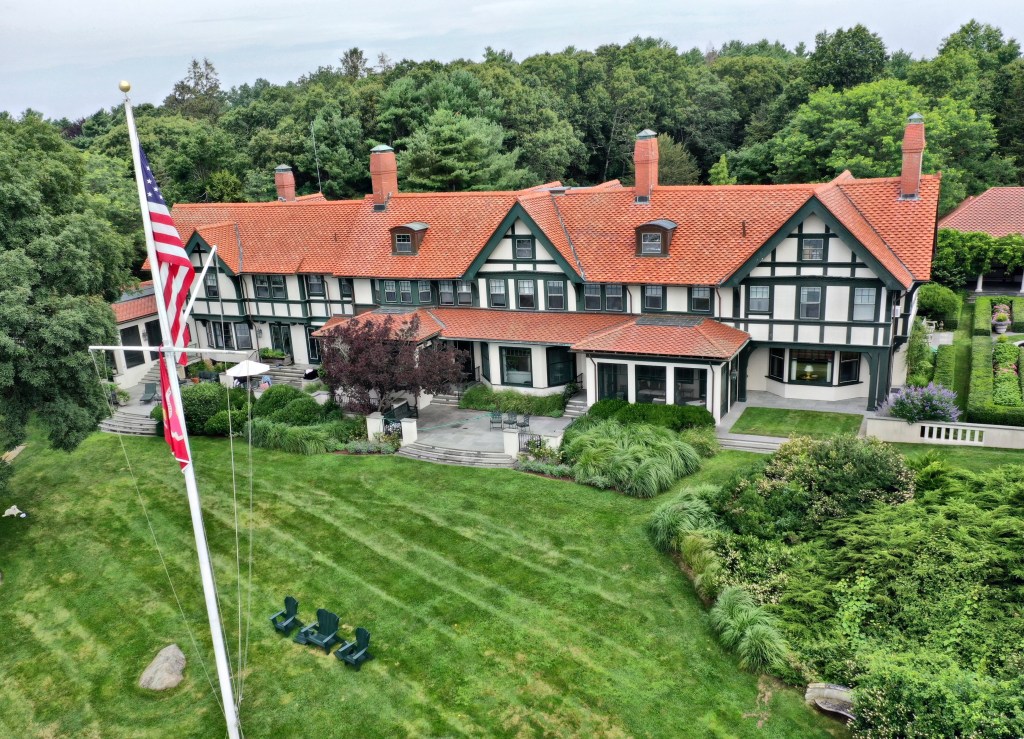
It’s Tudor Tuesday so I have to share one of the great Tudor Revival cottages in Bar Harbor, Maine, “The Poplars” (because any good summer cottage needs a name)! The cottage was built in 1899-1900 for Lewis A. Roberts, a retired book publisher from Boston, who purchased the lot which contained a summer cottage and stable, razing both. He hired the local firm of Goddard & Hunt, an architect/builder duo who worked on many projects in the village. The Tudor Revival cottage was only occupied in the summer months by Roberts and his family as the home was not winterized at the time. The cottage was built of wood and rough stucco work with rough timber trimmings all hallmarks of the Tudor style. The home was later known as the Stratford House, and became an inn until just a couple years ago. It was recently listed for sale and has 13 bedrooms and 13 bathrooms!
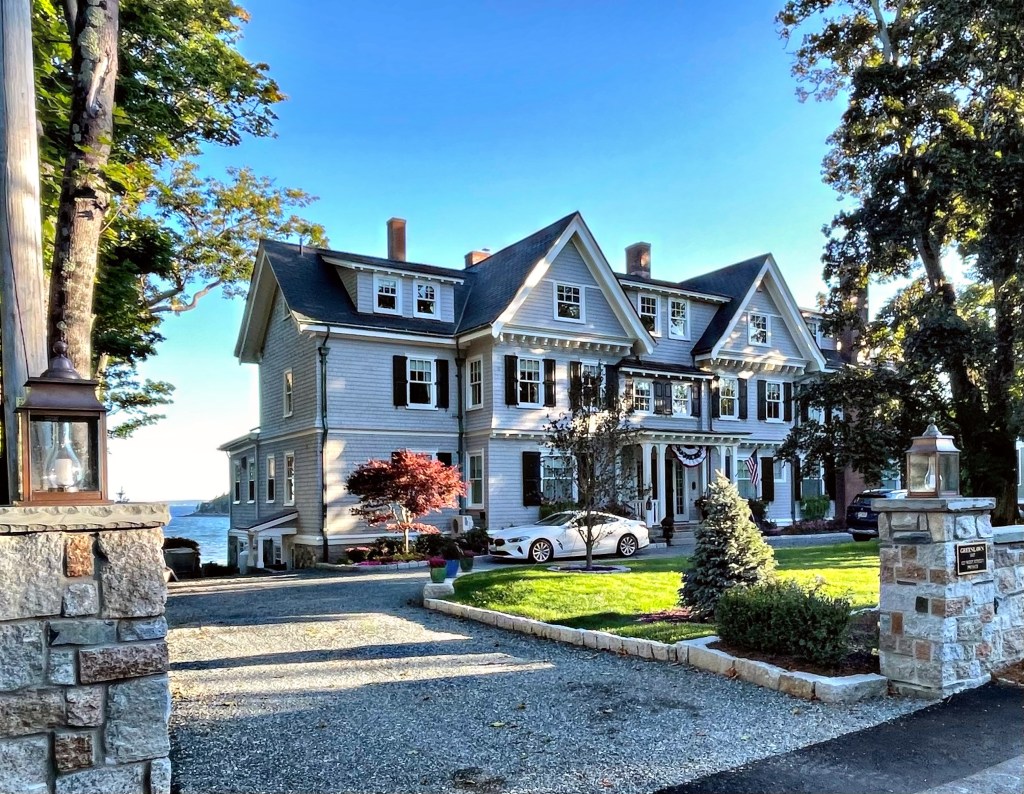
“Greenlawn” // 1887

West Street in Bar Harbor was laid out in 1886, and developers laid out house lots on both sides, with larger, more expensive land right on the water. One of the earliest homes built on the street is Greenlawn, constructed in 1887 for William Rice, an industrialist who co-founded Rice & Hutchins, a shoe manufacturing company with main offices in Boston. The architectural firm of Rotch and Tilden, comprised of partners Arthur Rotch and George Thomas Tilden. Both had studied at the Massachusetts Institute of Technology and at École des Beaux-Arts in Paris. Both had worked at the architectural firm of Ware and Van Brunt, and would be best known for their Gilded age mansions in New England. By 1896, the cottage was owned by William L. Green, which is likely when the cottage’s name “Greenlawn” stuck. The house recently sold for $4.25 Million and the interiors are gorgeous!

“La Rochelle” // 1903

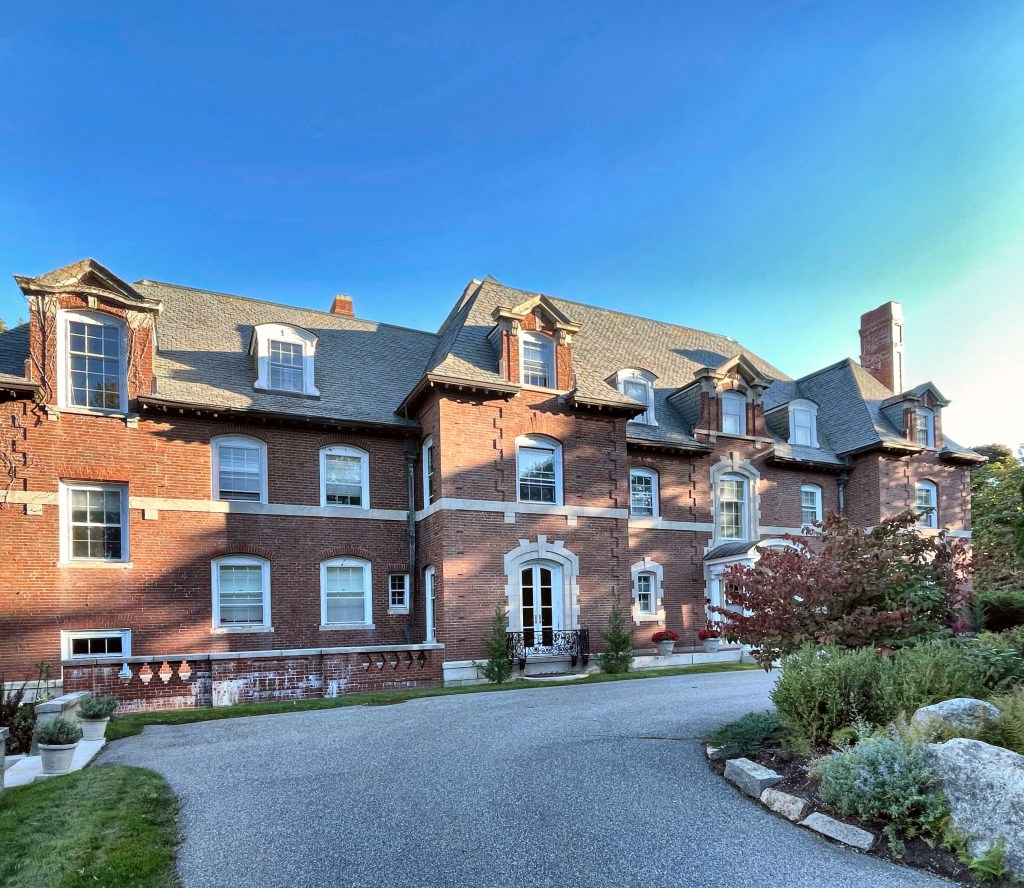
“La Rochelle”, one of the many beautiful summer “cottages” in Bar Harbor, Maine, sits on West Street, a well-preserved stretch of mansions that showcase Gilded Age wealth in the town. The cottage dates back to the 1902-3, when George Sullivan Bowdoin, great-grandson of Alexander Hamilton, and partner at J.P. Morgan, and his wife, Julia Irving Grinnell Bowdoin, a great niece of Washington Irving) commissioned the Boston architectural firm of Andrews, Jacques & Rantoul to design a cottage for them. They hoped to spend their summers away from New York, where they could rub elbows with other wealthy and well-connected summer residents in Bar Harbor. The French Renaissance style cottage, known as La Rochelle, became one of the first Bar Harbor mansions constructed of brick. The forty-one room, 13,000 square foot cottage was built with twelve bedrooms and nine full-bathrooms on two acres of land, which backs up to the Mount Desert Narrows and harbor. The name La Rochelle comes from La Rochelle, a seaport in Nouvelle, Aquitaine, France, where George’s ancestors lived before settling in present-day Maine (later moving to Boston). In the 1940s, Tristram C. Colket of Philadelphia and his wife (the former Ethel Dorrance, daughter of John T. Dorrance, the Campbell’s Soup king) acquired La Rochelle. In 1972, La Rochelle’s owners, the Colket family, donated it to The Maine Seacoast Mission, who then sold it in 2019 to the Bar Harbor Historical Society.

Yellow House Inn // c.1880

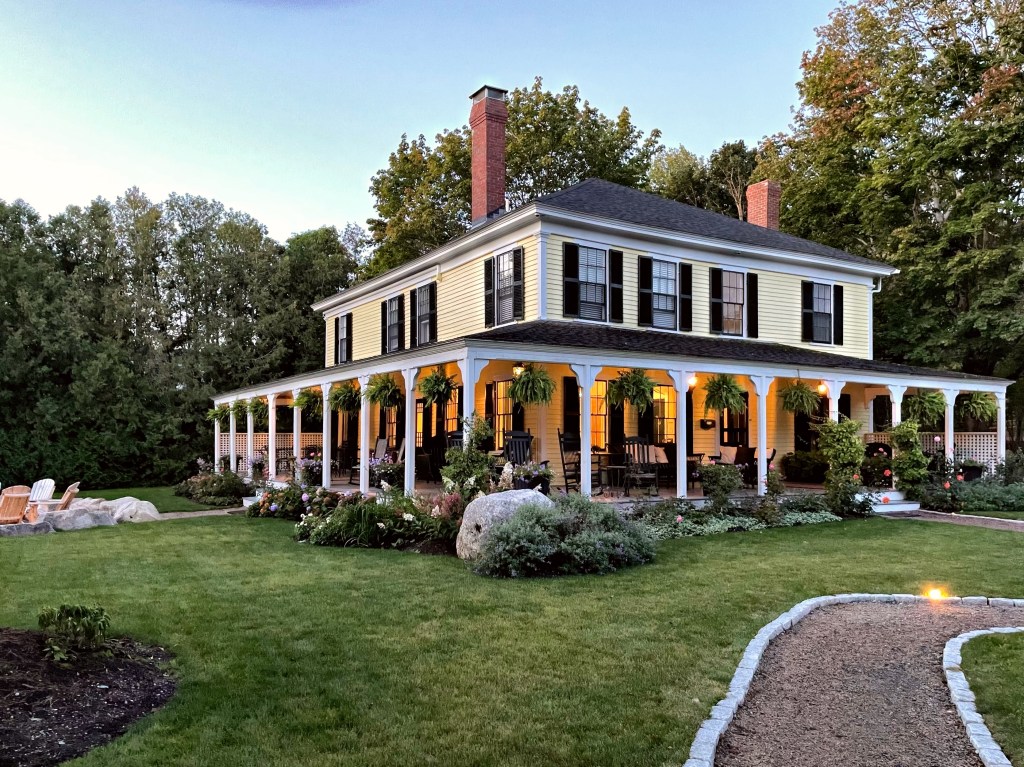
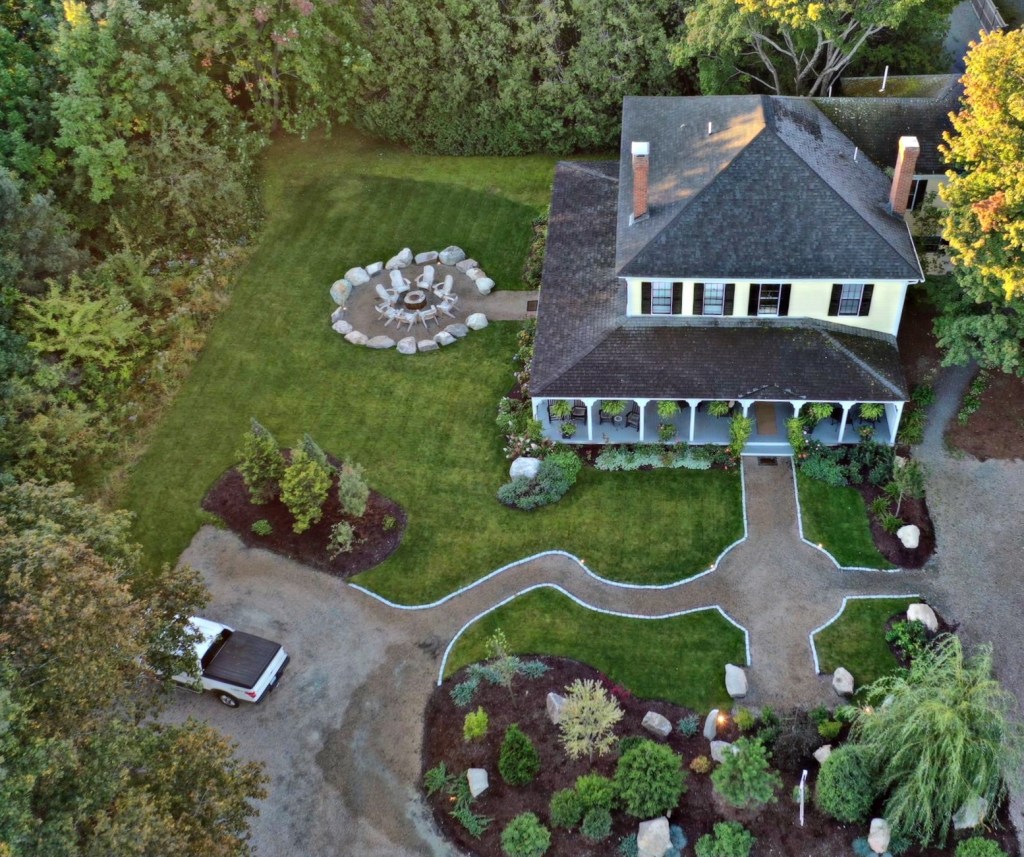
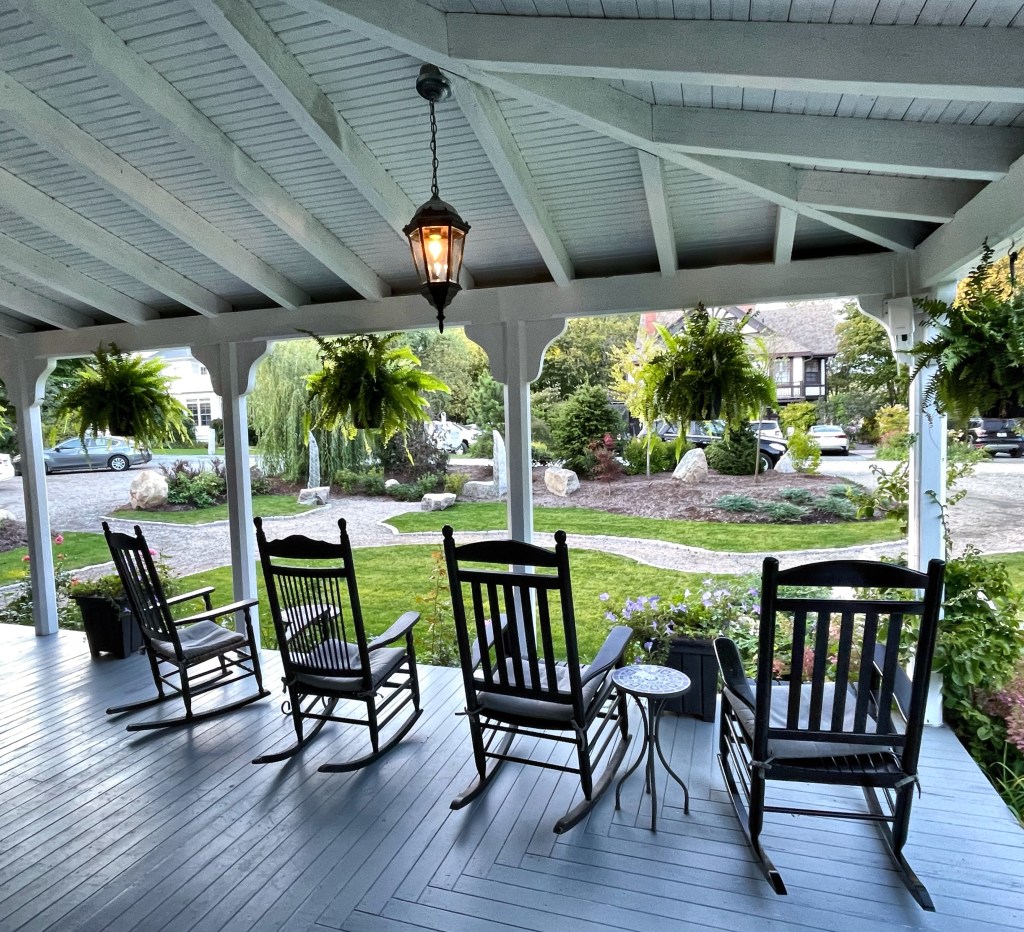
The Yellow House in Bar Harbor is one of the most stunning summer cottages in town, and luckily for us, is an inn! The cottage sits on a sleepy road just off Main Street, just steps from the rugged Mount Desert Island coastline on one side and busy restaurants, shopping, and bars on the other side. The cottage appears to have been built in the late 19th century from deed research and was acquired by socialite Ms. Sarah Parker Torrey Linzee, of Boston by 1886. Sarah married Thomas Linzee, a treasurer of a mill in Lowell, in 1855 and engaged in upper-class society together in Boston until his death in 1863. His wealth went to Sarah, who within a year of his death, purchased a rowhouse in Boston’s newly established Back Bay neighborhood. Her sister, Susan and her husband John Revere (the grandson of the American Patriot Paul Revere), had a matching home built nextdoor in Boston. Like any good socialite, Sarah Linzee desired a summer cottage in desirable Bar Harbor, Maine, to escape the woes of city life for clean air and large parties. Sarah and her sister Susan purchased this cottage, painting it yellow, and the name “Yellow House” stuck. The home was purchased by Leonard Opdyke and remained in the family for generations. By the second half of the 20th century, it became an inn, a use it remains as to this day. The old cottage features the finest wrap-around porch I have seen, large rooms, and original detailing inside and out. For anyone thinking about visiting Acadia National Park, I HIGHLY recommend checking in here to get the true Bar Harbor vibe!

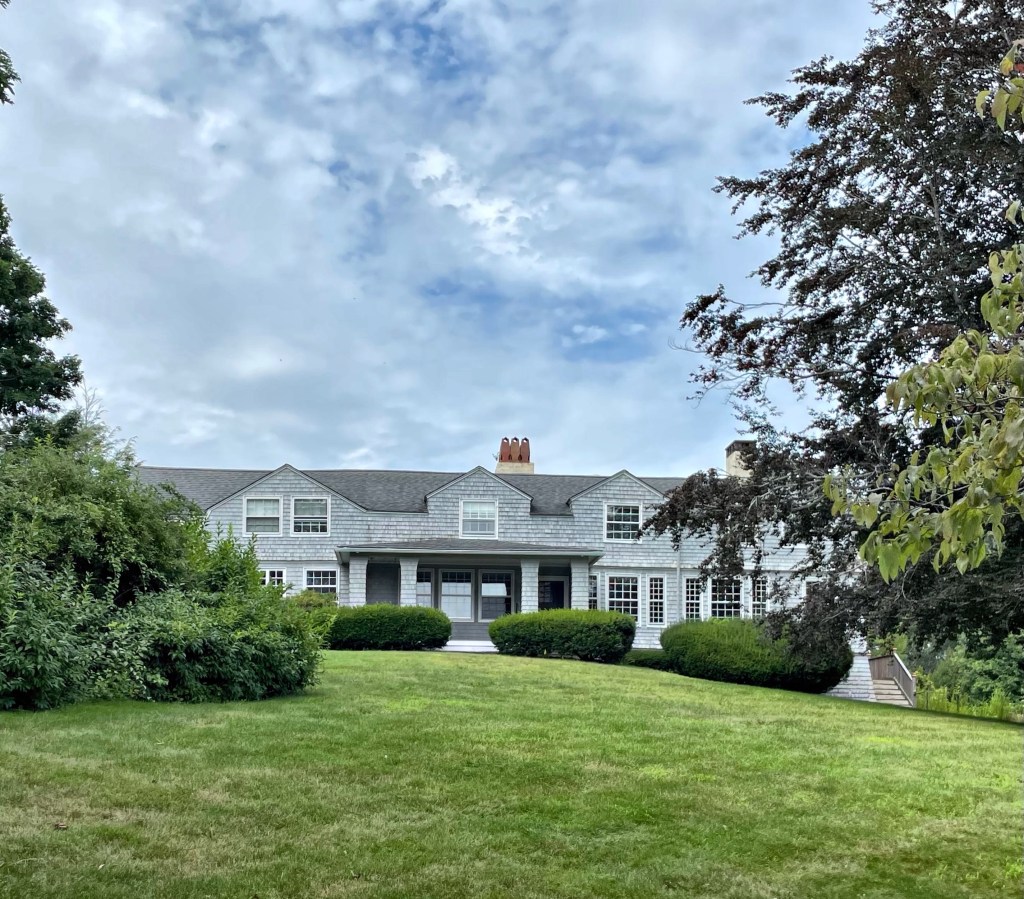
Benjamin Waters Houses // c.1895

Benjamin E. Waters (1863-1962) was a local businessman and real estate developer in Marion by the end of the 19th century. He acquired a large property not far from the beach, in the middle of a high-class residential enclave and developed the property, running a small dirt path through the middle, known today as Pie Alley. He built three large Shingle style homes and appears to have rented them out to wealthy residents. The homes are all situated very well on their lots among large lawns framed by stone walls, just a short walk from the beach.

“Fair Oaks” // 1903

One of the most grand Summer estates on the coast in Marion, MA, is “Fair Oaks”, a 1903 Tudor Revival mansion across the Sippican Harbor from the village. Horace B. Shepard was the president of the Shepard and Morse Lumber Company, which was headquartered in Downtown Boston. The company was a wholesale dealer in all kinds of lumber including: white pine, spruce, hemlock, North Carolina pine, yellow pine, poplar, and various oaks. Given Shepard’s line of work he not surprisingly called his summer estate “Fair Oaks”, and his house’s building materials
were undoubtedly supplied by his company. He appears to have hired Charles Allerton Coolidge, who lived nearby in his own summer cottage (featured previously) to design the Tudor mansion. The “cottage” is almost 13,000 sq.ft. and has 11 bedrooms, 9.5 bathrooms. Wow!

Rev. William Percy Browne Cottage // 1881

In 1881, Henry Hobson Richardson furnished plans for this modest, shingled cottage in the town of Marion, overlooking Sippican Harbor. At the same time, he was also completing designs for Austin Hall at Harvard and overseeing the construction of Albany City Hall in New York, both in his iconic Richardsonian Romanesque style. This Shingle style home in Marion was designed for Reverend William Percy Browne (1838-1901), who was educated at Kenyon College in Ohio alongside John Cotton Brooks, the youngest brother of Phillips Brooks, who would become the Rector of Boston’s Trinity Church and briefly Bishop of Massachusetts. Brooks would hire H.H. Richardson to design Trinity Church in Boston in the early 1870s. From this connection and being members of the St. Botolph Club of Boston, Reverend William Percy Browne and H.H. Richardson began a working relationship designing Browne’s summer cottage in Marion. The legend is that at the club, Browne bet Richardson that he could not design a small house for $2,500. Browne lost. This modest house was completed in 1882 and represented an early, significant example of a Shingle style home in Massachusetts. Browne died in 1901 and the house was sold to Sidney Hosmer, a Boston electrical engineer. Under his ownership, the home was expanded and altered, somewhat obscuring Richardson’s original design. The cottage was eventually purchased by Tabor Academy, who in 2019, pulled a demolition permit for the house. Architects and historians quickly rallied and advocated for the preservation of the cottage, saving it from the wrecking ball. The academy is undergoing alternative plans, which were stalled due to Covid-19.


Harkness Estate – Eolia Mansion // 1908

Eolia, the Harkness Estate, sits on the shoreline of Waterford, Connecticut and is significant as one of the most complete grand-scale, seaside estates in Connecticut. Similar to Seaside Sanatorium (featured previously), the Harkness Estate is another Connecticut State Park in the coastal town, but is quite opposite as the buildings and grounds are in much better condition and get use! The property was developed as a formal seasonal retreat and working farm in the early 1900s for William Taylor and Jessie Stillman, until it was purchased by Jessie’s sister Mary and her husband Edward Harkness soon after. Edward S. Harkness (1874-1940) spent most of his life managing, with his older brother Charles, a tremendous fortune built up by their father Stephen Harkness, who had had the foresight in 1870 to become John D. Rockefeller’s business partner by investing in the Standard Oil Company. Edward Harkness married Mary Stillman, daughter of wealthy New York attorney Thomas E. Stillman, in 1904. Mary’s maternal grandfather was Thomas S. Greenman, a shipbuilder in Mystic, Connecticut, who co-founded George Greenman & Co shipyard (now part of the Mystic Seaport Museum). As the centerpiece of this summer estate, the premier NY architectural firm of Lord & Hewlett, designed this stunning Renaissance Revival mansion which holds a whopping 42-rooms. Mary hired female landscape architect Beatrix Farrand to design the absolutely stunning gardens on the grounds. In 1918, Edward Harkness was ranked the 6th-richest person in the United States, and the couple decided to give away much of their wealth, including selling off some of their property in Waterford for Camp Harkness for children with polio. Mary and Edward were very private people who avoided public attention and acclaim, unlike many of the rich of today. Mary Harkness’s final gift, was written in her will, that her beloved estate Eolia, would be gifted to the State of Connecticut.

Stay tuned for some more buildings on this stunning estate!

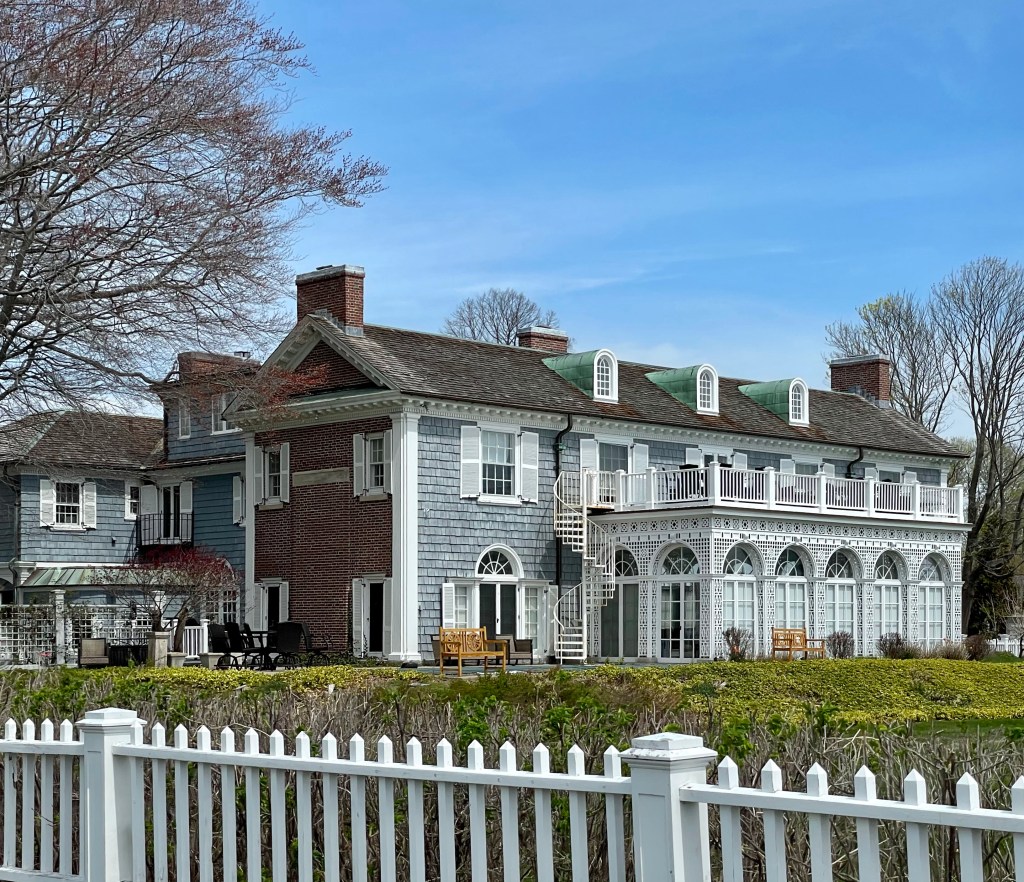
Clement Studebaker Jr. Summer Residence // 1915

This magnificent coastal mansion embodies historical elegance in Rye Beach, NH. Built in 1914-15 for Clement Studebaker Jr., the Studebaker Estate is one of the most elegant and most recognized residences on the New Hampshire coast, and among the best preserved. The Colonial Revival home is clad with shingle siding with two strong brick end walls. A solarium runs along the ocean-facing facade with ample glazing and delicate woodwork which presents a welcoming presence to passing motorists. Clement Studebaker Jr. was an American businessman and the son of wagon, carriage and automobile manufacturer Clement Studebaker. He held executive positions in the family’s automobile business, Studebaker Corporation. The Studebaker summer residence was recently sold, and the interior photographs are amazing!

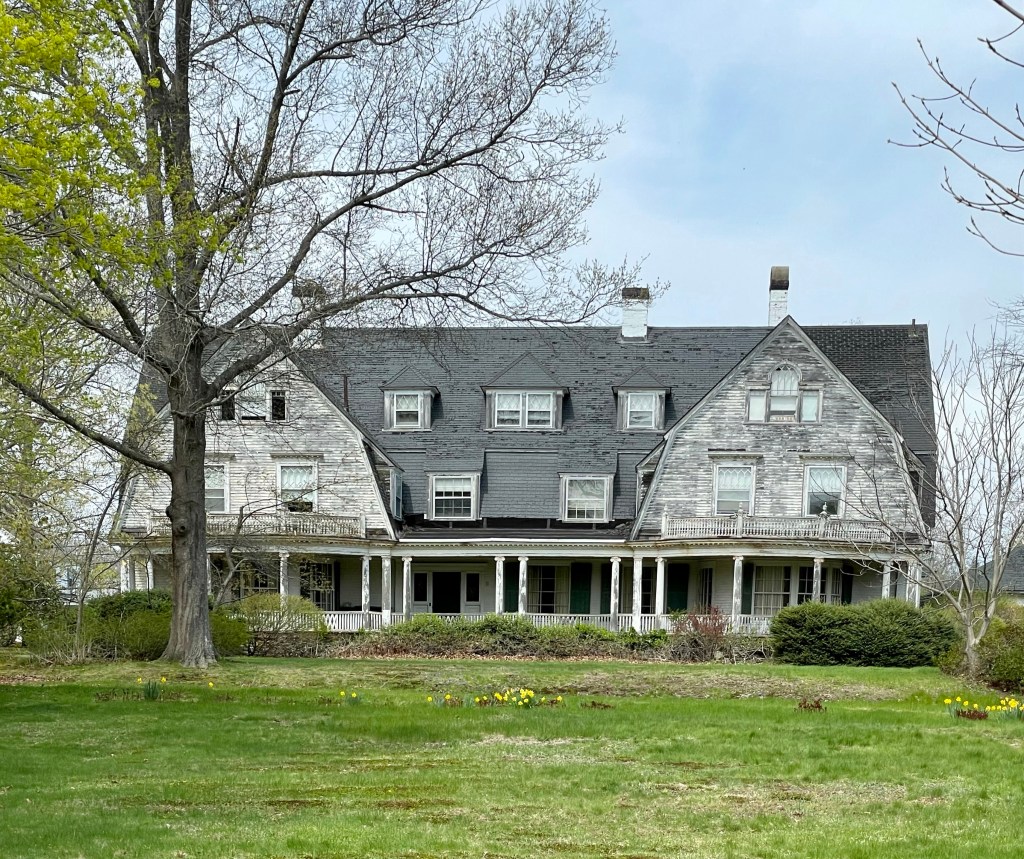
George L. Allen Summer Residence // c.1895

This massive summer “cottage” in Rye Beach, NH, was built around 1895 for St. Louis businessman George L. Allen. The massive Colonial Revival home features a gambrel roof with a series of gabled, hipped and shed dormers to break it up. A circular driveway would have allowed visitors for Great Gatsby-esque parties to get dropped off by their driver and enter right into the home’s large stair-hall. The most stunning facade is the rear, which faces a lawn with views out to the Atlantic Ocean. A full-length porch on the first floor sits recessed under the floor above to provide shelter from the harsh summer sun. Sadly, the mansion has seen better days and appears to be a shadow of its former self. Luckily, almost all of the historic windows remain and the home can definitely be saved. Fingers and toes are crossed to see this beauty preserved.