Dr. Jenks Apothecary Shop // c.1860

Who doesn’t love a good flatiron building?! This charming three-story with Mansard roof building is located in the Bulfinch Triangle district of Boston. The triangular-shaped building was built around 1860 as an apothecary shop for Dr. Thomas Leighton Jenks (1829-1899), a doctor who was born in Conway, New Hampshire, but left for Boston while still a teenager. When the Mexican-American War broke out in 1846 he enlisted in the Navy, where he served for three years in the hospital ward of the frigate U.S.S. United States. Upon returning from the war, Jenks attended Harvard Medical School, and wrote his thesis on Syphilis. Dr. Jenks apprenticed in a building on this site under Dr. Samuel Trull. He likely redeveloped or modernized the 1850s building, adding the mansard roof by the 1860s. During the Civil War, Dr. Jenks served as a front line surgeon. After returning home, he grew tired of the medical profession, and got involved with local politics. He was elected as an alderman, Massachusetts state representative, and in later years he earned appointments as Chairman of the Boston Board of Police, and Chairman of the Board of Commissioners of Public Institutions. He tragically collapsed and died in 1899 at a Boston courthouse. As a tribute to his birthplace, Dr. Jenks made a provision in his will for the funds necessary to build a public library in Conway, New Hampshire, which is still in use today. Somehow, the old Dr. Jenks Apothecary Shop has survived all this time as the city grows and changes all around it. The building saw life later as a restaurant and offices.
The Last Tenement // c.1870s

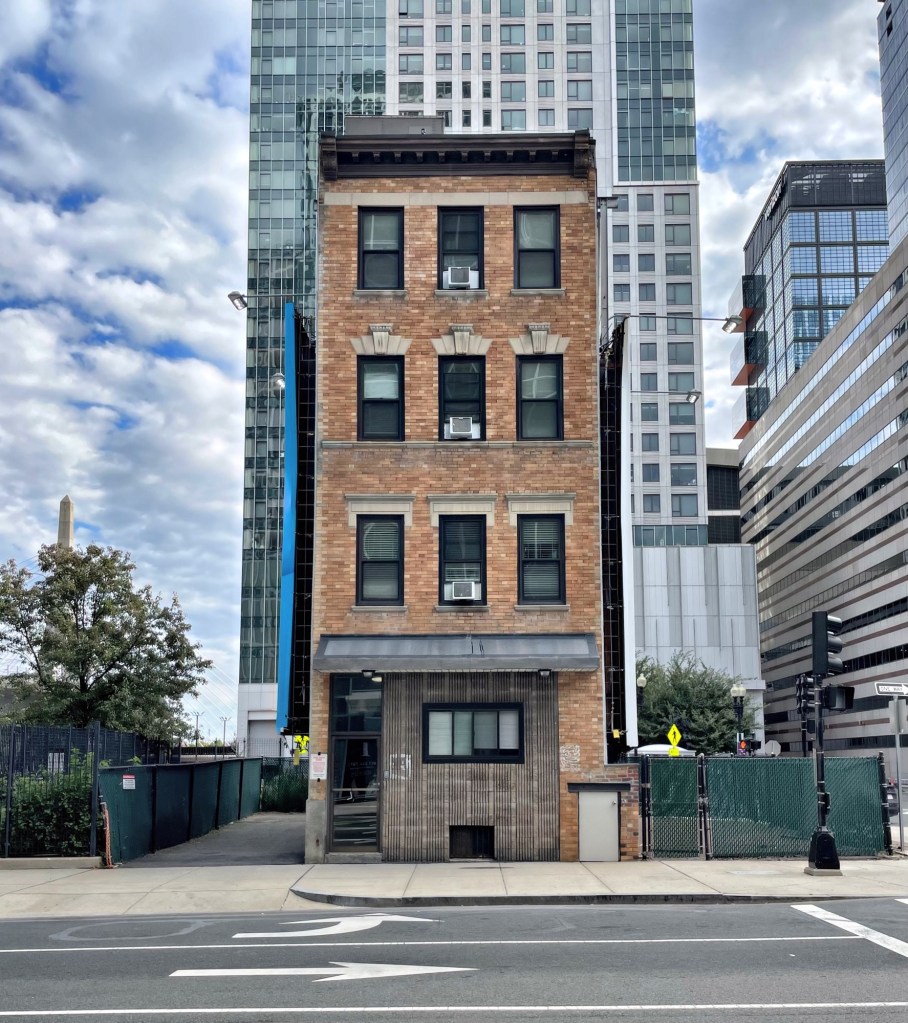
Originally built in the 1870s, and largely remodeled in the early 1900s, this charming building has been known locally as “The Last Tenement” of the old West End of Boston. Once part of an unbroken a row of 30 brick tenements along the east side of Lowell Street, this building typified much of the West End of Boston, a vibrant and dynamic immigrant neighborhood. Dwarfed by larger, modern apartment towers and highway off-ramps, this stand-alone building is a survivor, and should really be preserved! Here is a little history on The Last Tenement that I found. The building was originally built as a three-story residence just after the Civil War by furniture dealer, George M. Rogers. The building was rented to four families in the 1880 census, showing the diversity of the region with 20 people residing in the building of Irish, English, and German-Jewish backgrounds. At the turn of the century, an elevated rail line was laid out down Lowell Street. After WWII, the neighborhood would see a terrible demise, that has been widely told. City leaders effectively considered the vibrant immigrant neighborhood a slum, and in an effort to redevelop it to bring back middle-class families (and their tax dollars) handed much of the neighborhood to developers to start over, with little more than lip service for the displaced. This building, now with an address of 42 Lomasney Way, was occupied for some time by “Skinny” Kazonis, a low-level Mafia associate of the Angiulo Brothers, which was a leading gang in the North End until the Winter Hill Gang decided to run rackets in the area. The property sold, and residential units have been rented and the building maintained, with the assistance of a billboard for additional income for the owner. The Last Tenement showcases the strength and resilience of the old West End and will hopefully remain as a reminder of the vibrant neighborhood that was razed and replaced with mediocrity.

Haskell Free Library and Opera House // 1901

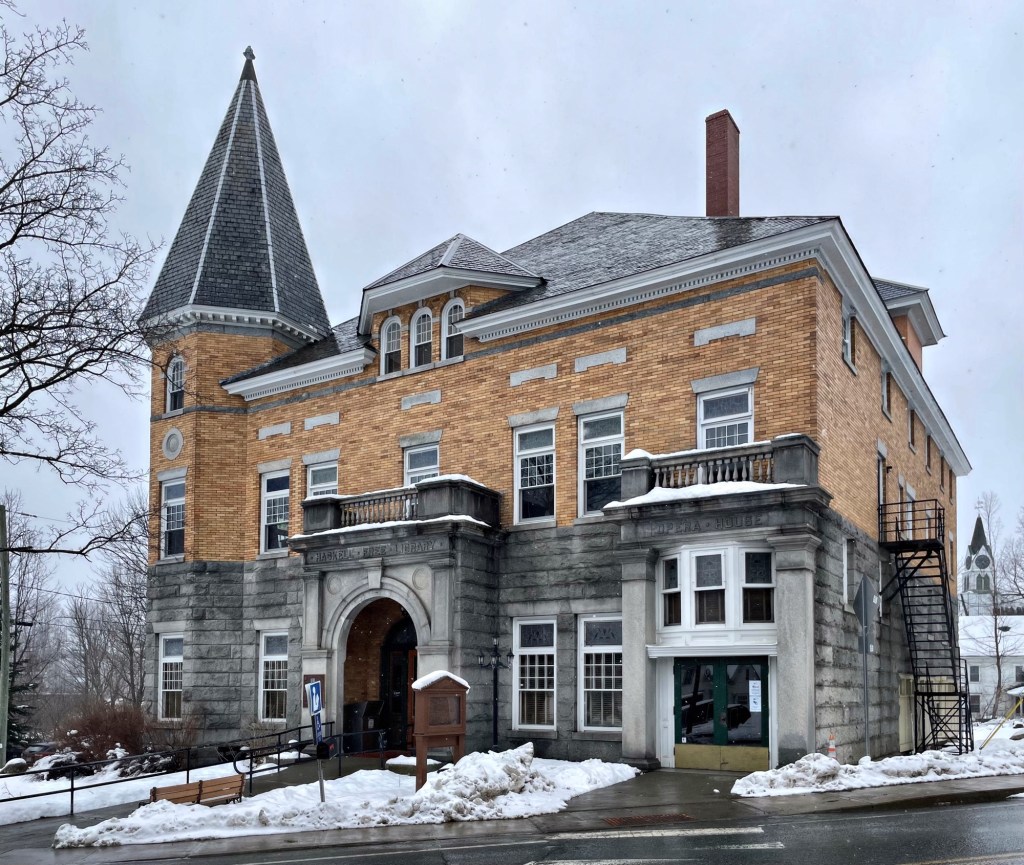
How many buildings do you know of that straddle two countries?! Well, here is one of the most iconic buildings in Vermont, the Haskell Free Library and Opera House of Derby. The building was gifted to the villages of Derby Line, Vermont and Rock Island, Quebec, by Martha Stewart Haskell and her son, Horace Stewart Haskell, who wanted to leave their mark on the town. The building was designed by James Ball of Rock Island, Quebec and is a high-style structure comprised of both a library and opera house for residents. Designed in a eclectic mix of Romanesque Revival and Classical Revival, there is a lot to look at from both countries! Some of the outstanding features of the building include the structural and ornamental use of granite, stained glass windows imported from Scotland, ornate fireplaces and rich woodworking on the library interior, and one of the most elaborate opera house interiors in a completely preserved condition in Vermont.

Johnston-Sullivan House // c.1894

One of the more exuberant and ornate homes in Roxbury’s Washington Park neighborhood is this charmer on Howland Street. The eclectic house was built in around 1894 for Ellen S. Johnston from plans by local architect Timothy Edward Sheehan and stands out for its preserved exterior in a neighborhood where many homes are covered in later siding, obscuring the ornate details underneath. Details include: swag and garland applied ornament, two bays at the facade (one polygonal and one rounded), a Colonial Revival style porch, and central rounded dormer. Wow!

Yale University – Yale Art Gallery Building // 1928

One of the most visually stunning and unique buildings in New England is the 1928 Yale Art Gallery building, which is connected to Street Hall (last post) via a skybridge over High Street. Completed in 1928, the Yale Art Gallery was designed by relatively little-known, but significant 20th century architect, Egerton Swartwout. Swartwout graduated from Yale College in 1891 with a B.A. degree and with no formal architecture training, was hired as a draftsman at the illustrious firm of McKim, Mead & White in New York before running his own office, Tracy and Swartwout. Built in a Gothic Renaissance style inspired by Italian buildings such as the Bargello in Florence, the sandstone masonry structure commands the prominent site with a corner tower and facade fronted by five gothic arched windows. Inside, visitors are transported to a historic Italian art museum within the Gallery Wing, with the full-height Gothic windows with walls, floors and ceilings restored and lined in stone.