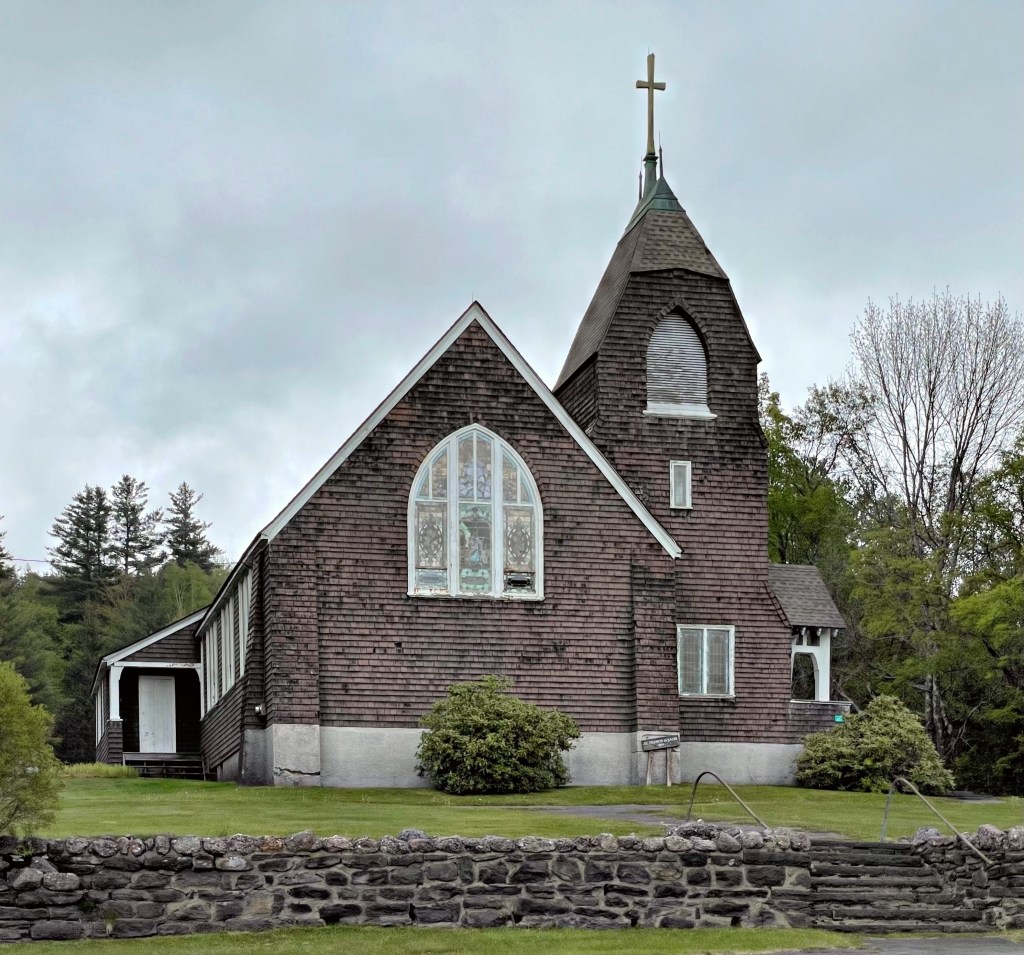
St. John the Evangelist Church // 1885

One of the most bucolic and beautiful buildings I have ever seen is this church in the Catskills, just outside of Elka Park, NY. Wow I wish New England could claim this one! The St. John the Evangelist Chapel was developed as part of a smaller enclave of summer cottages for rusticators from the Philadelphia-area, which was largely established by Mr. Alexander Hemsley (1834-1904) a chemist from Philadelphia who would later die from anaccidental chemical explosion at his factory. In 1883, Hemsley sold cottage lots to friends and family to erect summer houses in the Catskills and in 1884, decided to develop a lot for an Episcopal summer chapel. In that same year, Hemsley hired his future son-in-law, William Halsey Wood, to design the chapel. The Stick-style Victorian chapel blends the rustic use of natural materials found on the property with an elegant siting and attention to detail, not typically found in rural chapels. The native stone and stylized half-timbering really stood out to me. The church is used still in the summer with regular services on Sundays in July and August.
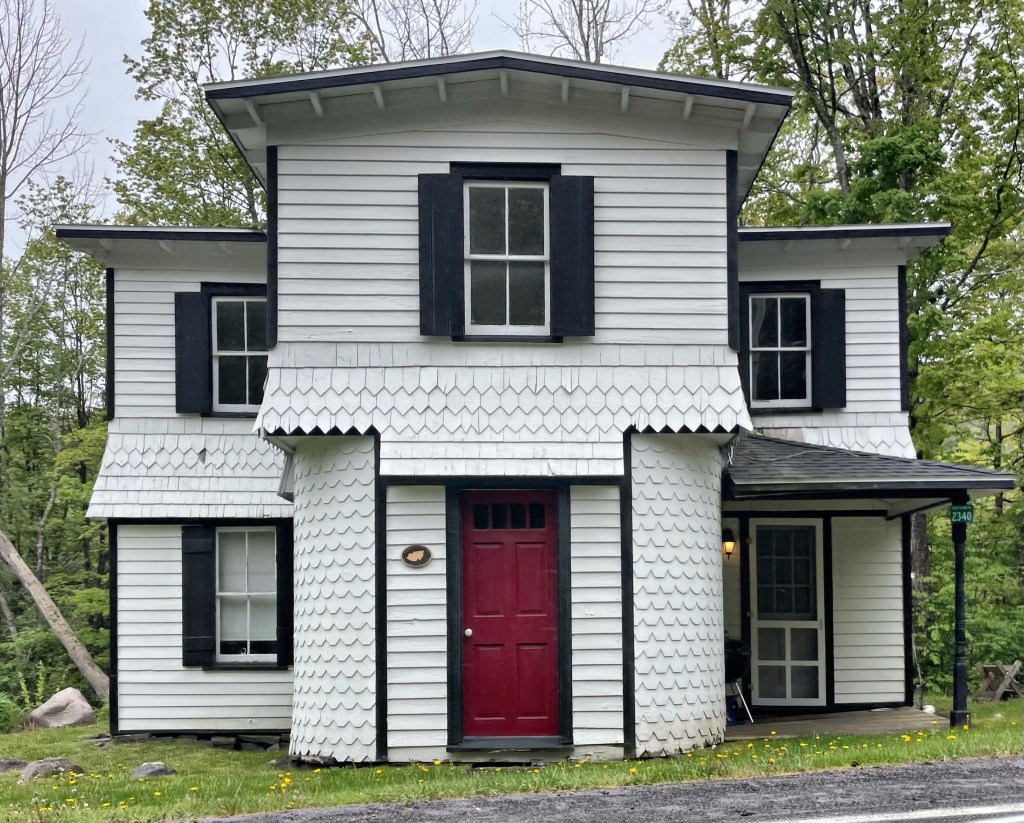
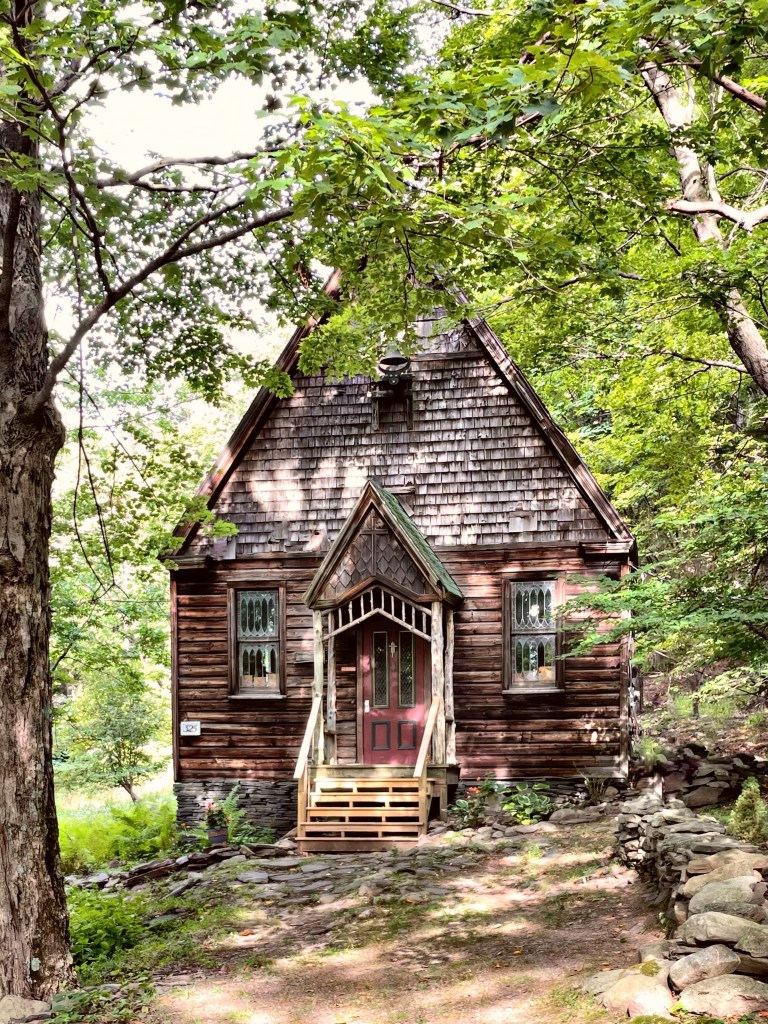
Keller Cottage // 1896

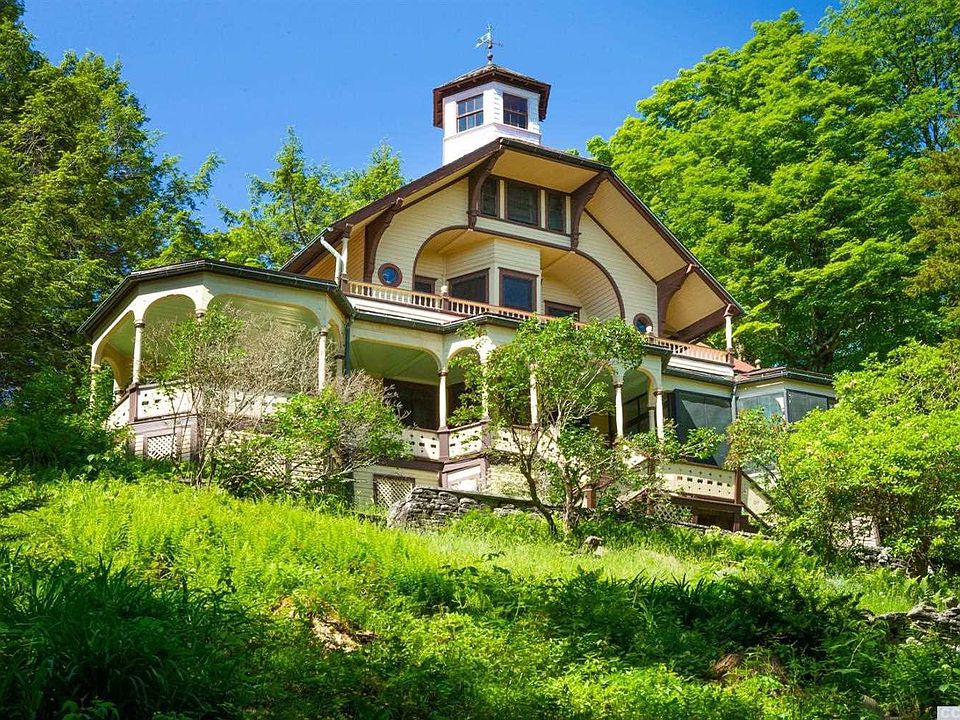
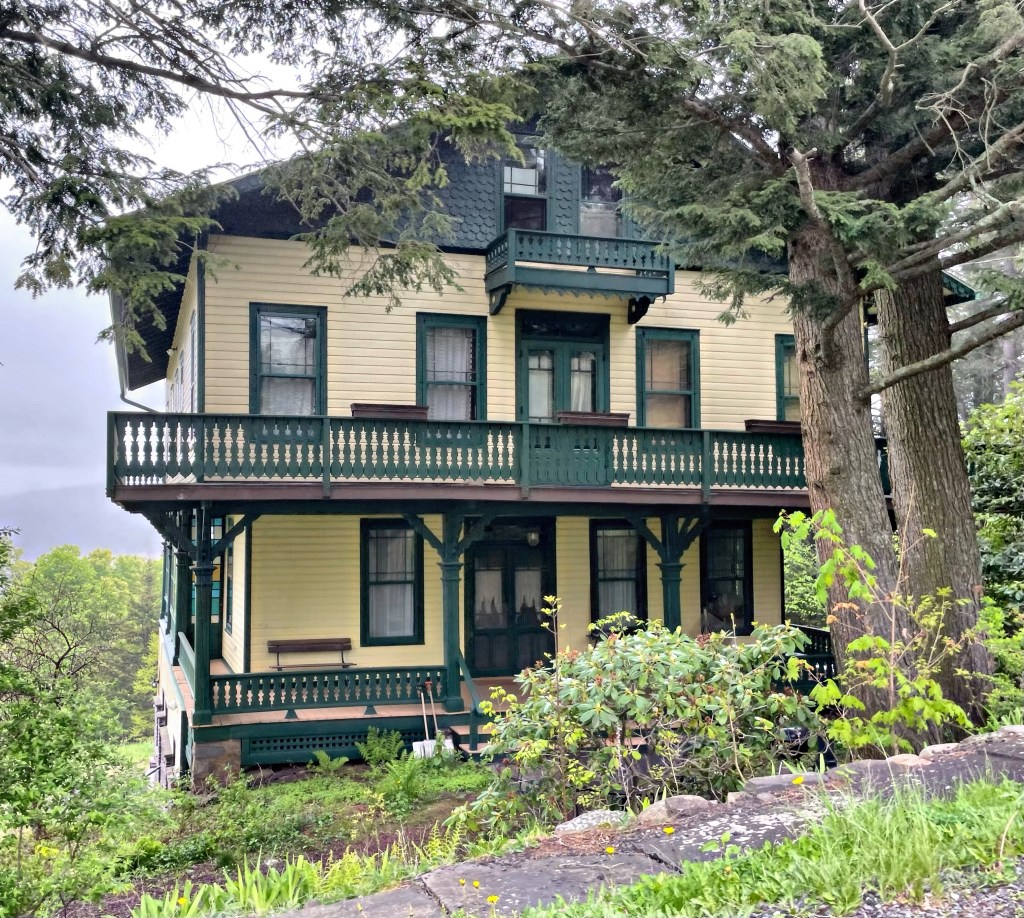
It wouldn’t be a German-developed summer colony with at least one Chalet-style summer cottage, would it? The Keller Cottage in Elka Park, New York, was built in 1896 for John Keller (1867-1924) and his German wife, Caroline Goehring (1866-1917) who summered in the colony for a few months of the year from Brooklyn, N.Y. The 3,500-square-foot, 6-bedroom “cottage” includes a sunroom with stained glass, original unpainted wood-paneled walls and oh, just some jaw-dropping views of the Catskill Mountains for good measure!

Tamsen Cottage // 1893

Photo from 2017 real estate listing

One of the more unique cottages in New York’s Elka Park summer colony in the Catskill Mountains is this charmer, the Tamsen Cottage. The cottage was built in 1893 for Edward Tamsen (1849-1907), the Sheriff of New York County from 1895-96 until Governor (and later Vice-President) Levi Parsons Morton removed him from office. The former Sheriff purchased this home and summered here with other German-American wealthy New Yorkers until his death in 1907. The chalet-style house has been exceptionally preserved since, and was listed for sale in 2017 for a mere $425,000. Wow!

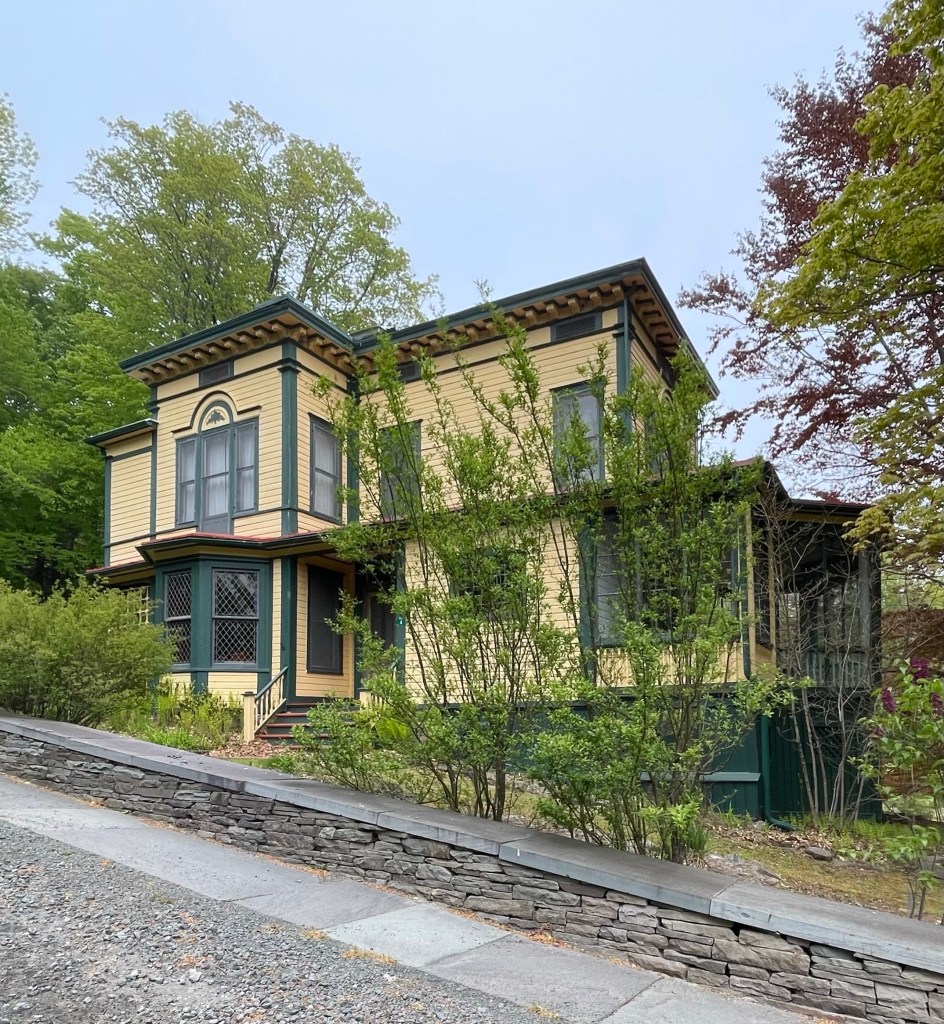
Kurth-Kliegel Cottage // 1896

Elka Park in Hunter, New York, is a really unique summer colony developed in the late 19th century as a country retreat for wealthy German-Americans to escape the woes of city life, primarily from New York City. Between 1890-1896, a total of 21 homes were built as summer cottages, 17 remain to this day. Almost all “cottages” were built with at least 4 bedrooms with space for servants, guests would lodge at the nearby Elka Park Clubhouse, which was destroyed by fire and replaced after WWII. The private community remains a secluded respite and relatively unknown to most. This cottage was built in 1896 for a tax commissioner Mr. Kurth, from plans by Hugo Kafka, a Czech-American architect with an office in New York City. Kafka also had a summer cottage at Elka Park. This cottage was purchased in the 1920s by Johann Kliegl, a German inventor and businessman who settled in New York, developing the “Klieglight”, a carbon arc lamp used heavily in filmmaking at the time. The late-Italianate style cottage remains well preserved to this day and even has a historically appropriate paint scheme!

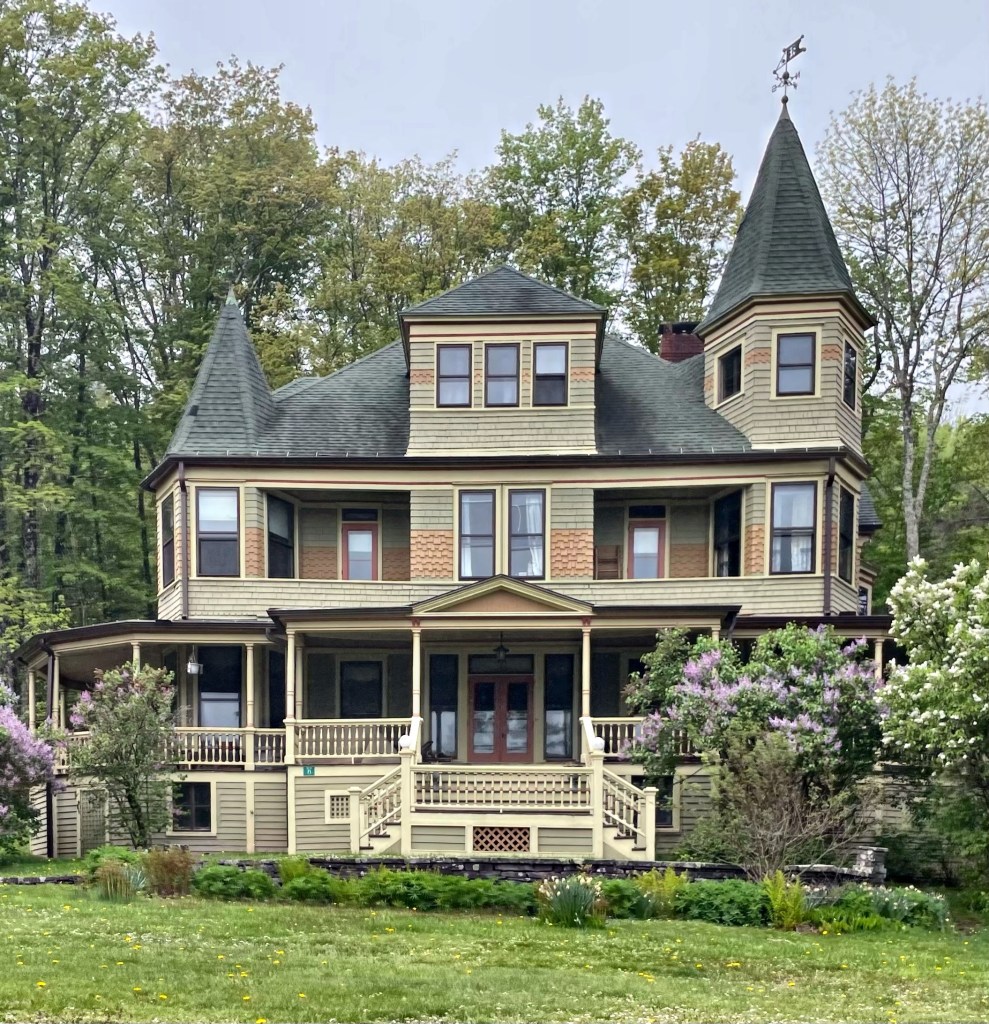
Keuffel Cottage // 1893

Built nextdoor to his business partner’s summer cottage (last post), Wilhelm (William) J. D. Keuffel, a German immigrant from Saxony, erected this summer cottage in the fashionable German-developed summer colony Elka Park in upstate New York. Keuffel & Esser Company (K&E) was founded by German immigrants Wilhelm J. D. Keuffel and Hermann Esser and manufactured high-quality surveying, drafting, and calculating tools for architects, engineers, surveyors, and building contractors in Hoboken, New Jersey with a sales office in Manhattan. By the early twentieth century, it was one of the largest manufacturers of scientific instruments in the world. Keuffel made good money, and summered in Elka Park for years until his death in 1908. The Queen Anne style Victorian “cottage” features the typical asymmetrical plan, corner towers, varied siding and detailing, and many porches to provide the residents with sweeping views of the distant mountains.

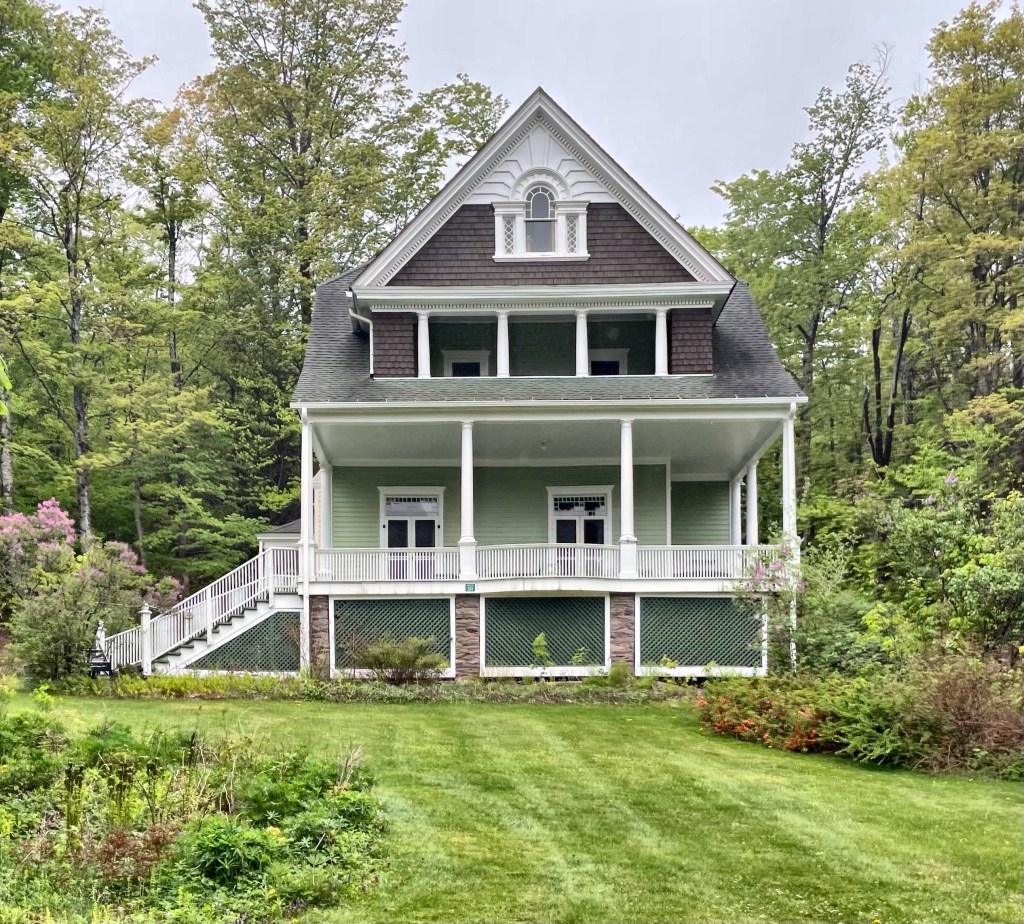
Esser Cottage // 1894

Hermann Esser (1845-1908) was born in Elbertfeld Germany and emigrated to the U.S. in the fall of 1866 and settling in Hoboken, NJ. On September 30, 1869, he married Bertha Michelmann of Hanover, Germany, who also emigrated to the U.S. years prior. In the states, Essen joined his old business partner Wilhelm J.D. Keuffel (also a German) and they ran the Keuffel & Esser Company, a scientific instrument manufacturing firm originally founded in New York City in 1867. Best known for its popularization of the slide rule, Keuffel & Esser was the first American company to specialize in the manufacture and sale of drafting and surveying tools. By the early twentieth century, it was one of the largest manufacturers of scientific instruments in the world. Their original store was located at 127 Fulton Street in Manhattan. Esser, with his wealth, decided to build a cottage in summer colony of Elka Park, New York, just north of Manhattan. The enclave was founded and has long been inhabited by wealthy German residents from New York City. This cottage was built for Mr. Esser in 1894, and is decidedly more Colonial Revival than many other cottages here. Esser only enjoyed a few summers here as he moved back to Germany in 1902, and died in 1908.

St. Francis de Sales Church, Elka Park // 1912

Down the street from the Old Platte Clove Post Office in Elka Park, New York, I stumbled across this large, shingled church with few houses nearby. I had to investigate! In 1888 parish lines for the Catholic church were redrawn in the area necessitating a new church near the summer colony of Elka Park. By 1891, a small, shed-like church was built here. By 1911, the small house of worship had outgrown its usefulness and it was considered a blight compared to the high-style homes nearby. A local summer resident, Francis H. Lewis funded $5,000 of the $6,500 cost of the building, and local carpenter Arthur Showers, was commissioned to erect the building. Father Keefe had conveyed to the builder some remembrances he had of a small church in France, and wished for it to be designed that way. Using local building traditions, the church was constructed of local lumber with shingled siding. The building and adjacent cemetery remain active to this day.

Old Platte Clove Post Office // c.1885

Believe it or not, but I occasionally venture out of New England, and a favorite place of mine to explore is Upstate New York. On a recent trip, I ended up driving through the tiny town of Hunter, New York, located in the middle of the Catskills. This charming little building was constructed c.1885 as the Platte Clove Post Office. The building was constructed to serve a rural portion of the town and was built as an early mixed-use building with the post office at the ground floor and small residence upstairs for the postmaster to live. The exterior cladding features both shingle and clapboard siding with overhanging eaves. The post office here ceased by 1911 and the use reverted solely to residential.

Elmendorf House // c.1780

Built circa 1780, this old stone house is fairly new compared to some of its neighbors (it was built after the Revolution). The land upon which the house sits was originally owned by Anthony de Hooges and his wife Eva. It was purchased by Conrad Elmendorf, who likely built the home after the War. and handed down to his great-grandson Col. Jonathan Elmendorf who served in the War of 1812. The property is now home to the Hurley Historical Society, which host an Old Stone House Tour every year.

Van Etten-Dumond “Spy” House // c.1726

One of my favorite houses in Hurley is the Dumond House (also known as the “Spy House”), a pre-Revolutionary stone cottage built in Dutch traditions. The house is one and one-half stories high, and is built of limestone. The limestone walls are of various thickness, from a nearby quarry, with the square ends laid up in mortar made of clay, and pointed with lime mortar outside. The house was built by Jacobus Van Etten (1696-1779) and used as a Guard House during the American Revolution. In 1777, it was famous for housing the convicted British spy, Lt. Daniel Taylor after he was caught carrying a message between British Generals Henry Clinton and John Burgoyne. Lt. Taylor was arrested as a British spy, convicted in court of spying and held in the basement of the Du Mond House as a prisoner. He was hung on October 18, 1777 from a nearby tree. American soldiers encamped in the area were paraded by the body as a warning to any potential British sympathizers. The home was later owned by the Dumond Family. It has been owned by the Kent family since 1933.

Polly Crispell Cottage // c.1700

Another of Hurley’s stone houses is this beauty, known as the Polly Crispel Cottage. The house was built before the American Revolution c.1700 by an Anthony Crispell, a cordwainer. The home was likely a half cape in form with the door and two windows to its right. The other half was added at a lower level later on with the floors uneven, likely in 1735 where a construction date plaque read. The home also features a dutch door, which I wish we had more of in New England.

Half Moon Tavern – Elmendorf House // c.1710

When Pieter Ostrander settled in Hurley, NY with his family in the late 1600s. Being of Dutch descent, he (and other settlers) built their homes and barns in Dutch traditions. This lot along the village’s main street was acquired by Pieter and inherited by his son, Arent in about 1710, about the time the home is estimated to have been built. It was acquired by the Elmendorf Family by the early 19th century. At that time, the property operated as the Half Moon Tavern, after Petrus Elmendorf purchased it in 1804. The addition to the east (right) was built as a weaving room. The property remained in the Elmendorf family until 2008 (that’s almost 300 years in two families!) It was acquired by the new owner who has been restoring and researching the home ever since. He runs a blog documenting the property’s rich history.

Ostrander-Houghtaling House // c.1705

Pieter Pieterzen Ostrander (1657-1706) was born in Amsterdam, Netherlands by 1657. His father died in the East Indies and soon after, Pieter, his mother, his stepfather Arent Teunissen, and older sister Tryntje Pieters immigrated to New Netherland (New York), arriving in 1661. Initially the family settled on Coney Island in Brooklyn and were eventually forced out by English settlers. The family removed to Wiltwyck (present-day Kingston, in Ulster County, New York. In Kingston, Pieter married Rebecca Traphagen Ostrander (1662-1720) in the Reformed Dutch Church of Kingston, New York, on 19 January 1679. Some time after their marriage, Pieter and Rebecca moved southwest to the nearby village of Hurley, where in 1687 he was one of several villagers to take an Oath of Allegiance. They built a small, single-room cottage here and lived there until it was expanded around the time Pieter passed away. In 1715, the house was deeded to Pieter’s son, Arent. During the time of the American Revolution, the home operated as a tavern. In October, November, and December of 1777, this house is said to have been the military headquarters for General George Clinton’s Continental forces and the town was the temporary capital of New York State. In 1782, the home was later believed to be where a reception was held in front for George Washington as he rode through town in 1782. In the 19th century, the left (northern) half of the house was added on by owner Abe Houghtaling, who operated that side as a wagon making shop. Whew! That’s a lot of history!

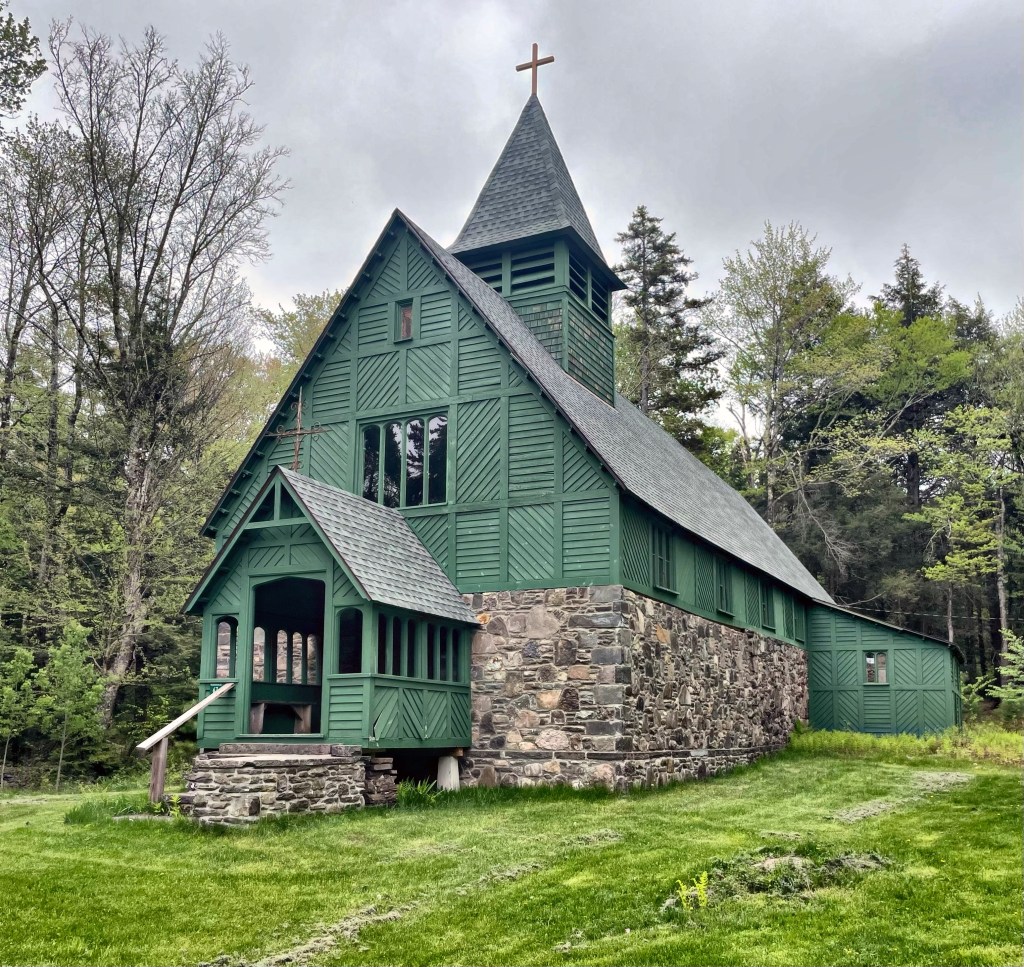
Church of the Holy Transfiguration // 1891

Highlighted by the establishment of the Catskill Mountain House in the 1820s, and furthered by the construction of subsequent resorts and boarding houses, the Catskill Mountains enjoyed a lively seasonal tourist industry that continued largely unabated throughout most of the nineteenth century. Mead’s Mountain House was representative of the smaller, less ostentatious boarding houses that sprang up in the region to serve a more middle-class clientele of tourists. This church, the Church of the Holy Transfiguration was originally constructed in 1891 in association with Mead’s Mountain House as a modest place of worship for guests of the Mead family’s boarding house and those of the nearby Overlook Mountain House. The chapel was constructed in 1891 and modestly built, constructed with a wood balloon frame above a fieldstone foundation with detailing reminiscent of the rustic aesthetic, popular in the Adirondacks to the north. In the 1960s, Father Francis, the much-beloved “hippie priest”, here welcomed hippies who had congregated in town during those years that culminated in the famous art and music festival. Fr. Francis began the practice of this lesser known branch of Catholicism, which acknowledges the Pope as an earthly spiritual leader but, unlike classical Roman Catholicism, does not consider the Pope to be supreme or infallible. The small chapel remains as a quirky and important piece of local history.

The Colony Hotel // 1929

As Woodstock New York surged in popularity as a retreat for American and European artists, savvy businessmen from Manhattan could not help themselves but to envision ways to make a little extra money. Morris Newgold and his son, Gabriel of New York City who purchased the Overlook Mountain House in 1917, sought to expand their upstate lodging empire and built a secondary establishment in the village of Woodstock, the Colony Hotel. The Colony Hotel serve as a more modest establishment to the grand Overlook Mountain House atop Overlook Mountain and would be a staging area and a stopover point for guests coming up the Hudson River by boat or train. Guests would spend the night at the Colony and eat at its fine restaurant before making the arduous trip up the mountain to the Overlook Mountain House the next day. The Colony Hotel appears to have been Gabriel’s idea who prided himself on the new building being “pretentious” as it was much more substantial than the more modest, vernacular buildings around the village. Gerald Betz of nearby Kingston was the architect for the Colony Hotel. Construction began for the Colony Hotel in 1927, and it opened to guests the summer of 1929. Morris died in 1940 and Gabriel continued to manage the Colony until his son took over from 1945 until the 1960 but as event space for arts and antiques fairs. It became known as the Colony Arts Center. The Colony’s website goes on to state that the building sat empty almost entirely through the next forty years. It was recently restored by artists Alexia and Neil Howard who converted it to a music venue and beer garden, it is pretty amazing and a must-see for history buffs visiting Woodstock.