Marie Hill Farmhouse // c.1810

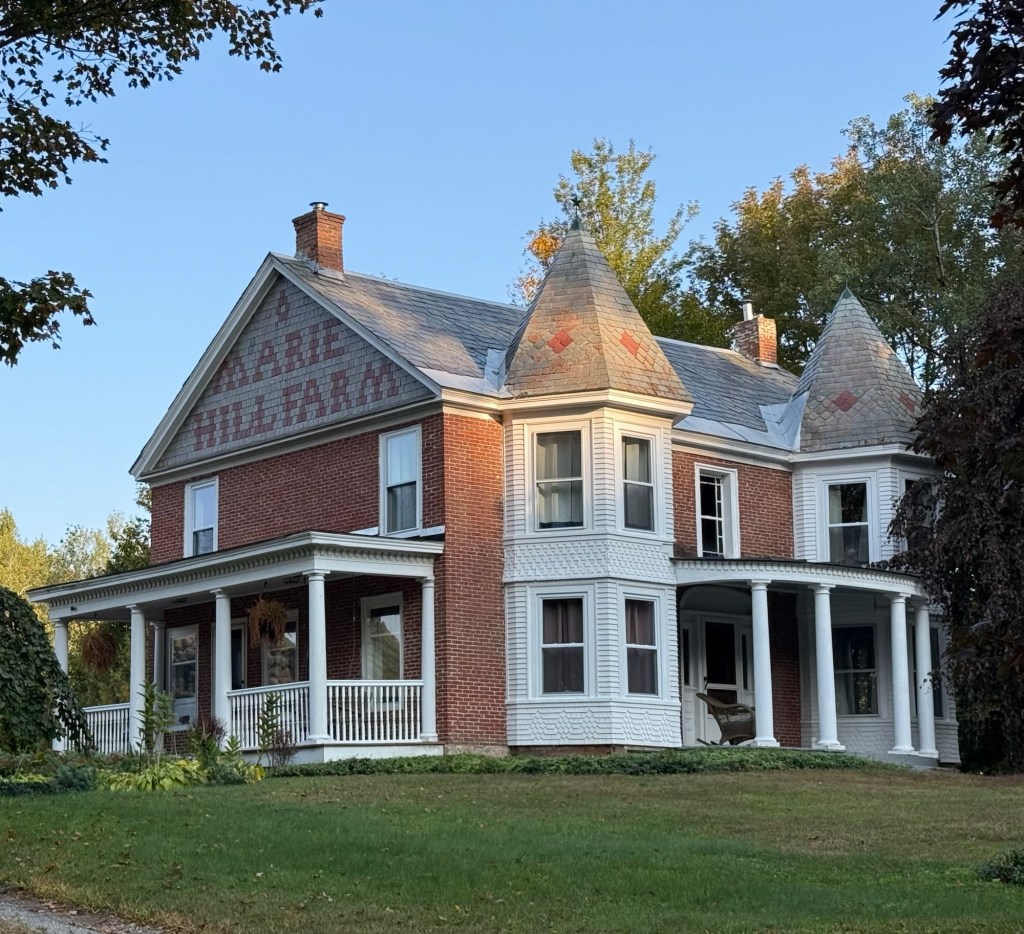
Located in the charming rural town of Andover, Vermont, the Marie Hill Farmhouse is one of the most interesting and charming residences in the area. Built around 1810, the brick farmhouse was designed in the Federal style, with a symmetrical five-bay facade, brick end chimneys, and a fanlight over the front door. The property was purchased by New Yorkers, Laurence Pfluger and his wife Mary “Marie” Pfluger, who operated the farm, raising dairy cows. Laurence would ship eggs, dairy and meat to his market in New York from this farm, which did quite well financially. The farmhouse was “modernized” by the turn of the 20th century with the addition of the two-story octagonal towers on the facade, front and side porches, along with the decorative slate spelling out “Marie Hill Farm” after his Marie Pflueger. The residence was later converted into a guesthouse, a use that remains to this day, still retaining the iconic name and branding in the southern gable.

Jaquith Homestead // c.1820

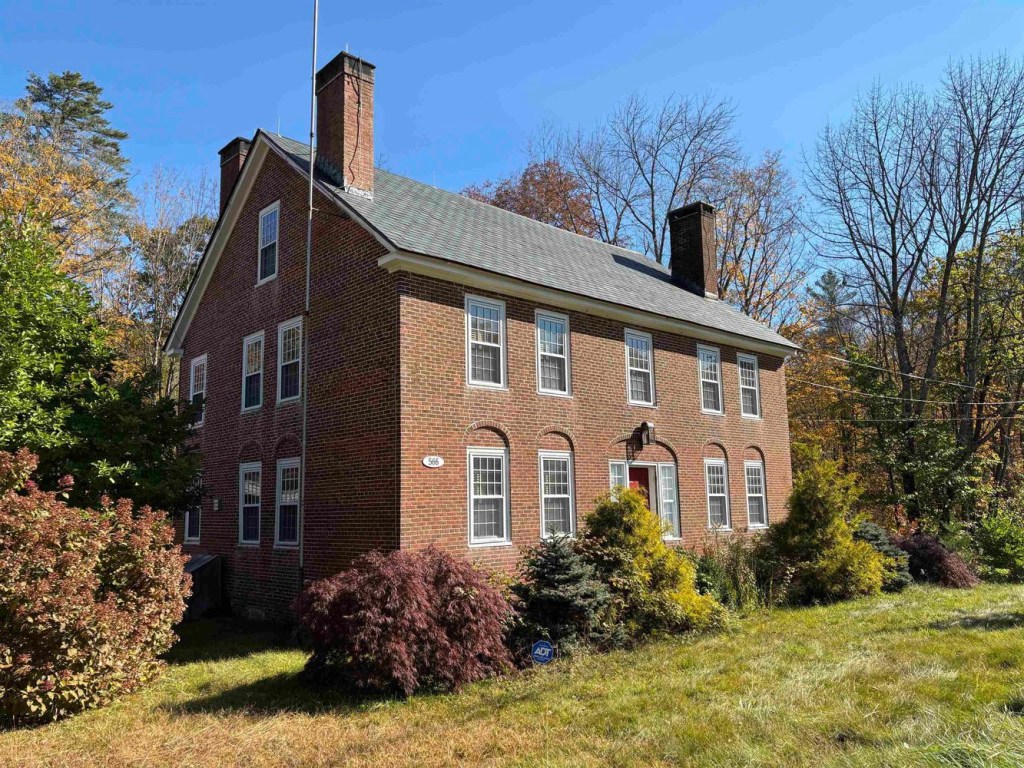
Erected in the 1820s by Joshua Jaquith, a prosperous mill owner who operated a sawmill and grist mill on the river directly behind his house, this residence in Andover, Vermont, exemplifies vernacular Federal period residential architecture in rural New England. The residence is said to have been carved up inside into apartments in the mid-1800s but was restored by Alden Jaquith, the third generation of the family later in the 19th century back into a single-family residence. The handsome brick home is symmetrical with a five-bay facade, 12-over-12 sash windows, and large end chimneys. Of particular note are the relief arches above first floor windows and above the door and the attached sidelight windows.

Robert Frost Farm // c.1820

Robert Frost, the famed American poet is best known for his realistic depictions of rural life in New England. Frequently honored during his lifetime, Frost is the only poet to receive four Pulitzer Prizes for Poetry, and in 1961, he was named poet laureate of Vermont, one of his favorite places to write. Though his writing is often beautiful, Robert Frost did suffer tragedies. His beloved wife, Elinor, died in 1938, causing him to resign from a teaching position at Amherst College. In the fall of 1940, the Frost family experienced another tragedy when Robert’s only son Carol committed suicide at 38 years of age. Robert Frost, who suffered from depression himself, would buy this farm in rural Ripton, Vermont, that year. The farm was a respite to escape to nature and be free from painful memories of the past. Frost chose the site eight miles from Middlebury College, and two miles from the Broad Loaf Inn, where each summer the college sponsored the Bread Loaf Writers’ Conference, the oldest and most prestigious writers conference in the country. The farm he purchased was established by and known as the Homer Noble Farm. The farmhouse seemingly dates to the early 19th century, and the property was added to by a cabin built for Mr. Frost to write and occupy when spending summers on the farm. The property would serve as his country retreat for summers away from his main residence in Cambridge, Massachusetts, until his death in 1963. The property is now owned by Middlebury College. The grounds are open to the public during daylight hours.

Atherton Farmstead // c.1840

This beautiful farmhouse in Cavendish, Vermont is located along a winding dirt road and has ties to one of the town’s original family’s. A home was built here in 1785 and changed hands numerously over the first few decades of its existence. The farmhouse that was built also served as a tavern for travellers along the newly laid out Wethersfield Turnpike. It is possible that the cheap land and rural character of the new town was appealing to some, but reality away from true commerce may have made many sell the farm after a few years, which could explain why the property was bought and sold so often early on. The property was purchased by Jonathan Atherton, a Revolutionary War veteran, farmer, surveyor and lawyer, who acquired large landholdings in Cavendish. In 1821, Jonathan Atherton was sued in court by his neighbor, Jedediah Tuttle for beating Tuttle’s wife Lydia. In order to finance the bonds, Atherton mortgaged all his real estate in Cavendish to his brother Joseph, and Elihu Ives, Jonathan Atherton Jr.’s father-in-law. Atherton St. lost the case and had to pay a fine. The property was eventually inherited by Stedman Atherton, the youngest son of Jonathan, who seems to have demolished the old homestead and constructed the present home on the site. The original dwelling was also the childhood home of Henry B. Atherton, a staunch abolitionist and soldier in the American Civil War, who later served as a lawyer and state legislator for New Hampshire, and his sister Eliza (Atherton) Aiken, a Civil War nurse who has been referred to as America’s own “Florence Nightingale”. The old Atherton farmstead was recently renovated.

Joshua Parker Farmhouse // 1850

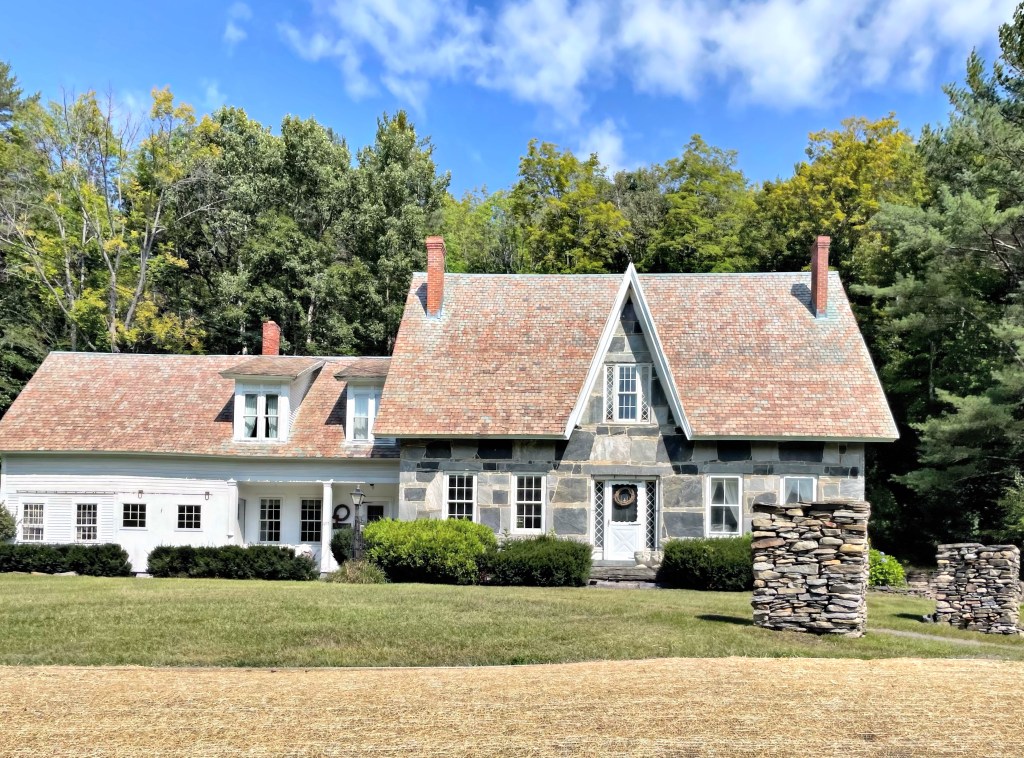
This house in Cavendish was constructed in 1850 by Joshua Parker and is an outstanding example of a gothicized snecked ashlar house. The house is in the Cape form and largely exhibits a more traditional cottage layout, but with the steep gable dormer, giving the home a distinctive Gothic feeling. The 1850 home replaced a late 18th century farmhouse, but in the iconic snecked ashlar construction. The farm grew over the subsequent decades, including a c.1900 snecked ashlar barn (not pictured), which is probably the last building of “Snecked Ashlar” construction erected in the State of Vermont.


Scott Farm – Farmhouse // c.1845

Scott Farm, established as a working farm in the late 18th century and as a commercial apple orchard in 1911, is an excellent example of the vernacular architecture that Vermont is known for. The sprawling 571-acre farm was established in Dummerston in 1791 and purchased by Rufus Scott in the mid-1800s. In the 1840s, he built this farmhouse and many of the barn buildings soon after. The five bay Greek Revival house is in a Cape form and retains its historic slate roof and detailing. The property has been owned since 1995 by The Landmark Trust USA, a non-profit organization whose mission is to preserve historic properties through creative sustainable uses for public enjoyment and education. The farm sits a short drive to Naulakha and the Dutton Farmhouse (both featured previously) which are also managed by the Landmark Trust USA.

Sleepy Hollow Farm // c.1780

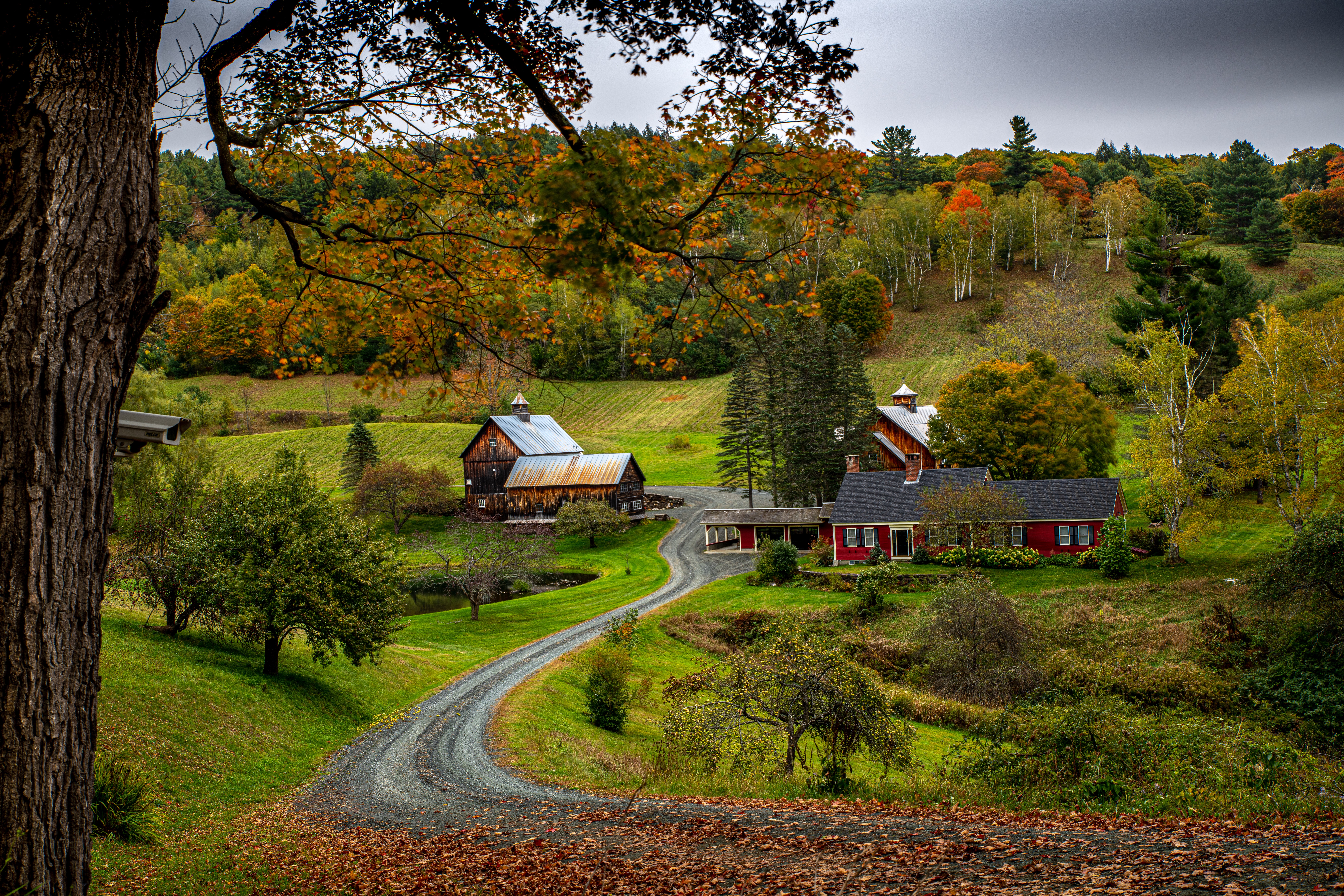
Without question, this property is the most photographed site in the tiny town of Pomfret, Vermont, if not the state. The property dates to the late 18th century when John and Samuel Doten moved to the newly settled town of Pomfret Vermont, overlooking the growing town of Woodstock in the valley below. The two brothers acquired vast farmland on the hills of Pomfret and each built farmhouses adjacent to eachother, with Samuel getting elevated land and John developing the land sunken off what is now known as Cloudland Road into this stunning property. Sleepy Hollow Farm remained in the Doten family for centuries until the 1950s, when the owners sold the property to move to Woodstock and work for Laurance Rockefeller, the famous philanthropist and conservationist, who later donated his Summer home in Woodstock to the National Park Service. The property sold numerous times in the late 20th century, and is presently owned by Aerosmith guitarist Joe Perry and his wife, Billie. They are clearly great stewards to the property’s rich history and various outbuildings, and must not care too much to have swarms of photographers at the end of their driveway year-round!