Derby House Hotel // 1896

The Derby House Hotel is located on Main Street in Derby Center, Vermont and was built in 1896 by Ms. Luvia A. Rickard, a widow. Since its construction, the hotel has been at the center of both the commercial and social activities of Derby Center and is one of the town’s few Second Empire style buildings. While built in the Second Empire style, then in declining use in Vermont, the Derby House Hotel was adorned with high-style touches including elaborately detailed porches and hardware. The rear section afforded extra living space, and a livery stable/barn provided for the guests’ horses and carriages. Luvia ran the hotel for extra income until her death in 1905. It appears that after, her son Harry took over the hotel for a few years until he sold the property to Albert C. Fellows, a local businessman. Tourism never really took-off in the early-mid decades of the 20th century, and the hotel was converted to apartments, a use that remains to this day.

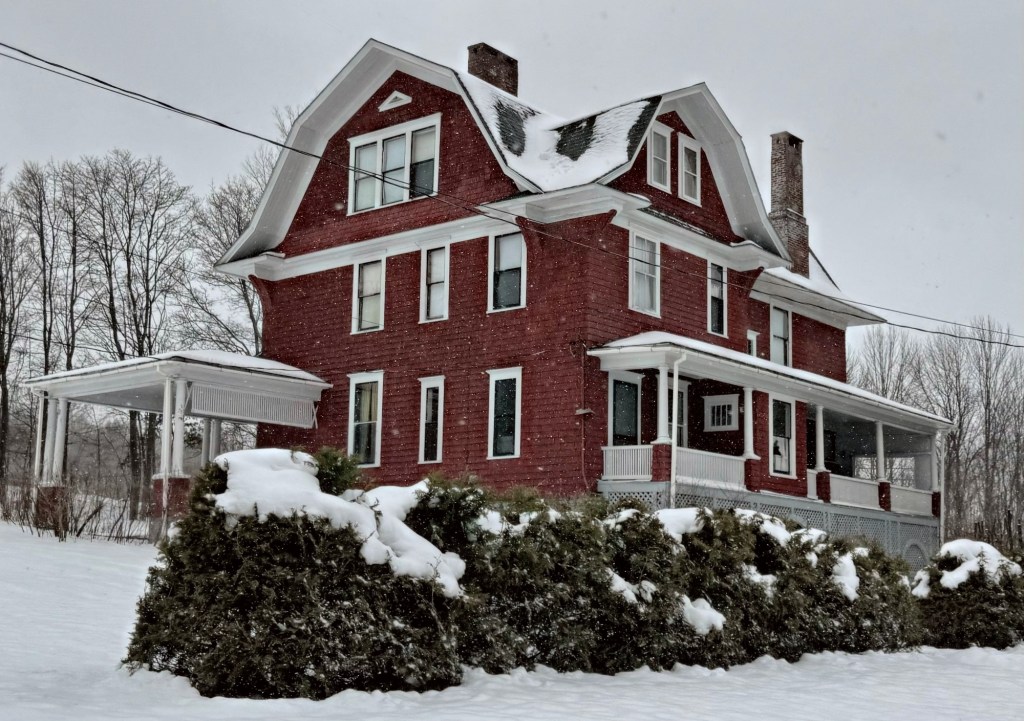
Dudley W. Davis House // c.1900

Dudley William Davis (1857-1942) was born in Quebec, Canada and eventually moved to the United States, graduating from Bates College and settling in the border town of Derby, Vermont. Here, he engaged in business and became the cashier, and eventual President of the Derby Line National Bank (featured previously). His success in banking afforded him the ability to purchase a house lot on high ground in town, and he had this large home built. Clad with wood shingle siding and a prominent cross-gambrel roof, the house retains much of its original architectural integrity.

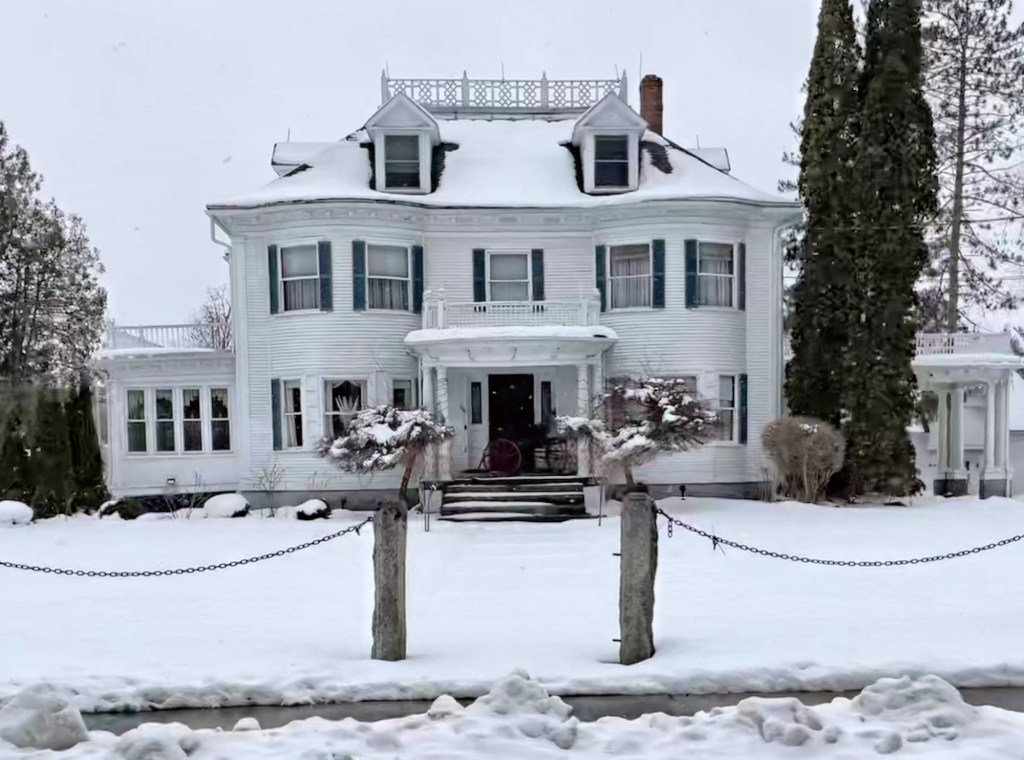
Butterfield Mansion – Derby Line Village Inn // 1903

Once described in a local history book as: “The largest, most glamorous home ever built in this [Derby Line] village”, the Butterfield Mansion is one of Northern Vermont’s best early 20th century houses. The house was built between 1901-1903 for Gen. Franklin G. Butterfield (1842-1916) who before this, received the country’s highest award for bravery during combat, the Medal of Honor, for his action at Salem Heights, Virginia on May 4, 1863 during the American Civil War. He would eventually move to Derby, Vermont, where he established the Butterfield Company, who specialized manufacturing axle cutters. Butterfield hired architects, James T. Ball and Gilbert H. Smith of Boston, who also designed the Haskell Free Library and Opera House in town that same year, to design his Colonial Revival mansion and intact carriage house. Today, the Butterfield Mansion is known as the Derby Line Village Inn.

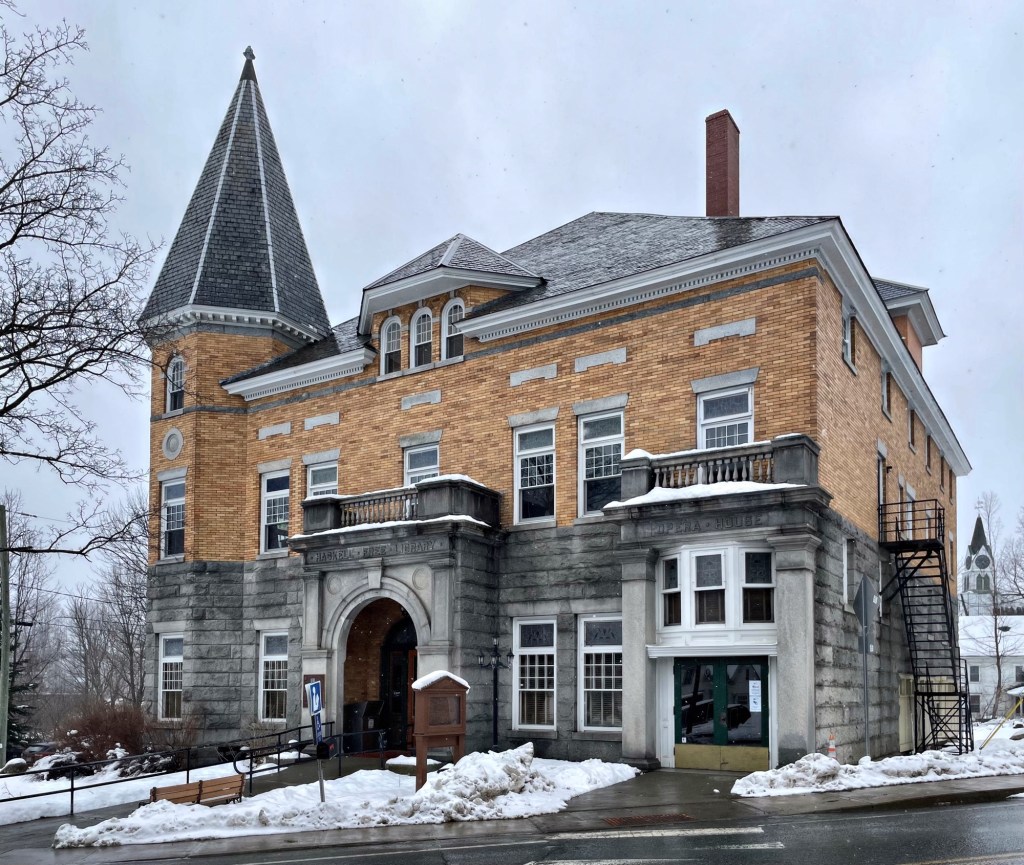
Haskell Free Library and Opera House // 1901

How many buildings do you know of that straddle two countries?! Well, here is one of the most iconic buildings in Vermont, the Haskell Free Library and Opera House of Derby. The building was gifted to the villages of Derby Line, Vermont and Rock Island, Quebec, by Martha Stewart Haskell and her son, Horace Stewart Haskell, who wanted to leave their mark on the town. The building was designed by James Ball of Rock Island, Quebec and is a high-style structure comprised of both a library and opera house for residents. Designed in a eclectic mix of Romanesque Revival and Classical Revival, there is a lot to look at from both countries! Some of the outstanding features of the building include the structural and ornamental use of granite, stained glass windows imported from Scotland, ornate fireplaces and rich woodworking on the library interior, and one of the most elaborate opera house interiors in a completely preserved condition in Vermont.

Samuel Read Hall House // 1831

Samuel Read Hall (1795–1877) was an American educator, who in 1823, started the first normal school, or school for training of teachers and educators, in the United States. He helped found the American Institute of Instruction in 1829, the oldest educational association in the U.S. He served as pastor in Brownington and Granby, Vermont from v 1846 to 1875 and would also become the principal and teacher at the Orleans County Grammar School in Brownington. He lived in this Federal style house in the village until his death. The Hall House is now a part of the Old Stone House Museum and Historic Village. Fun Fact: Samuel Read Hall is said to have been the earliest person to introduce the blackboard to the American classroom!

Cyrus Eaton House // 1834

Built in 1834 by Cyrus Eaton, a businessman who emigrated to Orleans County from Canada, this cape house blends Federal and Greek Revival styles under a charming roof. Mr. Eaton was a trustee of the Orleans County Grammar School in Brownington, Vermont and helped African American Alexander Lucius Twilight build the Old Stone House. Two of Eaton’s sons and one daughter enrolled at the school, located just nextdoor from their home. In 1971, the property was purchased from a private owner, and has since been part of the Old Stone House Museum and Historic Village’s gorgeous campus.

T. C. Stewart House // 1843

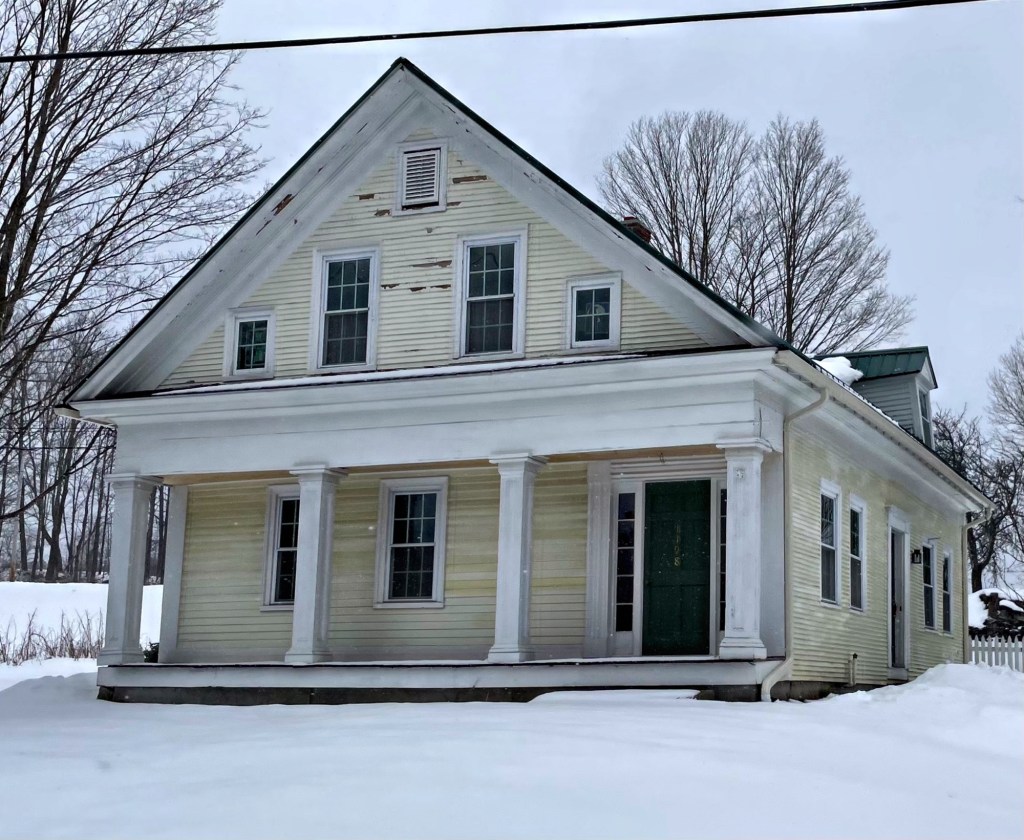
Welcome to Brownington, Vermont! This small, rural town sits in the Northeast Kingdom region of the state and was granted to Daniel and Timothy Brown in 1790, and named after their family. One of the first roads in Orleans County went through Brownington, connecting Greensboro to Derby. Brownington Village was once a stopping point for stagecoaches traveling between Boston and Canada. This Greek Revival style house was built in 1843 along the stagecoach route to Canada and was built for Thomas C. Stewart. Thomas Carlisle Stewart (1804-1865), an attorney and prominent member of town who was the son of Amherst Stewart, one of the town’s founders. The Stewart home has its gable end extending over the recessed front porch, reading like a temple-front home.

Sawyer Mansion // 1863 & 1914

Originally built in the Carpenter Gothic style in 1863, the Sawyer-Gillett Mansion in Whitingham, Vermont, is the highest-style house in town today. Indistinguishable from its Civil War-era original construction, the house was greatly expanded and altered into an elaborate take on Queen Anne / Shingle styles in 1914. The house was originally constructed by John W. Sawyer, but it was his son, Lincoln H. Sawyer who renovated the house and etched his name “L.H. Sawyer” on the glass of the new front door. The updated house style reflects a nostalgic Victorian preference by the owner, who sawed all the trim and materials on site at the family sawmill. It was recently sold and is now a B&B!

William W. Wells House // c.1845

One of the most stately and classic homes in central Vermont is this Greek Revival beauty constructed of brick, right on Main Street in Waterbury. The home was built for William Wellington Wells, who was born in Waterbury, Vermont in 1837. He soon became one of Waterbury’s most prosperous merchants of the mid-nineteenth century, starting as a lawyer with business interests including a tannery and grist mill in nearby “Mill Village” and a mop and chair stock business. He served in the Civil War and contributed much to the town’s growth. After successive ownership, the town’s appeal during the winter months shifted the demand towards short-term stays tied to the ski industry. The Wells House was added onto at the rear and converted to a motor hotel called the “Gateway Motel” in the mid-20th century. The use remained for decades until a fire destroyed much of the motel, leaving the 1840s Greek Revival home’s future in limbo. Thankfully, new owners restored the home and built much-needed residential housing at the rear, largely in the same form as the old motel. Love to see preservation at work!

Stagecoach Inn // 1826

Built by the Carpenter brothers in Waterbury, who also designed and built the neighboring Congregational Church (last post), this large structure was a stagecoach stop on the road to Stowe for much of the nineteenth century. Briefly, the Inn served as a private residence for Albert and Annette “Nettie” Spencer. Nettie grew up in Waterbury and married Albert who owned rubber factories in Ohio and invested in real estate in Burlington. At one time, the Spencers’ residences included their Waterbury house, a suite at the Waldorf Astoria in New York City, a house in Newport, an apartment in Paris, as well as one in London. Albert died in London, and Nettie continued living in Waterbury until her death in 1947, approaching 100 years of age. Within a year, the property was sold and the owners reopened the main house as a sort of boarding house. The property was restored and operates today as the Old Stagecoach Inn.