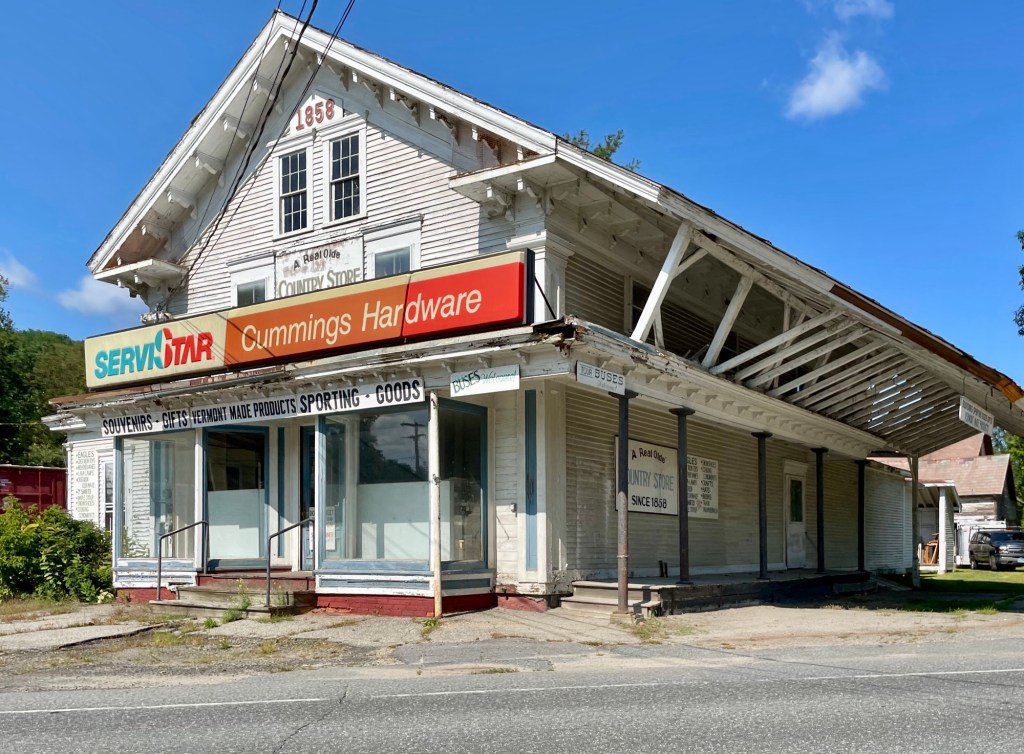
Robbins & Marsh Store // c.1858

Located in the Chester Depot Village, a commercial and civic assortment of buildings constructed in the mid-19th century between the often feuding North and South villages in Chester, Vermont, this handsome commercial building contributes to the character and history of the once thriving commercial center of town. Built across the tracks of the Central Vermont Railroad from the town’s depot, this Italianate style building dates to about 1858 when a P. H. Robbins opened an all-in-one store, selling everything from groceries to hardware and building products. Mr. Marsh was later joined by Frederick W. Marsh, who entered into the business, then named the Robbins & Marsh Store. The business thrived with the close proximity to the railroad depot with later alterations to the building including the addition of plate glass storefronts and a massive side awning porch. Business slowed after WWII, as rail service slowed and ultimately stopped in town. Today, the handsome building remains as an important visual anchor to the depot village. 
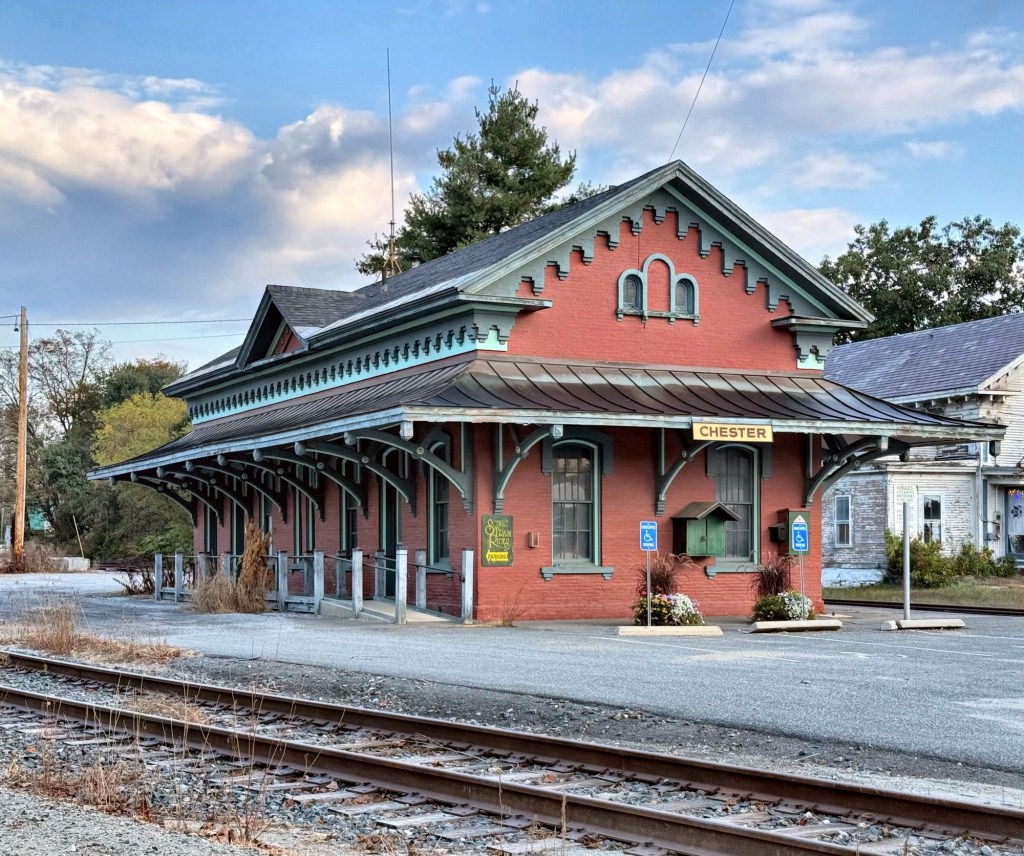
Chester Depot // 1872

The first public train arrived in Chester, Vermont, on July 18, 1849, and in December, the Rutland & Burlington Railroad opened the first rail line across Vermont linking the Connecticut River valley at Bellows Falls and Lake Champlain at Burlington. A fire destroyed the first station in 1871, and the Vermont Central Railroad built the current station within a year. The State of Vermont purchased the line in 1963, leasing it in part to the Green Mountain Railroad. Exceptional in Vermont, this brick station retains its high-style Italianate design and continues in railroad use. The station can be classified as Italianate/Romanesque in style and has a corbeled cornice, windows capped by brick hood moldings, and a projecting trackside awning. It appears that the station is not in active use, does anyone know more?

Marie Hill Farmhouse // c.1810

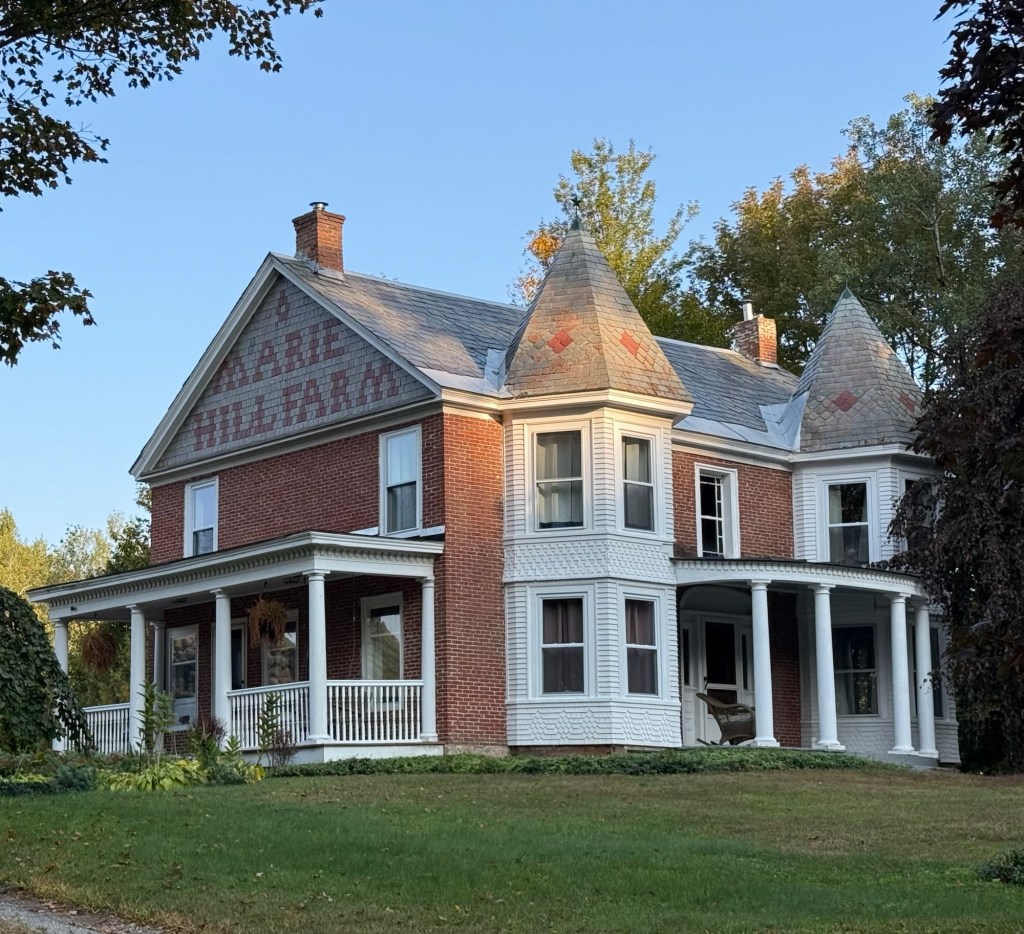
Located in the charming rural town of Andover, Vermont, the Marie Hill Farmhouse is one of the most interesting and charming residences in the area. Built around 1810, the brick farmhouse was designed in the Federal style, with a symmetrical five-bay facade, brick end chimneys, and a fanlight over the front door. The property was purchased by New Yorkers, Laurence Pfluger and his wife Mary “Marie” Pfluger, who operated the farm, raising dairy cows. Laurence would ship eggs, dairy and meat to his market in New York from this farm, which did quite well financially. The farmhouse was “modernized” by the turn of the 20th century with the addition of the two-story octagonal towers on the facade, front and side porches, along with the decorative slate spelling out “Marie Hill Farm” after his Marie Pflueger. The residence was later converted into a guesthouse, a use that remains to this day, still retaining the iconic name and branding in the southern gable.

Simonsville Union Meetinghouse // 1848

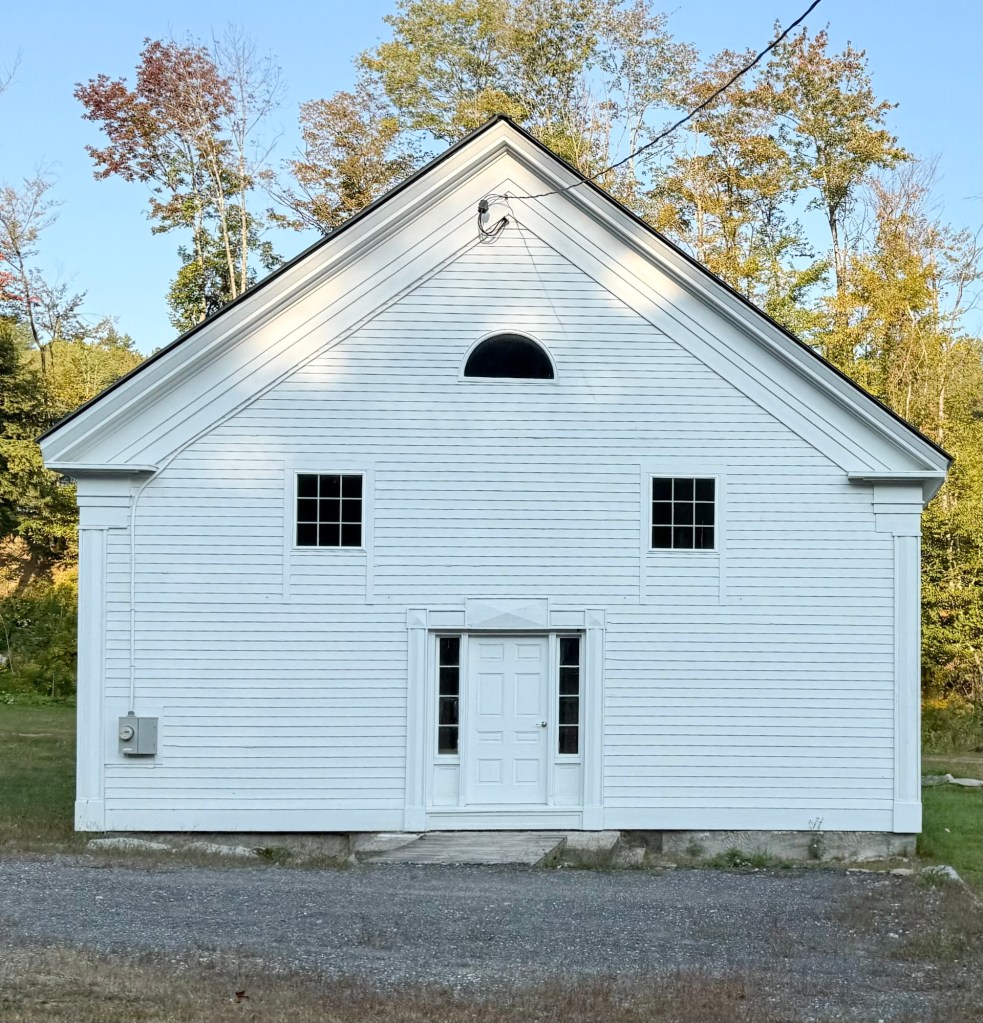
A once excellent example of a Gothicized, vernacular Greek Revival church in Vermont, the former Simonsville Meetinghouse in Andover, Vermont, has since been renovated into a private residence, removing almost all of the original fabric. Long ago in the Simonsville area of Andover, the residents desired to have a meeting house. There was a Baptist church in the village of Peaseville, but not all the Simonsville residents were Baptists, in fact, there were several religious denominations being followed. None of the religious groups had enough followers in Simonsville to be able to afford a minister and a church building, so they got together and combined their efforts and finances to erect a union meetinghouse that they would share. In April of 1847, the Simonsville Union Meetinghouse Society was formed and later that year, construction began, with the building completed in the spring of 1848. By the late 20th century, membership and use of the building dwindled, causing deferred maintenance and threatening the future of the church. The trustees of the church sold the building, and the church has since been renovated for private home. Sadly, the gothic belfry and historic window fenestration were altered in the renovation, but the entry and basic form remain.

Rowell’s Inn // 1826

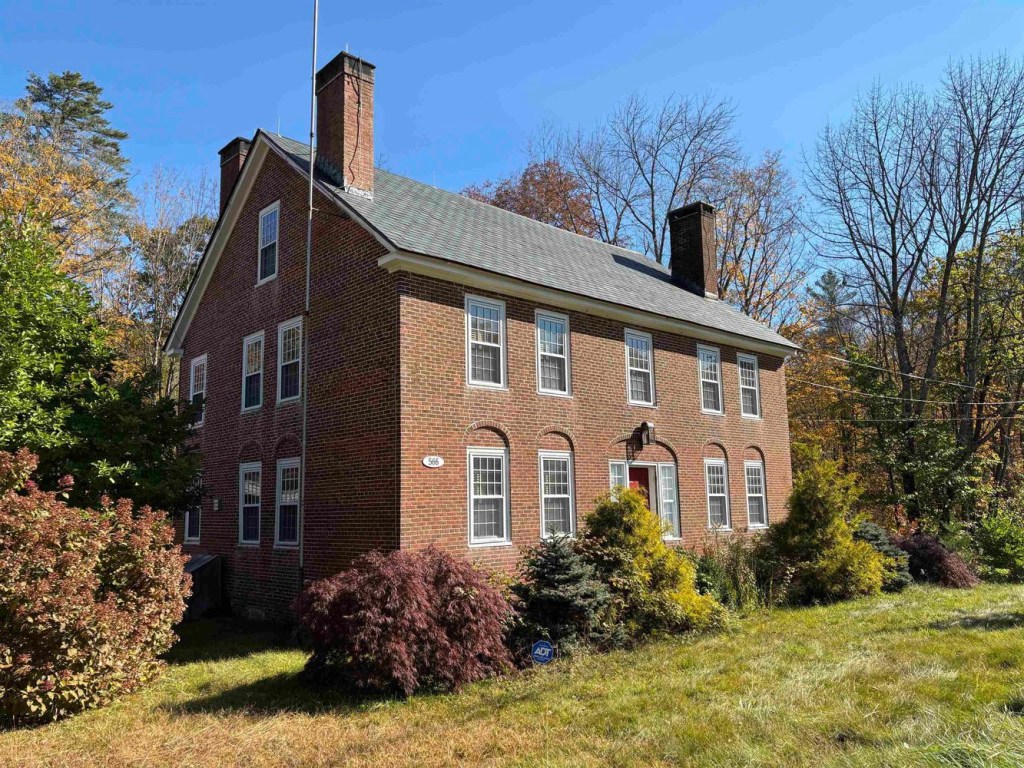
An outstanding example of a two-story, brick Federal style house with a five bay, front gable elevation, Rowell’s Inn of Andover, Vermont, is arguably the most famous landmark in town. The inn was constructed in 1826 by Edward L. Simons, for whom Simonsville, the area village, is named. Mr. Simons operated the building as a stagecoach inn and tavern for those traveling along major highways through the state. The building was also the home to the local post office, with Mr. Simons serving as the first postmaster. The inn, which had been in operation almost continuously since 1826, was purchased in 1910 by Frederick Rowell, hence the name, Rowell’s Inn. It is not clear when the distinctive wooden porch was added, which includes two-story full-length porches with a third-story porch set within a broad elliptical arch set in a flush-board pediment. The historic porch was altered years ago before it was purchased by the present owners, who renamed the building, The Inn Between, continuing its legacy as a stop for weary travelers.

Jaquith Homestead // c.1820

Erected in the 1820s by Joshua Jaquith, a prosperous mill owner who operated a sawmill and grist mill on the river directly behind his house, this residence in Andover, Vermont, exemplifies vernacular Federal period residential architecture in rural New England. The residence is said to have been carved up inside into apartments in the mid-1800s but was restored by Alden Jaquith, the third generation of the family later in the 19th century back into a single-family residence. The handsome brick home is symmetrical with a five-bay facade, 12-over-12 sash windows, and large end chimneys. Of particular note are the relief arches above first floor windows and above the door and the attached sidelight windows.

Bread Loaf Campus – Treman Cottage // c.1890

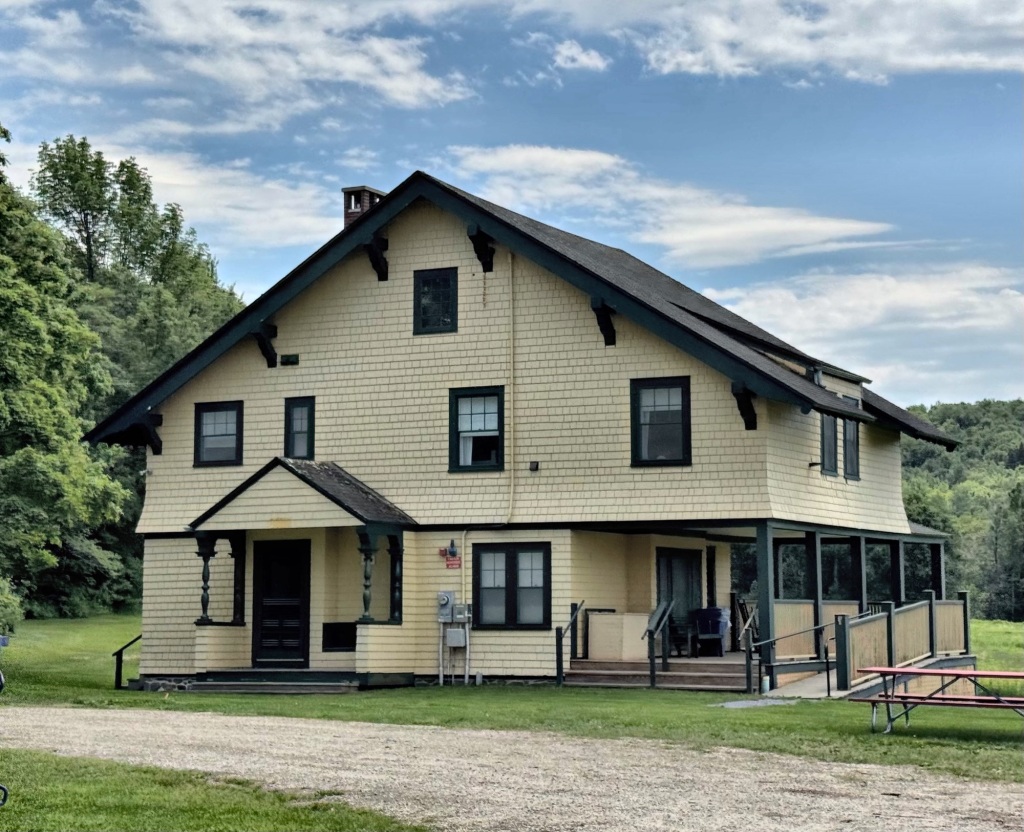
This is the last building to be featured on the Bread Loaf Campus! For more early history and context of the complex, check out the post on the Bread Loaf Inn. By 1900, owner Joseph Battell’s enterprise exceeded the capacity of the original inn, and cottages were added to accommodate more guests visiting his new permanent home in the mountains of Ripton, Vermont. Special friends who summered regularly at Bread Loaf purchased lots with water and sewage rights, and with Battell’s assistance, built their own family cottages to spend their summers. This is Treman Cottage, a shingled beauty which appears to have been built for a friend (though I am not sure who), and has since become the faculty cottage on the campus. As we wrap up this series, here is an interesting fact about the mountain campus: All buildings here that are painted the ochre color were built during Mr. Battell’s lifetime (by 1915), with later buildings painted white.

Bread Loaf Inn // 1882

The Breadloaf Inn is a rare intact example of Vermont’s Victorian resort architecture that also has important associations with the environmental movement and for American literature. Located in the quiet town of Ripton, Vermont, this impressive structure was built in 1882 by eccentric philanthropist Joseph Battell. Mr. Battell attended Middlebury College in the early 1860s but he was forced to abandon his studies due to ill health. On the advice of his doctor, Battell spent a weekend at a farmhouse in nearby Ripton where the clear mountain air would help cure his ailing lungs. He so loved the beauty of the surrounding hills that he decided to buy the old farmhouse, which became known as the Bread Loaf Inn, named for Bread Loaf Mountain not far away. Over the years, numerous new buildings, porches, and barns were added in order to accommodate Battell’s many friends and guests. The Inn, which was remodelled from the farmhouse in 1882, and the surrounding mountains served as Battell’s home and sanctuary for the rest of his long life. He amassed land holdings of over 30,000 acres of forest, preserving it in perpetuity until his death in 1915, becoming the state’s largest landowner when he died. Battell’s vast mountain estate was left to Middlebury College, who brought the seasonal inn back to life as the summer Breadloaf School of English. In 1926 the college added the Breadloaf Writers’ Conference, drawing such luminaries as poet Robert Frost, who spent summers at a cabin nearby. The complex is maintained by Middlebury College to this day, who do a great job at preserving the original buildings.

Robert Frost Farm // c.1820

Robert Frost, the famed American poet is best known for his realistic depictions of rural life in New England. Frequently honored during his lifetime, Frost is the only poet to receive four Pulitzer Prizes for Poetry, and in 1961, he was named poet laureate of Vermont, one of his favorite places to write. Though his writing is often beautiful, Robert Frost did suffer tragedies. His beloved wife, Elinor, died in 1938, causing him to resign from a teaching position at Amherst College. In the fall of 1940, the Frost family experienced another tragedy when Robert’s only son Carol committed suicide at 38 years of age. Robert Frost, who suffered from depression himself, would buy this farm in rural Ripton, Vermont, that year. The farm was a respite to escape to nature and be free from painful memories of the past. Frost chose the site eight miles from Middlebury College, and two miles from the Broad Loaf Inn, where each summer the college sponsored the Bread Loaf Writers’ Conference, the oldest and most prestigious writers conference in the country. The farm he purchased was established by and known as the Homer Noble Farm. The farmhouse seemingly dates to the early 19th century, and the property was added to by a cabin built for Mr. Frost to write and occupy when spending summers on the farm. The property would serve as his country retreat for summers away from his main residence in Cambridge, Massachusetts, until his death in 1963. The property is now owned by Middlebury College. The grounds are open to the public during daylight hours.

Ripton Community Church // 1864

Located a stone’s throw from the Ripton Community House in Ripton, Vermont, this church building helps contribute to the village center’s distinguished architectural presence for such a small community. The vernacular church building was constructed in 1864, the same time that the Congregational Church (now the Community House) was built. The Methodist Episcopal parishioners in town met in local homes and schools even before formally organizing their society in 1829, but it wasn’t until the onset of the Civil War that they started construction of a church building. During its full life as a methodist church, the building has also housed members of all faiths, and has been the place of worship for poets, authors and lecturers including Robert Frost, who was a summer resident. The building is well-preserved 160 years later!