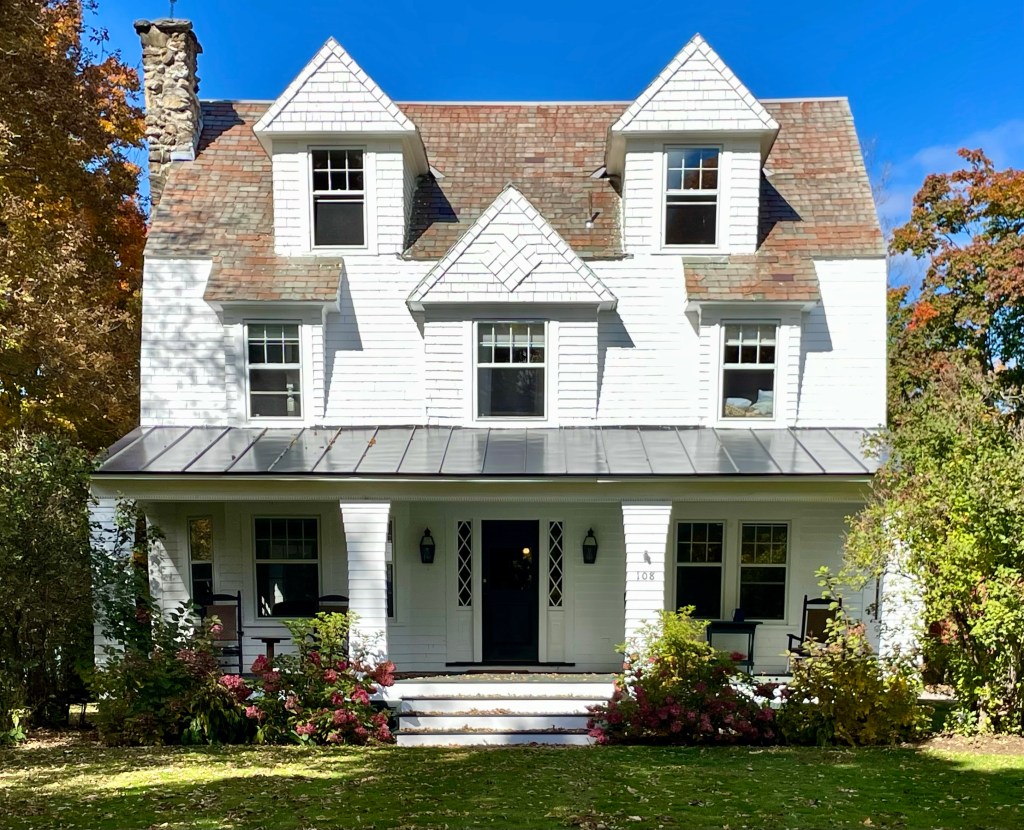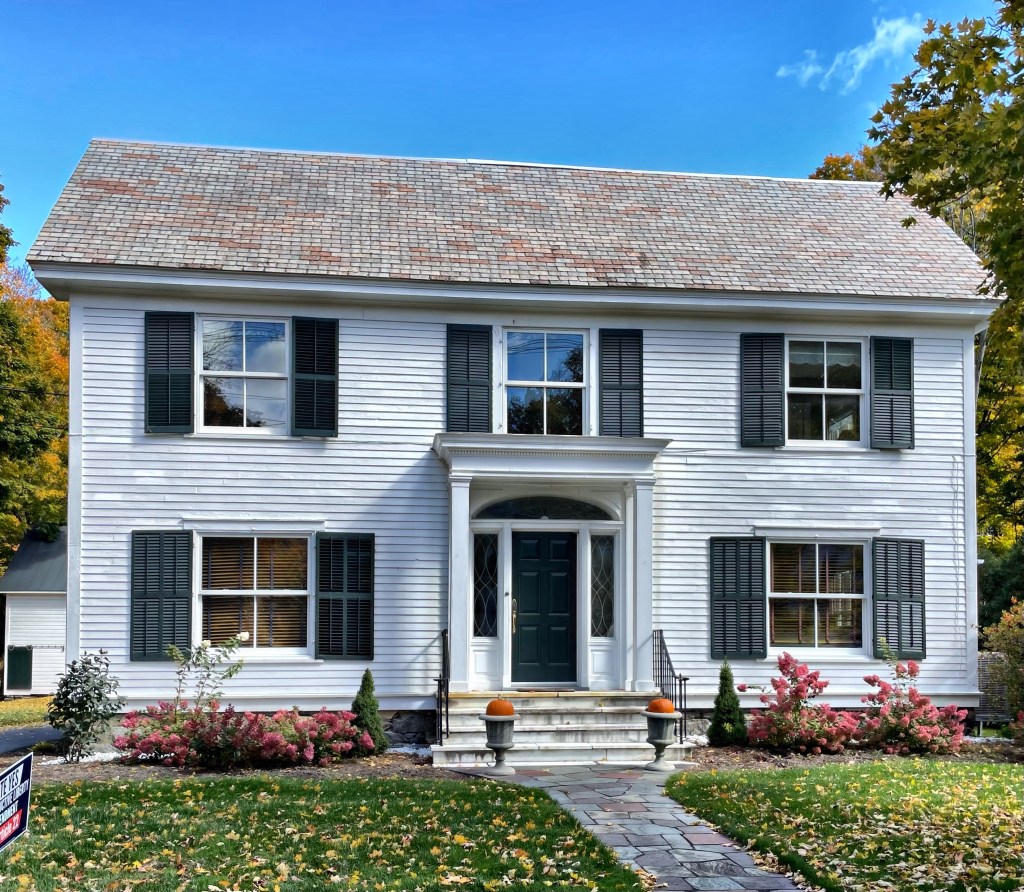
Musser House // 1906

The former Dorset Methodist Church sat on this property from about 1840 to 1900 until they merged with the United Church of Dorset. A Philadelphia physician, Dr. John Herr Musser (1856-1912), built this vacation home in 1906, and passed away just six years later. His widow Agnes Harper Musser (1856-1941) and their children continued to vacation here until after WWII. The home is a rare example of the Shingle style in Dorset and was painted the bright white to fit in with the more traditional New England village vibe, but it would be better-suited with a period- and style-appropriate paint scheme. The home is now offered for short-term/vacation rentals.

The Dorset Inn // 1796

One of the oldest continually operating inns in America, the Dorset Inn remains a visual and historical anchor to the charming little village of Dorset, Vermont. The Federal period building was historically known as the Hodges Hotel before becoming The Washington Hotel in about 1858 (the porch was added at that time to make it resemble George Washington’s Mt. Vernon home). The name became the Dorset Inn in 1904. As constructed in 1796, the main block possessed a five-bay facade arranged symmetrically around a central entrance; an 1858 extension added two bays on the west, when it was modernized. Though the inn has seen changes and modernizations over time, the building has such a historic character that brings in people from all over the country to experience the best of Dorset every year.

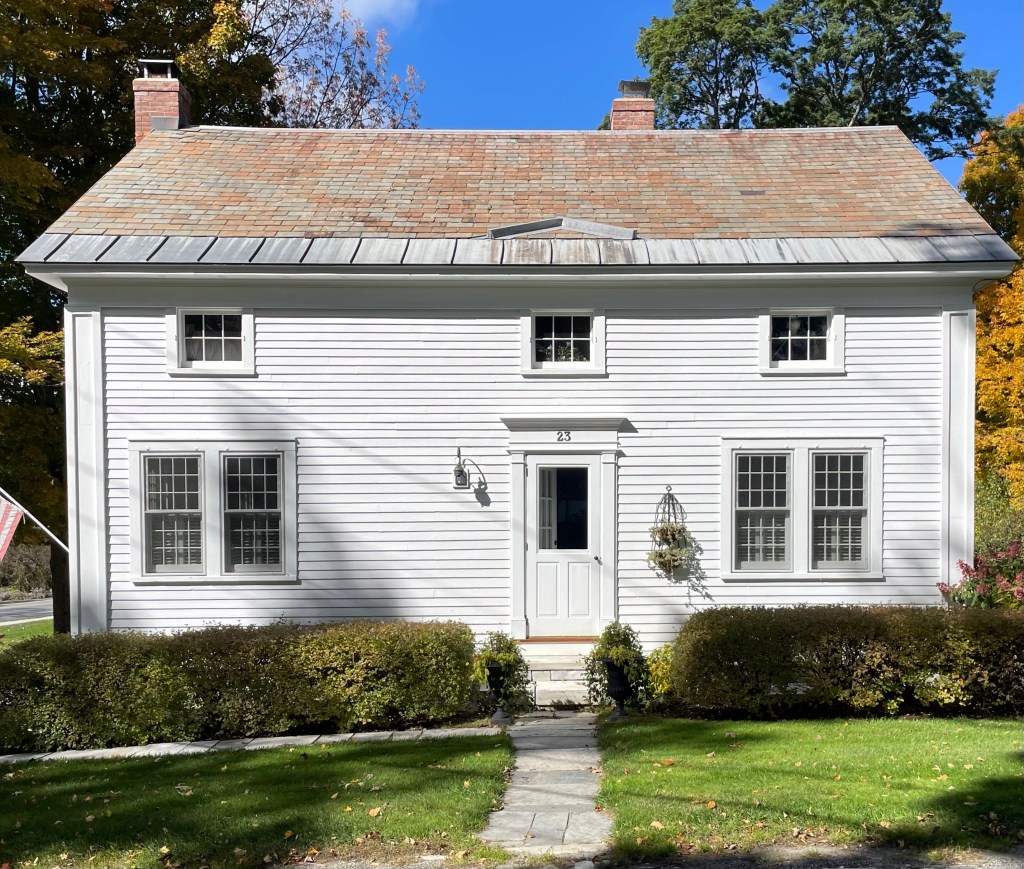
Laura Wade House // 1935

This charming cottage in Dorset is one of four houses in the village which were moved here by Charles Wade in the 1920s and ‘30s. Wade was born in Dorset and saw declining population with the marble industry failing. He sought to re-invigorate the town by advertising its natural beauty and brought in homes and buildings from nearby to fill the “missing teeth” (including the building that presently houses the Dorset Historical Society). Assembled from parts of various Enfield, Massachusetts buildings moved to Dorset this 1½-story, wood-framed, clapboard house stands on a marble ashlar foundation and is said to have been built by Wade for his daughter, Laura Wade.

Houghton House – Dorset Historical Society // c.1830

One of my favorite houses in Dorset I saw was this beautiful cottage, which is now home to the Dorset Historical Society. The home was originally built around 1830, but not in Dorset… It was built in Hebron, New York, two towns away. The house was moved to Dorset in 1928 by Charles Wade, a resident for Agnes Houghton. Wade was born in town and worked his whole life to maintain the village’s charm even through economically difficult times. He salvaged historic buildings all over the region and brought them to Dorset, helping to revitalize the town. New York City artist Elsa Bley used the house as her residence, studio, and art school from about 1950 until 1990, when she bequeathed the building to the Dorset Historical Society, which has been located here since 1991.

Dorset Congregational Church // 1909

Arguably the most high-style building in the quaint village of Dorset, Vermont is the Congregational Church, which appropriately sits on Church Street. The original congregational church in Dorset was located in nearby Maple Hill Cemetery. When the wood structure burned in 1832, an new wooden church was built on this site. The second wooden building burned in 1907, and then this church was built, but of fireproof construction. Jordan Greene, an architect from New York, designed this Neo Gothic Revival style in the historic district. The church was constructed by the contracting firm of O. W. Norcross, partner in the Norcross-West Marble Company, which donated the building stone from its South Dorset quarry. The design is dominated by a massive square central tower that ascends its facade and is capped by pinnacles. Behind the tower, the gable-roofed church is built of rough-faced Dorset marble laid in patterned coursed ashlar and trimmed with dressed stone. How many other marble churches can you think of?

Annie Sheldon House // 1909

Even with a declining marble industry by the turn of the 20th century, Dorset, Vermont was seen as a beautiful retreat from city life, and it attracted well-to-do middle-class families to escape to the town for parts of the year. One of those families was head by Harry Waters Sheldon (1869-1942) and Annie C. Bourn Sheldon (1875-1958) who lived in Yonkers, N.Y. with their four children. The family lived in this home as a cottage retreat in 1909 and constructed the only Craftsman bungalow in the village of Dorset. The bungalow was later altered and the porches were enclosed, but it was restored in the past few years!

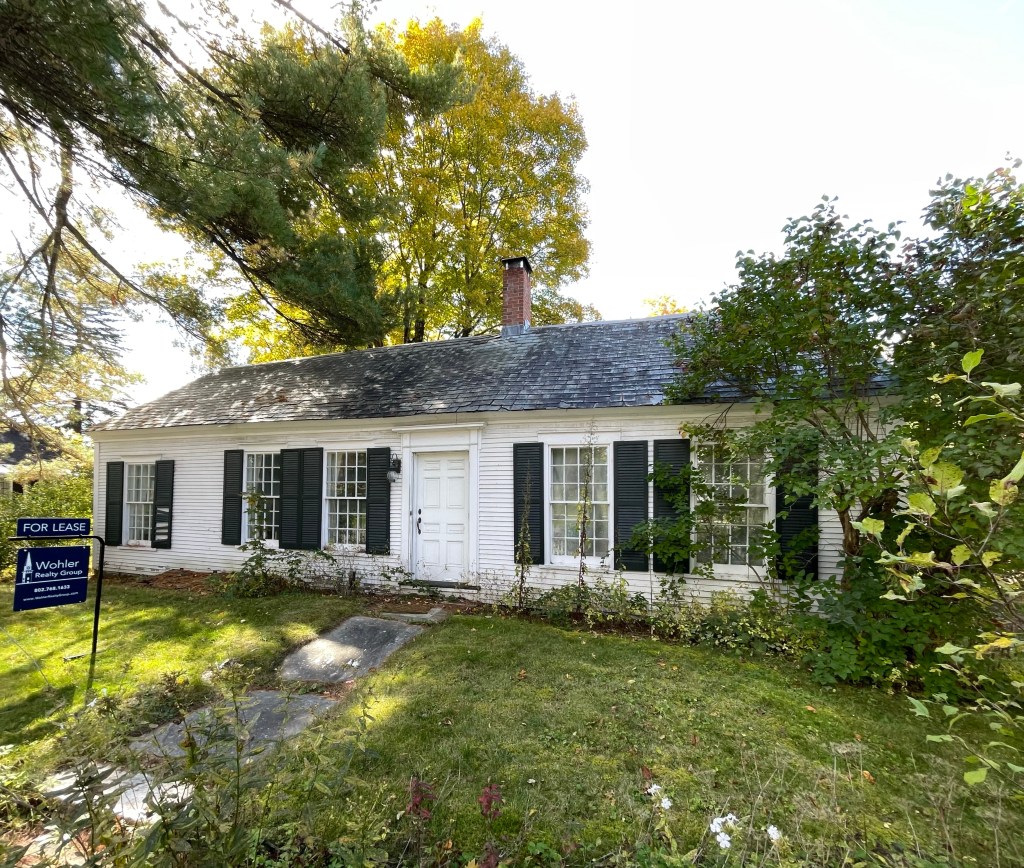
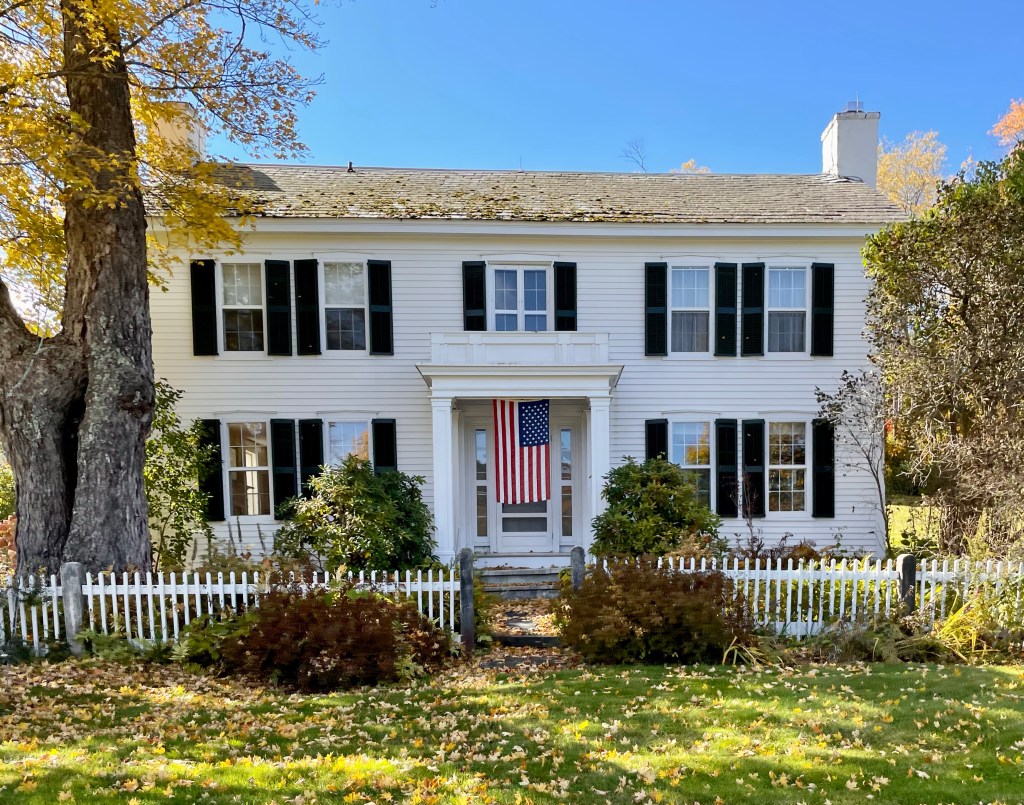
Hodge-Weeks House // c.1790

One of the oldest extant houses in Dorset, Vermont, this gorgeous Federal Cape house adds so much charm to the village. The house is possibly the homestead of James Abel Hodge (1756-1826) who settled in Dorset from Connecticut after serving in the Revolutionary War. Hodge settled in the town when it was but wilderness, opening up a store in the village and helping the infant township grow into a thriving marble manufactory. This house was later owned by stonecutter I. W. Dunton and after, by “Grandma” Annette Weeks (1841-1925). Like many Cape houses, it probably evolved, adding wings to the right and left as the family inside grew.

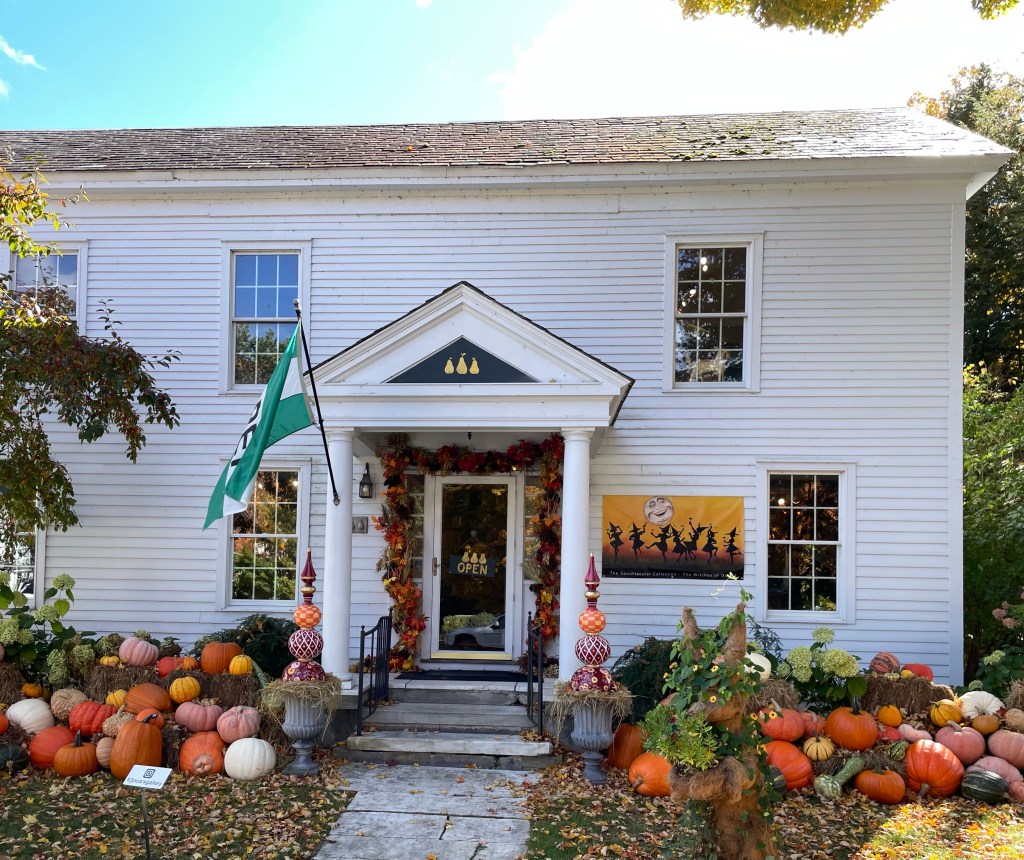
Sheldon House – 3 Pears Gallery // c.1830

This charming vernacular property in Dorset Village was built around 1830 as a one-story cape house. By the early 20th century, the modest home was enlarged with a second story and an extra bay, all in the Colonial Revival style, mixing the functional or minimally detailed historic building with a little oomph. The addition of a doorway portico and the randomly placed windows on the facade add to the charm. The renovation was completed by owner Bernis Sheldon (1866-1941). After Sheldon’s death, the building became home to the Dorset telephone exchange, who occupied part of the building. The building is now home to the 3 Pears Gallery, who have done a FANTASTIC job mainating and highlighting this beautiful building on the Green!

Warren Dunton House // c.1890

Much of Dorset Village was built in the early-to-mid 19th century, but there are some excellent examples of Colonial Revival and Craftsman homes and buildings. This Colonial Revival house was built c.1890 seemingly by Warren Robbins Dunton (1839-1902), who served as a Captain in the American Civil War. Captain Dunton seemingly built his home after moving the older house on the site back on the lot, building this house at the street. Great house, look at those chunky shutters that actually match the window openings!

Gilbert Sykes House // c.1850

This stunning Greek Revival house in Dorset Village was built around 1850 and was long the home of Gilbert Mortier Sykes (1834-1920). Gilbert Sykes operated a general store in Dorset and held various public offices in town and later in the Vermont House of Representatives and Senate. The house has fully embellished entrance with paneled pilasters carrying an entablature and an amazing triangular window with diamond panes in the gable.