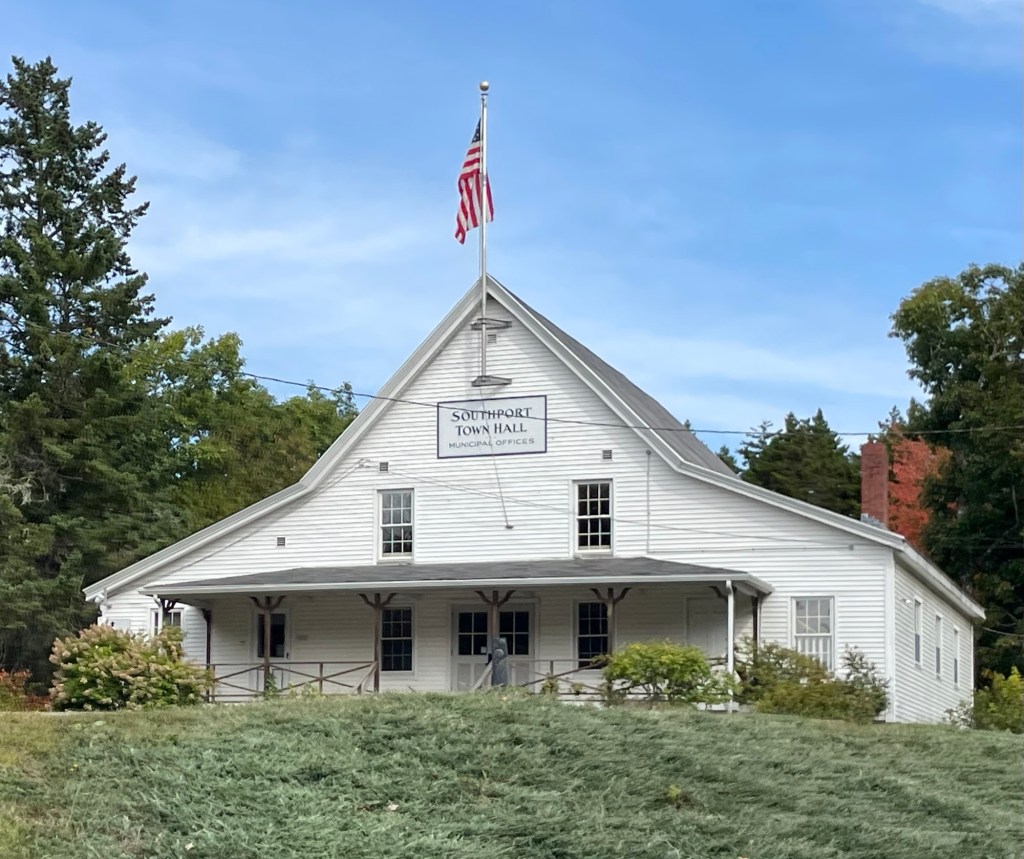
Southport Town Hall // 1866

While staying at the Spruce Point Inn in Boothbay Harbor, Maine, I took the chance to visit the nearby island-town of Southport! The town of Southport incorporated in 1842 when it separated from Boothbay and became known as Townsend, Maine. Just eight years later, in 1850, Townsend changed its name to Southport, after SouthportEngland. The town has a population of just over 600, which grows in the summer months as the island and nearby Squirrel Island (also a part of Southport) has many summer homes dotted along the coastline. The present-day Southport Town Hall was built in 1866 by the Ladies Sewing Circle of the Southport Methodist Episcopal Church as a meeting place for the women of town to meet and socialize, it also was rented to the town for town meetings. Eventually, the town purchased the building in 1900, where it has remained the town hall ever since.

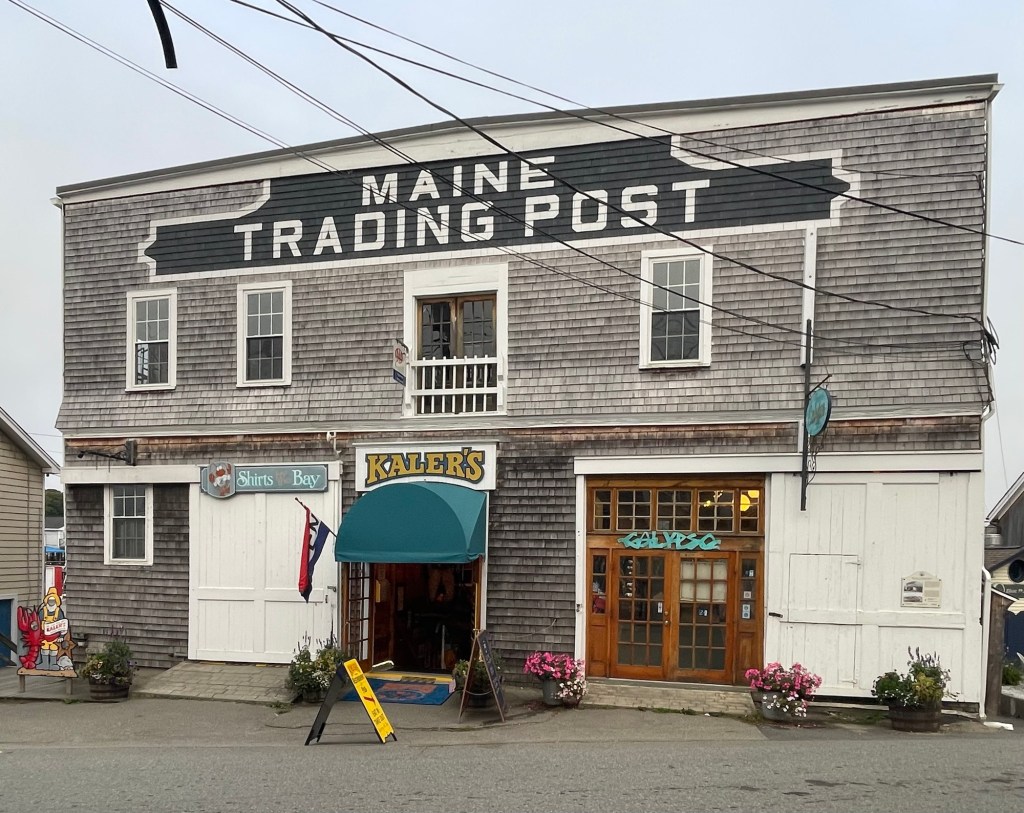
Sherman’s Livery & Garage – Maine Trading Post // 1908

This vernacular, shingled structure was built in 1908 to house two very different modes of transportation, horses and automobiles. The structure here is located in the charming village of Boothbay Harbor, Maine. Sherman’s Livery and Garage held stalls for horses on the ground floor with an elevator that moved hay, carriages and sleighs to the upper floor. Owners of horses could board them here and many would rent their horses to visitors who arrived to town by steamer, from this location. The building was set up for automobiles as well, but that began in earnest by 1915 when two Ford touring cars were added to the inventory here. Today, the building is known as the Maine Trading Post and houses Kaler’s Restaurant.

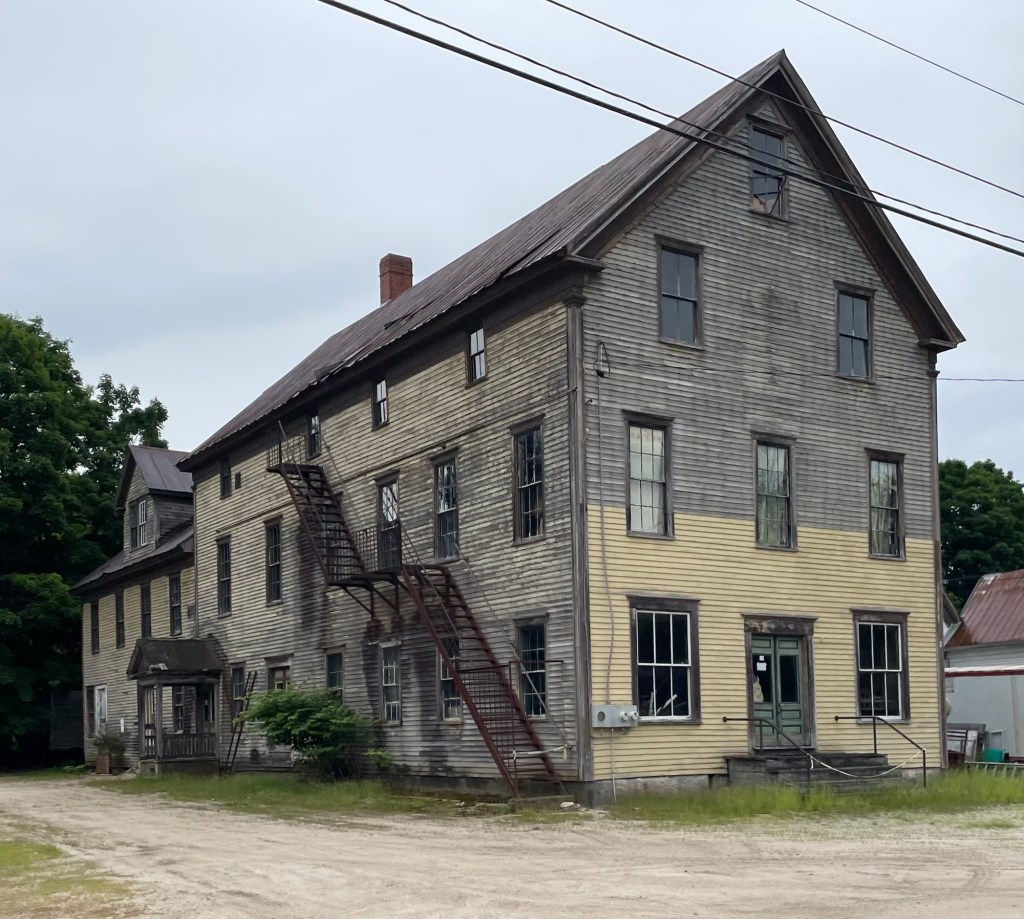
Hiram Lodge 39, Knights of Pythias // 1895

Another of the extant, significant vernacular buildings in the small town of Hiram, Maine, is this large frame building on Main Street. Hiram Lodge #39, Knights of Pythias, was organized in 1883 and a building was constructed on this site around that time. The first meeting hall was destroyed by fire in 1895, and soon-after replaced by this large lodge building, which is possibly the largest wooden building in town!  On the destruction of that first “hall” by fire in 1895, the Lodge hired Alva Ward to build what is probably the largest wooden building extant in Hiram. The Knights of Pythias Hall is important as a remnant of Hiram’s earlier commercial prosperity, with general store on the first floor, a large hall on the second floor (where dances, theatrical performances, and public suppers were held), and the lodge hall on the third floor.

Mount Cutler School // 1882

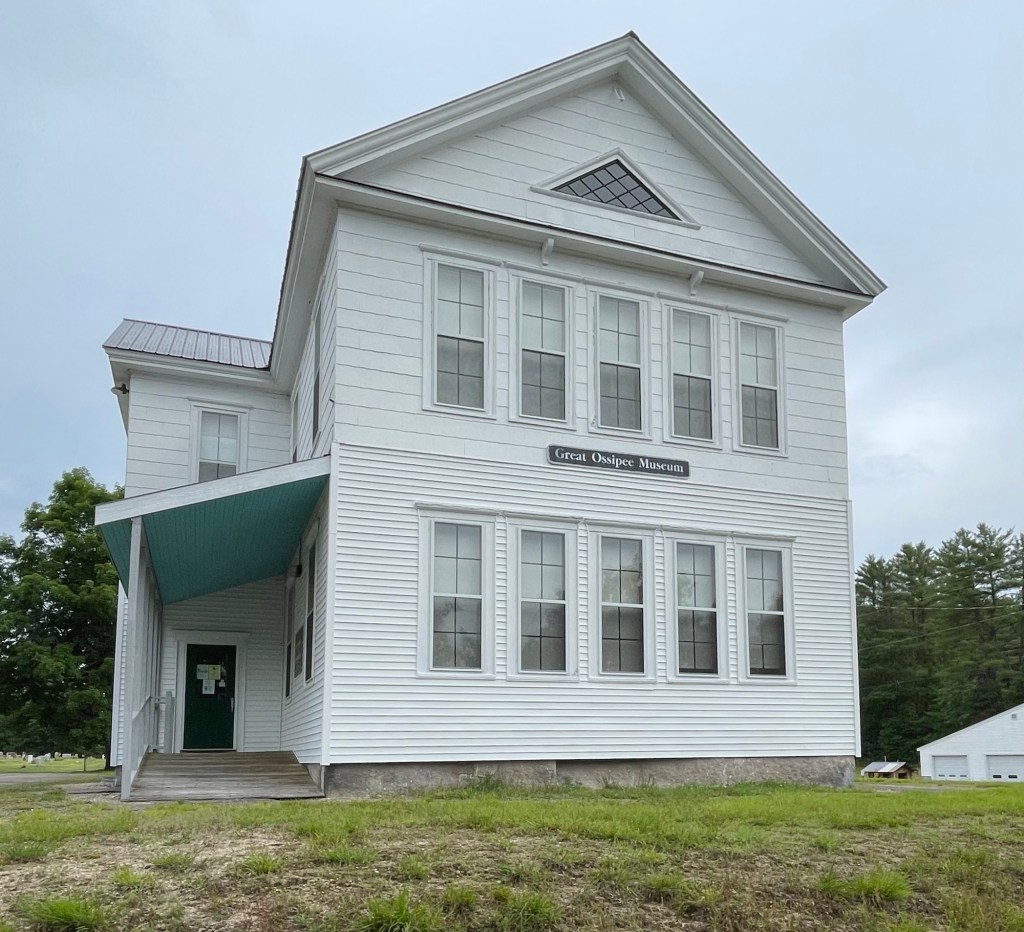
The cross-gabled, two-and-a-half story Mount Cutler School was built in 1883, possibly by local builder James Lot Hill, and is a well-preserved example of a district school in Hiram, Maine. A very late example of the Greek Revival style utilized for an educational facility, the structure displays a gabled facade with closed pediment highlighted at the center by a diamond-paned triangular window. The building, used solely as a grammar school (except from 1922-30 when a two-year high school operated in one room) replaced a similar structure which burned in February of 1883. The Mount Cutler School served the youth of Hiram from 1883-1967 and again in 1974-78. Its second floor now houses the collections of the Hiram Historical Society and it has been preserved ever since.

Hiram Village Store // c. 1850

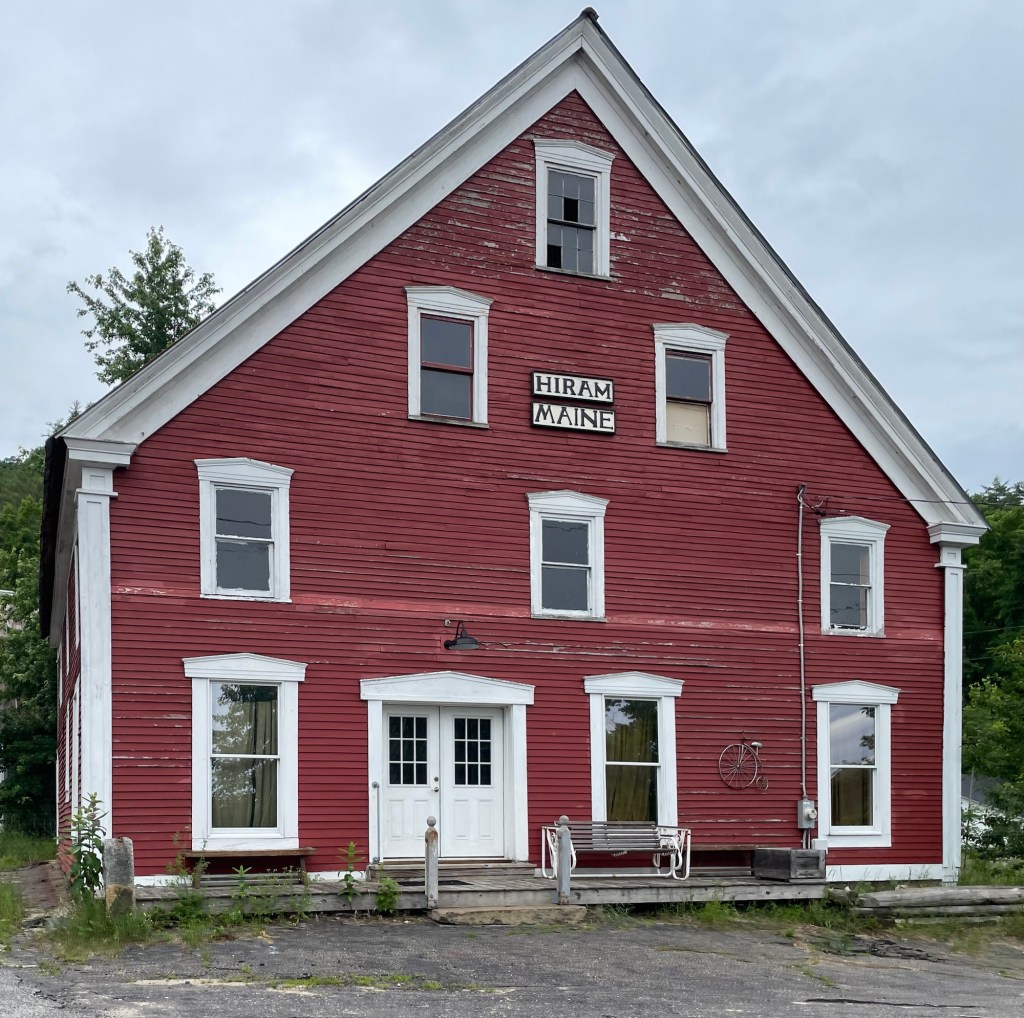
Hiram is a small, rural town in Oxford County, Maine, and has a handful of notable old buildings. The town was incorporated in 1814 and was occupied by white settlers as early as 1774. The land here has long been heavily wooded and the town’s name was inspired by the biblical King Hiram of Tyre whose kingdom was set among “timber of cedar and timber of fir.” The town’s two villages, Hiram Village and South Hiram, grew along the Saco River, and are typical rural villages built around industry and modest frame dwellings. This commercial building is one of the larger structures in Hiram Village and it dates to the mid 19th century. The structure was owned by Thomas B. Seavey, who purchased a store built on the site as early as 1816, from a Simeon Chadbourne. The store was enlarged and became a major hub of the sleepy town in the 19th and 20th centuries, but like many such structures, struggled due to changing of shopping habits and rural decline. The building, with its vernacular and Greek Revival lintels, appears vacant today.

Old Porter Meetinghouse // 1818

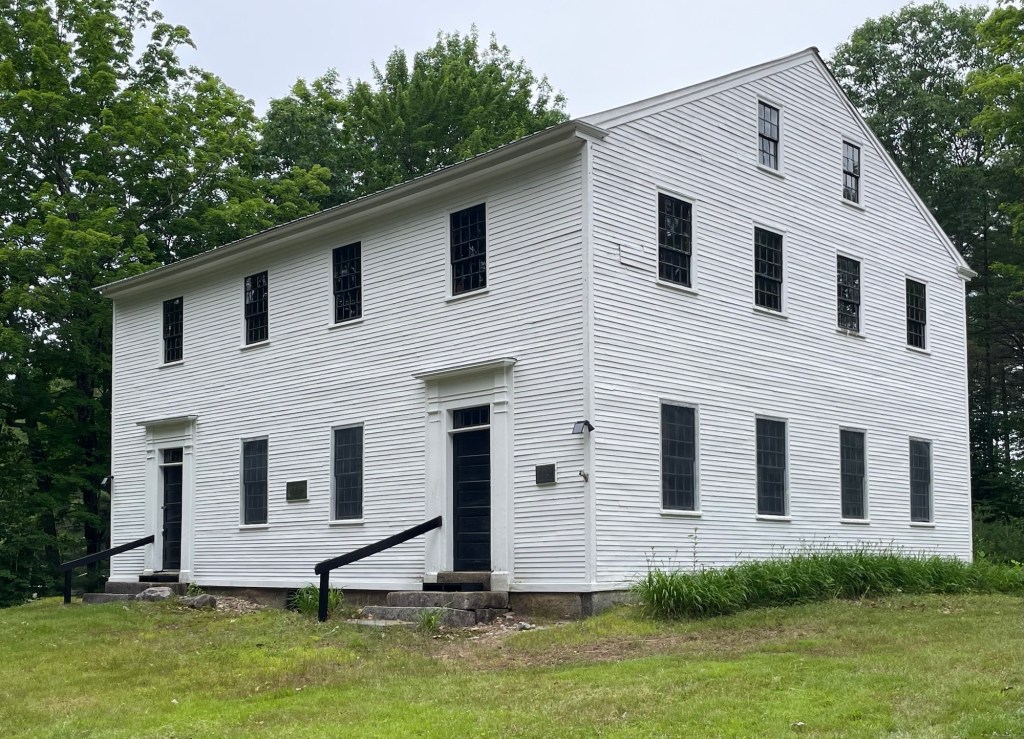
Welcome to Porter, Maine! The town is located on the Maine/New Hampshire border and was first called Portersfield Plantation. Porter was incorporated in 1807 and named after its first proprietor, Dr. Aaron Porter (1752-1837). The Porter Meetinghouse was built beginning in 1818 and it is said that it was not completely finished until 1824. The original congregation was a Freewill Baptist organization led by Reverend Jeremiah Bullock, and were known locally as “Bullockites“. The structure housed the Baptists and town meetings as needed. The plain vernacular, meetinghouse is typical of many early meetinghouses of the period in rural New England. The inside retains its original character with its space as a single large chamber with a gallery above on three sides. The walls are plaster, much of it original, with trowel marks visible. The main floor is populated with original box pews and a replica pulpit. The structure is a rare survivor!

Drake Store // c.1816

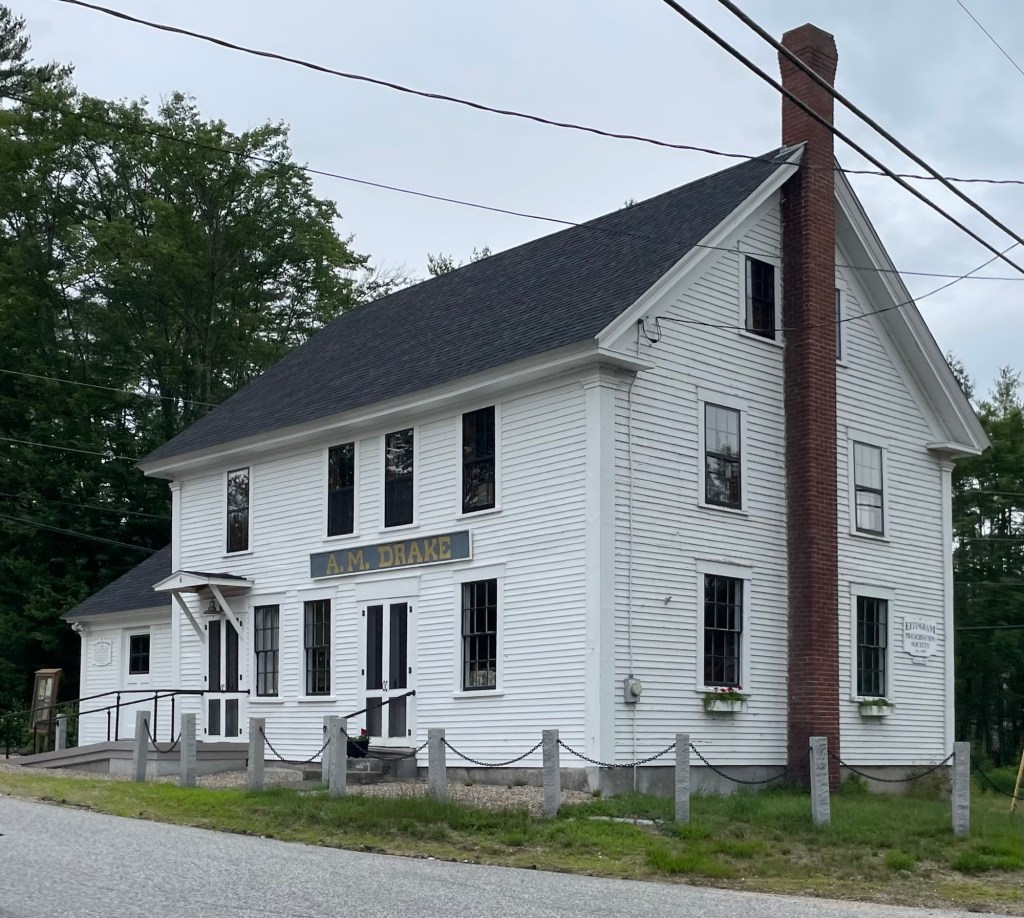
The Drake Store is a vernacular, early 19th century commercial building located in the center of Effingham, New Hampshire. According to local sources, the building was erected around 1816 by Weare Drake, an original settler of the town at age 78, and his 23-year-old grandson, Thomas Parsons Drake. The store sold provisions and was home to a post office, when Thomas Drake served as the town’s postmaster. Within a few years, the store fell into disuse and the building was fitted up as an academy known as the Carroll Literary Institute. Due to insufficient enrollment, in the 1850’s, it was again occupied as a store by Alexander Mellen Drake (hence the sign) and changed hands several times before being purchased by Grange No. 313 in 1913, operating as a grange hall for local farmers. The building was given by the Grange to the Town in 1994 and purchased from the Town for $1 by the Preservation Society in 2002. The Preservation Society has been restoring the building through capital campaigns and grants and the old store shines once again!

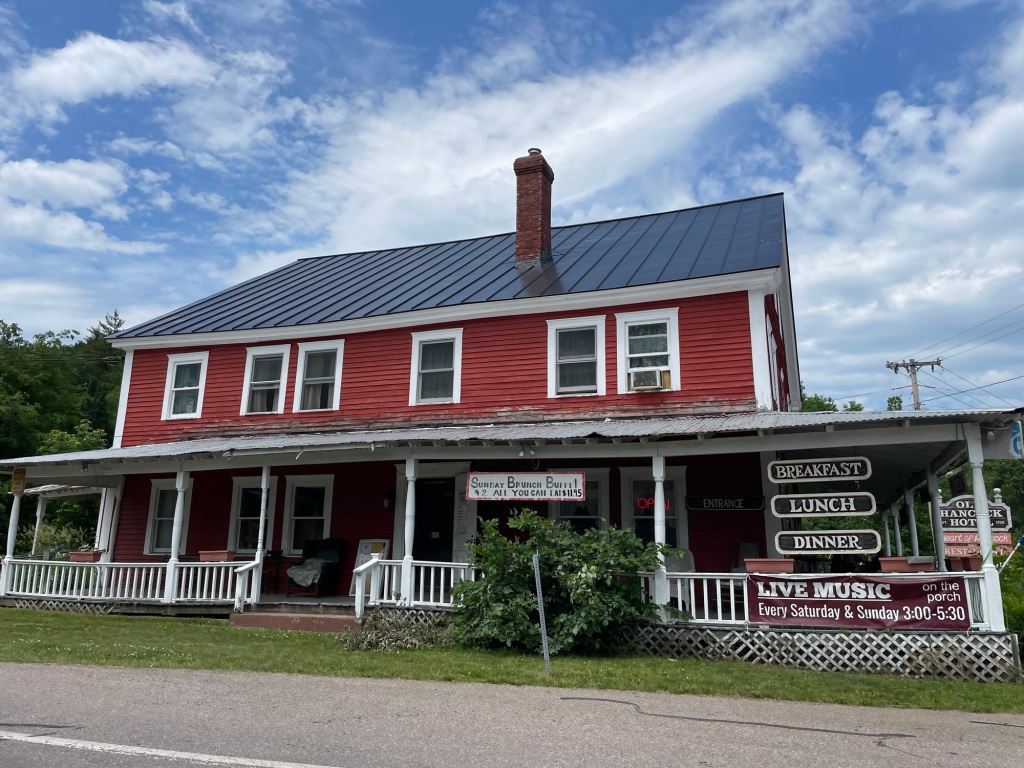
The Old Hancock Tavern // c.1810

Before the Centre Turnpike was laid out in 1808, better-connecting Middlebury, Vermont to towns east of the Green Mountains, visitors would have to travel hours longer to divert around the mountains. This new route cut right through the small village of Hancock, Vermont and the town prospered as a result. Along the route, this vernacular, Federal period tavern was built shortly after the turnpike aimed to take advantage of the new visitors driving through the town. This tavern/inn was operated for a time by a J. E. Wright as a hotel and the building has a perfect wrap-around porch.

Chaplin Congregational Church // c.1815

Years before the small town of Chaplin, Connecticut was incorporated as a town, early residents here had this Congregational church built at the future town’s center. The following decades would see the village develop into a cohesive street of Federal and Greek Revival style dwellings and shops, many of which remain to this day. The church was technically completed by 1815, but it would be decades until funding was acquired to add the steeple, pews, and other finishings for the edifice. The structure sits on a raised stone foundation and is prominently sited on the town’s main street.

The Congregational Church of Union // c.1841

The small town of Union, Connecticut was established in 1734 and as with many towns at the time, religion and community were some of the first things to be codified when settling in a new area. The town’s publicly supported religion, Congregationalism permeated everyday life in Union. Even after disestablishment in 1818, the Congregational church continued as Union’s predominant religious organization well into the twentieth century. By 1841, the members built this edifice, the congregations second, on a hill overlooking the town’s modest green. The vernacular church features a Gothic lancet window, classical belfry, and later pent roof porches over the entrances on the primary facade.