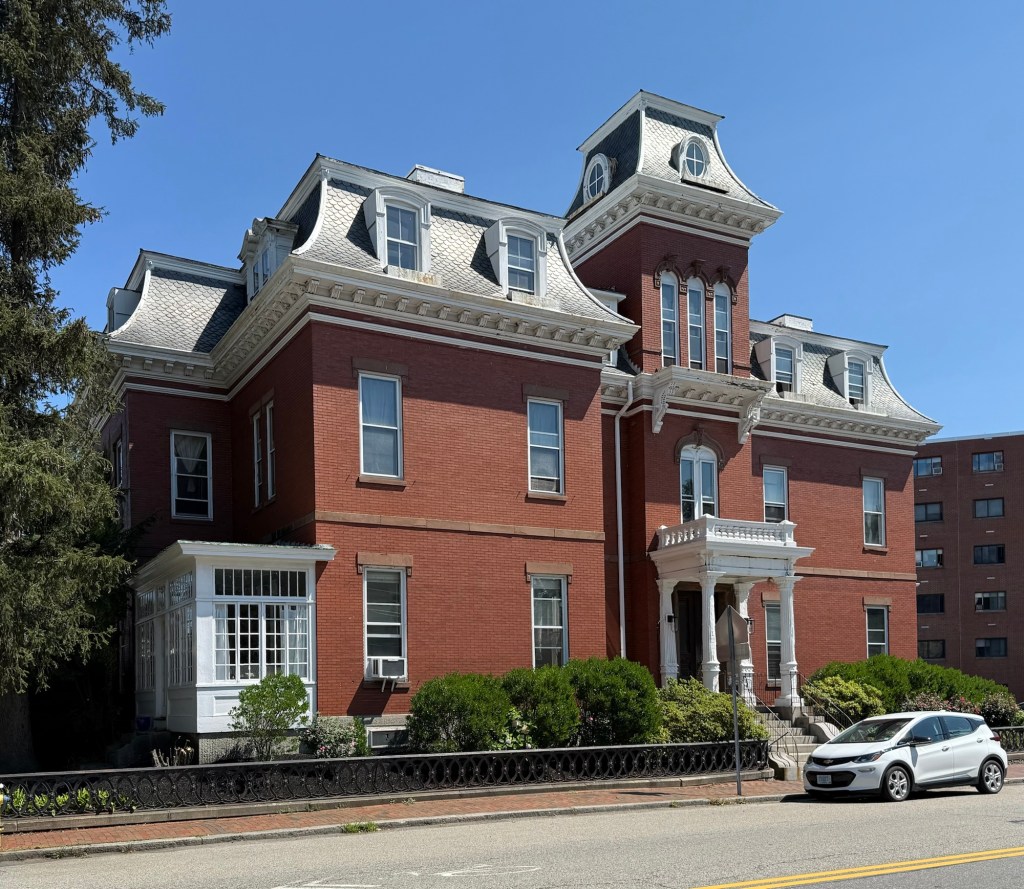
Jones-Sinclair House // 1865

One of the finest Victorian-era residences in Portsmouth, the Jones-Sinclair House at 241 Middle Street, is a stately and oversized Second Empire style mansion built in the location of an even more significant home. Originally on this site, at the convergence of two busy streets, Thomas Haven, a wealthy merchant and half-brother to William Haven who lived across the street, built an impressive brick, Federal style mansion here in around 1818. Admiral George Washington Storer, Commander in Chief of the Brazil squadron of the U.S. Navy, later purchased the Federal style octagonal house. Mary Washington Storer, inherited the house after her father’s death in 1864, and she with her husband, Albert L. Jones, demolished the old octagonal-shaped house around 1865-1867, replacing it with this mansard-villa style mansion. By about 1890, Charles A. Sinclair and his wife, Emma, is said to have received the house as a gift from her uncle, the famous Portsmouth industrialist and politician, Frank Jones

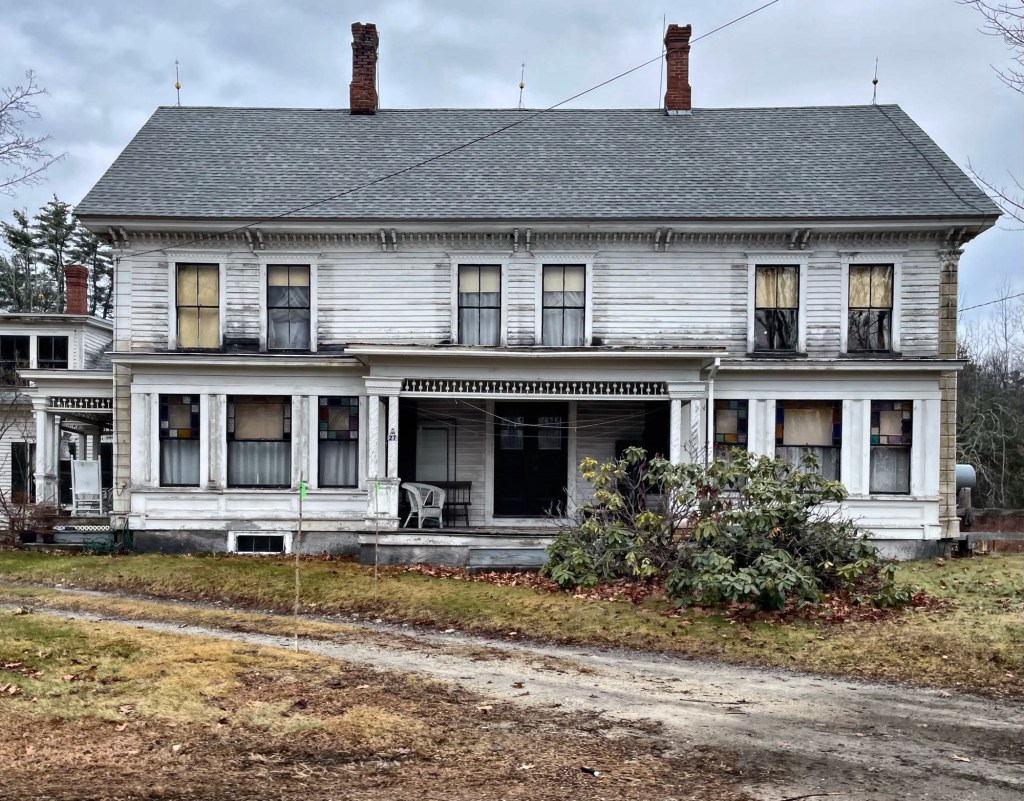
Sumner Stanley House // c.1850

One of the larger homes in Weare, New Hampshire is this sprawling mid-19th century residence, seemingly built around 1850 for Sumner Stanley and his wife, Ruth. Stanley and Ruth (née Dow) acquired land from Ruth’s family and they built their home here. By 1856, Stanley sold a small piece of land to town just to the east of his house for the construction of the North Weare Schoolhouse. The Italianate style house with its Stick style attached barn structure have some amazing detailing!

Samuel Dearborn House // 1886

Queen Anne perfection! The Samuel Dearborn House sits at the beginning of Concord Avenue in Nashua, New Hampshire and is among the city’s finest examples of the great architectural style. Samuel Gerrish Dearborn was born in Northfield, New Hampshire, August 10, 1827. His father was an industrious farmer and allowed Samuel to be educated at Sanbornton Academy and the New Hampshire Conference Seminary. He graduated from Dartmouth in 1849 and began practicing medicine in various New Hampshire towns. He served as a surgeon during the Civil War and after, settled in Nashua, remaining a prominent doctor. He and his family were avid travelers and had trips to the Pacific northwest and Mexico. He had this stately Queen Anne style residence built in 1886 which exhibits all the hallmarks of the style. Varied materials and siding types, asymmetrical plan, ornate turned columned porch, gables with detailed shingling, and complex roofline are all so eye-catching.

Lougee Cottage // c.1880

This house was built and first occupied by George G. Lougee, owner and proprietor of the Sea View House Hotel (demolished) across the street. Before building his own hotel, Lougee was a clerk at the Atlantic House, another summer resort. Lougee eventually worked his way up and ended up managing that hotel. Lougee’s success managing the Atlantic and later, the Farragut, enabled him to pursue his own enterprise and build his Sea View Hotel. When Lougee sold the Sea View hotel, he also sold this house with it. His former Stick style home was then converted to additional rooms at the hotel until it closed in the 20th century.

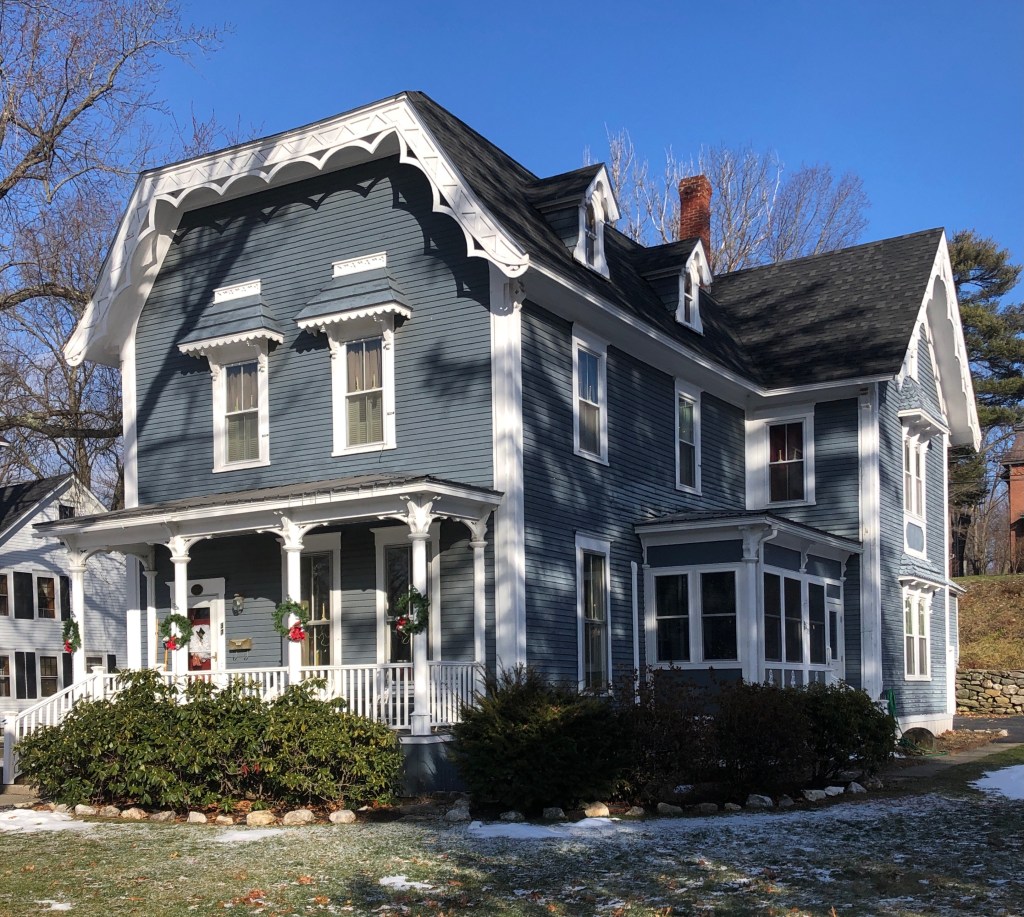
Parmelee House // c.1879

Located on the east side of the Town Common in Newport, NH, the Parmelee house stands out as a unique vernacular Stick style home. The home was built for Joseph Warren Parmelee (1818-1892), the grandson of original settlers of town, Captain Ezra Parmelee and Sybil Hill. He began his adult life as a merchant in Newport, before moving south to Charlestown, South Carolina in 1847. Joseph was forced back north at the beginning of the Civil War, and he lived in New York City until he finally relocated back to his hometown in 1879, which is likely when he built this home for his family. Upon returning, he became active in town affairs, and also pursued interests in history and poetry, creating a book of poems from his home. The Parmelee house retains much of its original detailing from the decorative bargeboards at the gable ends, large eyebrow window hoods at the second floor, and the interesting trapezoidal roof, possibly a vernacular nod to a mansard roof.