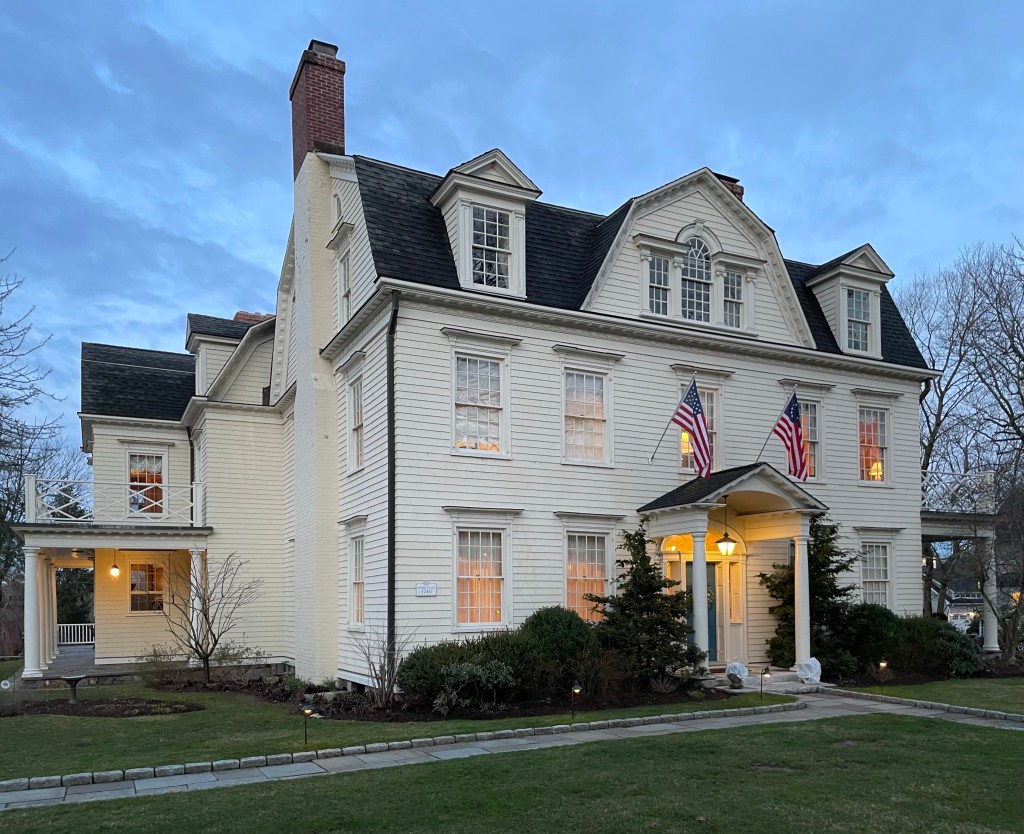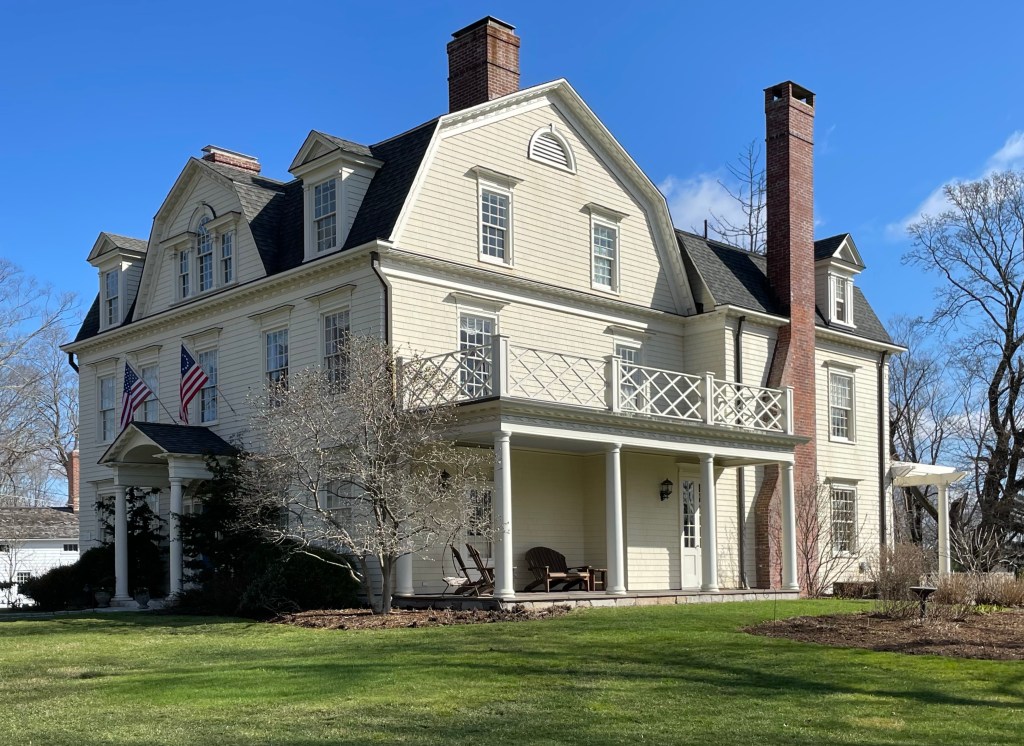
The Fountain Inn // 1740

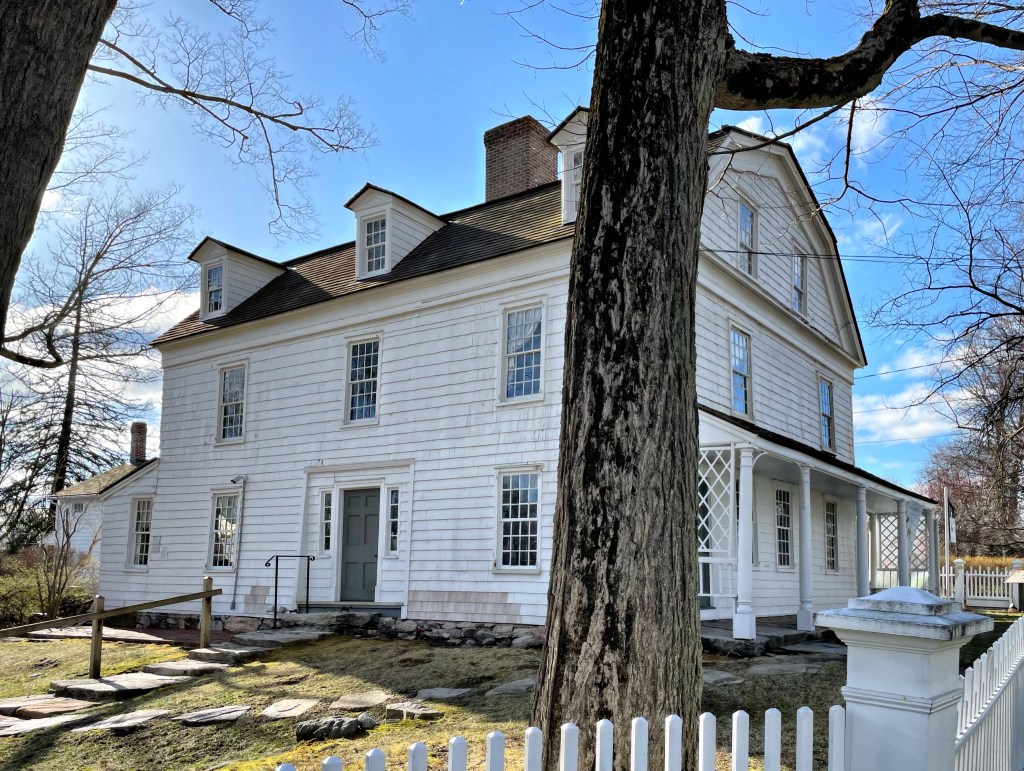
Located on Main Street in idyllic Ridgefield, in Fairfield County, Connecticut, The Fountain Inn provides one of the most welcoming and historical bed and breakfast experiences in New England! The Fountain Inn was built in 1740 as a “city home in the country” for David Hoyt, who showed off his wealth and stature in the young town by having such a high-style home built at the time. Decades later during the Revolutionary War, David Hoyt’s house became a part of the Battle of Ridgefield. After defeating the Colonial militia elsewhere on Main Street, British Gen. William Tryon‘s troops turned their attention to nearby Keeler Tavern, the local militia’s headquarters, which just happened to be neighbors with the mansion owned by David Hoyt, a known Loyalist. General Tryon’s troops practiced their artillery-firing skills on the building pummeling it with cannonballs, sending a message to the head of the local militia. David Hoyt formally demanded a cease-fire, as he was concerned about wayward cannonballs damaging his home. By 1790, with Ridgefield’s British influence diminishing by the day, David Hoyt finally left his Connecticut home and sailed back to England. The home was expanded and modernized over the next two hundred years until the present owners purchased the property and underwent a massive restoration of the Colonial house inside and out as their family residence. In the past year, the inn opened as the Fountain Inn so-named after a Cass Gilbert-designed fountain across the street.

Lillibridge Farmhouse // c.1770

Getting lost in New England is always fun because you can simply stumbleupon old farmhouses like this, which look like a setting of a movie! Located in northern Willington, CT, this farmhouse dates to the Revolutionary War! David Lillibridge (1744-1831) of Exeter, Rhode Island, served from 15 to 17 in the French and Indian War, and manned Fort Stanwix. In 1767, he was militia lieutenant, at the age of 25 converted, and entered the Baptist ministry. In 1777, he purchased a farm (unclear if there was a house on the land) from a Moses Holmes in modern day Willington and resided in this old saltbox Georgian home. The home remained in the Lillibridge family at least until the 1870s, when it was owned by Burnham Lillibridge. The house was moved from its previous location right on the street, and set back into the bucolic landscape, a fitting move!

Deacon Turner House // 1849

The Deacon Turner House, built in 1849, is an impressive Greek Revival house located at the Town Common in Willington, Connecticut. The Greek Revival portion was constructed onto an earlier house or store that was built 50 years prior. The one-story structure was likely moved and incorporated into the current house as a rear ell. The present house was designed by architect Augustus Treusdel of Coventry and built for Deacon John Turner by Emery Williams a well known local builder. John Turner was Deacon of the Willington Congregational Church, nearby.

Hiram Rider House // c.1820

Located on the southern edge of Willington Connecticut’s town common, this vernacular example of the Federal style with later alterations is really appealing, mostly for its simplicity and proportions. The house was built around 1820 for Hiran Rider, who served as a judge, county sheriff, and town selectman. The Rider Family were hit by tragedy in 1851 when dysentery hit the household, killing Hiram, his wife Sarah, and their daughter. The home was altered by a later owner with 2-over-2 windows, an Italianate style door, and a door hood.

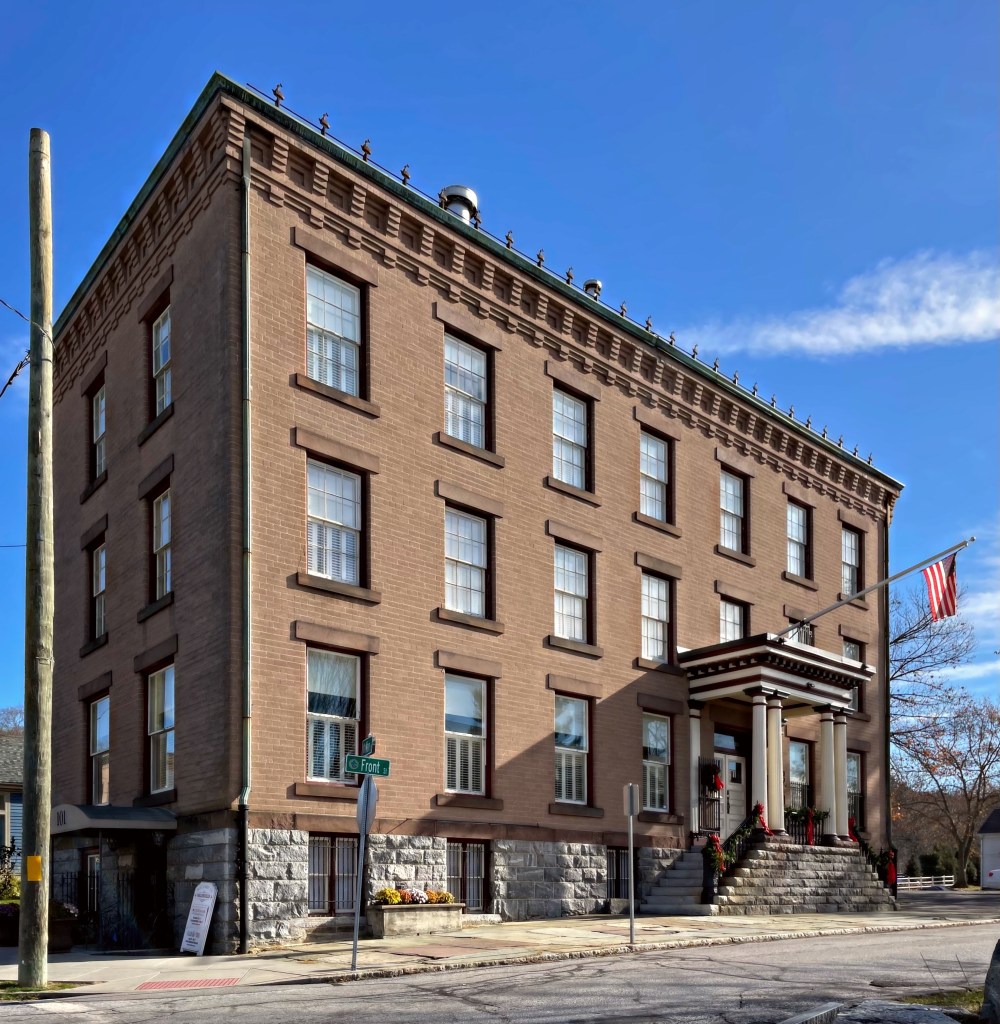
Collins Company Offices // 1868

When the Collins Company built its mill buildings in South Canton Village (later renamed Collinsville), workers housing, schools, businesses, and churches popped up to service the growing immigrant community here. The Company also built an office building for the executives, where they could oversee the business’ growth and balance the books. The original office building from 1830 was eventually outgrown, and after the Civil War, this larger building was constructed. The new building held offices, a post office, library, a third-floor meeting hall for local groups. The masonry building has decorative cornice and a gorgeous raised entry.

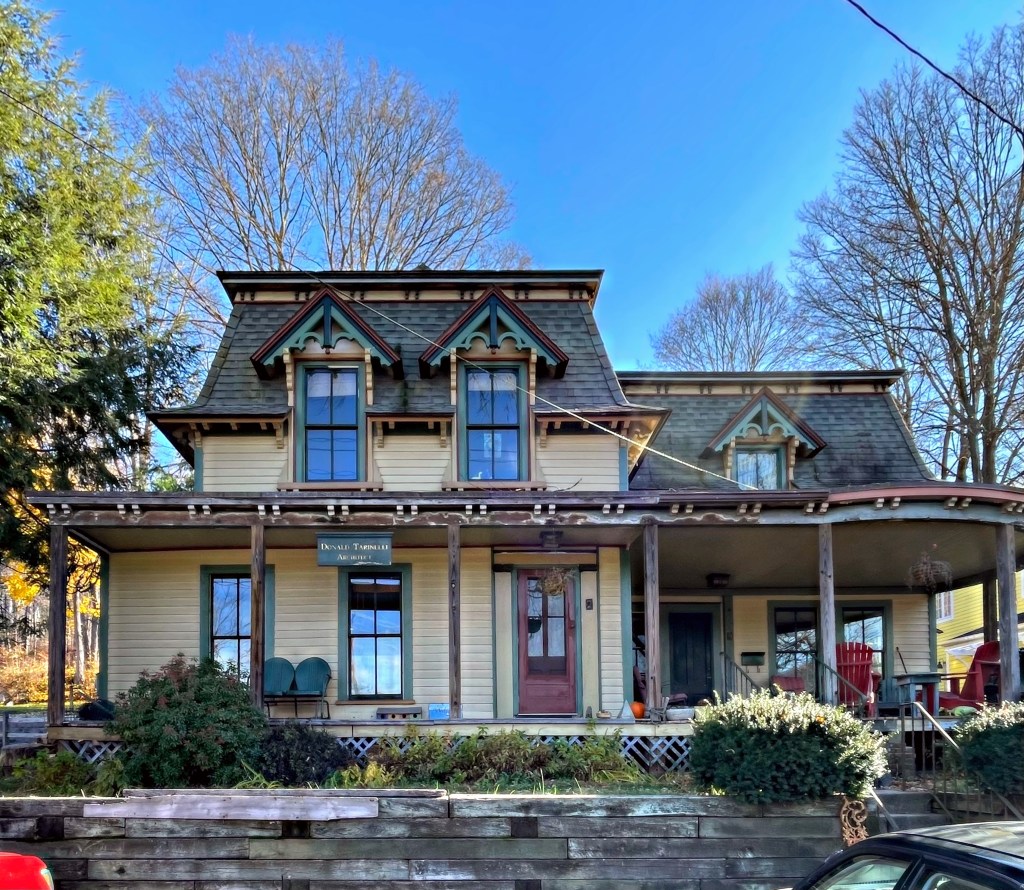
Polk-Haury House // c.1865

Collinsville, a village in Canton, Connecticut, sits along the Farmington River and is one of the most charming New England villages I’ve been to. The village sprung up around the Collins Axe Company, a manufacturer of edge tools, such as axes, machetes, picks and knives. With the company’s growth (more history on the company in a later post), immigrants moved to the town, and lived in workers cottages built by the factory owners. Churches, stores, schools, and parks came soon after, creating the dynamic village we see today. Nathan L. Polk moved to the village and built this charming Second Empire style cottage, walking distance to his apothecary shop. By 1872, Nathan died and the house was sold to Ulrich Haury. Haury was born and raised in Germany and settled in Collinsville by 1862, working at the Collins Axe Company. From his earnings, he opened up a grocery in the village, spending his earnings bringing his family for vacations to his homeland in Germany. The home remains in excellent condition.

Canton Center Schoolhouse // 1872

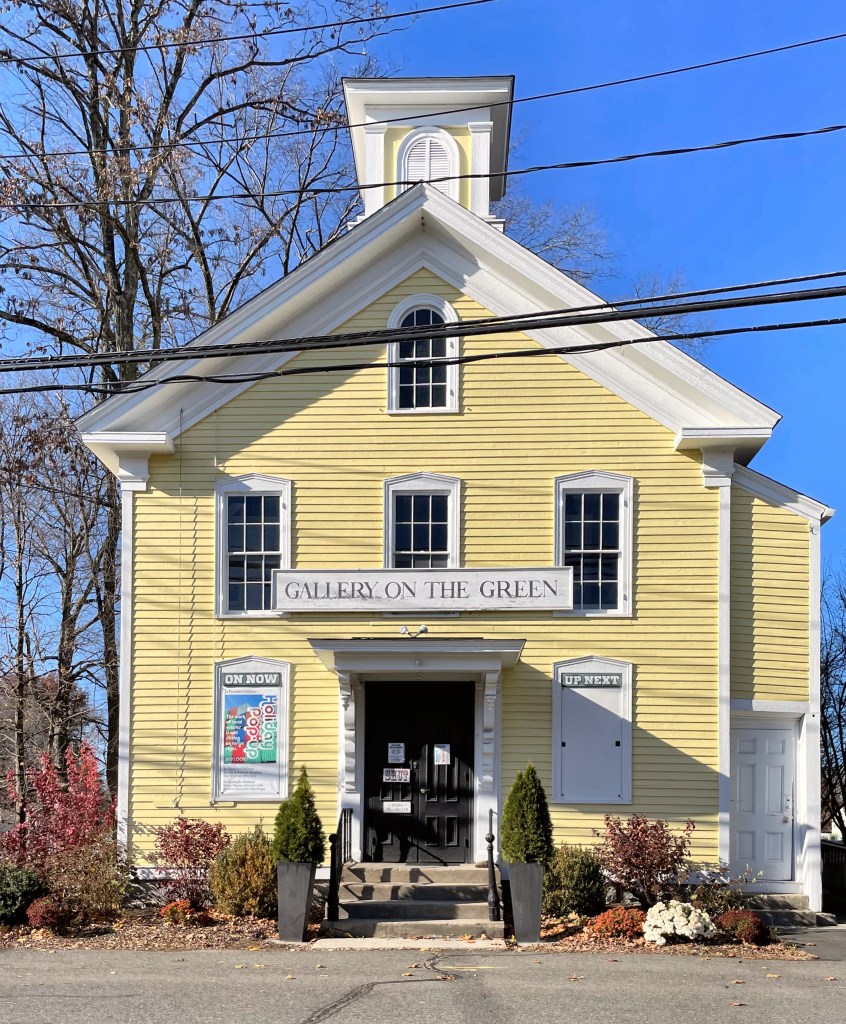
Canton, Connecticut, the only town in the state named after a city in China! The land which we now know as Canton had long been inhabited, specifically by the Wappingers, a group in the larger Algonquin speaking tribes. Canton was incorporated out of Simsbury in 1806, and named after the City of Canton in China (now known as Guangzhou), though I am not sure why. The town quickly developed two main villages. Collinsville sits on the Farmington River and its power was harvested for industry; while the center village grew differently as an agricultural village of farms. At the center of town sat a green for civic and town functions and gatherings. The town constructed a school here as far back as 1759, when the rural village was still a part of Simsbury. This is the fourth building on the green and it was built in 1872, and can be classified as Italianate in style. The building was occupied as a school until 1949, and it was used for other city uses until 1971, when the building was rented to the Canton Artist’s Guild and the building was renamed Gallery on the Green. The building remains community-focused and holds exhibits of local artists! Much of the rest of Canton Center lost all of its bucolic charm when the main road became commercialized, prioritizing speeding cars over a walkable village.

Seaside Sanatorium – Superintendent’s Residence // 1936

The last stop we will see at the stunning Seaside Sanatorium campus in Waterford, Connecticut is the former Superintendent’s Residence. Built in 1936, the home is elegantly sited at the waterfront, which would have provided amazing views for the man in charge of running Seaside, the Tuberculosis hospital for children here. Like the Maher Building, Nurse’s Residence, and Duplex Residence previously featured, this building was designed in the Tudor Revival style and is also credited as a work of architect Cass Gilbert. The Superintendent’s Residence is interesting as it has two completely different facades. The campus-facing facade features an L-shape with a garage wing and projecting entry pavilion in stone. Above, a diamond-pane window would allow natural light into what may be the stairhall. At the waterfront, a large open porch (since boarded up) and large windows at the first floor, would provide natural light and air into the building, along with amazing views of Long Island Sound. Additionally, a catslide roof extends from the rightmost bay and covers a recessed porch with basketweave brickwork above. I would for sure live here, could you?

Waterfront Facade

First Baptist Church, Waterford // 1848

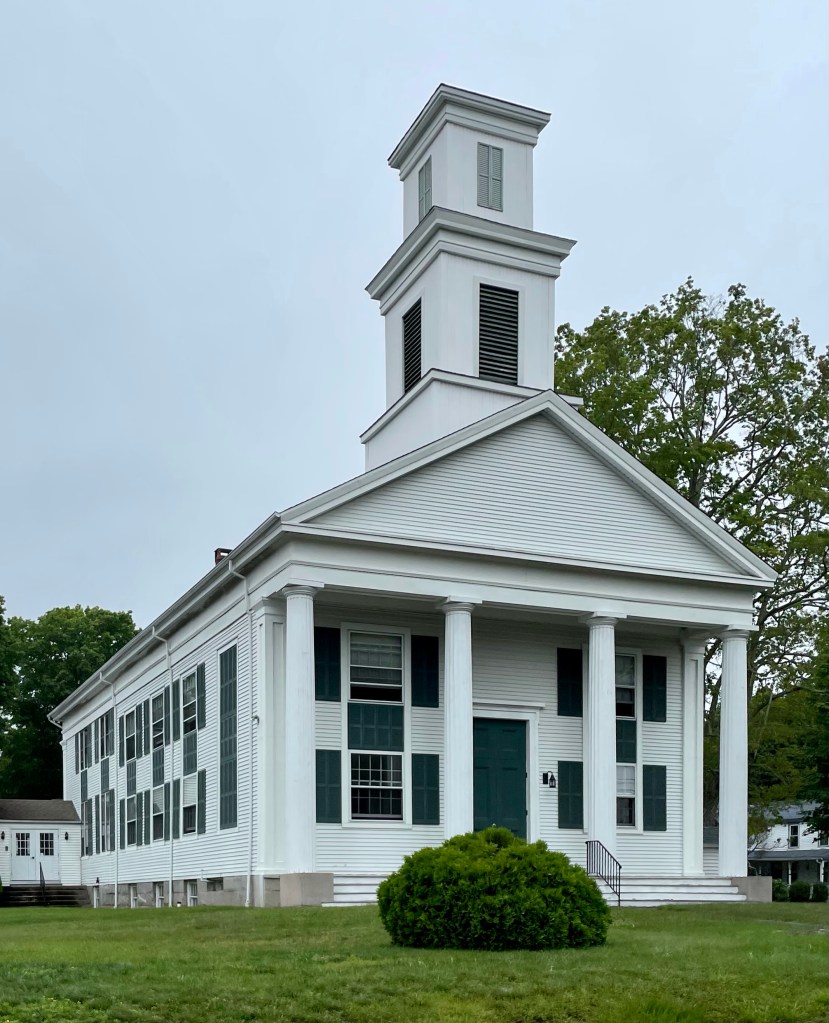
Founded in 1710, when Waterford was still part of New London, the Baptist Church was one of the dominant institutions in the historical development of the Jordan Village, which became the historic population center of town. The fact that Jordan Village in Waterford sprang up around a Baptist and not a Congregational church gives it an unusual religious significance in the state. The Baptist denomination was introduced to Connecticut from Rhode Island in 1705. The separation from the City of New London, which was organized around the locally supported Congregational church, was due in large part to the differences between the the formal, structured, Congregationalists and the evangelical Baptist farmers. In 1848, when this church in Jordan Village was built, many residents followed the architectural vocabulary and built Greek Revival homes nearby, creating a large development boom in the new town center. The church remains today as an active member of the community.

New London Harbor Light // 1801

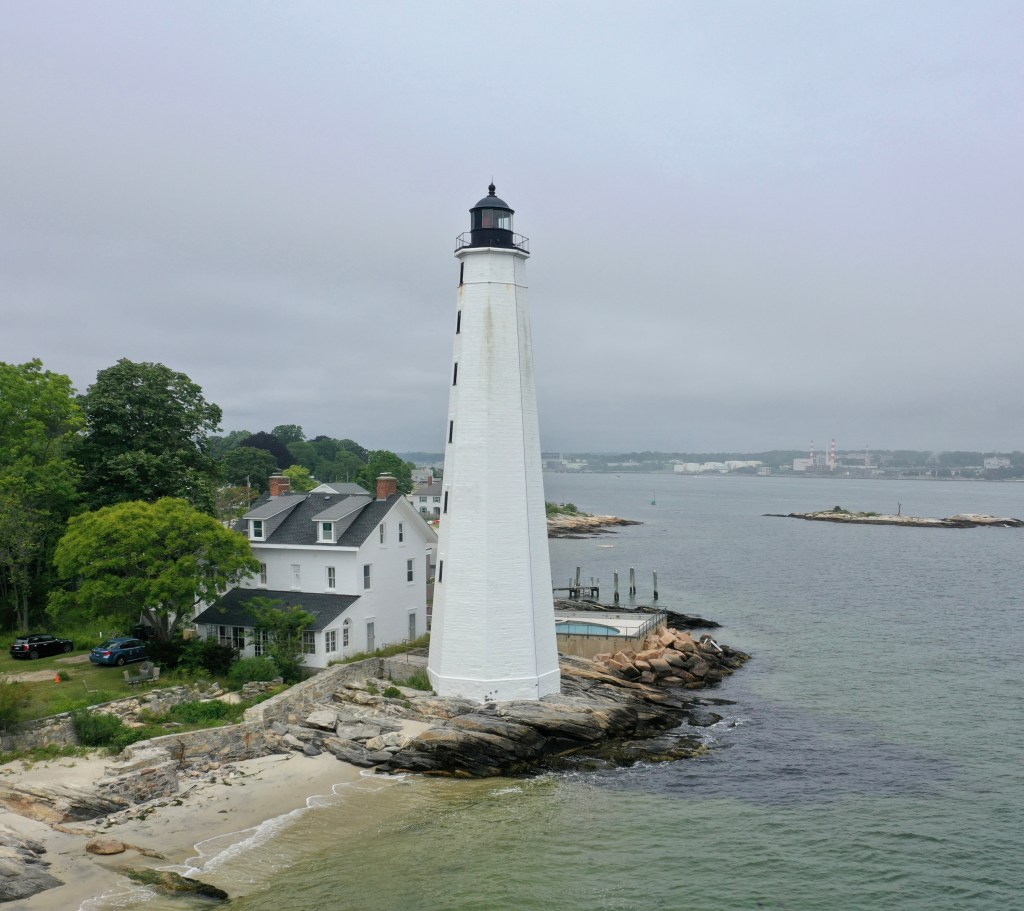
In 1760, the colonial legislature of Connecticut passed an act creating a committee to pursue the funding, construction, and staffing of a new lighthouse for the harbor entrance at New London. The following year, thousands of lottery tickets were sold to raise £500 for the lighthouse (a popular method of raising funds for construction projects in those days). The lighthouse, a sixty-four-foot-tall stone tower with a wooden lantern at the top, was finished that same year at the west side of the harbor entrance. By 1799, issues began to pile-up, including a crack in the structure compromised the integrity of the tower, compounded by the fact the light was so dim as to often be indistinguishable from the lights of the surrounding homes. These challenges led the charge for a new lighthouse. Congress allocated $15,700 for a replacement lighthouse on May 7, 1800, and New Londoner, Abisha Woodward began construction on the current octagonal, tapered, eighty-foot-tall tower. The present light was completed the next year and is constructed of smooth-hammered freestone which are lined with brick inside. The current gable-roofed, two-and-a-half-story keeper’s residence was built in 1863, and in 1900 it was expanded to provide quarters for the assistant keeper and their families. Today, the keeper’s house is privately owned and the light tower is owned by the New London Maritime Society, who offer tours of the light on occasion.