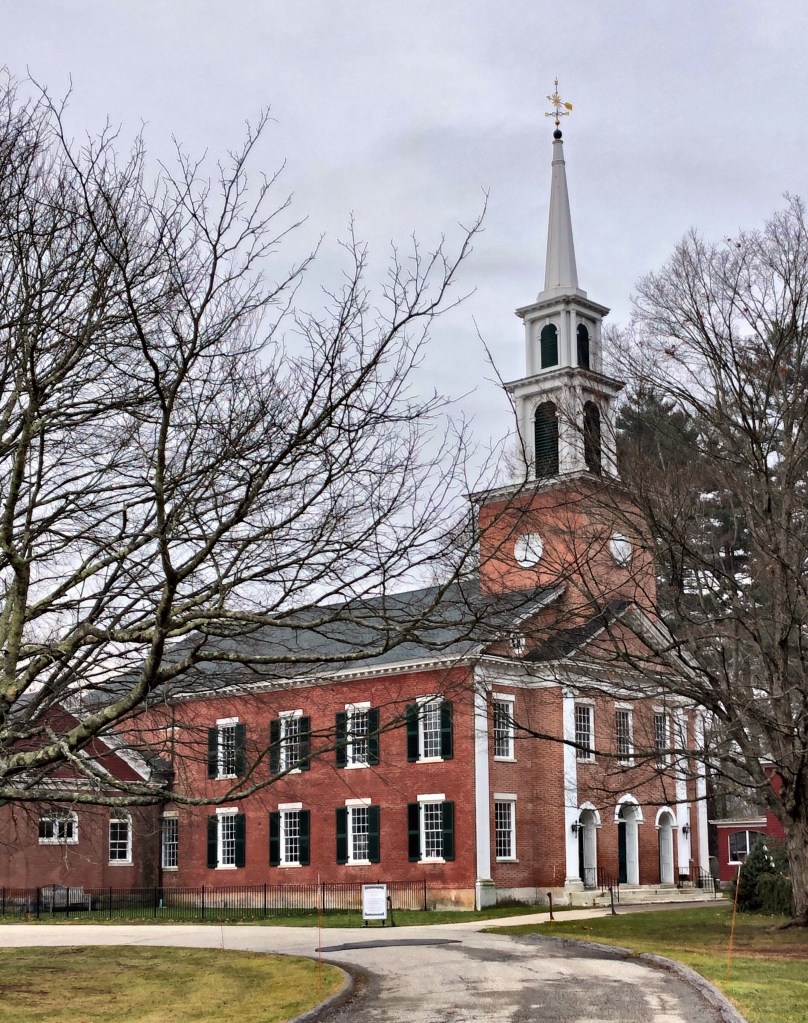
First Congregational Church, Stockbridge // 1824

Stockbridge, Massachusetts was settled by English missionaries in 1734, who established it as a praying town (an effort to convert the local Native American tribes to Christianity), for the Mohican tribe known as the Stockbridge Indians. The township was set aside for the tribe by English colonists as a reward for their assistance against the French in the French and Indian Wars. From this, a Yale-educated missionary, John Sergeant began converting native people to Christianity, essentially stripping them of their own religious culture and practices. Although Massachusetts General Court had assured the Stockbridge Indians that their land would never be sold, the agreement was rescinded. Despite the aid by the tribe during the Revolutionary War, the state forced their relocation to the west, to New York and then to Wisconsin. The village was then taken over by British-American settlers who created the township.

The first congregational church here was formed by Sergeant in 1734, and later succeeded by Jonathan Edwards, another minister. During his time in Stockbridge, Edwards wrote his masterpiece, Freedom of the Will, which remains one of the most studied works in American theology. Edwards later left the church to become the President of The College of New Jersey, now known as a little school by the name of Princeton. The first church was built in 1739, later replaced by a second church building that stood from 1785 to 1824. The present brick building was built in 1824 in the Federal Style. The space was occupied for town functions until the 1840s, when an official town hall was erected next door, demarcating the separation of church and state. The stunning church marks the immense influence religion had in the early colonial days of New England and the impact it had on native peoples (for better or worse).
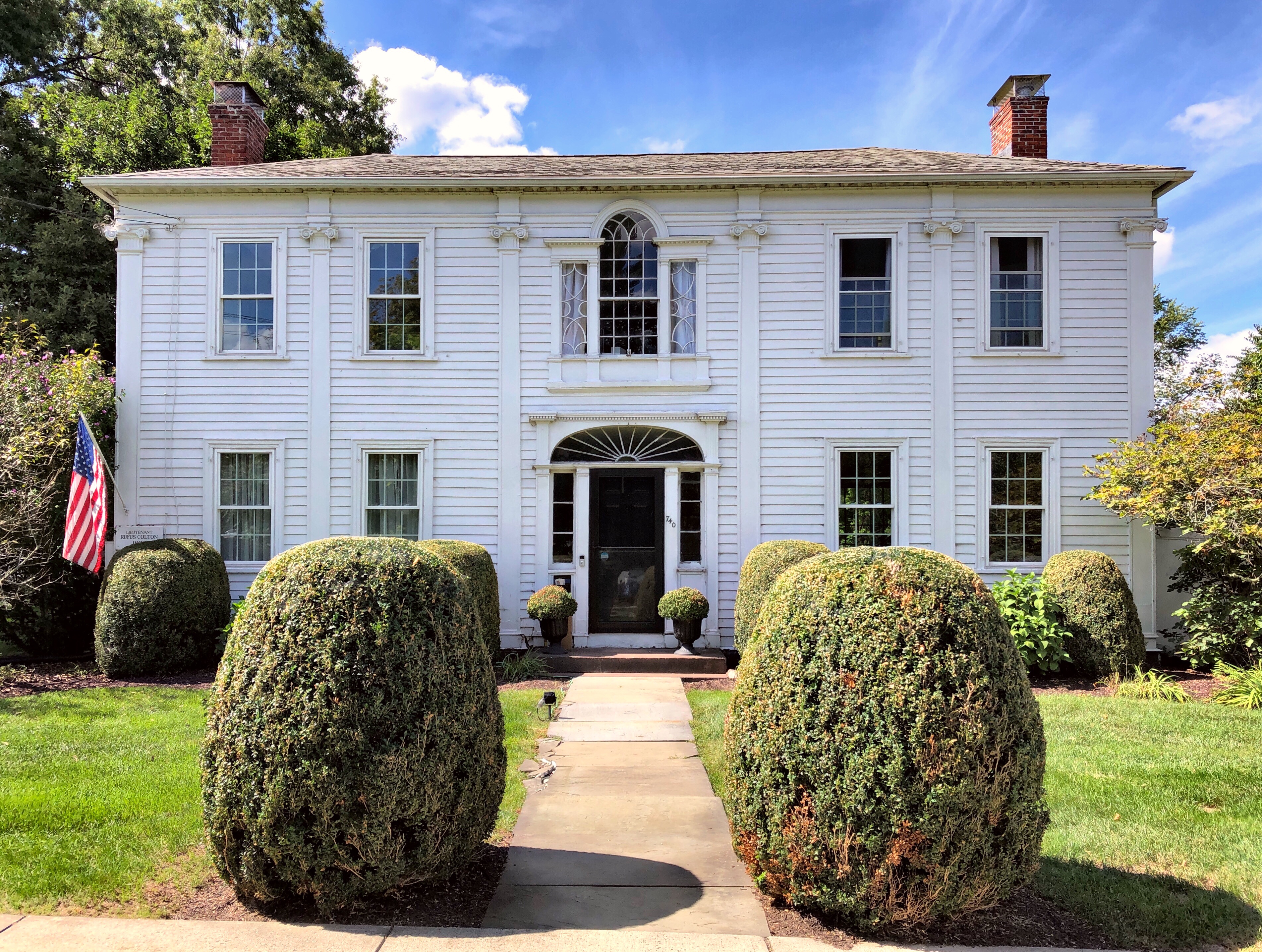
Colton House // 1806

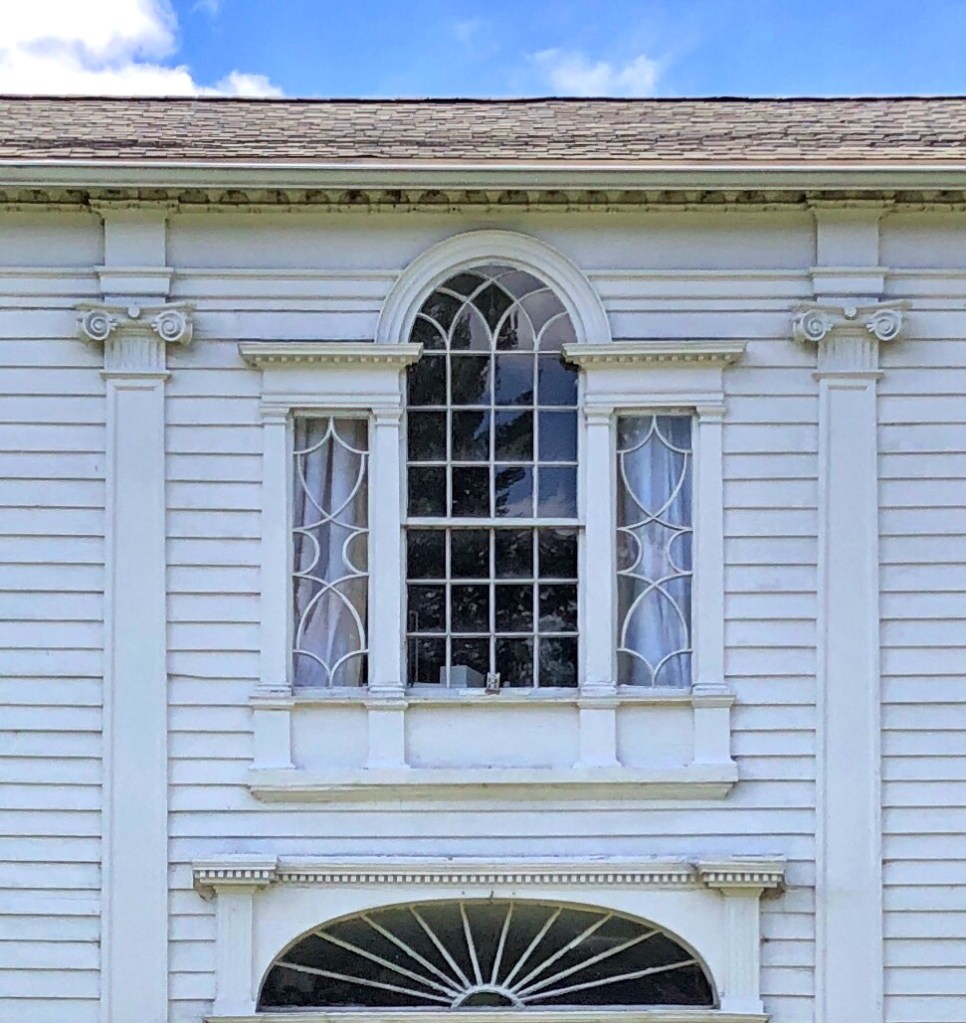
Similar to the Charles Leonard House a block away, the Colton House on Main Street in Agawam remains as a historically and architecturally significant Federal style home in Western MA. The home was built in 1806 for Rufus Colton (1776-1862), a couple years after he married his first wife. The home was likely constructed by a local builder who took inspiration from Asher Benjamin’s early plan books and Captain Leonard’s home nearby. The house was later owned by Martin Luther who operated the home as a tavern for travelers along the route from Hartford to Boston. It was later owned by Isaac Cooley and documented under the Historic American Buildings Survey. Architecturally, the house features a stunning broad entry surround which incorporates a generous elliptical fan-light with leaded glass above a paneled door. Directly over the main entry on the second floor is a Palladian window with the side panels showing the urn and leaf pattern, seen only in high-style Federal homes.

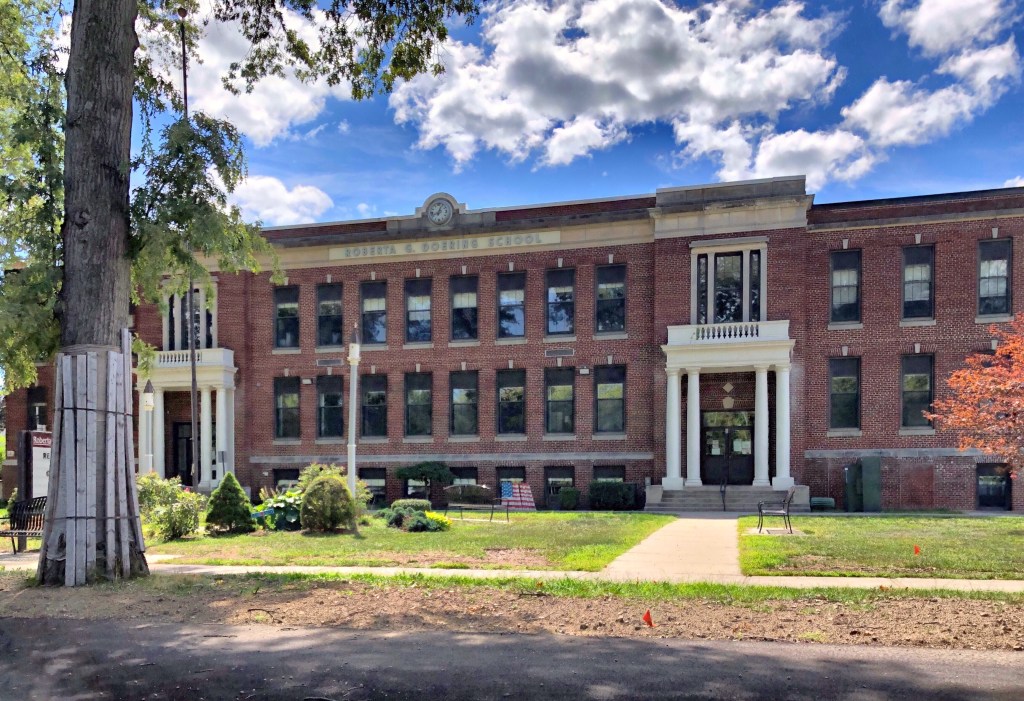
Agawam High School // 1921

This stunning High School building in Agawam was built in 1921 as the town’s first high school. William Pynchon purchased land on both sides of the Connecticut River from the local Pocomtuc Indians known as Agawam, which included present-day Springfield, Chicopee, Longmeadow, and West Springfield, Massachusetts. The purchase price for the Agawam portion was 10 coats, 10 hoes, 10 hatchets, 10 knives, and 10 fathoms of wampum. Agawam and West Springfield split in 1800, with Agawam incorporating as a town on in 1855. The town stayed fairly rural until the 20th century with the proliferation of the personal automobile and suburbanization from the industrial and urban center of Springfield. This increase required a new, modern high school to be constructed in town. The building was converted to a middle school in 1972.

Thomas and Esther Smith House // c.1758

The Thomas and Esther Smith House in the Feeding Hills area of Agawam, Massachusetts is a 1½ story, vernacular Georgian style house with a gambrel roof. Feeding Hills, so named for its bountiful soils, is an agricultural plain approximately five miles west of the Connecticut River at the eastern foot of Provin Mountain. The land was highly sought after by farmers, with many agricultural uses still taking place here to this day. This parcel of land was purchased by Thomas Smith, a carpenter, in 1757, who likely built the home soon after for his new family. The family occupied the home into the mid-19th century, harvesting crops and raising cattle for sustenance and sale. The agricultural property was subdivided numerous times and now sits on just an acre. The home and remaining land was purchased by the Agawam Historical Society in 2002, who maintain the property and educate on Agawam’s agricultural heritage.

Hampden County Training School // 1916

In most Massachusetts cities and towns, habitual truants (children who stayed away from school) and juvenile delinquents had normally been committed to local almshouses and prisons. By 1873, state law updated policies to “humanize” the children and guide them on a better path. Habitual truants (age seven to fourteen), habitual absentees (age seven to sixteen), and habitual school offenders could be committed to a county truant school for a term of up to two years. At least one of these types of schools were found in each of Massachusetts’ counties, which seemed to get more crowded every passing decade. In the early 20th century, the outlook on shaping children’s growth changed and to reflect this, the truancy schools were renamed “Training Schools”.

The former Hampden County Truancy School in Springfield was outgrown and outdated. The county petitioned the state for a new school on open land, and a site was acquired in nearby Agawam. The choice of location was intended to provide a rural farm environment and to avoid the temptations of the city. The isolated location, surrounded by farmland, ensured that students could not easily walk away from the school to rejoin their friends and families. Despite the remote location, the Hampden County Commissioners report of 1918 noted that 36 boys still ran away from the training school a total of 69 times and that 5 were still at large at the end of the year.

Starting in the 1940s, the County Training Schools were seen as a waste of taxpayer money and many staff at these institutions were under-educated themselves to deal with emotional or social issues that some of the children exhibited. Many county schools were closed, with the Hampden County Training School closing in 1972.

The school building and grounds sat vacant for over a decade until funding was released to renovate the building for use as a police academy training center in 1984. The exterior of the building remained relatively unchanged during this time, and many of the original classroom spaces were left as found. The building served in this capacity for over twenty years until it was closed in 2005. In 2017, Soldier On, a private nonprofit organization that provides housing and supportive services for military veterans, rehabilitated the former school and now provides 51 permanent housing units here. The property was listed on the National Register of Historic Places (a report where much of this information came from) and was rehabilitated using Federal Tax Credits.

The Classical Revival-style Hampden County Training School was designed by the prolific Holyoke-based architect George Perkins Bissell Alderman. Alderman was well known throughout western Massachusetts and Connecticut for his monumental, classically derived designs for residences, schools, commercial blocks, civic buildings, and churches.

Agawam Center School // 1939

Located in Agawam Center this interesting architectural example of a late-Tudor Revival school building really caught my eye. The building replaced a 1870s town hall and two-room schoolhouse which were both outgrown as Agawam’s population increased due to the proximity of nearby Springfield. The architect was Paul B. Johnson, who was based out of West Springfield and ran a small architectural office there. He attended Cornell and MIT for architectural training and worked primarily around Springfield. The school building is constructed of a deep red brick, laid in varied relief for a rough faced surface and a cast stone Tudor arch around the main entrance for contrast. The school was later renamed after Benjamin Phelps, the first superintendent of schools in Agawam.

St. Therese of the Infant Jesus Church // 1927

This church in Agawam was built in 1927, replacing the first Catholic church in town, which was established in 1873. The earlier church was destroyed by a fire in 1925, causing the congregation and Archdiocese to fund construction of a new, fireproof church building. The Neo-Gothic Revival building features lancet windows, buttresses, and a central steeple. The building is now occupied as the Moldovian Baptist Church.

Hoosac Tunnel // 1877

It is impossible to overstate the significance of the railroad in the 19th century to the industrial growth and economy of New England and American cities. In order to connect Boston and its ports to the Hudson Valley in New York, a western rail line was constructed in the southern part of Massachusetts but was not an ideal route. In response, businessmen and politicians began to envision a more direct rail line across Massachusetts, but with one problem: trains hate climbing mountains! Instead of going around Hoosac Mountain, a massive detour, engineers thought they could tunnel through it, and that’s what they did, creating the Hoosac Tunnel. The tunnel through Hoosac Mountain is just under 5 miles long. Its active construction period consumed roughly a quarter-century and cost at least $17 million in 1870s dollars – an enormous sum. The cost was paid in dollars and the lives of nearly 200 miners (many of whom suffered terrible deaths as you can imagine). The first train passed through the tunnel in 1875, with the eastern portal wall constructed in 1877 (seen here). By 1895, roughly 60% of Boston’s exports traveled through the tunnel. Since then, some small collapses and deferred maintenance have left their mark on the tunnel, though it is still in operation today!

Blackinton Mansion // 1865

This mansion in North Adams, MA was built in 1865 for Sanford Blackinton. Blackinton was said to be the first millionaire in North Adams, and his mansion was the most elaborate home ever built in the city. His mill produced woolen goods during the Civil War including cloth for the Union forces. After the Civil War, many factory owners no longer lived amongst their workers, as they formerly had done, but instead built luxurious mansions in other neighborhoods, away from their factories. These large residences were designed in extravagant modern styles to impress the public and reflect the stature of their owners. European materials were even imported to grace these homes, such as the Italian marble fireplaces in the Blackinton Mansion.

Sanford Blackinton built his mansion in the hopes that it would become the ancestral home for his descendants. However, after the death of his widow (their four children died by the 1870s), the mansion was put up for sale in 1896, and was bought by North Adams’s first mayor, A.C. Houghton.
He in turn donated the mansion, along with $10,000 for renovations, to the city, to be used as a public library and as a meeting place for the local historical society. He requested that the building be known as the Andrew Jackson Houghton Memorial after his late brother. The home, designed by architect Marcus Fayette Cummings, is a high-style Second Empire mansion with a prominent tower, constructed of red brick with brownstone trim.

St. John’s Episcopal Church // 1868

The St. John’s Episcopal Church in North Adams, MA was established in 1855 by Rev. William Tatlock and Stephen Higginson Tyng Jr. while both were studying at nearby Williams College. A church was built in 1858, but deteriorated quickly, and the congregation gathered funding to erect this large edifice. Architect Stephen C. Earle, a leading architect in Central and Western Massachusetts, designed the Gothic church constructed out of large stone blocks quarried nearby. The church continued to grow over the next decades, and it was added onto as the immigrant community boomed in town following North Adams’ industrial growth. In 1893, the adjoining Parish House was constructed of the same stone as the main church, also designed by Earle. In the 20th century, membership shrunk due to decreasing population, and in 2011, the parishes of St. John’s Episcopal Church in North Adams and St. Mark’s Episcopal Church in Adams merged to form the All Saints’ Episcopal Church.