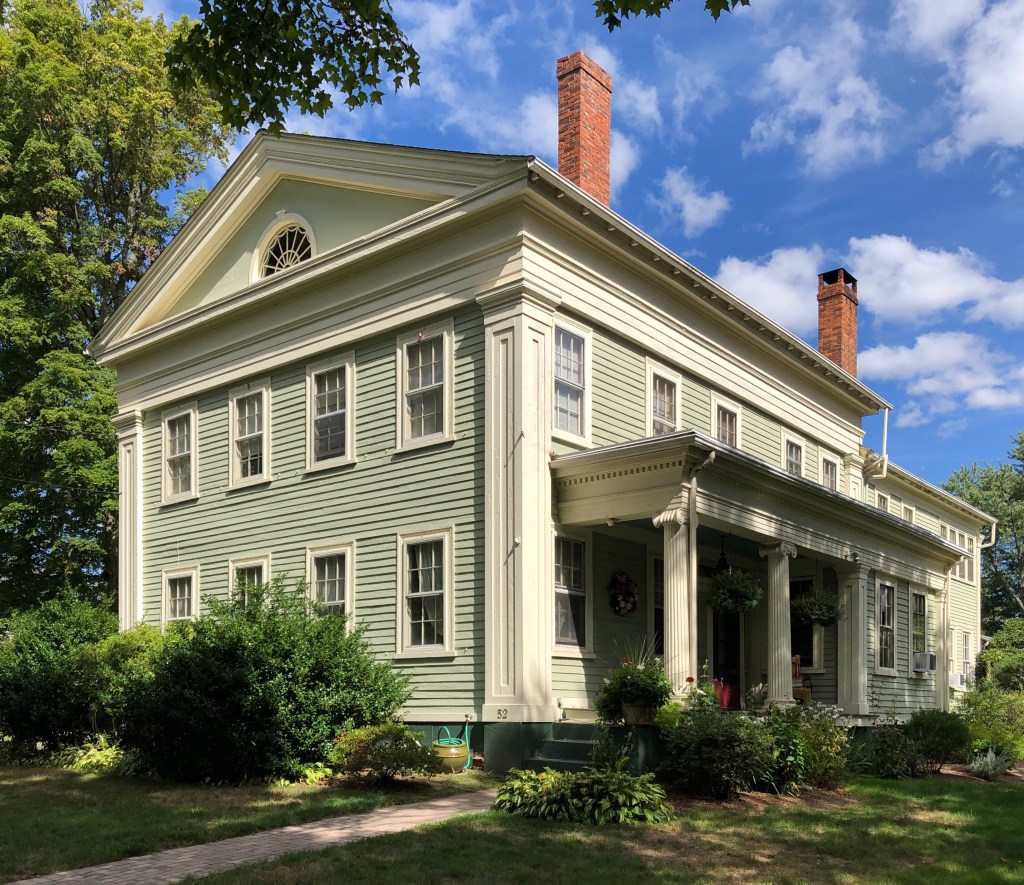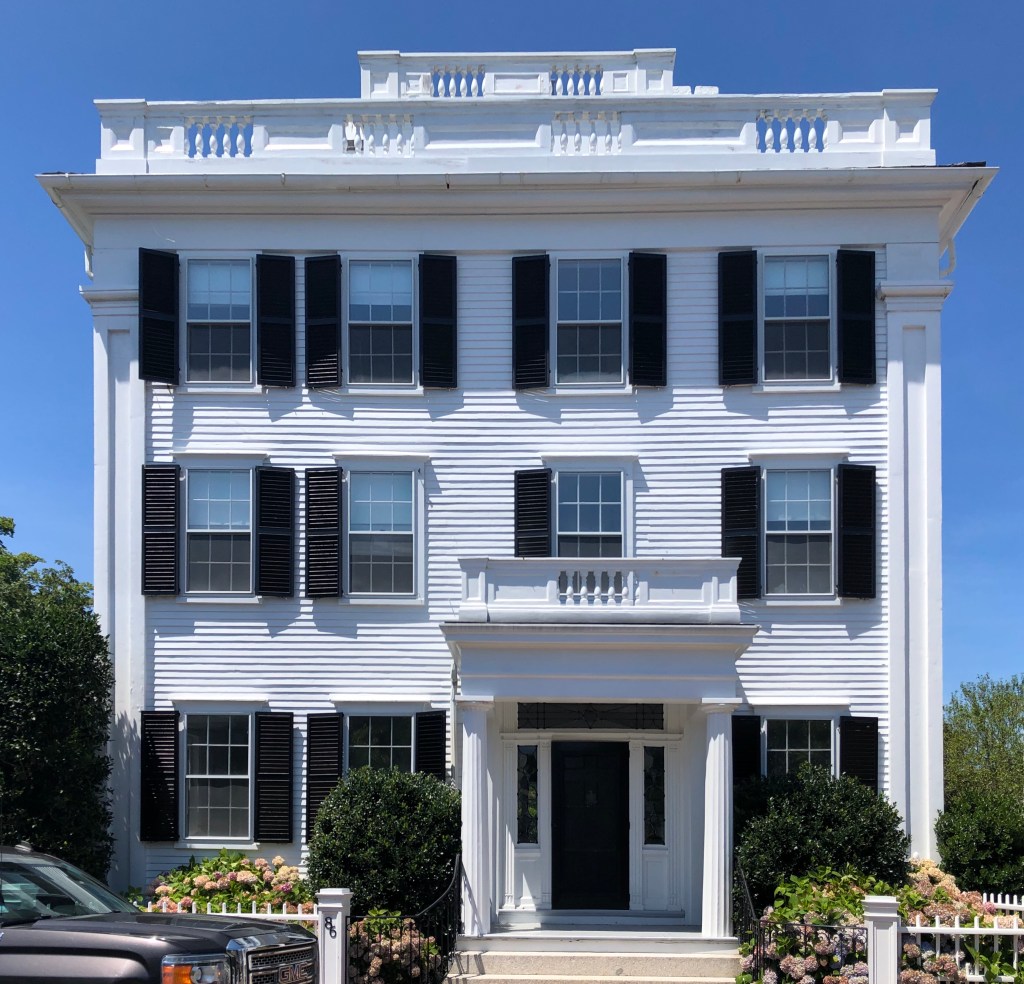
Captain Morse House // 1840

John Osborn Morse was born in 1803 in Edgartown. He was the second of eight children born to Uriah Morse and Prudence Fisher Morse. His father ran the small ferry from the foot of Morse Street to Chappaquiddick Island. As John Morse grew older, he began working as a whaler on various ships, sometimes gone for years at a time. After his first trip, he was hired as Captain of the Hector, a whaling ship which sailed out of New Bedford. Captain Morse took a break from whaling to establish a wharf on land he purchased and construct a massive Greek Revival home to overlook it. When news hit Edgartown of the gold found in California, it stirred the islanders’ imagination. In 1849, several ships sailed from Martha’s Vineyard to California, one commissioned by Captain Morse. The Vineyard Mining Company, led by Morse, brought roughly 50 passionate and hopeful Americans across the country by boat to California with some onboard writing journals of the trip. The boat arrived in San Francisco and discharged its crew in April of 1850 after a harrowing passage around Cape Horn and visits to several South American ports. After being in California for less than a year, Captain Morse decided to take go for a short whaling cruise. He died on this trip, reportedly getting “dropsy” off the coast of Colombia before succumbing in Peru in 1851.

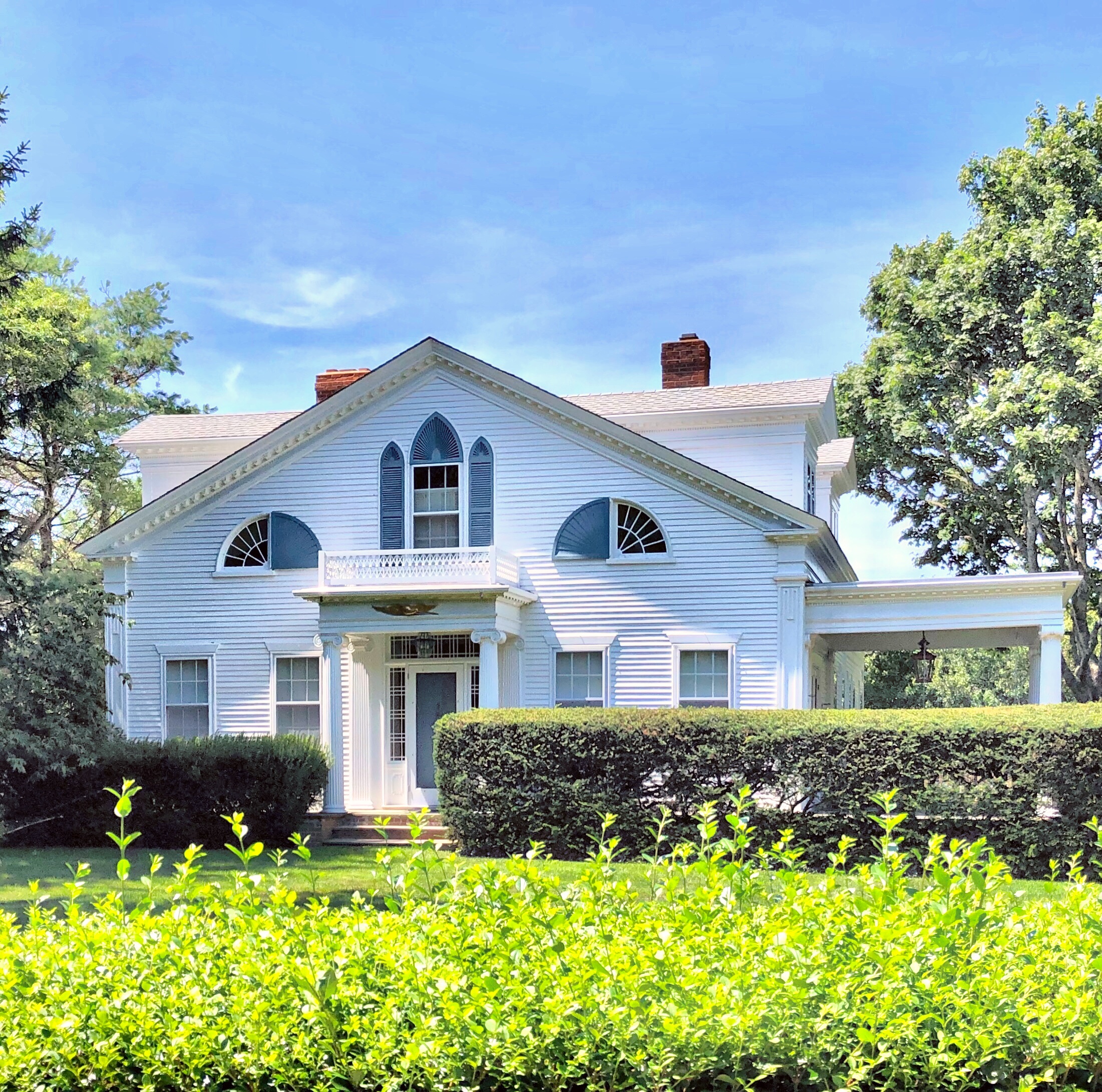
Baylies-Pease House // c.1845

This stunning house on Starbuck Neck in Edgartown was originally built on Main Street by Frederick Baylies Jr., as his own residence. Baylies was the architect of the town’s original Methodist church, the Old Whaling Church, and a couple other extant churches in town in the early 19th century. The home was sold to William Cooke Pease, a shipbuilder and merchant. In 1839, he joined the United States Revenue Cutter Service, an armed customs enforcement service, and he quickly rose in rank, spanning the transition from sail to steam. Capt. Pease designed and built new Cutter ships for the Great Lakes and refitted many aging vessels on the West Coast. Today, he is regarded as a founder of the modern Coast Guard, which in 1915, was created by the consolidation by an act of Congress of the U.S. Revenue Cutter Service the United States Life-Saving Service to form the United States Coast Guard as we know it today.

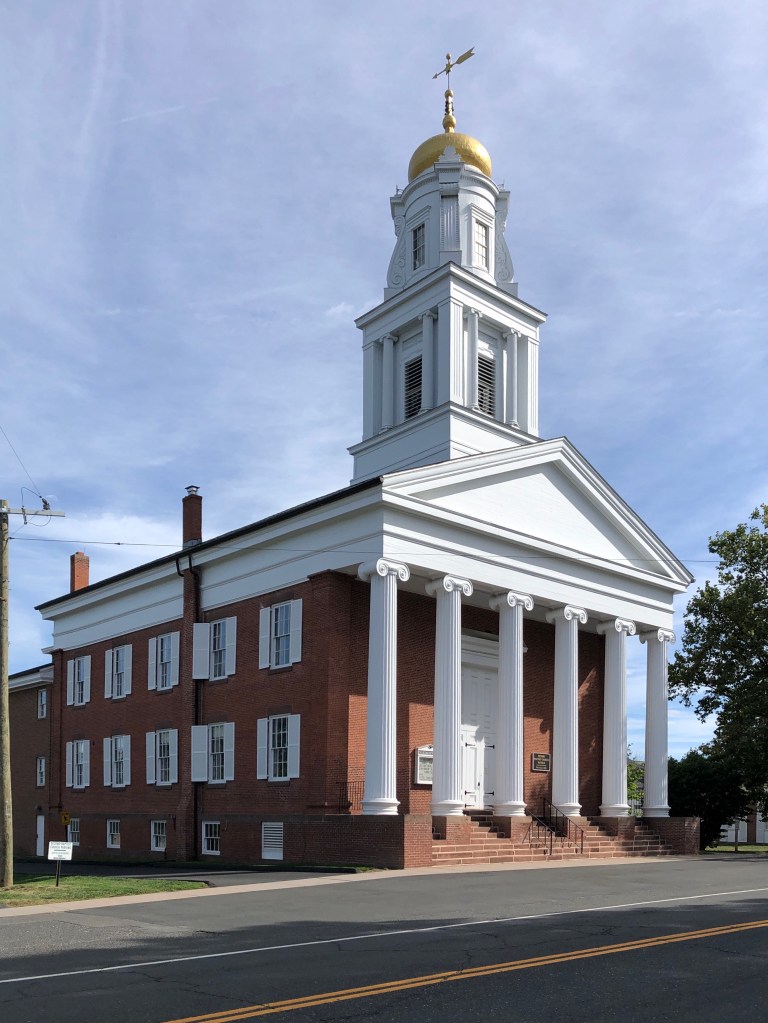
Old Whaling Church // 1843

Methodists on Martha’s Vineyard arguably left the largest lasting mark between religious groups on the island between Wesleyan Grove in Oak Bluffs and this stunning church in Edgartown. The Methodists in Edgartown grew with the success of the whaling industry there and their former church was outgrown, requiring a larger and more prominent worshipping space in town. Designed by Frederick Baylies, Jr., the Old Whaling Church was built by skilled shipwrights for Edgartown’s Methodist whaling captains and is regarded as one of the finest examples of Greek Revival architecture in New England. The Old Whaling Church was not only funded by mariners and those dedicated to seafaring trades, it was quite literally built by them, too. Baylies hired a crew of local carpenters who were equally as skilled in building churches as they were in constructing ships. The church is topped by a Gothic Revival clock tower which has crenellations, rounded arches, engaged pilasters, dentil cornice moldings and four spires capped with gilded acanthus leaf finials. The church was acquired by the Vineyard Trust in 1980, and they converted the old sanctuary into a performing arts space. The congregation meets in the former sanctuary in the summer months and in the vestry in the winter with its smaller numbers.

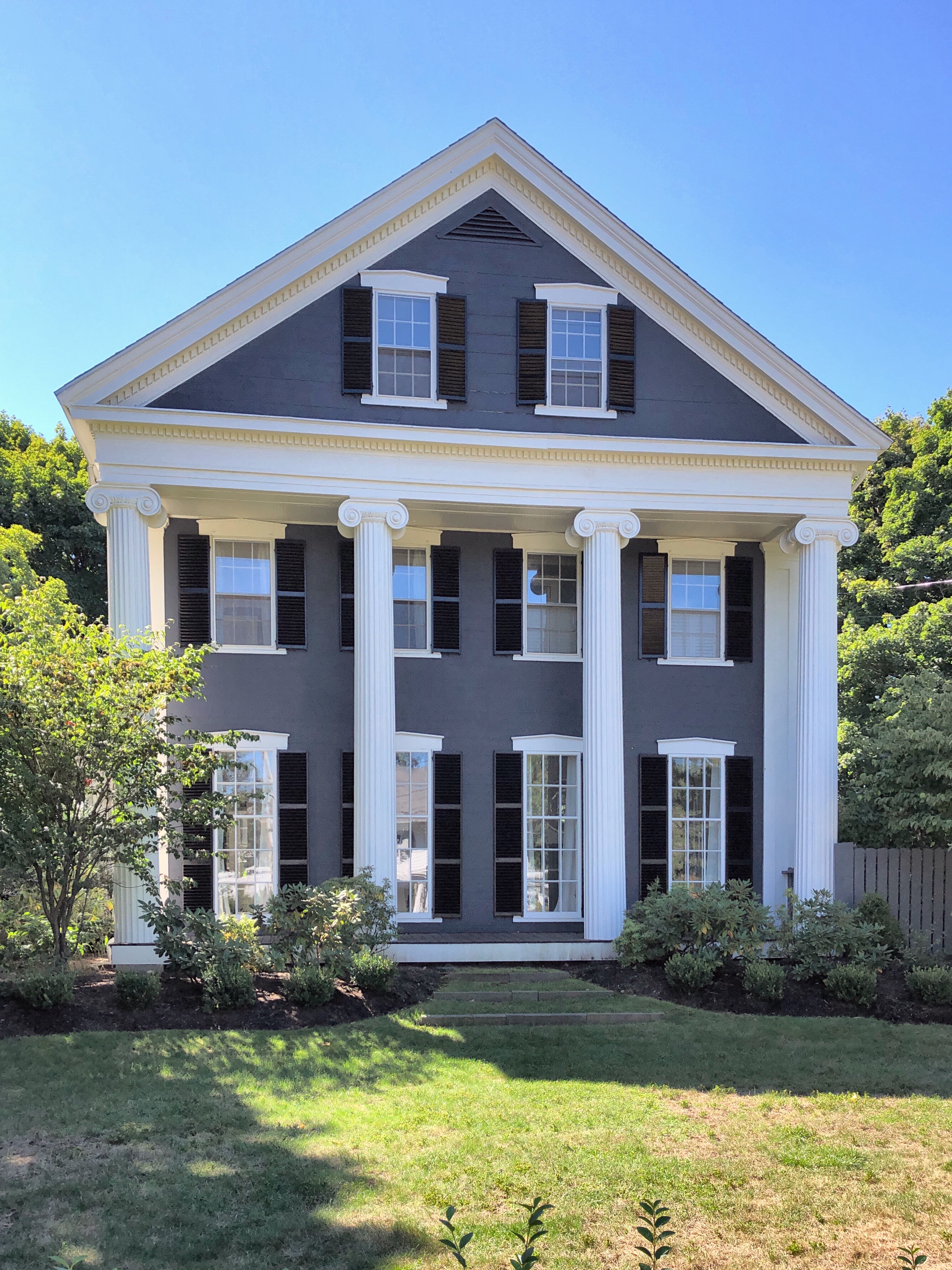
Captain Valentine Pease House // c.1830

This charming little Greek Revival house has a lot of history, tied to literature and the whaling industry that shaped Edgartown in the 19th century. The home was built in around 1830 for Captain Valentine Pease (1797-1870), a master mariner and captain of the Acushnet, a prominent whaling vessel which often departed from New Bedford. In 1841, Captain Valentine Pease, his crew, and a 21-year-old Herman Melville shipped out of New Bedford 1841 for eighteen months as Melville’s only whaling voyage. Melville took part in the hunting and killing of whales and in harvesting and processing whale oil aboard ship. He endured gales and calm, experienced excitement and boredom, followed ship’s discipline, all the while absorbing the lore of the veteran seamen who made up the Acushnet’s diverse and colorful crew. It is speculated that Valentine Pease was an inspiration for the character of Captain Ahab in Melville’s book “Moby Dick”.

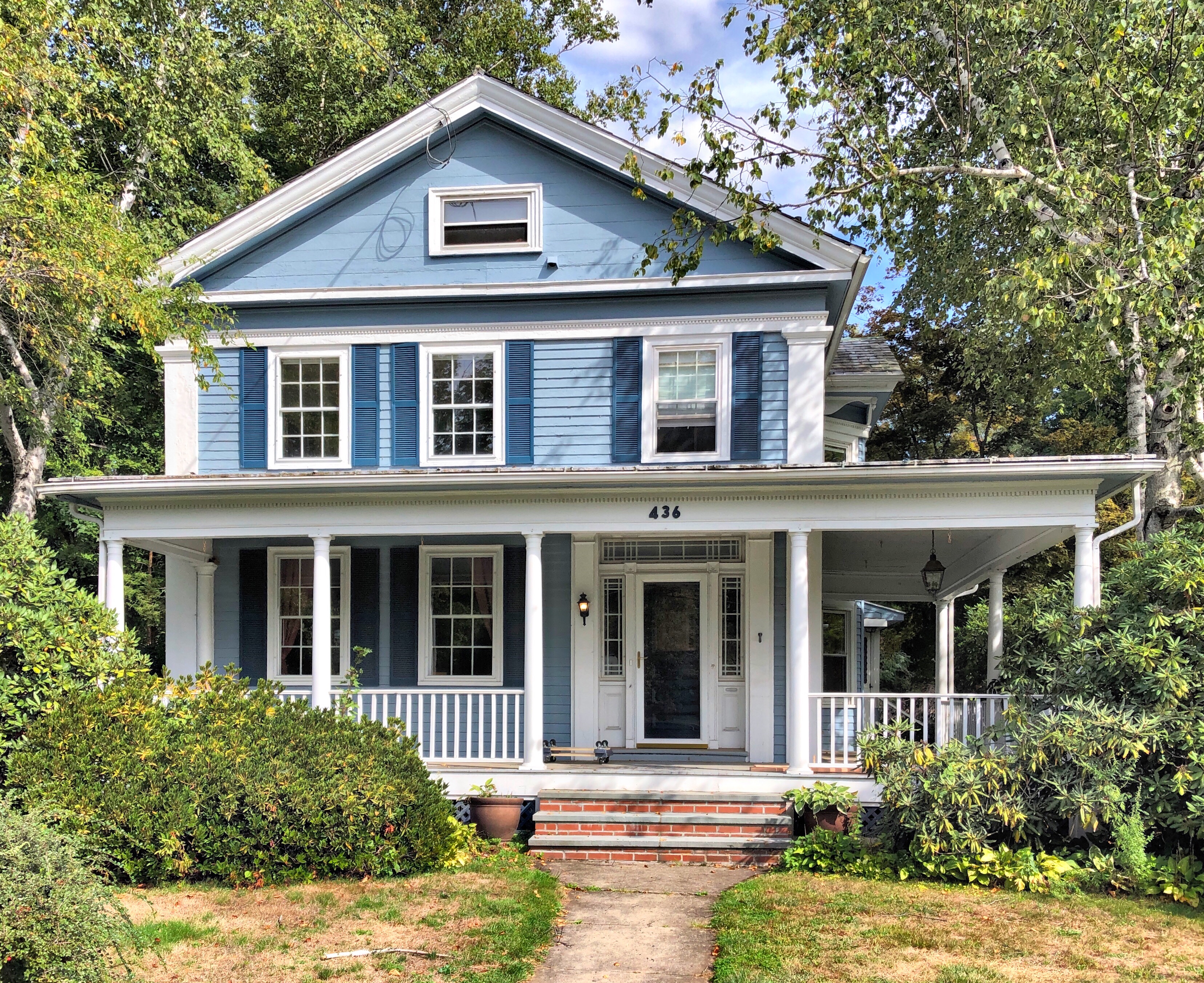
Capt. Sands House // c.1840

Edgartown on Martha’s Vineyard, became a primary whaling port in the early 19th century. Ships from all over the world would dock in its sheltered bay and captains would build grand mansions for their families on the tree lined streets, with sweeping views of the harbor. This modest whaling captain’s home was built around 1840 for Captain John Sands and his wife Eliza. John Sands worked as crew on various whaling ships based out of New Bedford, from the vessel Hector at age 22 before becoming a captain on the vessel Benjamin Tucker. Sands even brought his wife along on whaling ships, including a nearly four year excursion hunting for whale oil. The Sands home is the Greek Revival style with a gable front, six-over-six windows of varying sizes with flared lintels, and an off-center front door with sidelights and transom with an entablature above.

Martha’s Vineyard National Bank // 1855

Believe it or not, living on an island in the 19th century wasn’t as easy as you may think. Before this bank building was constructed in 1855, all banking was done off-island. The bank was constructed to house the newly formed Martha’s Vineyard National Bank, whose first president was Dr. Daniel Fisher, who made his money as a merchant and operator of one of the largest whale and sperm oil processing facilities in the country. The bank relocated to Vineyard Haven and the Edgartown National Bank was created to fill the void in town. Amazingly, the building is still to this day occupied by a bank, Rockland Trust, seemingly adding to the continuous occupancy of the building by banking facilities for well over a century. The structure is one of the oldest brick buildings in town and is a late iteration of the Greek Revival style.

Union Block // c.1842

Located in the Blackstone Block of Downtown Boston, this flatiron building encloses Marshall Street on the Freedom Trail, creating a tight, pedestrian-oriented street that once covered old Boston. The Union Block (c.1842) is a Greek Revival commercial block which typifies this network of short, narrow streets which somehow survived Urban Renewal and the coming of the highway in Boston. The longest running occupant of the building was Ward & Waldron Paper Hangings, which from my understanding, made wallpaper for the estates of Beacon Hill which were being built on the other side of town. After successive ownership, atlas maps show the ownership of the building in 1888 conveyed to Massachusetts General Hospital, which still held title to it past 1938. The building is now home to Bell in Hand, an iconic local pub that was founded in 1795 at another location.

Saint Elizabeth’s Center // 1838

The only two-story temple-front Greek Revival home in the Upper Falls Village of Newton, MA stands on Elliot Street, on the same block as the Mary Immaculate of Lourdes Catholic Church and Rectory. The home was built in 1838 at the present location of the church, but was moved in 1908 to its present location at the opposite end of the block for the erection of the large church. The original owner was Dr. Samuel Whitney, the village doctor who also operated his office out of the large house. By 1844, he moved to Dedham and sold the home and practice to Dr. Abraham D. Dearborn who ran his practice out of the home until the mid 1850s. After successive ownership by mill owners, the property was acquired by the Archdiocese of Boston who moved the home and used it as a rectory until the Colonial Revival rectory was built. The home has since been used as a parish center, but has not been well maintained over the years. Plans were unveiled in 2015 by a long-time resident to purchase the home from the Catholic Church for conversion of a community center with offices for non-profits, but it has not materialized sadly. Its future is unclear.

Pettee Caretaker’s Cottage // c.1840

One of the rare early stone cottages in Newton, this charming building in Upper Falls Village has an interesting history! The stone cottage was built around 1840 by Otis Pettee (1795-1853), a major mill owner in town. This cottage specifically served as a shop and later as the residence of the caretaker of the silk mill a couple blocks away. Pettee likely had this building and the adjacent barn constructed with stone to limit the chance of a fire, destroying any valuable silk inside.

Upper Falls Village School // 1846

The Upper Falls Village in Newton, MA is a small industrial neighborhood which grew after the Revolutionary War due to its location on the Charles River where rapids and falls occur. Mills and factories were built in the village and thus, workers from other towns and even Europe moved here to work in the dozen manufacturing facilities. By 1850, the village had 1,500 residents, a quarter of those living in the town of Newton at the time, in a much denser area. With workers and families moving here, the need for a school was paramount. As the Upper Falls Village continued to grow, schools were built and demolished for newer and larger structures to house the growing population. In 1846, this two-story schoolhouse was constructed in the then popular Greek Revival style. The schoolhouse was quickly deemed inadequate and was sold when a new school closer to the center of the village was built in 1855. This building was then converted to commercial use, serving as a grocery and dry goods store and later a watchmaking shop, with the storefront added at the time.