The original purpose served by this small clapboard building in the Canterbury Shaker Village, built in 1837 and measuring just 12 x 25 feet is subject to some debate, although it was definitely used as a drying house. Early writings indicate it was built as an apple-drying house while others state that the original purpose was to dry lumber. The present off-center gable-roofed cupola on the gable roof served as a ventilator. In 1865, the building became the headquarters of the bee keepers of the local Shakers.
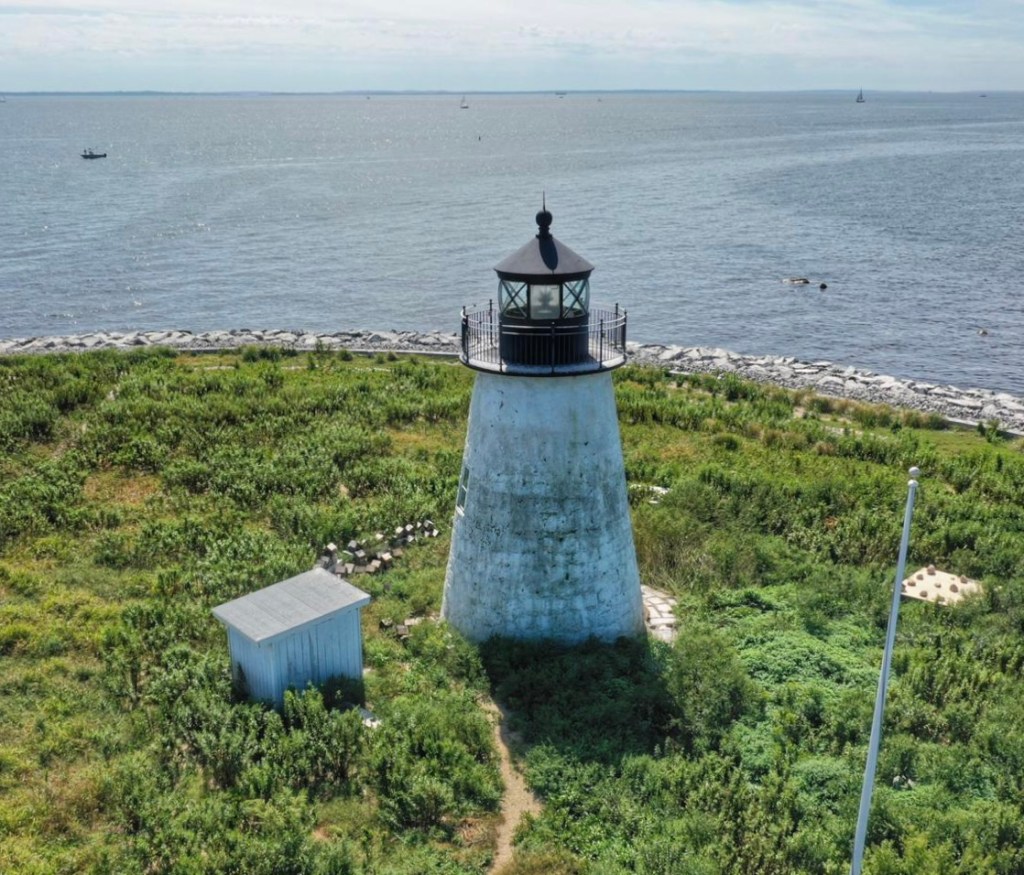
Bird Island sits about seven football fields away from the tip of the Butler Point peninsula, which juts out into Buzzards Bay in Marion. A small sitting area at the Kittansett Club provides a bench and amazing views of the open water and historic lighthouse in the distance. Immediately after the War of 1812, Marion became a hub of whaling and shipping with many sea captains building homes in town. As a result, Congress appropriated $11,500 for the purchase of Bird Island and the erection and stationing of a lighthouse. A 25-foot-tall conical rubblestone tower was constructed, surmounted by a 12-foot tall iron lantern. The accompanying stone dwelling was 20 by 34 feet, and a covered walkway connected the house and tower. William S. Moore, a veteran of the War of 1812, was appointed as the first keeper, which went into operation in 1819. There are legends about murder and hauntings on the island.
Moore’s wife, suffering from tuberculosis, would frequently get into liquor and cigarettes, and would become raucous when she did. When the villagers of Sippican would visit the island, many times they would bring her tobacco to the dismay of Keeper Moore. The legend claims that one morning, after returning from a shed on the island, he found his wife drunk and dancing through the snow. Reports are that he returned to the keeper’s dwelling, retrieved his rifle, and shot her. She is reported to be buried on the island, but there is no sign of a grave. Keeper Moore insisted that she had “succumbed from nicotine” when the townsfolk had asked what had happened. Many years later, when the keeper’s dwelling was being torn down in 1889, a rifle and a bag of tobacco were purportedly found in a secret hiding spot. With those items, was an alleged note that said the following:
“This bag contains tobacco, found among the clothes of my wife after her decease. It was furnished by certain individuals in and about Sippican. May the curses of the High Heaven rest upon the heads of those who destroyed the peace of my family and the health and happiness of a wife whom I Dearly Loved.”
The lighthouse is owned today by the Town of Marion. And the only residents are endangered roseate tern.
Just a stone’s throw away from the Marion Town Hall and Elizabeth Taber Library (yes, pun intended), this beautiful 200 year old stone building oozes charm. The building was constructed around 1820 as a salt works storage facility, and is an extremely rare surviving storage facility associated with the early 19th century salt industry. While many storage facilities we know today are void of architecture and soul, this building looks like it was plucked from the French countryside. The salt industry in Massachusetts began on Cape Cod during the Revolution. Salt was a vital necessity for the preservation and curing of fish and meat for sale in this country and overseas. According to local lore, the Old Stone Studio was originally “a place for the conversion of sea water into salt.” Around the Civil War, the building was being used as a whale oil refinery, a fitting use for a fireproof structure. It had fallen into disrepair by the 1880s, until New York magazine editor Richard Watson Gilder bought and restored it as a studio for his wife, artist Helena de Kay Gilder. Gilder renovated the building in the early 1880s as the town of Marion was becoming a vibrant summer colony. He added a massive stone fireplace and new windows to flood the interior with natural light. The towering fireplace, with its 9-foot long mantle, was apparently designed by leading 19th-century American architect and Gilder’s friend Stanford White of McKim, Mead & White. The fireplace provided a stunning backdrop for guests, including President Grover Cleveland and First Lady Frances Folsom Cleveland, who summered in town. Ms. Gilder even painted the First Lady in the studio, and hosted her on occasions.
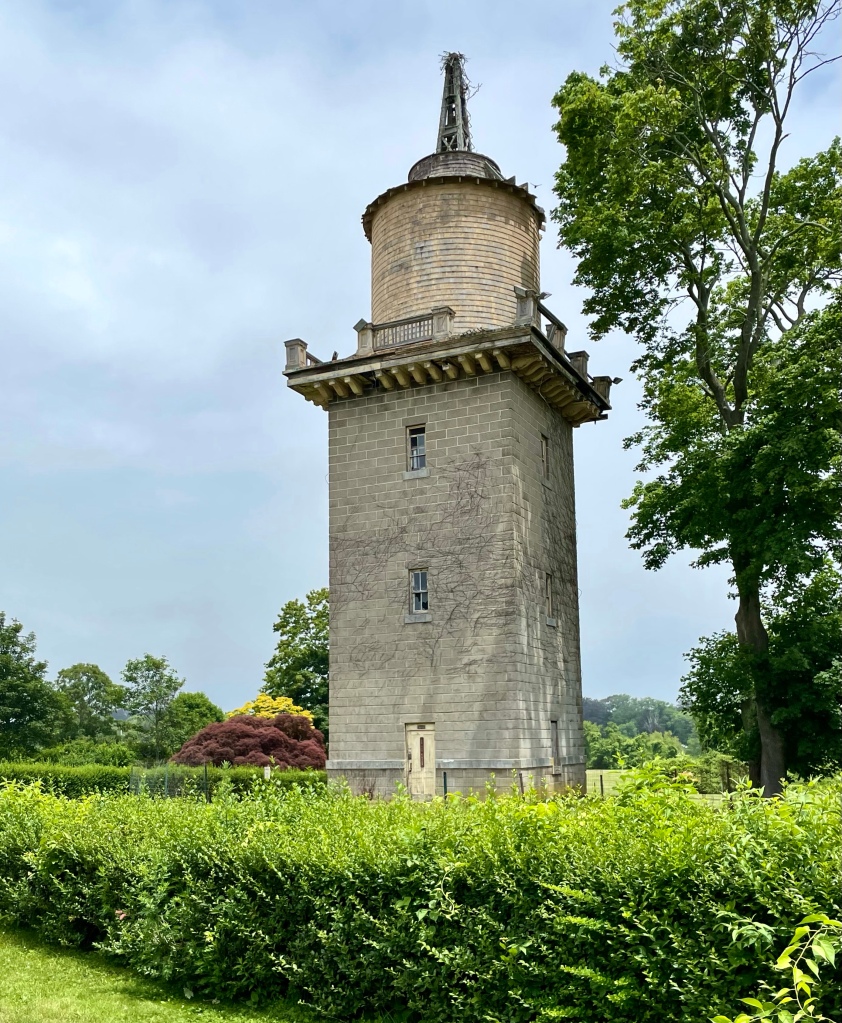
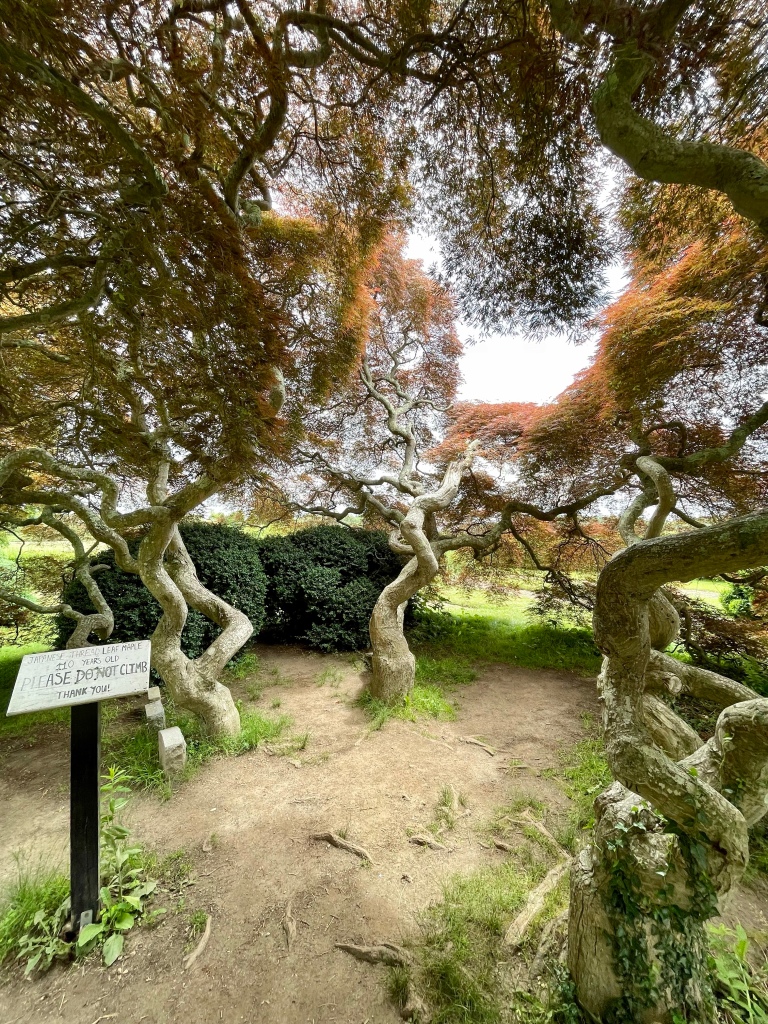
One of the most unique buildings on the grounds of the Harkness Estate has to be the most functional, the 1910 water tower. The structure was designed by architect James Gamble Rogers, a really under-appreciated architect who was commissioned by Edward and Mary Harkness to revamp their summer compound. The water tower features a skeletal frame with concrete block tower protecting it, surmounted by a shingled water tank which once had a functioning wind mill on it! Nearby the water tower, a garden designed by female landscape architect Beatrix Farrand frames the tower very well. In that garden sits a 110+ year old Japanese Thread Leaf Maple tree, which is probably the most beautiful tree I have ever seen.
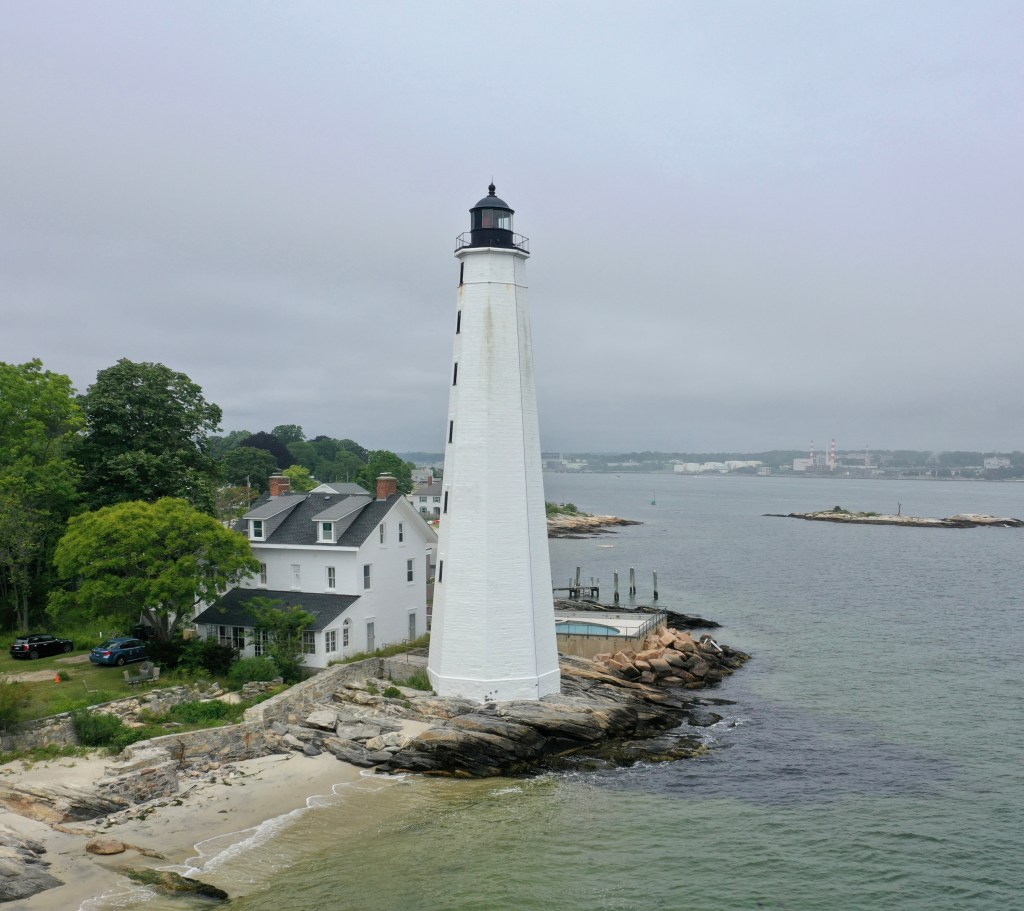
In 1760, the colonial legislature of Connecticut passed an act creating a committee to pursue the funding, construction, and staffing of a new lighthouse for the harbor entrance at New London. The following year, thousands of lottery tickets were sold to raise £500 for the lighthouse (a popular method of raising funds for construction projects in those days). The lighthouse, a sixty-four-foot-tall stone tower with a wooden lantern at the top, was finished that same year at the west side of the harbor entrance. By 1799, issues began to pile-up, including a crack in the structure compromised the integrity of the tower, compounded by the fact the light was so dim as to often be indistinguishable from the lights of the surrounding homes. These challenges led the charge for a new lighthouse. Congress allocated $15,700 for a replacement lighthouse on May 7, 1800, and New Londoner, Abisha Woodward began construction on the current octagonal, tapered, eighty-foot-tall tower. The present light was completed the next year and is constructed of smooth-hammered freestone which are lined with brick inside. The current gable-roofed, two-and-a-half-story keeper’s residence was built in 1863, and in 1900 it was expanded to provide quarters for the assistant keeper and their families. Today, the keeper’s house is privately owned and the light tower is owned by the New London Maritime Society, who offer tours of the light on occasion.
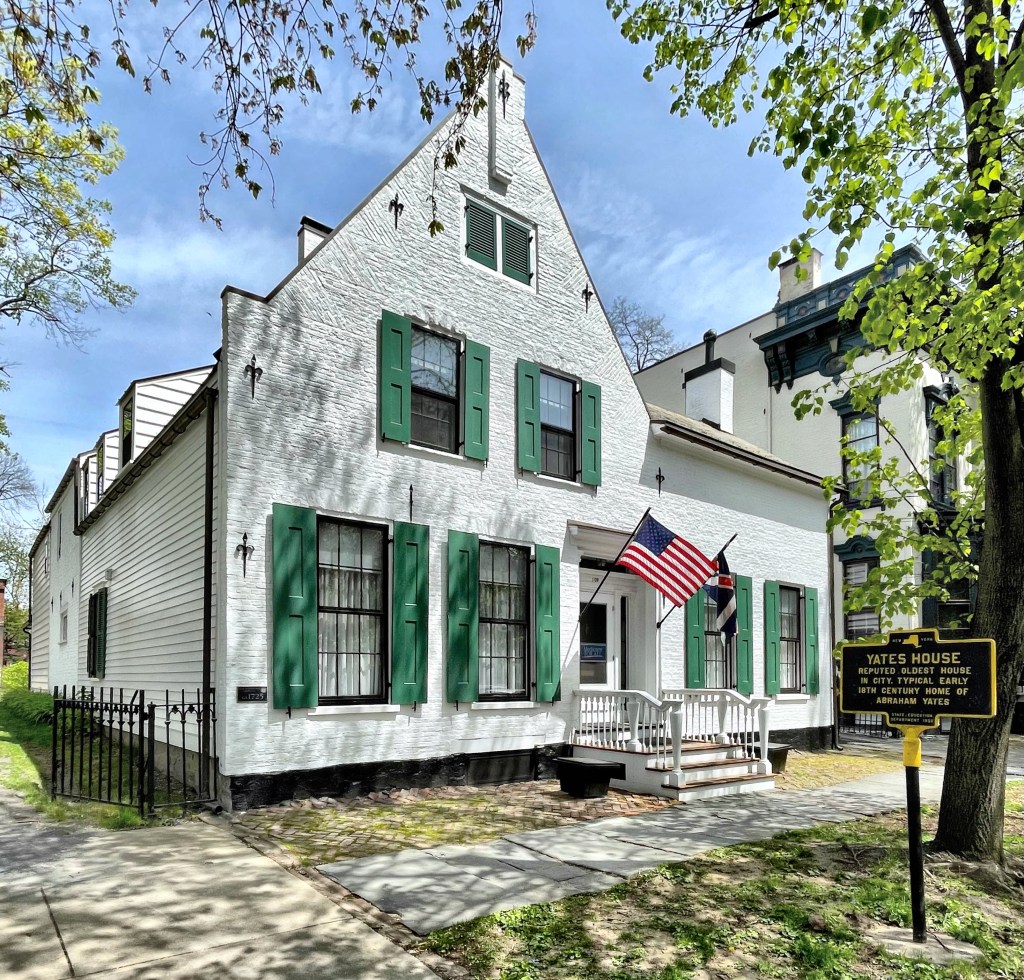
Thought to be the oldest extant home in Schenectady, New York, the Yates House serves as an excellent example of Dutch-inspired architecture found in the days before the founding of the United States of America. The house, believed to have been constructed around 1730, is an example of Dutch Colonial architecture. Dutch Colonial architecture was clearly common in New Netherland, present-day New York. As a contrast with New England, which featured British-inspired Georgian architecture, the homes and buildings found in the New Netherland colony was unapologetically Dutch. The Yates House in Schenectady’s Stockade neighborhood features a Dutch gable end wall facing the street with interesting brickwork.
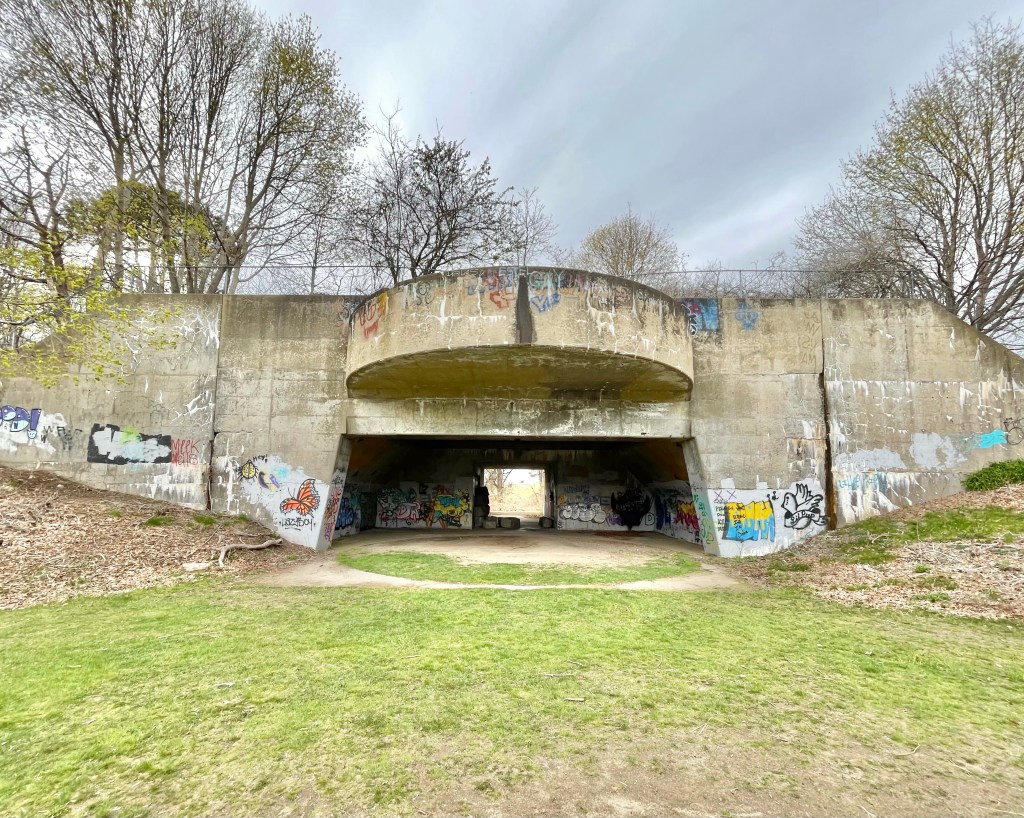
Odiorne Point in Rye New Hampshire was owned by the Odiorne Family from at least 1800, when the family built a farmhouse on the land. The peninsula juts out into the Atlantic Ocean, just south of Portsmouth, and it was seen as a strategic position by the United States Government, to protect the Portsmouth Naval Shipyard. With the advent of World War II, the United States Government deemed it necessary to improve the fortifications commanding the approaches to the Portsmouth Navy Yard, so the Government acquired this property and named it Fort Dearborn. Giant 16” coast defense guns and other equipment were installed to protect the coast from the impending German advance into North America. The Government acquisition on Odiorne’s Point included Mr. Odiorne’s home and 24 other properties, with many fine old homes on the coast demolished to make way for military facilities, but the Odiorne house was converted to a barracks. When The Nazi forces were beat in Europe, the fort was deactivated and all the guns were removed. In the Cold War period, the U.S. Air Force took formal possession of 45.3 acres at Odiorne’s Point in 1955, which it had been using since 1949 as the Rye Air Force Station. By 1961, the defensive use of the site was not as important, and the site was sold to the State of New Hampshire as a State Park. Today, you can explore the park and the decaying concrete batteries up close, which is a favorite excursion of mine.
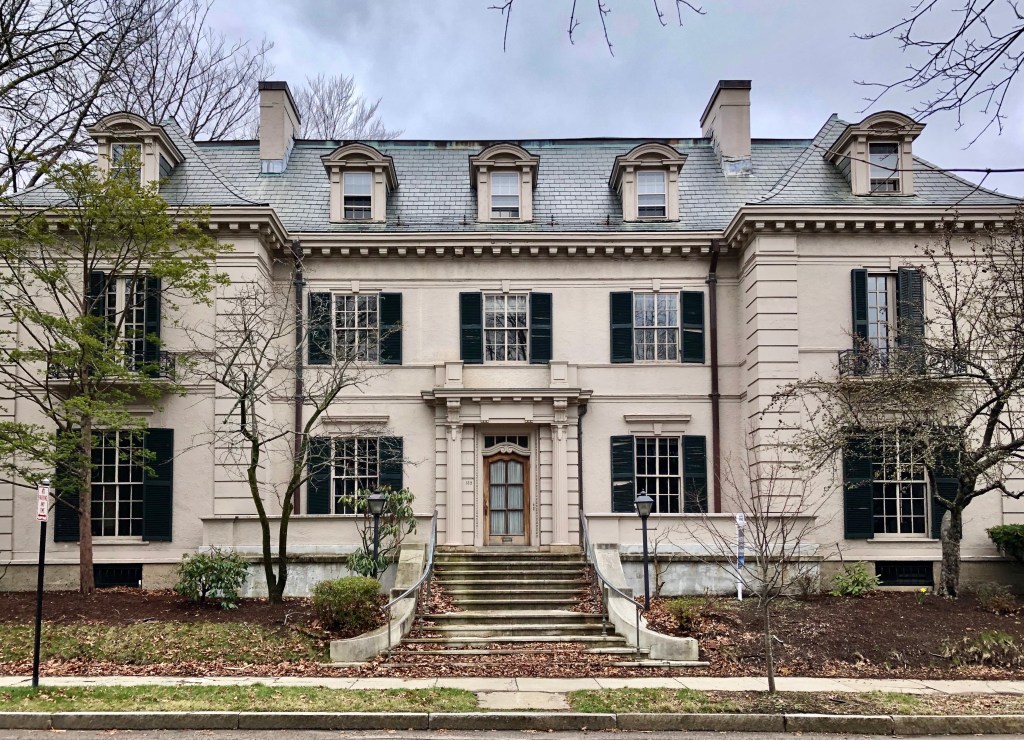
This stunning home in Brookline’s Cottage Farm neighborhood was built in 1908 for Bernard Jenney, the assistant treasurer of the Jenney Oil Company. Stephen Jenney, had founded Jenney Oil Company in Boston in 1812, as a kerosene, coal and whale oil producer. By the 1860s, Bernard Sr. and his brother Francis took over the company which became known as the Jenney Manufacturing Company. The newly established company focused primarily on production and distribution of petroleum products for factories and businesses. The Jenney Manufacturing Company took off in the early 1900s due to the proliferation of personal automobiles in Boston and they expanded a new manufacturing center in City Point, South Boston, which had a capacity of 500 barrels of oil a day. Jenney auto oil and gasoline became a major supplier and after Bernard Sr.’s death in 1918, under Bernard Jr.’s leadership, the company began to develop gas stations in New England. The company continued into the 1960s when it was acquired by Cities Service, later rebranding as Citgo. Jenney resided here until his death in 1939. According to the 1935 Brookline street list, the occupants included his daughter’s family Mary & Francis Brewer, three maids and a laundress. The house was acquired by Boston University in 1963 and has long served as the home of former president John Silber.
The architectural firm of Kilham & Hopkins was hired to design the home, which is French Renaissance Revival in style. The home itself is an architectural landmark. When it was published in ‘The American Architect’ in 1910, the house was described as, “A Study in French design of the Louis XVI period”. Additionally, the home (of course) featured a vehicle garage as the family must have had some cars based on the line of work. The home is now listed for sale for a cool $4,888,000 price tag!
Located on the appropriately named Netherlands Road in Brookline, MA, this house was actually designed as a temporary structure as part of the 1893 World’s Fair, also known as the World’s Columbian Exposition or the White City, depicted in the great book, Devil in the White City. The Dutch House was constructed in 1893 by the Van Houten Cocoa Company of the Netherlands, as a display pavilion and cocoa house. It was located at one end of the Manufactures and Liberal Arts Building (the largest building ever constructed at the time). The Dutch House as we know of it today, was greatly inspired in design by the Franeker City Hall (c. 1591) in the Netherlands. While attending the World’s Fair, Captain Charles Brooks Appleton of Brookline be.came so captivated with the structure that after the Fair, he purchased the building and had it dismantled and transported to Brookline. By the early 2000s, much of the amazing carvings on the building had fallen off, until a new homeowner had them all restored from drawings and images of the building, to the iconic landmark we see today.
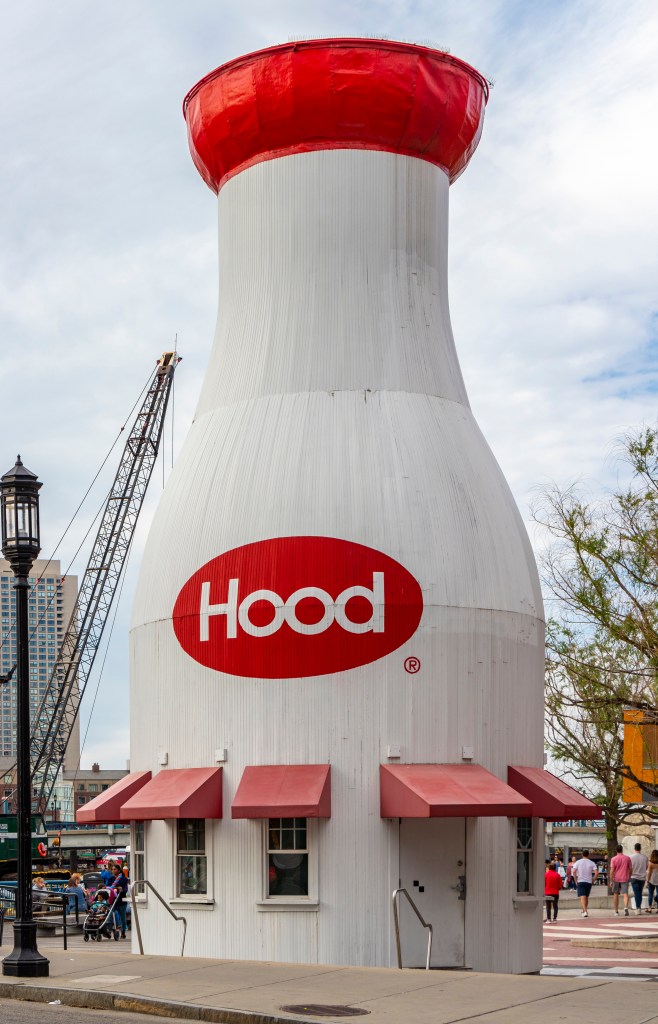
Boston’s iconic Hood Milk Bottle has been an iconic fixture in the city’s built environment for decades, but do you know about the history behind it? The architectural oddity was born in 1933-4 in Taunton, Massachusetts, the brainchild of Arthur Gagner who created it as roadside attraction in which he could sell his homemade ice cream. The Milk Bottle beckoned to local families with its impressive size (the structure is 40 feet tall, 18 feet wide, weighs 15,000 pounds, and would hold 58,620 gallons of milk, if it were a real milk bottle)! As car ownership became commonplace, giant donuts, coffee pots, hot dogs, and other surreal shapes rose up on roadsides across the country, enticing motorists to pull over from the busy, new freeways. Gagner peddled sweet treats from his whimsical wooden stand for a decade before selling the building to the Sankey family, who also used it to sell ice cream. But by 1967, the bottle had been abandoned. In 1974, photographer Walker Evans took a Polaroid of the forlorn building, which brought Hood Milk, native to Charlestown, to the table. With a quote of $25,000 to repair it, Hood agreed to cover that cost if the Bottle could be renamed The Hood Milk Bottle, and the structure was to be located on City Hall Plaza, until the architect of the plaza called the Mayor’s Office stating their displeasure with that idea. They then contacted the newly relocated Boston Children’s Museum, who agreed to locate the bottle on their property. The Hood Milk Bottle was delivered to the Museum in 1977 from Quincy (where the repairs were made) on a barge with two fire boats steaming alongside, on a voyage the Hood Company dubbed the “Great Bottle Sail”, where it has remained to this day. It recently underwent a $350,000 renovation, restoring it to its former glory. So no crying over spilled milk!




 Buildings of New England
