Newport Opera House // 1886

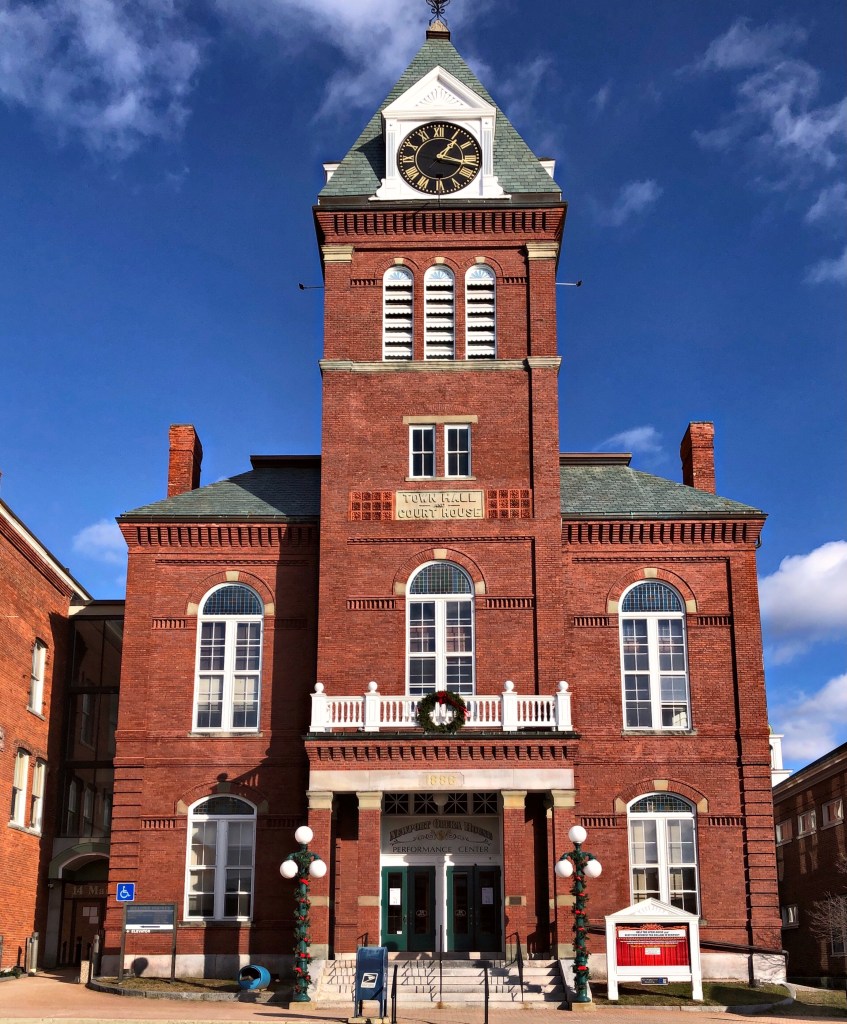
The architectural focal-point on Main Street in Newport, NH is the Newport Opera House, with its solid massing and prominent central tower. The town was growing after the American Civil War and its position as County Seat solidified that growth. A new large civic building was erected in 1872 which housed a new courthouse and town hall. A fire destroyed much of the buildings on Main Street in 1885, and destroyed the courthouse and town hall building. As a response to the loss of the building, a fire-proof structure was erected from designs by Hiram Beckwith, a regionally prominent architect from Claremont. The structure featured space for the county, town, and even an opera house! The jewel of the new building was the Opera House located on the second floor that housed a stage considered the largest north of Boston. The Newport Opera House soon became the center of entertainment in Sullivan County and patrons came from far away to enjoy the large variety of programs presented. The large hall played host to dances, boxing matches, weddings, political rallies, plays, school graduations and more! After a period of severe decline, a group of artists and residents of town worked together to restore the building and use the space as a performance center. It remains one of the finest buildings in this part of the state.

DeWolf Block // 1893

Located next door to the Lewis Block (last post) on Main Street in Newport, NH, the DeWolf Block showcases late Victorian design before the more generic 20th century main street architecture took hold. The DeWolf Block was built in 1893 by Samuel DeWolf Lewis, who also erected the Lewis Block, both named after himself. As was traditional with many business blocks, fraternal organizations occupied the upper floor of the building, and retail uses were located on the ground floor. In the case of the DeWolf Block, it was the Knights of Pythias. By the 1950’s the DeWolf Block was home to J. S. Hirsch Department Store, operated by Joshua & Sally Hirsch, until it was purchased by the Hubert family in the 1970’s. The Huberts operated a clothing store
there until the building was purchased by Sullivan County and has since housed the county offices. The DeWolf Block is a modest Romanesque Revival style building with large, round arched windows at the third story.

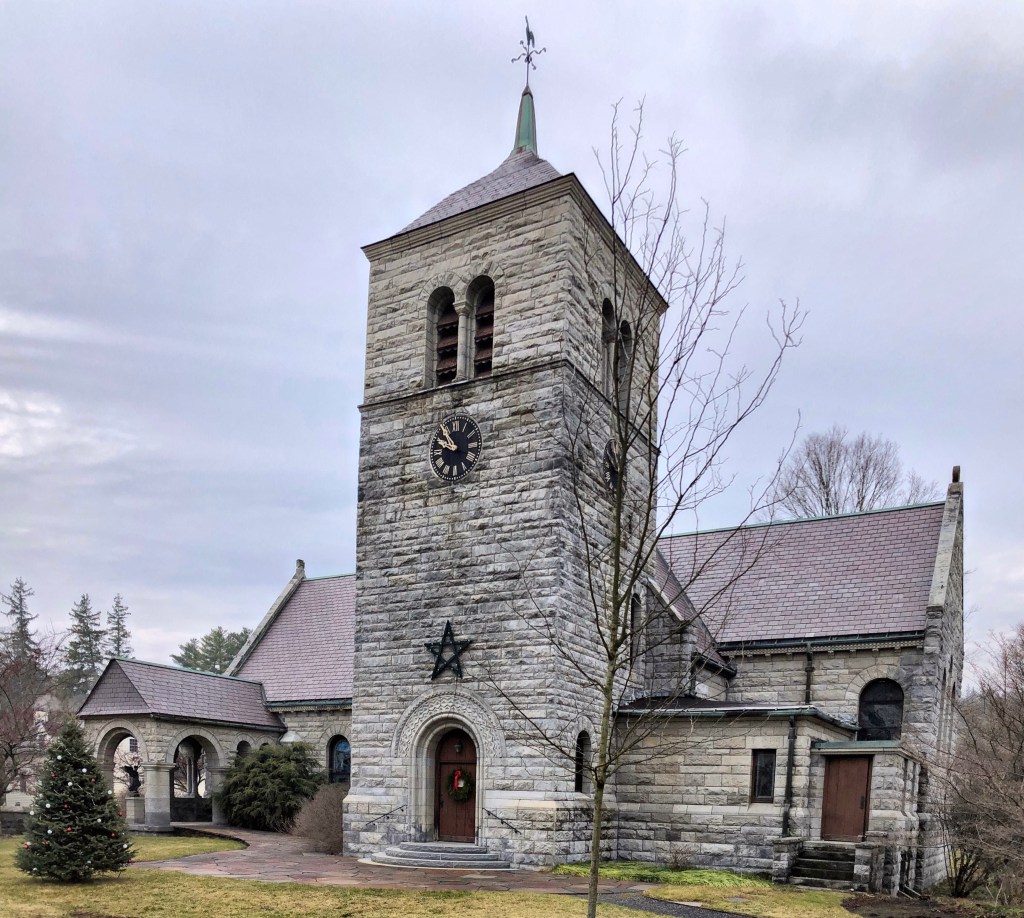
St. Paul’s Church, Stockbridge // 1884

Located on the idyllic Main Street in Stockbridge, MA in the Berkshires, this stone church marks the emergence of the once sleepy town into a summer retreat for wealthy citizens, escaping the cities in the late 19th century. This building is Charles Follen McKim’s first church design, a building reflecting his early training in the office of H. H. Richardson with the use of Romanesque detailing, though with a hint of Norman design. St. Paul’s Church is constructed of gray Berkshire granite with stained glass windows by John La Farge. The church replaced an older wooden church building designed by Richard Upjohn in the Gothic Revival style. The church was almost entirely funded by Charles Butler, a New York lawyer who wanted to honor his late wife Susan Ridley Sedgwick Butler, a descendant of Theodore Sedgwick, whose home I featured not long ago.

Pequot Library // 1894

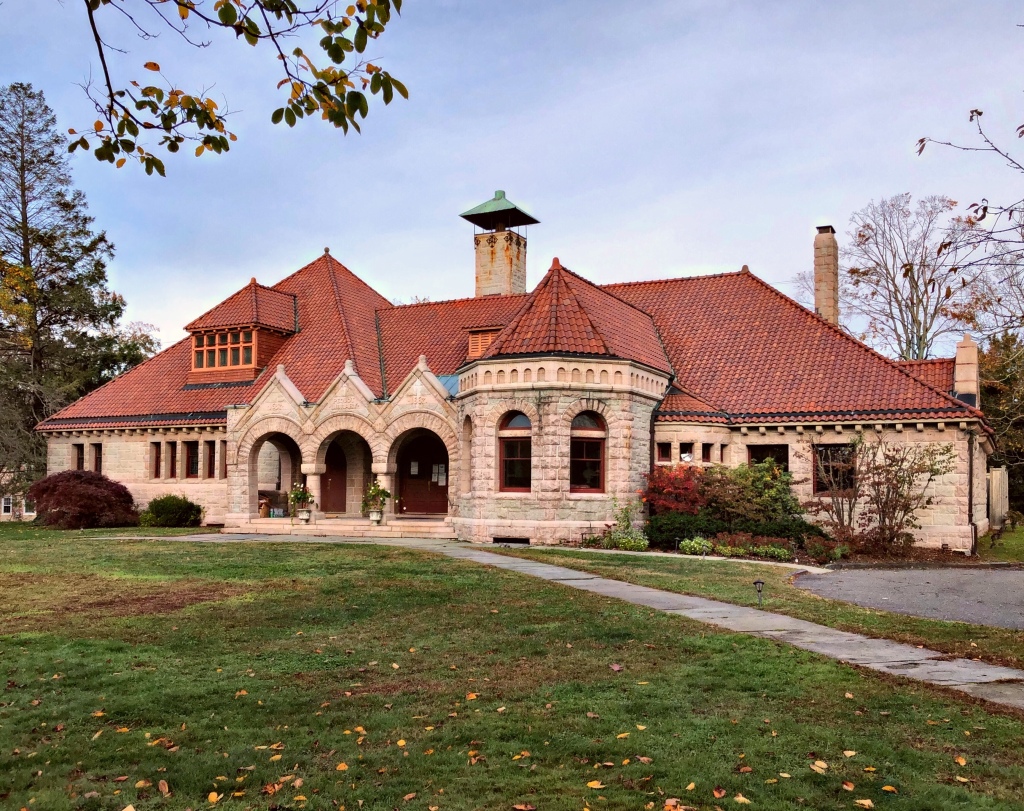
The Pequot Library in Southport, Connecticut was founded in 1889 by Virginia Marquand Monroe and her husband Elbert B. Monroe. The library, designed by noted New York City architect Robert H. Robertson, opened to the public in March 1894. The building is Romanesque Revival in style in a granite sandstone construction. There is an expansive roof area topped with red tile and hipped dormers; an arcaded entrance porch with three arched openings serves as the focal point of the front facade. It was Mrs. Monroe’s intention that Pequot be as “free as air to all”, which it remains as to this day.

First Church Congregational of Fairfield // 1892

The First Church Congregational in Fairfield, Connecticut is the sixth church to occupy this site! The first structure was built in 1640, and the current building was constructed in 1892. The third version of the church was burned by the British in 1779, while the fourth “meeting house” took nearly 42 years to finish and was partially funded by the sales of properties which formerly belonged to Tory sympathizers. The Romanesque Revival church was designed by architect J. Cleaveland Cady, who is best known for his design of the south entrance of the American Museum of Natural History on the Upper West Side of Manhattan.

First Church of Christ, Suffield // 1869

Located adjacent to the Town Common, the First Church of Christ in Suffield showcases the grandiose architecture seen in many churches after the Civil War in New England. This brick edifice is the fifth in the history of the church which dates back to around 1680. The church was designed by local architect John C. Mead, who designed many churches in the region. The church is a blending of Italianate and Romanesque Revival styles and originally featured a tall spire and secondary tower. In 1938, the New England Hurricane destroyed the tall spire (a similar event occurred to many New England Churches, including Old North in Boston). Even without the steeple, the church remains as a great architectural treasure in town.

Boylston Building // 1887

2019 image courtesy of Brandon Bartoszek.

Built by the Boylston Market Association, replacing the former Boylston Market (1810-1887) in Downtown Boston, the Boylston Building is a great example of late 19th-century commercial design in Boston. The Association hired German-born architect Carl Fehmer (who also designed the amazing Beaconsfield Terrace housing in Brookline) to design a structure that would stand up to the architectural landmarks along Boylston and Washington Streets nearby. Fehmer’s design exhibits many features of the emerging Commercial style (also known as Chicago school style) of architecture which promoted new technologies of steel-frame construction in commercial buildings with masonry cladding, while clearly showcasing the Romanesque round arch windows. In the mid-20th century, this area of Downtown Boston became known as the ‘Combat Zone‘, Boston’s Red Light District, flooded with prostitution, drugs, and adult video stores. The Boylston Building was occupied by an adult video store and dive pizza shop. The building and area surrounding are different today, but you can always find some characters nearby!

North Adams Universalist Church // 1893

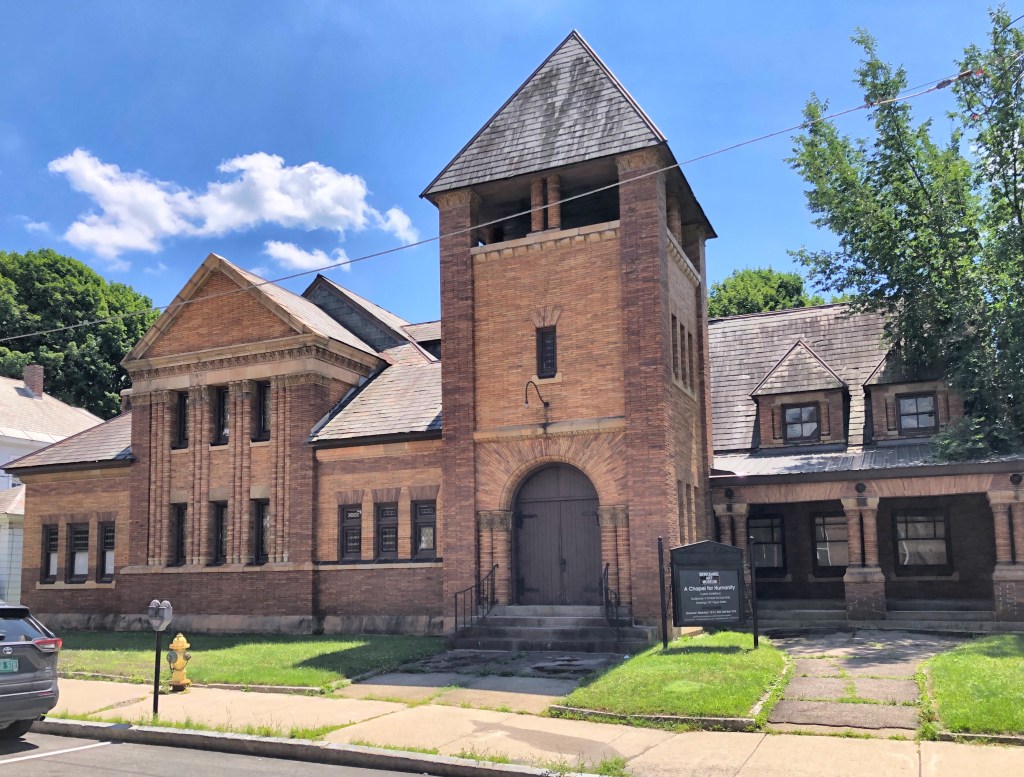
Tucked away off Main Street in North Adams you’ll find this charming little church. The Universalists were organized in North Adams in 1842, restoring an existing church near the Hoosic River. The congregation chose a site for a new church in 1852, and erected a white wooden chapel. It is unclear if the church was outgrown or a fire destroyed it, but the Unitarian society voted to build this church for a cost of approximately $25,000 in 1892. Architect Henry Neill Wilson of Pittsfield drew the plans, and the firm of Porter and Harnam of North Adams constructed the church. Due to the declining population in town in the mid-20th century, the church struggled and was sold to a private owner. The building began to decay by the 1970s and was later sold in 1996 to Barbara and Eric Rudd to house artist Eric Rudd’s installation entitled “A Chapel for Humanity”. The building is currently used as the Berkshire Art Museum Annex.

New Kimbell Building // 1902

Located on Main Street in North Adams, you’ll find this monstrous commercial block looking like it belongs in New York, not in Western MA. North Adams in the early 20th century was booming as an industrial center with a rapidly growing population. Due to this, business owners had the capital and clientele needed to erect large commercial buildings. A man named Jencks Kimbell owned a couple large parcels of land on Main Street and ran a livery stable there until his death in 1858. The business was ran by his sons until their death and the property was willed to their widows Clara and Lydia who saw the potential for the site to make them money. In 1902, the two widows erected this magnificent block on Main Street, with a stone facade. Built on top of a quicksand pit, it was the first building in North Adams to be built on steel pilings. I could find no information on the architect, but it is Eclectic to say the least! It has Romaneque arches, monumental pilasters with Corinthian capitals, and a Swan’s neck broken pediment at the parapet.

Hoosac Savings Bank // 1893

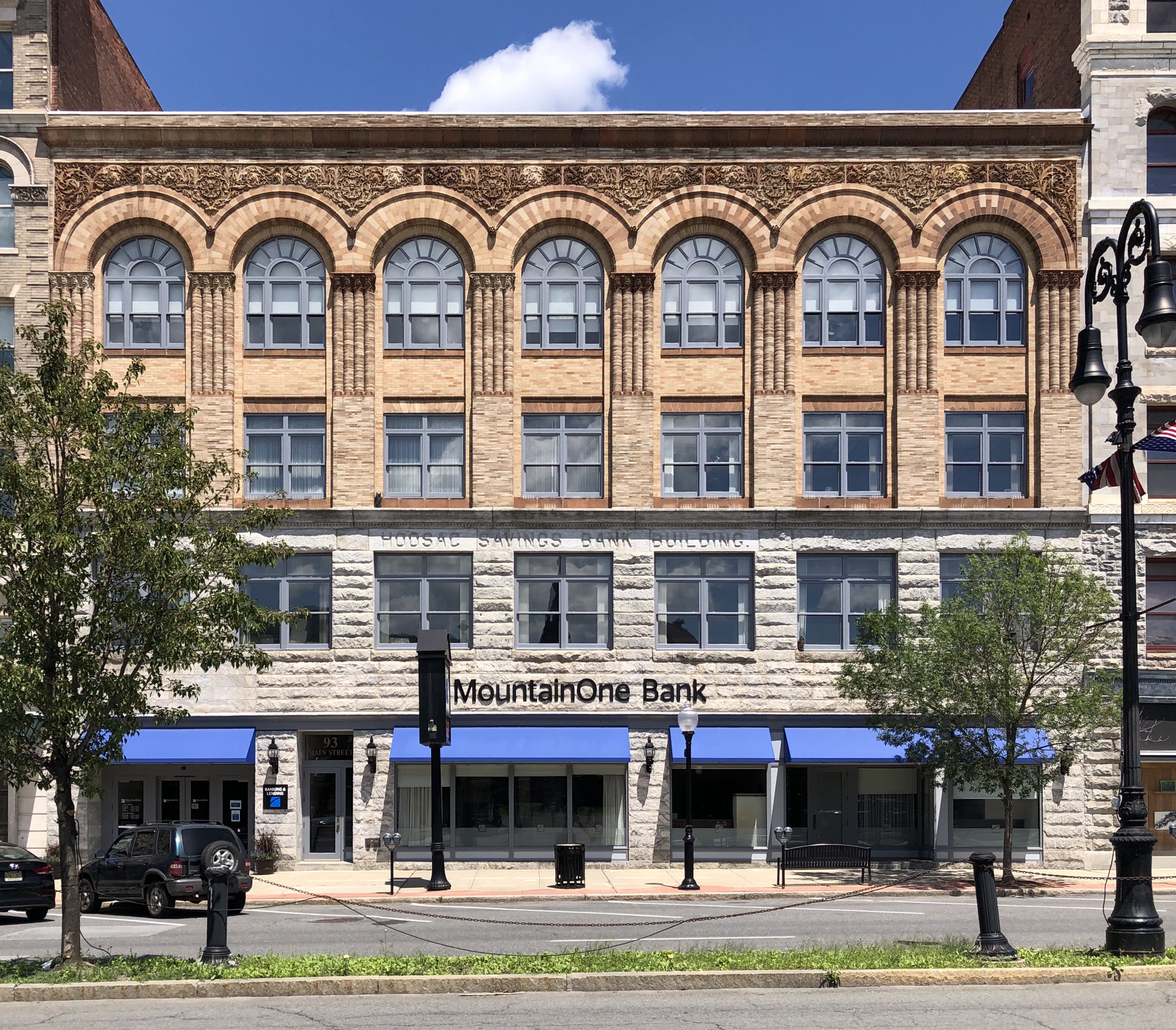
Located in Downtown North Adams, this beautiful Romanesque Revival commercial block is one of the better designed buildings in the region. Designed by architect H. Neill Wilson of Pittsfield, the Romanesque headquarters with fine terra cotta decorations cost $60,000 to build. When built in 1893, the stone over the storefronts were carved to display the bank’s name. The two venerable institutions merged into the North Adams Hoosac Savings Bank in 1962. In 2013, the bank merged with MountainOne Bank.