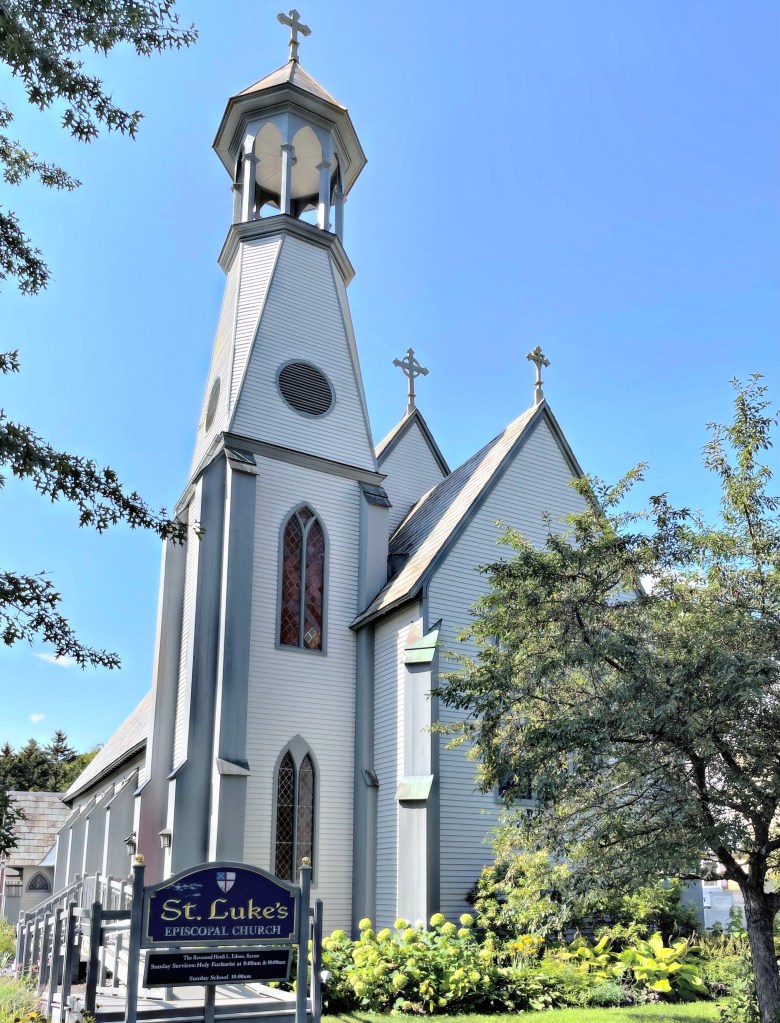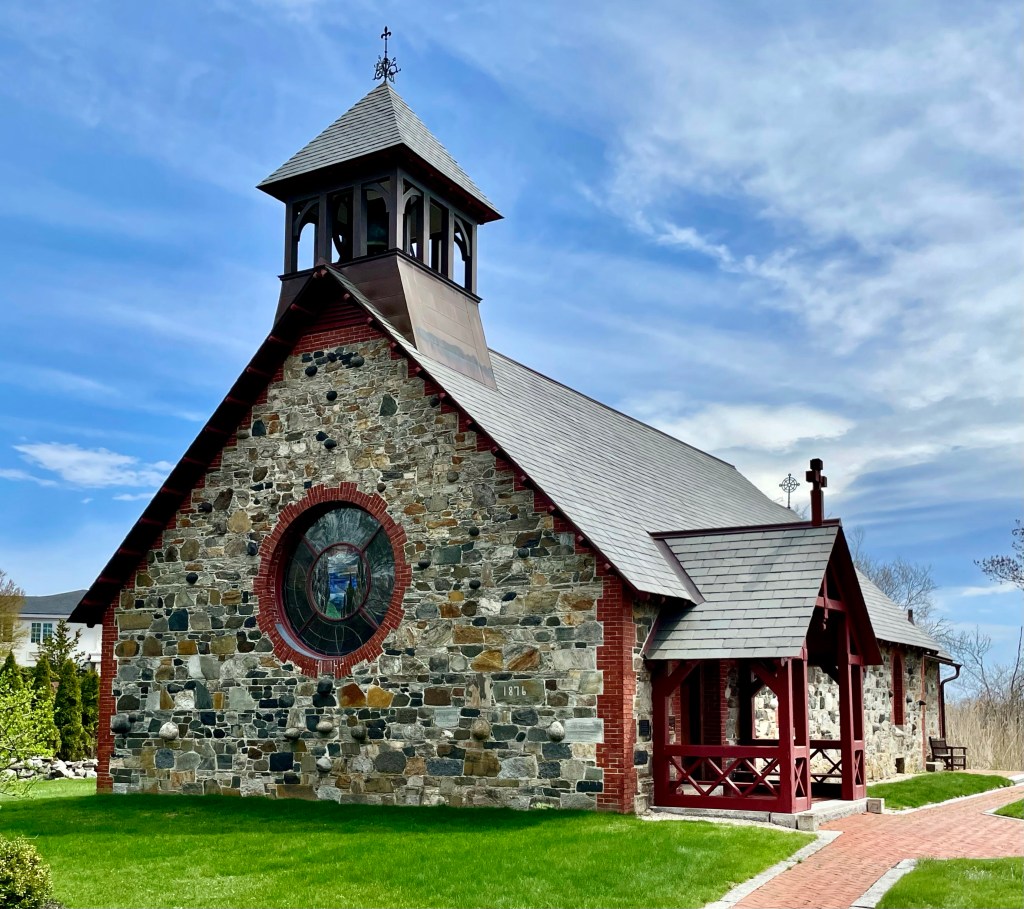
St. Andrews-by-the-Sea // 1876

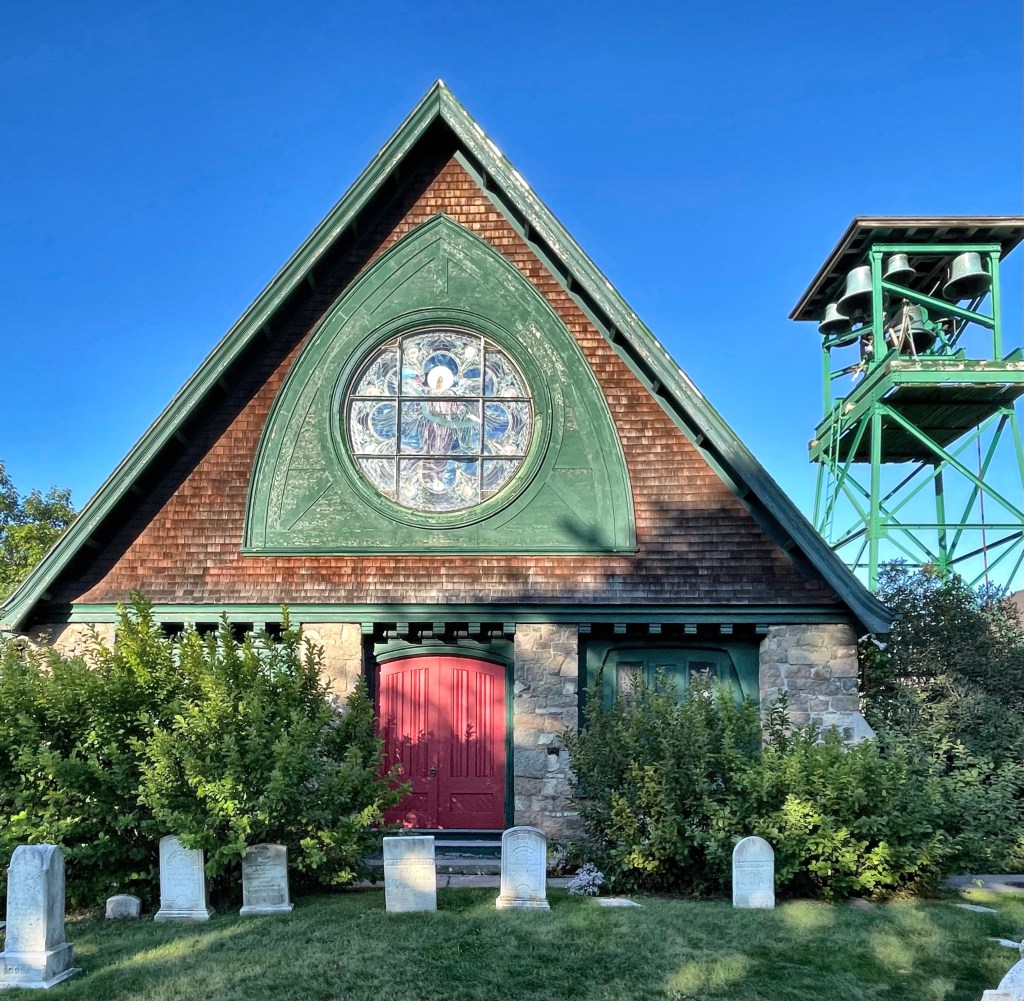
In the mid-to-late 1800’s, Rye Beach on the coast of New Hampshire was a popular summer residences for wealthy families from New York, St. Louis, Chicago, and other mid-western cities. Church services were important to these summer residents who united together to build this chapel, which before its construction, had to go to services at the casino in the colony (not ideal). Generally, wealthy summer residents here brought their household staffs, who lived in the many hotels and boarding houses along the beach. Some of these servants and employees of the hotels were African-Americans, who used St. Andrew’s for their own worship services and meetings. The summer chapel was built in 1876, completed that next year and is one of the most stunning chapels I have seen in New England. St. Andrew’s was designed by the architectural firm of Winslow and Wetherell. It is a unique example of a small rural stone chapel embellished by wooden trim and owes much to both the Stick and late Gothic styles. English country parish churches clearly inspired the chapel’s design and the use of rubblestone construction (likely of stones that were taken from the site) makes the building pop! Oh and that rose window at the facade!

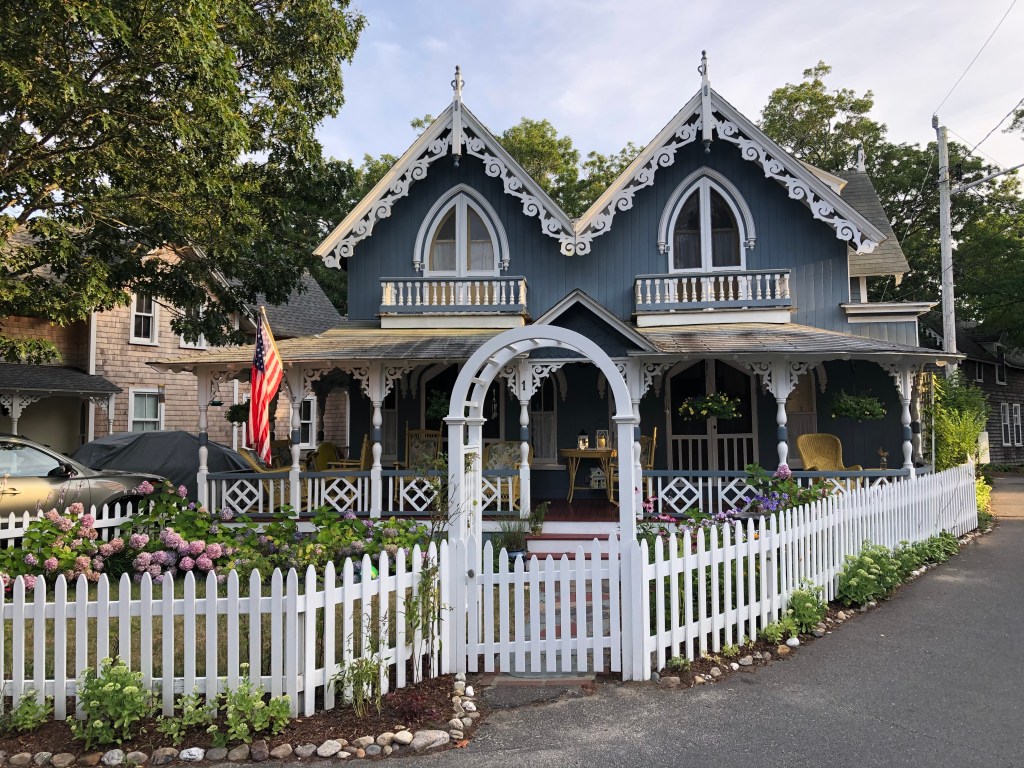
Tower Cottage // c.1880

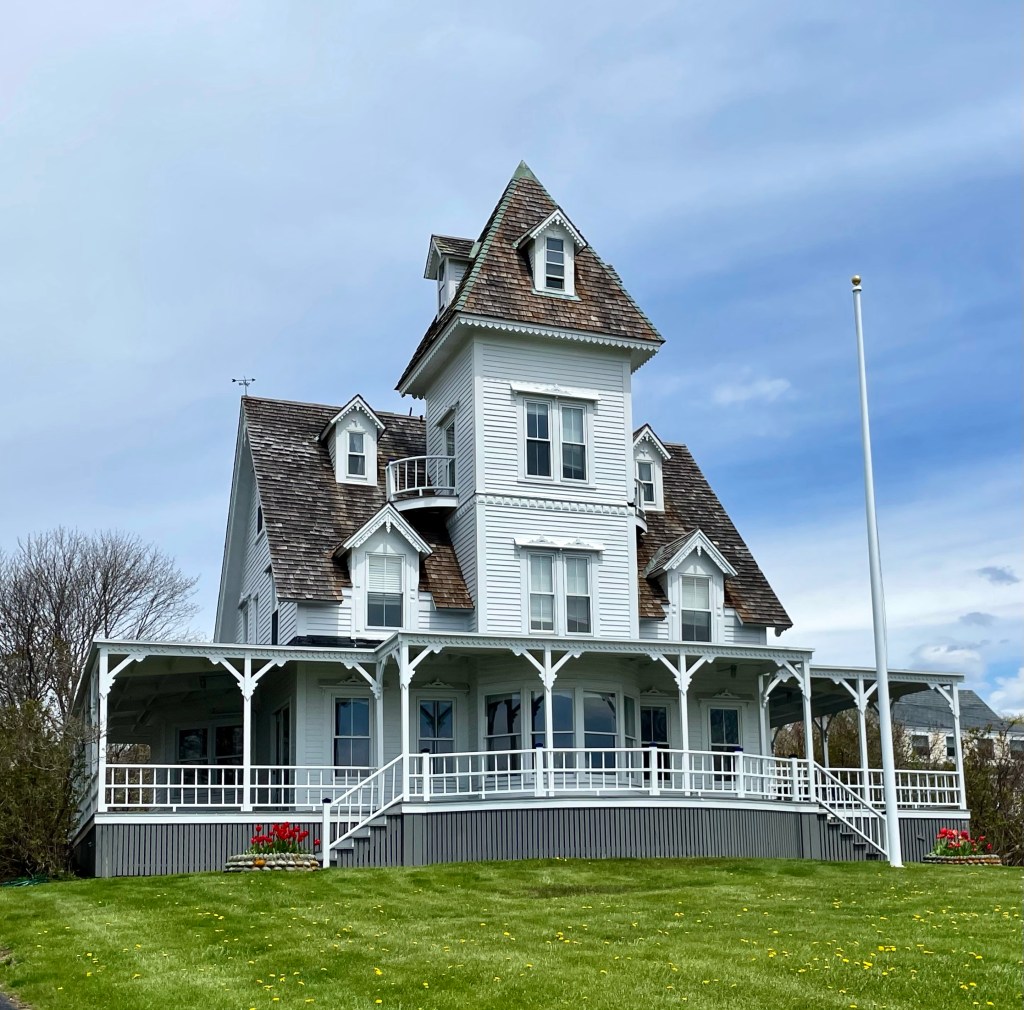
Located in the Foss Beach section of Rye, NH, this Victorian summer cottage stands out among the later new construction of lesser detailed and quality late 20th century homes seen here lately. The home, known as “Tower Cottage” was built at the end of the 19th century and exhibits Victorian Gothic elements with a massive center tower. The steep wood shingle roof is punctuated by two rows of delicate dormers which add detail and views to the ocean. The massive wrap-around porch is also a must for such a prime location fronting the Atlantic Ocean!

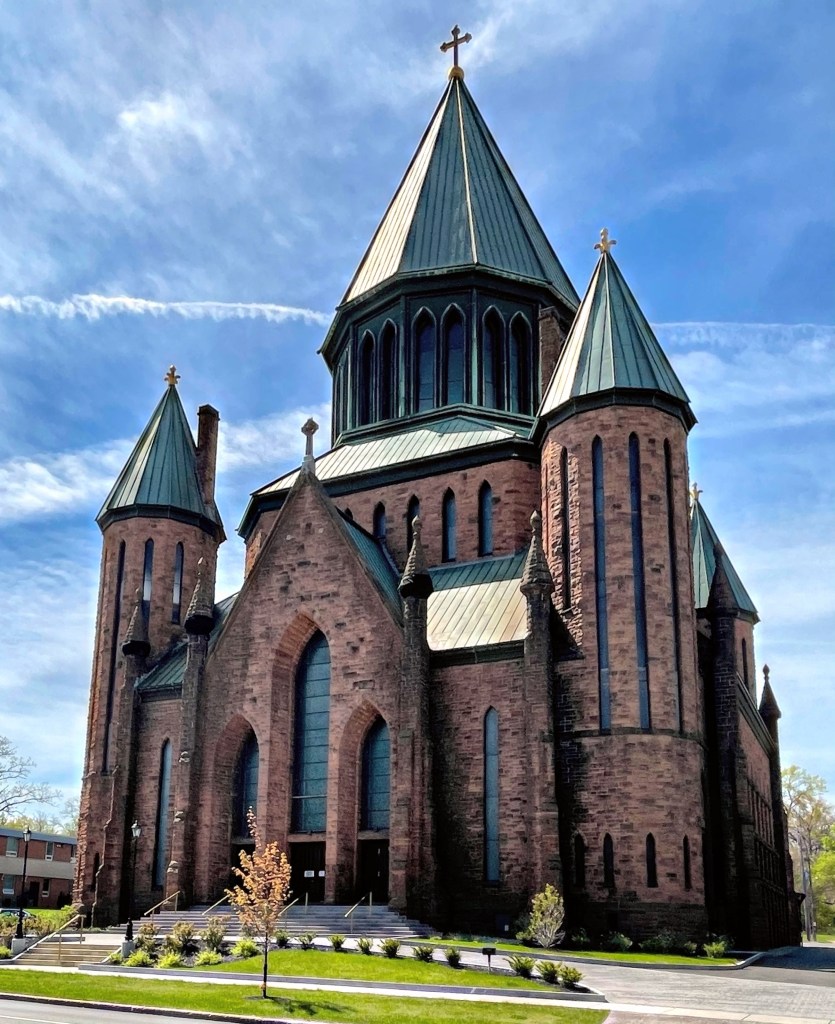
St. Michael’s Episcopal Church // 1860

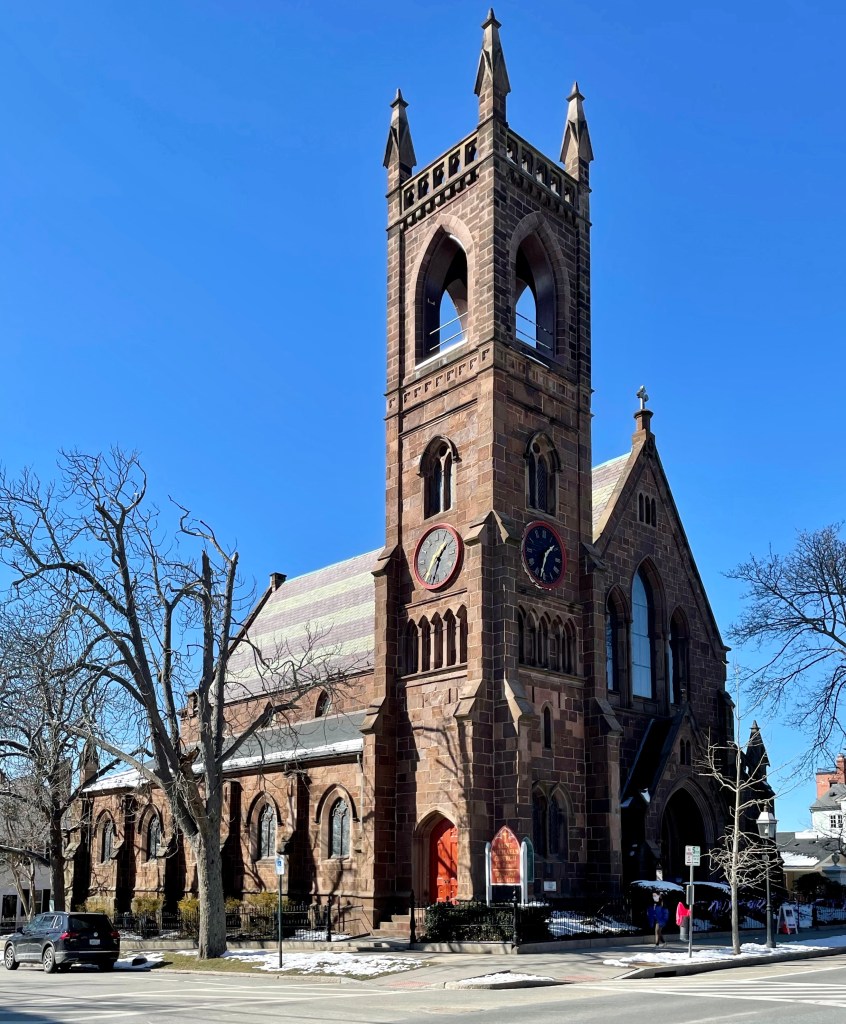
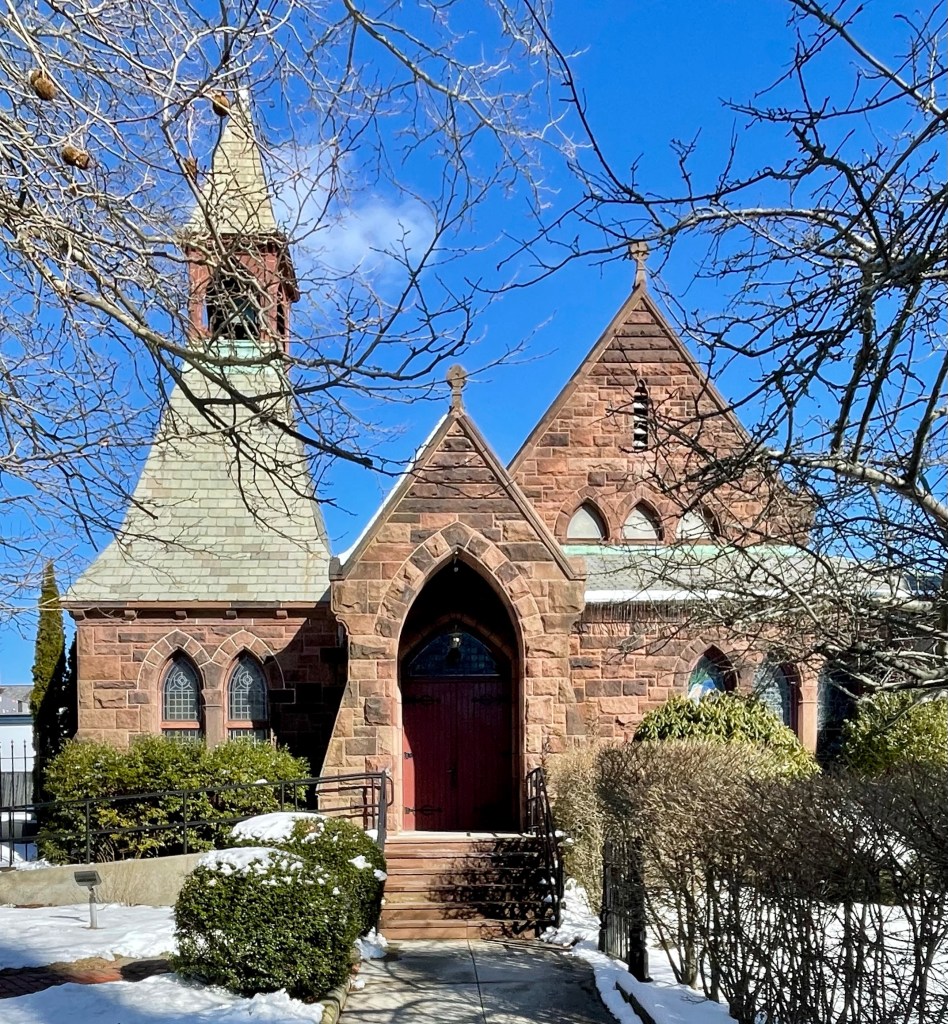
While I love the quintessential white, wood-frame New England churches that proliferate the region, the stone, Gothic churches always make me stop in my tracks; and this example in Bristol is no exception! St. Michael’s parish was founded in 1718 as one of the Rhode Island’s four colonial churches, funded and overseen from London. The first church, built in 1720, was ironically later burned during a British raid in 1778. It was replaced in 1785 by a plain wooden meetinghouse with funds from local residents and partitioners. In 1833, it was replaced by a wood-frame Gothic church which burned in 1858. Undeterred, the church hired New York City architects Alexander Saeltzer and Lawrence B. Valk, who designed the present brownstone Gothic Revival church. Just over a decade later, the church hired Worcester architect Stephen C. Earle, to design a chapel and parish house, across the street. The chapel building follows the Gothic Revival style, but with more Victorian flair, and is also constructed of brownstone to compliment the church. Together, the two structures transport you to the English countryside with their design and presence on the main street in town. What do you think of them?

“Seven Oaks” // 1873

When strolling around Bristol, Rhode Island, you are overloaded with gorgeous early 19th century house styles, primarily in the Federal and Greek Revival styles. Among these, one house (or should I say mansion) stands out as a flamboyant Victorian Gothic showpiece at the southern end of the downtown area. Built in 1873 for Augustus O. Bourn (1834-1925), the founder of the National Rubber Company (and from 1883 to 1885 governor of Rhode Island), “Seven Oaks” could go toe-to-toe with any house in the state. Bourn’s architect was James Renwick of New York, one of the most celebrated architects of his time. Before designing Seven Oaks, Renwick’s resume included: Smithsonian Institution Building, Washington, D.C.; St. Patrick’s Cathedral, New York City; and the Renwick Gallery, Washington, D.C.. Seven Oaks is a large, hip-and-cross-gable-roof Victorian Gothic mansion constructed of stone, with multiple towers and a slate roof capped with iron cresting.

Juniper Hill Cemetery Gate Lodge and Chapel // 1869 & 1913

As Bristol grew to be a dominant financial center in Rhode Island in the mid 19th century, prominent families there decided that their loved ones (and later themselves) needed a place of beauty to rest eternally. In 1855, descendants of Levi DeWolf, of the infamous slave-trading family, donated 22-acres of land for use as a cemetery. The old Levi DeWolf home remains fronting Hope Street, featured previously as the Reynolds-DeWolf House. It is a fine example of the mid-19th century rural cemetery movement, with winding lanes and paths. The landscape was designed by Niles Bierragaard Schubarth, who had done similar work at other Rhode Island cemeteries. Upon the opening of Juniper Hill, many families relocated their loved ones from other cemeteries in town here, so the families could be interred nearby each-other. The cemetery has three main structures; a gateway, the gate lodge, and a chapel/receiving tomb. The gate is a massive stone archway set at the entry to the cemetery, and was built in 1876 by the Smith Granite Company of Westerly, R.I. The Gate Lodge was built years earlier is located at the side of the entry into the grounds, and is a stone Victorian Gothic Revival building, designed by Providence architect Clifton A. Hall and constructed of granite quarried on the site during construction of the landscape. Yards away, the charming Amory Chapel and Receiving Tomb, built in 1913, is a 1-story stuccoed structure with a tile roof, designed by the firm of Angell & Swift of Providence. The small chapel stands out as it is a rare example of the Spanish Revival style, but has seen better days, and is apparently being used as a tool shed.

Shedd Free Library // 1881

Aren’t tiny old libraries just the best?!

Located in Washington, NH, the Shedd Free Library is the only Victorian Gothic building in town, and packs a punch for its small size. The library was named for Sarah Shedd, a Washington teacher and poet who went to work in the cotton mills of Lowell, Massachusetts to support her family and educate her siblings. When she died in 1867 she bequeathed $2,500 to her hometown to establish a free public library, an amazing gift! The gift did not appear to be enough as nothing was built until 1881, after Boston architect S. S. Woodcock was selected by Luman T. Jefts, a wealthy shoe manufacturer in Massachusetts, to design the library after a gift to his hometown.

St. Patrick’s Church, Newport // 1882

Perched high on a hill in central Newport, NH, St. Patrick’s Church has served the community in its stunning building for nearly 150 years. The town of Newport began seeing Irish immigrants moving into town looking for work at the mills as early as 1835. The large working-class population created a need for a Catholic church in the growing town. That same year, the Catholic population of the state of New Hampshire was listed at just 720 people. Over the following decades of meeting in homes and small buildings around town, the Catholic population in town, along with the newly established Archdiocese of Manchester, NH, came up with funds for a church in the mill town of Newport. The congregation hired Hira Ransom Beckwith, a carpenter, builder and architect from nearby Claremont to design and construct the new place of worship. Interestingly, Beckwith had only a high school education, so his training as an architect and builder was through apprenticeships. The church is a blend of Gothic Revival and Stick styles, with the lancet windows and tracery paired with the elaborate stick-work in the gable.

Lewis Block // 1886

Following the granting of the royal charter in 1761, Newport, NH was incorporated and named after Henry Newport, a distinguished English soldier and statesman. With excellent soil for farming, and abundant water power from the Sugar River to run mills, Newport grew prosperous. The main street developed, leading to a proliferation of hotels and taverns that were soon situated along the length of Main Street to service the many travelers who stopped along the route, many such structures were wood frame construction. A fire devastated much of Main Street in Newport in 1885, leading to a massive rebuilding campaign by the town’s richest citizens. One of the earliest buildings constructed after the fire was the Lewis Block, developed by Frederick Lewis, who lived a block away, and his son Samuel DeWolf Lewis, who designed the block. The two-story building is broken up by brick pilasters with recessed corbelled detailing which give rise to buttresses capped by gablets (yes its a word), punctuating the flat roof profile.

Stockbridge Depot // 1893

The historic Stockbridge Railroad Station was built in 1893, replacing an original wooden structure, with funds partially furnished by the Laurel Hill Association, the nation’s first village improvement society. The society was instrumental in preserve the attractive character of Stockbridge, which appealed to many New Yorkers, who began to construct homes in the Berkshires as summer retreats. To welcome many visitors to the quaint town, a more appropriate train station was needed to replace the decrepit wooden station there previously. Architect Frank Waller designed the station, which was owned and used by the New York, New Haven, and Hartford Railroad until the early 1960’s. Soon after the station was occupied by a small bar/club and a kitchen fire almost destroyed the building. Today, the Berkshire Scenic Railway Museum has control of the historic structure and hopes to utilize the space for events and detailing the rich history of Stockbridge.

Moses Bulkley House // 1861

Constructed in 1861, this Victorian Gothic mansion in Southport, Connecticut, stands out amongst the many Classically inspired homes nearby. Designed by Bridgeport architects Lambert & Bunnell for Moses Bulkley (1796-1868), the house is designed on a cruciform plan, synonymous with the Gothic style. Expansive pointed gables trimmed with a gingerbread bargeboards, pointed arched windows, ogee arches trimmed with jigsaw tracery on the verandah, and a tall square tower topped with a steeply-pitched pyramidal roof are all seen in this beauty. If only it had a historically appropriate paint scheme to really make those details pop!