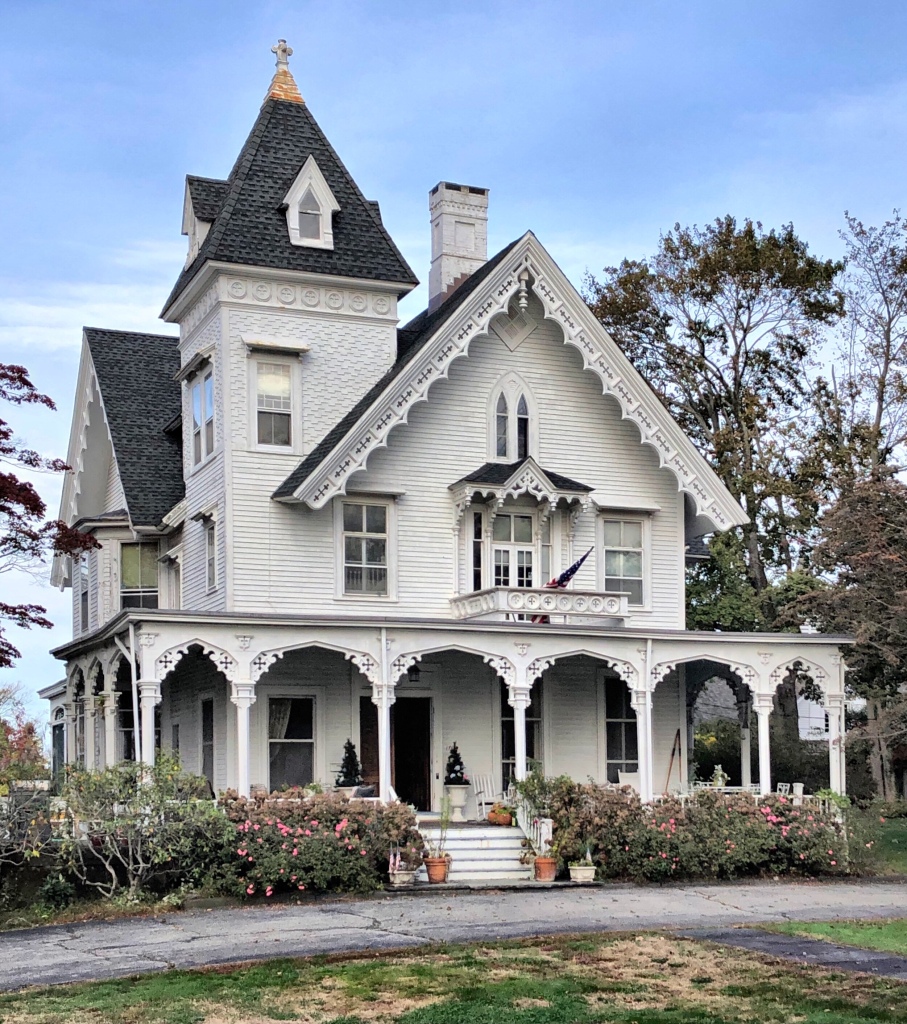
Constructed in 1861, this Victorian Gothic mansion in Southport, Connecticut, stands out amongst the many Classically inspired homes nearby. Designed by Bridgeport architects Lambert & Bunnell for Moses Bulkley (1796-1868), the house is designed on a cruciform plan, synonymous with the Gothic style. Expansive pointed gables trimmed with a gingerbread bargeboards, pointed arched windows, ogee arches trimmed with jigsaw tracery on the verandah, and a tall square tower topped with a steeply-pitched pyramidal roof are all seen in this beauty. If only it had a historically appropriate paint scheme to really make those details pop!
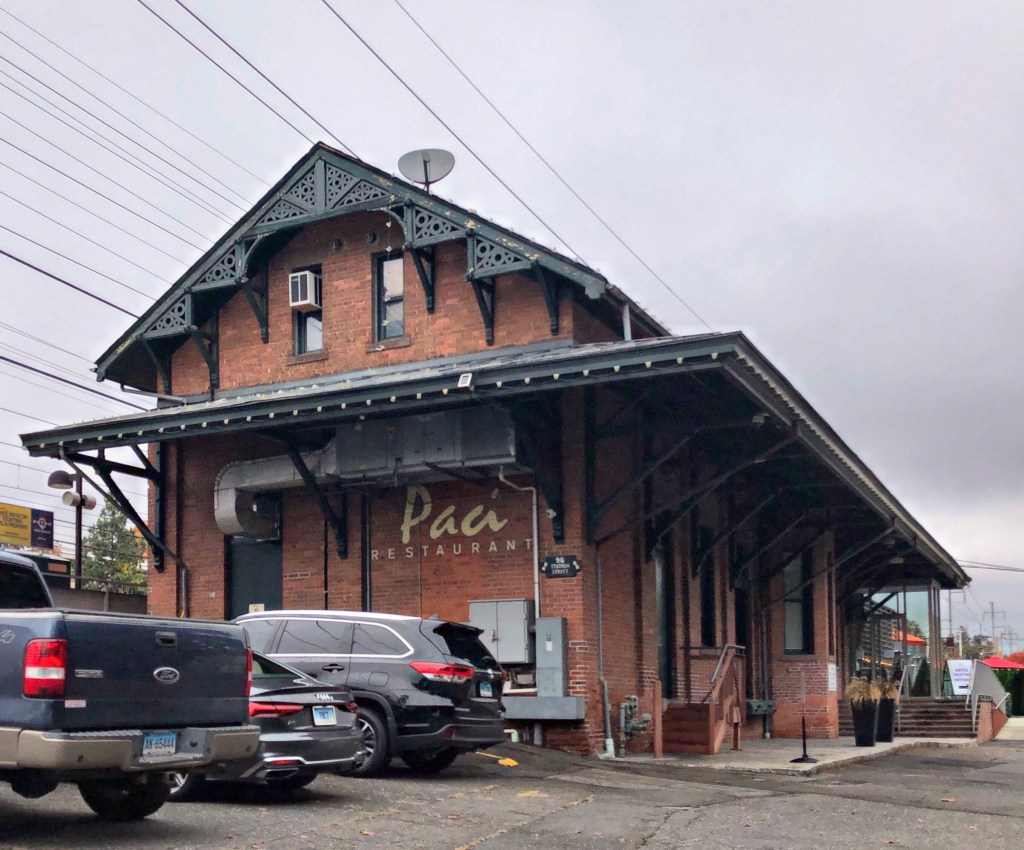
The Southport railroad stations in Fairfield, Connecticut, are reminders of the important role of railroad passenger service in the historical development of the town which continues to this day. In Southport, there are two stations, an east-bound and west-bound, one on either side of the tracks. The older east-bound station was built in 1884 to replace a depot destroyed by fire. It is typical of the substantial brick stations built at small-town stops throughout the state in the period. The use of brick was likely to prevent fire destroying yet another station. The stations were commonly large enough to accommodate spacious waiting rooms, ticket counters, offices, restrooms, and a baggage area. The brick station was converted to a restaurant, with a modern addition by Roger Ferris + Partners completed by 2017.
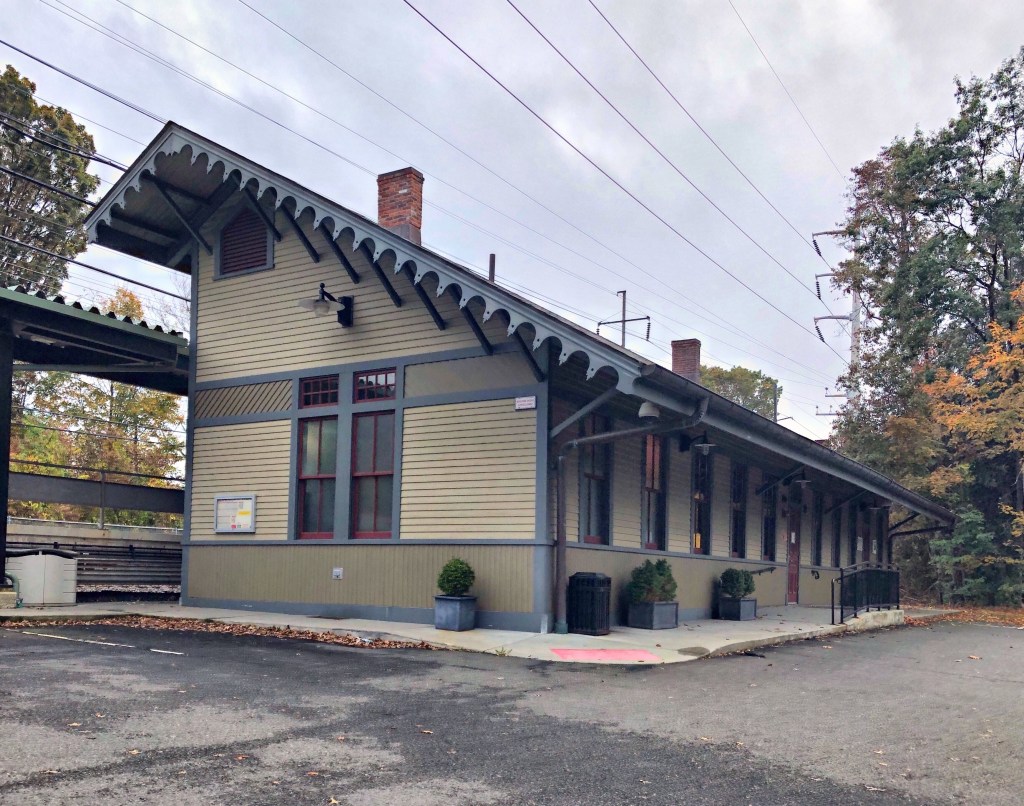
The wooden west-bound station was built around 1895 as part of a massive rebuilding of the New York, New Haven and Hartford Railroad’s main line. At this time, the railroad adopted a single design-concept for all the stations, reverting to wood construction, and limited the stylistic details. The Southport station has an interesting design however; with its saltbox-like roofline, bargeboards, and stick detailing. Imagine all the people and stories that passed through these buildings. Parents saying goodbye to children going off to college or war, businessmen and women commuting to and from work, or people like me who took it to Manhattan!
For middle-class families in North Adams, some residents could afford to move out of workers housing but not yet afford single-family homes, the best option was for apartments. Seeing the demand for this housing type increase with the booming industrial development in town, businessman and real estate developer, Martin Crafts Jewett developed some of his land with a luxurious apartment building. This six-unit building has beautiful poly-chrome brickwork and corbeled chimneys, mansard roof with wall dormers, and flared turrets, typical of its architect, Marcus F. Cummings who also designed the Blackinton Mansion (now North Adams Public Library).
The Blackinton area of North Adams had no organized church congregation in the mid-nineteenth century; instead, the community met in the public hall and attended sermons given by a professor at nearby Williams College. By 1871, the hall could no longer accommodate the attendance. In that year, Sanford Blackinton of the S. Blackinton Woolen Mill Company, (who built his new mansion away from the mill)spent $10,000 to build this church, which could seat 300 people. The church was not associated with any specific denomination, and in fact, services were given by a rotating group of preachers from the Baptist, Methodist, and Congregational churches from North Adams. The Victorian Gothic church originally featured a tall steeple, which sadly burned in the 1940s when struck by lightning. The stunted tower was reconfigured at that time. The gorgeous church remains a landmark in the Blackinton area of North Adams.
Located on Trinity Park in Wesleyan Grove (aka the Martha’s Vineyard Camp Meeting Association), this 1878 church served the year round Methodist community in Oak Bluffs. The Trinity Methodist Church is a towered, Victorian Gothic structure of some distinction. Edward M. Hyde, a Methodist minister who had trained in architecture and art, designed it. The property that the church and Parish House sit on belongs to the Association, but the buildings are maintained by the congregation. Interestingly, should the congregation disband, the buildings would return to the Association.
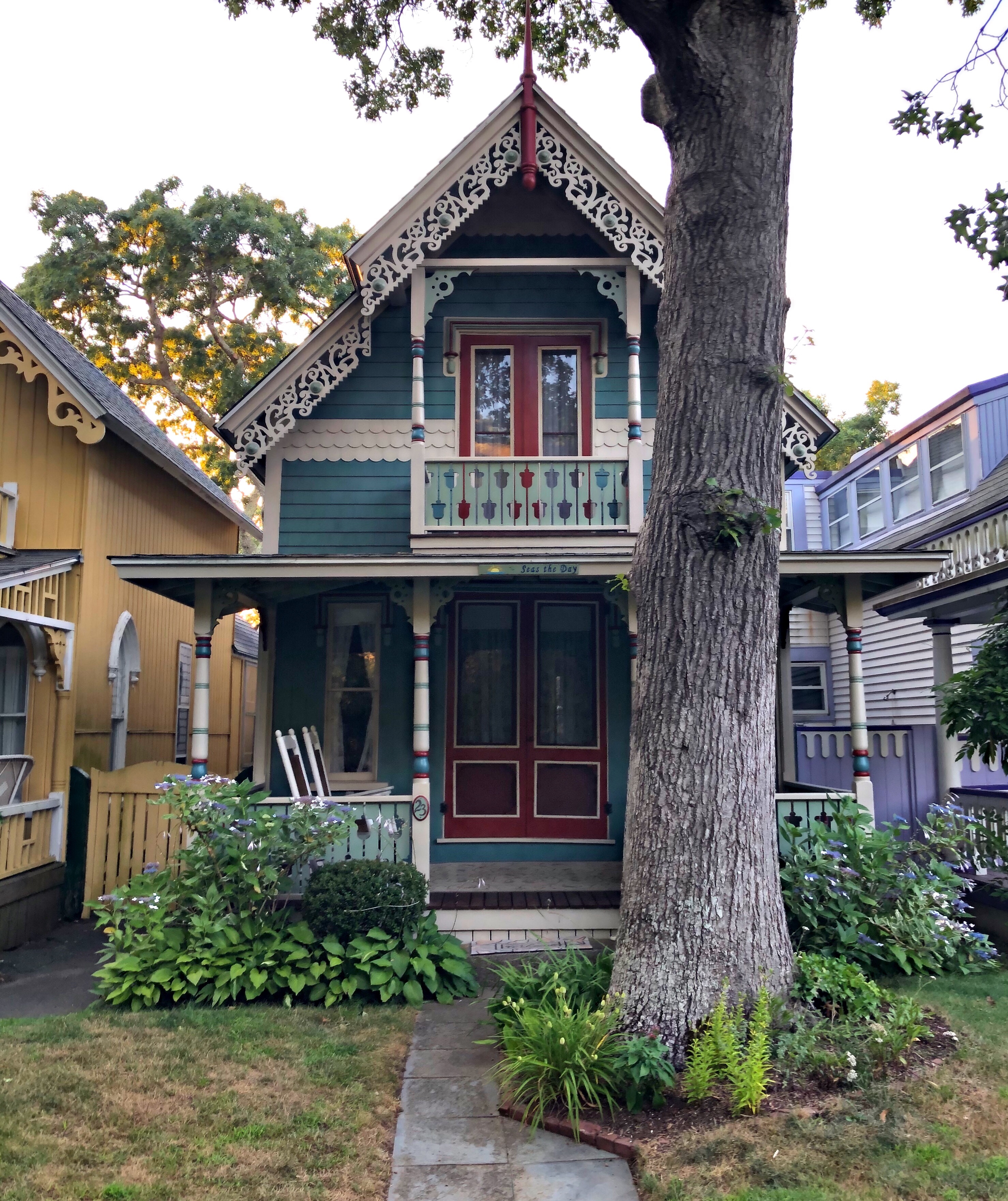
This quaint little summer cottage in Wesleyan Grove was built in 1875 for Hanson Arnold, a merchant and methodist from Woonsocket, R.I. The home is typical of many other summer cottages in Oak Bluffs on Martha’s Vineyard, with its delicate stick work, turned posts, full-length porch, and second story balcony with pierced bargeboards. The home was at one point named “Seas the Day”, a trend of naming the cottages occurred sometime in the 20th century by families who summered on the island, many incorporating the family’s name somehow. The home was restored recently with all new detailing and a reversion back to the original porch configuration.
This cottage on Ocean Ave in Oak Bluffs was built before 1880 for J.F. Riday, a manager at the American Mail and Export Journal at the Wesleyan Building on Bromfield Street in Boston. The quaint cottage was photographed shortly after it was built with Riday and two women (one likely being his wife) posing on the front porch overlooking the ocean. By the early 20th century, the home was owned by George and Corielle Evans, a couple from Mexico. They likely modified the home with the shingled siding and front porch with sheltered balcony above, while the original lancet windows and doors remained.
This charming little cottage in Oak Bluffs was built in 1876 for Charles N. Jones, a resident of Medford, MA who had a home built there in 1872. His family’s summer cottage on Martha’s Vineyard was designed by the Ripley Brothers, Alonzo and Walter, carpenters who lived in town and designed and built many of the charming little summer homes there. The home features a wrap-around porch, a covered balcony at the second floor, and pierced board balustrade and cornerboards. Oh, and the paint scheme is perfect!
Located on the iconic Circuit Street in Oak Bluffs, this Eclectic Victorian cottage has a storied past related to Black history on the island. Even though Oak Bluffs was a relatively safe place for African Americans to be, there were still limits on their rights. In some parts of Oak Bluffs there were laws that said that certain property could only be owned by whites. The island became a vacation spot for thousands every summer in the 19th century and seeing a lack of options for Black travelers, Mrs. Georgia O’Brien and Ms. Louisa Izett began to operate an inn for people of color. The inn was one of two such residences in Oak Bluffs and has since been listed on the African American Heritage Trail of Martha’s Vineyard. The home has since been named the Tivoli Inn and retains much of the original gingerbread trim. In recent years, Martha’s Vineyard was given the nickname, “The Black Hamptons,” due to its popularity as a place for wealthy African-Americans to vacation, it remains a very diverse island in summer months.
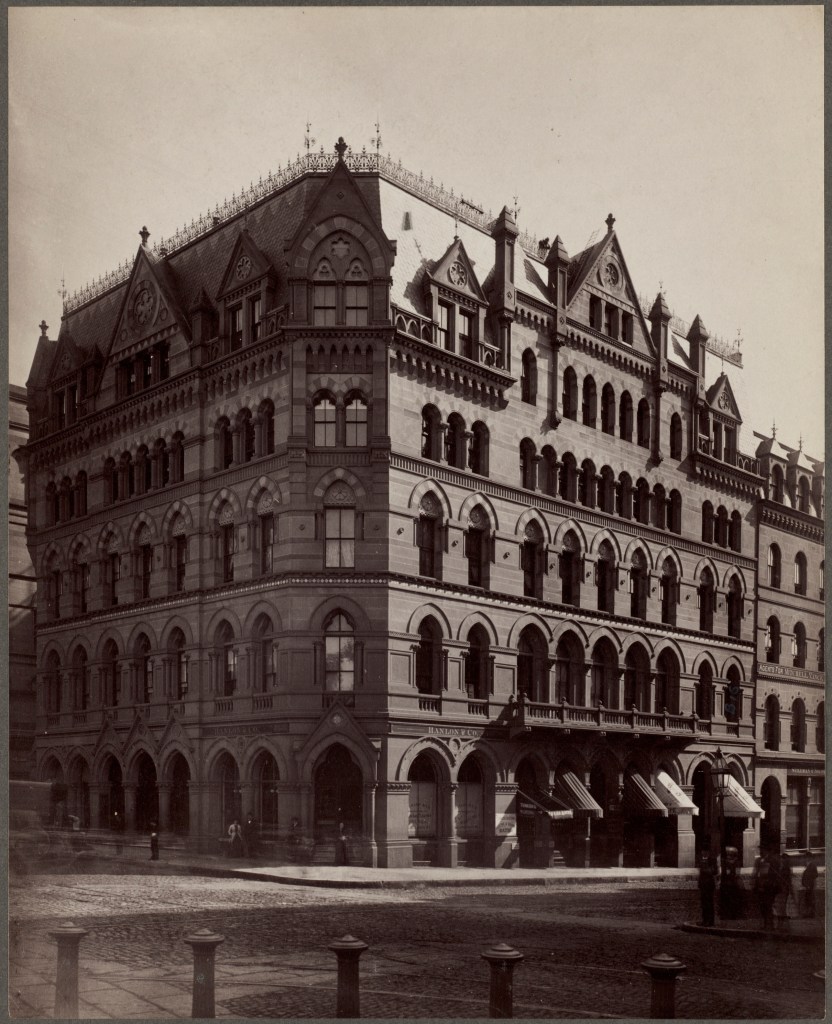
Standing just 24 years, the Hotel Boylston at the corner of Boylston and Tremont Streets, evoked the Victorian-era grandeur of Boston. Built in 1870, the Victorian Gothic hotel (what we consider apartment building today) was designed by the architectural team of Cummings and Sears, who were very busy at the time in Boston and beyond. The 5 1/2-story building was constructed of sandstone and featured Gothic arches, dormers of varied sizes and shapes, and a mansard roof with iron cresting. The building (and the three others on Tremont Street) was razed in 1894 and replaced with the Hotel Touraine a few years later.