John Deane House // 1896

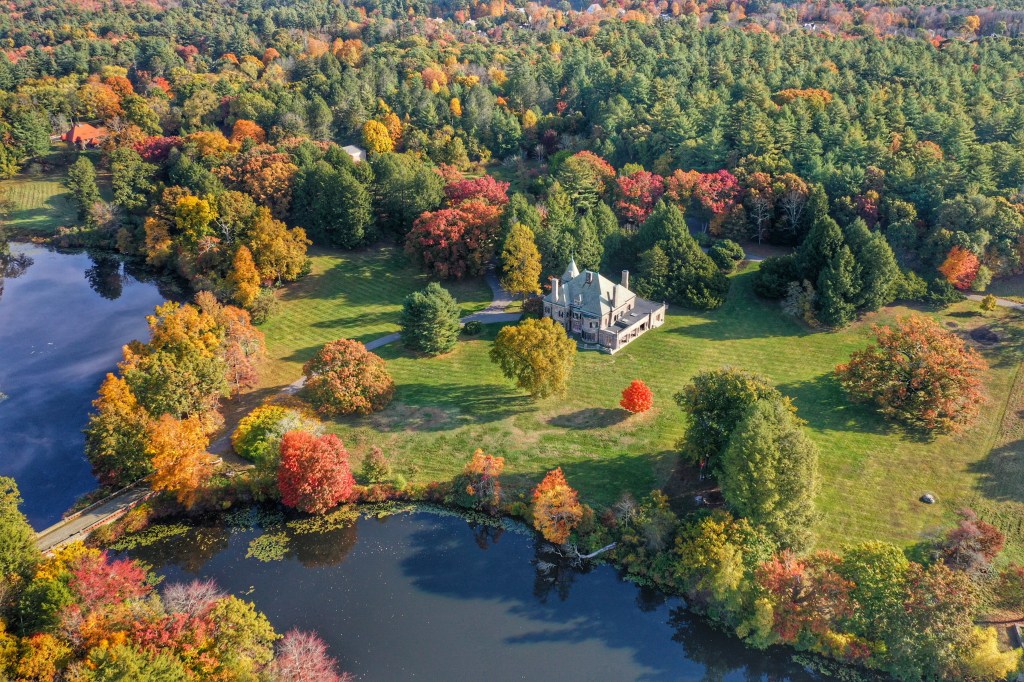
John Milton Deane (1840-1914) was born in Assonet Village in Freetown, Mass., to a prominent local family. He attended regional schools before becoming a teacher. As an 18-year-old school teacher, Deane enlisted in Assonet’s militia company, in 1858, upon increasing tension between the slave- and free-states. The local militia company joined the 3rd Regiment, Massachusetts Militia, which was organized for active service on April 15, 1861 in response to President Lincoln’s call for 75,000 troops to put down the insurrection in the southern states, the beginning of the American Civil War. After serving and a small break, he again joined the Union forces as 2nd Lieutenant with the 29th Massachusetts Volunteer Infantry Regiment. He was awarded the Medal of Honor for action in the 29th Massachusetts on March 25, 1865 at Fort Stedman, Virginia. His citation reads “This officer, observing an abandoned gun within Fort Haskell, called for volunteers, and under a heavy fire, worked the gun until the enemy’s advancing line was routed.” After the conclusion of the Civil War, John Deane continued teaching for a year before opening a dry goods store. He built this home after a decorated military and sales career, in 1896, on a prominent lot facing a branch of the Taunton River. The Queen Anne style home exhibits a prominent corner tower, porches, and decorative corbels.

Bacon-Sampson House // 1814

Rufus Bacon, a lawyer, moved to Assonet in 1814 and built a modest Federal Cape house on the town’s Main Street. Rufus worked in town at a law office for over a decade until he moved to New York, selling his property in 1828 to Earl Sampson, who ran a profitable corner store just down the street. Sampson completely modernized the home, adding the Greek Revival doorway, chimneys, and south-facing veranda. After Sampson died, the home was either purchased or gifted to the Assonet Congregational Church, and occupied as a parsonage. The property has since been deaccessioned by the church and is a private home.

Cudworth House // c.1790

This house in Assonet Village in Massachusetts has SOOOO much potential, I just want to save her! The Cudworth House was built at the end of the 18th century, possibly for John Cudworth a mariner who owned a wharf just across the street. By the mid-late 19th century, the home was renovated, given the steep gable, bracketed details, and projecting entry. The house has seen better days, and needs some serious TLC to bring it back to livable conditions.

Update: A fire in August 2022 damaged the property. It is unclear at this time as to the condition and future of the home.

Freetown Village School // 1794

The Freetown Village School was originally built in 1794 as a lawyer’s office. At that time, it was half as wide as its current configuration. Around 1800, the office became a private academy for children of sea captains and ship-builders in Assonet. In 1858, the Town of Freetown purchased the building and turned it into a public school. By 1906, the school was enlarged and given the Colonial Revival detailing we see today. Like many smaller schools in New England, this school building was outgrown after WWII, and converted to other uses for the town, with uses from committee meeting space to storage. The schoolhouse was finally abandoned at the end of the 20th century, and stood empty. The roof developed leaks and water infiltration became a serious problem. In 2011, the Town approached the Massachusetts Historical Commission for an Emergency Grant, and was granted $30,000 for the preservation and restoration of the decaying building. The roof has been replaced and structurally repaired, but more work is to be done. I can’t wait to come back and check up on this beauty.

Strobridge House // c.1812

When Robert Strobridge turned of age, he inherited his father’s estate, which was split between him and his sister. When he was in his 20s, Robert appears to have built this stunning Federal style home, largely from his inheritance, probably around the time of his marriage in 1812 to Betsey Porter. Strobridge ran a popular store in town and he became a popular figure there, being elected four times to the state legislature. His business partner was the first postmaster of Assonet, and when he resigned, Mr. Strobridge succeeded him, and continued in the position until his death in 1822 at just 37 years old.

Assonet Congregational Church // 1808

The Assonet Congregational Church, now the United Church of Assonet was originally known as the Town Church and was organized in 1704. In 1807, fifteen residents of town, all from prominent families, gathered to ‘‘manifesting the desire to enter into a Church estate.’‘ Land was deeded to the church in 1807, and the Federal style edifice was constructed the next year. Documentation on its construction is limited, with research stating, “we can only speculate on the construction of this beautiful Church
building. It is believed that Ebenezer Peirce (1777-1852) of Assonet and Middleboro was the master builder assisted by ship builders of the village. Mr. Peirce sent his sloop “Unicorn” to the Penobscot River region in Maine to procure most of the lumber.” The church is in great condition today, even retaining its bell, cast by Paul Revere, and original box pews. Sadly, in October 1910, the steeple was struck by lightning and the acorn top blew off. The 1880s clock was damaged but repaired. The steeple was re-installed or reconstructed, but deferred maintenance required the church to remove it and the Revere bell in the early 2000s until funding could be gathered to restore, nothing yet. What I wouldn’t do to see the original acorn top of this steeple again!

Hathaway-Read House // c.1800

The best street in Assonet (Freetown), Mass. is Water Street, a quiet road that runs along the bank of the Assonet River with gorgeous old homes lining the opposite side. This beautiful home on Water Street was built around the turn of the 19th century, possibly as a rental property for Philip Hathaway who lived nearby. The home was likely built by shipbuilders, who worked across the street, building sloops for the village’s sea captains. From the date, we know the boxy Federal style home once was more refined, but it was updated by a later owner, Captain Washington Read. Captain Read loved being on the open sea. From age nine, he worked on his father’s ships as a cabin boy, eventually commanding his own sloop at just thirteen years old! Later, in the ship “Caroline Read” (named after his wife), he circumnavigated the globe. Starting from New York in 1850, being then thirty-seven years of age, he doubled Cape Horn to San Francisco; thence to Singapore, thence to Calcutta, thence around the Cape of Good Hope to London, and from there home to New York. The trip occupied seventeen months. Captain Read crossed the Atlantic about seventy times, his wife accompanying him thirty-eight times. He never grounded or lost a vessel. He rescued many survivors from numerous wrecks, taking fifty-two from one wreck in mid-ocean, encountering great peril in so doing. For this he received high commendation from the Lord Mayor of London, the rescued being British subjects. It was Read who “modernized” this home with Italianate detailing including: the bracketed eaves, bay windows, and door hood. The monitor roof may have been original.

Philip Hathaway House // 1782

Philip Hathaway was born in 1740 in Freetown, Massachusetts, into one of the most prominent local families. He appears to have worked in the maritime trade like many men in his family before accepting positions as the clerk, treasurer, and assessor for the town. Upon the start of the American Revolution, Philip served as Lieutenant of the local militia, which disbanded in 1781. Within a year of mustering out, he built this stately home on Main Street in Assonet Village, just south of the Taunton River. The stately home with its symmetrical facade is special for the projecting windows. A gambrel roof store, which was constructed in the 1790s in town, was moved here and added onto this home as a rear ell and remains there to this day.

East Freetown Grange // 1916

The East Freetown Grange is a community organization founded in 1912, as a meeting place for the local chapter of The National Grange of the Order of Patrons of Husbandry. Granges have been the heart of rural American communities for generations. The home of local chapters of the Order of Patrons of Husbandry, Grange Halls are where farmers have traditionally gathered to learn new agricultural practices, develop strategic business partnerships, and barter for goods and services. Grange Halls also serve as a gathering place for community celebrations and annual agricultural fairs. These social halls can be found in agricultural towns and villages all over New England, and historically have been as important (or more) to farming communities as churches in those areas. Within years of the East Freetown forming an organization, they gathered enough funding to erect this Arts and Crafts style building, with rustic fieldstone piers, likely from stone pulled off farmland nearby. The hall is still used today for everything from agriculture fairs to Girl Scout meetings!

High Street House // c.1810

This house in Freetown, MA literally made me turn the car around to get a photo (it’s a sickness, they need a rehab for old house addicts). The house was built in the early 1800s and is a stellar example of the Federal style, which took over architecture in New England after the Revolutionary War until the 1830s. The style often features intricate designs and complex geometry, which previously would have been too difficult for the majority of builders or designers to accomplish. From pattern books by influential architects like Asher Benjamin, the style was built in forms and places from urban townhomes in Boston and New York, to rural, rambling farmhouses in Vermont and Maine. Publications by Asher Benjamin including The Country Builder’s Assistant and The American Builder’s Companion opened up high-quality, architectural landmark designs to the masses, and is a significant reason New England architecture is so iconic. Benjamin included drawings and diagrams which builders could copy, from column styles and dimensions to chimney and moulding details.