Central Congregational Church, Providence // 1893

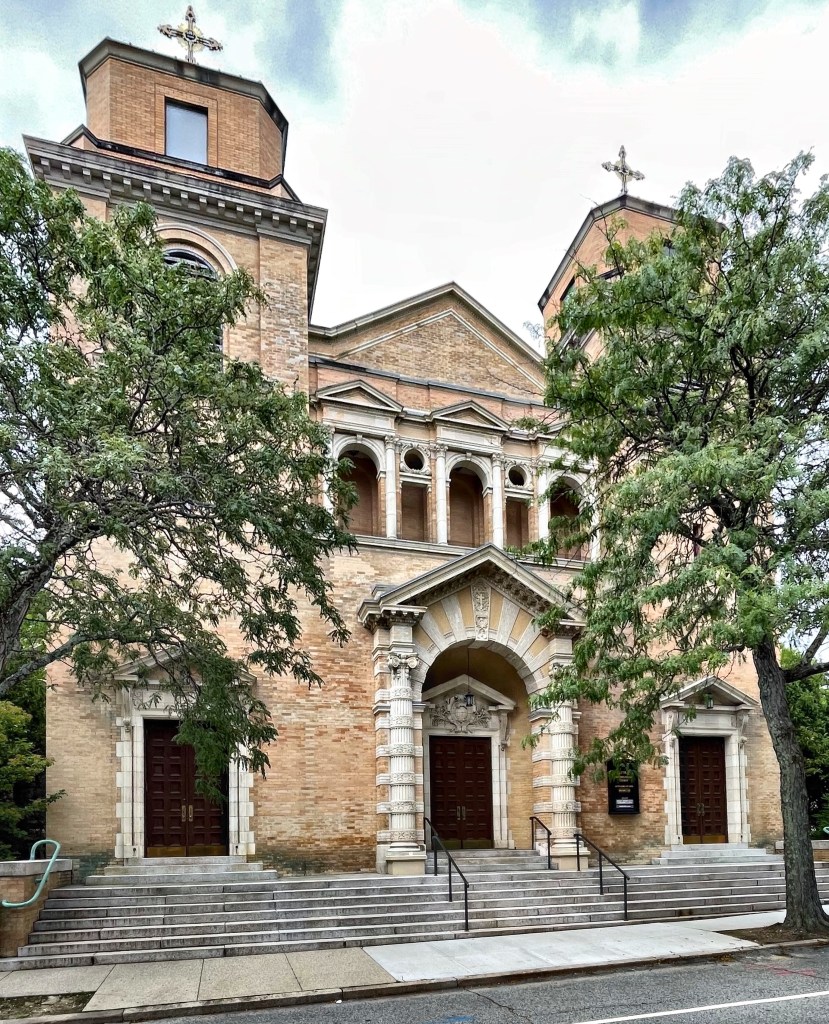
One of the best examples of Renaissance Revival architecture in Rhode Island is the Central Congregational Church of Providence. Constructed between 1891-1893, this building was the new home to a growing congregation, which outgrew its original Thomas Tefft-designed building on Benefit Street (which has since been occupied by RISD). Famed architect Thomas Hastings of the firm Carrère and Hastings of New York City, was hired to furnish plans, and worked closely with Reverend Edward C. Moore to make sure the building was fitting of the site. The church is cross-gabled in form and is constructed of yellow brick with terracotta trimmings, evocative of Spanish and Italian Renaissance styles. The facade has a detailed central pavilion which is flanked by two towers. These towers were originally surmounted by elaborate belfries, but these were damaged by a hurricane in the mid 20th century and replaced by the present brick caps. The dome and vaulting is of tiles by Rafael Guastavino, it is the first dome that he constructed in the U.S., making this building even more significant.
Grace Church // 1835-1966

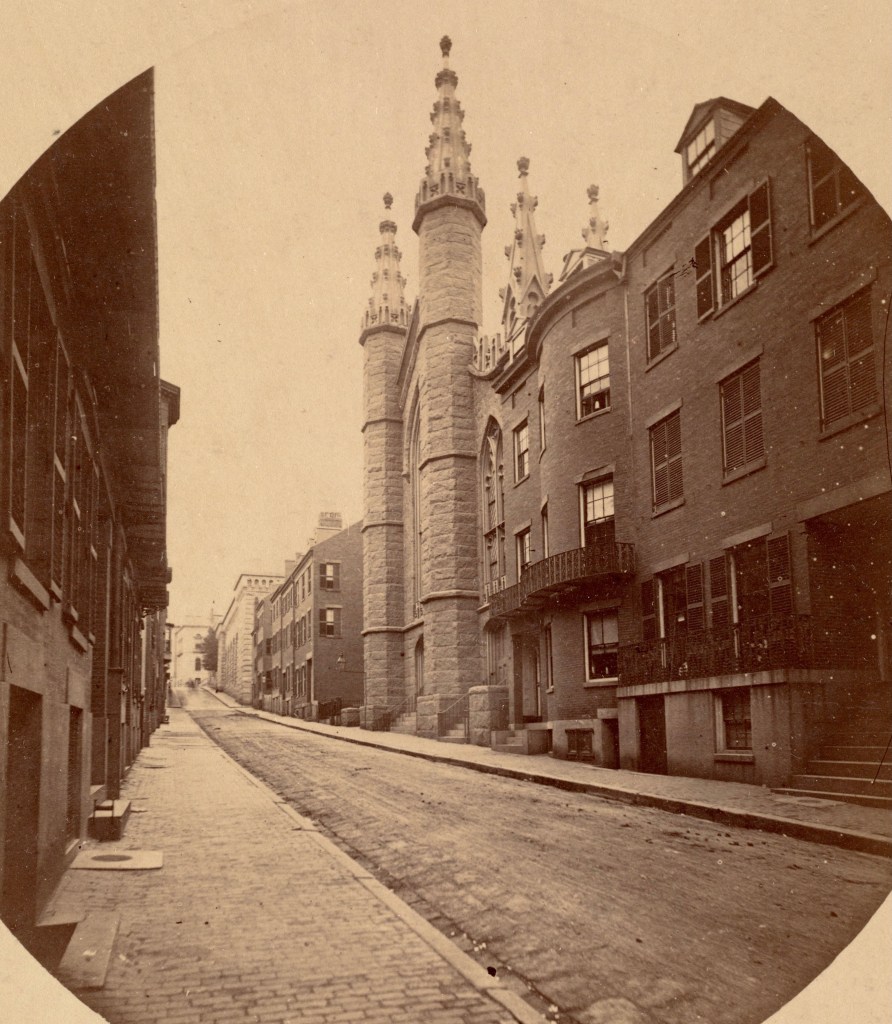
Grace Church was built in 1835 for a growing congregation in Beacon Hill. The absolutely stunning Gothic style church was designed by William Washburn (1808–1890), an architect and city councilor in Boston. The church was constructed of granite and had massive stained glass windows and soaring towers with decorative embellishments. Inside, a massive central window flooded the interior with natural light, and illuminated paintings from Mario Bragaldi, a Milan artist. In 1865, the building was sold to the Methodist Episcopal Society. 1873, it merged with Hanover Street, and took the name First Methodist. The church was variously referred to as First, Grace, or Temple Street, sometimes all at once! This church was occupied until 1962, when it merged with Copley to form First-Copley, which appears to have then occupied the Old West Church. The building was soon after acquired by Boston University and demolished for the building on the site today, a true loss to one of Boston’s most beautiful buildings.

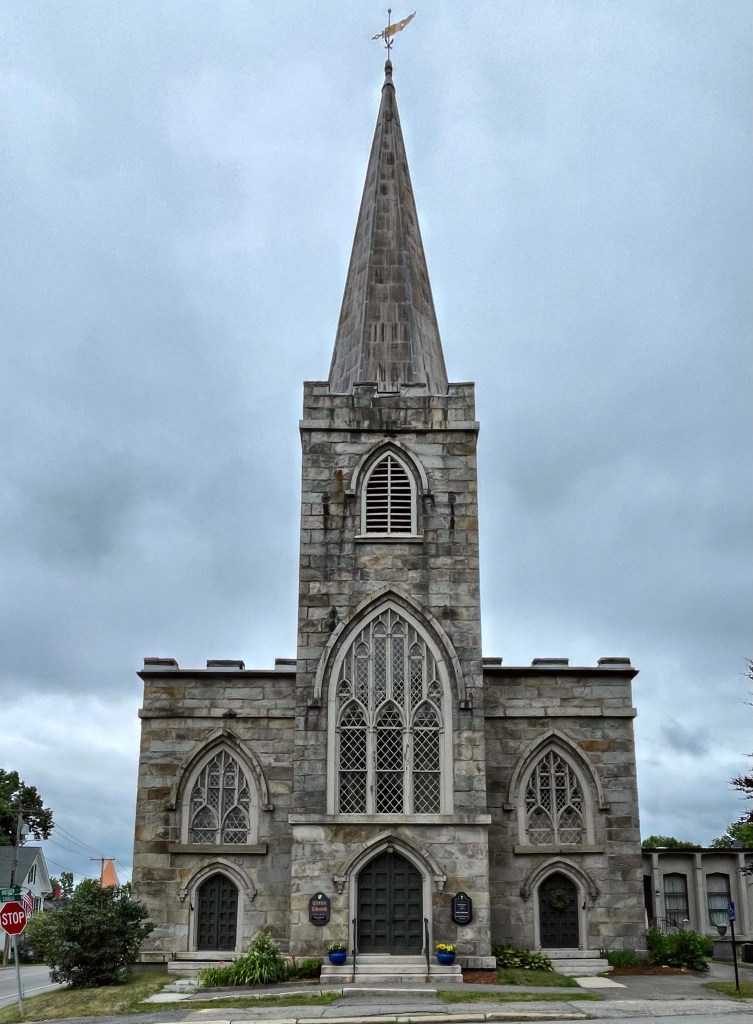
Christ Episcopal Church, Gardiner // 1820

The oldest known example of ecclesiastical Gothic Revival architecture in New England is surprisingly located right in Gardiner, Maine, the Christ Episcopal Church. The Episcopal Church in Gardiner was organized in 1772 by Sylvester Gardiner, a major landowner for whom the city is named as the town’s main church. Two more vernacular buildings were constructed as houses of worship until a new, fireproof structure was desired. Built in 1820, the stone church was designed by the Reverend Samuel Farmer Jarvis, who was likely heavily inspired by the stone churches found in England. The church has massive lancet Gothic windows with tracery, that in the tower considerably larger.

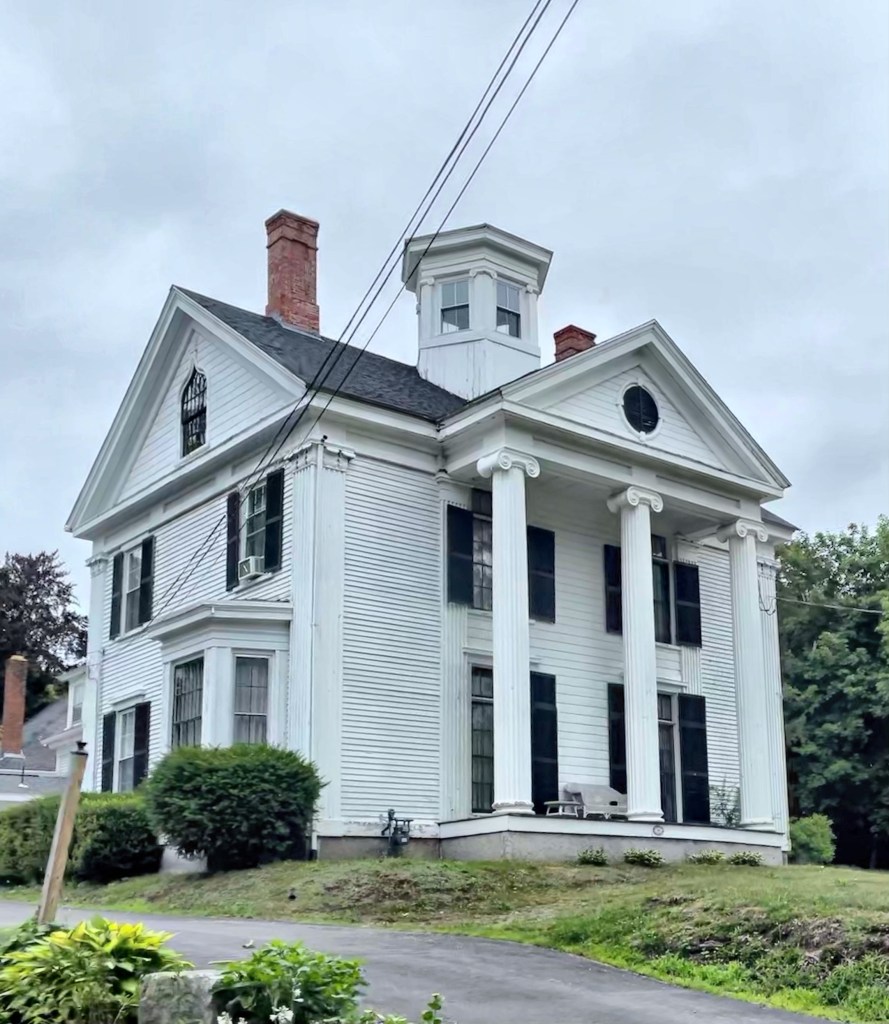
Mitchell-Patten House // c.1840

One of the most stunning examples of Greek Revival architecture in Gardiner, Maine, is the Mitchell-Patten House. The home was constructed in the mid-1840s for John S. Mitchell (1804-1891) head of the firm of Mitchell, Wilson and Co., who were traders on the Kennebec river, in lumber and other goods. The home was likely built not long after John’s wife, Philenia Sewall Mitchell died during childbirth in 1837 to the couple’s son, who died at just two years old himself. After the death of his wife and only son, John met Mary and they married, moving into this home. Together, they had four children. Together, they had three sons, but like with his first marriage, tragedy wasn’t far behind. Their first son was stillborn, their son William died at age 27, and their third son, Egbert died in his first year. The family home was willed to the couple’s only living child, Susan, after her marriage to husband Freeman Patten. Freeman was a successful businessman in town and worked as a bank director, and later served as President of the Board of Trade and as Mayor of Gardiner 1899-1900.

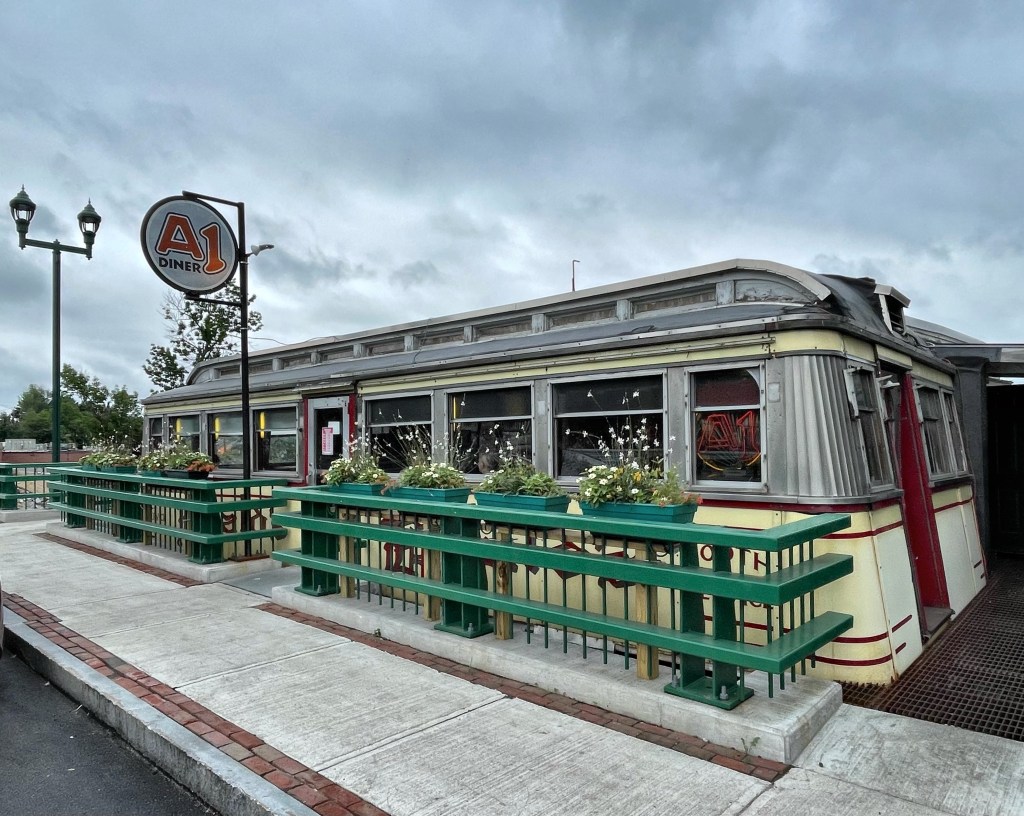
A1 Diner // 1946

Arriving by truck in 1946 from the Worcester Lunch Car Company factory in Worcester, Massachusetts, this piece of Americana has served dishes to Gardiner, Maine workers, families, and tourists for nearly a century. The diner opened as Heald’s Diner under the ownership of Elmer “Eddie” Heald. The Worcester Lunch Car Company began in 1906 and which shipped ‘diners’ all over the Eastern Seaboard. The first manufactured lunch wagons with seating served busy downtown locations, and due to their compact size, and ability to be easily moved, were great options for young businessmen and immigrants looking to start in the food industry, think Triple-deckers for restaurants. The Gardiner, Maine location is special as the diner itself is situated about 20 feet in the air on stilts, due to the location near the Kennebec River, which often flooded downtown. Heald sold his diner in the early 1950s, and it was sold again to Al “Gibey” Gibberson who named the diner after himself, Al’s Diner and ran it until he sold it in 1988, to owners who didn’t name it after themselves but called it the A1 Diner instead, likely as the “l” in Al looked like a 1. The diner is quintessential roadside American history inside and out, and the food is even more impressive. Do you have an old diner near you?

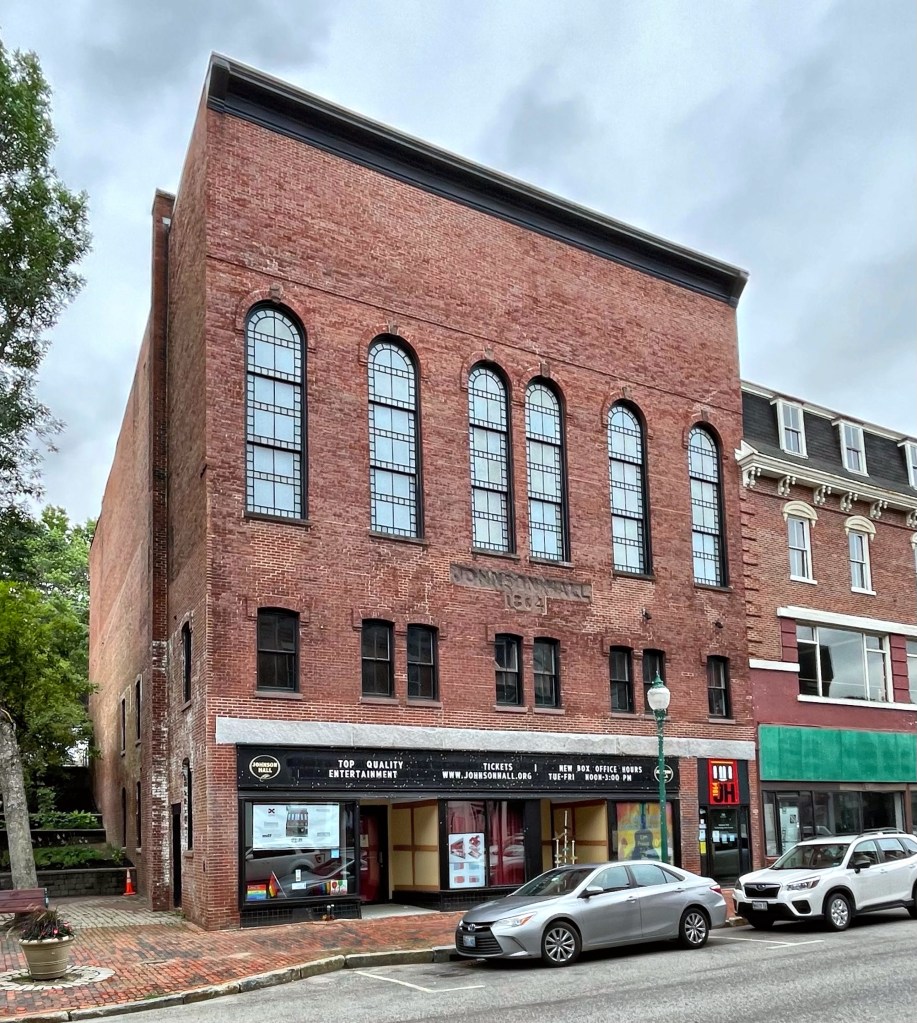
Johnson Hall // 1864

After heading west to seek his fortune in the California Gold Rush, Gardiner resident Benjamin Johnson, moved back to his hometown and immediately spent money to buy one of the finest hotels in town. He renamed the hotel Johnson House and served as the manager of the hotel through the American Civil War. The hotel included a two-story stable to the side which allowed visitors to keep their horses and carriages nearby. In December 1864, he completed a two-story vertical addition which added a large hall with gallery above for events and shows, retaining the stable on the ground floor. The demarcation of the two sections is evident from the windows on the main facade and the difference in brick. The hall opened to great fanfare, and with Johnson as manager, hundreds of plays, musicians, and events were held in the event space, which made Gardiner a major hub for socio-cultural life in Kennebec County. In the 1880s, he added a new wood floor upstairs which allowed the hall to be used for rollerskating, a very popular update. Not long after, the stable was converted to commercial space at the ground floor, and upstairs an opera hall. Benjamin died in 1903, and his widow, Henrietta took over, and kept-up with the times, changing the upstairs hall to a moving pictures and silent film theatre. The theatre closed in the mid-20th century, like so many other small local theaters. Good news though! A group of locals is working to fully restore all three floors of Johnson Hall, creating a new state-of-the-art performing arts theater, while maintaining the architectural character of the building.

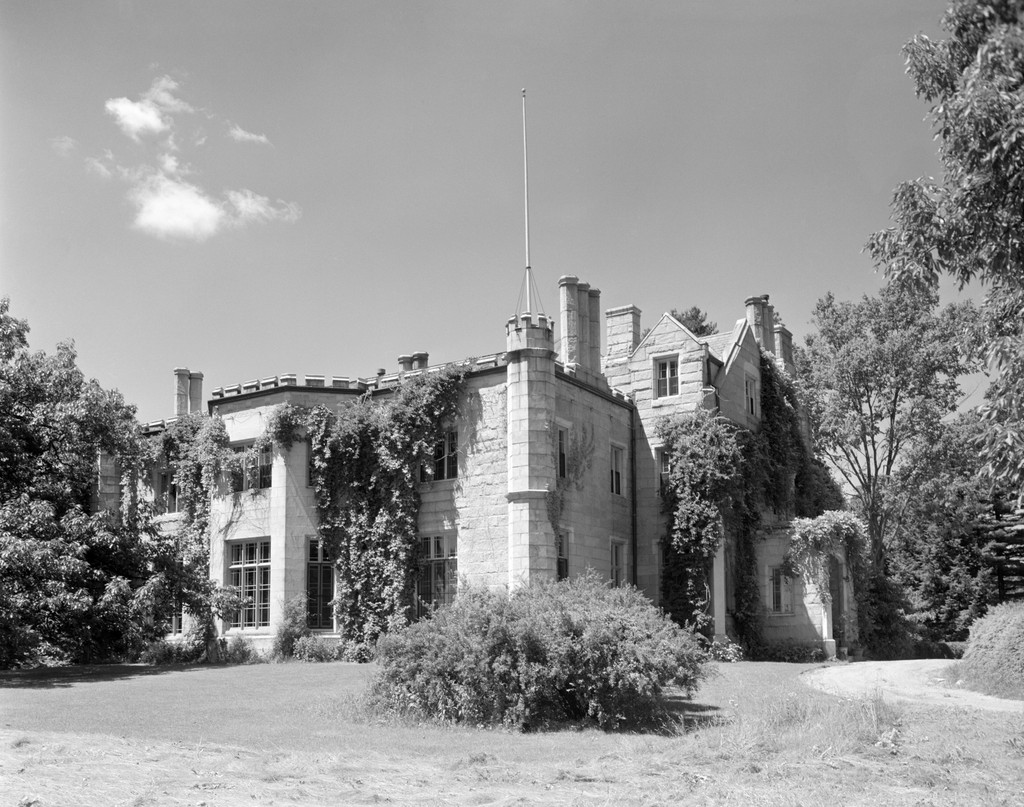
Oaklands // 1835

A massive amount of land on the eastern edge of the Kennebec River was acquired by Sylvester Gardiner in the 18th century, but confiscated by the state during the American Revolutionary War (because Gardiner was a Loyalist who fled). Years later, the land was recovered by Gardiner’s grandson and heir, Robert Hallowell Gardiner. Upon coming to age, Robert Hallowell Gardiner returned to Maine in 1803, after graduating from Harvard, ready to straighten out and manage the holdings willed to him by his late grandfather Dr. Sylvester Gardiner, the founder of Gardiner, Maine. He came with no inclinations or training in business, but his cousin Charles Vaughan in Hallowell helped in steer him on the right course. Starting at the age of 25, Robert Hallowell Gardiner embarked on the task of developing an entire city, Gardiner, but with profit and investment in mind over the next sixty-one years. His business enterprises included: six dams, saw and gristmills, shipyards, foundries, a brick mill, broom making industries, furniture manufacture, paper making and the ice-harvesting business. He married Emma Jane Tudor of Boston (who he likely met during his time at Harvard, in 1805. They soon after built a home for their family and welcomed friends and family to stay there on the massive property. The first Oaklands estate burned in 1834 and the present Gothic Revival mansion on the site was built in 1835-37. Designed by English-born architect Richard Upjohn, Oaklands typifies an English country manor house and features a rectangular hip roof, hooded window moldings, turrets and elaborate stonework. Oaklands is among the first and finest 19th-century rural villas in the State of Maine and is among the most significant in the country. The home remains on over 310-acres of sprawling land which looks out over the Kennebec River, and is owned by the Gardiner family to this day!

Reverend Hanson House // 1853

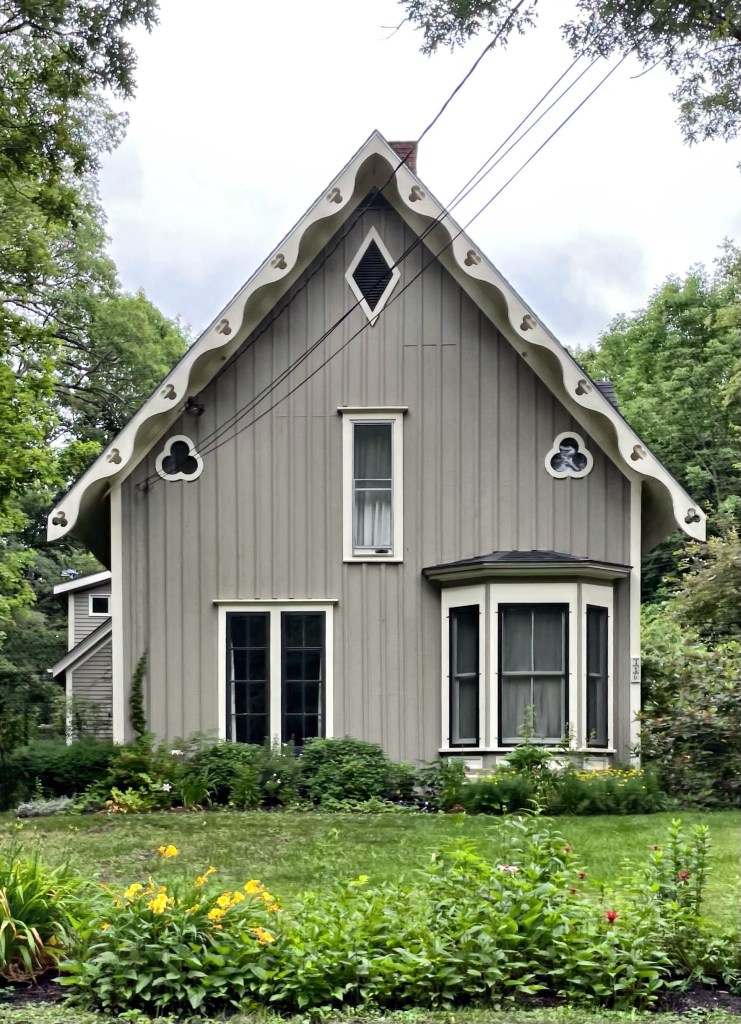
This Carpenter Gothic house in Gardiner, Maine, was built in 1853 by Reverend J.W. Hanson, author of the 1852 History of Gardiner, Pittston and West Gardiner and the second minister (1850-54) of the Universalist Church (last post), after its organization in 1843. Hanson was likely inspired by the design of his church when having his own home built, as he followed the Gothic mode. His house features board-and-batten siding, bargeboards, and trefoil windows and carvings in the said bargeboards. Reverend Hanson lived in the home until 1868 when he moved to Dubuque, Iowa. The home is very well preserved and one of the best examples of the Carpenter Gothic style in the state.

Gardiner Universalist Church // 1843

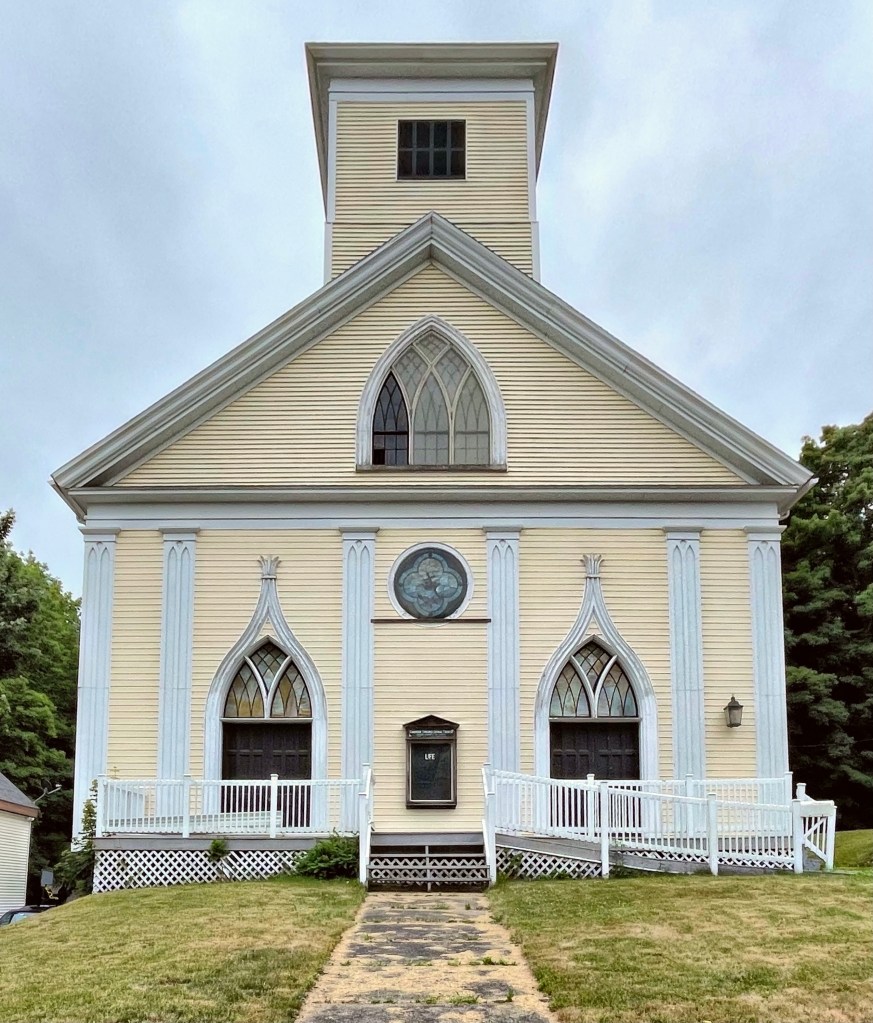
This stunning Gothic Revival church was built in 1843, on the site of the blockhouse, erected 80 years prior for the settlers of the area from native attack. In the 17th and 18th centuries, many rural parts of New England had blockhouses erected to allow the settlers a defensive fort from attack. The blockhouses were often garrisoned wooden structures with small windows on all sides to allow for gunfire to attackers below. The structure would protect those inside from arrows and melee weapons. This building however, was constructed later for the Universalists, who believed in “universal salvation,” who had been meeting since 1821 in a schoolhouse beside the town common. The church, in its original state with its steeple and clock, was an extremely sophisticated example in wood of the Gothic Revival style with its pinnacles, lancet windows and pilasters. Sadly, the steeple and clock were removed in the early 1920’s for safety reasons as the structure could not support it without significant engineering. The church and congregation changed to the United Church of Christ-Congregational denomination in 1964. After that, the building was occupied by a brewery (believe it or not), before being reverted back to a church by the current congregation.

Hartley Jewett House // c.1895 //

This stunning Queen Anne home in Gardiner, Maine, overlooks the Kennebec River from its high position on a hill. The home was built for Hartley Jewett, who ran a busy lumber mill in town, which sold long lumber, laths, and shingles, some of which ended up on his own home. Maine was huge in the lumber industry, and it’s vast forests were often cut and sent down to cities like New York and Boston on rail to supply their own building booms.