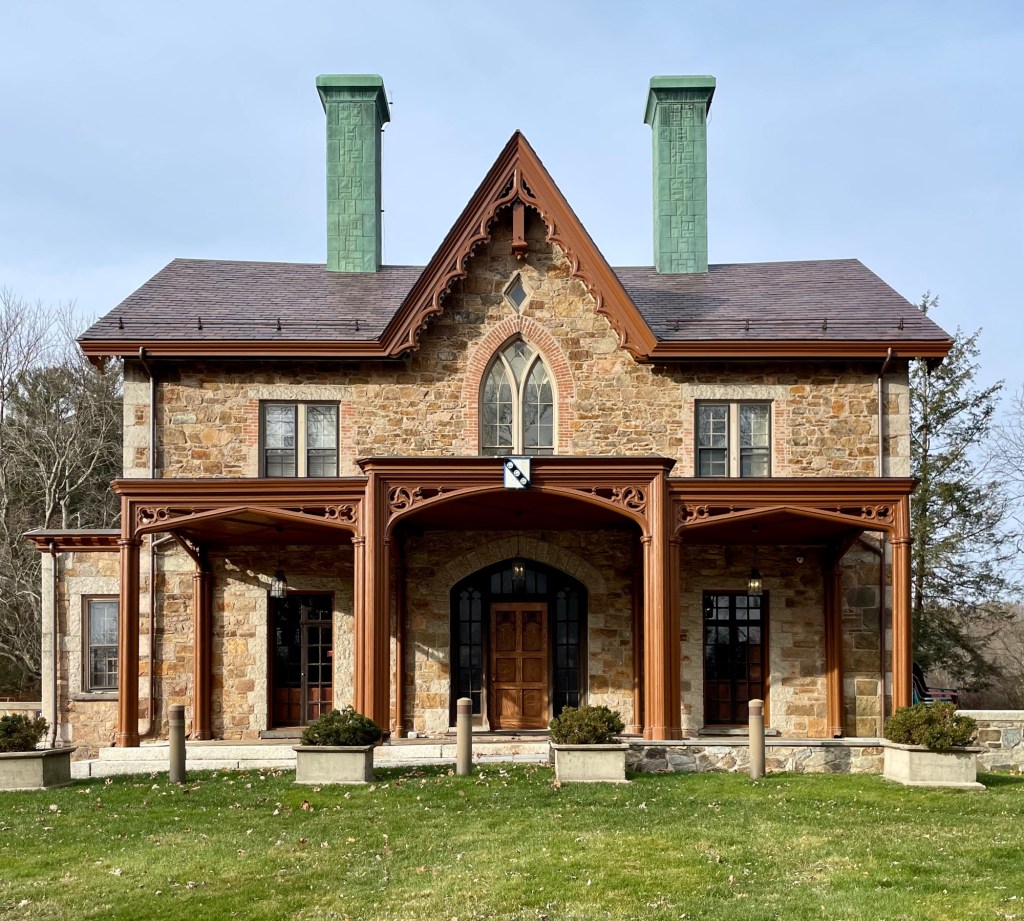
Queset Lodge // 1854

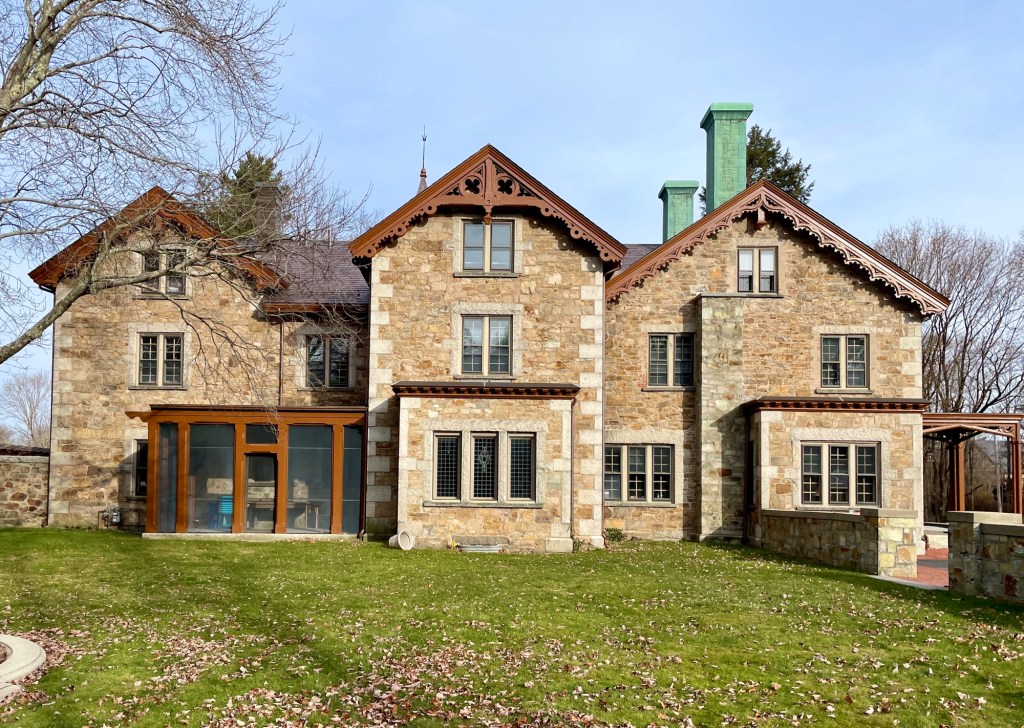
Tucked away behind the Ames Free Library in Easton, Massachusetts, you will find one of the most stately examples of Gothic Revival architecture in New England. The house is known as Queset Lodge, and it was completed in 1854 for Oakes Angier Ames, of the wealthy Ames Family. Oakes Ames was an owner of the Ames Shovel Works nearby, which made the family multi-millionaires and have the ability to generously gift buildings to their hometown. The original picturesque Gothic Cottage was built in a style that had been advocated by Andrew Jackson Downing in his publication, The Architecture of Country Houses (1850). In 1873, Oakes Ames hired his family member, John Ames Mitchell, to design the rear addition, effectively doubling the size of the stone mansion. Mitchell also added the copper-clad chimneys and hired landscape architect Frederick Law Olmsted, to design the grounds and gardens. After his death in 1899, the home was occupied by his son, famous theatrical producer Winthrop Ames, and his wife. The family would eventually gift the property to the Town of Easton, which is today used as an extension of the Public Library!
Glimmerstone // 1845

What a treat it was to stumble upon one of the most beautiful homes in Vermont, and all the best houses have names! Glimmerstone is located in the small town of Cavendish, and is possibly the finest Snecked Ashlar constructed home in the state. The house was built in 1845 for Henry Fullerton, manager of the Black River Manufacturing and Canal Company mill in Cavendish. The stone used to build the house was quarried less than a mile away, and hauled to the site. The construction style consists of stone facing on either side of rubble fill, with slabs and snecks sometimes laid across the fill to provide strength, a method brought to the region by Scottish immigrant masons. The house’s design is by a local carpenter, Lucius Paige, and is based on designs published by Andrew Jackson Downing, who depicted many Gothic style designs in pattern books which were built all over the country. The house has had a number of owners after Mr. Fullerton died. During the prohibition era, Art Hadley, who would later become extremely wealthy as the inventor of the expansion bracelet, used the home as part of a rum running operation. Glimmerstone was purchased in 2010 by the current owners, who underwent a massive restoration of the home, converting it into a bed and breakfast, allowing the public to experience the property as well.

John Bush House // c.1845

Here is another of my favorite non-Gilded Age houses in Newport, the John Bush House on Mann Street! John T. Bush (1817-1881) was listed in directories as a “wool-puller” which clearly was a lucrative job, as he could afford to build this high-style Gothic Revival home. This house is heavily influenced by the publications of Andrew Jackson Downing first published in 1842, so the house is probably built within a couple years of that date. Hallmark features of the Gothic Revival style include: lancet windows, bargeboards, windows with drip molds, and steeply pitched roofs; this house has all of the above!