Norwood Town Hall // 1928

Norwood Town Hall represents the achievement of landscape architect Arthur A. Shurtleff and local financier, George Willet, to transform the village center of Norwood, Massachusetts from a sleepy rural village to a thriving commercial and cultural center of town. Plans for the municipal building began as early as 1919, with this building serving as both a town hall and memorial to the Norwood men who died in all previous wars. The building would not be completed until 1928. Designed by Norwood architect, William Upham, the building is a landmark example of the Neo-Gothic Revival style and its main feature, the 110-foot bell-tower which houses a 50-bell carillon, towers over the town common.

George Carpenter House // 1885

While many lots in Brookline village in the final decades of the 19th century were being redeveloped as duplexes, three-deckers, and apartment houses, some property owners still wanted single-family living. In 1885, George Carpenter had this home in the village built from plans by well-known architect Obed F. Smith, who designed many Victorian-era homes in Boston’s Back Bay and around the region. George Carpenter worked in Downtown Boston as an agent for the Massachusetts Mutual Life Insurance Company. The house features some Stick style elements seen in the porch spindles and carved brackets.

Grader Block // 1885

Commercial districts and Main Streets in historic New England towns are full of amazing architecture that is meant for pedestrians. Strolling through these areas, the varied styles, materials, storefronts, and signage provides a sense of artistry and community that is impossible to achieve in suburban strip-malls and shopping centers. Historic buildings serve not only as visible anchors to communities, but are more often occupied by local, women, and/or minority-owned businesses compared to modern buildings and districts. Marblehead has many historic (sometimes Revolutionary-era) buildings that are commercial and contribute so much to the town’s vibrancy. This building was constructed in 1885 as a high-style Italian Renaissance Revival style commercial block, replacing a late 18th or early 19th century building. The Grader Block features a rounded corner, scored siding to resemble ashlar masonry construction, and Classically inspired design features like pilasters and pediments. Today, the storefronts are occupied by local small businesses.

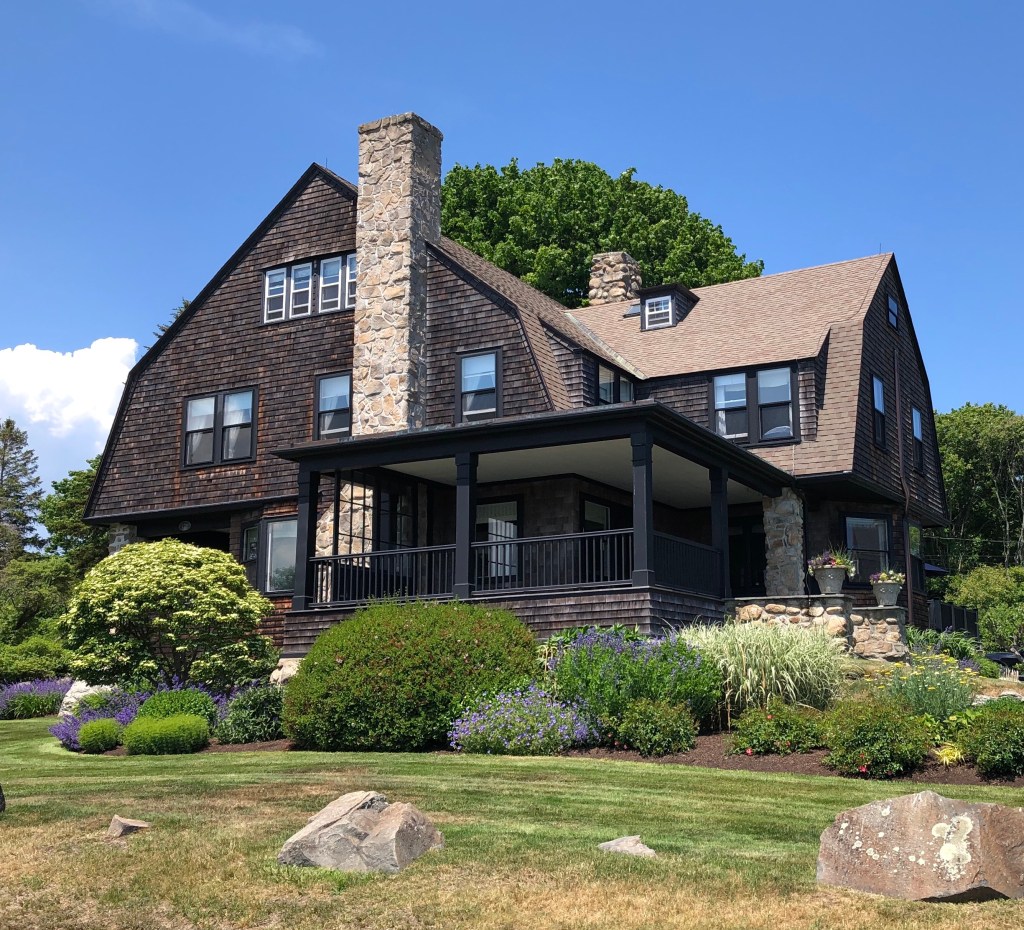
Inglesea Cottage // 1889

One of the larger Shingle style homes in Kennebunkport, Inglesea Cottage, was designed in 1889, possibly by Henry Paston Clark, who designed or worked on many homes and buildings in the summer colony. The original owner, Dr. George Frederick Brooks, a doctor based out of New York, who spent his childhood on the coast of Maine, and decided to spend his elderly summers there. By 1903, the home was purchased by Ms. Lucy Fay (1864-1937) of Fitchburg, MA, who hired Henry P. Clark, to add the cross gambrel addition to enlarge the home. Lucy Fay was the daughter of the the wealthy industrialist George Flagg Fay and his wife, Emily Upton, and upon their deaths, inherited their fortune (her sister died at just seven years old, making her an only child). The home remains in impeccable shape and is a head-turner everytime I drive down the coast.