Murdock-Wiswall House // c.1718

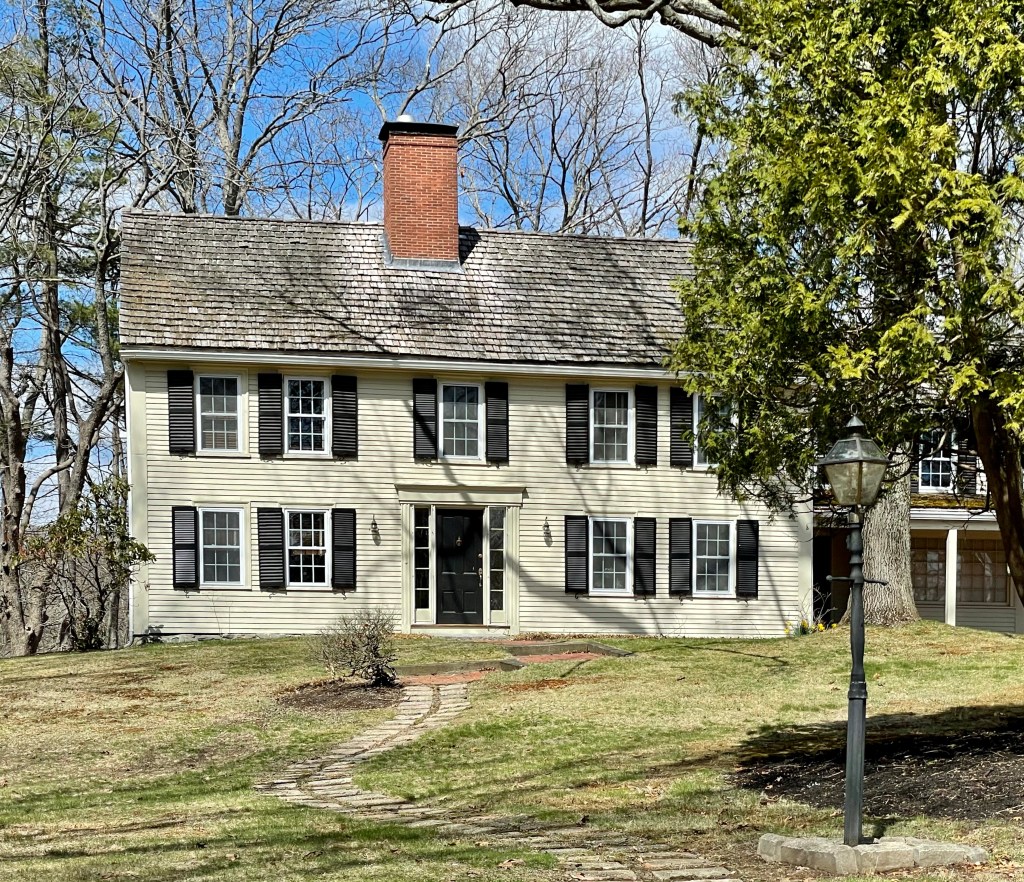
Another of Oak Hill Village’s pre-Revolution homes is this stunner! This home was built some years before 1718 and was eventually occupied by Robert Murdock (1663-1754) and wife Hannah Stedman. Murdock emigrated from Scotland to Plymouth, MA in 1688 with his brother, later settling in Roxbury. In 1703, Robert bought a house and 120-acres of land here, and worked as a housewright. Like the King House (last post), the house was likely rebuilt or modified substantially at this time. Robert also served as a selectman, Constable, Surveyor of Highways, and Assessor in town until his death; and his son, Robert Murdock Jr., took over the property. By the mid-18th century, the estate was purchased by Jeremiah Wiswall (1725-1807). Wiswall served as Captain of the militia at the battle at Concord and Dorchester Heights during the Revolution and held a number of positions in the community including Overseer of the Poor, Constable, Selectman and as a hogreeve (person charted with the prevention or appraising of damages by stray swine). He was very involved in the events leading up to the Revolution including the committee on the tea embargo and drilled with the militia. He also lent money to the town to hire soldiers and owned a house designated as a place to receive smallpox inoculations in 1777, though it is unclear if it was this house he used. The house was eventually slated for demolition in the 1960s, but was saved by Dr. Roy Carlson, President of nearby Mount Ida College (now owned by UMass. For $1, he purchased the home from a developer and paid for it to be moved from its original location at the corner of Brookline and Dedham streets a ¼ mile southwest to its current location, on Carlson Ave, and it served as the President’s House.
North Wilmot Church // 1829

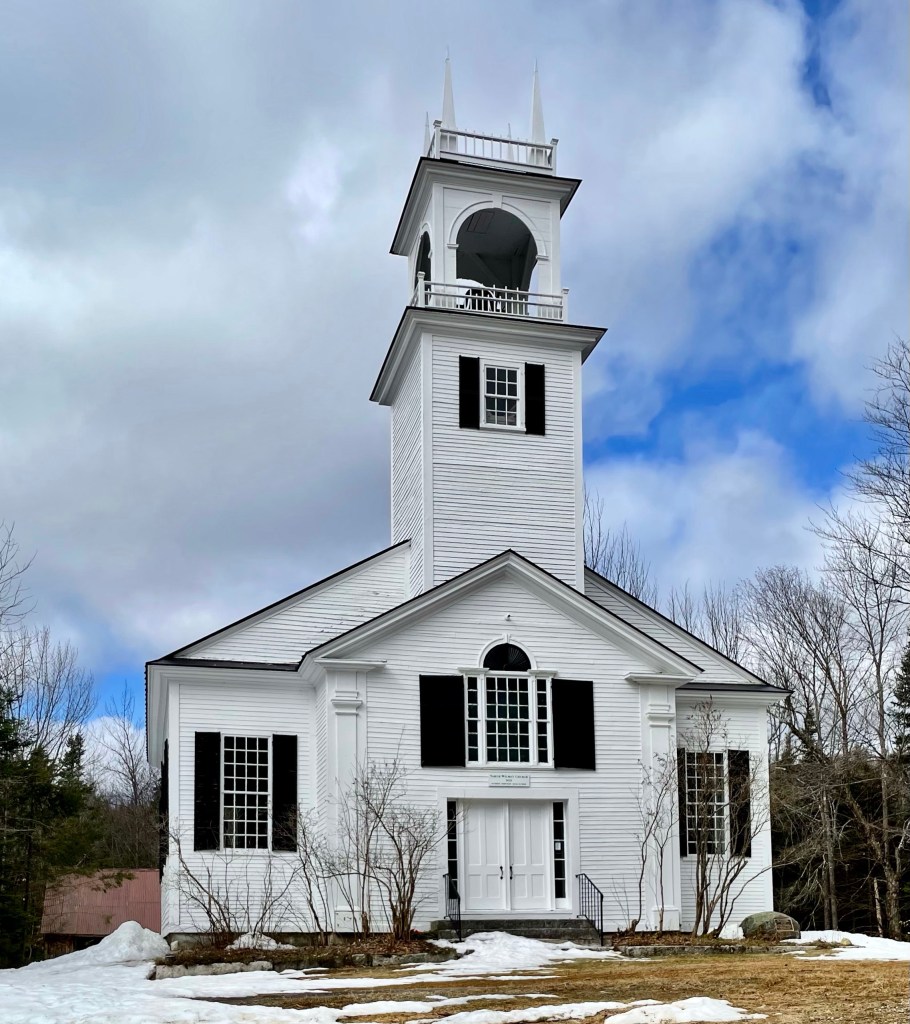
Off the beaten path (like much of the town of Wilmot, NH, you can find this stunning old New England meeting house. Erected in 1829, the North Wilmot Church stands as the oldest extant church in the small town. Five denominations—Congregational, Christian Baptist, Freewill Baptist, Universalist, and Methodist, together collaborated to build this structure then known as the North Union Meeting House. Each denomination held services at the church, as they were all too small separately to warrant their own buildings. Decades after it was built, it was determined that the church should be moved down the hill. In 1846, the church was lifted and placed on rollers (logs), and with the help of oxen, rolled down the hill. It is said that the builder of the church, Josiah Stearns, rode in the belfry. The Different congregations later built churches elsewhere and the building was under-utilized, and it was converted to a meeting space, but allowed a congregation to use the structure. In 1983, with the agreement of remaining North Wilmot Congregational Church members, the North Wilmot Union Meeting House Society was established to maintain the structure and arrange for services in July and August.


Wilmot Center Schoolhouse // 1854

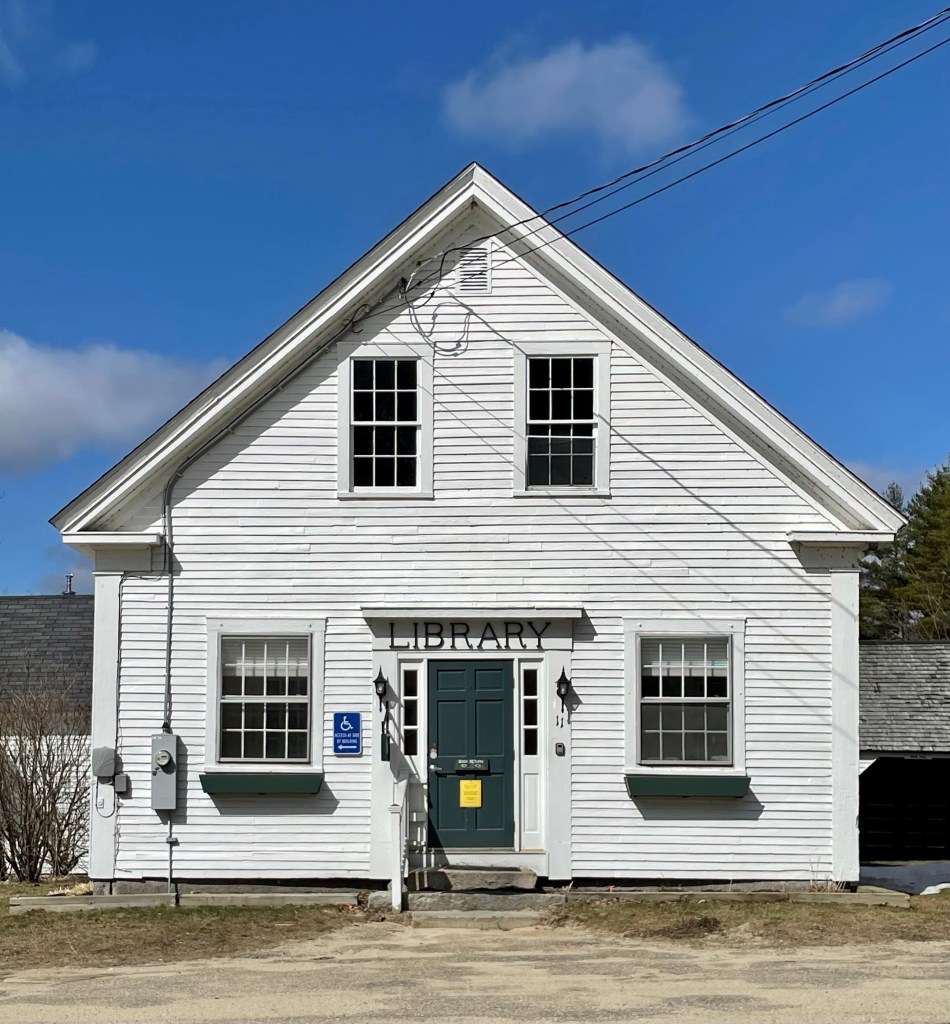
Driving through the quaint village of Wilmot Center in New Hampshire, I had to pull over to snap a photo of this little library building. When I got home, I learned that the building was constructed in 1854 not as a library, but as a schoolhouse! The vernacular Greek Revival school served as one of many district schoolhouses in the region, dispersed around small towns to be within walking distance of the sparsely developed parts of the state. With population growth in the 20th century and the proliferation of the personal automobile, these small regional schools became obsolete. Many of these buildings were converted to other civic uses or as personal residences, but most were demolished. The Wilmot Public Library located in the former schoolhouse in 1972 and is now connected to the town offices next door.

Thomas Casey Building // 1896

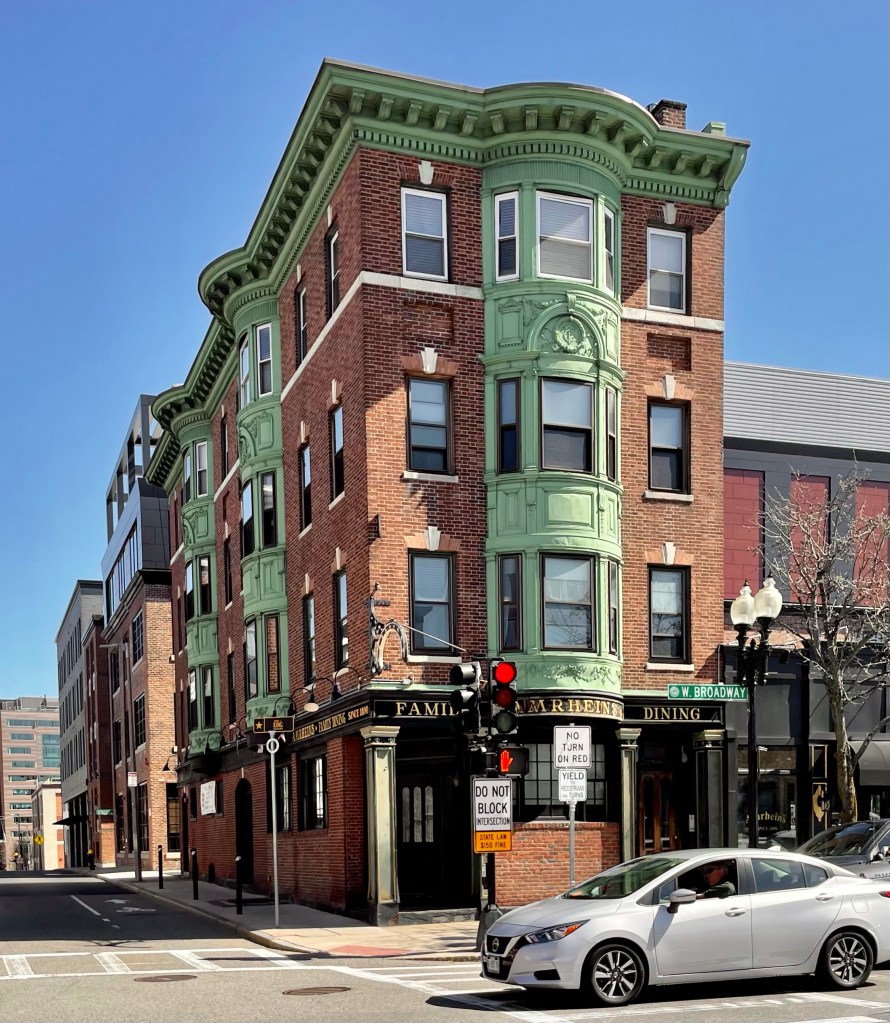
Located on West Broadway in a section of South Boston that has almost been stripped of all of its architectural character and history, sits this historic commercial building, which soon may face the wrecking ball. This building was constructed in 1896 for Thomas Casey, an Irish liquor dealer. He hired Irish-born architect Charles Donagh Maginnis who emigrated to Boston at age 18 and got his first job apprenticing for architect Edmund M. Wheelwright, the city architect of Boston, as a draftsman. The result was a four-story Colonial Revival commercial building, significant for the series of rounded copper bays and cornice. Of special note, there are wreath inlays designed into the bays between the third and fourth floors with the letters “T” and “C” within, representing Thomas Casey. Years after the building was constructed, it was purchased by Emma A. Amrhein, and has – until recently – been home to Amrhein’s Restaurant and Bar. The local landmark had two (unconfirmed) claims to fame; the oldest hand carved bar in America and the first draft beer pump in Boston. The large property was sold, and the developers proposed a large housing development on the site, retaining the Casey-Amrhein building. However, some have recently pushed for the demolition of this building to make the project slightly larger than would be with the historic building.

Boston Consolidated Gas Company Building // 1927

The Boston Gas Light Company was incorporated in 1823 and for thirty years was the sole company producing coal gas in the City of Boston. In the second half of the 19th century, several additional gas light companies were formed in and around Boston to make loads of money with the booming industrial growth seen there. They continued until it was determined that with the proximity of competing pipelines and the overlap of service areas it would be more efficient to consolidate into a single company. The Boston Consolidated Gas Company was chartered in 1903 to to combine numerous smaller corporations operating in the City of Boston under one conglomerate. The organization had a small building in Downtown, which was outgrown decades later. The company hired the local firm of Parker, Thomas & Rice, to design the new mid-rise office building on the outskirts of the fashionable Back Bay neighborhood. The base of the Classical Revival building follows the base, shaft and capital form. The base is traditional with three stories of rustication, ornamental capitals, carved detail at the arches and the elegant bronze window frames. The central stories are clad in dressed limestone, streamlined with punched openings, emphasizing verticality. Stories 12 and 13 are framed by colossal engaged columns with arched windows and bas reliefs. The ground floor today is home to a recently opened restaurant, Nusr-Et Boston, which was created by the famous chef, Salt Bae.

Exeter Chambers // 1889

One of the lesser-known historic hotels in Boston can be found at the corner of Exeter and Blagden Streets in the Back Bay neighborhood, tucked behind the Boston Public Library’s Johnson addition. Exeter Chambers (now Courtyard by Marriott Boston Copley Square), was built between 1889 and 1890 from plans by architect Theodore Minot Clark. Clark was a professor at MIT and the understudy of Boston’s famed Trinity Church architect, H. H. Richardson. Clark oversaw much of the construction of Trinity Church and his name is even engraved on the building. Exeter Chambers was constructed by the Guastavino Company, a very prominent contractor during the period noted for style and quality, known for the Guastavino tile. Cutting edge techniques such as compression arches and terracotta accents were featured throughout the structure. The hotel was vacant for many years and a renovation in 2004, which added three stories to the building, restored the ornate exterior to its former glory.

Hennessy’s Bar // c.1826

St. Patricks Day in Boston is not the same this year. It has been a year since I have been crammed into a dimly lit, wood-paneled Irish Pub, with a pint of Guinness and good conversations with strangers. So for now, I will drink my sorrows in highlighting one of many Irish pubs in Boston, Hennessy’s. The building was constructed as one of a row around 1826 along with the adjacent buildings on the block (today containing Son’s of Boston and Blackstone Grill). All four buildings were identical and stood 3-1/2 stories as Federal style commercial buildings with retail space at the ground floor and office or residences above. The buildings were sold off separately and in the 1960s, this building was acquired by the Charlestown Savings Bank, who thought to “Colonialize” the building. They removed 1-1/2 stories and altered the openings at the ground floor (it could have been MUCH worse). The bank moved out just decades later and the building has since been home to Hennessy’s.

Mount Washington Hotel // 1902

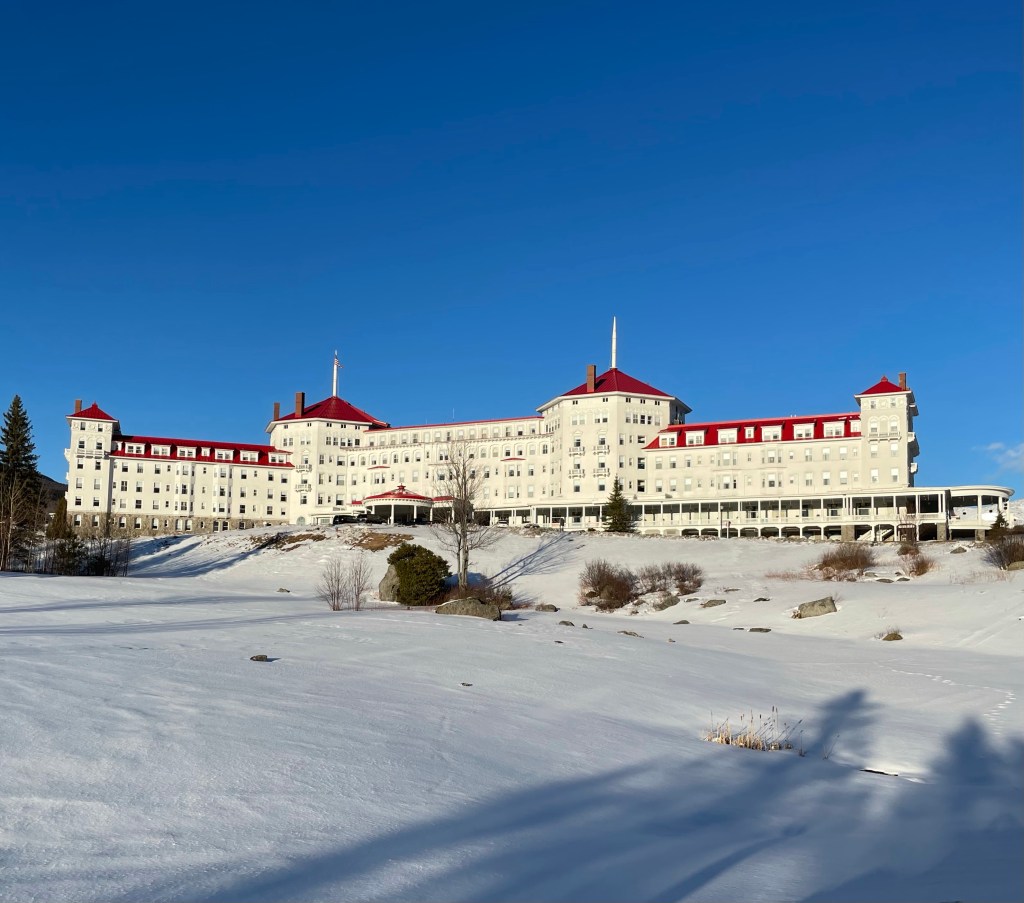
The Omni Mount Washington (originally the Mount Washington Hotel), surrounded by the great White Mountains of New Hampshire, was completed in 1902, at the end of the Gilded Age and the grand hotel era of America. The grand hotel was financed by Joseph Stickney, a native of New Hampshire, who made a fortune before the age of 30 investing in the coal business in Pennsylvania. In 1881, Stickney purchased the Mount Pleasant Hotel, a nearby summer resort and enlarged it, and acquiring a taste for hospitality development in the White Mountains (it was later demolished in the 1930s). He hired architect Charles Alling Gifford to design a new, larger resort across the street which in total, cost him over $50,000,000 in today’s dollars! Ironically, Joseph Stickney, had famously told the press on the opening day: “Look at me, for I am the poor fool who built all this,” as the economy was starting to turn right as the hotel opened. He died one year later in 1903. Nevertheless, up to fifty trains a day unloaded the families of the country’s wealthiest people, mostly from New York City, who stayed here for Summers at a time, leaving behind “the yellow fever and cholera in the cities” for fresh air and open space. The hotel’s design incorporated some of the most cutting-edge innovations of its age, including a steel-frame superstructure, an electrical power plant, and a sophisticated internal heating system. Roughly 250 Italian artisans were brought in to provide artistic touches to the structure by working on its exterior granite and stucco masonry including the two massive octagonal towers, and installing Tiffany stained glass windows.

After Joseph Stickney’s death in 1903, Carolyn his widow, became extremely rich (the couple never had children). Carolyn spent her summers at the hotel for the next decade, a nearby chapel honoring her late husband. The hotel did well in the subsequent decades until the advent of income tax, Prohibition, and the Great Depression, which harmed many large resorts’ profits. In 1936, Mrs. Stickney’s nephew, Foster Reynolds, inherited the hotel, but it closed in 1942 because of World War II. A Boston syndicate bought the extensive property for about $450,000 In 1944. The Bretton Woods monetary conference took place that year, establishing the World Bank and the International Monetary Fund. After subsequent owners, in 2015, the hotel and the Bretton Woods Mountain Resort were purchased by Omni Hotels & Resorts, who have been advocates to the history and preservation of the building and surrounding area, also overseeing the hotel’s inclusion to the illustrious Historic Hotels of America list.

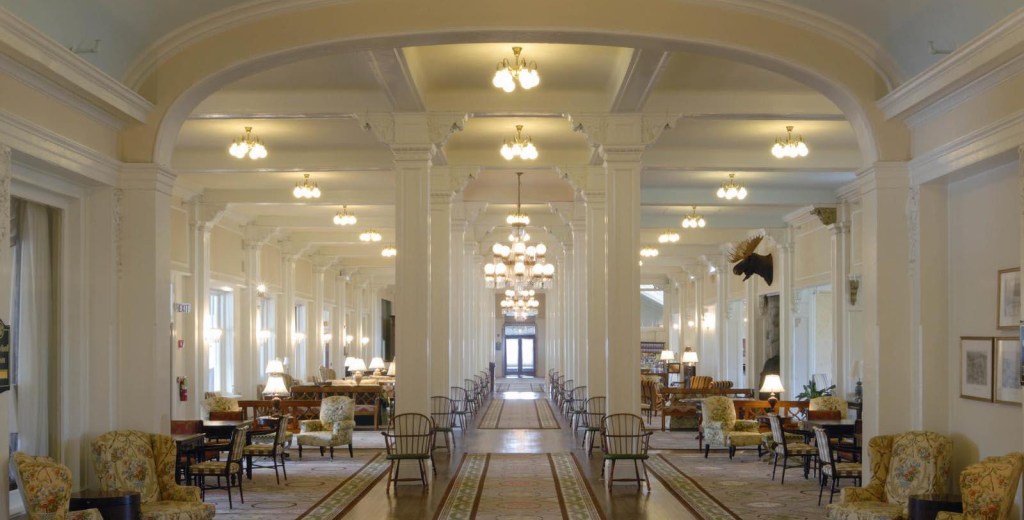
There is so much more I could write about the Omni Mount Washington Resort, from the incredible interior spaces, to Carolyn’s marriage to a French prince, to the supposedly haunted sites… So much history to uncover, so little time!

Bretton Arms Inn // 1896

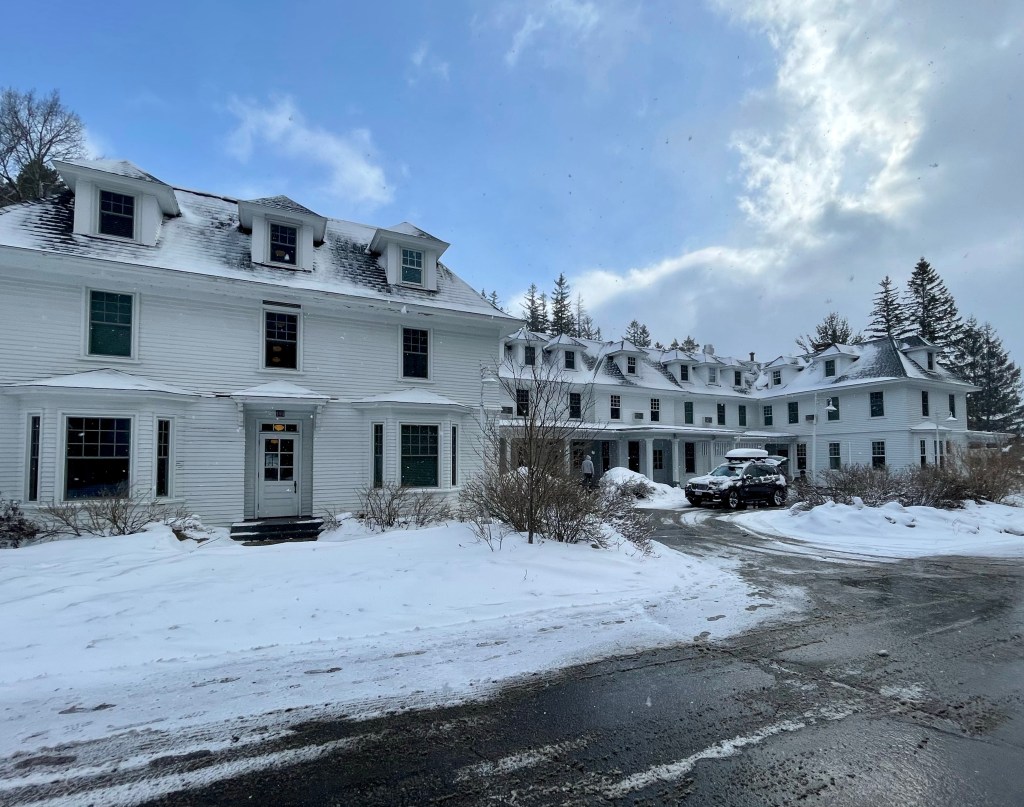
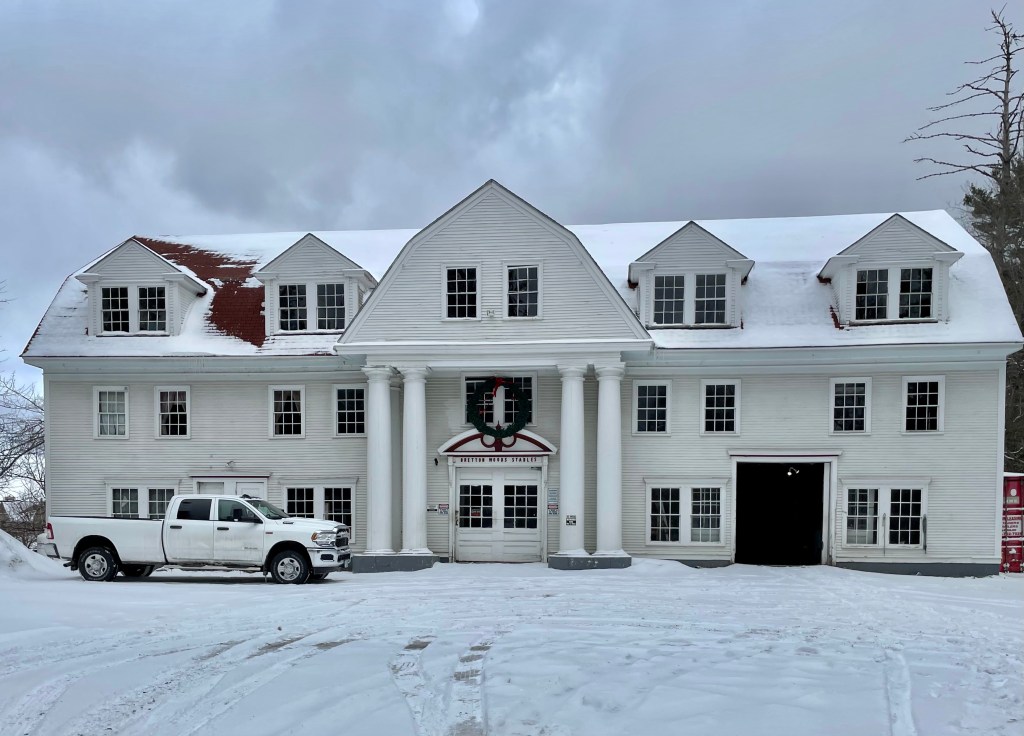
The historic Omni Bretton Arms Inn, adjacent to the Omni Mount Washington Hotel in the White Mountains of New Hampshire, was built as a private home in 1896. The home was designed by, and occupied by architect Charles Alling Gifford, while he oversaw the design and construction of the iconic Gilded Age hotel. After the hotel nearby was opened, the interior was converted to hotel rooms, and opened to guests in 1907. The Colonial Revival building features a central mass with two wings. The building was occupied in 1944 as the headquarters for the Conference Secretariat during the 44-nation Bretton Woods Monetary Conference. The Inn was granted National Historic Landmark designation in 1986 and has recently undergone a $1.4 million renovation focused on bringing the outdoors in. Part of the Omni Mount Washington Resort, this property offers more seclusion and less crowds compared to its larger neighbor. Just down the road from the Bretton Arms is the equally stunning Bretton Woods Stable, likely built at the same time.

Rosebrook Lodge // 2020

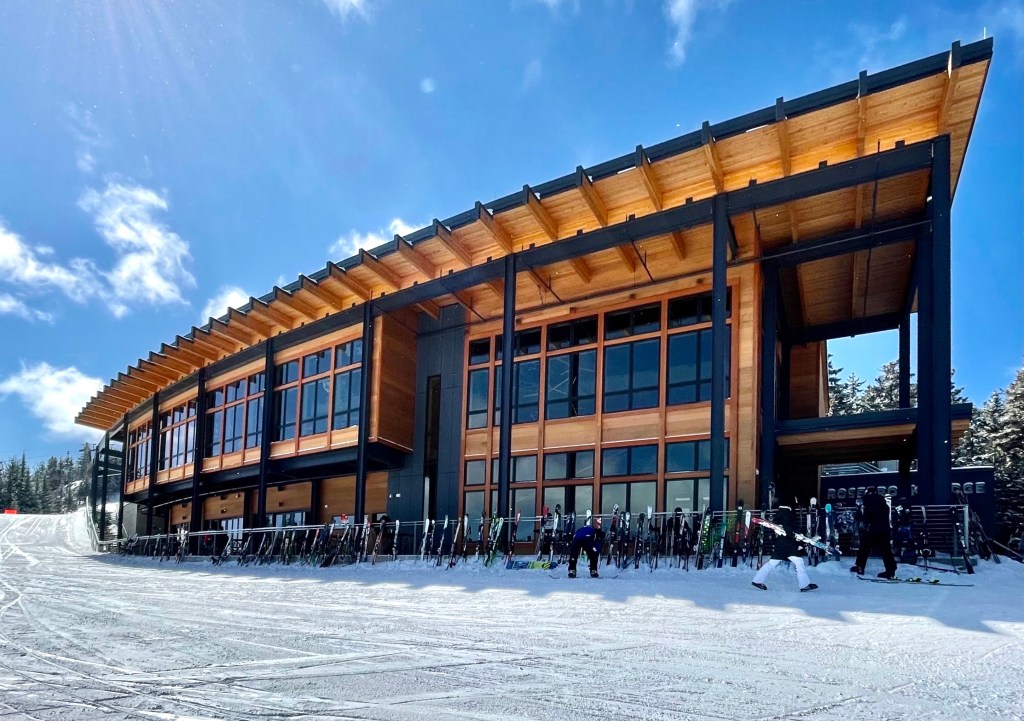
Located at the top of Rosebrook Mountain in the Bretton Woods Ski Resort, this stunning modern lodge building provides possibly the best mountain views in New England. After a couple runs on the slopes, I took the gondola up to the top, exiting to a sweeping view of the White Mountains and the iconic Mount Washington Hotel (more on that later). At the top, is this large, well-sited lodge which is perched upon the mountainside, and an excellent example of Contemporary design done right! Appropriately named Rosebrook Lodge, the new building was just completed in 2020 by designs from architectural firm Bull Stockwell Allen from San Francisco, with help from TruexCullins on the interior design. The two-story lodge is constructed from of timber, steel, stone and glass, which complement the region’s rugged natural beauty and provide a sleek space for on-mountain dining or aprés ski. Inside, the building highlights the outside with walls of windows with warm lighting and woodwork that make relaxing effortless.