Fletcher Free Library // 1904

On July 14, 1873, Mrs. Mary L. Fletcher and her daughter, Miss Mary M. Fletcher, gave the city of Burlington, VT, $20,000 for the founding of the Fletcher Free Library. Half of this sum was to be spent on books; the other half was used to start an endowment for the library. By 1901, the library had outgrown its location in the old City Hall building. In the same year, Andrew Carnegie made a gift of $50,000 for the construction of a new library. In 1902, an architectural competition was created with entries from Boston, New York, Buffalo, Montpelier, Vermont, and Lowell, Massachusetts, but a young Burlington architect, Walter R. B. Willcox won the commission. Willcox designed the new ornate library that year and in August, 1904, the new library was dedicated and opened for business. In the early to mid-1970’s there was some pressure from the citizenry to demolish the Carnegie building and rebuild on the site, which coincided with Burlington’s large urban renewal policies in the downtown area. In response, a group of Burlington residents formed The Committee to Save the Fletcher Free Library Building. A petition was circulated, and as a result, the building was added to the National Register of Historic Places in 1974. In 1977, a grant of $234,000 made possible the stabilization and external repair of the building, and later an addition was constructed, to allow the historic library to meet the needs of the much larger city.
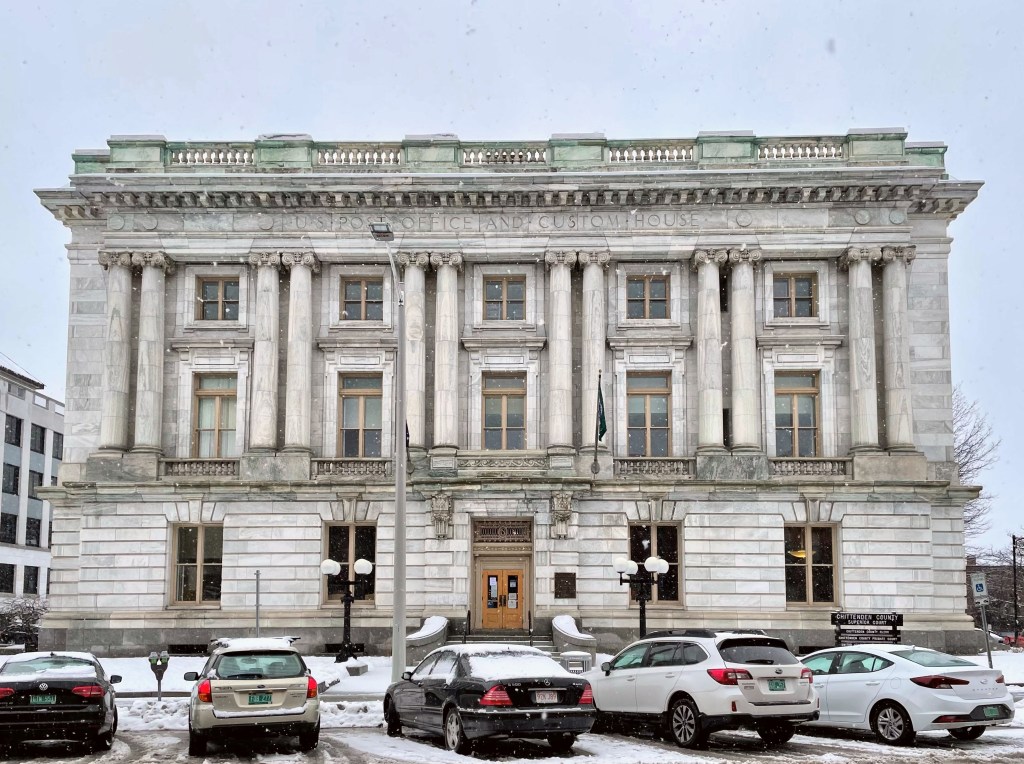
Chittenden County Superior Courthouse // 1906

The Chittenden County Superior Courthouse in Burlington, Vermont was built in 1906 and is one of the most bold architectural designs in the city. The building was actually constructed as the U.S. Post Office and Custom House for Burlington, but changed use in the 1980s after the Old County Courthouse was destroyed by fire. The building was the work of U.S. Treasury architect James Knox Taylor. Taylor designed, many major eastern federal buildings during the late 19th and early 20th centuries. He provided plans for this Beaux Arts structure with a well-appointed exterior finished in marble and dressed granite. Beaux-Arts architecture depended on sculptural decoration along conservative modern lines, blossoming in the United States in the early 20th century after many American architects studied at the École des Beaux-Arts in Paris, particularly from the 1830s to the end of the 19th century.

First Methodist Church, Burlington // 1869

This beautifully designed Romanesque Revival church consists of a large rectangular block with a steeply pitched gable roof and a square tower surmounted by a spire. The church is constructed of Willard’s Ledge stone (a locally quarried purplish limestone) with trimmings of Isle La Motte grey sandstone from quarries north of Burlington. This church is the only Romanesque Revival style church in the city and just one of four pre-1880 churches in Burlington. Architect Alexander R. Esty (1826-1881) designed the building and was a noted New England architect working during the late nineteenth century. He was trained in Boston and opened his own office in 1850 in Framingham, Massachusetts. The congregation remains active and welcoming.

Burlington Savings Bank // 1900

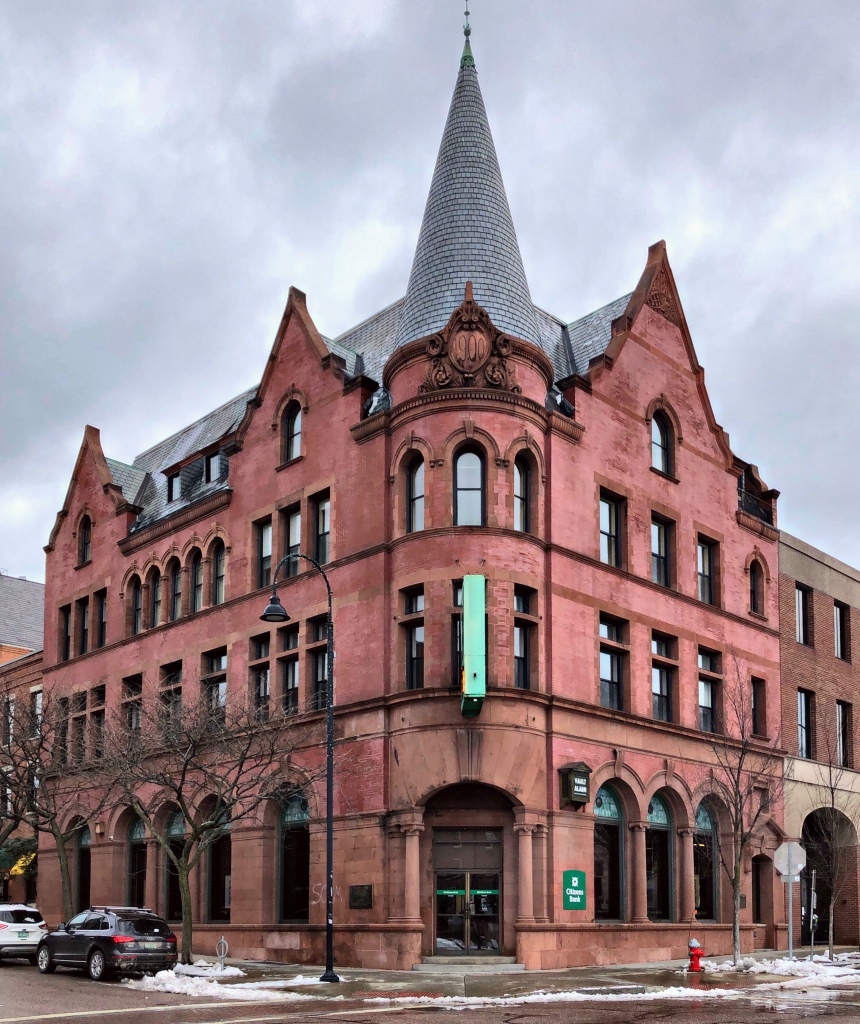
The Burlington Savings Bank building, constructed in 1900, is one of the most architecturally sophisticated buildings in Downtown Burlington, Vermont. The design uses a brick and brownstone facade with prominent wall dormers and a corner tower with conical roof which harkens back to the chateaus and estates of Europe. The recessed corner entrance is framed by free-standing Ionic columns which support a brownstone segmental arch, which helps command the corner presence. The Burlington Savings Bank opened for business on January 1, 1848, and operated under that title until 1988 when it merged with the Bank of Boston to become the Bank of Vermont, which in 1995, was purchased by KeyBank. The corner building is now occupied by Citizens Bank, which continues this buildings legacy as a castle of finance in the city.

Burlington Trust Co. Building // 1891

This narrow, four-story commercial block is located near the Burlington City Hall, and fronts the park it sits on. Constructed in 1891 from local redstone in a unique Romanesque Revival style, the building stands out as one of the most unique in the commercial downtown area. The building was built for the Burlington Trust Company from plans by Clellan W. Fisher, an architect who soon after joined a firm with Stephen C. Earle in Worcester, MA. The design features an unusual checkerboard pattern of inlaid red and white ashlar paired with a stone cornice which similates dentils and brackets. The building is now home to a Burton snowboard retail store, a company started in Vermont in 1977, now the leading snowboard company in the country.

Burlington City Hall // 1928

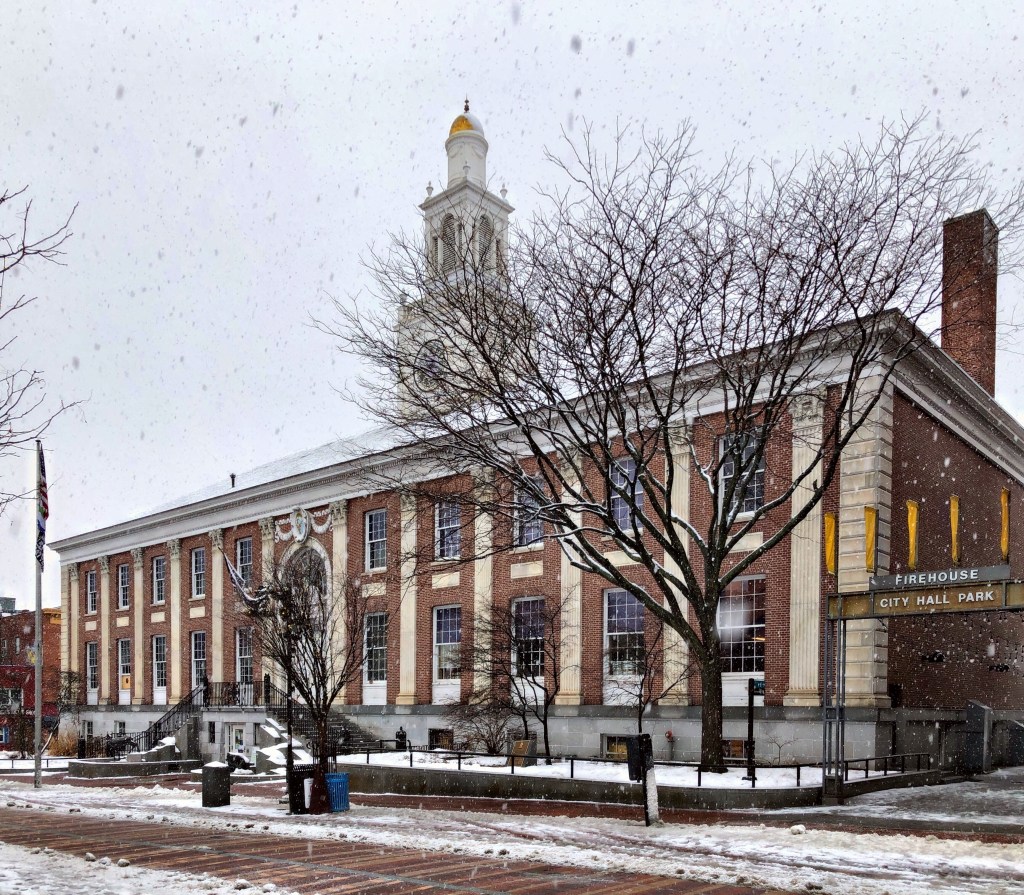
One of the largest, most grand buildings in Downtown Burlington, Vermont is its City Hall building, constructed in 1928, just before the Great Depression. The brick facade with extensive carved marble trim is Neo-classical in style, with virtually all the finish materials – brick, marble, roofing slate, and granite produced in Vermont. The building replaced the 1850s City Hall, which was poorly constructed and suffered from deterioration, exacerbated by an earthquake in 1925. Architect William M. Kendall was hired to complete the designs of the large, bold Classical building. Kendall spent his career with the New York firm of McKim, Mead & White, the leading American architectural practice at the turn of the century, and showcased the best of that firm with the design of this building.

Faxon House // c.1795

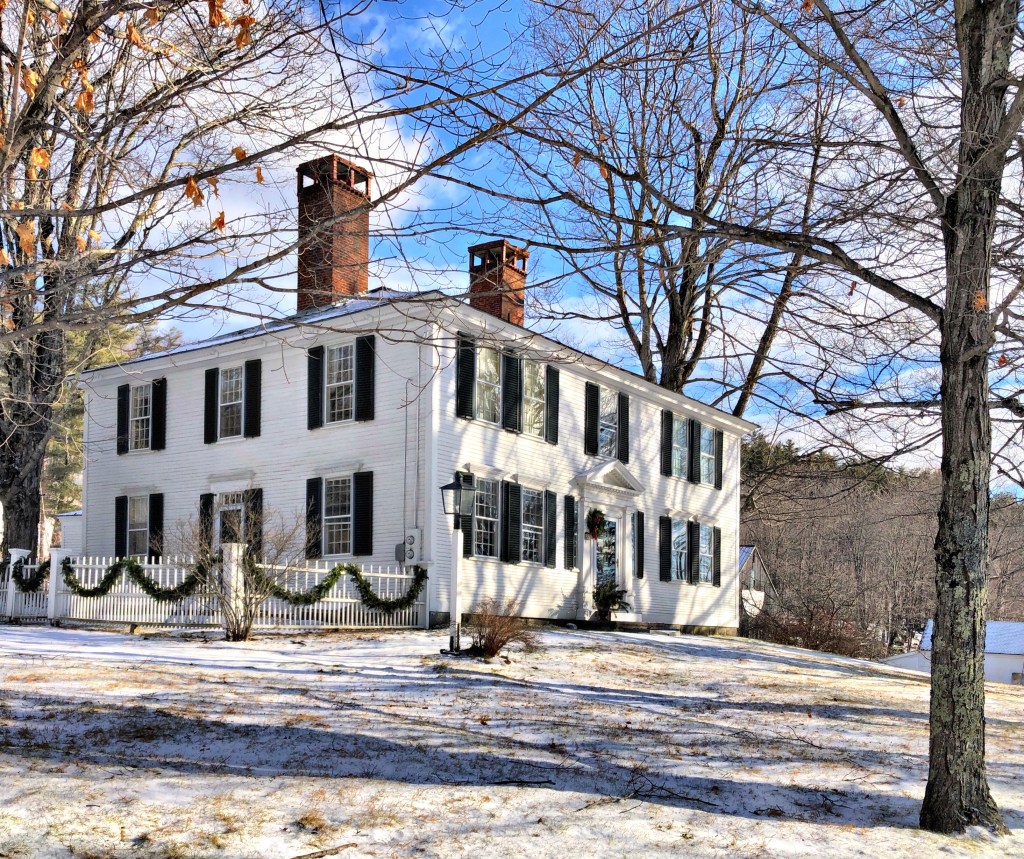
Located adjacent to the Washington Town Green, the Faxon House exemplifies the Georgian architectural style seen in small towns all over the region. The home was built in the early 1790s by a member of the Faxon family. By the early 19th century, the home was owned by Azariah Faxon a storekeeper and the schoolmaster at the District #1 School, which at that time was located between the Town Hall and the Congregational Church in the center of town before being replaced with a larger structure. In 1793, an eight-year-old Sylvanus Thayer moved up to Washington from his family home in Braintree, Massachusetts, to live with his uncle, attending school where he was a teacher. While there, impressionable Sylvanus met Benjamin Pierce, father of future President Franklin Pierce. Both General Pierce and Sylvanus’ Uncle Azaria, who had fought in the Revolutionary War, fed Sylvanus’ growing fascination with military matters, including the dazzling campaigns of Napoleon Bonaparte. Sylvanus later attended nearby Dartmouth College, and went on to become “the Father of West Point” as an early superintendent of the United States Military Academy at West Point and an early advocate of engineering education in the United States.

East Washington Baptist Church // 1877

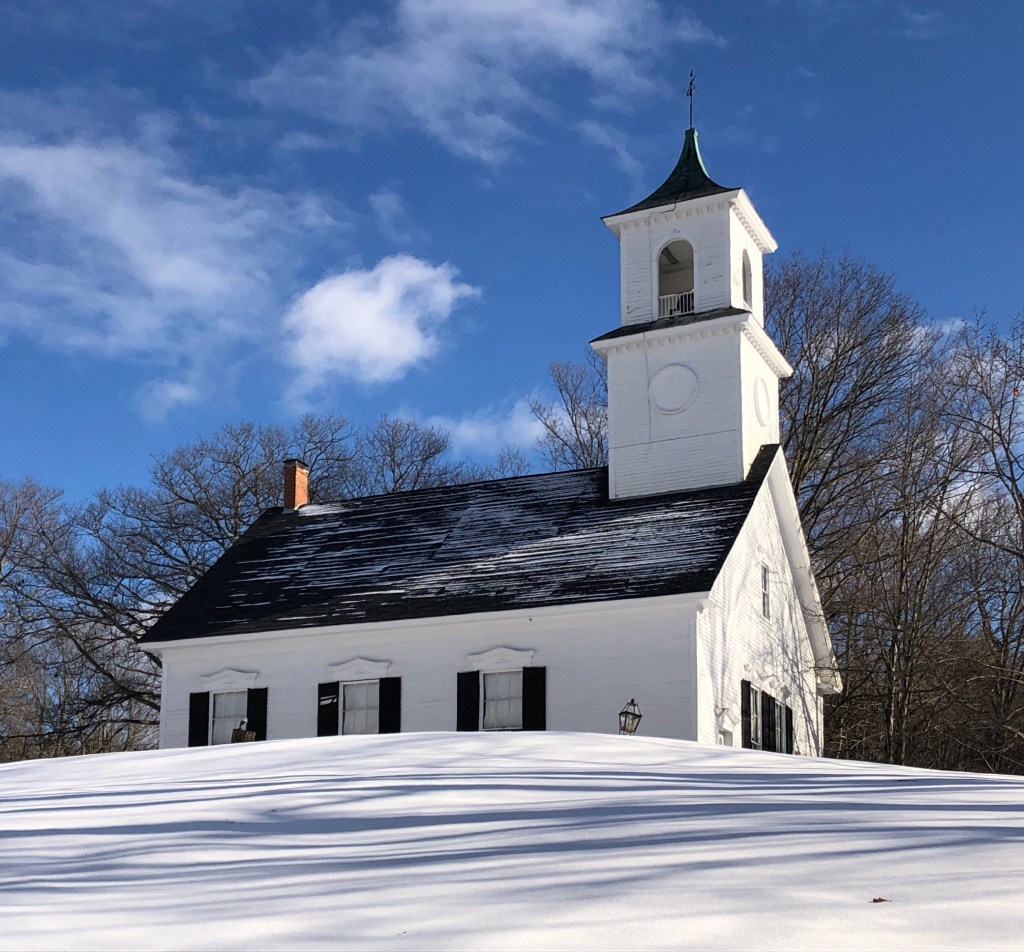
Residents in the eastern portion of the rural town of Washington, NH found it very inconvenient to attend church at the center of town. In 1800, a group of residents on the east side of town banded together to create a new congregation, building a church perched on a low hill soon by 1826. The church was used for decades until it burned in 1844, it was replaced a year later, but that burned as well. Undeterred, the small congregation had yet another church built in 1877. The church remains in great condition, and is still active.

Shedd Free Library // 1881

Aren’t tiny old libraries just the best?!

Located in Washington, NH, the Shedd Free Library is the only Victorian Gothic building in town, and packs a punch for its small size. The library was named for Sarah Shedd, a Washington teacher and poet who went to work in the cotton mills of Lowell, Massachusetts to support her family and educate her siblings. When she died in 1867 she bequeathed $2,500 to her hometown to establish a free public library, an amazing gift! The gift did not appear to be enough as nothing was built until 1881, after Boston architect S. S. Woodcock was selected by Luman T. Jefts, a wealthy shoe manufacturer in Massachusetts, to design the library after a gift to his hometown.

Washington Congregational Church // 1840

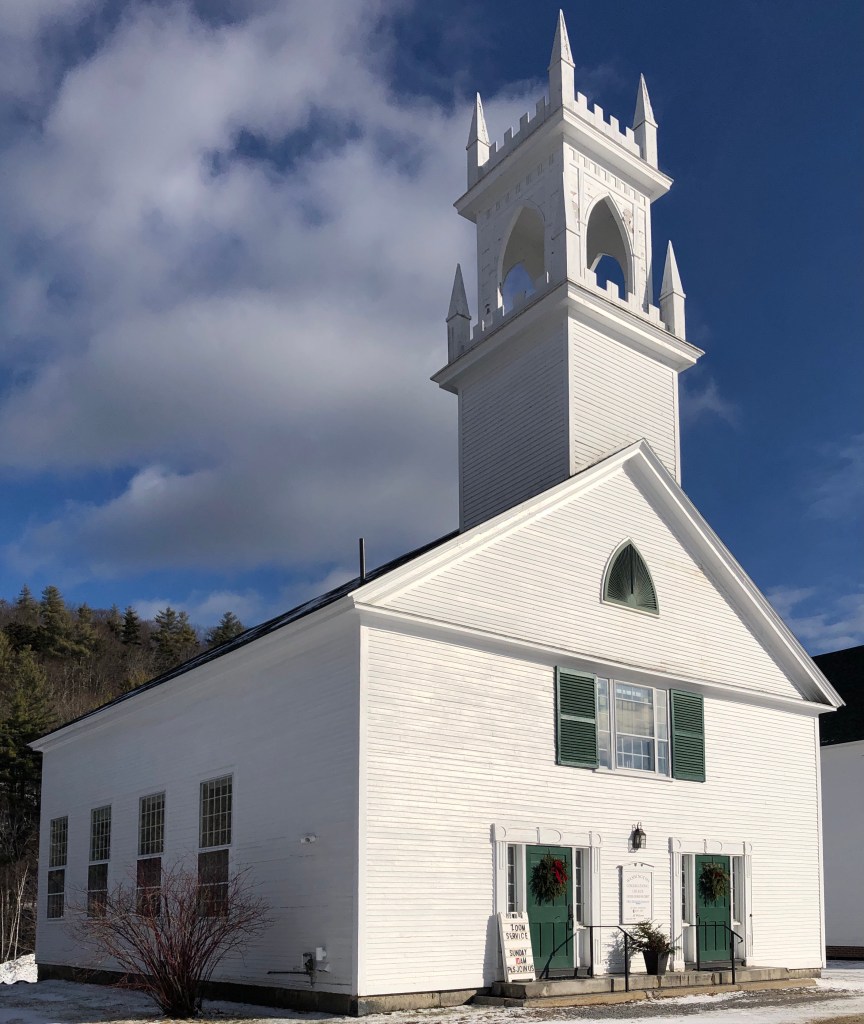
Located adjacent to the Washington Meeting House and Central Schoolhouse on the Washington, New Hampshire Town Green, the Washington Congregational Church perfectly compliments the collection of vernacular buildings here to create a very cohesive, three-building historic district. The church is dominated by a Gothic-inspired two stage square tower adorned by pointed pinnacles and crenellation. The building, constructed in 1840, is a great example of a Gothic Revival vernacular church building in rural New Hampshire and has been well-maintained over the years. In 1960, a fire in the church resulted in several thousand dollars worth of damage. A full basement was built under the church in 1985 to provide space for Sunday School classes and events. The simple arched sanctuary has remained in keeping with the original interior design, and features wide board wainscoting and wooden pews, taken from the old Meeting House.