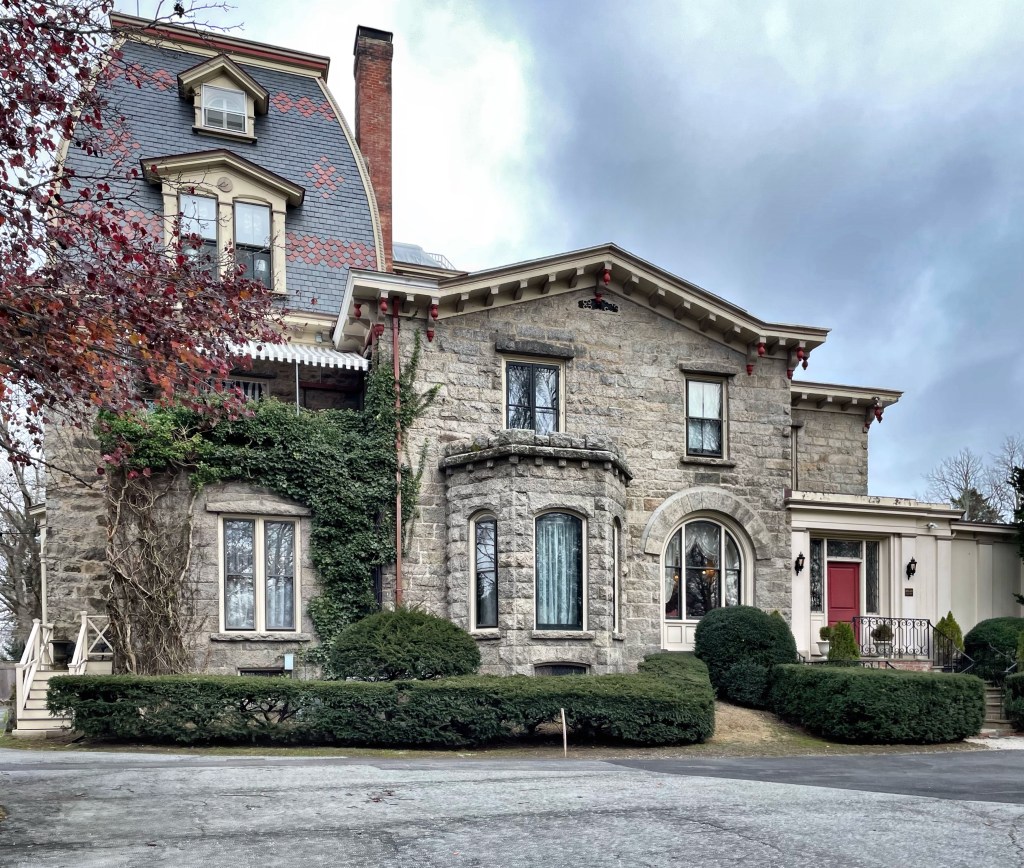
Belair Mansion // 1850

One of the most stunning summer “cottages” in Newport, Rhode Island is this stone behemoth named “Belair”. The house is set back way off the street and was one of the first summer estates built in this section of Newport. Belair was built in 1850 for New York oil baron H. Allen Wright in the Italianate style and constructed of roughly dressed stone and was originally about half of the size of the current footprint. The mansion was designed by architect Seth C. Bradford, who is also credited as architect of the similarly designed Chateau-sur-Mer, built one year later. Wright sold this house to George H. Norman two years after its completion. Norman (1827-1900), founded the Newport Daily News in 1848 and made his fortune as an engineer, first establishing gas works and later water works systems across New England, New York, and the Midwest. Norman made a fortune, and renovated and expanded his mansion in 1870 from plans by Newport architect Dudley Newton, with grand Second Empire additions, including the high convex-mansard corner tower. The original four acre Belair property has been extensively subdivided, and this house now occupies a lot of about an acre; with the original outbuildings sold off, and Belair is now 11 condominium units!
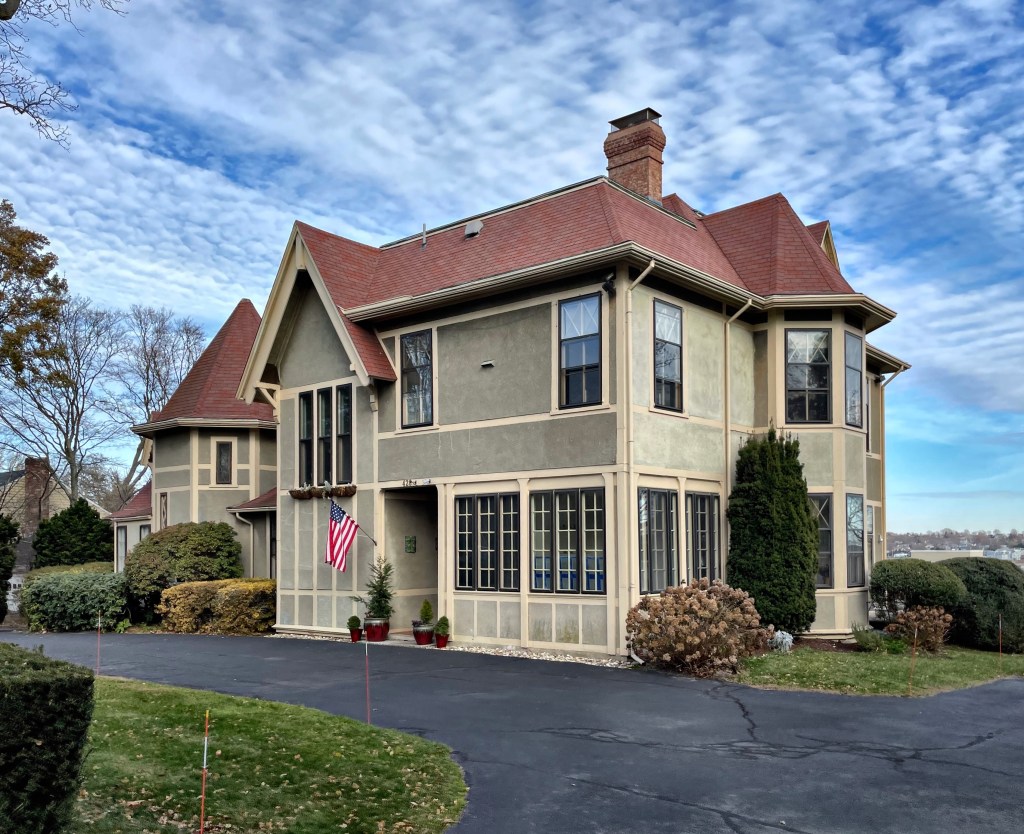
“Morningside” // 1872

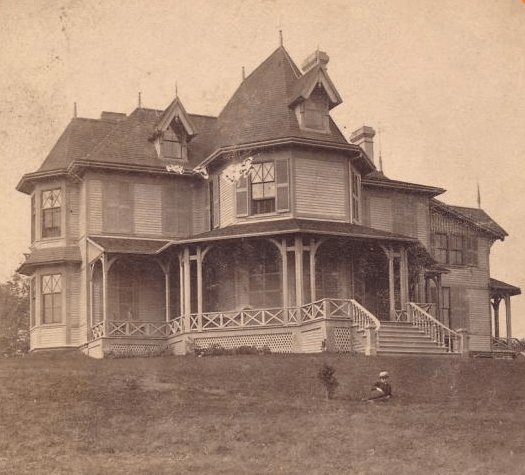
While many of the summer cottages in Newport retain much of their architectural and historical integrity, it is not always the case. This cottage, named “Morningside” barely resembles its original 1873 design. The summer home was built for William Barton Rogers (1804-1882), a scientist, educator, and best-known as founder of the Massachusetts Institute of Technology. He sought a place of rest and leisure, away from the stresses of Boston and running a new college, so he hired the Boston firm of Cabot & Chandler to design a Stick style cottage for him to spend the summer months at. In his diary for October 11, 1872, Mr. Rogers wrote, “Removed [from Cliff House Cottage] to our new home on Gibbs Avenue, at 4.30 o’clock. I have decided to name the place ‘Morningside.'” The house was his respite from stresses and he loved to spend time here with his family. President Rogers died after collapsing during a speech at MIT’s 1882 commencement exercises. His last words were “bituminous coal.” After the property sold out of the Rogers estate, the house was remodeled with stucco siding and much of the original Stick detailing was removed or covered. Morningside is now divided into condominiums.

Morningside c.1880s

The Anchorage Cottage // 1878

This charming Victorian cottage in Newport was built in 1878 for Henrietta and Dr. Stephen Cambreleng Powell as their summer cottage. The well-connected couple hired New Haven architect David R. Brown to design the residence, which is an excellent example of the Queen Anne and Stick/Eastlake architecture styles. David Brown, the architect, apprenticed under the famed Henry Austin for years in New Haven, Connecticut before becoming a partner of the firm. As any good summer cottage needs a fun name, the couple named their cottage “The Anchorage”. The cottage is now known as the Old Beach Inn, and is among Newports many charming old inns.

Anderson-Muenchinger House // c.1850

One of the most eccentric and over-the-top houses in Newport (a town full of over-the top houses) is this home on Cottage Street. The original house was built around 1850, likely as an Italianate style residence with a flat roof. Early owner Elbert J. Anderson (1800-1888) who was born and raised in New York City. In Manhattan, Anderson was a director of The Manhattan Fire Insurance Company; the Farmers’ Loan & Trust Company; and The Phoenix Bank. He married Martha Maria Ellery, the eldest daughter of the late Abraham Redwood Ellery. In 1847, his wife inherited the Redwood Farm at Portsmouth, six miles from Newport, and they eventually moved there permanently. They maintained this summer cottage in Newport to remain close to high-society. The home was sold to George and Annie Collins, who likely modernized the residence with the bays, porches, and frilly details. By the early 20th century, the property was owned by Gustave and Amanda Muenchinger, who ran a hotel at the corner of Bellevue and Catherine streets.

Tew Brothers House // 1845

This Greek Revival house in Newport was built in 1845 for the Tew Brothers. The home was likely a double-house with two doors for each family, as the current entry looks to be of a more recent vintage. The house features a full-length columned porch which has small brackets in the eave, an early nod to the emerging Italianate style. The property was recently renovated and sold for just over $1 Million. Talk about a steal!

Tillinghast Tompkins House // 1854

This large frame house in Newport, Rhode Island was built for Tillinghast Tompkins in 1854. The house is a formal example of the Italianate style of architecture, of which many great examples can be found in the coastal town. Character-defining features of the style on this house include the elaborate round-arch bargeboard with acorn pendants, tripartite round-arch windows in façade’s attic, and the important wide cornice with large triple-arch paired brackets with acorn pendants. The house was occupied by Tillinghast for just a few years until his death in 1860. His widow, Charlotte owned the property until her death in 1899, upon which time it was inherited by their son, Hamilton Bullock Tompkins, a historian and author.

Coolidge Homestead // c.1840

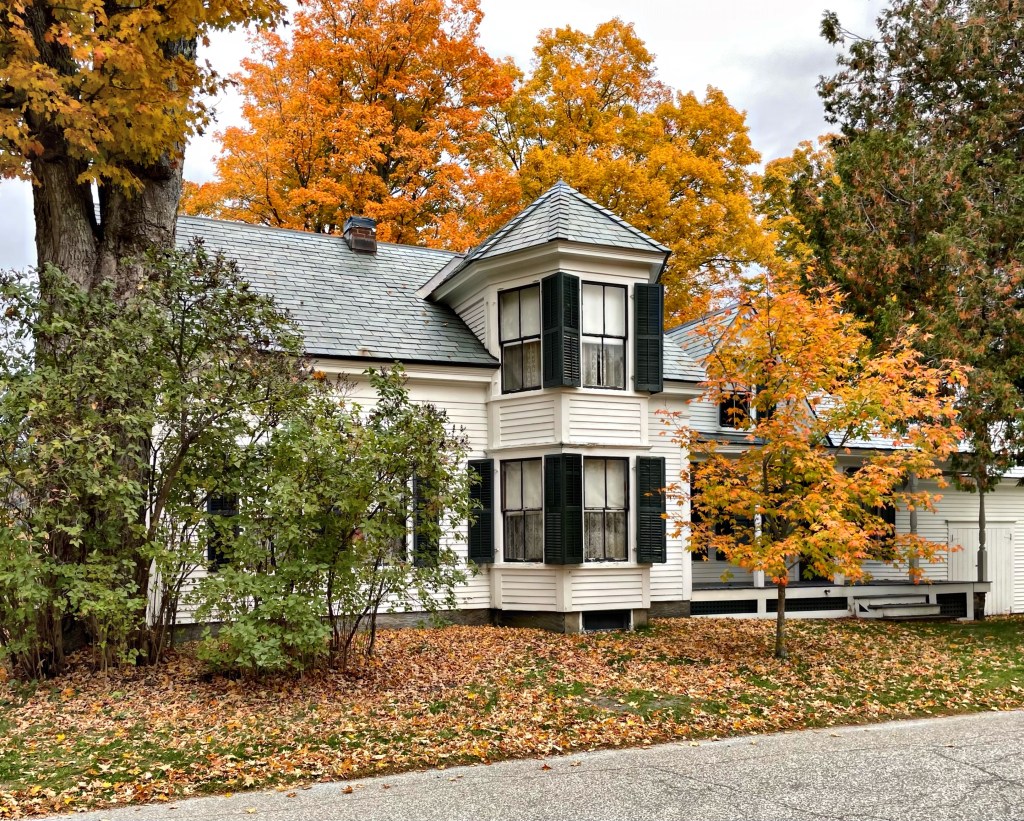
In 1876, a four year old Calvin Coolidge moved to this house in sleepy Plymouth Notch, Vermont, which was purchased by his father and he lived here continuously until 1887 when he began to attend the Black River Academy at nearby Ludlow, Vermont. The house was likely built in the mid-19th century as a modest Greek Revival cape and was Victorianized in the late 19th century by Calvin Coolidge’s father, when he added the two-story bay window, dormer, and side additions. The house remained in the Coolidge family until 1956 when it was given to the State of Vermont as part of the Calvin Coolidge Historic Site.

Coolidge Cheese Factory // 1890

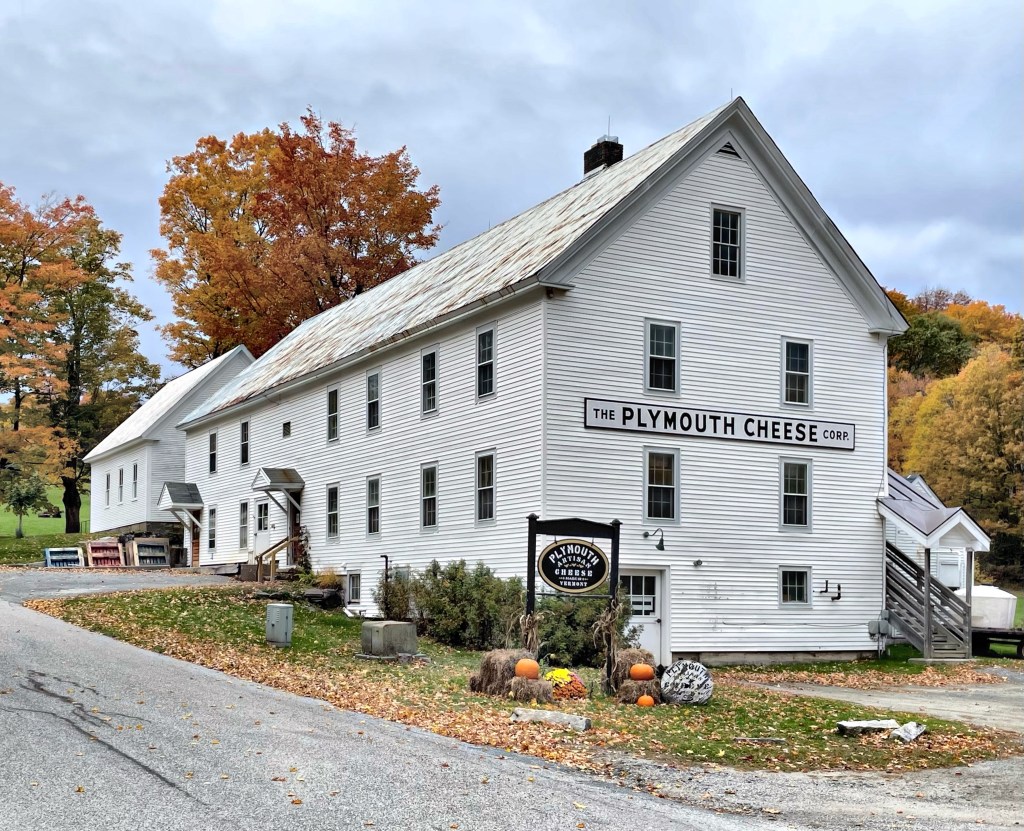
Does it get more Vermont than a cheese factory?! The Coolidge Cheese Factory in Plymouth Notch, Vermont was built in 1890 by Col. John Coolidge (President Calvin Coolidge‘s father), James S. Brown, and two other local farmers so that they would have a convenient market processing milk produced by their farms into cheese. The vernacular building was a short walk from the original Coolidge home and is evocative of many such buildings in rural Vermont. The cheese factory continued to operate until the 1930’s. The factory was renovated in the early 1970s in honor of President Coolidge’s 100th birthday and now produces cheese according to the original formula. The cheese would make a great Christmas gift!

Union Christian Church of Plymouth Notch // 1840

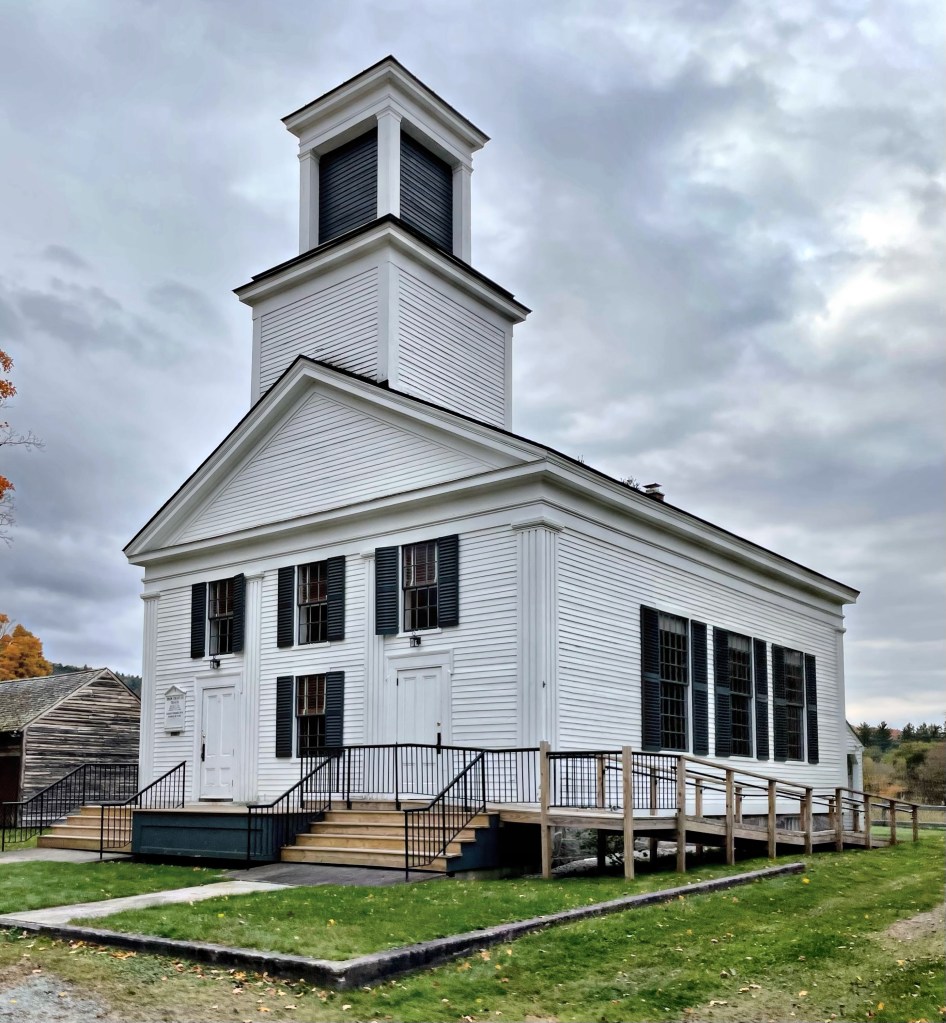
Located next to President Calvin Coolidge’s birthplace and the Coolidge Family store, the Union Christian Church of Plymouth Notch in Vermont stands as another of the village’s well-preserved buildings with direct ties to the former president. The church was built in 1840 as a modest, vernacular Greek Revival building with a two-stage tower and originally was the town’s meetinghouse. The building was dedicated as a Congregational church in 1842. President Coolidge attended services here as a child and later when visiting his hometown as Governor of Massachusetts and President of the United States. In 1942, the
building became a union church for all congregations.

Coolidge Family Store // c.1830

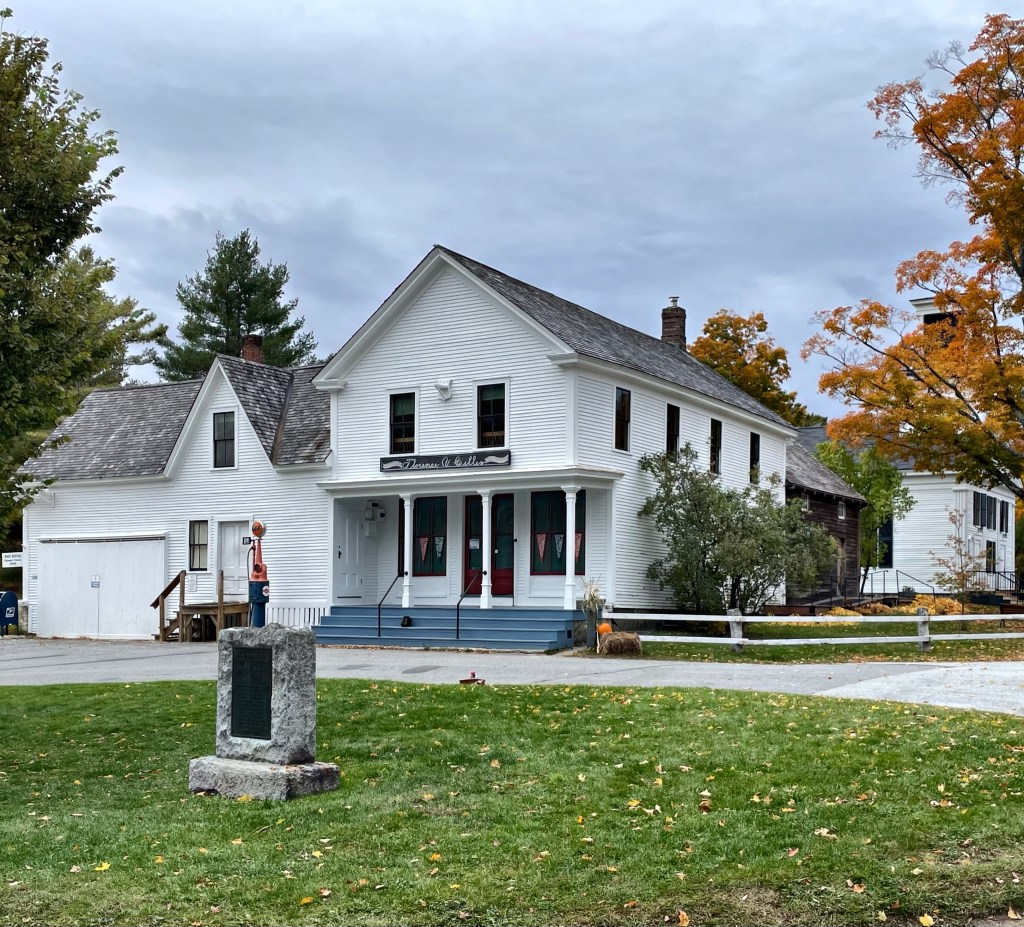
Built before 1835, this typical country store in Plymouth, Vermont, consists of a two-story main block with a one-story storage ell on the southern (left) side, each of frame and clapboard with gabled roof. The building was the village’s country store and was owned by the Coolidge Family, made famous by Calvin Coolidge, the 30th President of the United States. This store was built years before a home for the Coolidge Family was built attached at the rear. The attached house was the birthplace of President Calvin Coolidge in 1872, and the building was where after the death of President Warren Harding, Col. John Coolidge, Calvin’s father, a notary public, administered the presidential oath of office to his son in the family dining room at 2:47 a.m. on August 3, 1923. The old house and store are preserved by the State of Vermont as a living museum to President Coolidge and his family.