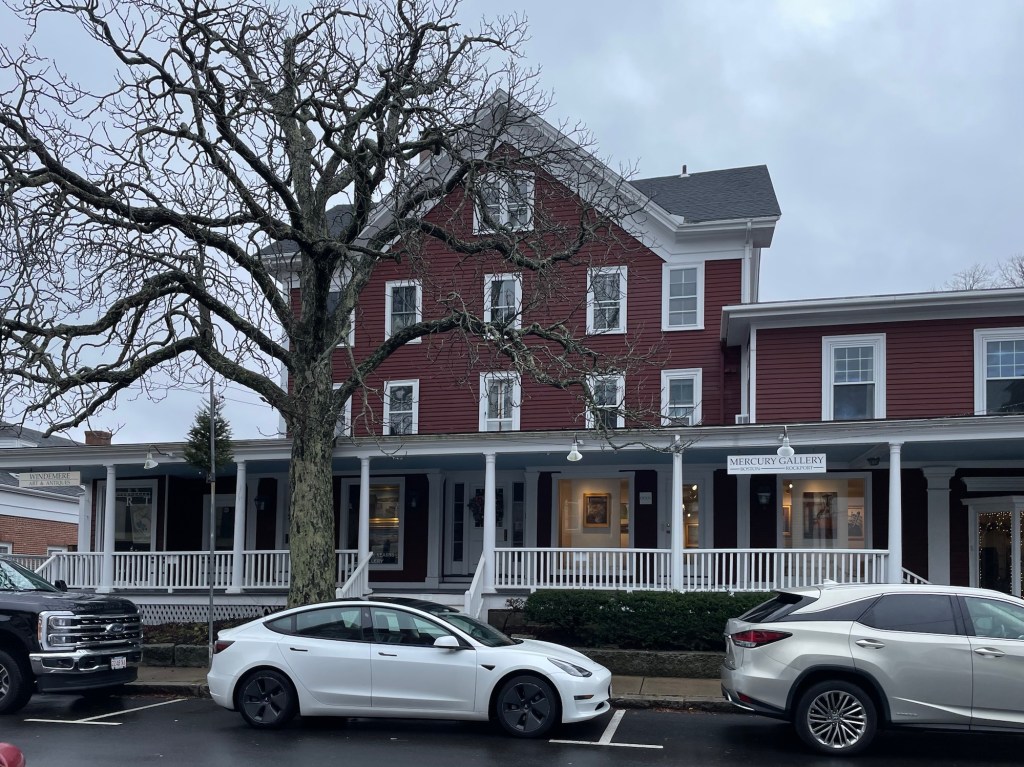
Old Granite Shore Hotel // c.1755

Reverend Ebenezer Cleveland (1725-1805) graduated from Yale College in 1749 and would move to Rockport (then a parish town of Gloucester) accepting the call as the village’s pastor for its Congregational Church. By around 1755, he lived in a house on this site next to the church before becoming a chaplain in the French and Indian War, fighting at the Battle of Bunker Hill, and helping to establish Dartmouth College. The property here was later owned by Jabez R. Gott, a deacon of the Congregational Church and the original cashier of the Rockport National Bank until his death in 1876. Sometime in the next decade, the Cleveland House was converted to a summer hotel, known as the Granite Shore Hotel. The original Georgian-era structure was heavily altered and expanded to provide new rooms and amenities for seasonal guests. An 1905 book showed rooms available at the Granite Shore for $2 a night. By 1919, the rates were $3 a day or between $15 and $18 a week! The hotel closed sometime in the 1940s and the building is now home to art galleries.
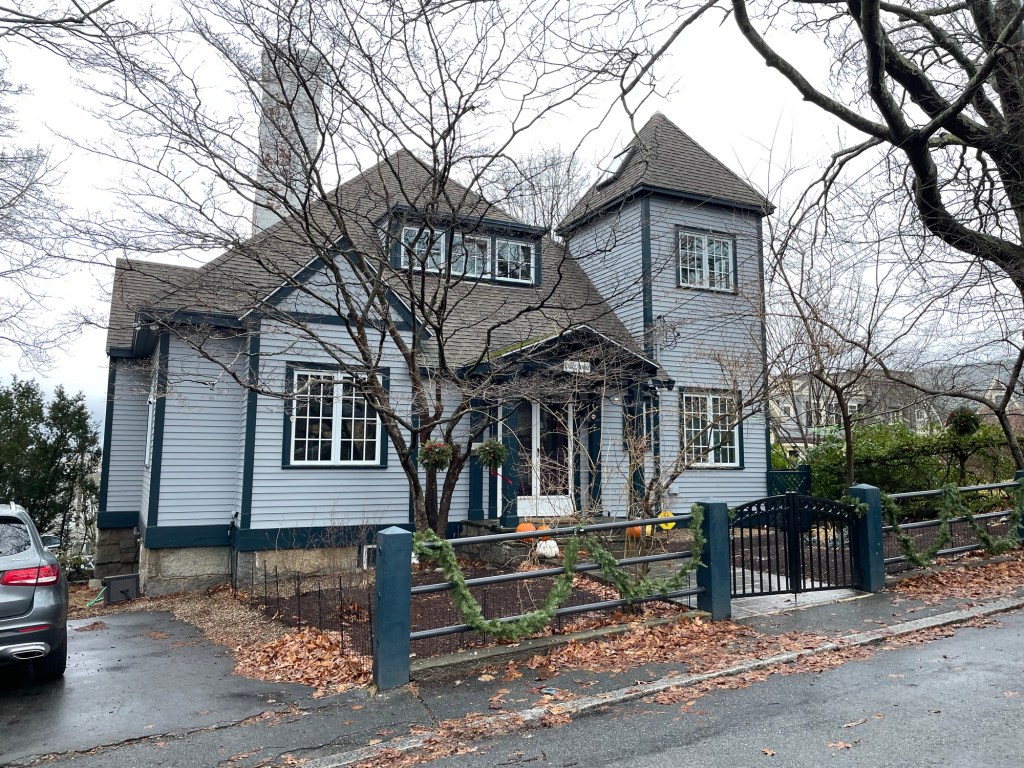
Commercial Cable Company Relay House // 1884

This shingled house in Rockport may look like an ordinary 1880s residence, but it was actually built as an important piece of infrastructure! This is the Commercial Cable Company’s Relay House, built in 1884 to serve as a terminus to a transatlantic cable providing communication across the Atlantic Ocean. Up until 1884, a French company, the Atlantic Telegraph Company, was the sole provider of transatlantic telegraph cables. James Gordon Bennett, editor of the New York Herald, was dissatisfied was the 50 cents per word he had to pay for transatlantic telegraphs. Seeking to break ATC’s monopoly, he convinced millionaire John W. Mackay to create the Commercial Cable Company. That company put down two cables from Ireland to Nova Scotia with two other lines to the United States, one to Rockaway Beach, Long Island, and the other to Rockport. This building housed offices on the first floor and a billiards room for employees on the second floor with machine shop in the basement to service equipment. Cable operations continued from this building until 1935 when newer international communications made cable lines obsolete. The Relay House was converted to residential use, and while it has been altered, it still maintains its significance architecturally and historically.

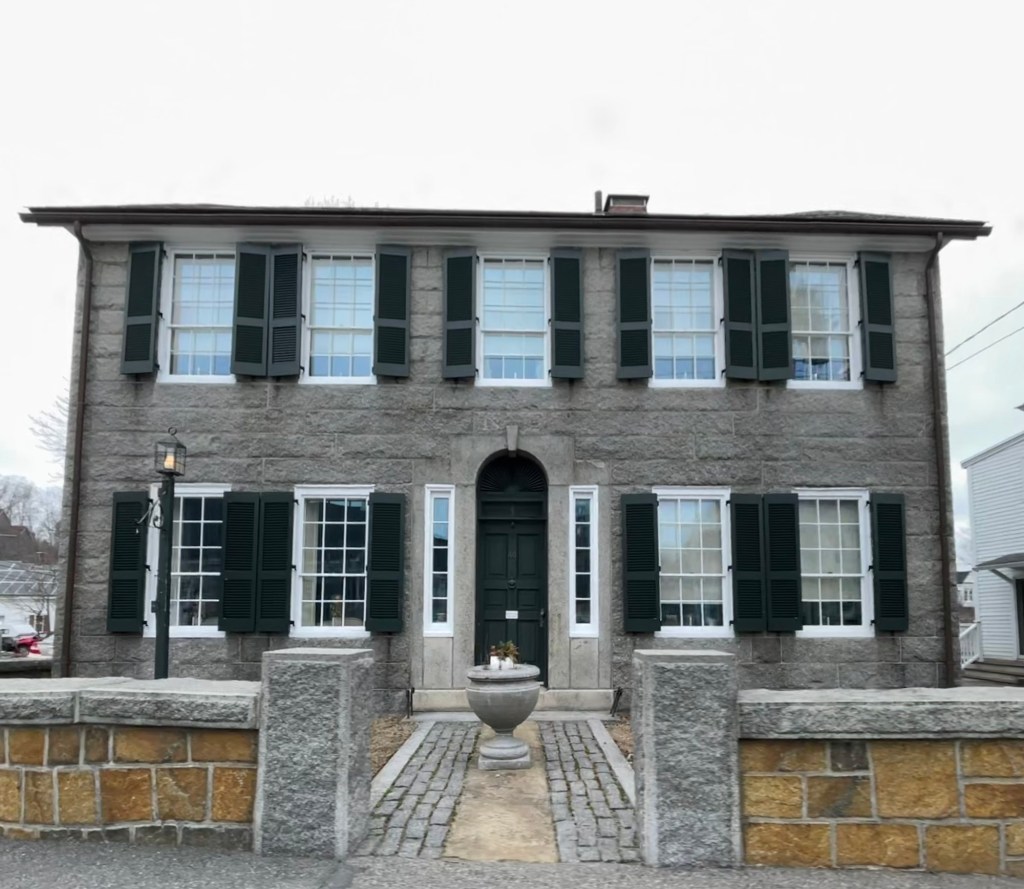
Sewall-Scripture House // 1832

Levi Sewall (1805-1880), a native of Maine, built this stunning granite Federal style house in Rockport, Massachusetts in 1832 in preparation for his marriage to Mary Ann Robards. The granite blocks used to build the house were hauled by oxen from Sewall’s own quarry in Pigeon Cove, which is said to have produced stone of excellent quality. Sewall was one of the towns earliest entrepreneurs in the granite business and did quite well, supplying the building material to many of the region’s buildings in the mid 19th century. The property was inherited by Levi and Mary’s son-in-law, Frank Scripture, who took over the family business. Levi Sewall’s descendants occupied the Sewall-Scripture House until 1957, and ever since, it has been home to the Sandy Bay Historical Society and Museum.

George’s Island – Fort Warren // 1847

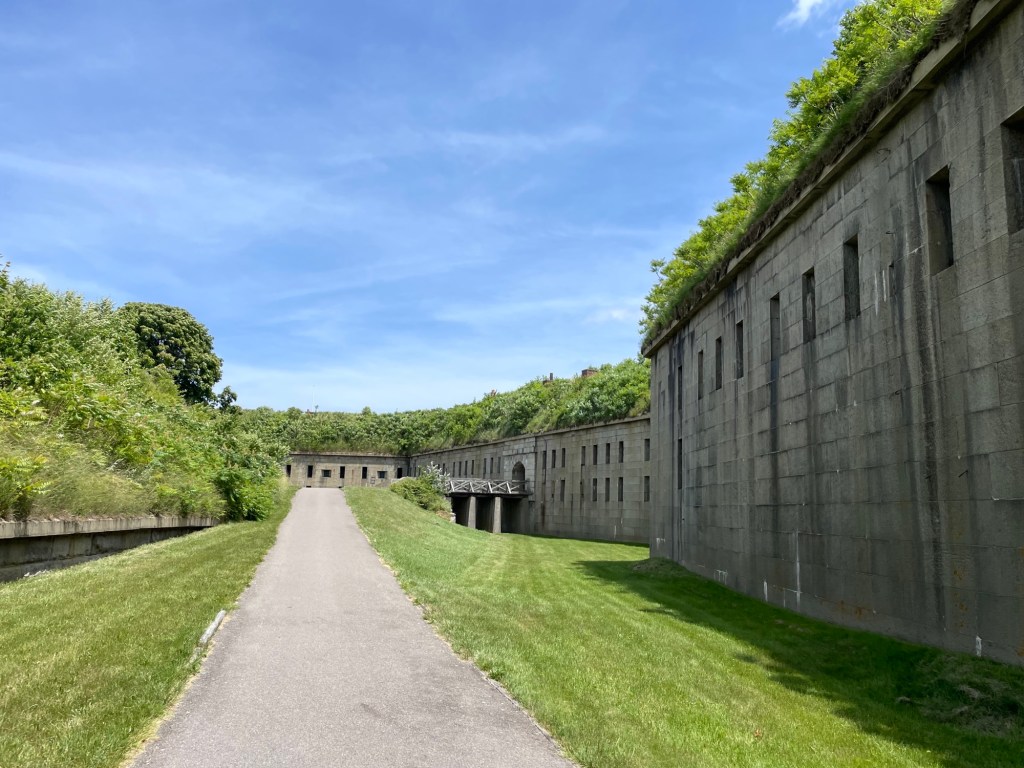
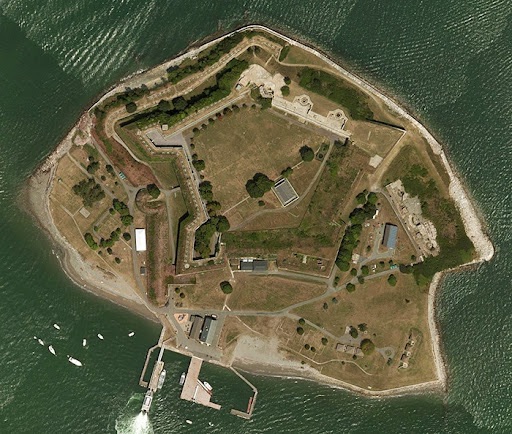
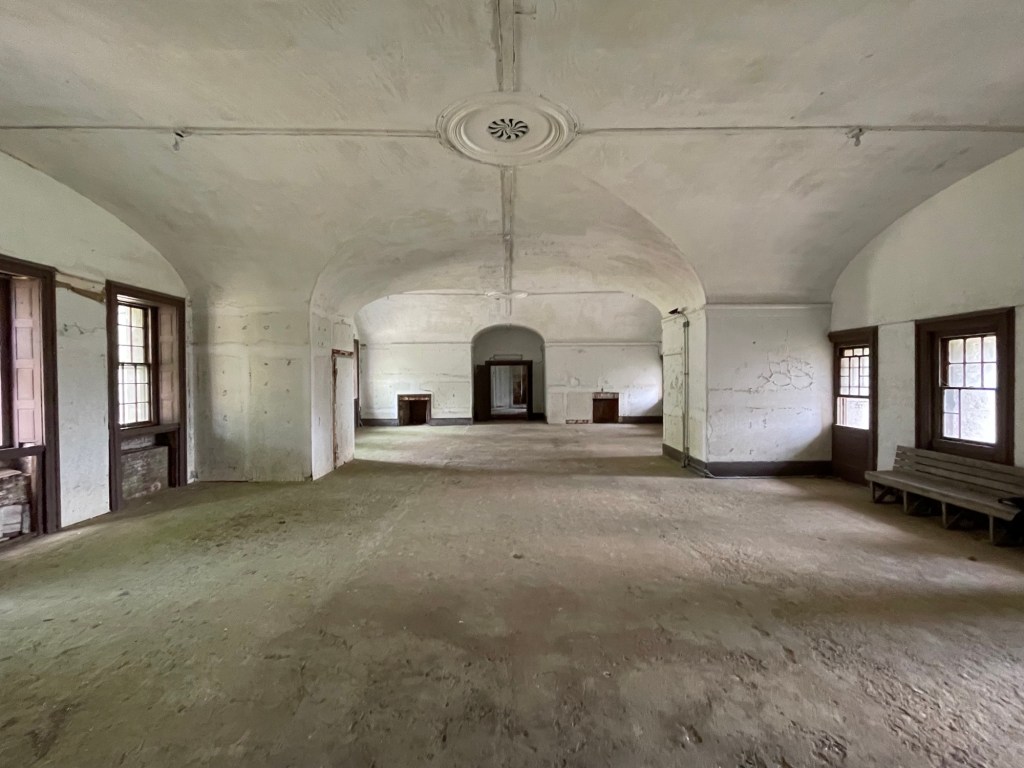
Located seven miles by boat from downtown Boston, Georges Island is a must-visit location for history-buffs and those looking to see the city from a new vantage point! The island in its early days was used for agriculture for 200 years until 1825, when the U.S. government acquired it for coastal defense. Fort Warren was first-dedicated in 1847 and is named for Revolutionary War hero Dr. Joseph Warren, who sent Paul Revere on his famous ride, and was later killed at the Battle of Bunker Hill. Fort Warren is a pentagonal bastion fort, made of granite, and was constructed from 1833 to 1861, overseen by Col. Sylvanus Thayer, and completed shortly after the beginning of the American Civil War. Fort Warren defended the harbor in Boston, Massachusetts, off-and-on from 1861 through the end of World War II. It’s highest use was during the Civil War, where it served as a training facility and as a prison for Confederate officers and government officials. Unused after WWII, Fort Warren was acquired by the Commonwealth of Massachusetts by the Federal government and is today maintained by the Massachusetts Department of Conservation and Recreation as the centerpiece of the Boston Harbor Islands National Recreation Area.

Have you been to Georges Island?

Peep Toad Mill // c.1850

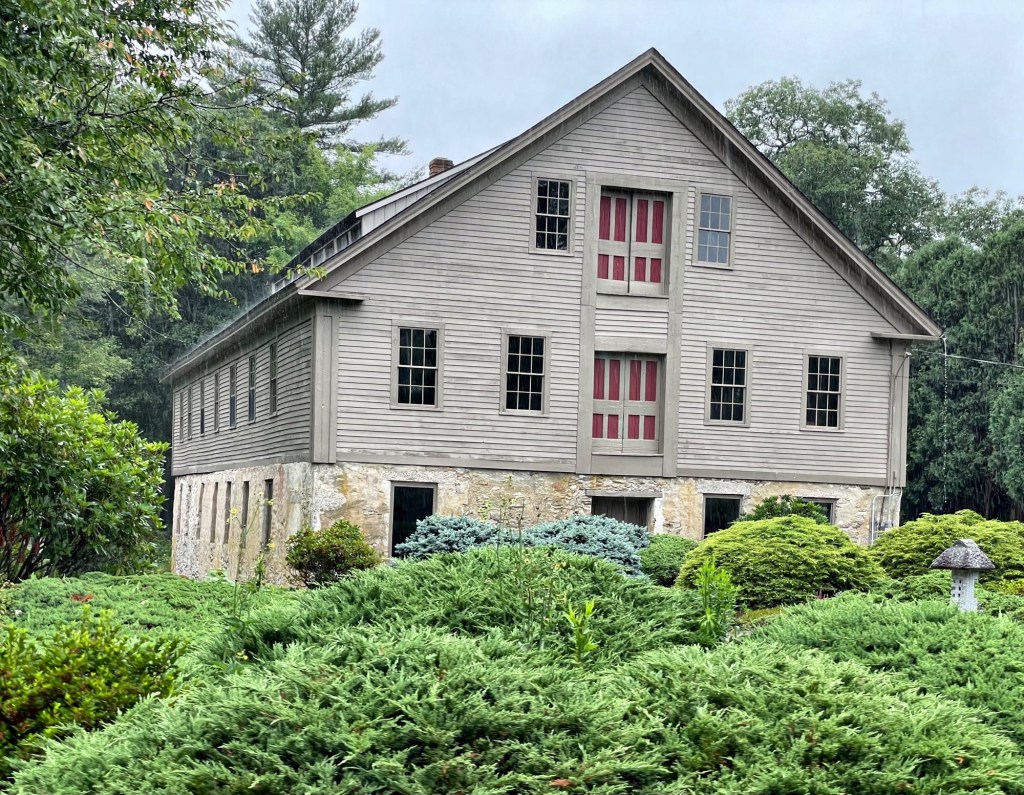
The Peep Toad Mill (also known as the Elliottville Lower Mill) was built in Killingly, Connecticut, around 1850 by the Elliottville Manufacturing Company, whose larger main mill was upstream from this complex. The Elliottville Manufacturing Company was formed in the 1830s and later acquired by Albert Elliott and Nelson Eddy, who expanded operations here. This structure, the lower Mill was used for spinning and preparing the warps for cotton sheetings, the firm’s principal product. In 1870, the two mills employed 18 women, 18 children and 13 men. The business closed in the 1880s, and the building was vacant for some time before being converted to a residence and artist studio. The old mill is a rare surviving example of a wood-frame textile mill, many of which were built but few of which survive, due to fires and/or later expansion of the premises. The present owners have done an amazing job restoring and maintaining this rare treasure!

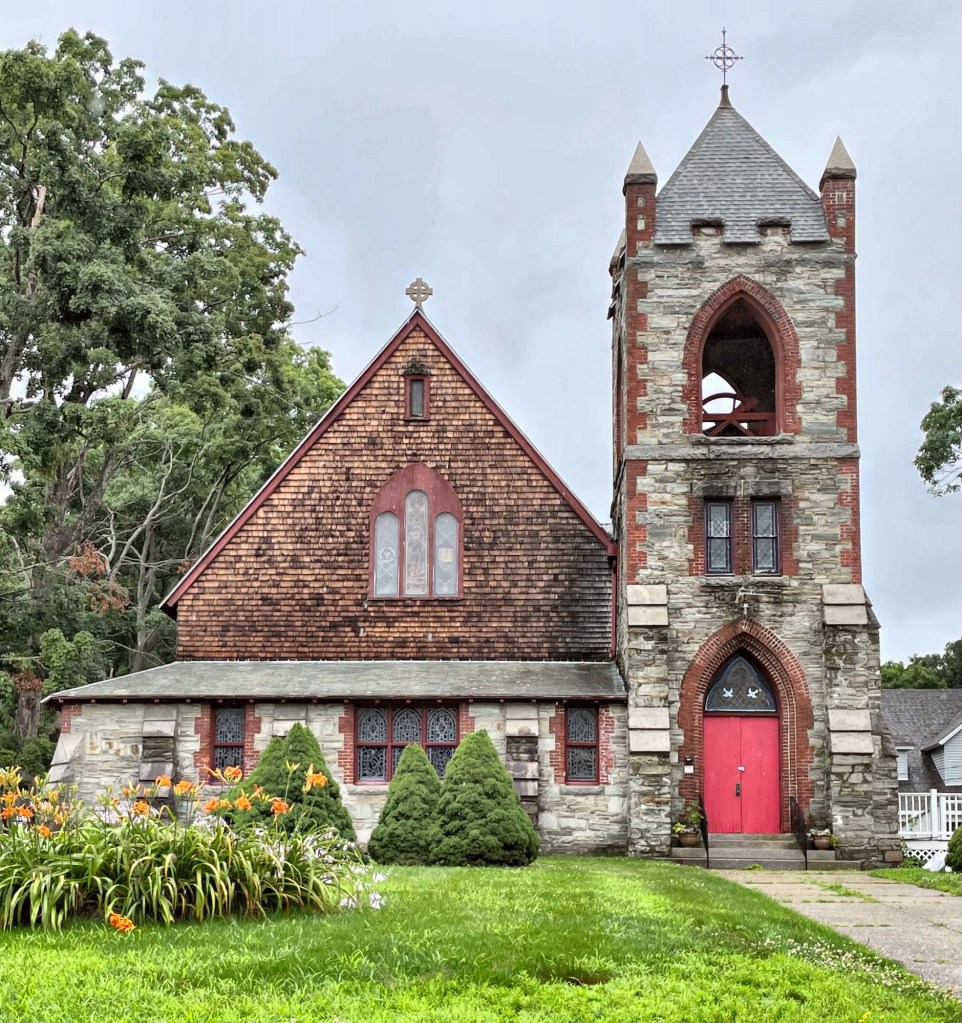
St. Alban’s Episcopal Church // 1891

Tucked away off Broad Street in the Danielson village of Killingly, Connecticut, you will find this charming and eclectic church building, long-occupied by the St. Alban´s Episcopal Church. Episcopalians began congregating in the town in the 1860s, and it would be in 1865, when an old academy building on this site was acquired and converted for use as an Episcopal church. By 1891, the relative prosperity of members of the church made it so a new church building was to be built on the site. Worcester-based architect Stephen C. Earle was hired to furnish plans for the new edifice which is eclectic with Victorian Gothic and Shingle style elements. The congregation appears to have either disbanded or merged with a nearby church as the building does not appear to be occupied. 

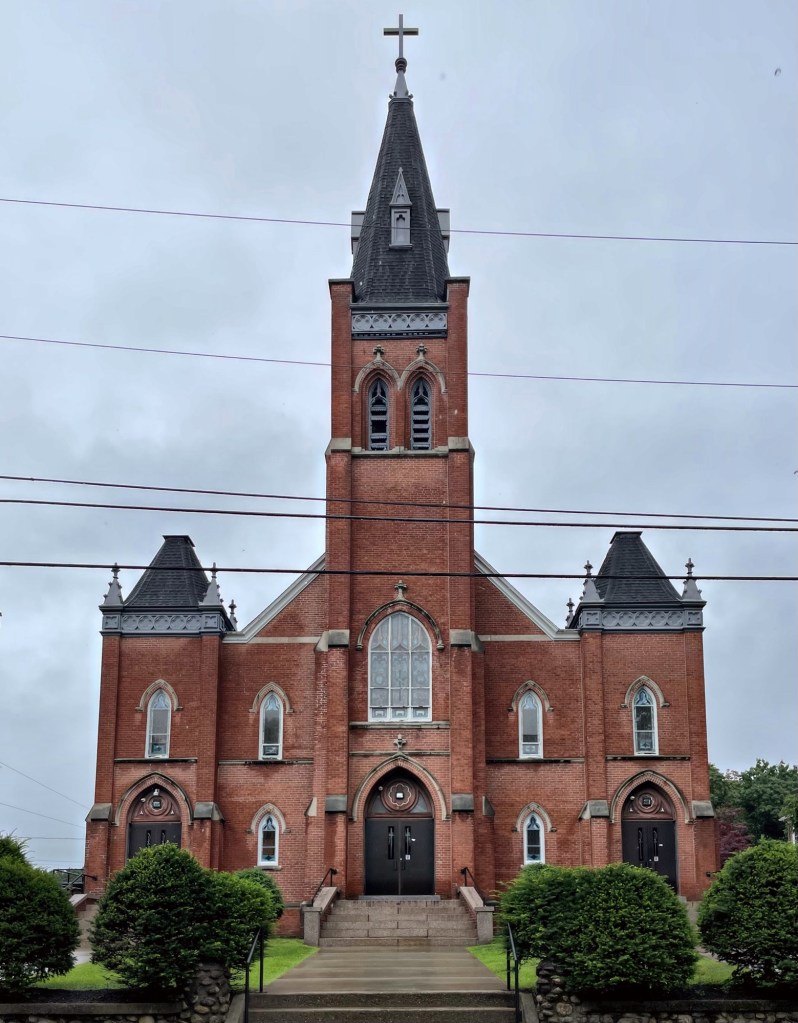
St. James Catholic Church, Danielson // 1870

The St. James Catholic Church in Danielson, Connecticut, is an imposing and architecturally ornate example of a church built in the Victorian Gothic style. Catholics in town had their first Mass conducted by Rev. Michael McCabe, a Franciscan friar from Ireland, and the first service was held in a private home. They met in different halls until 1864 when they purchased the old Second Advent Chapel on Winter street and it became the first St. James Church. The congregation, largely of working-class Irish immigrants, eventually was able to afford a new church, this large brick structure, built in the form of a cross. A parish hall and school were also built next door and the campus serves as an important piece of the town´s immigrant and working-class history. 

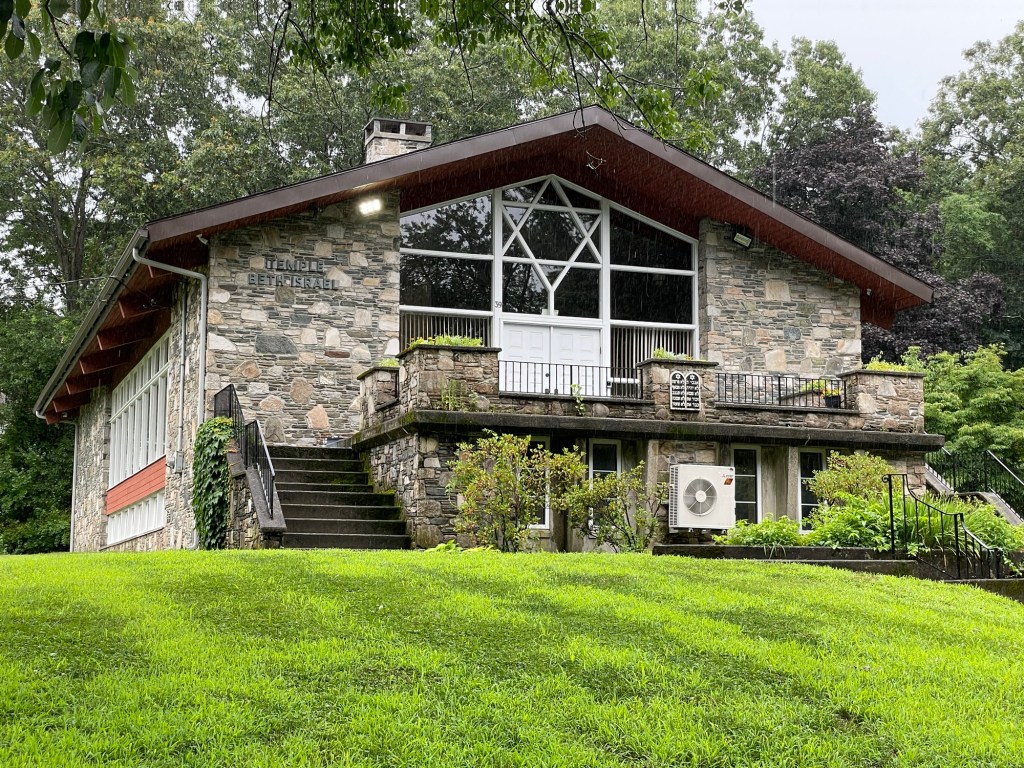
Temple Beth Israel, Danielson // 1955

Temple Beth Israel is a unique, Mid-Century Modern former synagogue, that can be found in the village of Danielson, in the town of Killingly, Connecticut. Ground was broken on the temple in 1951 and the foundation and basement were completed soon-after. Funding was tight and the building remained unfinished for years. During the first years that the congregation used the unfinished synagogue, while continually striving for additional funds to complete the building. A congregation member Mary Riseman’ s son William Riseman, an architect, designed the building and the Riseman family donated the fieldstone for the building from a quarry on their farm. The building was eventually completed in 1961, ten years after its ground-breaking ceremony, with young, recently graduated architect, Maurice Finegold as designer of the interior of the main floor sanctuary and more, completing the project. The congregation, a blend of Orthodox and Conservative adherents, was generally served by itinerant rabbis, often religious students. Dwindling membership forced the congregation to merge with another in nearby Putnam, and the building was eventually sold. A secular preservation society was organized to keep it, which has transformed it into a cultural and historical center, dedicated to preserving the history of the Jewish experience in the area.

Old Killingly High School // 1908

The Old Killingly High School is located in a densely built residential neighborhood east of downtown Danielson, a village of Killingly, Connecticut. The building has served the community for well over 100 years, but through various uses. The school was built in 1908 and enlarged with side wings in 1927. It was considered state of the art for its time, with fireproof construction, wide hallways, and large bands of windows to maximize lighting of the classrooms. Clearly showcasing the village’s wealth and hope for future prosperity. The school was even designed by Hartwell, Richardson & Driver, a leading architectural firm based in Boston, Massachusetts. The building served as the community’s high school until 1965, and as its junior high school 1966–90 until it was converted to a community center and police station for the town. The Renaissance Revival style building is a gem and while tucked away off the main street, it shines through some great maintenance and restoration from the town.

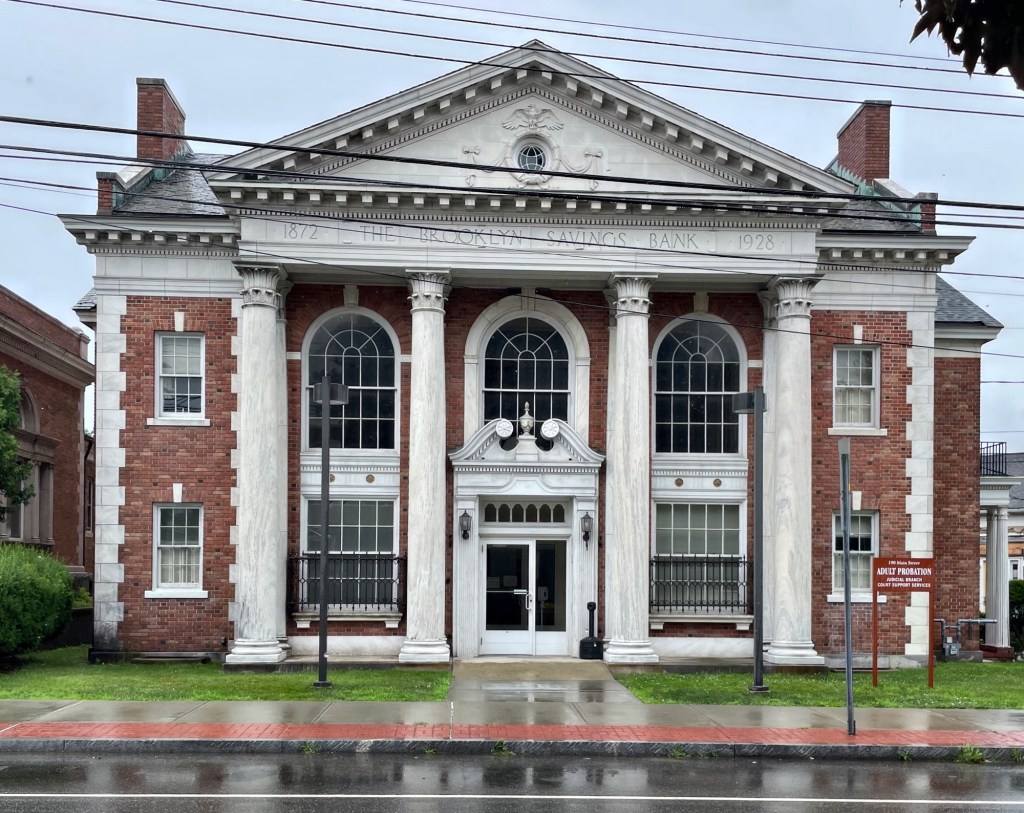
Old Brooklyn Savings Bank // 1928

One of the most intact and architecturally significant buildings in Killingly is this stunning example of a bank built in the Georgian Revival style. Located on Main Street in the village of Danielson, the former Brooklyn Savings Bank was designed by the New Haven-based architectural firm of Norton & Townsend for the Brooklyn Savings Bank, which was founded in the adjacent town, Brooklyn, in 1872. The bank relocated to the economic center of the two towns, Danielson, in 1915, later building this landmark bank structure as its primary facility. The two-story bank is covered in red brick with elaborate limestone and marble trim and detailing, showcasing the wealth and stability of the banking institution for potential members. The façade features a two-story pedimented pavilion, round arched windows, and an elaborate swans neck pediment over the door. The structure has been very well-preserved in its nearly 100 year existence and now appears to be the home of a state judicial court.