Gallup Farm Carriage House // 1906

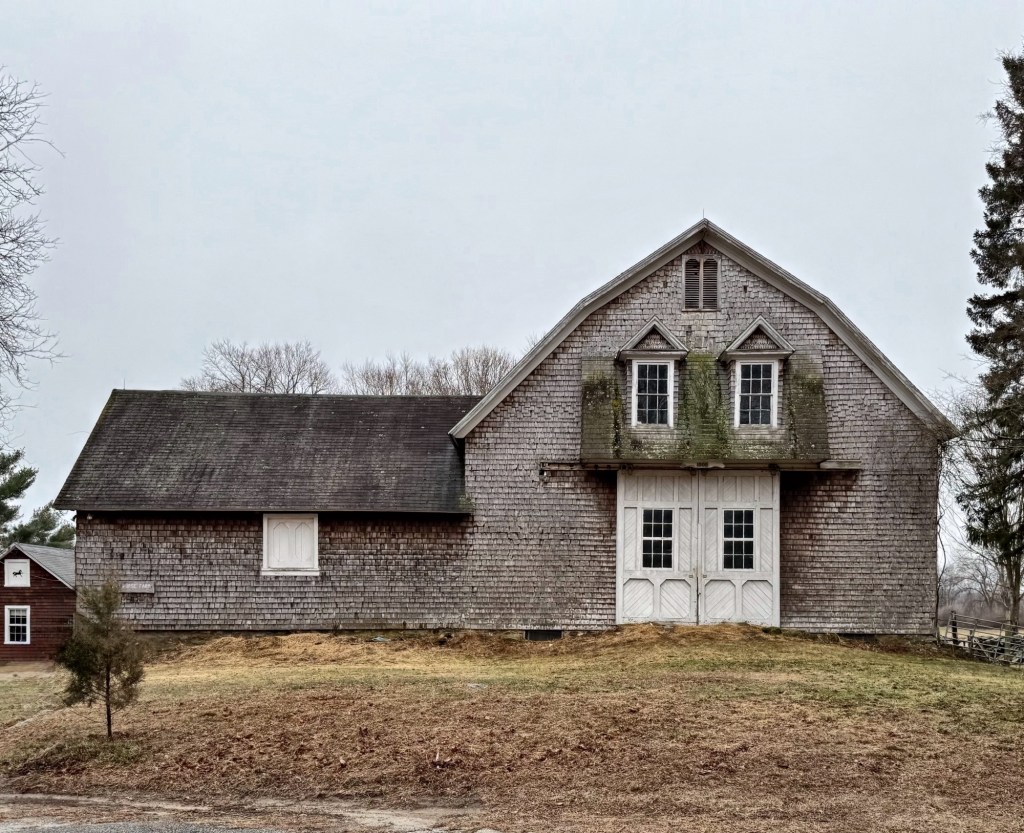
This handsome Shingle style building was constructed in 1906 as a carriage house of a larger farm property in Scotland, Connecticut. The barn is said to have been built for Archie Gallup, who purchased the old Manning farm just west of the town green in Scotland. The 1 1/2-story carriage-house with a gambrel-roof stands out for its principal entry of paneled wooden doors and above, a large, flared hood featuring two pedimented gable-dormers. The entire building is clad with varied shingles to add complexity to the design, catching the attention of all who drive by.

Roughwood Estate Cow Barn // 1892

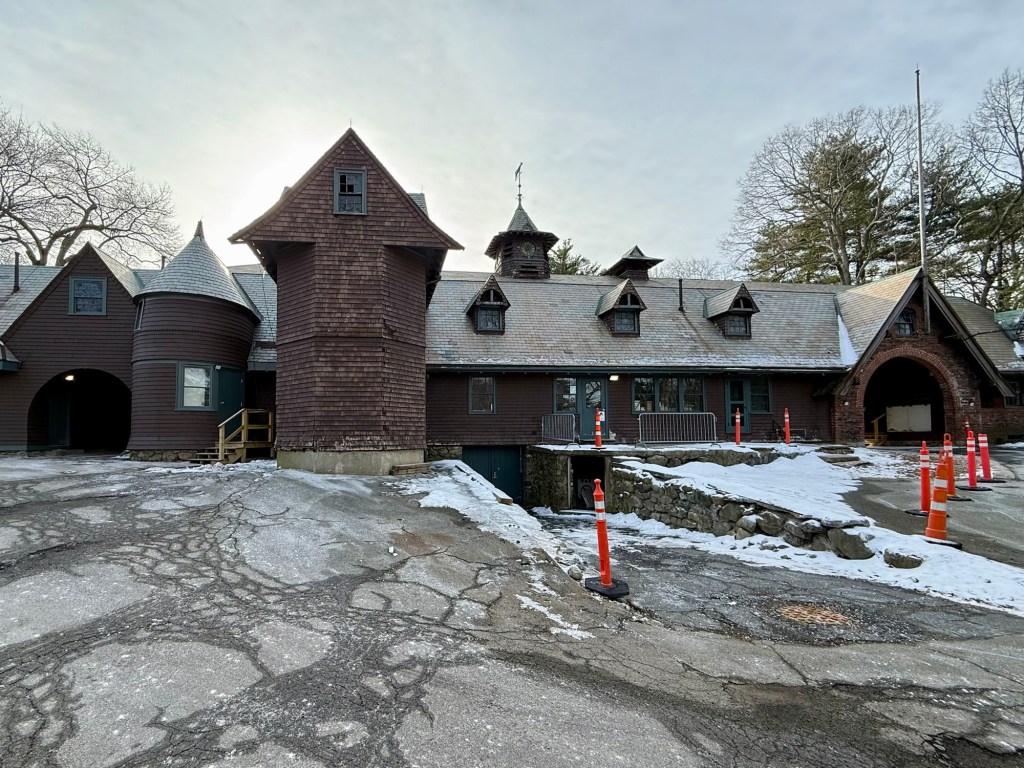
Like the Roughwood Mansion and carriage house, this building was designed and built in Brookline, Massachusetts, in the early 1890s as part of the “Roughwood” estate. Despite its high-style and ornate detailing, the building was actually constructed as a cow barn. Built in two phases for its two owners, William Cox and Ernest Dane, the large barn structure blends Victorian design into a use more reserved for vernacular detailing. The building was designed by Andrews, Jacques and Rantoul, and like the mansion and carriage house, blends Queen Anne and Shingle styles under one roof. Ever-since the estate became a college in the 1960s, the building has been used as a maintenance building. It appears that since it has been owned by Boston College as part of it’s Messina Campus, it is undergoing a thoughtful restoration!

Weir Farm Barn // c.1820

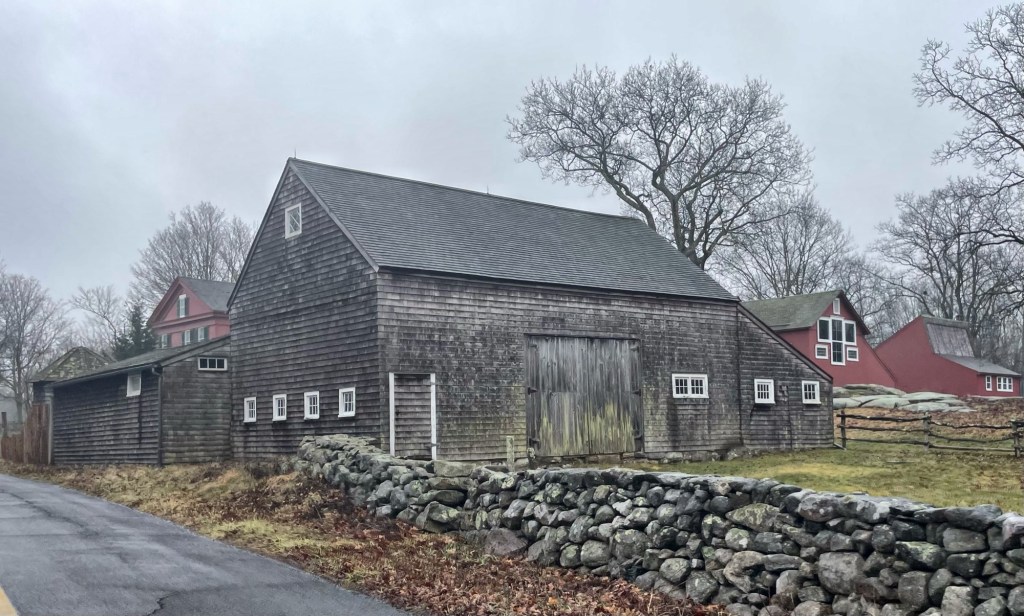
Weir Farm, later an artists retreat and studios, was once a fully operating farm, with horses, cows, oxen, chickens, vegetables, and numerous gardens. To artist Julian Alden Weir, farming was more of a hobby than an economic necessity, undertaken for aesthetic reasons. Weir’s romantic vision of the landscape extended to his use of oxen, carts, and hand tools instead of modern machinery available at the time. Over its long history the barn complex has housed a milking room, a carriage house/wagon shed, a garage, a tack room, an equipment and tool room, hay lofts, a corn crib, and stalls for donkeys, ponies and horses. The rustic barn is a typical “English-barn” built between 1815 and 1835 by The Beers’ family, who owned the property until 1880. Weir used the barn as a prominent feature in many of his paintings like “New England Barnyard” and “After the Ride.” It remains an important piece of agricultural and artistic significance to the now nationally recognized Historic Site.

Frederic Bronson Barn // c.1895

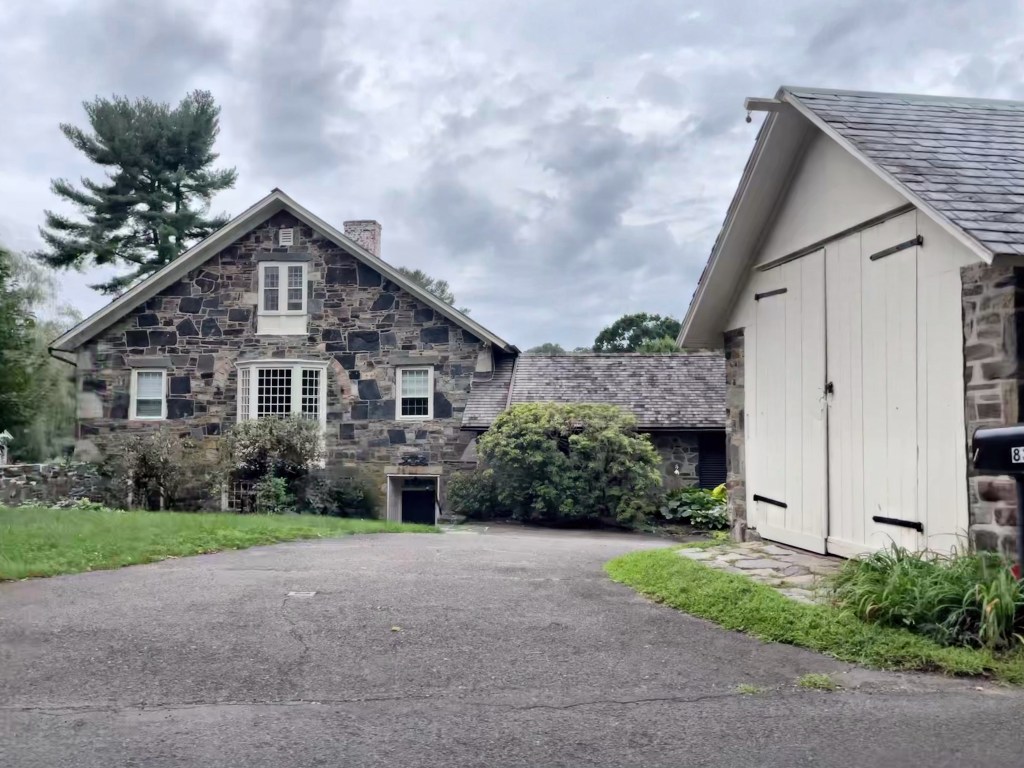
Not many buildings in Greenfield Hill, Fairfield, Connecticut showcase the neighborhood’s transition from farming community to affluent suburb quite as well as this stone barn turned house on Hillside Road. The stone barn was constructed around c.1895 for Frederic Bronson Jr. (1851-1900) a prominent New York attorney and treasurer of the New York Life and Trust Company which was founded by his grandfather, Isaac Bronson. In about 1892, Frederic demolished his ancestral home and hired architect Richard Morris Hunt to design a new country estate for his family. The house was called Verna and is also located in Fairfield. Today Verna is known best as the Fairfield County Day School. As with many wealthy men of the Gilded Age, Frederic wanted his rural retreat to also work as a gentleman’s farm, where he could have staff farm and tend to livestock on the expansive rolling hills bounded by historic stone walls. He appears to have had this barn built for his livestock shortly after the main house, Verna was completed nearby. Bronson died in 1900 and some of the property was later sold off. This property was acquired by a Charles Stillman in 1941 and it is likely him that converted the barn into a charming residence.

Scott Farm – Pig Barn // 1911

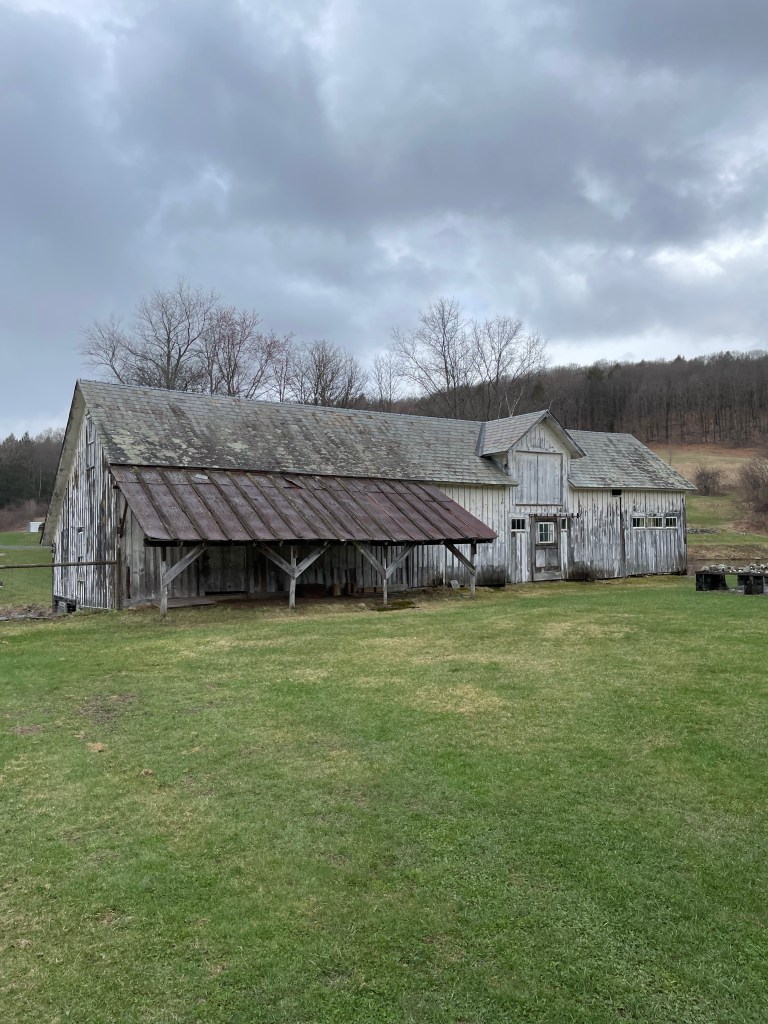
Cows, horses and pigs once dominated the 571-acre landscape of Scott Farm in Dummerston, VT. We have seen where the farmer, cows, and horses lived, so now it’s time to see where the pigs “pigged” out. This barn building was constructed around the time of the horse barn when the farm was owned by Frederick Holbrook II of Boston. The one-and-a-half-story pig barn, like the others, was built into the landscape which would allow for the animals to easily get into the structures. This building was used as the “Cider House” in the 1999 movie Cider House Rules.

Scott Farm – Horse Barn // c.1910

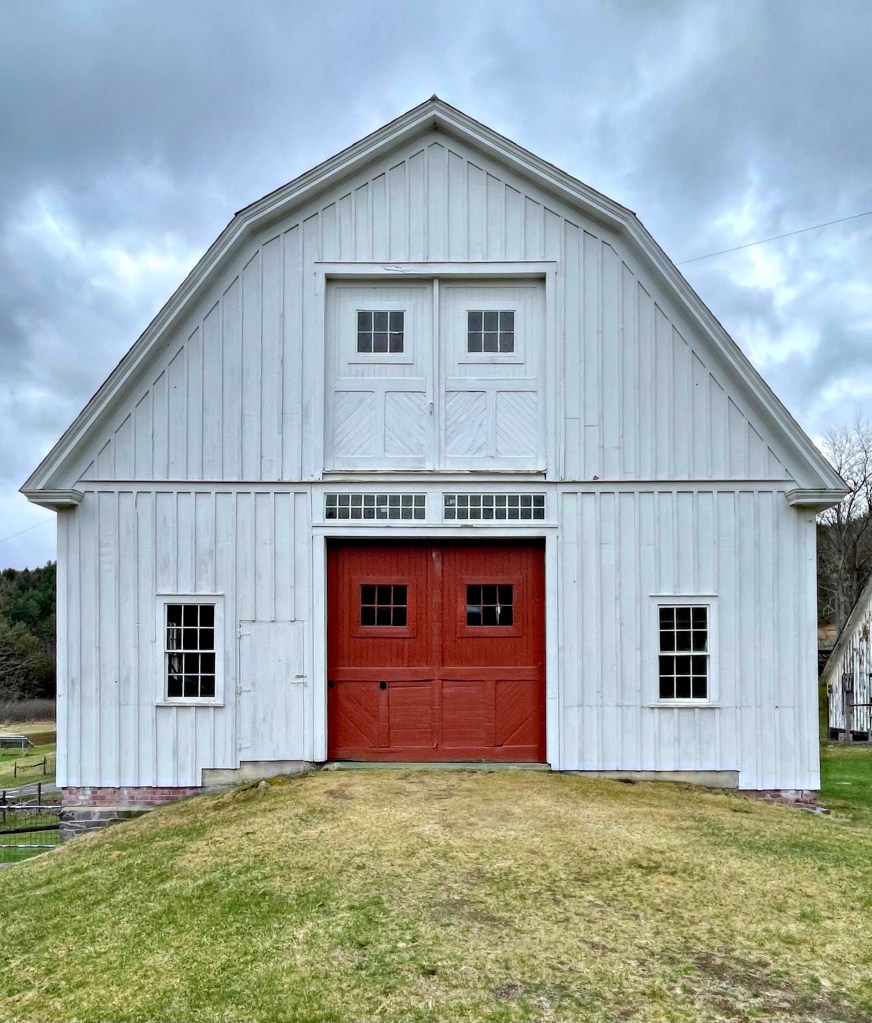
You saw the cow barn at Scott Farm, now you can see where the horses lived! The Horse Barn at Scott Farm in Dummerston, Vermont is a very photogenic building with its symmetrical facade and bright colors. The barn was built not long after Frederick Holbrook II of Boston acquired most of the farm to add to Naulakha, where he lived. Holbrook used the farm as a gentleman’s farm where he would have laborers managing the grounds and supplying him with the freshest produce and dairy products. Inside, there is a ramp down to the basement which still retains the horse stalls, it’s so charming!

Scott Farm – Cow Barn // 1862

Historic barns really are the most charming buildings, and luckily, Vermont is home to soooo many great examples. The Cow Barn at Scott Farm in Dummerston, VT was built in 1862 and constructed into the slope of the land. The barn has a brick and stone foundation, barn board siding, and a roof sheathed with small dark slate. It is built into the slope of the land and has a single-story shed roof addition (c.1915) off the west facade to give the building a saltbox form, and a single story gable roof milk house addition off the east facade. The rear facade has a more rustic appearance and has a large entrance to the space inside which is occupied by The Stone Trust, with the mission to preserve and advance the art and craft of dry stone walling. The organization holds classes and trainings where people can learn how to build a traditional or modern stone wall and more! The barn (and the rest of the buildings on the Scott Farm property) is owned by the Landmark Trust USA.

Canterbury Shaker Horse Barn // 1819

This large, shingled horse barn at Canterbury Shaker Village in New Hampshire, was built in 1819 and measures 60 x 40 feet. The massive barn structure showcases the significance of horses and agriculture for the rural community, which lived off the land.

Colt Dairy Barn // 1917

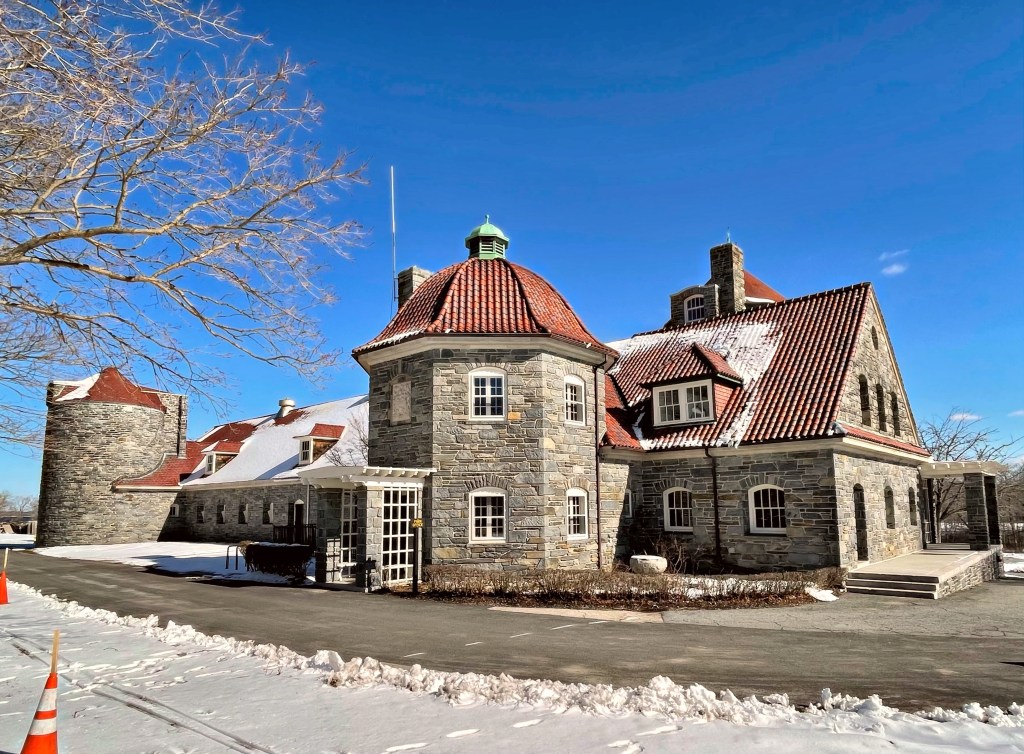
Samuel Pomeroy Colt (1855-1921), a Bristol industrialist, purchased three farms on Poppasquash Neck, in Bristol, Rhode Island in 1905. One of the farms he aquired, Coggeshall Farm, was featured in my last post. On the newly consolidated farmland, just outside the hustle-and-bustle of Bristol’s downtown core, Colt built a large summer dwelling called ‘The Casino’. He lived at his family estate in town a majority of the year, but used ‘The Casino’ as a gentleman’s farm and a space to raise his prize-winning Jersey cattle and Berkshire sows. Colt wished that the citizens of town share his enjoyment of the property and had an open invitation carved onto the marble piers at the estate entrance which reads, “Private Property, Public Welcome”; access was freely allowed at the farm and shoreline. The two marble piers at the entrance to the estate are topped with massive bronze bulls modeled after two of Colt’s bulls, and were cast in Paris by Val d’Onse Company. Colt died in 1921. His will specified that Colt Farm not be sold and that it remain accessible to the public. Though he left a sum to operate the farm, it ran a deficit. The Casino was demolished in the 1960s as it was consistently destroyed by vandals, and became a public safety concern. The lasting cow barn was built in 1917, from designs by architect Wallis E. Howe. The barn utilized field stone from existing stone walls on the property and is capped with a red tile roof. The barn is unlike anything I have ever seen, and now is park offices. In 1965, after approval by Bristol voters, the State of Rhode Island purchased 466 acres of the Colt estate and created the largest public park in the Bristol County, known as Colt State Park.

West Monitor Barn // 1903

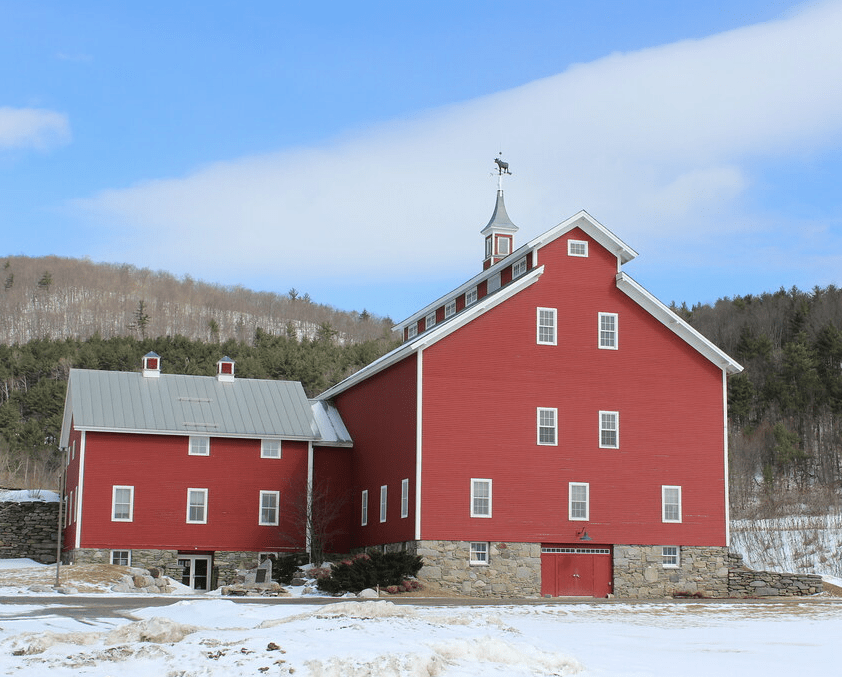
There is something about red barns that just scream Vermont! Located in Richmond, the West Monitor Barn is one of the best-preserved large barns in the region. The West Monitor Barn was constructed in 1903 by Uziel Whitcomb. At the turn of the century when agriculture represented 70% of the American economy, the Whitcomb’s operation was one of the most successful; at a time when the average farm had eight cows, the Whitcomb’s had hundreds. Hay and grain were planted and harvested by hand and horse. More than 175 cows were milked three times a day by hand inside of this barn. Milk went from cow to pail, to can, and then was driven to market by horse and wagon. It was an operation that represented the epitome of hand-powered farming, and was an operation admired nationwide. The farm was so large and eventually shut down decades later, leaving the iconic barn to decay. A new owner purchased the structure and began a massive restoration project which took years. About 40% of the timbers in the reconstructed barn are original and the rest have been carefully and accurately re-fabricated. In addition, the stone foundation and walls are all original stone – quarried by hand from the back fields. The East Monitor Barn also on the property is in fair condition and could use the same updates. The barn is now commonly used as a venue for weddings and other special events!