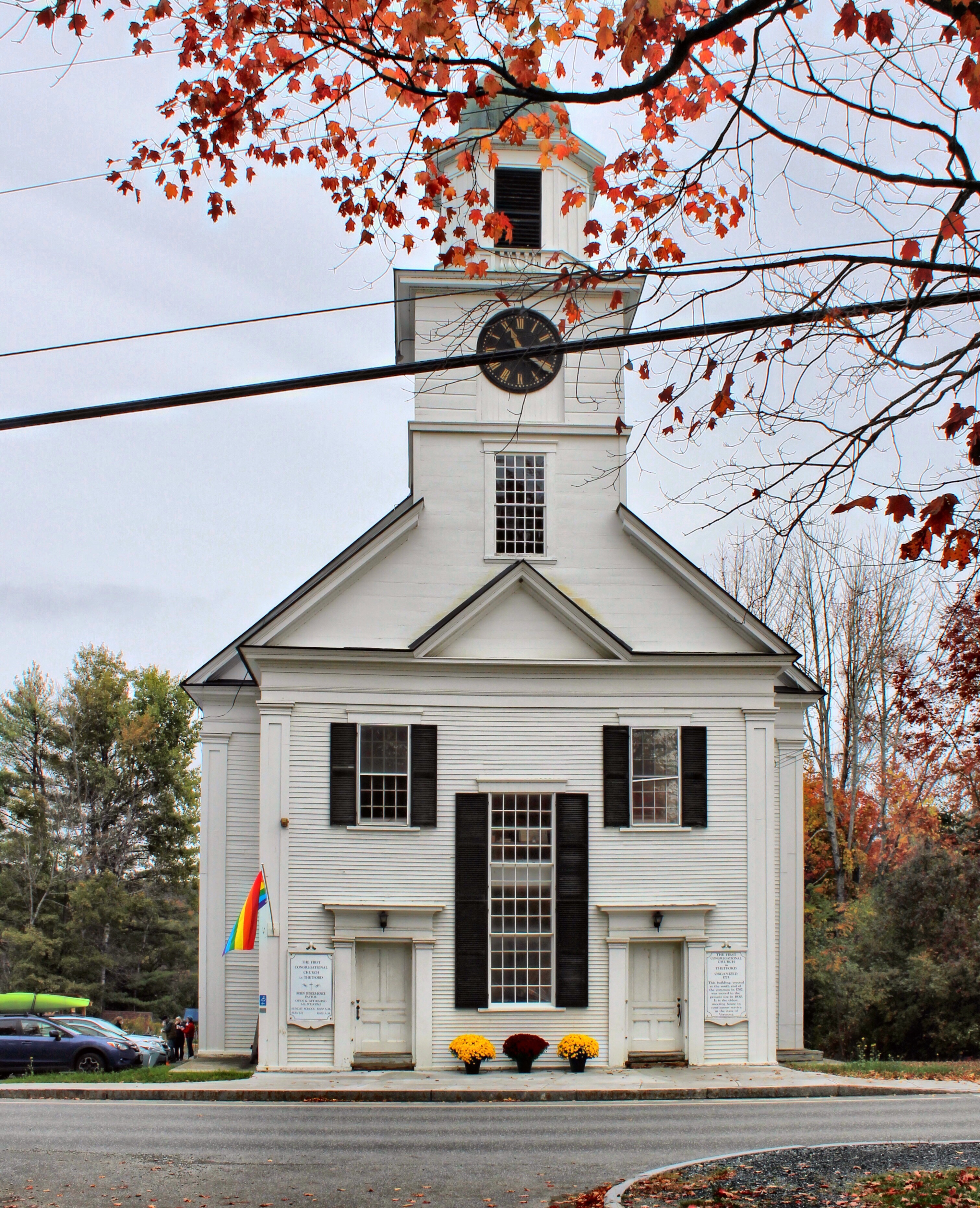
First Congregational Church, Thetford // 1785 & 1830

Attempts were made to organize the Congregational Church in Thetford, Vermont as early as 1771, making this congregation among the five earliest in the state. As was typical of the day, the meetinghouse was intended to serve both public and religious functions, before the separation of church and state. Following the customary dispute over the location of the meetinghouse in town, the structure was erected on the Town Common, marking the beginning of the village of Thetford Hill. Construction began on the meetinghouse in 1785, being completed within a couple years. Sometime between 1807 and 1812, the Congregational Church ceased to be supported by taxes as the separation of church and state resulted in the sale of the meetinghouse and its subsequent move in 1830, from the town-owned common to its present site just north of it. In 1830, the pavilion, tower, and pilasters were added to give the church a Greek Revival flair. The church is reportedly the oldest meetinghouse in the state still in continuous service.
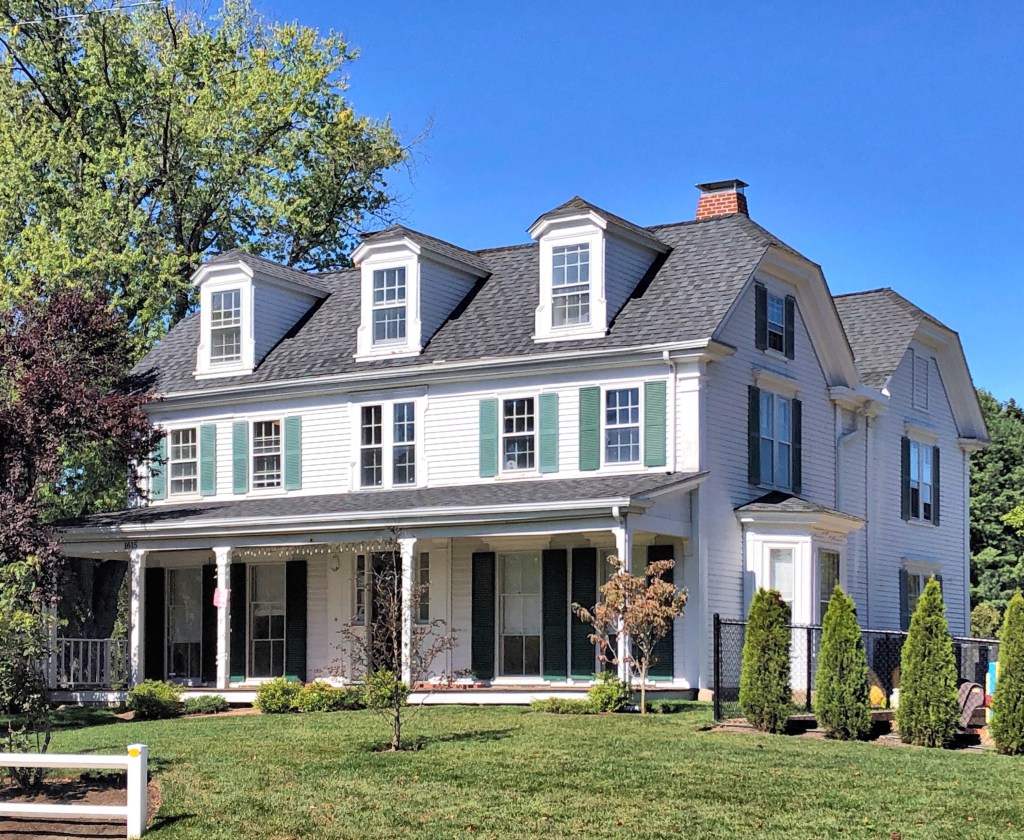
Staples-Crafts Farm // 1750

In 1688, John Staples, settled in the untouched landscape seven miles west of Boston, now known as Waban Village in the town of Newton. John was a weaver by trade but he ended up as the first public school teacher, the town clerk, a policeman, and an alderman. John married and lived in a modest farmhouse for decades here, witnessing the birth of a new nation nearby. The couple had no children of their own but raised some of Mary’s relatives including Moses Crafts, who would eventually take over the home. Craft rebuilt the house on the original foundation around 1750, constructing a colonial farmhouse two and a half stories high with five windows and two rooms across, one room wide.

Joseph Crafts died in 1821 at the age of 85, leaving no will and considerable
debts owed. The Judge of Probate ordered the property to be auctioned, and
Joseph’s son, Moses Crafts II, made the winning bid of $5.50 for the house,
barn, and a large tract of land! In 1824, Moses Craft II sold the property to his cousin William Wiswall, who gave the house a Federal period remodeling.

By the late 19th century, the home and ample farm land were acquired by William Strong and his wife Mary. William, President of the Massachusetts Horticultural Society, used the property for some time as a nursery, with apple orchards and rose gardens. After his petitioning for a train station in Waban, he parceled up the farmland into large house lots for sale, seeing the neighborhood shifting to a suburban village. He soon after built the Strong Block, the first commercial building here.

Church of the Good Shepherd, Waban // 1896

For the small population living in the farming village of Waban in Newton, MA, every Sunday, they had to take a horse and carriage or walk to church in a nearby village. The Waban Christian Union was the first religious organization to be established in Waban, 1894-1895 after seeing a suburbanization of the village. The church was to be for services of the Protestant Episcopal Faith, though the group claimed no allegiance to the Diocese, nor was it organized according to the laws of the church. It was independently owned by a corporation that felt the need for a religious association in the community. This church structure was constructed in the
summer of 1896 at a cost of $5000 with William F. Goodwin, a charter member of the group (and resident nearby), donating his services as the architect. The organization leased the space to a pastor for $200 a year, later selling it to the congregation, known now as the Church of the Good Shepherd.

Waban Station // 1886-1958

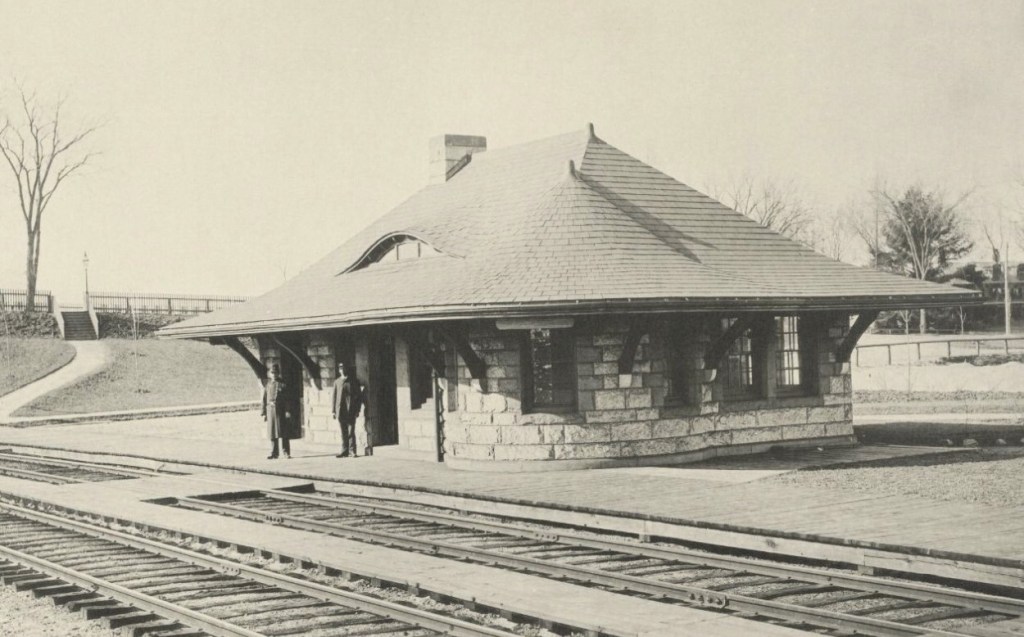
Image from Harvard Archives.

The village of Waban in Newton, Massachusetts, was named after a Massachusett Chief who had previously resided atop Nonantum Hill on the Newton-Brighton line. This location is believed to have been a favorite hunting ground for Waban (the Wind) and his people. Throughout much of the 19th century, Waban remained a quiet agricultural region. As late as 1874, fewer than 20 families held title to all of its land. In the mid-1880s, however, interest in suburban developments near the Boston and Albany Railroad became increasingly widespread. Seeing suburbanization in the late 19th century and into the early 20th century.

The station that allowed all the development in the early days of Waban was built in 1886. The Boston & Albany Railroad hired renowned architect Henry Hobson Richardson to design the station, and many others on branches of the various lines radiating out from Boston. The Highland Branch (which this station was on) was later acquired by the MBTA in Boston, which operated it as a Commuter line. Waban Station closed along with the rest of the Highland Branch commuter rail line in 1958 and reopened a year later in 1959 as part of the Green Line’s D Branch. The gorgeous H.H. Richardson-designed station was demolished in order to build a 74-space parking lot. They literally paved paradise, and put up a parking lot

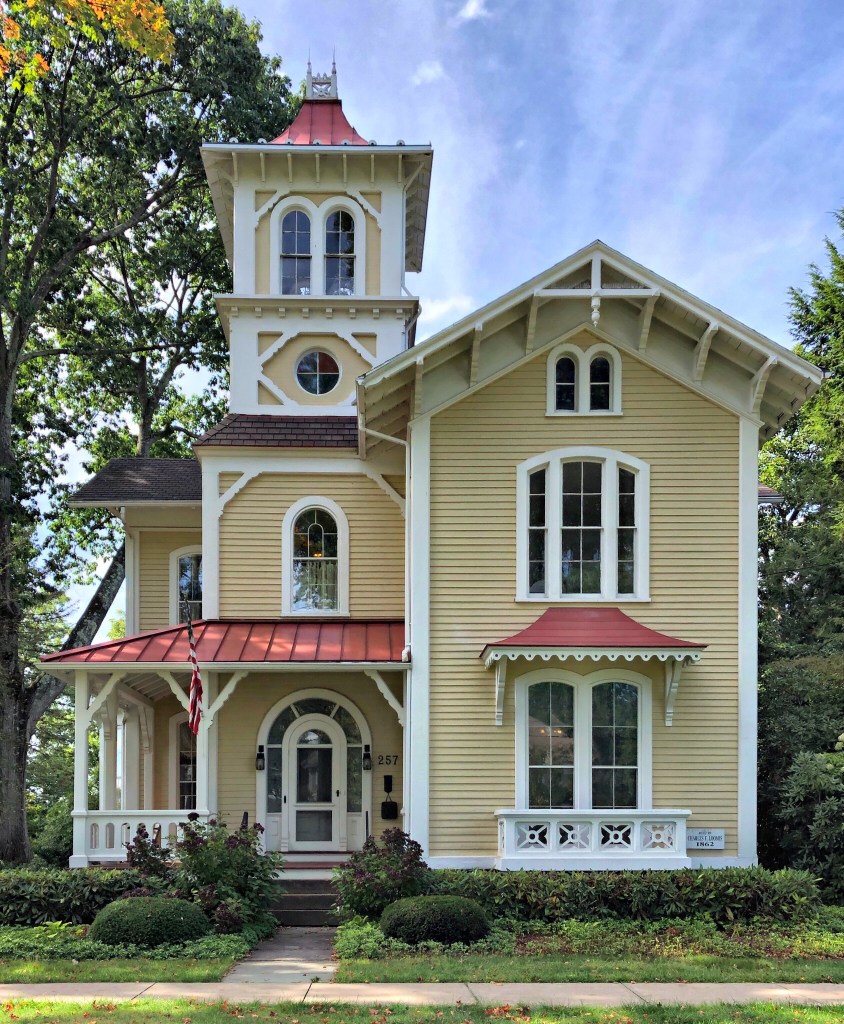
Charles Loomis House // 1862

This home was built for Charles Loomis of the Loomis Family, who made their fortune in the tobacco farming and rolling industry in Suffield, Connecticut. Charles F. Loomis used his tobacco money to have this asymmetrical Italianate Villa constructed in 1862. The home features a prominent three-story tower capped with iron cresting, broad overhanging eaves with brackets and some stickwork, and a gorgeous door with arched transom and sidelights. There are almost too many architectural details to list. What is your favorite?

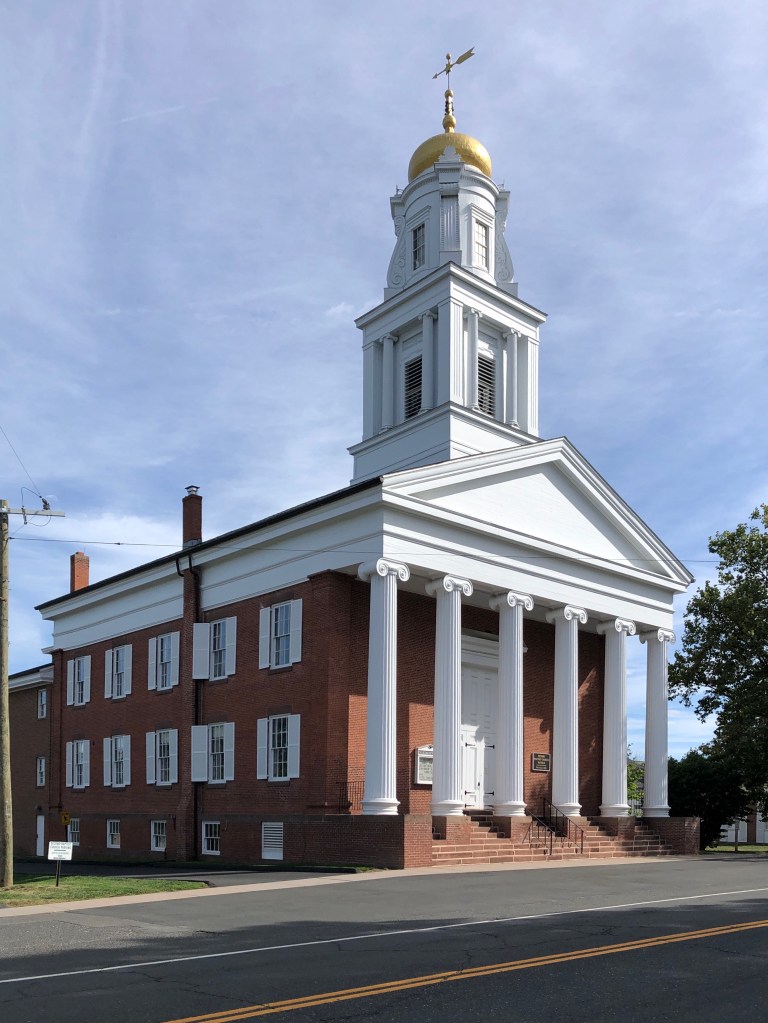
Second Baptist Church, Suffield // 1840

In early New England, the Congregational Church had a near monopoly on churches. Congregational churches had lost much of its hold on its members and on government by 1725. Eventually, some of its ministers decided a religious revival was needed, creating the emergence of new Baptist and Methodist churches all over the region. Baptists erected a church in West Suffield, far from the town center, which began to rapidly develop in the early 19th century. In 1805, they petitioned to create a second Baptist church, and succeeded. By 1840, the members collected funds to erect this stunning Greek Revival church on Main Street. The congregation hired architect Henry Sykes, who had trained under Chauncey Shepherd of Springfield, Mass and Ithiel Town of New Haven, clearly learning a lot on church design.

New Kent Memorial Library // 1972

Between 1900 and 1970, the town of Suffield doubled its population, and the 1899 public library was outgrown. The city gathered funds to construct a new library, knowing that the endowment for the day-to-day operations of the library by Sidney Kent, in memory of his parents, would transfer to a new building as long as the name carried with it. The town hired Warren Platner, an architect, interior designer and furniture designer, based out of New Haven. Platner designed the Modern library with a concrete frame, faced with pink stone and white painted brick above, surrounds a central garden court. The flat coffered concrete roof and overhanging concrete project outwards over the terraced exterior courtyards. The interior is on five floor levels connected by gradual ramps with no stairs inside (at least at the time of construction). The town proposed a plan to demolish the library in 2008, replacing it with a larger library, but it was voted down by residents, saving (what is believed to be) the only free-standing Platner building remaining in the country.

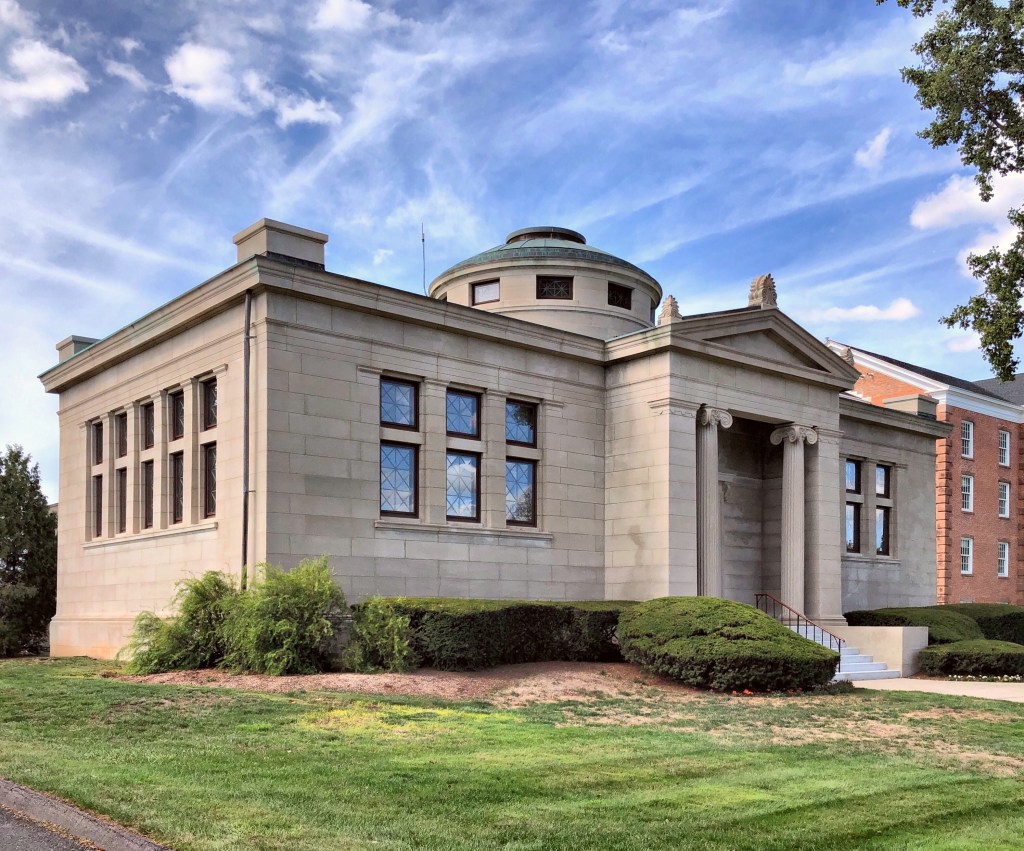
Old Kent Memorial Library // 1899

In 1897, Sidney A. Kent, a Suffield native, graduate of Suffield Academy and successful Chicago businessman sought to build a $35,000 library as a memorial to his parents in his home town. Land was purchased from the academy, demolishing a significant academic building, and the new Kent Memorial Library erected. Kent hired architectural giant Daniel Burnham (architect of the famous Flatiron Building in Manhattan) who also designed Kent’s home in Chicago. It sat on the site of land purchased by the first Kent ancestor in Suffield. Sidney Kent furnished nearly 7000 books and periodicals and left an endowment of $25,000. The building was dedicated on November l, 1899. It was eventually outgrown and a new building was constructed across the street.

John W. Loomis House // 1740

This stunning home on Main Street in Suffield, CT was apparently built in 1740. By the 1840s, it was purchased by John Wells Loomis, and altered to fit the then-fashionable Greek Revival style, replacing the center chimney with two chimneys, adding pilasters and a Greek Revival entry. John Loomis was the head of the Loomis family which made a fortune in the tobacco industry in Suffield, rolling and shipping products as far away as California. Before his death, John Loomis built his son George a house nearby, knowing that his son would carry on the business, which he did until a couple years after his father’s death when he sold the business and moved to New Haven.

Bryon Loomis House // c.1850

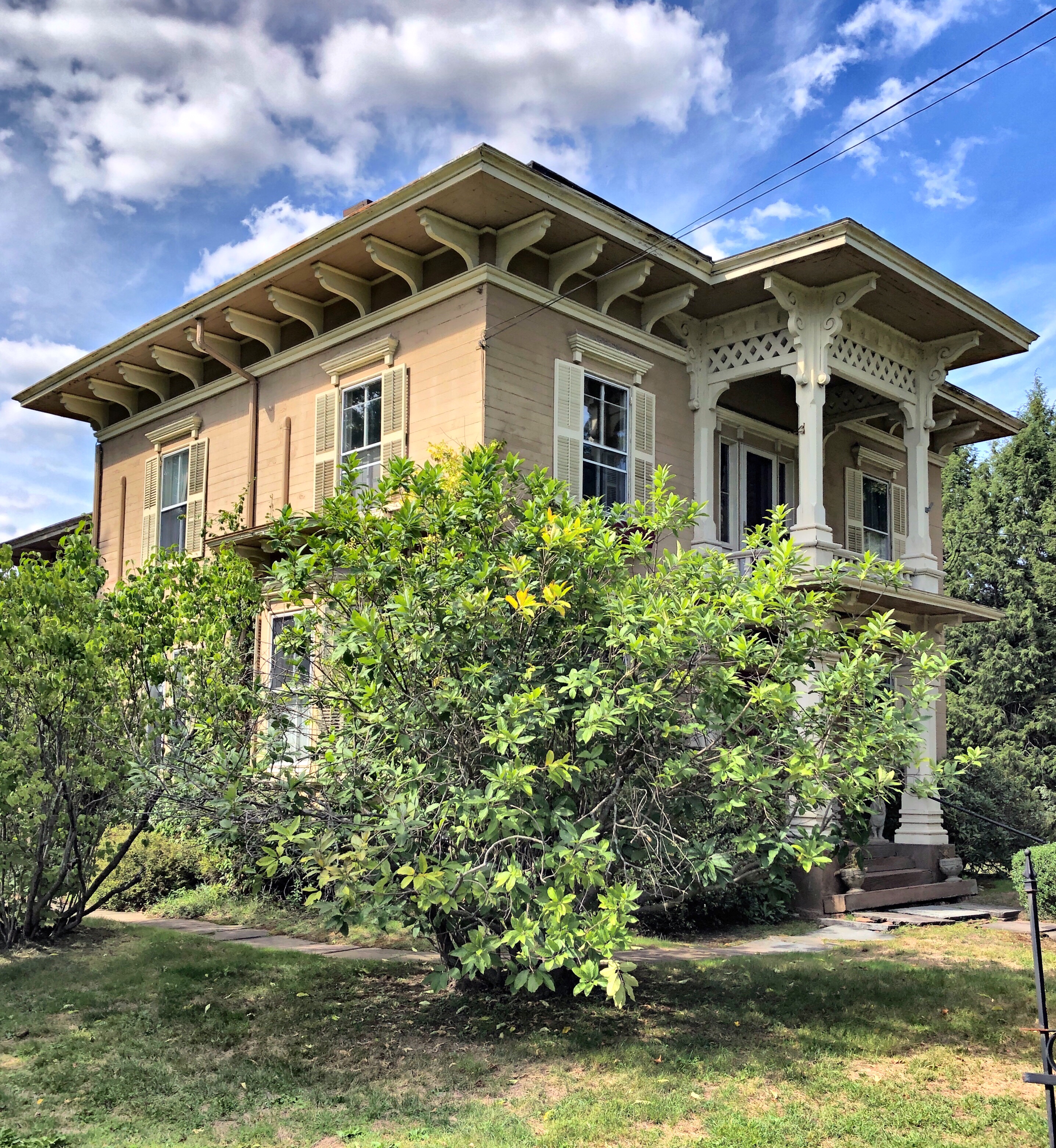
This Italianate mansion was built around 1850 for Byron Loomis (1831-1896) possibly as a gift from his father Neland. Neland Loomis was the brother of John Loomis, and was part of the wealthy tobacco farming family who later packaged, rolled, and shipped tobacco from Suffield all over the country. The home is a large Italianate mansion is in the symmetrical form and covered with flush board siding. The low sloped roof with broad overhanging eaves is topped with a large belvedere. The home is somewhat difficult to photograph due to large bushes in front.