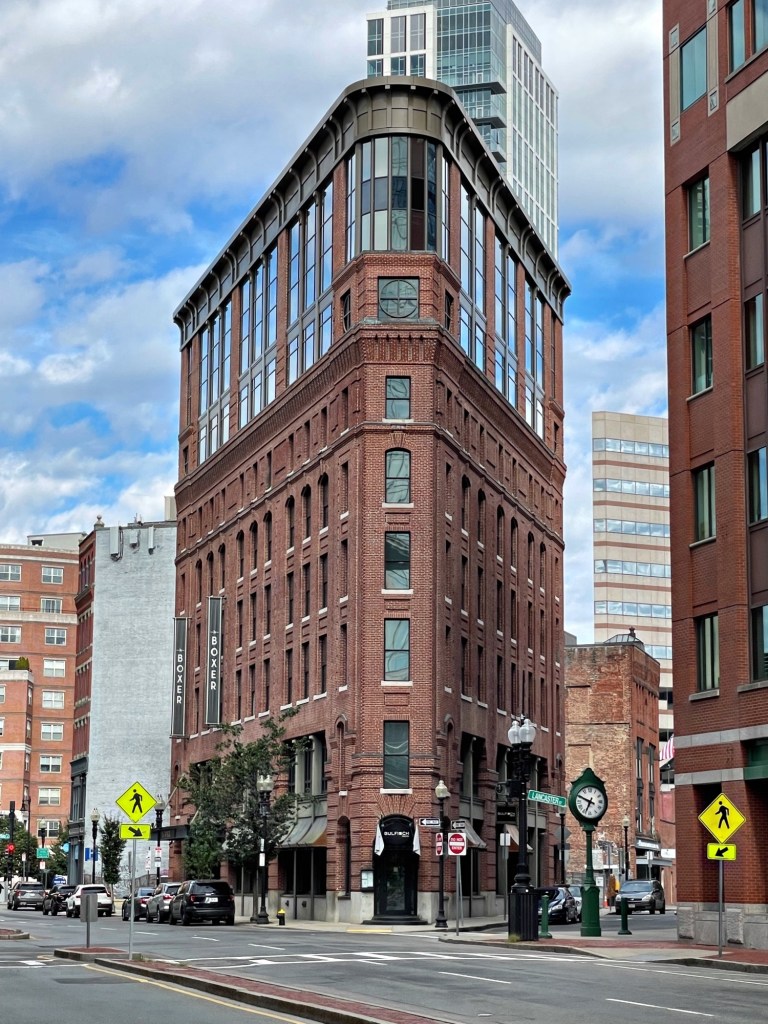
Boston Flatiron – The Boxer Hotel // 1900

The interesting street-layout of the Bulfinch Triangle area of Boston created some oddly shaped triangular building lots which for decades, saw only small, modest wood-frame structures built upon them. By 1900, Boston’s own Flatiron Building (built two years before New York’s more iconic example) was constructed on this site and it has been an icon ever since. The structure was built by ownerCharles Pelham Curtis III (1860-1948), who was born in Boston and graduated from Harvard Law School and became a police commissioner and attorney in the city before moving into real estate development. He hired architect Stephen Codman to design this commercial block, which was rented out to local businesses and professional offices. The building has been home to a hotel for a number of decades, with a major renovation undertaken beginning in 2000, 100 years after the building was constructed. Three floors were added to the top of the original six-story, which are Modernistic in design with large expanses of windows within three center bays that align with the bays of the original building and which are defined by brick piers. The hotel today, The Boxer Hotel, perfectly blends the history of the building with modernity and style. What a gem of a building!

Dr. Jenks Apothecary Shop // c.1860

Who doesn’t love a good flatiron building?! This charming three-story with Mansard roof building is located in the Bulfinch Triangle district of Boston. The triangular-shaped building was built around 1860 as an apothecary shop for Dr. Thomas Leighton Jenks (1829-1899), a doctor who was born in Conway, New Hampshire, but left for Boston while still a teenager. When the Mexican-American War broke out in 1846 he enlisted in the Navy, where he served for three years in the hospital ward of the frigate U.S.S. United States. Upon returning from the war, Jenks attended Harvard Medical School, and wrote his thesis on Syphilis. Dr. Jenks apprenticed in a building on this site under Dr. Samuel Trull. He likely redeveloped or modernized the 1850s building, adding the mansard roof by the 1860s. During the Civil War, Dr. Jenks served as a front line surgeon. After returning home, he grew tired of the medical profession, and got involved with local politics. He was elected as an alderman, Massachusetts state representative, and in later years he earned appointments as Chairman of the Boston Board of Police, and Chairman of the Board of Commissioners of Public Institutions. He tragically collapsed and died in 1899 at a Boston courthouse. As a tribute to his birthplace, Dr. Jenks made a provision in his will for the funds necessary to build a public library in Conway, New Hampshire, which is still in use today. Somehow, the old Dr. Jenks Apothecary Shop has survived all this time as the city grows and changes all around it. The building saw life later as a restaurant and offices.

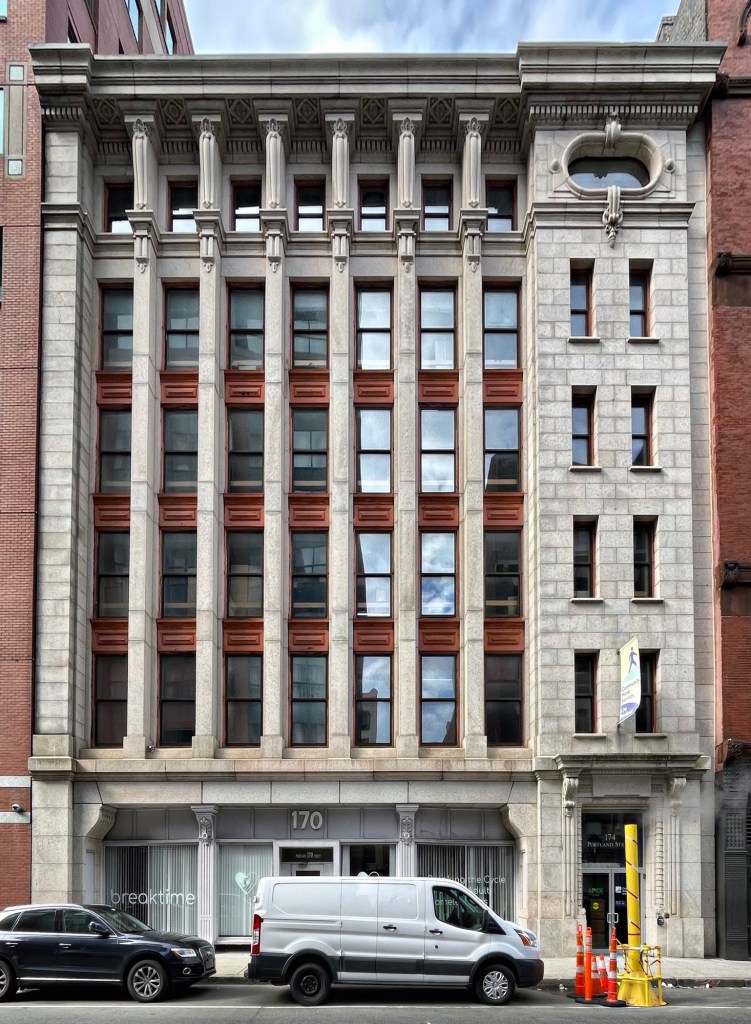
Heywood Brothers & Wakefield Co. Building // 1897

Nearly a decade after the heirs of Peter Bent Brigham and his wealthy estate erected the Peter B. Brigham building in the Bulfinch Triangle Historic District of Boston, they would again develop more of the block the trust owned, building this stately commercial building. Much of the Peter Bent Brigham Building was rented to the Heywood Brothers & Company and Wakefield Company, both furniture makers. Heywood Brothers was established in 1826, Wakefield Company in 1855, with both firms producing wicker and rattan furniture. The companies merged in 1897 and moved into this building constructed by the Brigham estate that same year. The building was designed in a unique version of the Beaux Arts and Classical Revival styles by relatively unknown architect Stephen Russell Hurd Codman (1867-1944), a first cousin of more famous architect and interior designer, Ogden Codman. Stephen Codman opened a firm with the French-born architect, Constant Desire Despradelle, designing some landmark buildings in Boston together. The Heywood Brothers & Wakefield Company Building on Portland Street is a distinctive granite-faced building standing six-stories tall with engaged box columns spanning four floors and dividing the bays of the facade.

Peter Bent Brigham Building // 1888

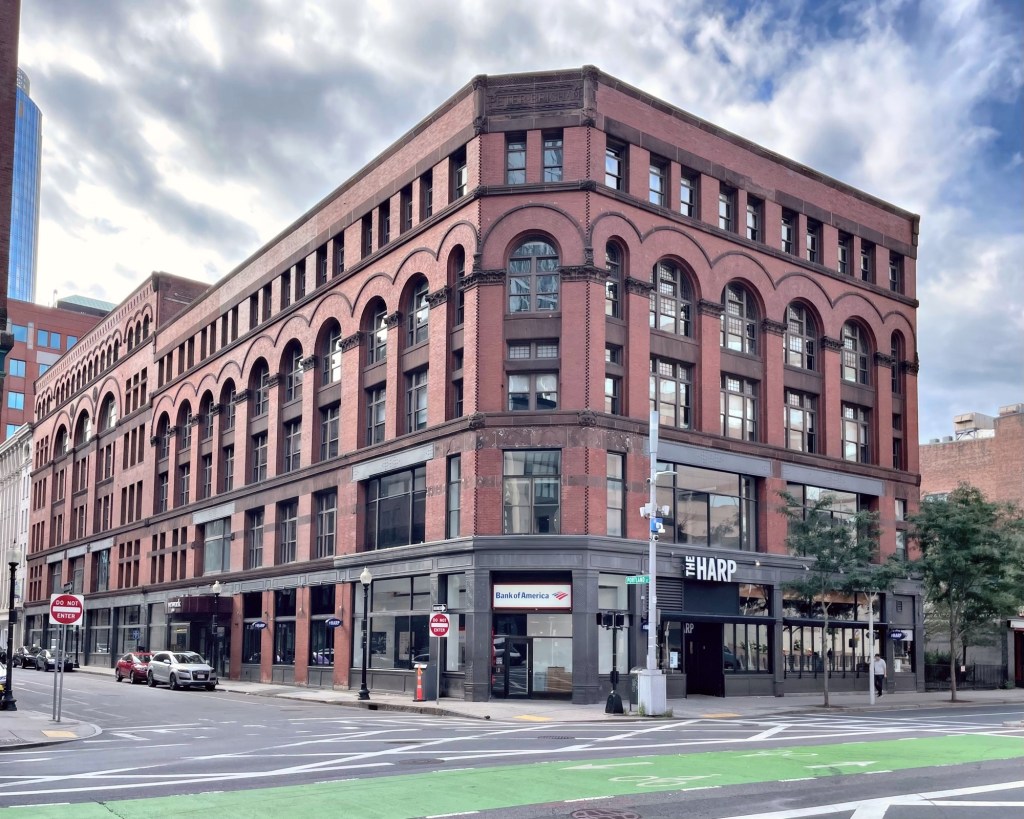
Located at the corner of Causeway and Portland streets in the Bulfinch Triangle Historic District of Boston, you will find the Peter Bent Brigham Building, one of the best examples of the Richardsonian Romanesque architecture style in the city. The building was built by the estate of Peter Bent Brigham (1807-1877), an interesting character in Boston’s history. Peter B. Brigham was born in Vermont and eventually moved to Boston and began his career selling fish and oysters in Boston. A self-made, hardworking man, Peter would eventually own a restaurant in the city and began making connections with the movers and shakers of town. With his success, he began investing in real estate and would become a founding director of the Fitchburg Railroad. Peter died in 1877, he never married nor had children. His estate valued in the millions and was to be spent 25 years after his death, for a hospital “for the care of sick persons in indigent circumstances”. The money appreciated to $2,000,000 by 1902 and was used to establish the Peter Bent Brigham Hospital, now Brigham and Women’s Hospital. His family, who also received a substantial amount of money in the will, built this building, hiring the firm of Hartwell & Richardson to design the 1888 corner and the later, larger 1891 addition. The commercial building was rented to stores and professionals and even retains Peter B. Brigham’s name in the facade carved in terra cotta.

William L. Lockhart Company Building // 1887

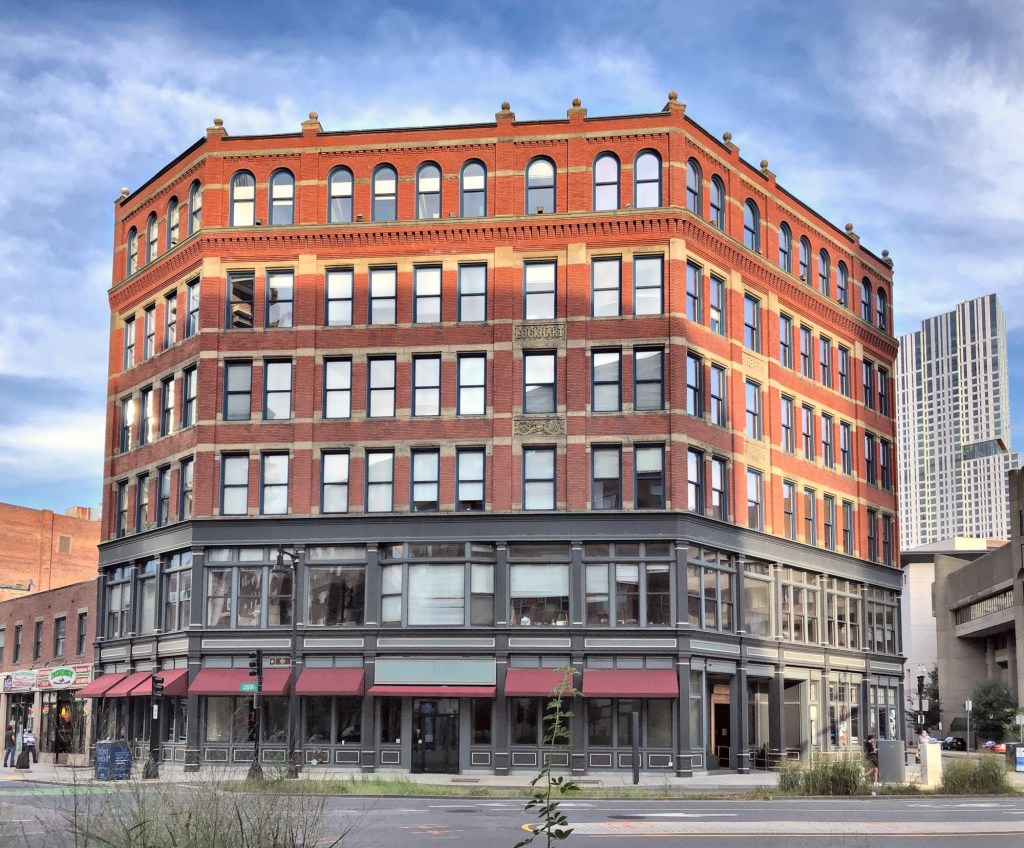
This six-story brick and sandstone building at Causeway and Staniford streets near North Station in Boston was built in 1887 as the headquarters and sales center for William L. Lockhart & Co., manufacturers and wholesale dealers of coffins, caskets, and undertakers’ supplies, which at the time was considered the largest establishment of its kind in New England. The company had its factory in East Cambridge and built this structure as offices and sales rooms. The building is an excellent example of the Romanesque Revival style, which is typified by the use of round arched windows at the top floor and the use of inlaid carved stone panels. Frederick Nason Footman a relatively unknown architect is said to have designed the building for the Lockhart Company, with the building serving as an important piece of the company’s portfolio. Shop space was created on the street level, with the company’s offices, salesrooms and casket hardware department occupying the second floor, show rooms on the third floor, shipping department on the fourth floor and storage on the fifth and sixth floors. While the adjacent parcels have been razed and are still vacant, this building serves as an important visual gateway into what was once the West End, a neighborhood that was almost entirely demolished during urban renewal.

North Station & Boston Garden // 1928-1998

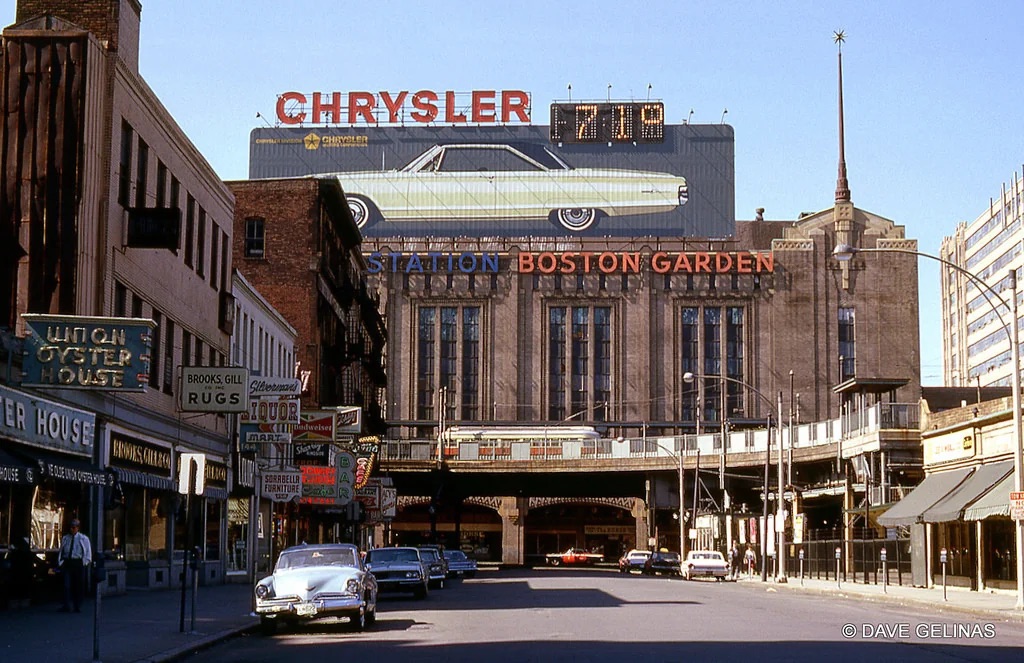
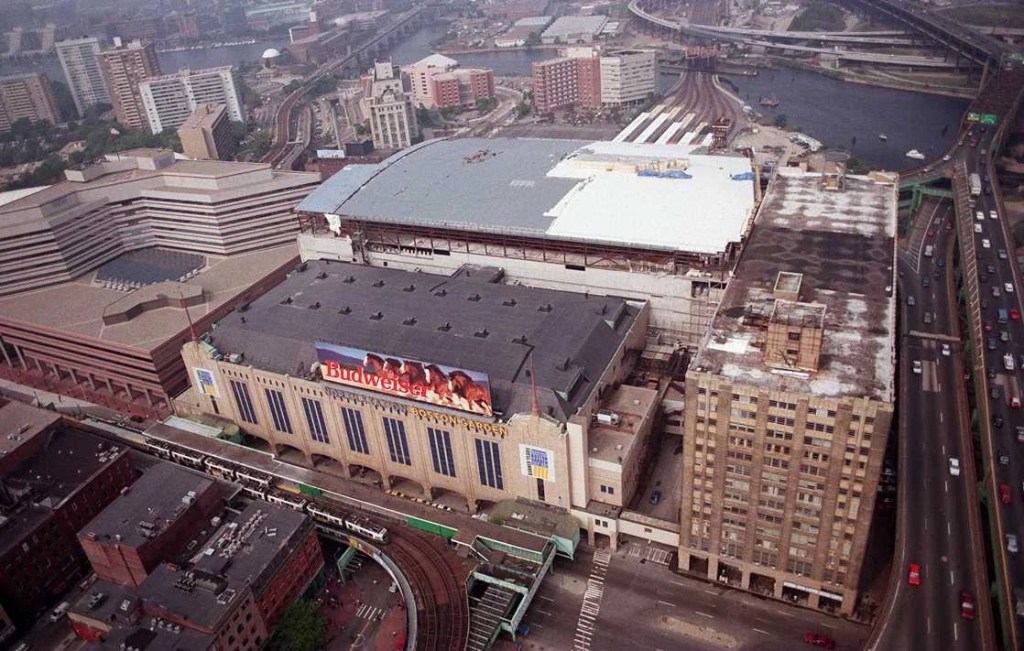
In the 1920s, plans began to build a contemporary train station that tied in both the Boston subway and regional train lines. The complex would replace the former North Union Station and help propel Boston as a more contemporary city. Seeing the opportunity, Boston real estate developer James Walsh realized the potential of adding a sporting stadium atop the station. Walsh had also contacted New York boxing promoter Tex Rickard, who built the third iteration of New York’s Madison Square Garden, and was eyeing boston as a location for a second Madison Square Garden. The duo hired the New York firm of Fellheimer and Wagner (designers of New York Grand Central Station) to design the exterior of the building in the Art Deco style. The building opened in November 1928 as the Boston Madison Square Garden, later shortened to the Boston Garden. The arena was built specifically with boxing in mind, with Rickard believing every seat should be close enough to see the “sweat on the boxers’ brows”. Due to this layout, fans for decades later were much closer to the players during Bruins and Celtics games than in most arenas, leading to a distinct hometown advantage. Storied franchises became dynasties and the grit and determination of Boston sports was fostered under this roof. The small size of the Boston Garden, paired with electrical issues and lack of air-conditioning, led to its demise. The present Boston Garden opened in 1995, behind the old Garden and was known as the Fleet Center, later renamed the TD Garden. The 1920s Garden sat vacant for three years before it was demolished in 1998. The site where the building once stood is currently a commercial development called The Hub on Causeway.

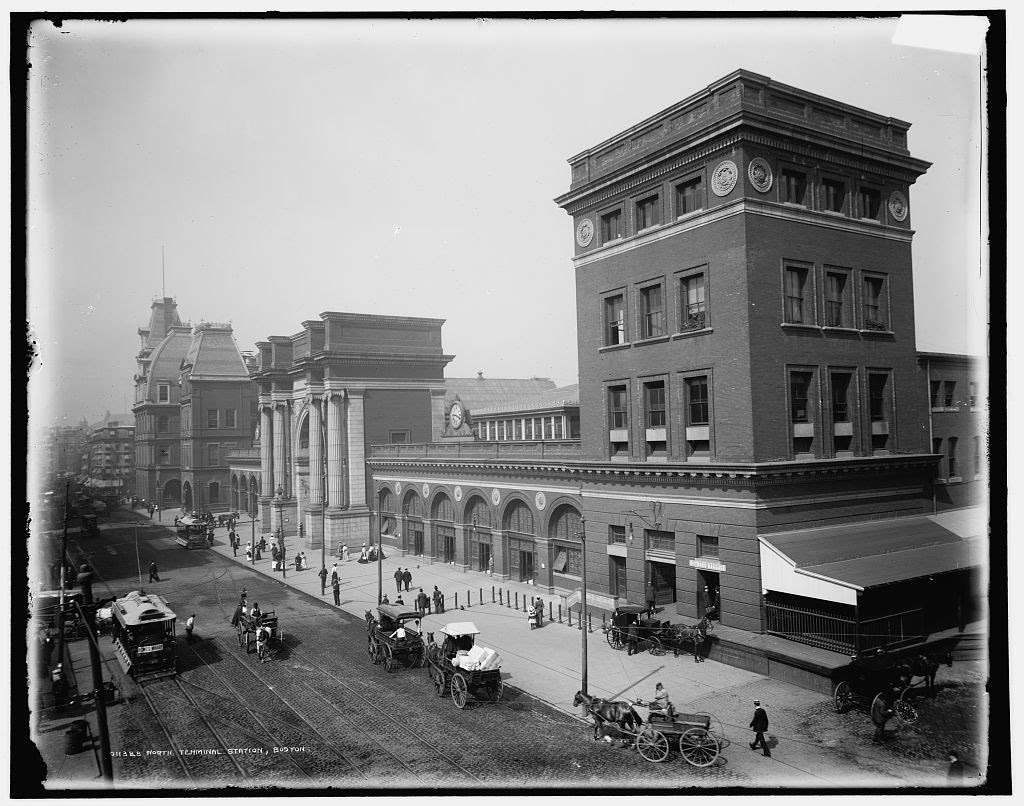
Old Boston North Union Station // 1893-1927

Photo courtesy of Library of Congress.

By the 1890s, many of the regional train lines in New England consolidated and as a result, union stations were built. All north-bound train lines including the Boston & Lowell and Boston & Maine railroads would consolidate into North Union Station with southbound trains consolidated into South Station. North Union Station, actually three adjoined buildings, was completed in 1893 and included the former Boston & Lowell Station, a Second Empire masterpiece which dated from 1873. The other sections of Union Station were designed by the firm, Shepley, Rutan & Coolidge, and comprised of an office tower at the rightmost section and a central building serving as the main entrance and concourse with waiting rooms and baggage holding. The central entrance exhibited an elaborate columned block of brick with stone trimmings. The station lasted until 1927 when the entire complex was razed for the new North Station (The Boston Garden), which itself was replaced. The demolition of the Old North Union Station was one of the biggest architectural losses in Boston’s history, a stain on its historical legacy only compounded by the sterile development we see there today.

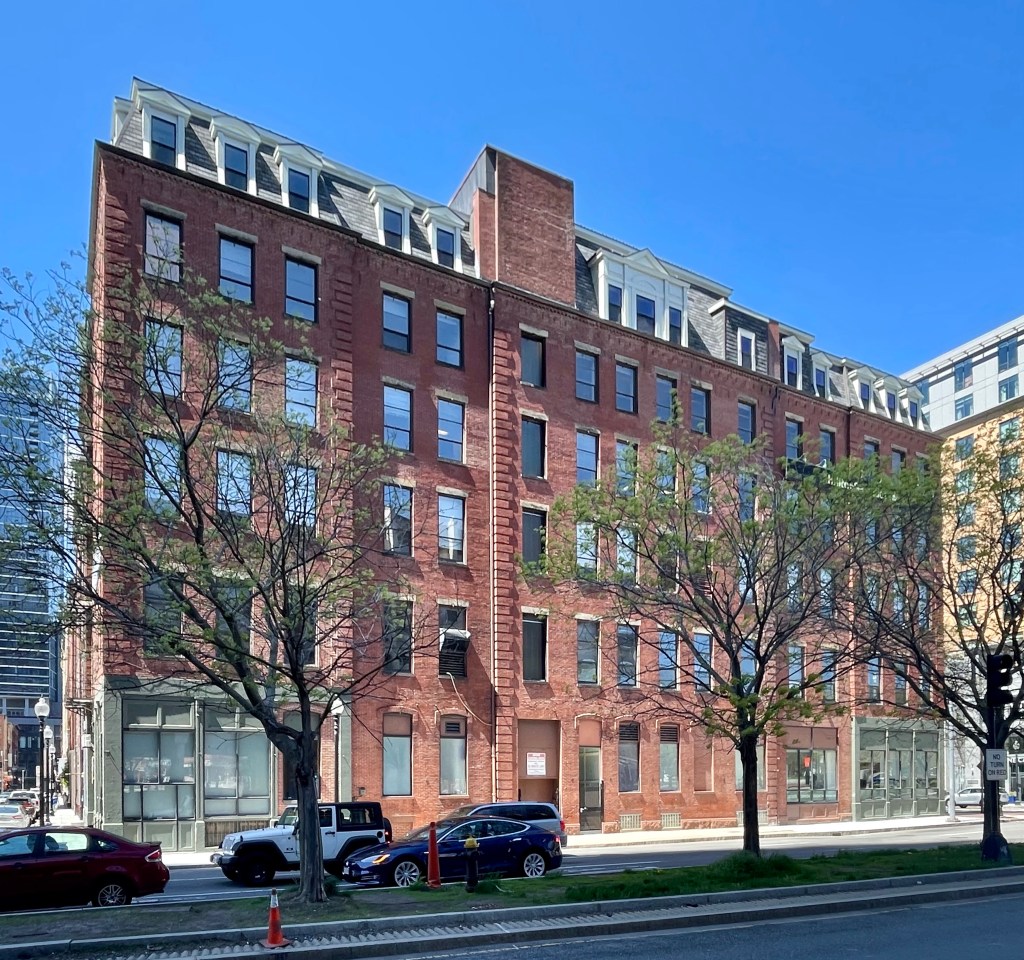
Former Arlington House Hotel // 1870

The Bulfinch Triangle area just south of the TD Garden in Boston is a cohesive and historically preserved district of similar commercial and industrial buildings of the 19th and early 20th centuries. Somehow, the area has been preserved largely intact besides some sites serving as surface parking lots and some incompatible infill developments. Historically, the area was a tidal flat, before the land here was filled beginning in 1807, with Causeway Street as the northern boundary. The area’s namesake, architect Charles Bulfinch, designed the street layout for the landowners, and the area was filled with material taken by lowering Beacon Hill and Copp’s Hill. Development was fairly slow until railroad companies built depots in the area around present-day North Station, many of which connected the area to cities north of Boston. These new train lines boosted the value of the surrounding land, with manufacturers and developers building factories and hotels in the area. This handsome structure on Causeway Street was built in 1870 by William G. Means, a manufacturer who also invested in real estate in Boston. He commissioned architect Samuel J. F. Thayer to furnish plans for the apartment hotel in the Second Empire style with a mansard roof and window lintels of diminishing detail as the floors increase. In later years, the Arlington House Hotel changed hands and names, later known as the Eastern Hotel and Hotel Haymarket. Stay tuned for more Boston history in this series highlighting the North Station and Bulfinch Triangle district!

Paine’s Furniture Factory // 1871

Founded in 1835, Paine’s Furniture Company was at one time the largest furniture manufacturer and dealer in New England and had a nationwide business. The company was founded by Leonard Baker Shearer, who was joined in business in 1845 by John S. Paine, his son-in-law. Upon the death of Shearer in 1864, the name of the firm was changed to Paine’s Furniture Company. The company occupied a couple wooden and metal buildings on this site in the Bulfinch Triangle until a fire destroyed the complex. The growing firm took this opportunity to hire one of the most successful architect Gridley J. F. Bryant who worked with a colleague, Louis P. Rogers, to design the fire-proof building. The Second Empire style building with mansard roof was split into three sections with the rear two rented out to other companies, while Paine’s occupied the south-facing (main) facade. When Paine’s moved to their new building in the Back Bay, they sold this building and later alterations severely diminished the original design of the building. The current hodgepodge of alterations creates a mess of what was once an undeniable architectural landmark.