Boston Free Hospital for Women // 1895

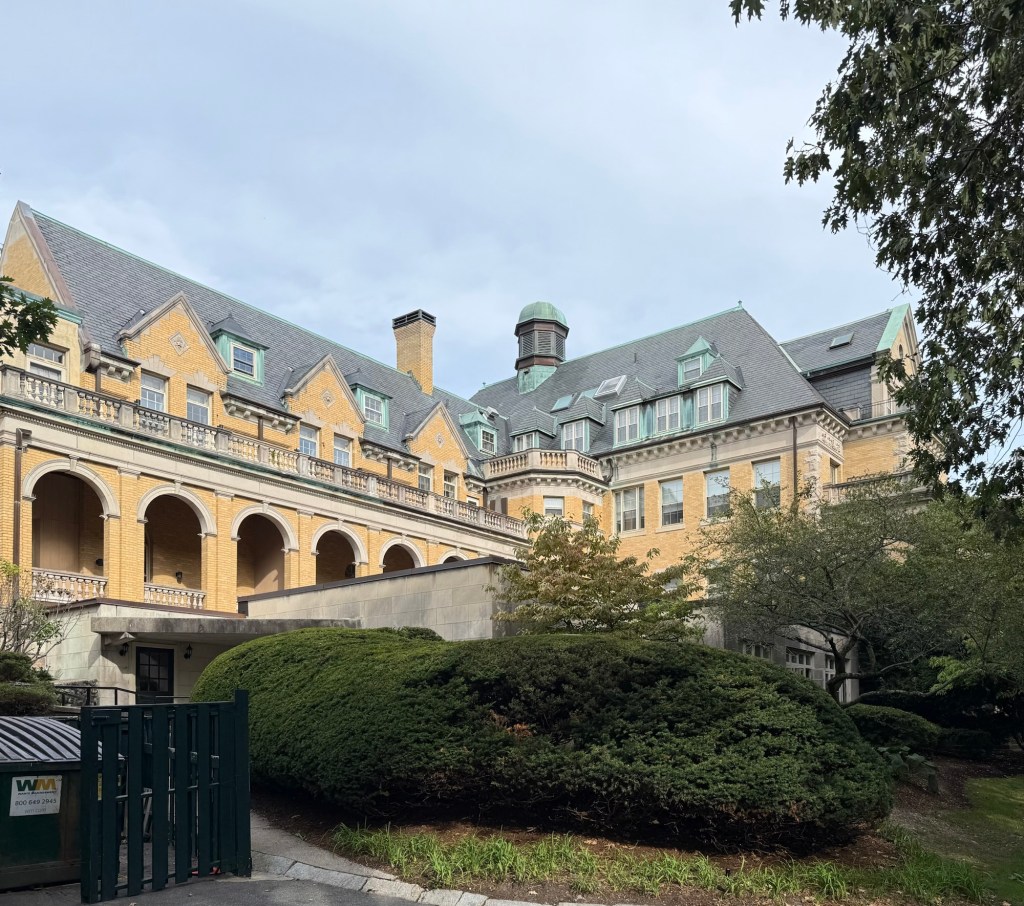
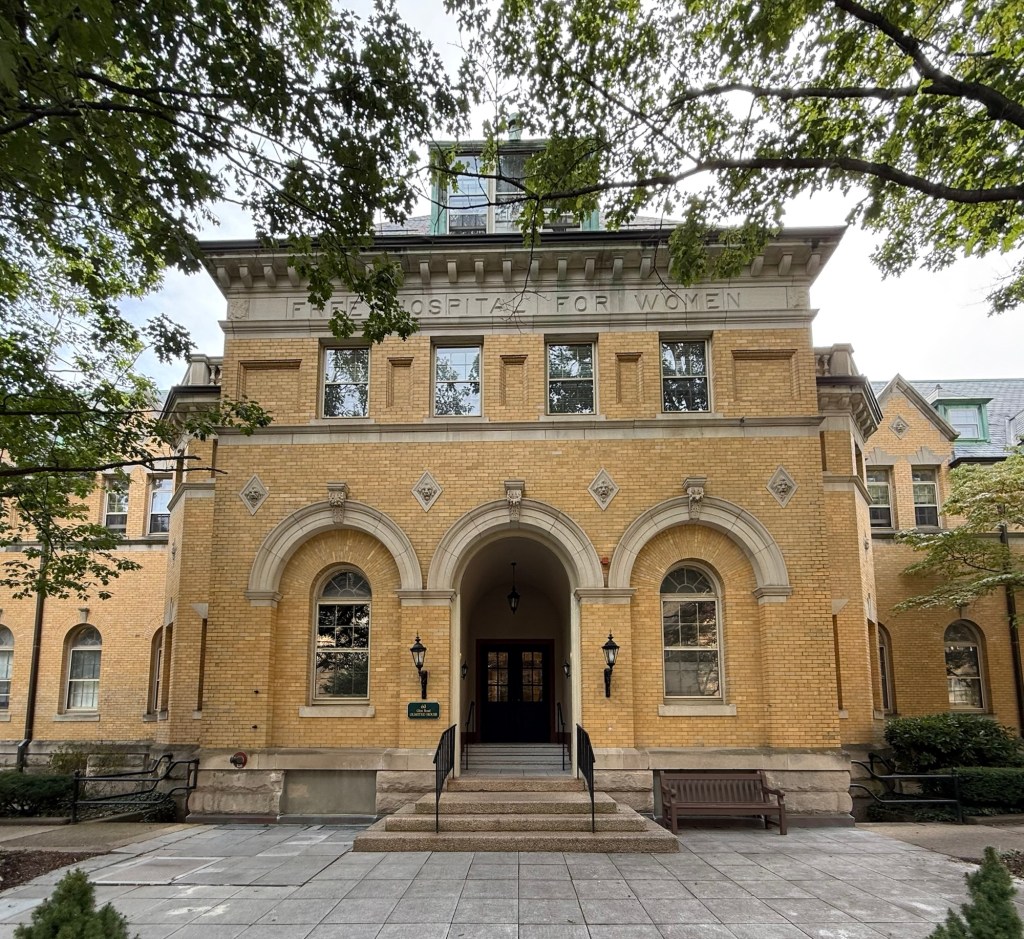
This handsome yellow brick building, designed by architects, Shaw and Hunnewell, was completed in 1895 as the Boston Free Hospital for Women. The hospital was organized in 1875 in a converted rowhouse in Boston’s South End, and after relocating once, it was decided that a purpose-built hospital was needed for the growing demands of the institution. A site in Brookline on the Muddy River, overlooking Frederick Law Olmsted’s Riverway and Olmsted Park, was purchased and the hospital was opened in 1895. The brick and limestone hospital building is somewhat Chateauesque in style and when opened, had no electricity and no telephone. The hospital is historically significant as the first teaching hospital for Harvard and as the first hospital in the country to apply radiation treatment for cancer, along with being a major research facility in fertility, especially the work of Dr. John Rock (who lived nearby) on the development of the birth control pill and research on in-vitro fertilization. The Free Hospital for Women merged with the Boston Lying In
Hospital (now part of Brigham & Women’s), which closed its Brookline Campus in the 1960s. In 1984, the firm of Childs, Bertman and Tseckares oversaw the conversion of the buildings to condominiums, called The Park, with sympathetic new construction.
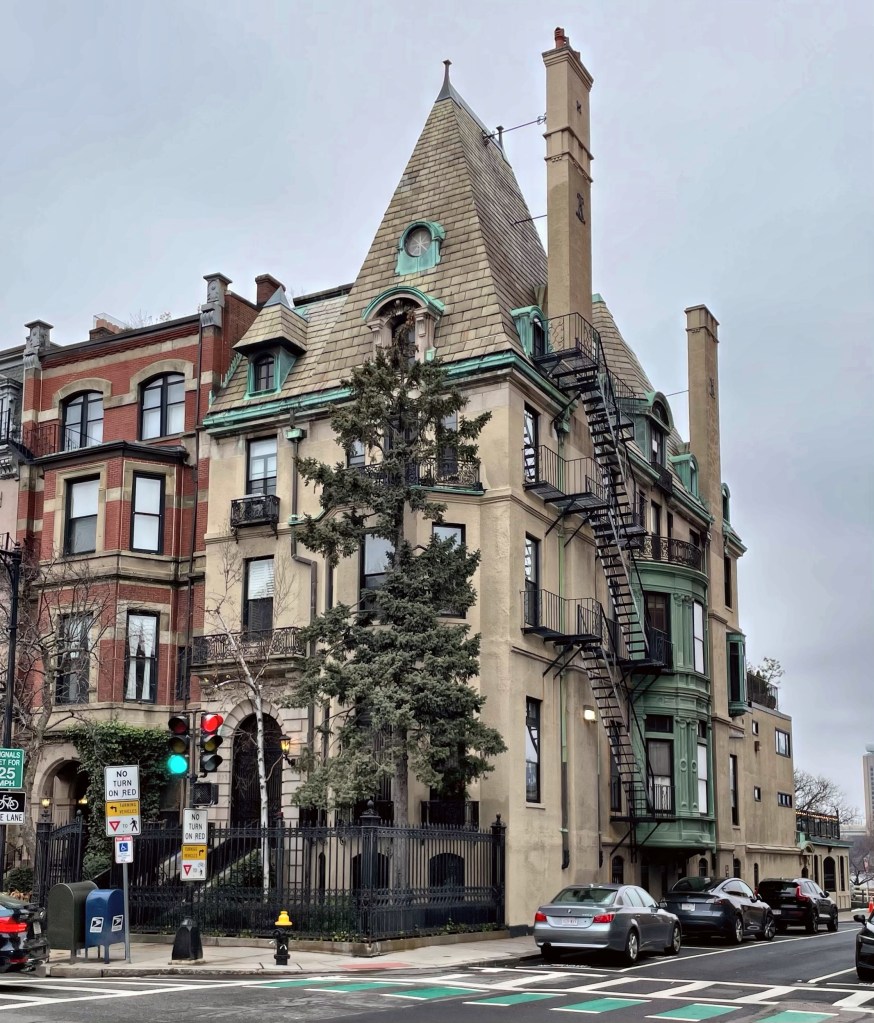
Pope-Barron Townhouse // 1871

Merry Christmas to those who celebrate! As there is no snow on the ground in Boston, I wanted to share a house with a prominent pine tree, which resembles an oversized urban Christmas tree on Beacon Street. This house at the corner of Beacon and Fairfield streets was built in 1871 by architect and builder Frederick B. Pope on speculation. It did not sell as quickly as he would have hoped, and it took two years for it to finally sell at public auction in 1873. The relatively modest brick Second Empire style house was bought and sold numerous times until March 1905, when the residence was purchased by Clarence Walker Barron, a prominent publisher and journalist. In 1903, he purchased Dow Jones & Company and from 1912 until his death in 1928, he was its president. During this period, he was also de facto manager of The Wall Street Journal, he expanded its daily circulation, modernized its printing press operations, and deepened its reporting capabilities. In 1921, he founded Barron’s National Financial Weekly, later renamed Barron’s Magazine. Barron pushed for the intense scrutiny of corporate financial records, and for this reason is considered by many to be the founder of modern financial journalism. In 1920, he investigated Charles Ponzi, inventor of the “Ponzi scheme”. His aggressive questioning and common-sense analysis helped lead to Ponzi’s arrest and conviction. For his Boston townhouse, Barron hired the firm of Cram, Goodhue & Ferguson to completely renovate the dwelling with an extra floor, limestone facades, and more bold roof design.

Ochre Court // 1892

Ochre Court, one of the grandest mansions in America was built in 1892 for New York banker and real estate developer Ogden Goelet (1846-1897) and his wife, Mary Wilson (1855-1929). In 1879, Ogden and his brother, Robert, inherited a real estate empire in Manhattan of 259 houses then worth a combined $40 million which was second only to the Astors. In 1892, Goelet and his wife Mary were included in Ward McAllister‘s “Four Hundred“, purported to be an index of New York’s best families, published in The New York Times, a position only solidified after his summer “cottage” was completed that year in Newport, Rhode Island. Named Ochre Court, the 50-room chateau overlooks the Cliff Walk and Atlantic Ocean and is the second-largest mansion in Newport (after The Breakers). Ochre Court was designed by architect Richard Morris Hunt, who also designed The Breakers, and summered in town himself. Shockingly, the Goelet’s only occupied the home during an eight-week summer season, and they spent the rest of the year in their homes in New York City, France, or London. The operation of Ochre Court usually required twenty-seven house servants, eight coachmen and grooms for horses and their carriages, and twelve gardeners for the grounds. In 1947 the Goelets’ son, railroad, hotel, and real estate developer Robert Goelet IV (1880-1966), gave ‘Ochre Court’ to the Religious Sisters of Mercy to establish Salve Regina College after it became too expensive to maintain. ‘Ochre Court’, which housed the entire college during its first years, is still in use and remains the heart of the greatly expanded Salve Regina University.

Richardson Building // 1895

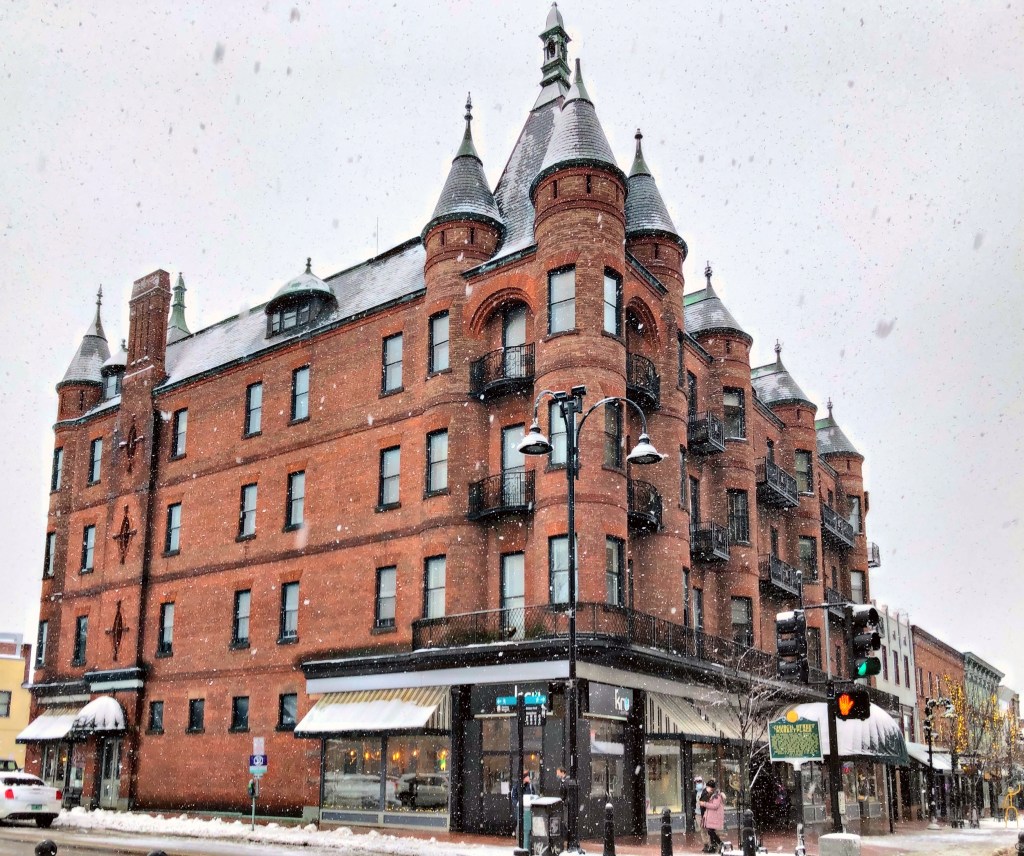
Located across from the Federal style Unitarian Church and Romanesque style Masonic Temple and rounding out the nicest intersection of Burlington Vermont, I present, the Richardson Building. The Richardson Building was constructed in 1895 by developer Albert Richmond, and can be classified as Chateauesque with its rounded bays surmounted by conical roofs and finials, showing the complexity of a French Chateau. The building was likely constructed for a commercial interest as an income property with retail at the ground floor and professional offices above. In 1911, the famous building was purchased by Frank D. Abernethy, who purchased his partner’s share of their business and created the Abernethy’s Department Store, soon the largest department store in town. Despite being a prominent, long-term fixture on Church Street, Abernethy’s went out of business in November 1982. The building was later renovated and new tenants moved in.

Burlington Savings Bank // 1900

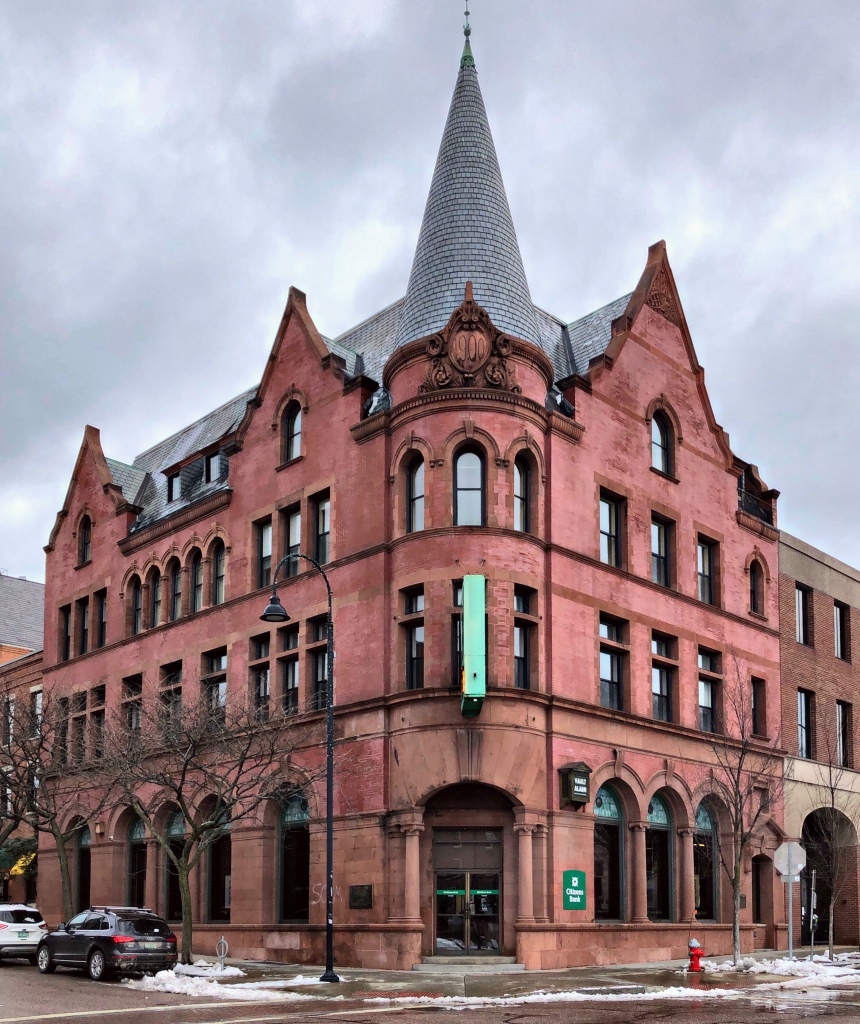
The Burlington Savings Bank building, constructed in 1900, is one of the most architecturally sophisticated buildings in Downtown Burlington, Vermont. The design uses a brick and brownstone facade with prominent wall dormers and a corner tower with conical roof which harkens back to the chateaus and estates of Europe. The recessed corner entrance is framed by free-standing Ionic columns which support a brownstone segmental arch, which helps command the corner presence. The Burlington Savings Bank opened for business on January 1, 1848, and operated under that title until 1988 when it merged with the Bank of Boston to become the Bank of Vermont, which in 1995, was purchased by KeyBank. The corner building is now occupied by Citizens Bank, which continues this buildings legacy as a castle of finance in the city.