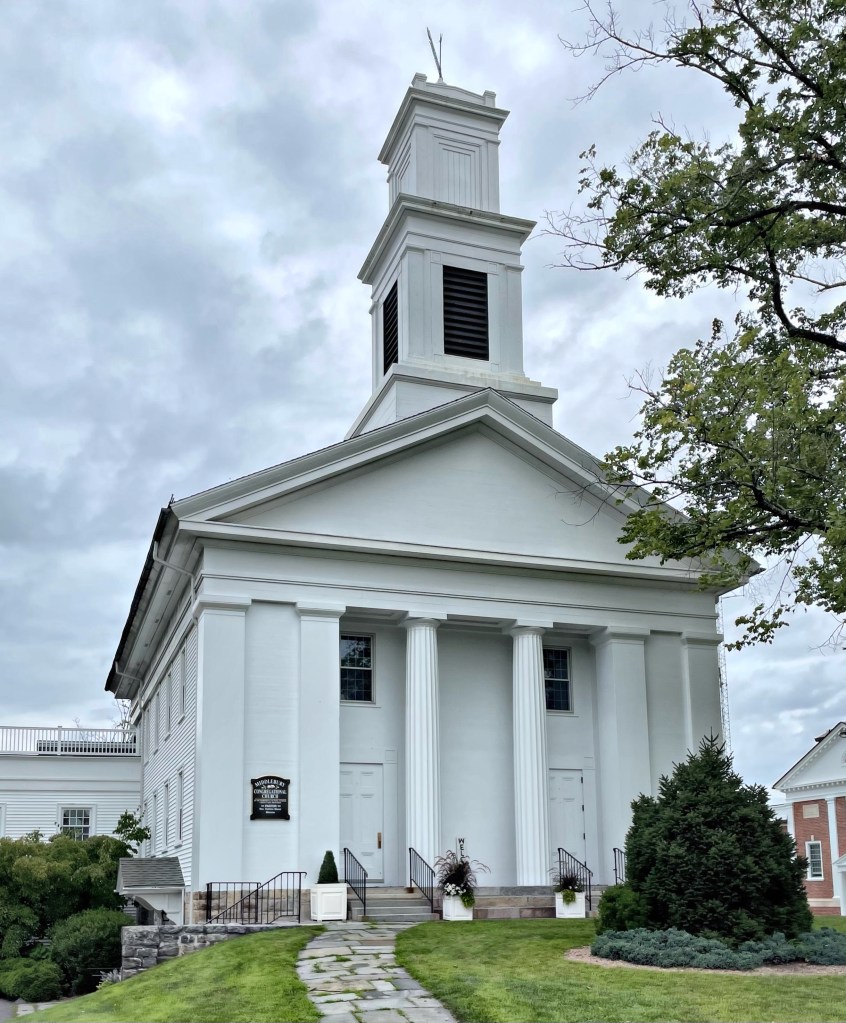
Middlebury Congregational Church // 1935

Located next door to the Middlebury Town Hall, the Middlebury Congregational Church has a very similar history to its Classically inspired counterpart. The congregational church here was established in 1791, less than a year after a separate Middlebury ecclesiastical society was granted and the first church here was erected in 1794. Decades later, a more traditional and larger church was desired by the congregation, so they had a Greek Revival style church built in 1839. Nearly 100 years later, the church (and adjacent original town hall building) burned in a large fire in April 1935. Undeterred, the congregation hired architect Elbert G. Richmond, AIA (1886-1965), who as a young man worked in the New Haven office of J. Frederick Kelly, Connecticut’s first and most famous restoration architect. The present building is a near-replica of the mid-19th century church building, and even has a bell that was recast from pieces of the old bell that crashed through the building during the earlier fire. Talk about rebirth!
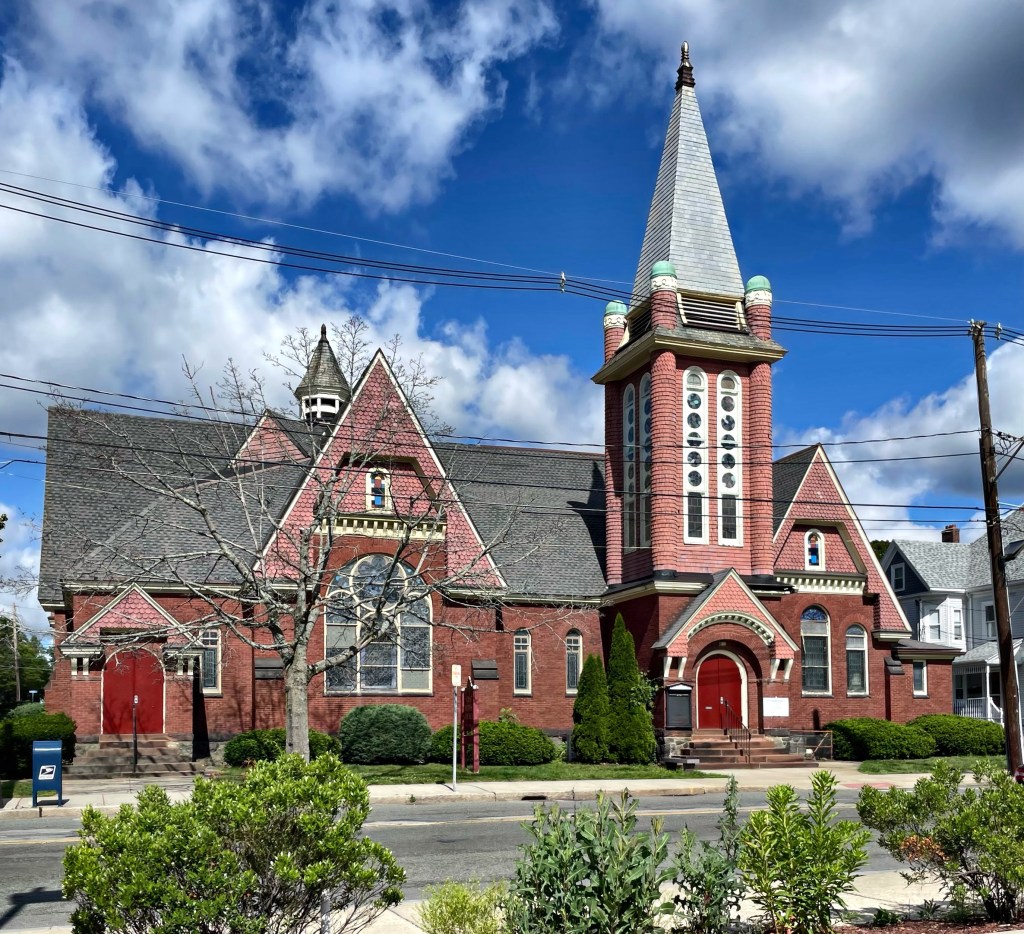
First Baptist Church of Stoneham // 1892

In 1891, the Baptist Society of Stoneham, Massachusetts unveiled that it had acquired funding and approved the plans for its first purpose-built church building in town. The organization met in a shared chapel in town since its founding in 1870. The new church would be unique in the Boston suburb as the only in town to be of the Queen Anne/Shingle style. A prominent site on South Main Street was acquired and work began in 1892 to erect the new house of worship. The design of the church is credited to the firm of L.B. Volk & Sons, a firm who specialized in church buildings with commissions all over the country. The church is complex in plan and combines brick and shingle siding in its construction with a prominent two-story tower with rounded corners and stained glass rondels (round windows).

Beth Eden Chapel // 1900

Almost at the southern, most remote tip of the Blue Hill Peninsula in Brooklin, Maine, I was stunned to come across this enchanting chapel. Completed in 1900, the Beth Eden Chapel is a small wooden frame building that appears to have been the first religious facility erected in the Naskeag area of Brooklin. Although it was erected by the Methodist Episcopal Church of Brooklin, the building was dedicated to the use of all Christian sects who wished to worship in the more remote section of town. Interestingly, the vernacular church employs some late 19th-century detail including the shingled flared siding and triangular motif. The chapel appears to remain open for summer months.

Litchfield Community Presbyterian Church // 1844

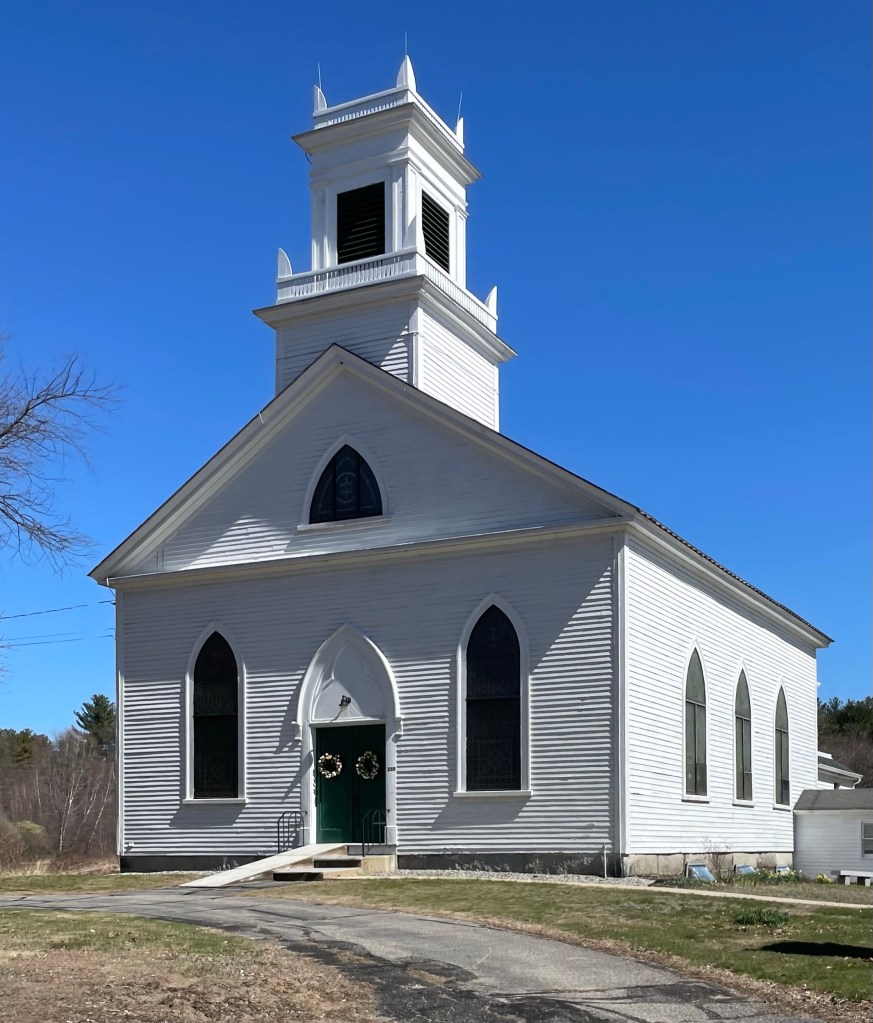
Litchfield, New Hampshire remained a rural agricultural town on the eastern banks of the Merrimack River from its founding by white settlers until after WWII when it rapidly became a bedroom community for nearby NH cities and Boston. The area’s Presbyterian residents needed a place to worship, separate from the more common congregationalists, and they built this Gothic and Greek Revival style church near the geographic center of town, a stone’s throw from the Merrimack River. The building features lancet windows, tracery, and a two-tiered belfry with classical pilasters and Gothic finials at the tower.

Congdon Street Baptist Church // 1875

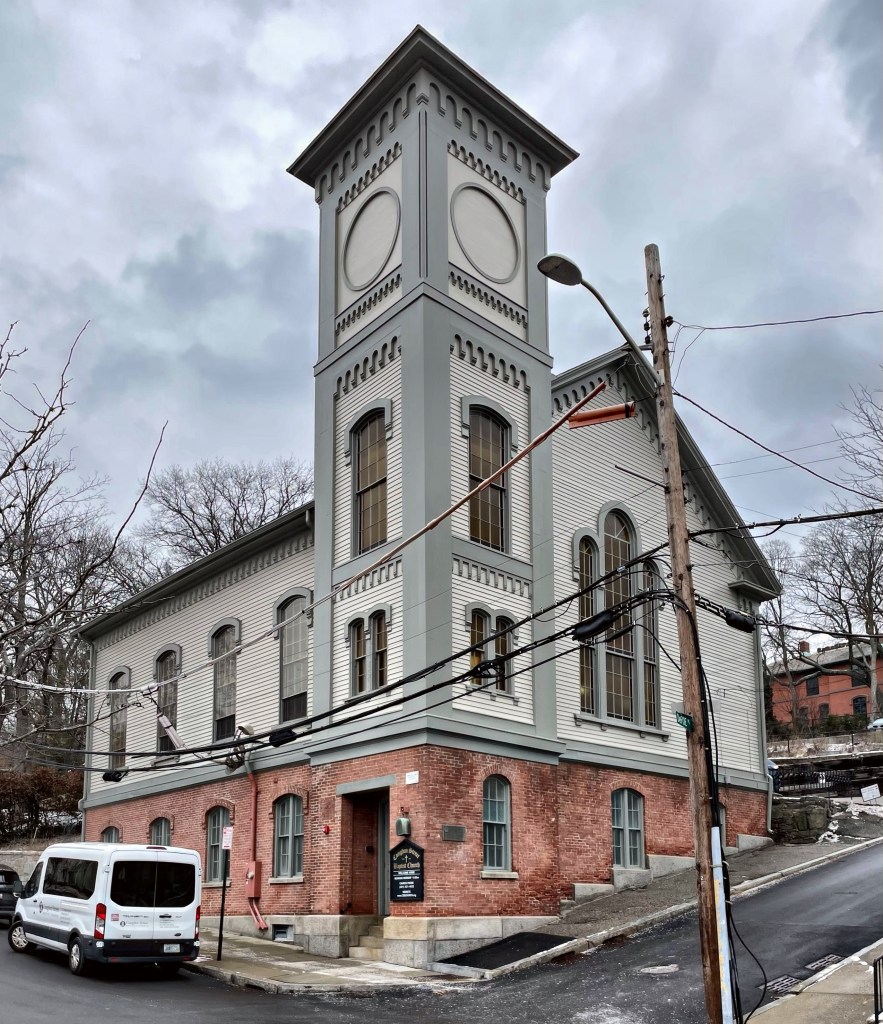
The Congdon Street Baptist Church on College Hill is extremely significant as part of the rich history of Providence. Its origins began in 1819, when Moses Brown, an abolitionist, industrialist and member of the Brown Family (who profited on the institution of slavery) gave land to “the people of color” of Providence for a schoolhouse and meeting house. The original building stood slightly north of the present structure and it was built in 1821. The structure provided the first schoolhouse for Black children in Providence. In 1869 the building was torn down, without the approval or knowledge of the congregation by white neighbors because “its proximity displeased them”… Eventually the congregation arranged an exchange of lots with one of the church’s neighbors and architects Hartshorn & Wilcox were commissioned to design the new church building. Hartshorn was the successor of Thomas A. Tefft and this church echoes many of his designs in the Italianate style. The new building was completed in 1875 at the cost of $16,000. It was renamed the Congdon Street Baptist Church. The church has since 1875 served as an important landmark and gathering place for many Providence’s Black residents past and present.

Versailles United Methodist Church // 1876

After the Civil War, the Village of Versailles’ Congregational Church was seeing less attendance and its deathknell was a fire which destroyed the building in 1870. That next year, a vote was taken by members of the Congregational Church as to a preference for their denomination. A majority voted for Methodist Episcopal and asked the New England Conference to appoint a Pastor for the new church. Funds were gathered and this church was opened in 1876, in the Italianate and Victorian Gothic styles. The building sits upon a raised brick foundation with small windows on the facade. In 1887, the Versailles church was linked with Baltic and Greenville (Norwich) the following year.

St. Mary of the Immaculate Conception Church // 1911

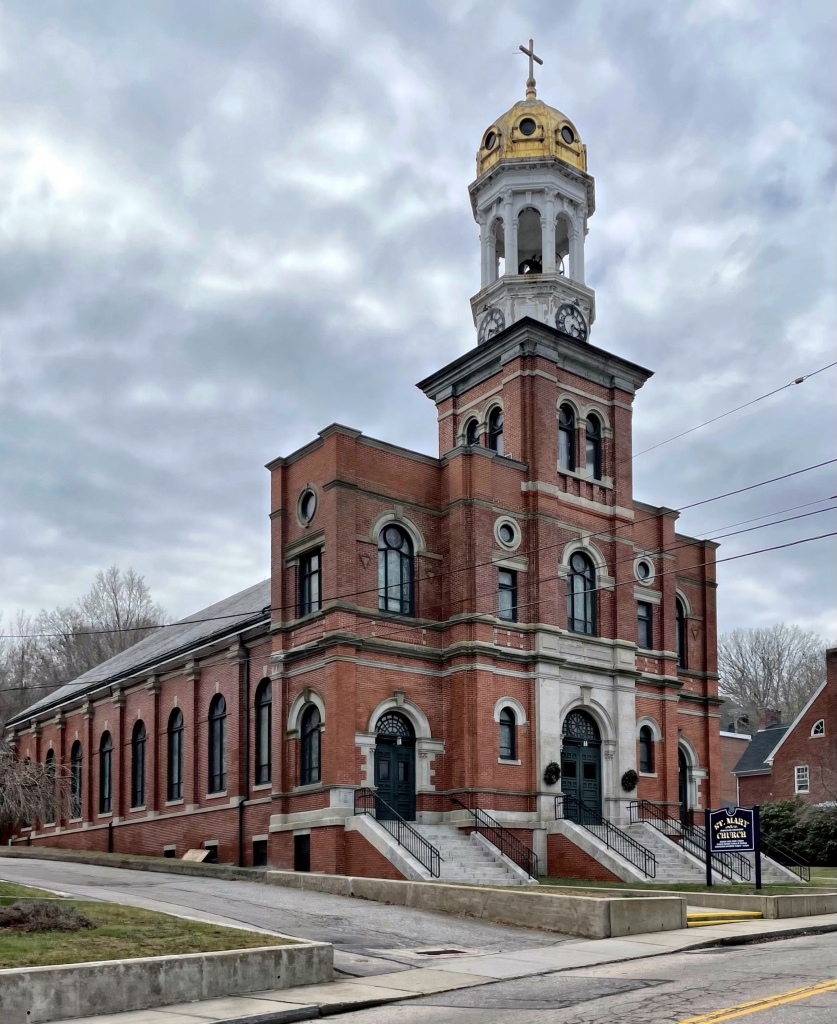
One of the grandest and high-style buildings in Sprague’s Baltic Village is the St. Mary of the Immaculate Conception Church. As Irish, French- Canadians and Poles settled in the village of Baltic, they formed a substantial Catholic community. This congregation was founded by 1860 and a modest church building was erected at that time. As the town’s Catholic population grew, the Archdiocese decided to fund a new church building. This Romanesque Revival style building was constructed in 1911 and it must have made a big statement when it was completed. The building is one of the most unique church designs that I have seen in Connecticut.

Franklin Congregational Church // 1863

When the town of Franklin, Connecticut was still a part of Norwich, it was known as West Farms. The residents there had a meetinghouse built there as it took too long to travel into Norwich for town meetings and church services. The first meetinghouse was built in 1718 on what became Meetinghouse Hill. Decades later, the primitive building was replaced by a newer structure. That building was replaced two more times until the present Congregational Church was erected in 1863. The building takes cues from the Greek Revival church designs of decades prior and looks to the future with Italianate detailing and steeple. There remains a small, but active congregation here to this day, who maintain the old building very well!

Union Christian Church of Plymouth Notch // 1840

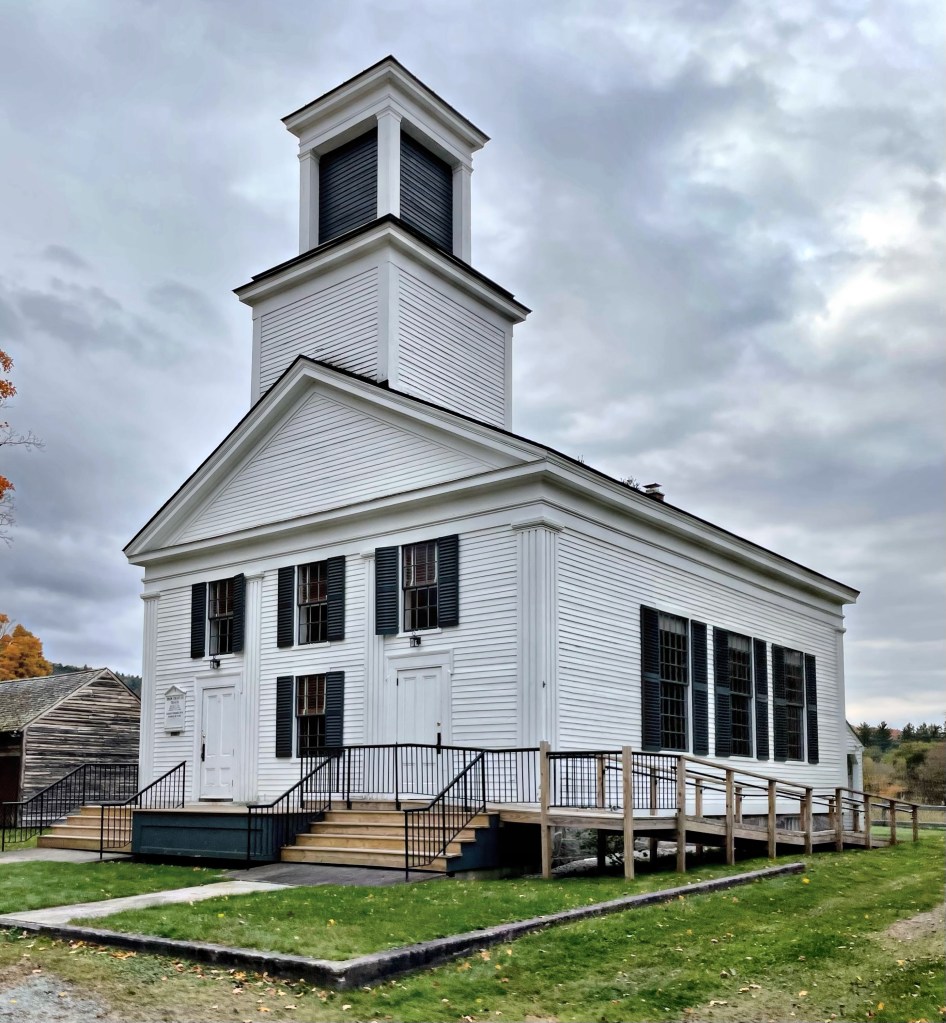
Located next to President Calvin Coolidge’s birthplace and the Coolidge Family store, the Union Christian Church of Plymouth Notch in Vermont stands as another of the village’s well-preserved buildings with direct ties to the former president. The church was built in 1840 as a modest, vernacular Greek Revival building with a two-stage tower and originally was the town’s meetinghouse. The building was dedicated as a Congregational church in 1842. President Coolidge attended services here as a child and later when visiting his hometown as Governor of Massachusetts and President of the United States. In 1942, the
building became a union church for all congregations.

United Methodist Church of Nantucket // 1823

The United Methodist Church of Nantucket stands prominently at the top of Main Street on land was obtained from Peleg Mitchell in 1822. Construction on the site began in 1823 with the massive structure originally built with a pyramidal hip roof of enormous timbers brought to the island on whaling vessels. In 1840, the roofline was amended with the present gable roof, constructed over the original hip roof. The church is a highly significant example of Greek Revival architecture on the island and a more rare example of the temple-front form seen there. Deferred maintenance threatened the building to the point that in 1995, the building was listed as one of the most endangered buildings in Massachusetts. A restoration was undertaken funded by private contributions and the Massachusetts Preservation Project Fund, preserving the building for another 200 years.