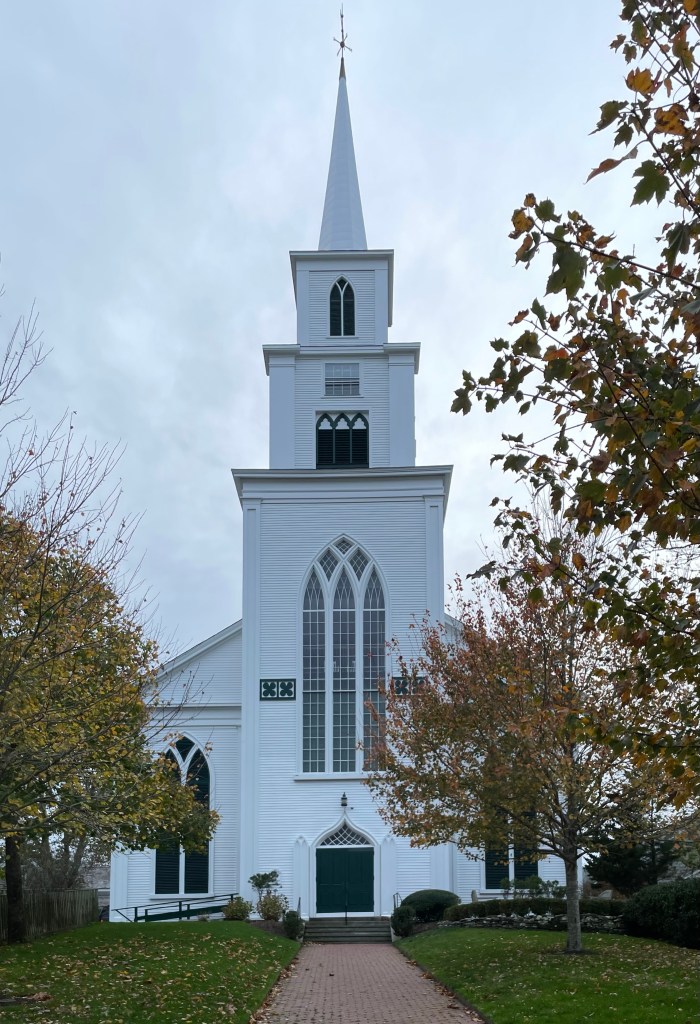
The First Congregational Church is one of Nantucket’s most prominent historic landmarks and is prominently located on a hilltop, being one of the first buildings you’ll see when arriving to the island by ferry. Constructed from a design by Samuel Waldron, a Boston housewright, the present church blends the Greek and Gothic Revival styles elegantly into a single composition. The interior of the church was painted with architectural trompe l’oeil paintings by E.H. Whitaker of Boston in 1852. The steeple was removed in 1849, likely from engineering concerns and high winds on the island. In 1968, the steeple was reconstructed from historic drawings by Philip Graves of Ames & Graves.
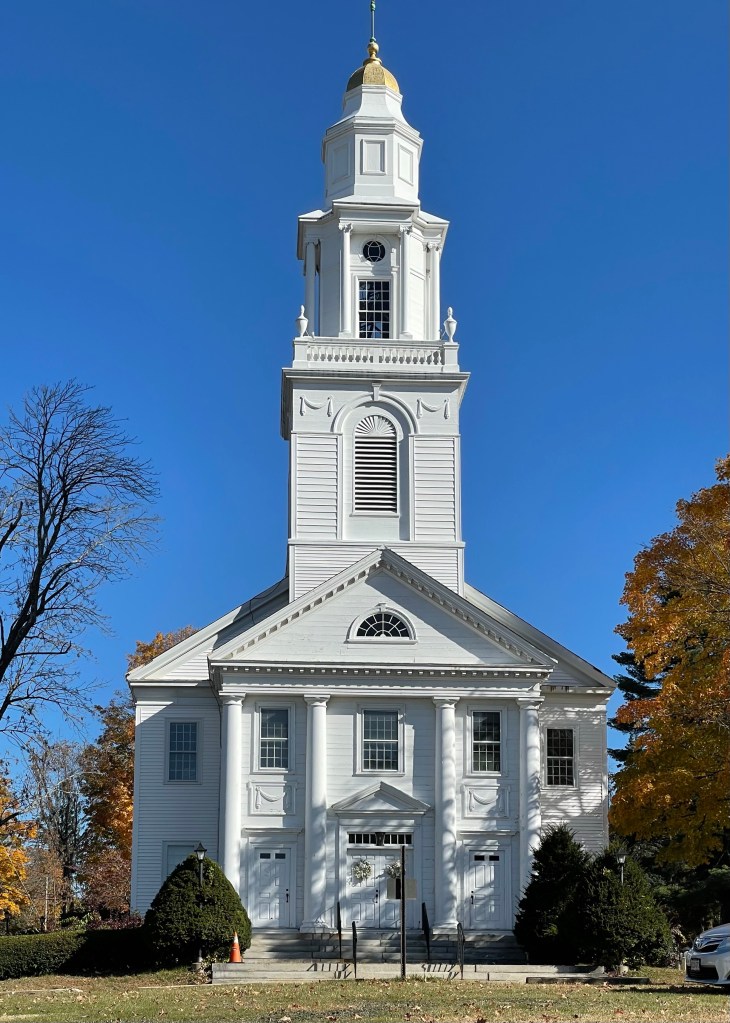
The East Congregational Church in Ware was established in 1826, spurred by the industrial growth and subsequent immigrant population boom in the village of Ware, Massachusetts. The Ware Manufacturing Company, a major player in town, contributed $3,000 to towards the construction of a new congregational church in the village, which was matched by residents. The original church was built in 1826, following plans prepared by Isaac Damon, a noted church architect from Northampton, in the Federal style, popular at the time. In 1925, just a year before its centennial, the church burned to the ground. Plans to rebuild the church formulated immediately. Due to changes to the neighborhood since 1826 (notably the construction of tenement housing adjacent to the church), the decision was made to locate the new church setback from the street. Plans were drawn by Frohman, Robb and Little of Boston for the new building, which was to be Federal Revival, a nod to the former church building. The grounds in front were landscaped by the prominent landscape architect Arthur A. Shurtleff. After WWII, population decline and dwindling membership of some churches in town required a few congregations to consolidate, creating a union or united church here. The United Church of Ware came into being in 1969 when the East Congregational Church, United Church of Christ and the Ware Methodist Church, United Methodist Church joined together and became one federated church with ties to two denominations.
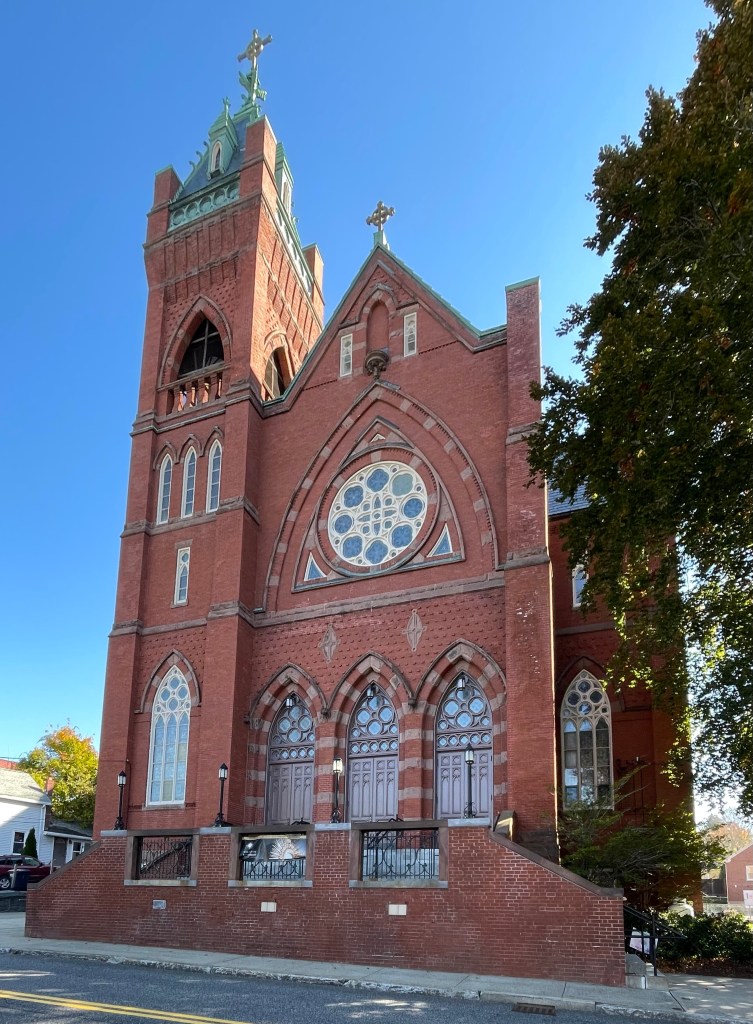
All Saints’ Church in Ware Massachusetts was originally known as St. William’s parish, and was the oldest Roman Catholic Church in the town. Beginning in 1850, regular Catholic services were held in the new industrial village, as large a population of French Canadians moved there for work in the textile mills. A small frame church was built on West Street and a cemetery laid out around it for members of the congregation. As the congregation grew, a larger building was needed. In 1888, work began on the present structure which was to be located in a more central location. The Archdiocese worked with Patrick W. Ford, an architect who designed many Roman Catholic churches built in the eastern part of United States through the latter half of the 19th century. The Victorian Gothic church building remains one of the best examples of the style in central Massachusetts.
I love exploring old industrial towns. In Ware, Massachusetts, the urban decay of some buildings provides opportunity and potential, but also so much negative thoughts for long-time residents as it reminds some of the town’s once thriving past. Just off Ware’s Main Street, I spotted this former chapel and had to learn more. This structure was built in 1881 as the second East Congregational Church chapel. The congregation was largely made up of immigrant laborers who worked in the town’s mills. This chapel replaced a Greek Revival building erected in 1857 on Water (Pulaski) Street that was later remodeled by the town into a fire station. That building was destroyed during the Hurricane of 1938. This Victorian Gothic chapel was designed by architect Eugene C. Gardner of Springfield, who was very busy in central/western Massachusetts. The chapel long was used by church members for spillover events and social gatherings. Later, the building became the office of the Ware River News.
Arguably the most high-style building in the quaint village of Dorset, Vermont is the Congregational Church, which appropriately sits on Church Street. The original congregational church in Dorset was located in nearby Maple Hill Cemetery. When the wood structure burned in 1832, an new wooden church was built on this site. The second wooden building burned in 1907, and then this church was built, but of fireproof construction. Jordan Greene, an architect from New York, designed this Neo Gothic Revival style in the historic district. The church was constructed by the contracting firm of O. W. Norcross, partner in the Norcross-West Marble Company, which donated the building stone from its South Dorset quarry. The design is dominated by a massive square central tower that ascends its facade and is capped by pinnacles. Behind the tower, the gable-roofed church is built of rough-faced Dorset marble laid in patterned coursed ashlar and trimmed with dressed stone. How many other marble churches can you think of?
Early in the 17th century, the Rev. John Lothrop and his followers left England for these shores seeking religious independence. They settled first in Scituate and a few years later came to Barnstable, arriving in 1639. They constructed their first meetinghouse in 1646 on Coggins Pond, about a mile west of this church. Lothrop’s second dwelling in Barnstable is the current Public Library in town (featured previously). In the early 19th century there was considerable theological debate in the “churches of the standing order” in New England. Many churches actually split over this debate, the traditionalists becoming Congregationalists and the liberals becoming Unitarians. The Eastern Parish in town was thus occupied by the Unitarians. In 1836 the original meeting house was removed and a new, larger one was constructed. It was destroyed by fire in 1905, and planning began for a new church. The present edifice was dedicated in 1907, and was designed by architect Guy Lowell, the architect of the Boston Museum of Fine Arts and the New York County Courthouse. His traditional, Classical designs were featured in publications all over the country. This church in the Classical Revival style is one of the finest on Cape Cod.
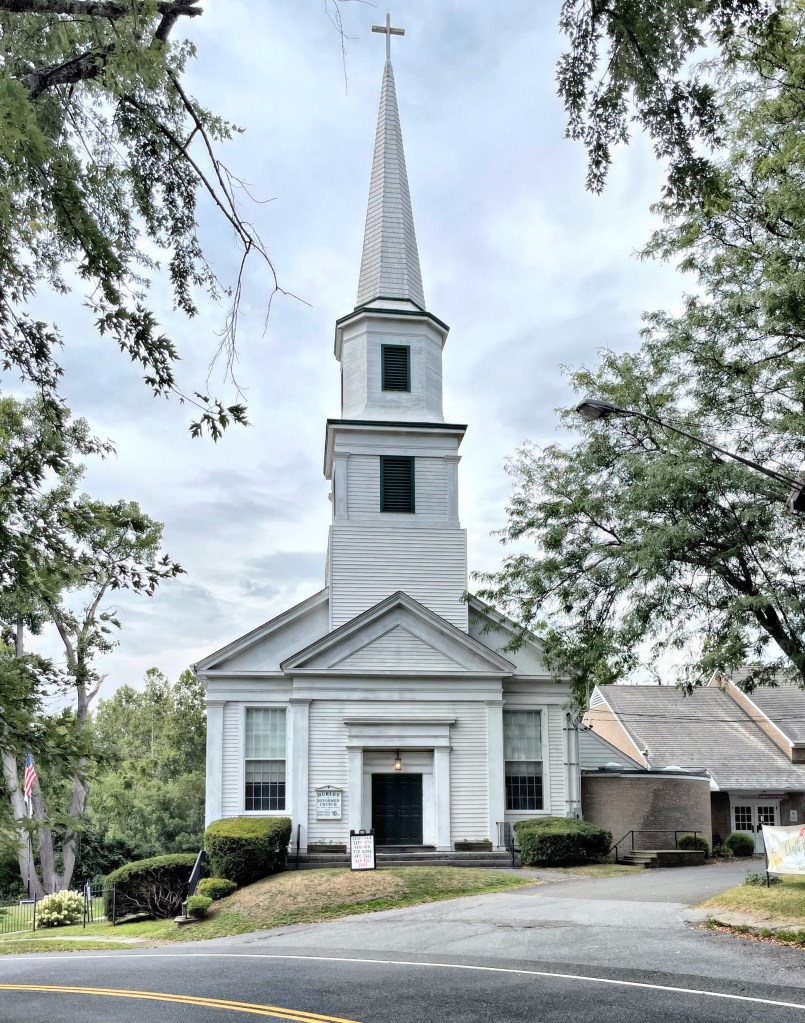
From about 1670 to 1801, the villagers of Hurley were associated with the Kingston Reformed Church, about three miles away. In those years, the minister of the Kingston Church met with the Hurley parishioners at least once every six weeks and conducted a Sunday service in one of the local homes. In 1801, they grew tired of not having their own place of worship, and they petitioned to establish their own church in Hurley, and succeeded. The original church building was a large, single room, stone building that seated over 250 people on the main floor and in three galleries around the side and back walls. A tall steeple atop the building boasted a large brass globe surmounted by a wrought iron weathervane in the shape of a crowing rooster. A large crack in the building was unrepairable and the structure began to shift, leading to its replacement with the current building in 1854. The old white church has been occupied by the congregation ever since.
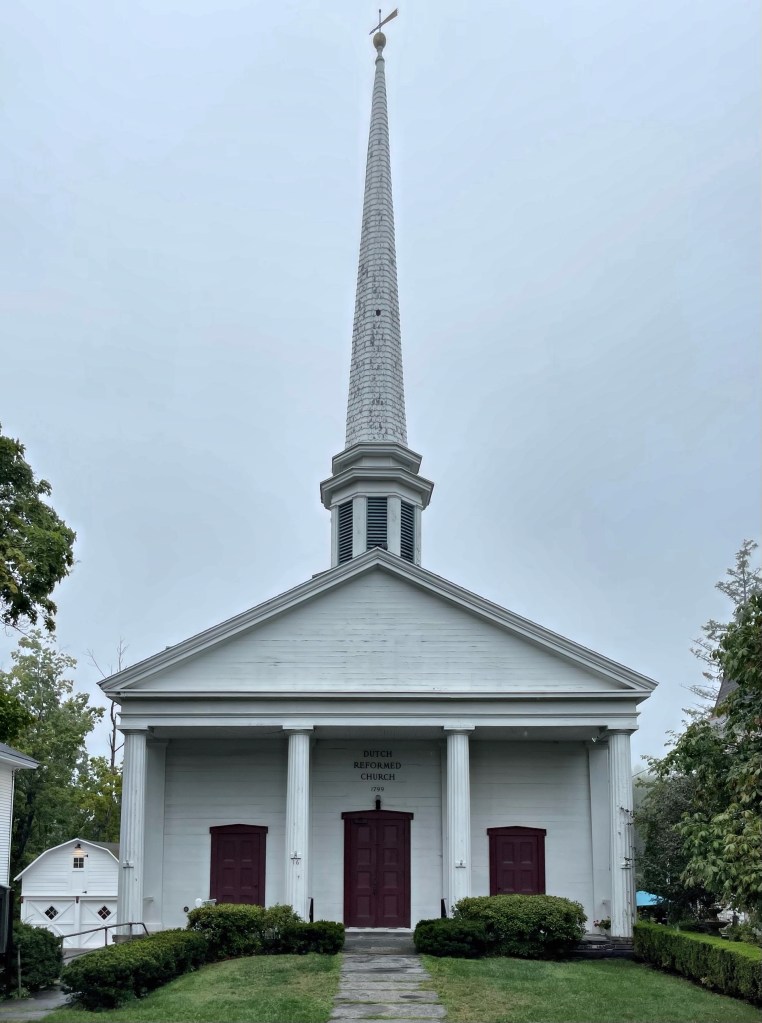
When Dutch and German colonists began to settle along the Hudson River Valley, they brought with them their own religious beliefs and desire for community in a new home. In the Village of Woodstock in Ulster County in 1799, the Dutch settlers began meeting in homes to worship establishing a church. By 1805, they petitioned the denomination for an organized church and purchased land, which is now known as the Village Green. In the heart of Woodstock, they built the first church structure. In 1844, that building was torn down for a new, Greek Revival place of worship on the outskirts of the Green. Architecturally, the church exhibits a prominent temple front with pedimented gable and Doric portico capped by an octagonal steeple. Inside, the sanctuary is lined on the walls and ceiling with decorative, pressed tin, which is apparently from the mid-19th century. The church remains very active in local and current events.
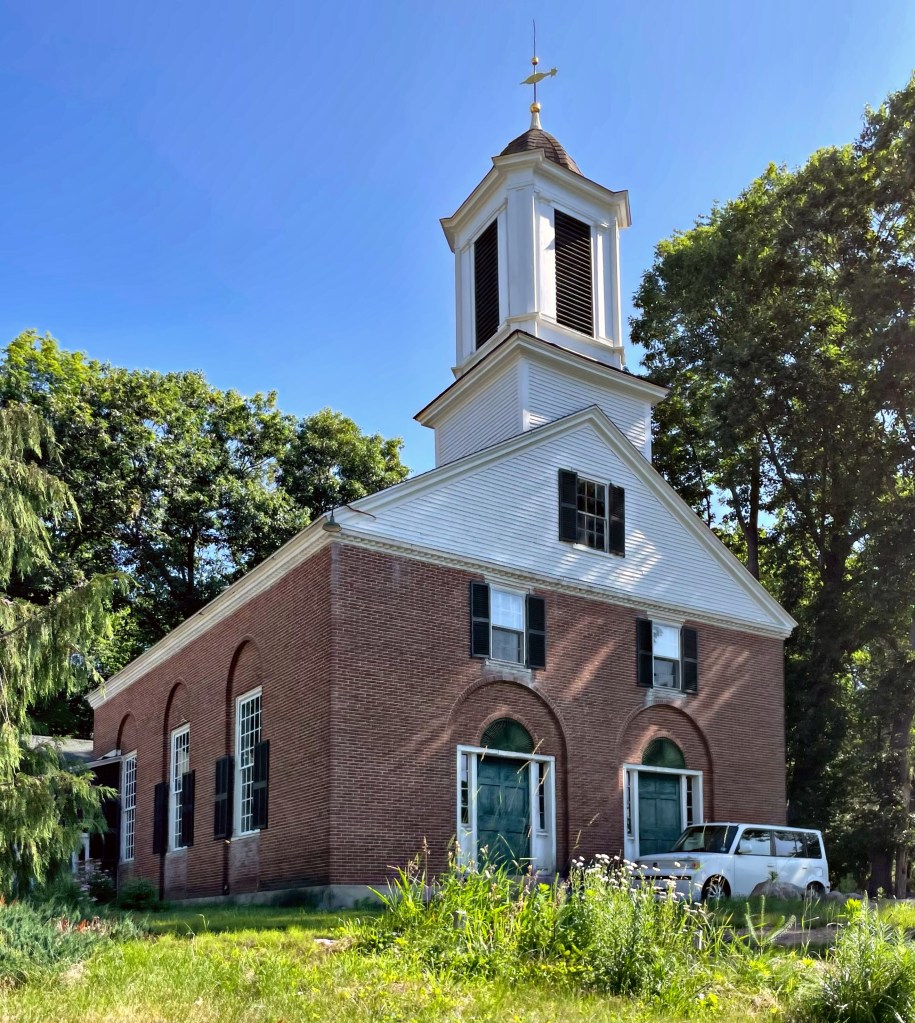
Located next to the Blanchard House, the old Wilton Center Baptist Church stands as one of the only brick buildings in Wilton Center, New Hampshire. Baptists in town originally met and worshipped in nearby Mason, NH, but eventually began services in town. By the 1820s, a new edifice was needed, and the members pooled resources, largely from wealthier members for funding for a new church. The Federal style brick church is stunning with its recessed arched panels surrounding the windows and doors, and its steeple. The building has been converted to residential use.


 Buildings of New England