Beneficent Congregational Church // 1809

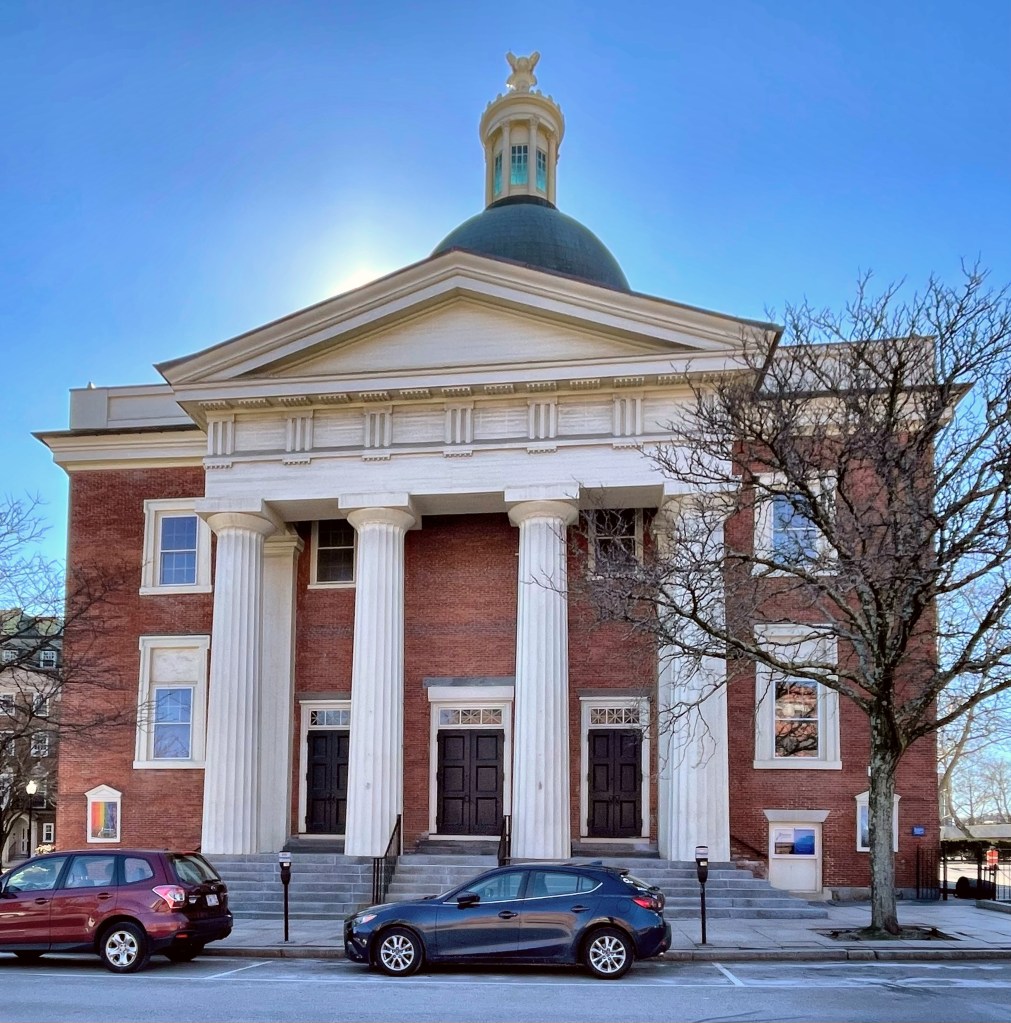
The oldest religious structure on Providence’s west side, the Beneficent Congregational Church is a key Providence landmark. The church visually dominates the part of Downtown that saw widespread demolition in a period of urban renewal, where a large portion of historic buildings and homes were razed for new development and parking. The current structure (the second Meeting House on this location) was built in 1809 to plans by Barnard Eddy and John Newman, the latter of whom supervised construction. It was substantially altered in the Greek Revival style in 1836 to a design by James C. Bucklin, which oversaw the addition of the columns and Classical trim. This work was funded with a $30,000 donation from textile entrepreneur Henry J. Steere in honor of his father. Steere also gave to the church a chandelier containing 5,673 pieces of Austrian crystal! It is not the columns or chandelier that catches people’s attention, it is the massive dome. Legend has it that when designed, Reverend Wilson wanted to recall the domed Custom House in Dublin, which had been dedicated shortly before his emigration to America. The building looks similar to the Massachusetts State House, built in the 1790s, especially when the church’s dome was covered with gold leaf. Due to weather damage to the gold leaf, the congregation voted in 1987 to replace the roof with more durable copper sheeting, which now has a green patina.
Arnold-Palmer House // 1826

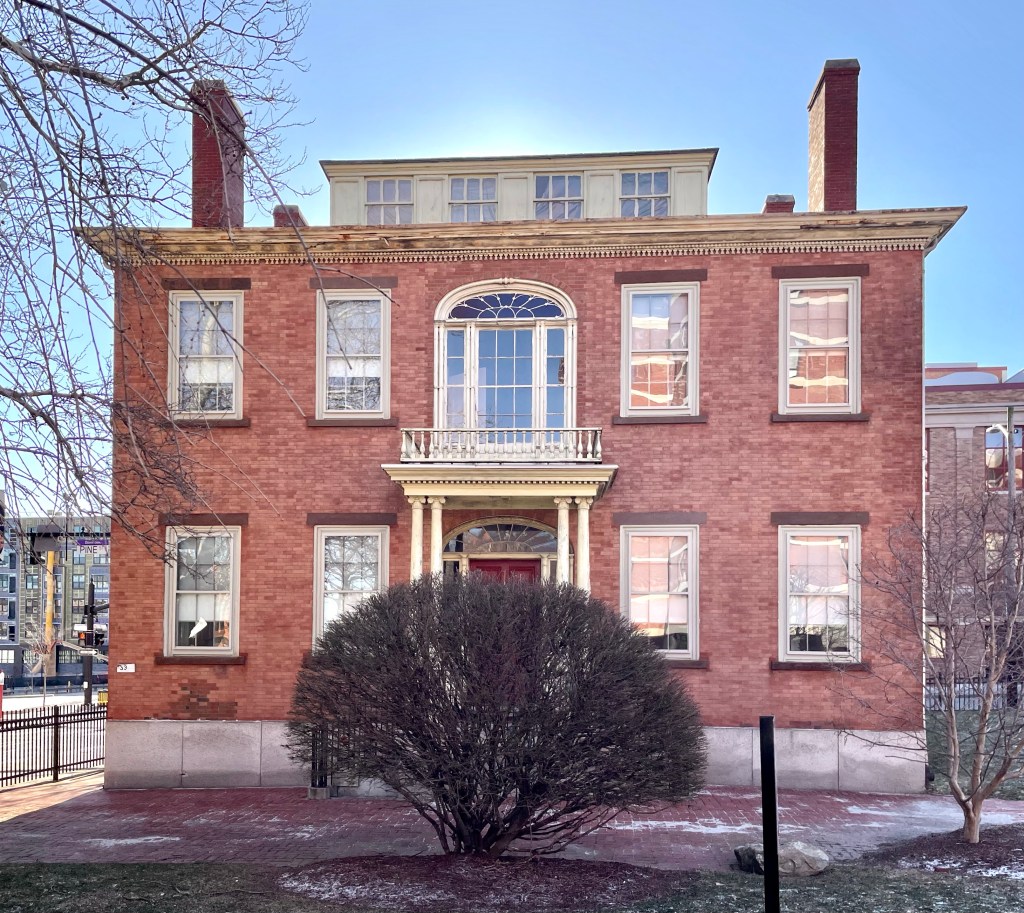
The Arnold-Palmer house (not related to the drink), a handsome brick single residence of the Federal period, was built about 1826 by Daniel Arnold, a wealthy Providence merchant who did well in the economic expansion of the 1820s and 30s. The home is attributed to John Holden Greene, a Providence architect who commonly incorporated a monitor roof in his designs. Daniel Arnold focused his wealth on flour trade, but he speculated in cotton as well, as did many of the merchants in Providence at the time. The connection of Providence with southern states and plantations demonstrate how tightly bound Rhode Island’s industrial economy was with Southern cotton and the enslaved people who produced it, with manufacturing and cotton mills all over Rhode Island. By the 1850s, Arnold’s house was sold to Joseph Palmer, who, through the firm of Palmer & Capron, manufactured gold rings in Providence’s growing jewelry business. The house was built in Cathedral Square a part of Downtown and was moved to its present site when that part of Providence was nearly entirely razed in urban renewal. While the siting is less than desirable, this rare surviving Federal home in downtown shows how the wealth and prosperity of Providence was not only restricted to College Hill.

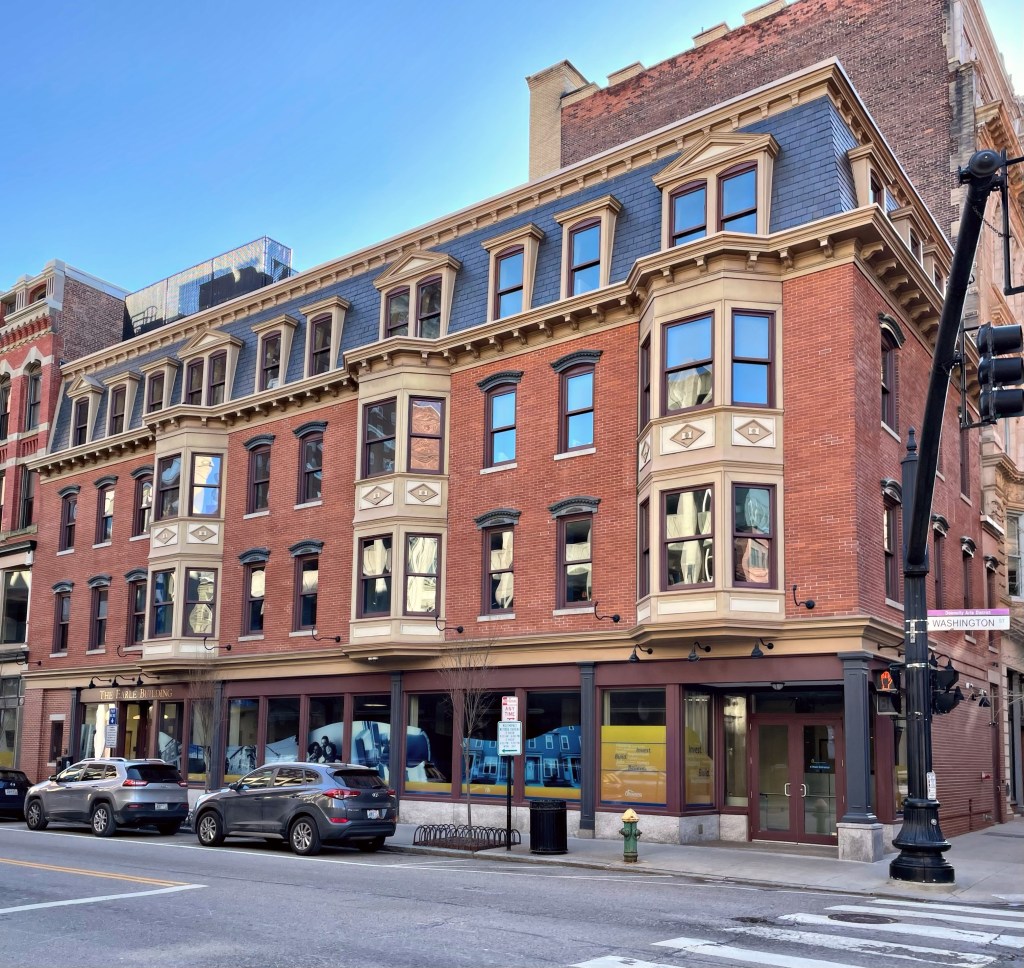
Earle Building // 1895

The Earle Building in Downtown Providence, Rhode Island is an architectural anomaly. The structure was built in 1895 and is a stunning example of the Second Empire style of architecture, best characterized by the iconic Mansard roof. The Second Empire style surged in popularity from the 1860s-1880s, but really fell off in popularity when historic revival styles took over (Renaissance, Colonial, and Classical). William H. Earle built this structure in 1895 to house his business, Earle & Prew, General Express Forwarders. Earle & Prew dealt exclusively with at least half a dozen local train and steamship lines, and held offices in this building well into the 20th century. The building today is one of the better-preserved structures downtown, which provides architectural intrigue and design that is of human scale.

New England Telephone Building, Providence // 1917

This towering Georgian Revival building in Providence is definitely one of my favorites downtown. The 8-story building was constructed in 1917 for the New England Telephone and Telegraph Company, who outgrew their other facility just blocks away. The design is credited to the firm of Clarke & Howe, local architects. The two-story arcaded marble base is surmounted by a six-story brick tower, which is an architectural landmark in Downtown Providence. The building appears to retain its original windows and looks much as it did when built over 100 years ago. At the rear, a larger 1970s wing was added and shares little in terms of architectural detailing with the original structure.

Shepard Building // 1880+

Not many buildings show the rapid prosperity seen in American cities in the late 19th century and the shifting of retail as well as the Shepard Company Building in Downtown Providence. The core of this building was constructed in the 1880 as a modest three-story Italianate style commercial structure for the Shepard Company, a dry goods store. Founder John Shepard insisted that his store was not simply one large business, but instead a collection of quaint shops, “each more complete in itself than the small separate stores,” with each division offering a premier shopping experience, an early example of a department store. Beginning in 1896, the company embarked on a rapid building expansion, designed by local architects Martin & Hall, which was largely completed by 1903, encompassing the entire city block. The two ends front the main streets of Washington and Westminster, each with stunning corner entrances. A 1923 fire caused damage to the building which was quickly restored. Though once successful, the Shepard Company went bankrupt in 1974, after decades of shifting retail and population density toward the outer suburbs. The building is now occupied by the University of Rhode Island’s Providence campus, and the institution does a phenomenal job maintaining and preserving this gem!

Strand Theatre – Strand Ballroom // 1915

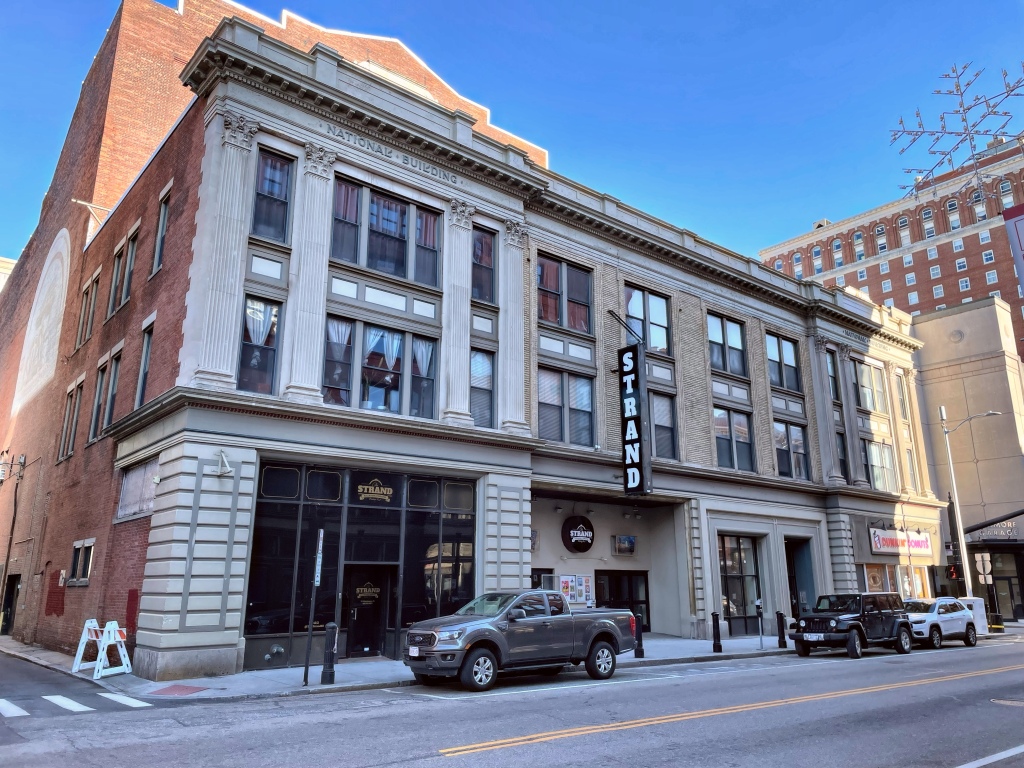
This three-story brick and stone building in Downtown Providence was built in 1915 as a motion picture theatre, one of the first purpose-built movie houses in the city. Local architect Thomas J. Hill Pierce designed the building which had a central theatre core with offices at the street which enhanced the
building’s income by optimizing rental space and providing a sound buffer between the street and the auditorium. Taken over by Publix, the building was briefly known as the Paramount Theatre from 1930-34, when the Strand name was restored. After WWII, populations were moving farther and farther from downtown, the theater struggled to attract customers, so like many other downtown movie theaters, the Strand shifted its clientele by featuring adult films, a revenue stream that only worked for a few years before the owners converted some of the auditorium space into commercial/office use. When Downtown Providence began to see a resurgence, owners re-opened the old Strand as a live music venue, known as Lupos Heartbreak Hotel and Roxy Providence. In 2017, new owners closed the theatre for a three month, $1 million renovation project, reopening as the Strand Ballroom, a wildly popular venue.

Grace Episcopal Church, Providence // 1845

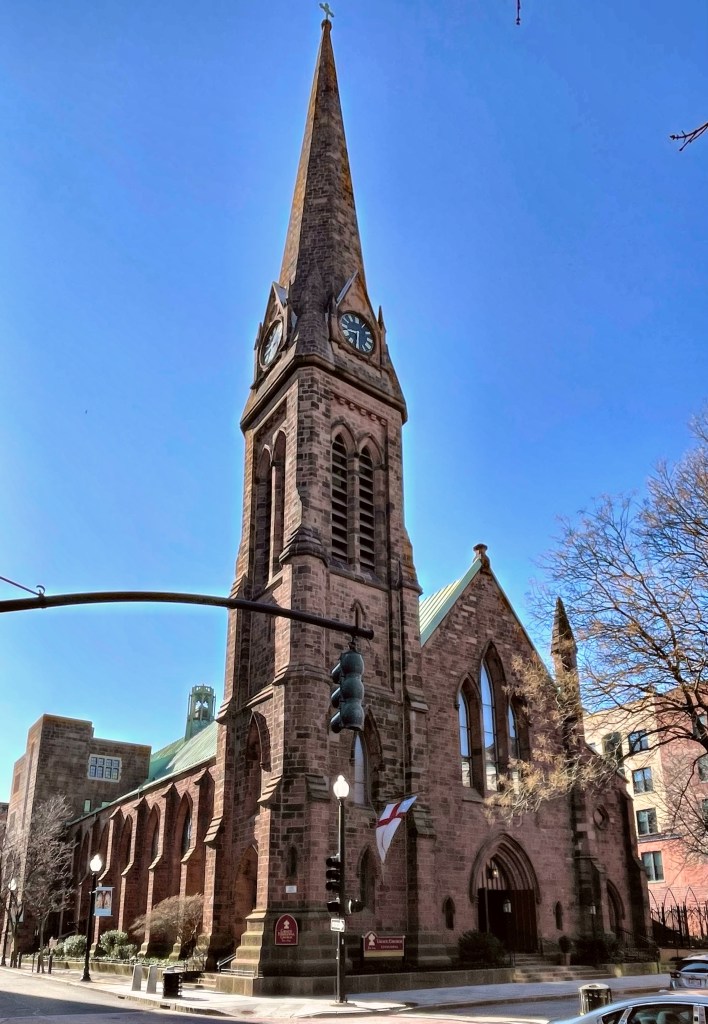
By 1829, the population of Providence, Rhode Island was spreading from the east side of the Providence River (near Brown University) to the west. Around this time, two dozen parishioners of the St. John’s Episcopal Church on Providence’s East Side purchased the old Providence Theater on the west side of town and renovated it for use as a church. By 1835, the congregation grew to 260, and a new church building was needed. Grace Church hired the foremost architect of the time, Richard Upjohn, to design the beautiful new building, which was the first asymmetrical Gothic Revival church in America when it was completed in 1846! In addition to its architectural significance, the building contains the first painted windows ever seen in Rhode Island. Downtown Providence eventually grew up around the church, really diminishing the chance at a good photo of the building, but later urban renewal and the razing of parts of the downtown area (many undeveloped to this day) provide some interesting sightlines of the towering steeple.