The largest house in the smallest town (in Middlesex County) of Ashby, Massachusetts, is this towering, three-story Federal period home on South Road. Local history states that the home was originally a two-story Federal style home with shallow hipped roof. The Goodnough’s “modernized” the home by the 1870s, adding a mansard roof and built a stable on the property. Lastly, the third major owner, Jesse P. Lyman, and his wife, Mary Chapman Lyman, had the home “modernized” again, in 1898, but in the Colonial Revival style, harkening back to the house’s original Colonial-inspired roots. Fitchburg-based architect Henry M. Francis converted the old mansard roof to a full third-floor, updated the carriage house, and added side wings to flank the main block of the house (similar to his design at the old Lyman School in town). The house recently sold for over $600,000 in 2020, which may be the best steal ever! This house is a stunner!
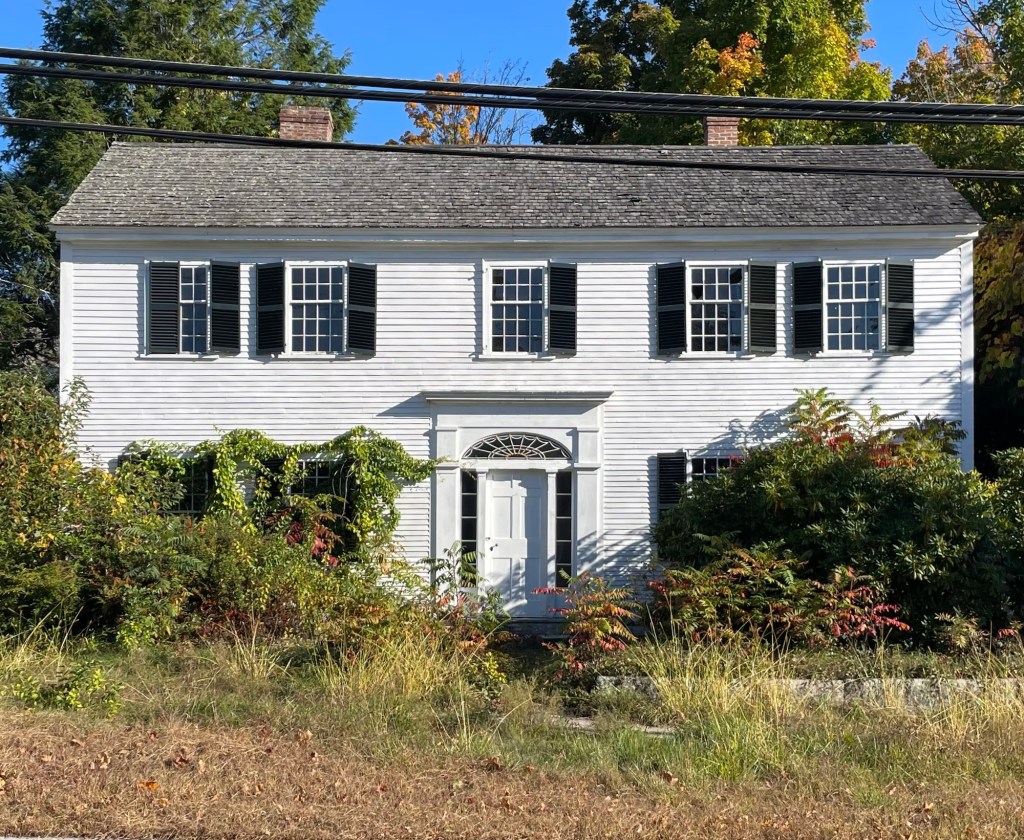
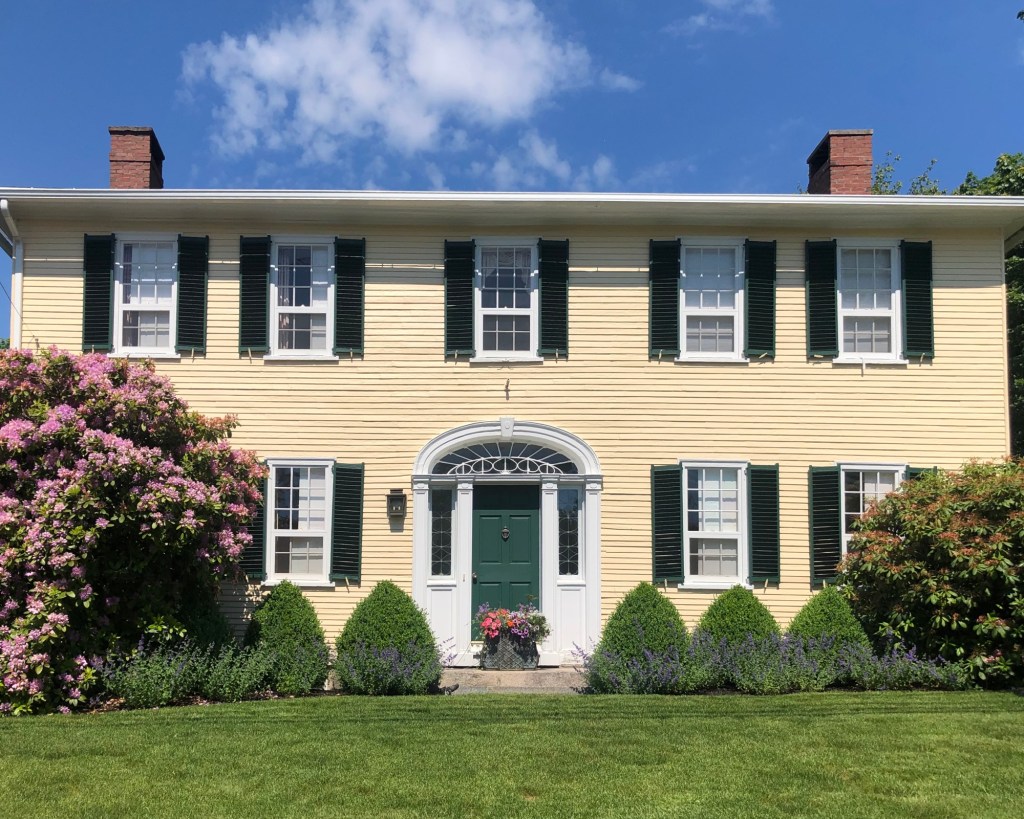
One of the many Federal period houses in Ashby Center is this lovely c.1810 residence on Main Street. The house is known as the Wellington House, and was possibly built by Darius Wellington, a carpenter who assisted with building the town’s First Parish Church in 1809. The house exhibited a symmetrical facade with stunning fanlight transom over the main entrance and eight-over-twelve sash windows. In the latter half of the 19th century, the property was owned by Cyrus Sears, a prominent sea captain, who sought a life inland with his family. He would serve in the Civil War, but had the half-decade house “modernized” with new bay windows and an entry porch. He would later move to Baltimore and serve as a port captain and consul to Cuba. In the past few years, the owners have restored the home to its original Federal design, re-emphasizing the stunning fanlight transom and sidelight details.
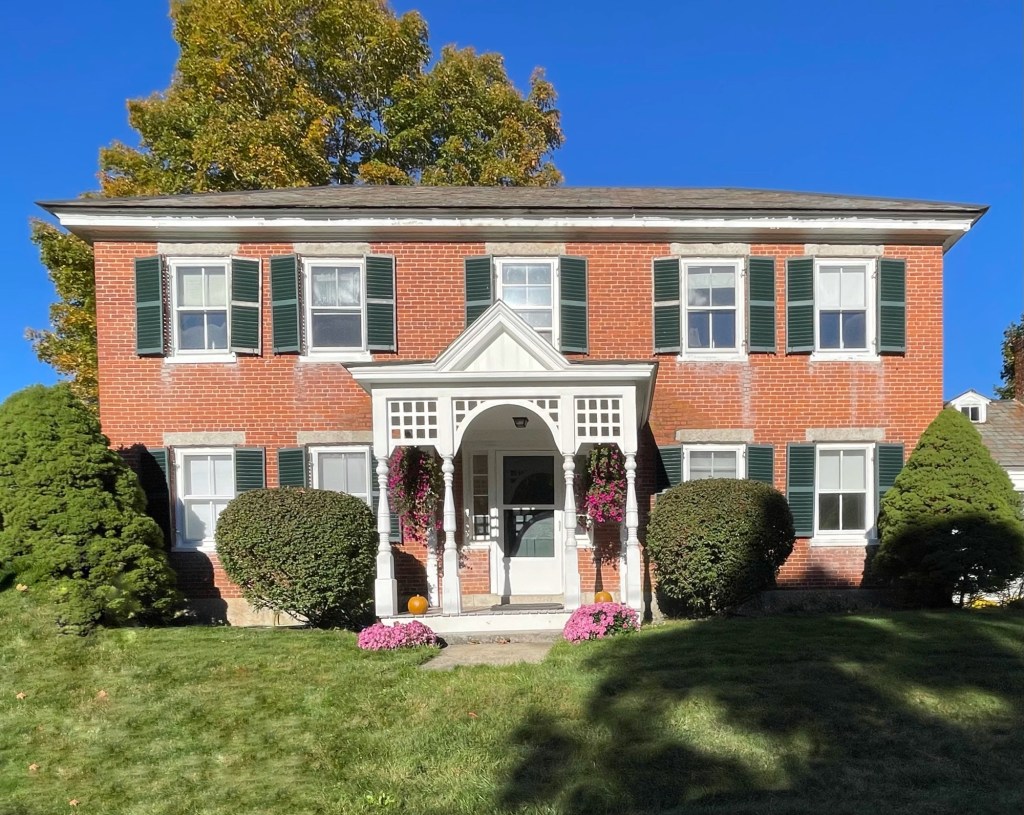
The Asa C. Everett House on Allen Road in Ashby, Massachusetts, was built around the time of the wedding of Asa Cutter Everett, a saddle- and harness-maker, and Rowena Spaulding in 1824. The house was built of brick and in the Federal style with a shallow hipped roof and symmetrical facade, and was “modernized” in the late 19th century. Victorian-era alterations include the entrance porch with turned posts and spindle frieze and two-over-two sash windows. Blending of vastly different architectural styles can be tough to pull off, but this example really looks great! What do you think?
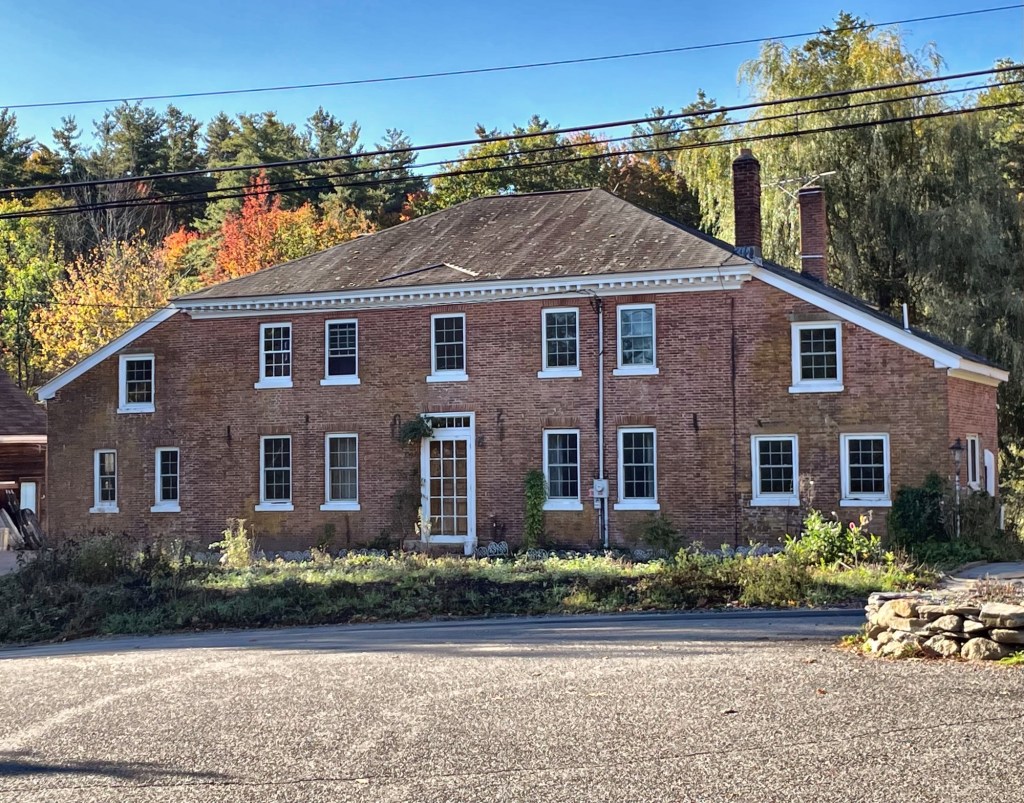
The Asa Kendall House is a significant Federal period house from the late 18th century on Richardson Road in Ashby, Massachusetts. The house here is actually believed to be the second built on this location, the first being the John Fitch House and Garrison. John Fitch was one of the earliest settlers in present-day Ashby, which in the mid-1700s, was sparsely developed and threats of attack by Native peoples limited development for decades. Due to raising tensions in the years leading up to the French and Indian War, Fitch petitioned the government for a garrison manned by three soldiers, which was approved. In 1745, the garrison was attacked and Fitch with his family, were kidnapped by Native Americans, held hostage for six months and brought up to Canada. The homestead and garrison were burned. He and his family were ransomed and would later return settling elsewhere in town. The former location of the garrison was purchased by Asa Kendall and this house was built around 1790 for him. The brick house with sloping wings was extensively documented as part of the Historic American Building Survey in 1936 and has been preserved by later owners ever-since!
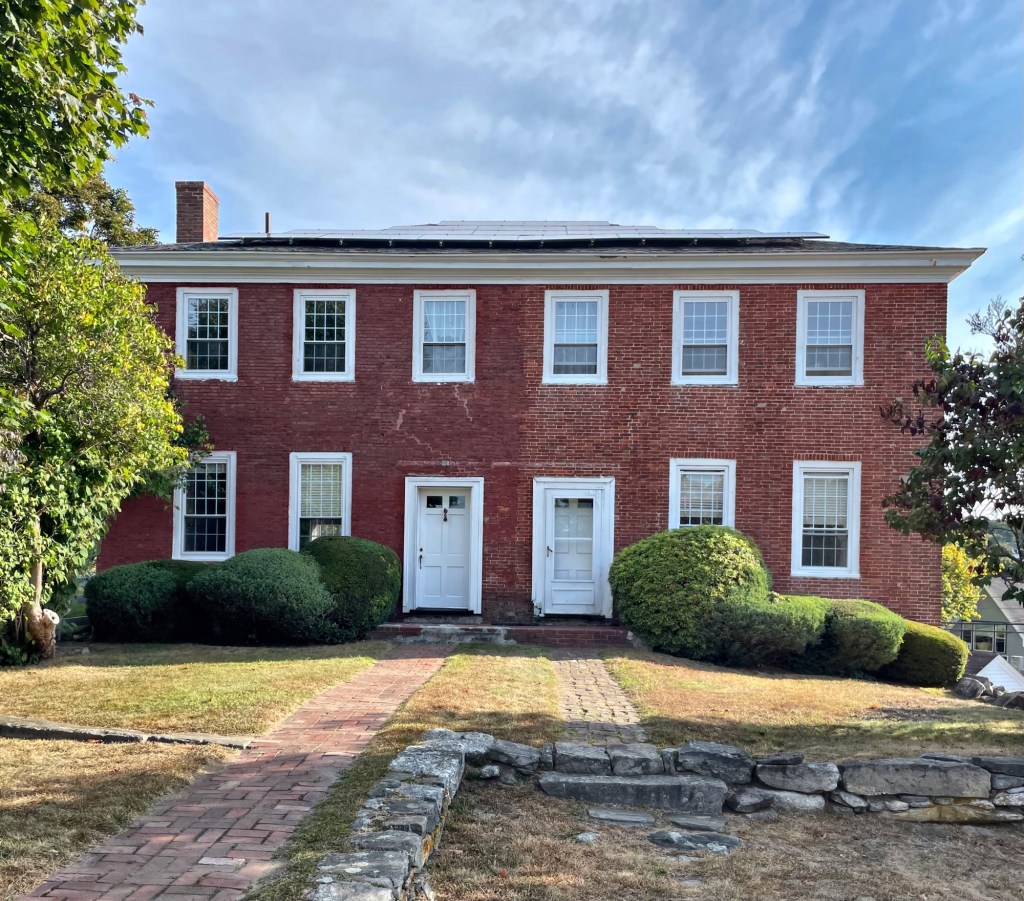
The Auld-McCobb House is set on a rocky ledge overlooking the absolutely charming downtown Boothbay Harbor, Maine. The brick, Federal-period double-house was built in 1807 for Jacob Auld and Joseph McCobb, two prominent local merchants. The two were engaged in a business partnership that included fishing, shipbuilding, and general mercantile pursuits, and were a dominant force in the local economy in the first quarter of the 19th century. The duo owned a good bit of land in town, eventually selling the five-acre Burnt Island to the Federal Government for a new lighthouse. McCobb married Auld’s sister in 1807, and it is thought that this is what necessitated the house’s construction at the time. The house is interesting, not only as a rare example of a double-house of the period, but also as one of the first (and only) brick homes in Boothbay Harbor.
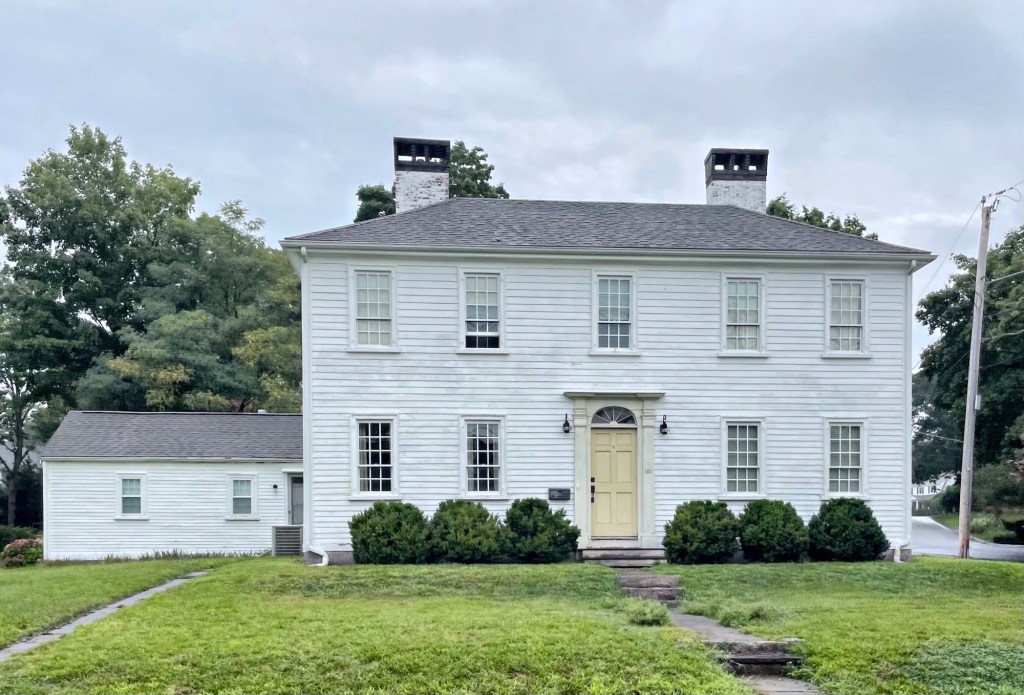
The Chickering House at 101 Walpole Street is significant as one of the oldest extant houses in Norwood, Massachusetts. Although local lore dates this house to 1781, it likely dates to 1807 (or was adapted from an earlier house) and was owned by Deacon Dean and Sally Guild Chickering, who farmed on the lot. Three generations of Chickerings farmed the land here until the early 20th century, when John D. Chickering, a local historian, sold much of the land for suburban development. The Federal style farmhouse remains as a vestige of the early, pre-suburbanization that Norwood is now known for.
John Andrews Jr. (1747-1844) was born in Essex County, Massachusetts to John Andrews Sr., a church Deacon, merchant, and blacksmith. John Jr., was a fisherman and would later move to Arundel by 1783 (now named Kennebunkport) and built this stately Federal style residence in the village. The house was built sometime between 1783 and 1810, with my best estimate dating the house (at least in its current form) to around 1808 as the high-style entry is similar to what is seen in Asher Benjamin’s plan books of the early 19th century, like the American Builder’s Companion, which provided builders with plans for elevations, cornices, entrances and windows, and any other features of a house built at the time.
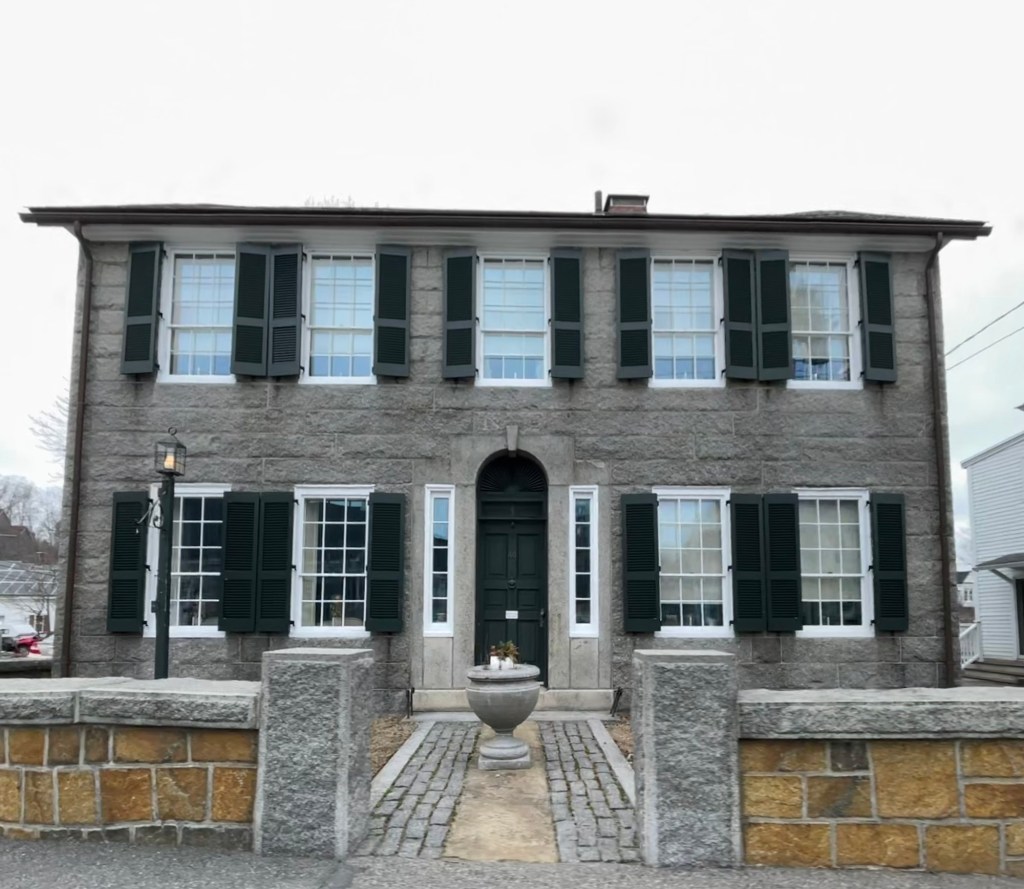
Levi Sewall (1805-1880), a native of Maine, built this stunning granite Federal style house in Rockport, Massachusetts in 1832 in preparation for his marriage to Mary Ann Robards. The granite blocks used to build the house were hauled by oxen from Sewall’s own quarry in Pigeon Cove, which is said to have produced stone of excellent quality. Sewall was one of the towns earliest entrepreneurs in the granite business and did quite well, supplying the building material to many of the region’s buildings in the mid 19th century. The property was inherited by Levi and Mary’s son-in-law, Frank Scripture, who took over the family business. Levi Sewall’s descendants occupied the Sewall-Scripture House until 1957, and ever since, it has been home to the Sandy Bay Historical Society and Museum.
This large Federal style home in Rockport is a rare extant example of a spite house in Maine. The story goes… James McCobb, an Irish immigrant, arrived in what is now Phippsburg in 1731. Living in a log cabin with his Irish-born wife, Beatrice, he raised a large family of 10 children, among whom was Thomas McCobb (1778-1815), who became a sea captain. In 1774, James built a handsome Federal period house for his second wife, Hannah Nichols, with whom he had three children (twin daughters, and a second son, also named Thomas). He married a third time in 1782 to Mary Langdon Storer Hill, who had a son, Mark Langdon Hill, from a previous marriage, who ended up marrying one of McCobb’s daughters, one of the twins, who was a half-sister to Thomas. While Captain Thomas McCobb was away at sea, the Hills, which included Thomas’ half-sister/wife of Mark Langdon Hill, broke his father’s will and took the homestead for themselves. When Captain Thomas McCobb returned from his voyage and discovered what had happened, he vowed to build the most beautiful house in Maine and one that would dwarf the one he had been deprived of. The house was promptly dubbed “The Spite House”.
This house was built in 1806. Ironically, Captain Thomas apparently never married and left no descendants, as a result, when he died in 1815 in Boston, the house was given over to the Hill family. The house had fallen into disrepair and was purchased in 1925 by Donald Dodge of Philadelphia, who moved the house, to save it from demolition, over 85 miles by boat from Phippsburg to Rockport. He also transported a 1796 house from South Harpswell to be used in the construction of the wings that were subsequently added onto the Spite House. The property now sits on Beauchamp Point, not visible from the street, in a desirable enclave of summer residences, with sweeping views of the Atlantic Ocean.
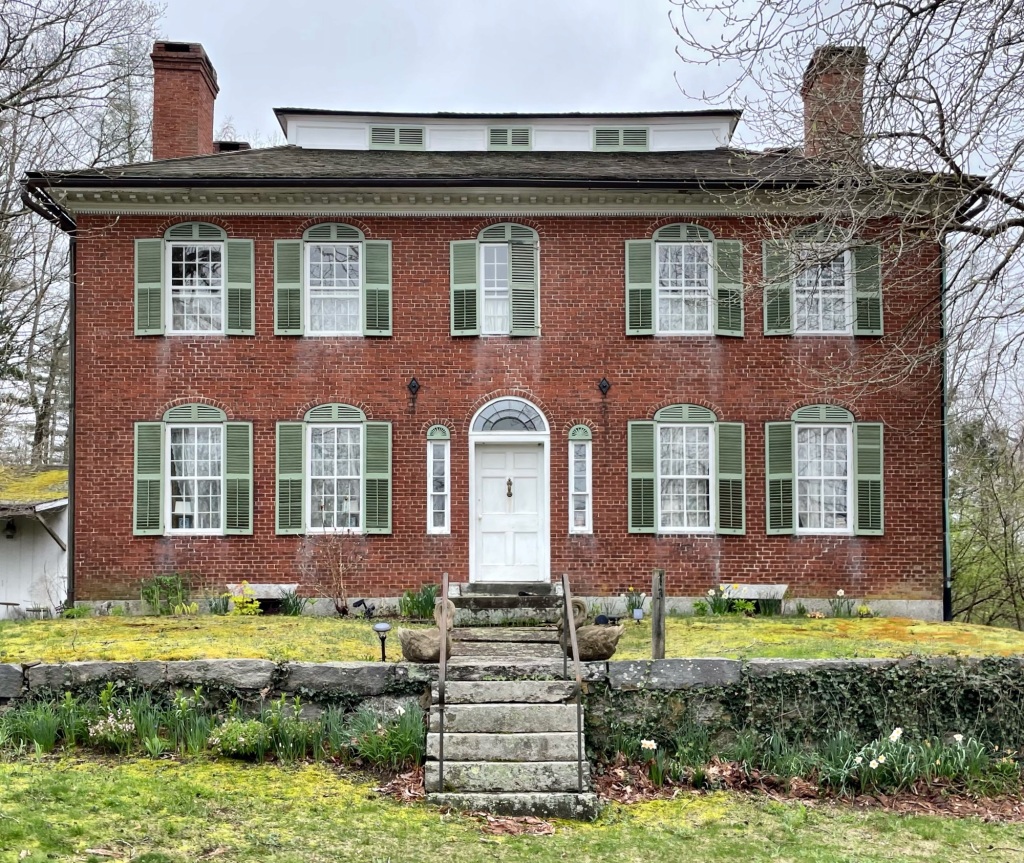
The Witter House of Chaplin, Connecticut was built in 1821 and owned by three generations of medical doctors all named Orin Witter. The Witter House stands on Chaplin Street and is among the finest Federal style residences in this part of the state. Orin Witter had the house built just before the town was incorporated in 1822 and would also serve as the town’s first Clerk. The Witter House is five bays wide, with paired chimneys at the ends of the hip roof. The centered entrance is flanked by arched sidelight windows and has a fanlight above. The fanlight detail is echoed by semi-elliptical fan louvers above each window. The roof has a monitor section at its center. Due to its architectural merit and state of preservation, the house was individually listed in the National Register of Historic Places.



 Buildings of New England