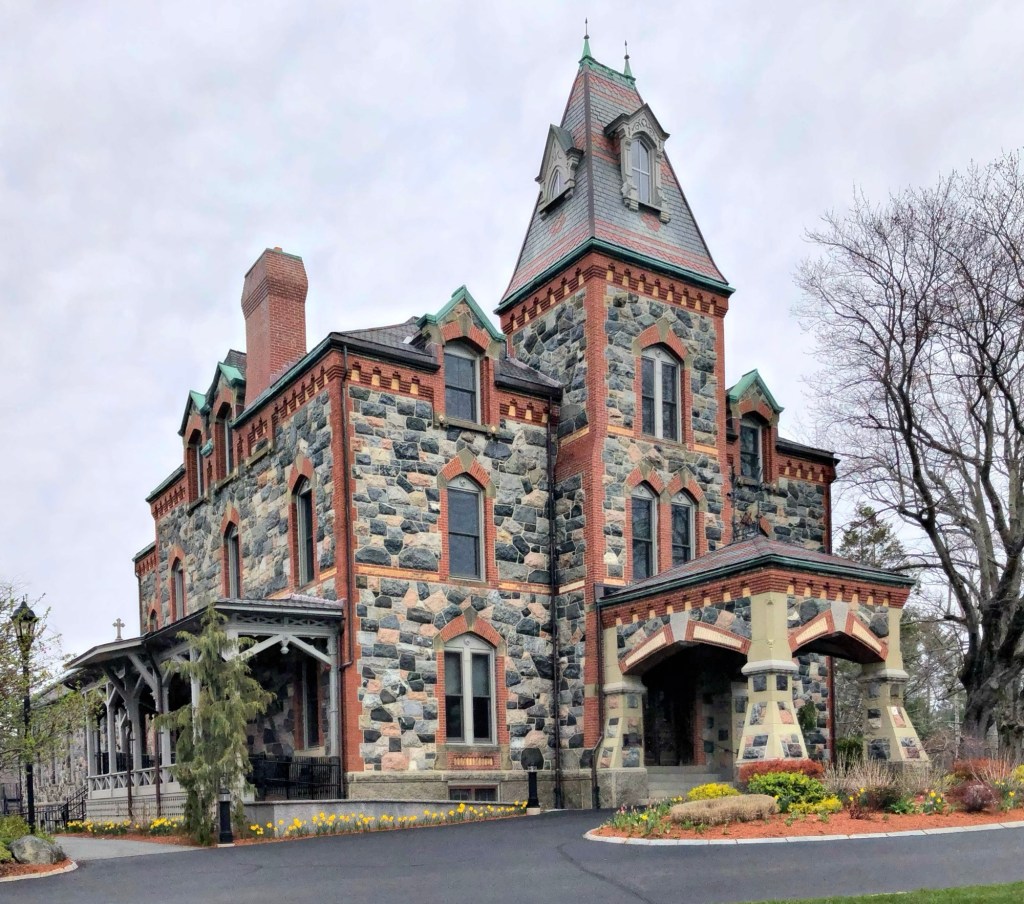
Porphyry Hall // 1880

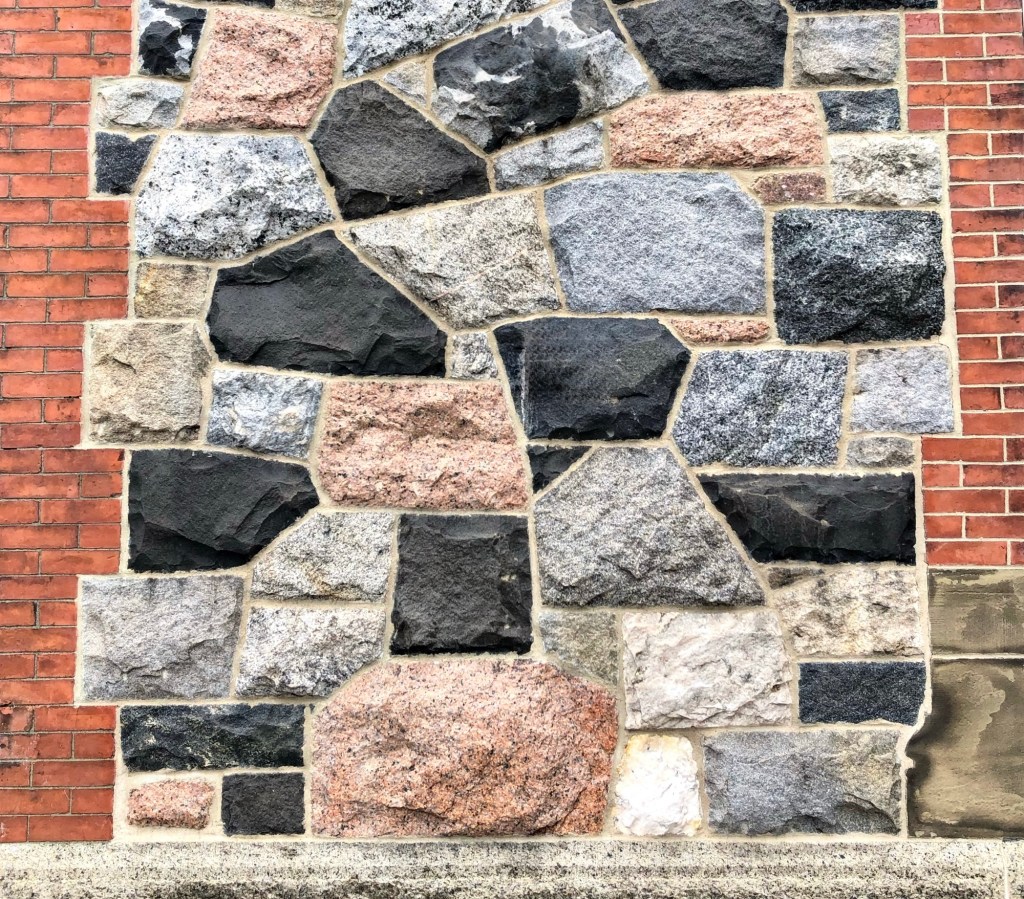
The Jacob E. Spring Mansion, also known as Porphyry Hall, is a high-style estate house located in Danvers, Massachusetts, that is one of the finest and most unique in the state! The house was built in 1880 for Jacob Evans Spring (1825-1905), who was born in Brownfield, Maine, and at the age of twenty, he went to Argentina and amassed a fortune in the wool business in Buenos Aires between 1845 and 1865, when he returned to the United States. Jacob and his wife, Sara Duffy, would purchase a large farm in Danvers and began planning for their family country home. Their residence was built on a high hill over two years and constructed of over 40 types of stones of irregular size and color with door and window sills of Nova Scotia freestone with arches of the doors and windows and corners of brick. The mansion was designed by architect George M. Harding of Boston, and built by several skilled masons over many months. Mr. Spring named his estate, “Porphyry Hall” with Porphyry meaning an igneous rock with large crystals in a fine-grained matrix; suitable for the walls of their mansion. The Spring’s lived lavishly at this home and spent nearly all of their fortune, selling the property after just ten years to the Xaverian Brothers, who opened it as Saint John’s Normal College. In 1907, the compound was re-organized as a Catholic boys prep school. In 1915, a chapel was added to the rear of the building, constructed from gray fieldstone to blend with the main house. Have you ever seen a building like this?
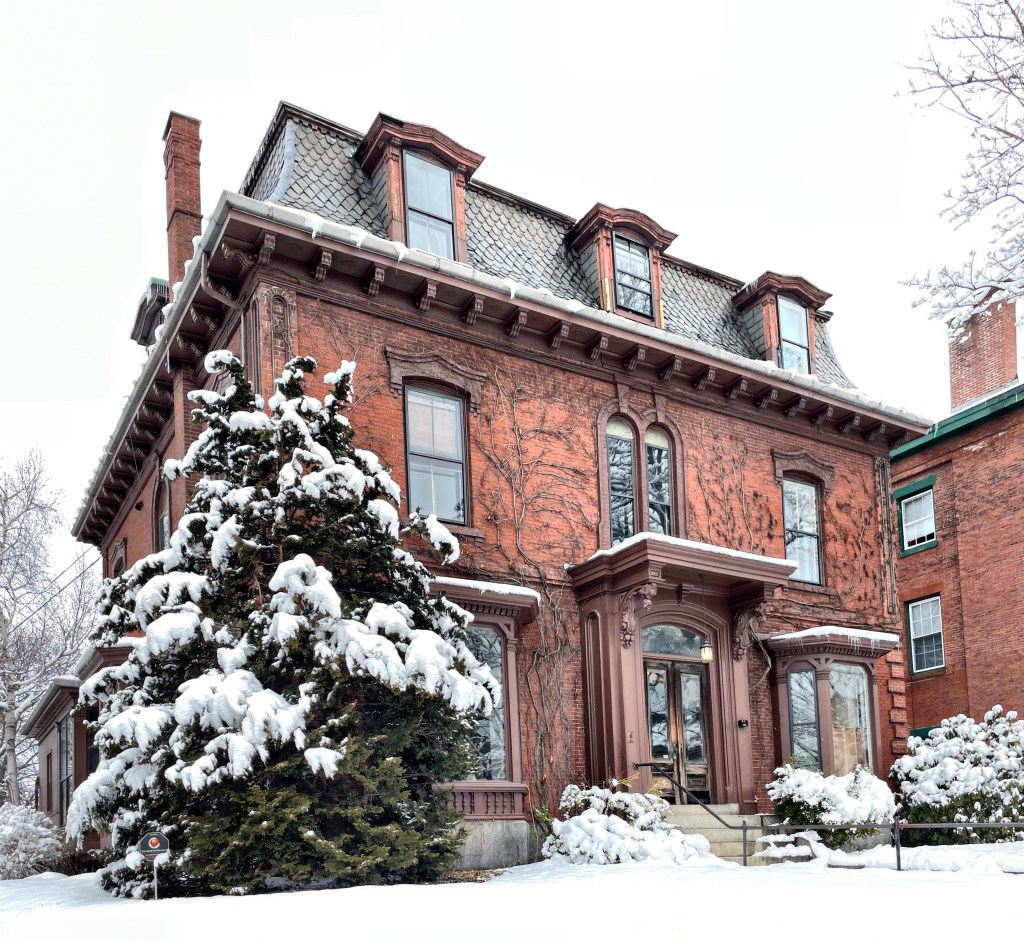
William Allen Jr. House // 1866

Italianate style houses dominate the Deering Street area of Portland architecturally, but there are definitely some great Second Empire residences and other styles seen here. This house (like seemingly every building in Portland in the 1860s) was designed by architect George M. Harding for William Allen Jr. The house would soon be Harding’s neighbor, so he made an effort to site and design this residence with care. The brick building is capped by a slate mansard roof and it has a beautiful projecting door hood with pendants carved of grapes. Sadly, like some others on the street, the belvedere was removed in the mid-20th century.

George M. Harding House // 1868

Architect George M. Harding built this boxy Italianate style house as his personal residence on Deering Street in Portland, Maine. Harding was very busy in the late 1860s after the destructive Great Fire of Portland in 1866. He designed some of the finest commercial blocks Downtown, including the Rackleff Block and Woodman Block, both excellently preserved landmarks in town today. For his own residence, he pulled out all the stops, with bold proportions, carved trim details, and a center tower capped with a mansard roof. The tower was removed in 1956, but the rest of the house is just stunning. Architect-designed houses for their own residency are always fun to find!

Thompson Block // 1868

Another of Portland’s stunning mid-19th century commercial blocks is the Thompson Block, built in 1868. The structure is one of the most high-style commercial buildings in Maine and is in a great state of preservation. The building was designed by George M. Harding, a VERY busy architect after the disastrous Great Fire of 1866, which destroyed much of Downtown Portland. The building stands three-stories tall with a polychrome slate mansard roof providing a full fourth floor, a subtle and great way to get extra height without making a building too overbearing. The mansard is broken up at the facade by dormers with round-arch windows and keystoned and eared hoods. If only all cities held off urban renewal, we would have so many more structures like this!

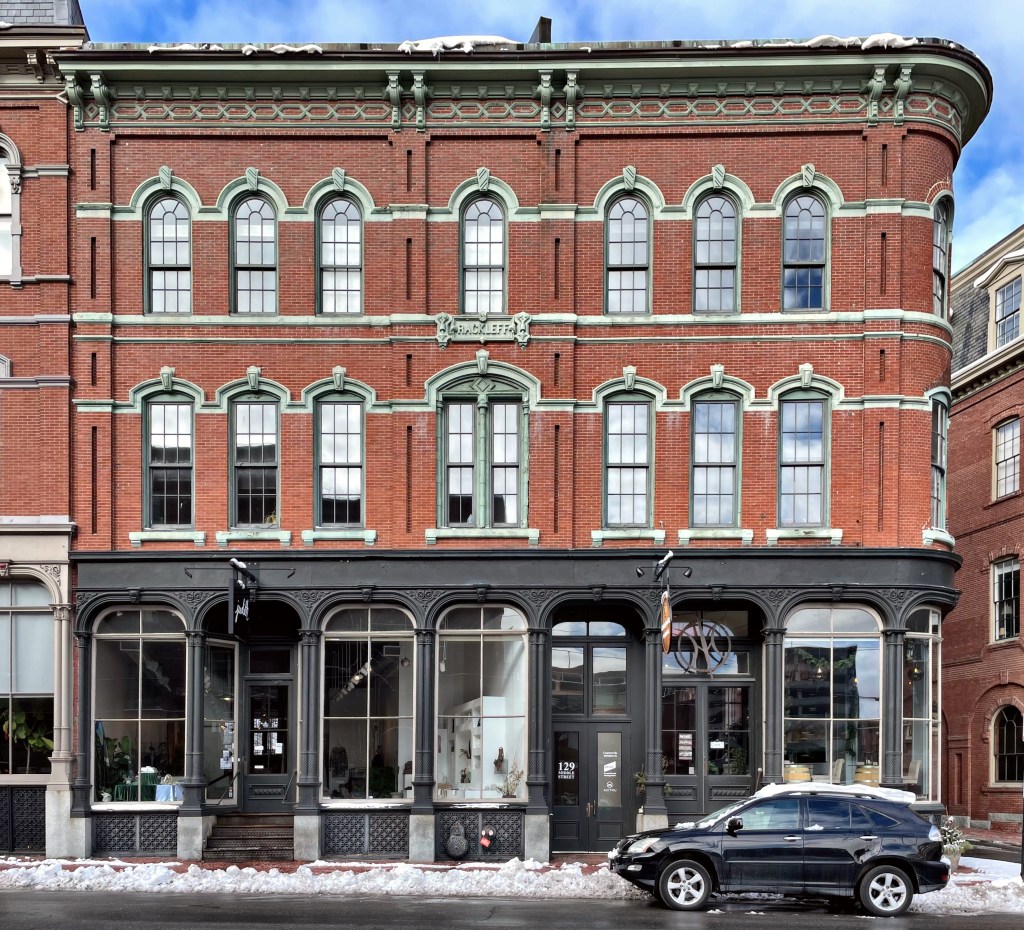
Rackleff Block // 1867

Late 19th century commercial architecture in downtowns all across New England always transport me to the past because they evoke the days of carriages in the streets and the hustle and bustle of post Civil War American cities. After Portland’s Great Fire of 1866, many standing or damaged wooden buildings were replaced with fireproof construction in the event of another conflagration. Five years before the Great Chicago Fire, this was the greatest fire yet seen in an American city. It started in a boat house then spread across the city. Amazingly, only two people died in the fire, but ten thousand people were made homeless and 1,800 buildings were burned to the ground. This is one of the buildings constructed in the rebirth of the downtown/waterfront of Portland. The Rackleff Block was built in 1867 from plans by architect George M. Harding, who designed the building with details reading Italianate and Victorian Gothic. The building retains its original cast iron storefronts and ornate cornice with brackets.