Frederick Sears Cottage // 1851

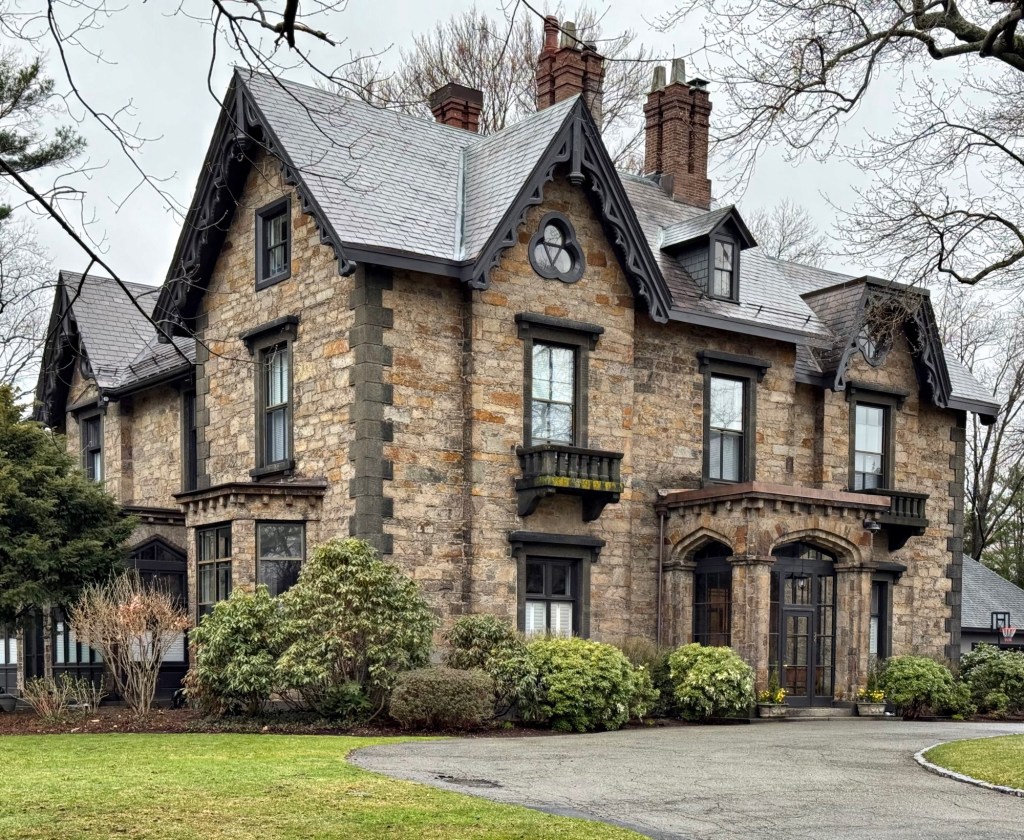
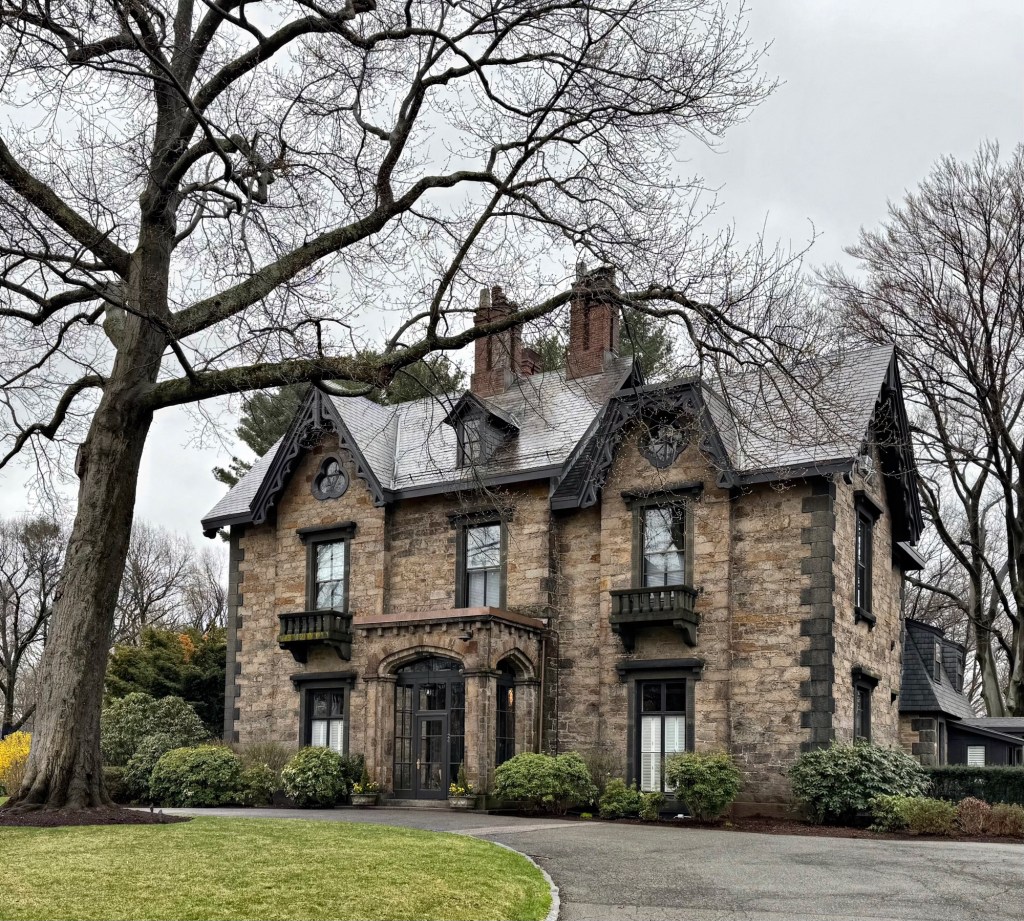
The Frederick Sears Cottage in the Cottage Farm neighborhood of Brookline, Massachusetts, is significant as one of the major surviving examples of Gothic Revival domestic architecture in the Boston area. In 1849, wealthy Bostonian, David Sears (1787-1871) laid out parks and squares in the Cottage Farm neighborhood, and built houses for himself and his children. His own house, erected in 1843, was the oldest, soon followed by houses for his four daughters, Ellen d’Hautville, Harriet Crowninshield, Anna Amory, Grace Rives, and son, Frederick. The Frederick Sears Cottage is the only surviving Sears residence in the Cottage Farm neighborhood. Frederick Sears‘ cottage was built in 1851, though he did not occupy the house long, as just three years after he and his wife married in 1852 to move into this home, Marian died. The house was inherited by Frederick Sears Jr. , and was acquired by Boston University in 1960, who began to expand into this neighborhood. They maintain the significant property very well. The Sears Cottage is an excellent example of the Gothic Revival style in stone with scalloped vergeboards, quatrefoil motifs, corner quoins, and projecting entry. The house is constructed of Roxbury Puddingstone and is said to have been designed by George Minot Dexter.
Dexter-Hall Cottage // 1851

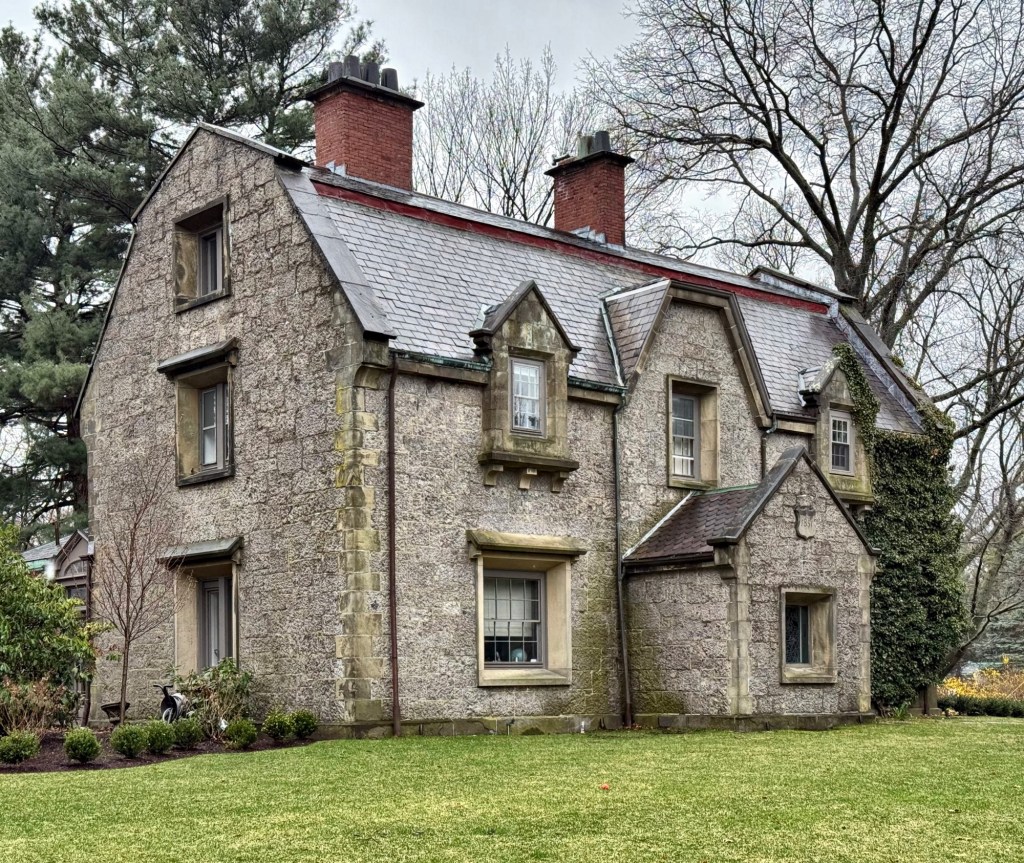
Built across the street from the Amos A. Lawrence House in the Cottage Farm neighborhood in Brookline, the Dexter-Hall Cottage is an early Gothic Revival style residence built in the first period of the district’s history. Architect, George Minot Dexter was gifted a desirable house lot in the neighborhood from Amos Lawrence as a reward for his designing his own property, and in turn, designed this cottage in 1851 in the the same mode as the Lawrence House. The stone cottage has a three bay façade with enclosed center entry. On the second floor are wall dormers as well as a central jerkinhead dormer with a gambrel slate roof. The property was later owned by George M. Dexter’s daughter, Emily, and her husband, Thomas Bartlett Hall. The house remained in the Hall family through at least the 1920s.

Amos A. Lawrence House // 1851

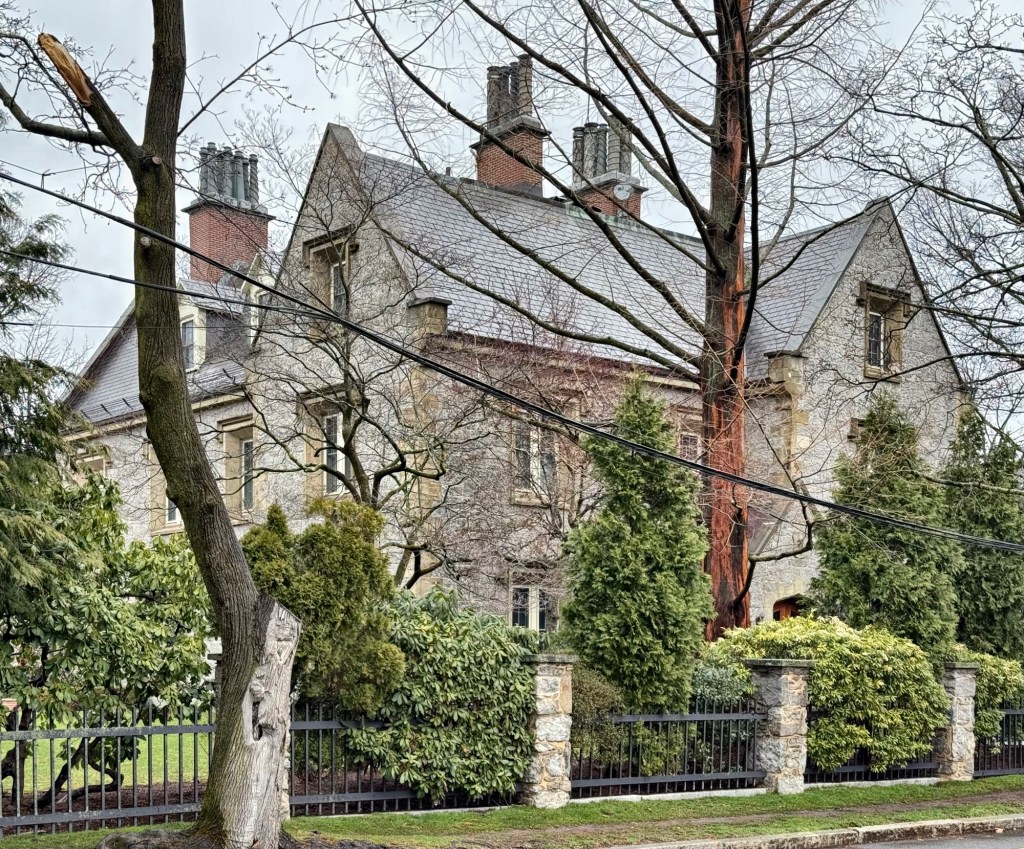
Cottage Farm area of Brookline is one of the finest neighborhoods in all of New England. The area was developed thanks to Amos A. Lawrence (1814-1886), a wealthy second-generation Bostonian, who provided much of the capital and enthusiasm for the growth of the cotton industry in New England prior to the Civil War. Lawrence’s involvement in the industry aided the development of the Massachusetts mill towns of Lowell and Lawrence, whom the city was named after. In 1851, Amos Lawrence purchased 200 acres of land from David Sears, who himself developed the equally beautiful Longwood neighborhood of Brookline on the other side of Beacon Street. Amos began to subdivide the land, working with the architect George Minot Dexter and landscape architect and surveyor, Alexander Wadsworth, who designed Mount Auburn Cemetery in Cambridge, to create an early picturesque residential suburb. With houses designed in the newly popular Gothic Revival and Mansard styles and several small parks, the area became known as Cottage Farm. This stone house was designed by George M. Dexter and was the country residence of Amos Lawrence, who had other homes built nearby and rented out to wealthy friends and family. By 1888, the property was owned by Amos’ daughter, Hettie S. Cunningham, who later, subdivided the estate into five house lots, and moved this stone house to the corner of Ivy and Carleton streets. Expressive of English architectural traditions over the more ornate Gothic Revival popularized by Andrew Jackson Downing, the Lawrence House is one of the finest residences in the Boston area. Built of granite with limestone trim and set behind landscaping and a perimeter fence, the mansion is surprisingly hard to get decent photos of, but it is a stunner. Today, the house is owned by Boston University and is known as Sloane House.