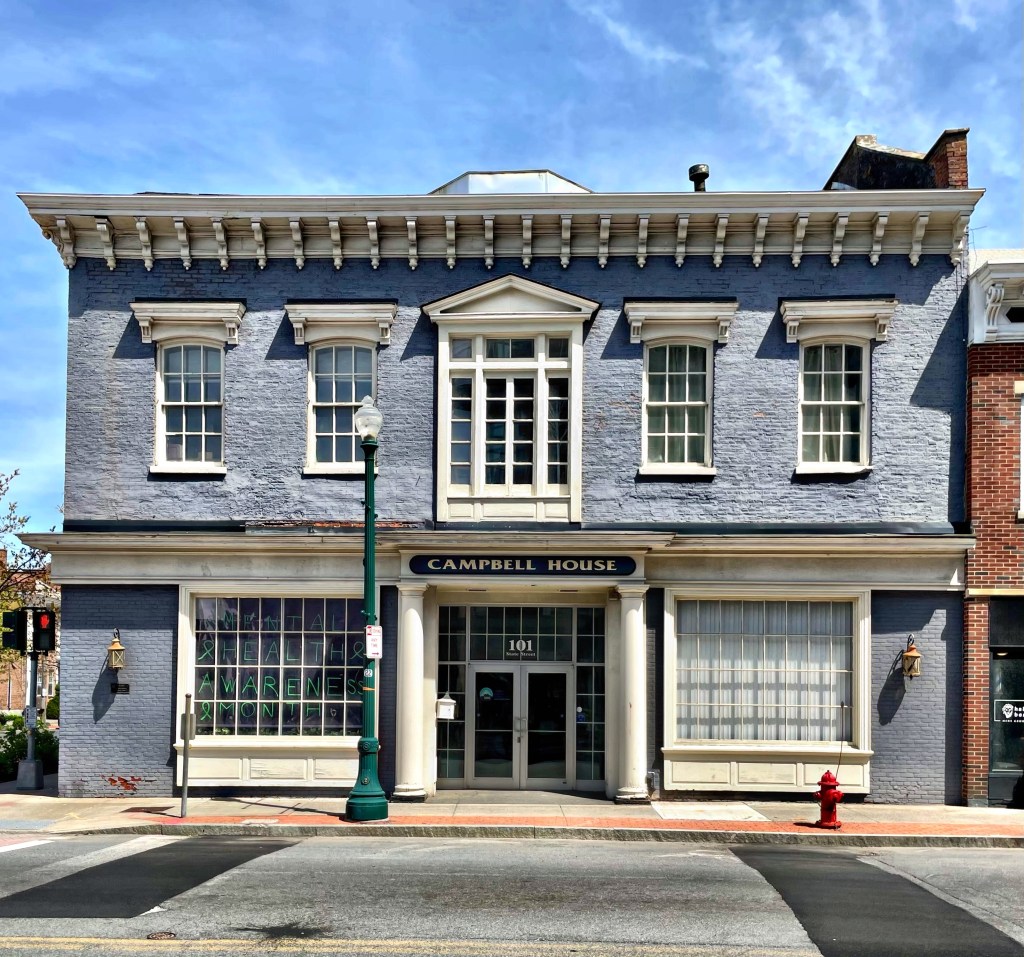
Daniel Campbell House // 1762

Daniel Campbell (1730-1802) emigrated to Schenectady, New York from Ireland, in 1754 at just 24. When he arrived to New York, he became involved in the fur trade, buying furs of animals from native people in the undeveloped lands of upstate, and selling the furs back to Europe. He began to purchase valuable land in the river town of Schenectady and nearby Albany, solidifying his position in those cities. In 1760, he married Engeltie Bradt, daughter of the Schenectady branch of a prominent New-Netherland era family. Soon after his marriage, he hired architect Samuel Fuller to design a spacious new Georgian mansion. The couple split their time between Schenectady and Albany until Daniel’s death in 1802. His widow resided at this home until her death ten years later. As State Street (where this mansion sits) turned more industrial, this home was modified with storefronts and later alterations in the mid 19th century.

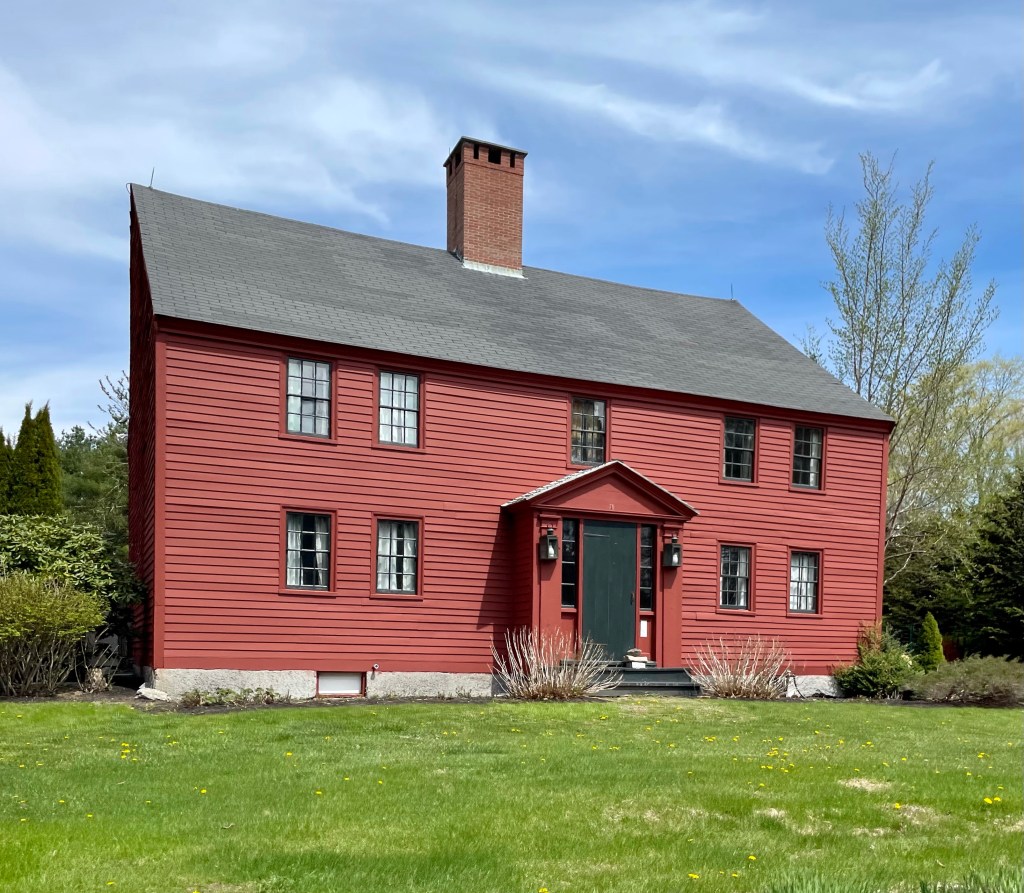
Elijah Locke House // 1739

John Locke (1627-1696) settled in New Hampshire about 1640, arriving from London. He was a farmer and carpenter, and reportedly built the first church in New Hampshire. He was also a Captain in the local militia, who was constantly at odds with the people who’s land they were usurping. While working the fields at his homestead in Rye, he was killed by a native person, likely as a retaliatory attach. The attacker was soon after shot by his son, who was helping his father at the time. This Georgian home was built by John’s grandson Elijah in 1739 on family land; the date is found incised on one of the original roof beams inside.

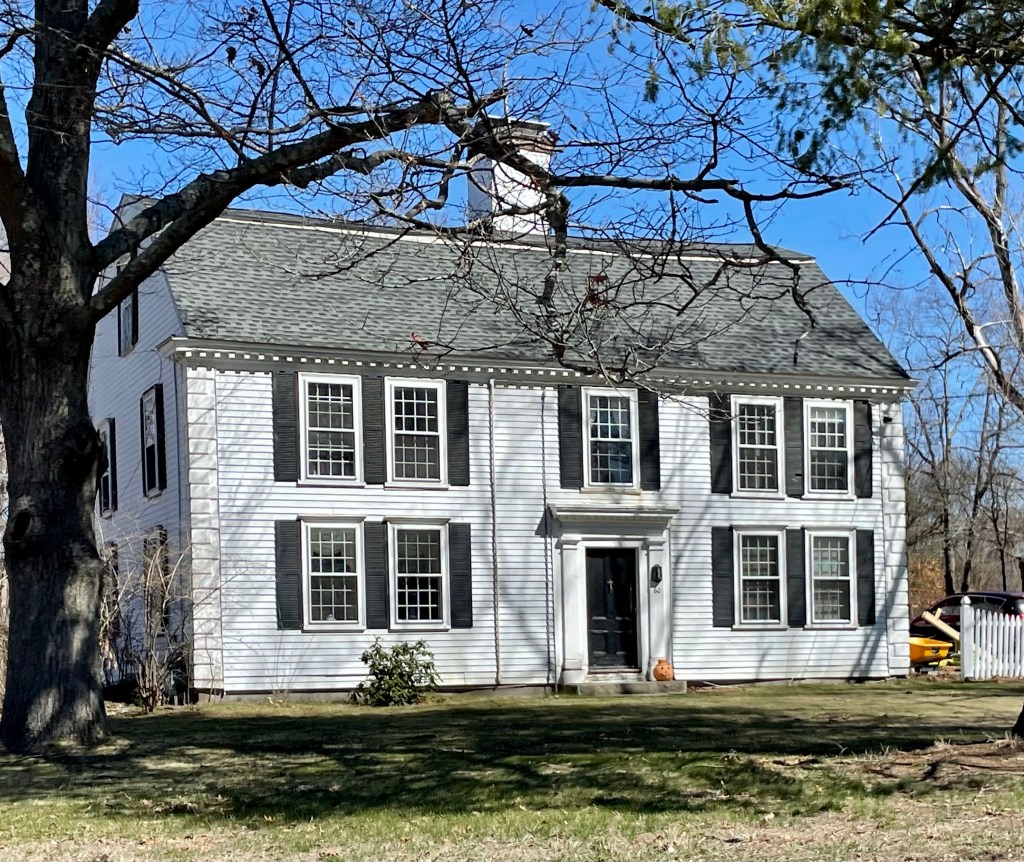
Rev. Sampson Spaulding House // 1737

Sampson Spaulding (1711-1796) studied at Harvard University to become a minister. At the age of just 23, he was called to be the first minister at the new First Congregational Church in 1736. To entice the young minister to the rural new town of Tewksbury, this Georgian mansion was constructed, probably with help from his new congregation. He married Mehetable Hunt, a local woman, and they had six children. Rev. Spaulding was
stricken with paralysis in 1791 in the middle of a church service, and he died five years later. He became one of the first burials in the new cemetery in town, now known as the Tewksbury Cemetery. The gambrel-roofed Georgian mansion stands today as one of the oldest homes in Tewksbury.

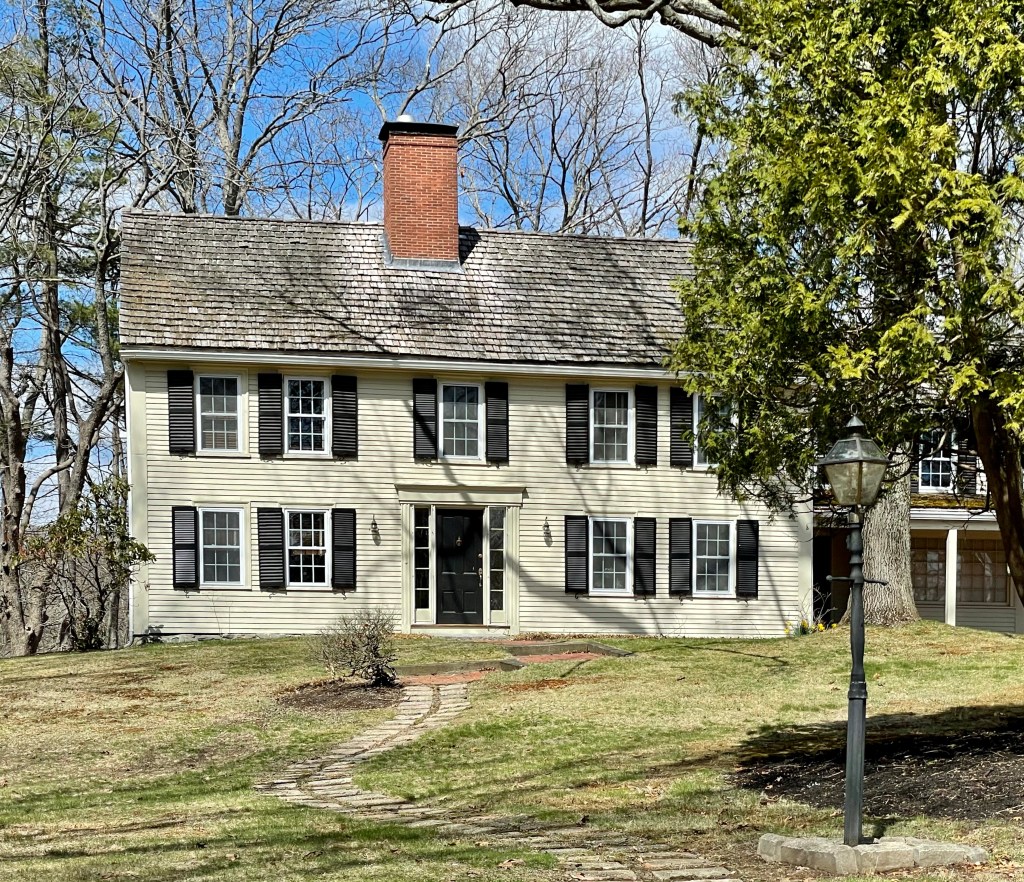
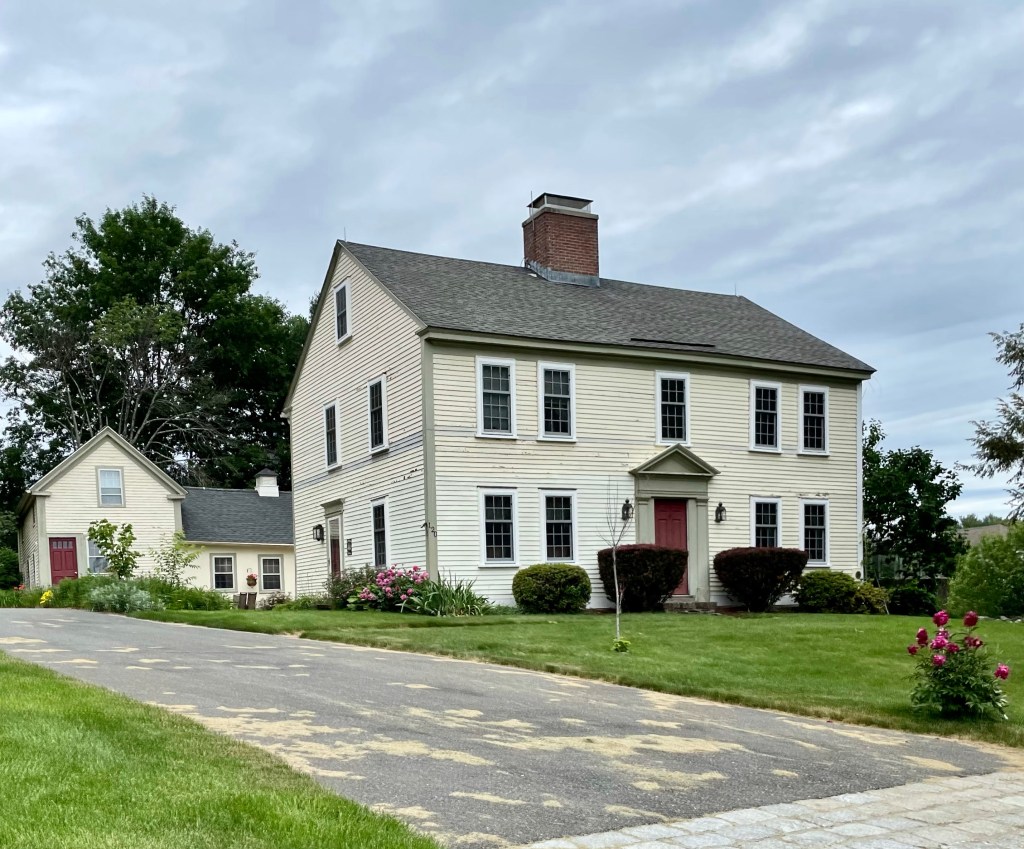
Murdock-Wiswall House // c.1718

Another of Oak Hill Village’s pre-Revolution homes is this stunner! This home was built some years before 1718 and was eventually occupied by Robert Murdock (1663-1754) and wife Hannah Stedman. Murdock emigrated from Scotland to Plymouth, MA in 1688 with his brother, later settling in Roxbury. In 1703, Robert bought a house and 120-acres of land here, and worked as a housewright. Like the King House (last post), the house was likely rebuilt or modified substantially at this time. Robert also served as a selectman, Constable, Surveyor of Highways, and Assessor in town until his death; and his son, Robert Murdock Jr., took over the property. By the mid-18th century, the estate was purchased by Jeremiah Wiswall (1725-1807). Wiswall served as Captain of the militia at the battle at Concord and Dorchester Heights during the Revolution and held a number of positions in the community including Overseer of the Poor, Constable, Selectman and as a hogreeve (person charted with the prevention or appraising of damages by stray swine). He was very involved in the events leading up to the Revolution including the committee on the tea embargo and drilled with the militia. He also lent money to the town to hire soldiers and owned a house designated as a place to receive smallpox inoculations in 1777, though it is unclear if it was this house he used. The house was eventually slated for demolition in the 1960s, but was saved by Dr. Roy Carlson, President of nearby Mount Ida College (now owned by UMass. For $1, he purchased the home from a developer and paid for it to be moved from its original location at the corner of Brookline and Dedham streets a ¼ mile southwest to its current location, on Carlson Ave, and it served as the President’s House.

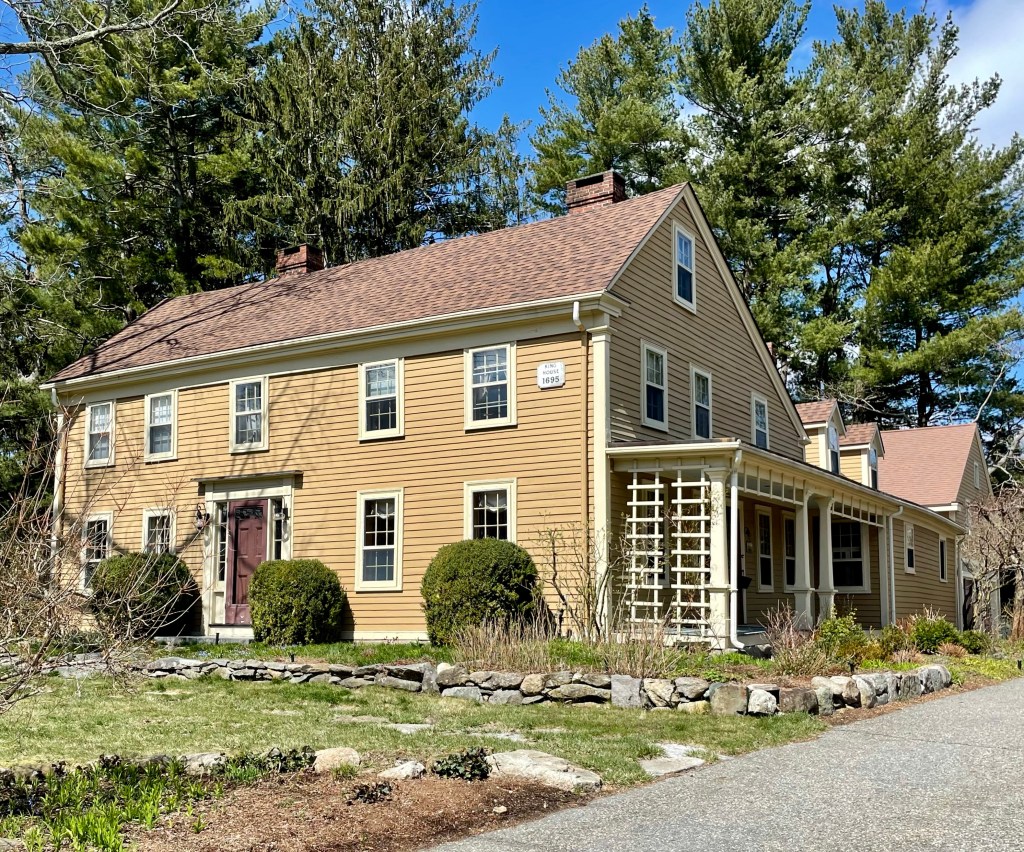
Dike-King House // c.1740

Located in the Oak Hill Village of Newton, the Dike-King House remains as one of a few pre-Revolution houses, but the history is a little murky from what I found. Oak Hill was the most remote village of Newton historically and has maintained much of its open space to this day, as it did not see the suburban development following the streetcar in other villages in town connecting to nearby Boston. This house was apparently built by Jonathan Dike (1673-1751), a cooper, who lived here with his second wife Experience French (yes that was her name). The home he built was likely a much smaller dwelling and was added onto as the family grew. Jonathan died in 1751 and the home went to his eldest living son and later sold to Noah King in 1796. The house plaque on the house gives a date of 1795 as King purchased a house on the lot, but it was likely much older than one year old. Noah King was a housewright, deacon, and son of Dr. John King a prominent civic leader in the town. With his expertise as a housewright, he likely rebuilt much of the house into what we see today. Starting in 1796 through 1923 the property was run as a farm by members of the King family, but land was sold off around the Great Depression for much needed funds. Due to the asymmetry of the house, it is likely that it started as a half-house with just three bays with the door at the left-most bay, with the saltbox roof added around that time.

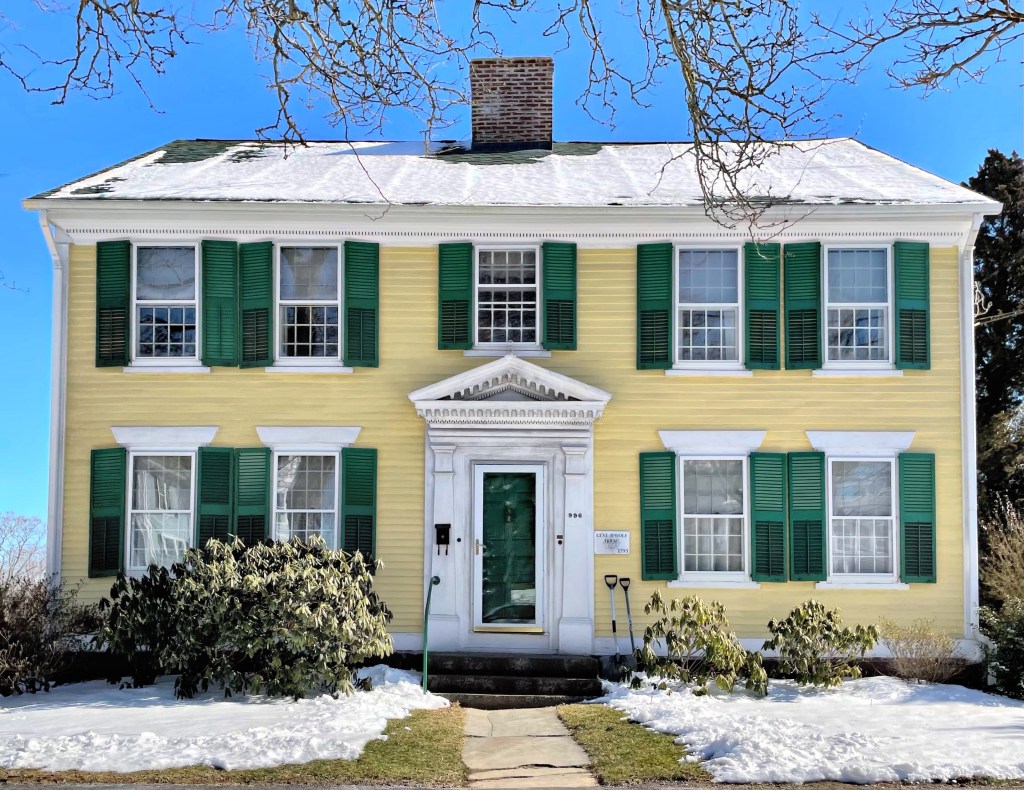
Reynolds-DeWolf House // c.1760

New England is lucky to have so many examples of pre-Revolution Georgian homes to gawk at, and this home in Bristol is one of them. The home was likely constructed by Benjamin Reynolds, a cobbler (shoemaker) for his family. The home was purchased by Benjamin and Abigail Bosworth sometime before the Revolutionary War, and Benjamin served with the Continental Army, at the rank of Major. In 1786, Mark Antony DeWolf the patriarch of the infamous DeWolf Family (who made their fortunes on the backs of the enslaved) returned to Bristol after it was burned by the British, and purchased this home where he lived until his death in 1793. At that time, one of Mark Antony DeWolf’s many children, Levi, moved into the home. Levi DeWolf (1766-1848) was a Quaker, who was an avid reader. While his involvement in the slave trade was a shadow of that of his siblings, he was complicit and travelled to Africa at least three times on behalf of his brother James. After the trips, James offered to outfit a vessel for him to continue the trade, but Levi’s conscience likely caused him to decline. In the late 1790s, Levi had the home updated, with a new, elaborate pedimented entrance with a modillion and dentil cornice.

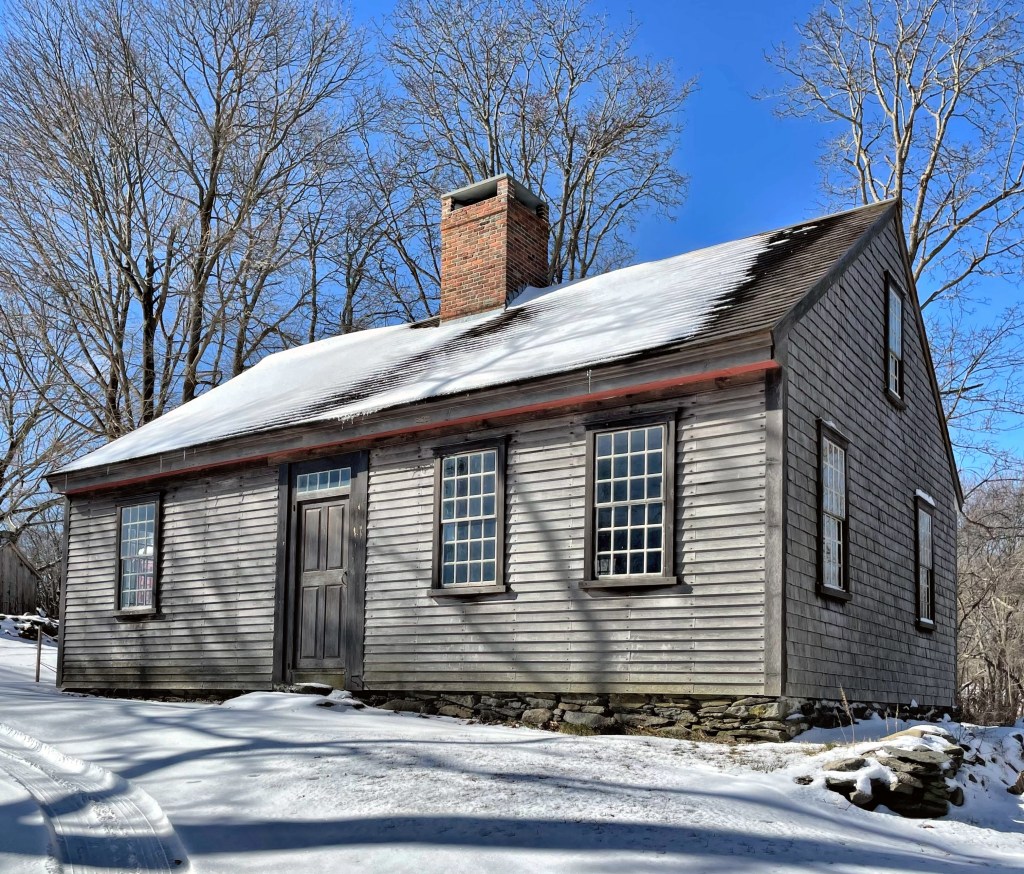
Coggeshall Farm // c.1750

Located on the Poppasquash Peninsula, in my favorite Rhode Island town of Bristol, the Coggeshall Farmhouse showcases the historic rural farming character of the town, which saw much development by the 19th century. In 1723, Samuel Viall (1667-1749 purchased farmland from Nathaniel Byfield, who had acquired most of the north part of Poppasquash as one of the original “founders” of Bristol (though the Wampanoag people had been already living here for centuries). Viall or a descendent likely had this small Georgian farmhouse built on the land, along with outbuildings to farm the beautiful land here. In the early nineteenth-century Wilbour and Eliza Coggeshall were tenant farmers at the farm. The Coggeshall’s son, Chandler Coggeshall, later became a politician and helped to found the Rhode Island College of Agriculture and Mechanic Arts in 1888, which became known as the University of Rhode Island. The farm eventually was acquired by industrialist Samuel P. Colt, nephew of firearms manufacturer Samuel Colt, who created a massive estate on the land. In 1965 the State of Rhode Island purchased the Colt Estate for use as a state park, and the Bristol Historical Society petitioned the state for permission to preserve the old Coggeshall farm house on the property as a museum. Coggeshall Farm Museum was established in 1973 to educate modern Americans about eighteenth century New England farm life.

Lovell’s Tavern // 1744

This gambreled Georgian cape house was built around 1744 and first occupied as a tavern. Local tradition holds that in this house, the town officials held meetings and managed governmental duties. After the Revolution, a new town hall was built and the tavern reverted back to its former use. It was occupied by Samuel and Olive Lovell until Olive’s death in the 1840s, she possibly ran the tavern alone for the thirty years she outlived her husband. The home is an excellent example of a pre-Revolutionary Georgian home, with a cedar shingle roof to top it all off!

Loring House // c.1658

Likely the oldest home in the town of Hull, the Loring House has ties to the significant Loring Family, who’s descendants include individuals on both sides of the American Revolution, the US Civil War, and today live across North America, Spain, England and Australia. This house was built on land purchased by Thomas Loring (1600-1661) who came to Hingham in 1634 from England. He built a larger estate in town until a fire destroyed all his belongings, and he chose not to rebuild, but acquired property in the adjoining plantation of Hull. In Hull, he served as constable (court officer and tax collector), and raised his family there. His eldest son, John, married in 1657 and likely had this home built on his father’s vast land holdings within the year. John worked as a house-wright and likely built the home himself. He had two wives (his first wife Mary died at 39), and 15 children at the home, though some likely did not live past infancy as was common in early colonial days. John died in 1714, but left a lasting legacy in New England and beyond. Notably, his grandson was Joshua Loring, a British Loyalist who built the famous Loring-Greenough House in Boston. The old Loring House in Hull is very-well maintained inside and out and serves as a time-capsule of days past.

Mission House // c.1739

The Mission House, erected by the Reverend John Sergeant in 1739 on Prospect Hill in Stockbridge, Massachusetts, is an excellent and little-altered example of Georgian architecture as constructed on the New
England frontier. The home is a lasting remnant of early missionary efforts toward the local Mohican tribe. Reverend John Sergeant, the first missionary to the Housatonic Indians, moved to Stockbridge and preached to the native people here and at the Congregational Church. Sergeant and his wife Abigail moved to town, but she had made it clear that she wished to live on the hill, away from the village and the native people. Sergeant then built this home, a spacious and distinguished house for its frontier location. Though covered in part by a grant from the General Court, the cost of constructing such a house must have been a severe strain on Sergeant’s slender financial resources, as his salary at that time was 100 pounds per year. The home remained in the family until the 19th century. In 1928, long unoccupied and badly in need of repair, the house was purchased by Miss Mabel Choate, daughter of noted lawyer and former Ambassador to Great Britain, Joseph H. Choate. The house was taken down piece by piece, moved and reconstructed, on Main Street, in its current location. The Mission House was furnished with pieces appropriate to Sergeant’s economic status and his wife’s taste, many of them dating from the 1750’s or earlier. Since 1948, the home has been owned by the Trustees of Reservations.