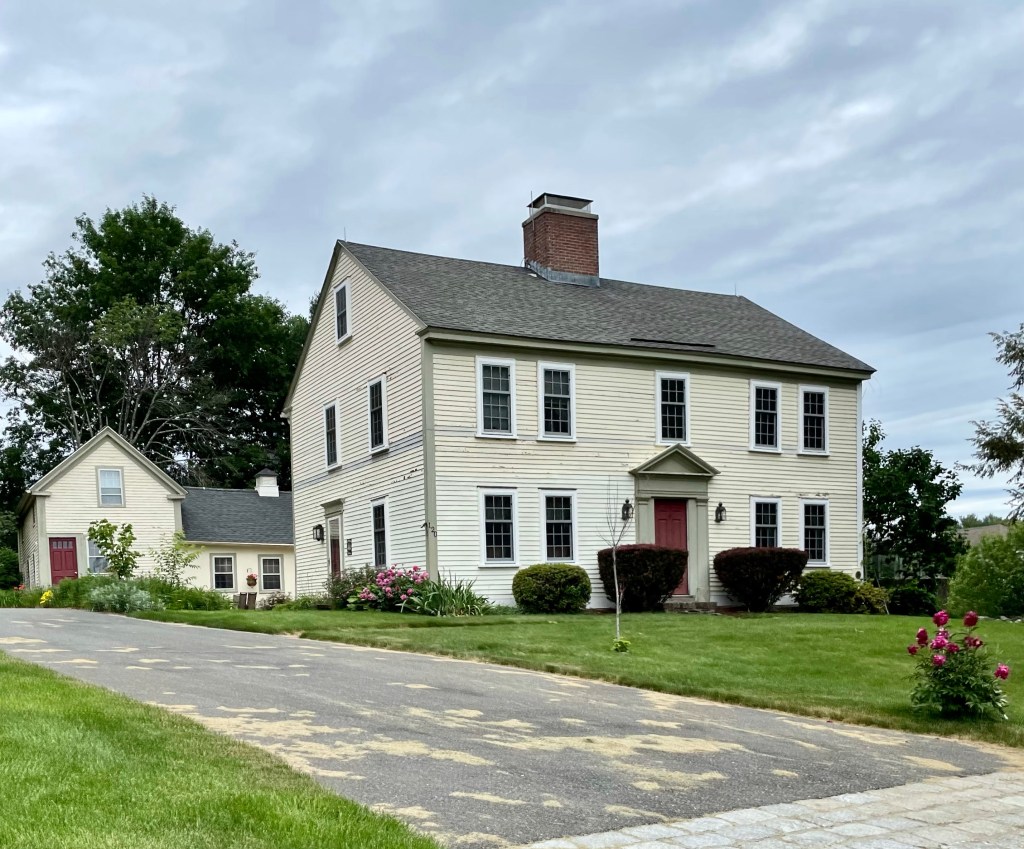
Simeon Wetherbee Farmhouse // c.1800

This late-Georgian farmhouse in Boxborough, Mass showcases how architectural integrity and historical context matter in historic preservation. Architectural integrity means the degree to which a building’s original design and physical composition is evident and intact. Historic contexts are the patterns, themes, or trends in history by which a specific property or site is understood and its meaning (or significance) within history is made clear. In this example, the old farmhouse retains much of its architectural integrity as it physically appears much as it would have upon its time of construction. However, the former farmland was sold off and developed as a residential subdivision, which completely obscures the historical context of the building in relation to its original use. The Simeon Wetherbee Farm remained in the Wetherbee family until the 1965, when the land was likely soon after subdivided and sold off for housing lots. A majority of the homes built surrounding this old farmhouse are classified as “Neo-Traditional” a modern take on Colonial architecture, but with cheaper materials and odd proportions. They are not a favorite among architects and historians.
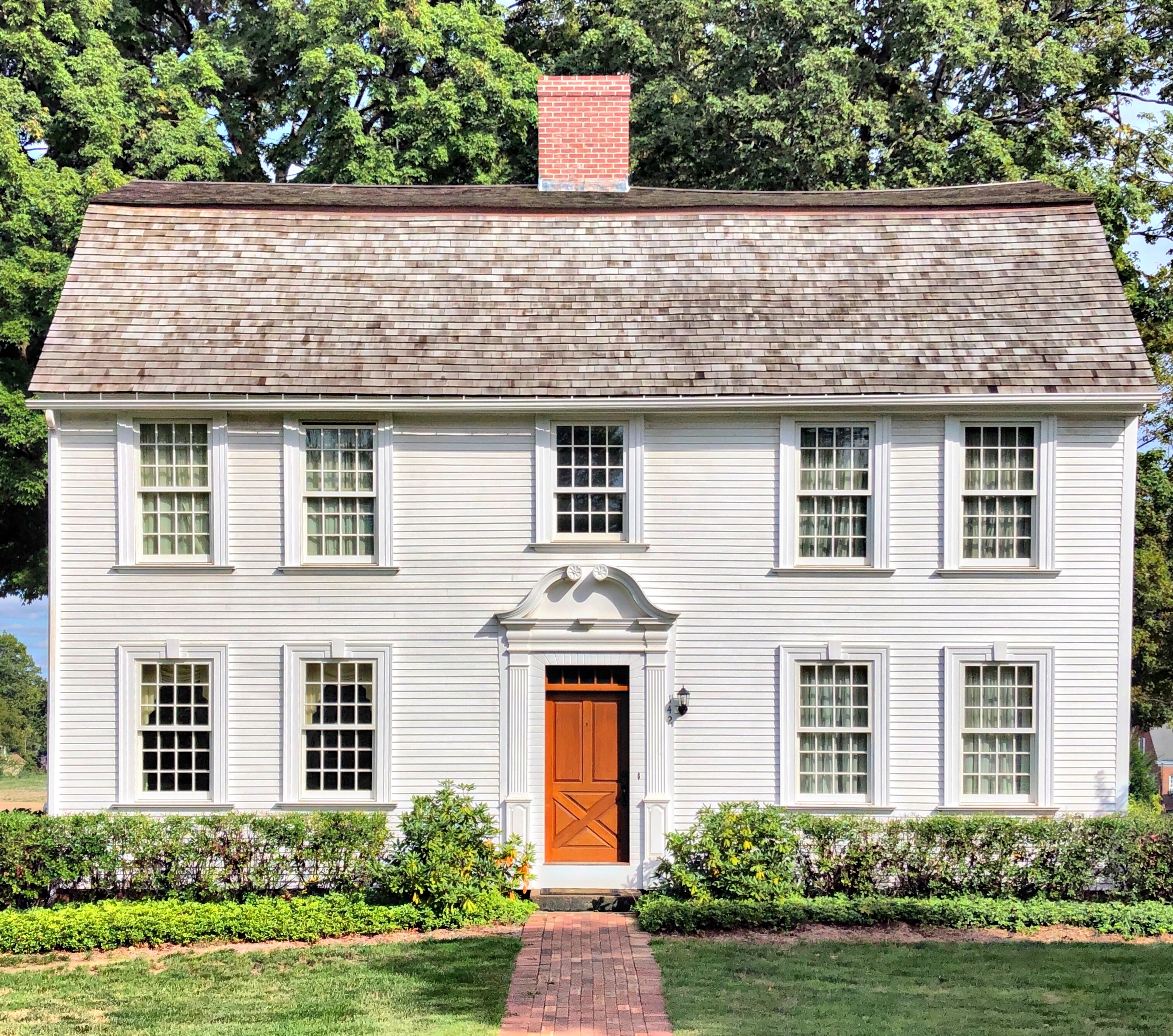
Hubbell-Lacey Homestead // c.1750

Remaining of the oldest extant homes in Brookfield, this Georgian home has stood for almost 275 years, and looks much like it did when first built! The home was constructed around 1750 for Peter Hubbell, one of the earliest colonial settlers of the Parish of Newbury, renamed Brookfield in 1778, when the town was officially incorporated. The Hubbell Homestead is an excellent vernacular Georgian home with a central chimney and stunning board-and-batten front door with small transom above. Peter Hubbell moved to newly established Iron Works Village along the Still River in the Newbury Parish, likely for business interests. The property sold numerous times until it was sold to Dr. Noah Lacey, a town doctor who later served as a State Representative and as a member of the Connecticut Constitutional Convention in 1818. By the 1930s, the home was owned by an Alice Bennett, and that year, she was said to have had a friend living at the home, a Miss Edna Ferber. In 1930, Edna Ferber wrote her novel “American Beauty” which took place in the fictional town of Oakes Field, which has too many resemblances to Brookfield to be coincidental. Hopefully the rumors are true about her writing this book (which is a great read even today) in this home!

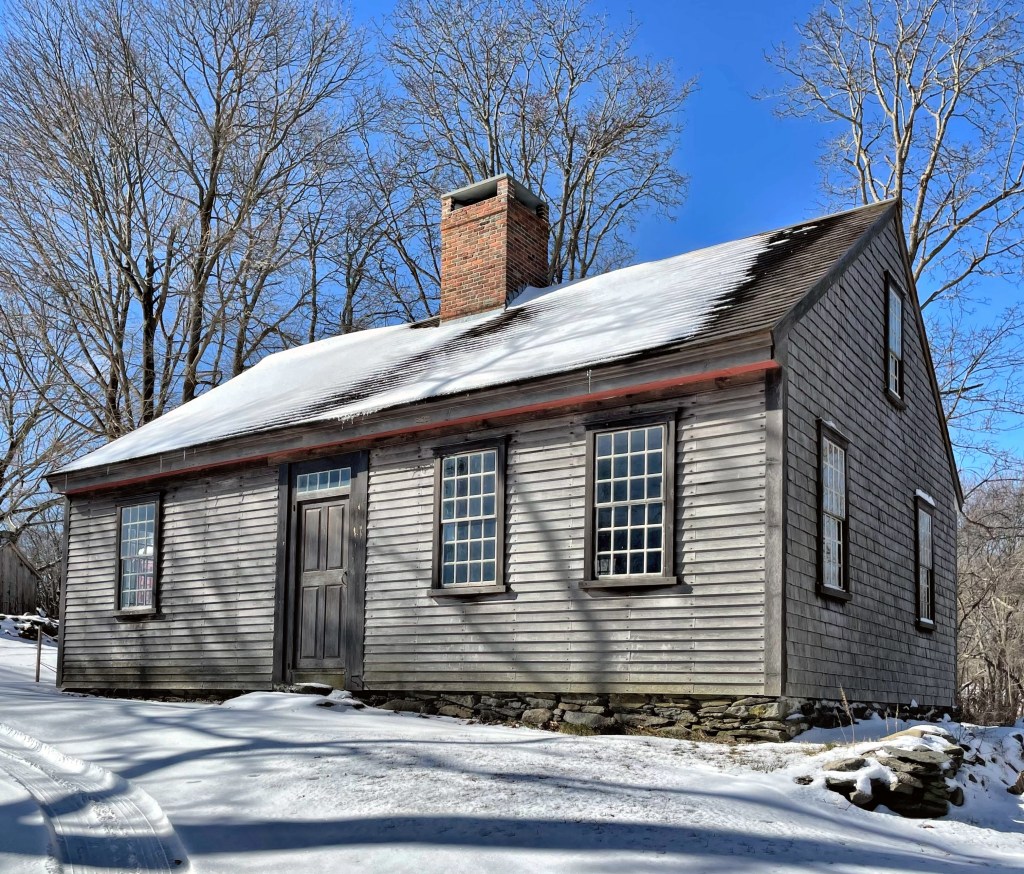
Coggeshall Farm // c.1750

Located on the Poppasquash Peninsula, in my favorite Rhode Island town of Bristol, the Coggeshall Farmhouse showcases the historic rural farming character of the town, which saw much development by the 19th century. In 1723, Samuel Viall (1667-1749 purchased farmland from Nathaniel Byfield, who had acquired most of the north part of Poppasquash as one of the original “founders” of Bristol (though the Wampanoag people had been already living here for centuries). Viall or a descendent likely had this small Georgian farmhouse built on the land, along with outbuildings to farm the beautiful land here. In the early nineteenth-century Wilbour and Eliza Coggeshall were tenant farmers at the farm. The Coggeshall’s son, Chandler Coggeshall, later became a politician and helped to found the Rhode Island College of Agriculture and Mechanic Arts in 1888, which became known as the University of Rhode Island. The farm eventually was acquired by industrialist Samuel P. Colt, nephew of firearms manufacturer Samuel Colt, who created a massive estate on the land. In 1965 the State of Rhode Island purchased the Colt Estate for use as a state park, and the Bristol Historical Society petitioned the state for permission to preserve the old Coggeshall farm house on the property as a museum. Coggeshall Farm Museum was established in 1973 to educate modern Americans about eighteenth century New England farm life.

Gay Manse // 1743

Ebenezer Gay (1718-1796), the third minister of the First Congregational Church of Suffield, was born in 1718 in Dedham, Mass. His father was a substantial farmer, and his uncle was the famous minister, Ebenezer Gay of Hingham. Young Ebenezer graduated from Harvard in 1737, and held his first preaching job three years later. Reverend Gay became a candidate for a pastor in the Suffield Congregation, becoming ordained in 1742. That same year he married his wife, Hannah, and they had this massive home built adjacent to the town’s church. Rev. Gay and his wife had no children, but had adopted a black girl “Sybil” who was baptized as the “child of Ebenezer and Hannah”. There were other black members in the Gay household in later years including Titus Gay. “Old Ti” was born in 1787, and lived nearly his entire early life in Suffield, CT. He was born to a family of slaves also owned by Reverend Ebenezer Gay, making him born into slavery. His mother, Rose Gay, was a princess in Africa, and his father was owned by Major Elihu Kent. Reverend Gay was the pastor of the church until his death in 1796. The home was later occupied by other pastors at the church, and was eventually acquired by Suffield Academy for use as housing. The gambrel roof Georgian mansion features a stunning Connecticut Valley doorway with swan’s neck pediment.

Elihu Kent Jr. House // 1787

In 1775, when news of the Battle of Lexington reached Suffield, Elihu Kent Sr. (1733-1814) at the age of 42 took command of a local militia of 59 men the next day, along with his son Elihu Kent Jr., 18, and his slave Titus Kent, and marched to Springfield, before heading toward Boston. Initially, slaves were discouraged from enlisting in the Continental Army as the Continental Congress was trying to appease the southern states into fighting in the Revolution. England offered freedom to slaves who fought for their side. forcing the Continental Congress to do the same in order to keep a balance. The militia later ended up on Long Island and Kent Jr. was captured by British forces and confined for a long time as a prisoner of war in the old Rhinelander Sugar House in New York. After his return to Suffield, Elihu Kent Jr. had this Georgian home built for his family.

John Coffin House // 1703

This historic Georgian mansion was built in 1703 for John Coffin (1647-1711) who moved to Edgartown by the way of Nantucket and Haverhill, Massachusetts looking for new work. John Coffin opened a blacksmithy
on the waterfront in Edgartown and immediately prospered, building this home after his success. Legend says the home was actually right on the street before the street was widened and after, the front steps and home’s location obscured the view of other buildings on the street. The home was moved back on the lot in its bucolic setting now amongst the hustle and bustle of downtown Edgartown. The home was threatened with demolition almost all of the 20th century due to the commercial nature of its location. Thankfully, it was acquired by the Vineyard Trust in 1946, who preserve it to this day with small businesses located inside.

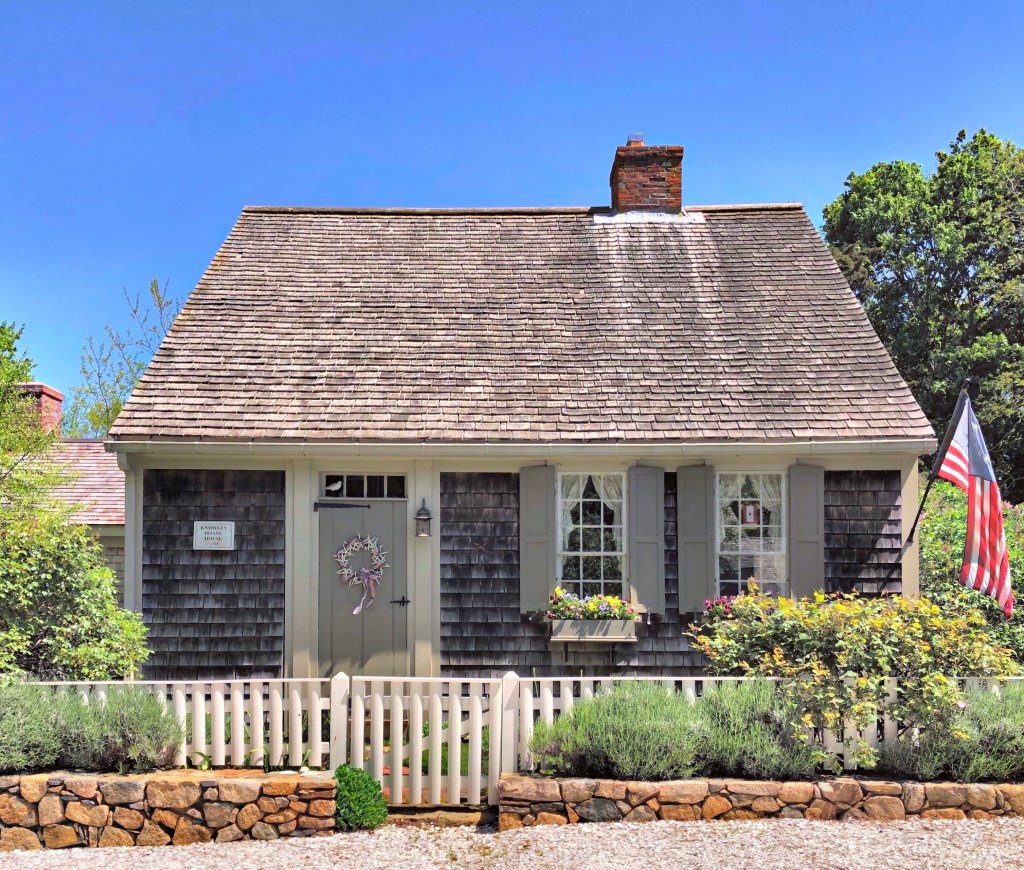
Knowles Doane House // 1765

The gorgeous half-cape Knowles Doane House in Eastham is an early example of a traditional Cape home that are synonymous with the peninsula. The modest house features an off-center entry with a solid wood door with a transom above. Clad with wood shingle siding and roofing, the home screams “Cape Cod”. The large central chimney would have provided warmth inside the home during the harsh winter months. The home was likely built for a member of the Doane Family, whos patriarch, John Doane, arrived to Plymouth Colony by 1632. The family eventually settled in Eastham and participated in fishing, whaling and agriculture. By the early 1800s, the home was occupied by Knowles Doane.