The Breakers – Children’s Cottage // 1878

While the Breakers Mansion in Newport is one of the most opulent buildings in the United States, a tiny cottage on the grounds always gives me feelings of whimsy. Predating the larger mansion by two decades, this cottage was constructed on the grounds of the original Breakers House, owned by Cornelius Vanderbilt, which was destroyed by fire in 1893. The cottage was built as a children’s playhouse around the time the original Breakers mansion was built in 1878. The Boston architectural firm of Peabody and Stearns built the mansion and adjacent cottage for Pierre Lorillard IV, a New York cigar manufacturer and millionaire. The Queen Anne Revival style elements, including the half-timbering and shingles and asymmetry, were in keeping with the style of the original Breakers, and complimented it well. My favorite part of the cottage is the open porch facing the ocean, which has four wooden posts, carved in the shape of figures from Dutch folklore, a sort of caryatid, supporting the roof. The house contains a living room and kitchen separated by a huge red brick chimney, which would be maintained by servants for the children while they play.

The Breakers – Music Room // 1895

You know you’ve “made it” if you have a music room, especially if you have one in your summer mansion in Newport! The Music Room in The Breakers evokes the opulent Parisian interiors of the Second Period and when inside the room, you just feel sensory overload (in the best way possible. The room is located off the Great Room and Morning Room, at the southern end of the house. The Music Room was used for recitals and dances for the Vanderbilt Family and guests. The room displays ornate woodwork and furnishings designed by Richard Van der Boyen and built by J. Allard of Paris. The room looks like it was plucked out of a French building and dropped into the mansion, and that is because it was! The room’s interior was constructed completely in France and then sent to America where it was installed at The Breakers by French craftsmen. My favorite parts of the interior are the bay window at the end and the gilt gold coffered ceiling.

The Breakers – Morning Room // 1895

Possibly my favorite room in The Breakers mansion is the Morning Room, found on the first floor, just off the Great Hall and lower loggia. The Morning Room is executed in a late Renaissance style and faces east to catch the morning sun and provides sweeping views of the Atlantic. It served as a family sitting room at all times of the day. The interior design, including the fixtures, woodworking, and furniture, were designed by French architect Richard Bouwens van der Boijen and designer Jules Allard. The predominant grey, and gold colors of the Morning Room are echoed in its fireplace which is made of Campan marble. On the walls, you will find the most stunning shimmering silver wall panels, depicting ancient Greek goddesses. It was originally believed that these features were silver leaf, but the Newport County Preservation Society investigated further, determining it is actually platinum! The Vanderbilts clearly wanted this room to shimmer with the sunrise, so the use of platinum, which never tarnishes, was a great solution!

The Breakers – Great Hall // 1895

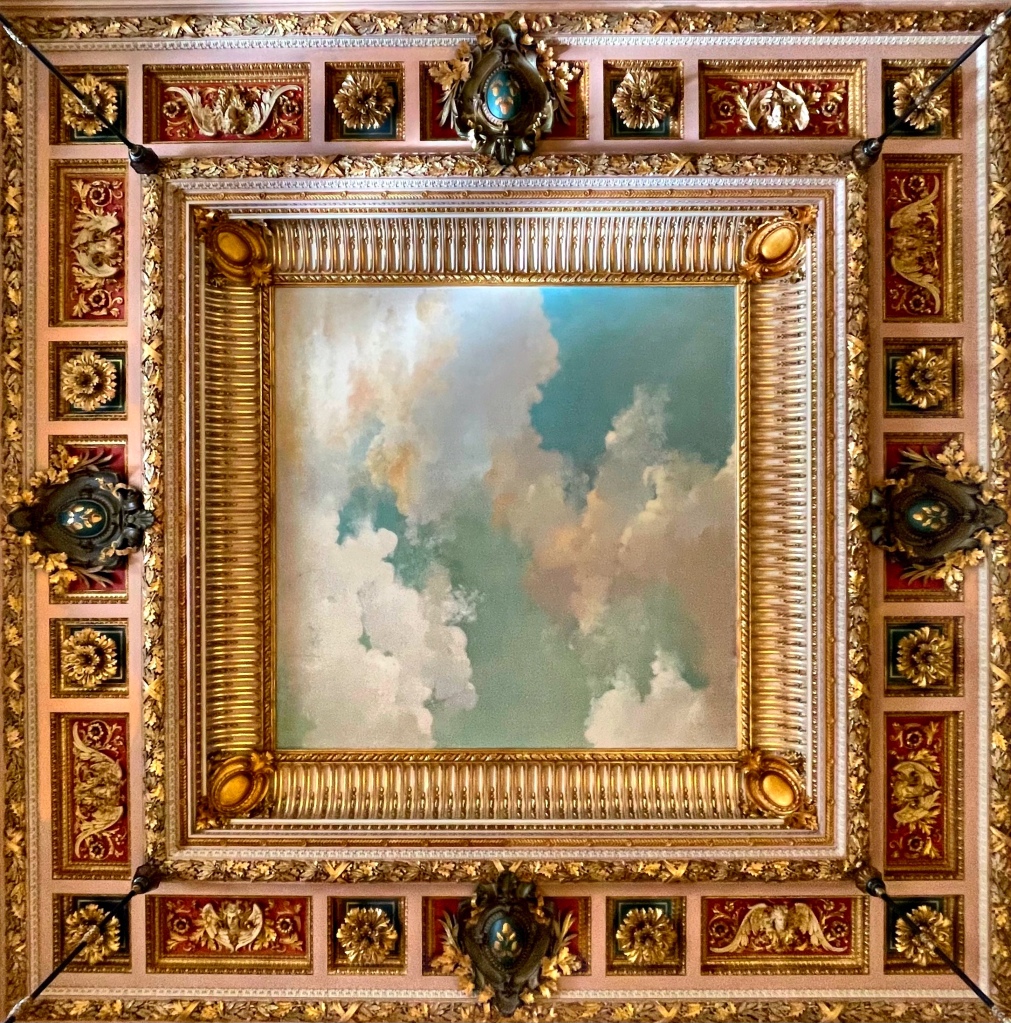
Merry Christmas from The Breakers! This 1895 Gilded Age mansion is the best to explore during December, when the halls are decked and stunning Christmas trees adorn the lavish rooms (learn more about the mansion in my last post) When you walk into The Breakers, you enter the Great Hall. Architect Richard Morris Hunt designed the Great Hall after the open-air courtyards in Italian villas, but enclosed due to the tough New England winters. The palatial space (measuring 50 foot square), even if crowded by tourists trying to get the perfect shot on their smartphones, feels spacious yet somehow welcoming given the art museum-like detailing. The walls are made of carved limestone from Caen on the coast of France and adorned with plaques of rare marbles. Elaborately carved pilasters decorated with acorns and oak leaves support a massive carved and gilt-cornice which surrounds a ceiling painted to depict a windswept sky, further expressing the open-air courtyard feeling envisioned by Hunt, the architect. Four bronze chandeliers dangle from the gilded ceiling, and flood the room with warm light, evoking warm summers in Italy.

The Breakers // 1895

The most opulent of all summer ‘cottages’ in Newport is the iconic Gilded Age mansion, The Breakers. This mansion was completed in 1895 as a summer residence for Cornelius Vanderbilt II. Cornelius’ grandfather, Commodore Cornelius Vanderbilt (1794-1877) established the family fortune in steamships and later in the New York Central Railroad. Cornelius Vanderbilt II became President of the New York Central Railroad system in 1885, and bought a wooden summer house called The Breakers in Newport during that same year. The original Breakers Mansion burned in a fire in 1892 and was rebuilt, but more substantially. Vanderbilt commissioned famed architect Richard Morris Hunt to rebuild it. Vanderbilt insisted that the building be made as fireproof as possible, so the structure of the building used steel trusses and no wooden parts. He even required that the boiler housed in an underground space below the front lawn. The Italian Renaissance-Beaux Arts style mansion was likely the most expensive home constructed in New England at the time at a cost of over $7 Million USD (equivalent to over $150 million today).

Cornelius Vanderbilt died from a cerebral hemorrhage in 1899 at age 55, leaving The Breakers to his wife Alice Gwynne Vanderbilt. She outlived him by 35 years and died at the age of 89 in 1934. She left The Breakers to her youngest daughter Countess Gladys Széchenyi (1886–1965). In 1948, Gladys leased the near-impossible to maintain property to The Preservation Society of Newport County for $1 per year. The Preservation Society bought The Breakers and approximately 90% of its furnishings in 1972 for $365,000 ($2.3 million today) from Countess Sylvia Szapary, Gladys’ daughter, although the agreement granted her life tenancy. Upon her death in 1998, The Society agreed to allow the family to continue to live on the third floor, which is not open to the public. The last-remaining family members residing there were evicted from the third floor due to safety concerns, but others state it is retaliation for the Szápárys’ opposition of the controversial Breakers Welcome Center, the plan for which other members of their family, including Gloria Vanderbilt, also opposed.

“La Rochelle” // 1903

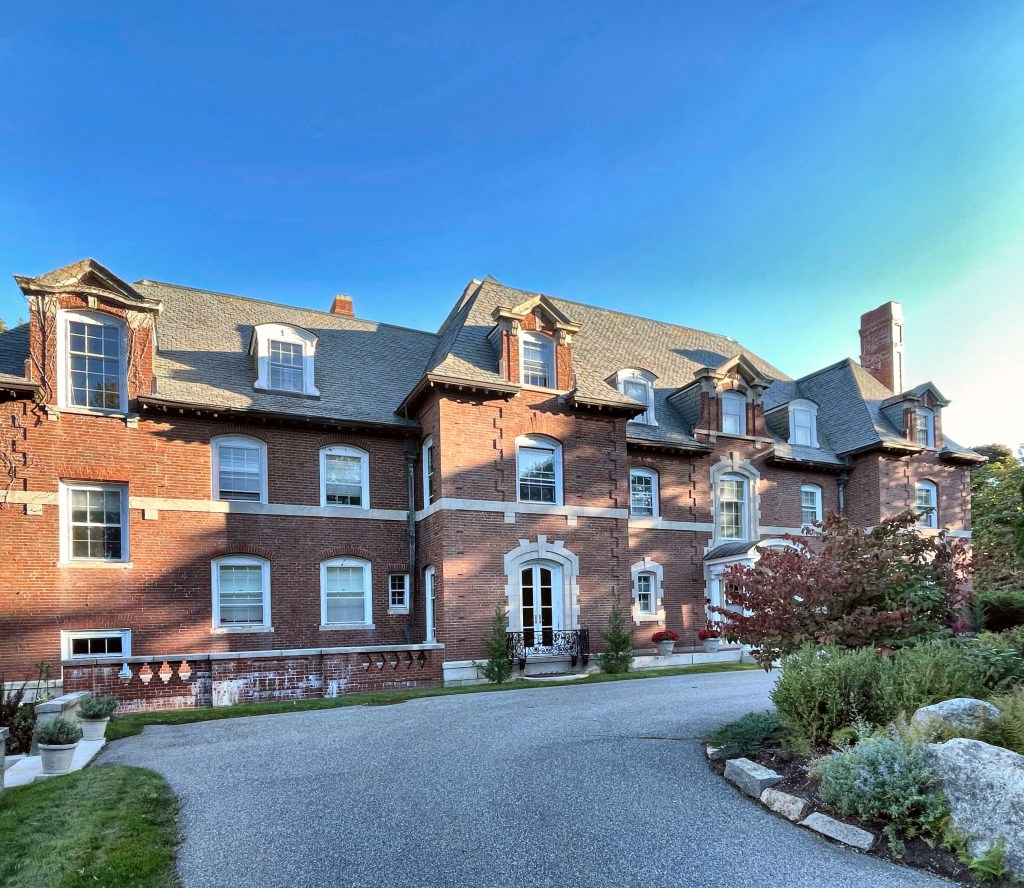
“La Rochelle”, one of the many beautiful summer “cottages” in Bar Harbor, Maine, sits on West Street, a well-preserved stretch of mansions that showcase Gilded Age wealth in the town. The cottage dates back to the 1902-3, when George Sullivan Bowdoin, great-grandson of Alexander Hamilton, and partner at J.P. Morgan, and his wife, Julia Irving Grinnell Bowdoin, a great niece of Washington Irving) commissioned the Boston architectural firm of Andrews, Jacques & Rantoul to design a cottage for them. They hoped to spend their summers away from New York, where they could rub elbows with other wealthy and well-connected summer residents in Bar Harbor. The French Renaissance style cottage, known as La Rochelle, became one of the first Bar Harbor mansions constructed of brick. The forty-one room, 13,000 square foot cottage was built with twelve bedrooms and nine full-bathrooms on two acres of land, which backs up to the Mount Desert Narrows and harbor. The name La Rochelle comes from La Rochelle, a seaport in Nouvelle, Aquitaine, France, where George’s ancestors lived before settling in present-day Maine (later moving to Boston). In the 1940s, Tristram C. Colket of Philadelphia and his wife (the former Ethel Dorrance, daughter of John T. Dorrance, the Campbell’s Soup king) acquired La Rochelle. In 1972, La Rochelle’s owners, the Colket family, donated it to The Maine Seacoast Mission, who then sold it in 2019 to the Bar Harbor Historical Society.

“Red Tower” // 1780 & 1895

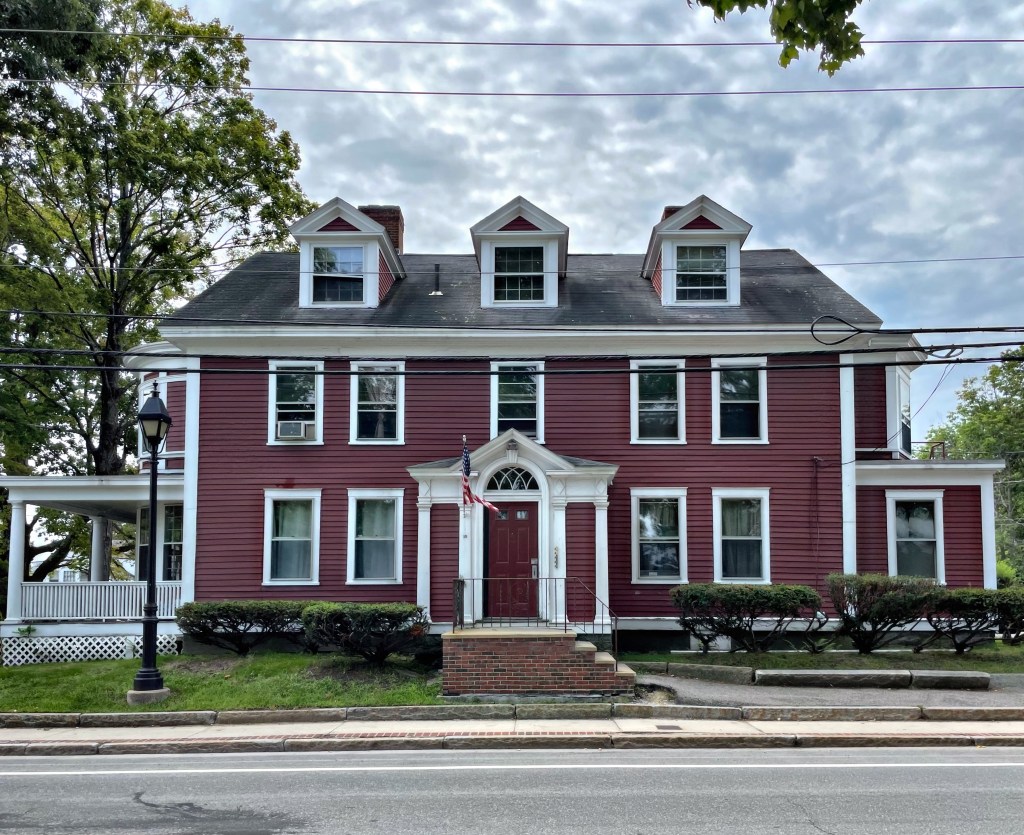
One of the most interesting homes in Durham, NH, sits right on Main Street, and while lacks much of its original grandeur, the house still has a story to tell. When mining engineer, Hamilton Smith met and married Alice Congreve while working in London, the couple envisioned and planned for a sprawling gentleman’s farm in New England to retire to. In 1895, the couple purchased the 1780 Rev. Blydenburgh home on Main Street, a large Federal style mansion. When Alice and Hamilton retired to the Red Tower in 1895, they set about renovating the estate into a jewel of the Gilded Age. They added a three-story tower to the rear of the home, large additions and Colonial Revival alterations, and they purchased large land holdings behind the house for a working farm. On the farmland, they built a carriage house, creamery, and men’s and women’s accessory buildings (a billiards building and tea house, respectively). Hamilton could only enjoy the home for a couple years until his death in 1900. His widow created the family cemetery at the farthest extent of the property and built the stunning Smith Memorial Chapel (last post). In the 1940s, much of the property was sold off and developed for a residential neighborhood for UNH faculty, and the Red Tower mansion was converted to an apartment house for students.

President Grover Cleveland Summer Home // c.1886

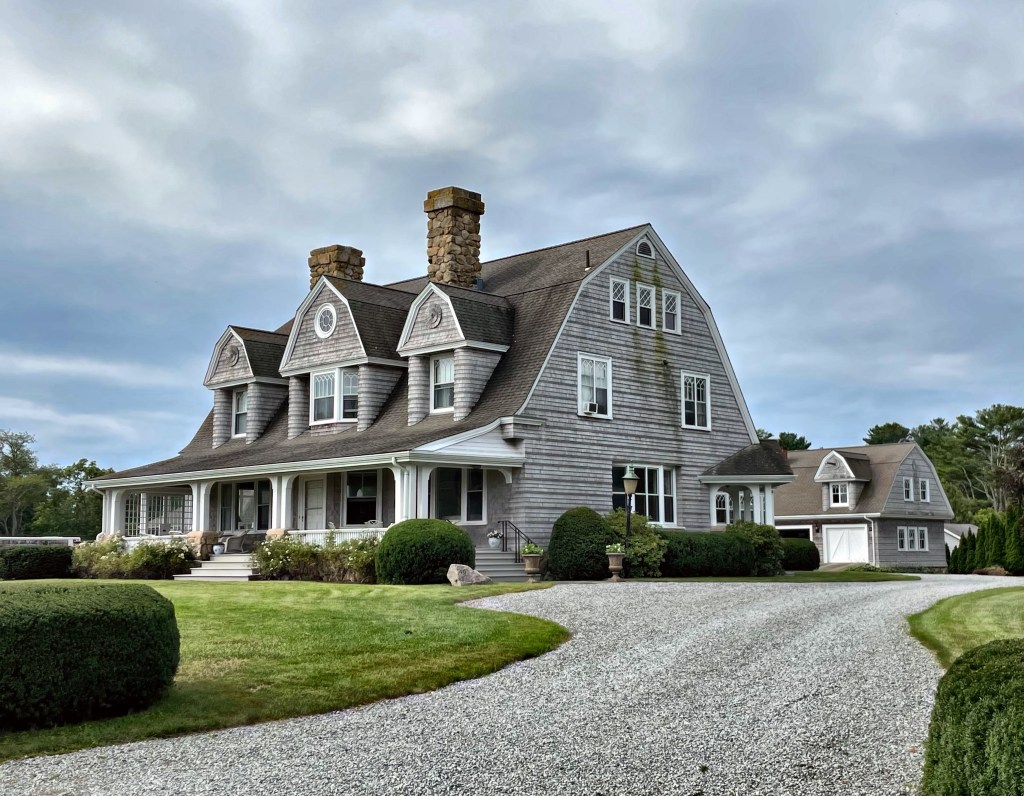
My favorite home in Marion, Massachusetts is this summer cottage on Water Street, overlooking Sippican Harbor. The home is said to have been built from a c.1840s house and enlarged by Reed as a summer home in the fashionable Shingle style. H. R. Reed, an agent for the Revere Sugar Refinery in Boston was well-connected in town and hosted President Grover Cleveland with Rev. Percy Browne ( a summer resident) at his cottage during the summer months. Evidently, Reed added the rubblestone elements, modified the porch, added a tower on the south elevation, the massive dormers at the roof, and is responsible for the exquisite Colonial Revival-style interior, from architect James Templeton Kelley. The home is arguably best known as the summer White House of Grover Cleveland, the only U.S. president to marry in the White House and the only two-time president to serve non consecutively – from 1885-89 and from 1893-97. The Cleveland’ Family summered in Marion between their time in the White House. In 1891, the President hoped to purchase the home, but could not settle upon a reasonable price, so he bought Grey Gables, a summer cottage in nearby Buzzards Bay (no longer extant).

Wheatleigh // 1893

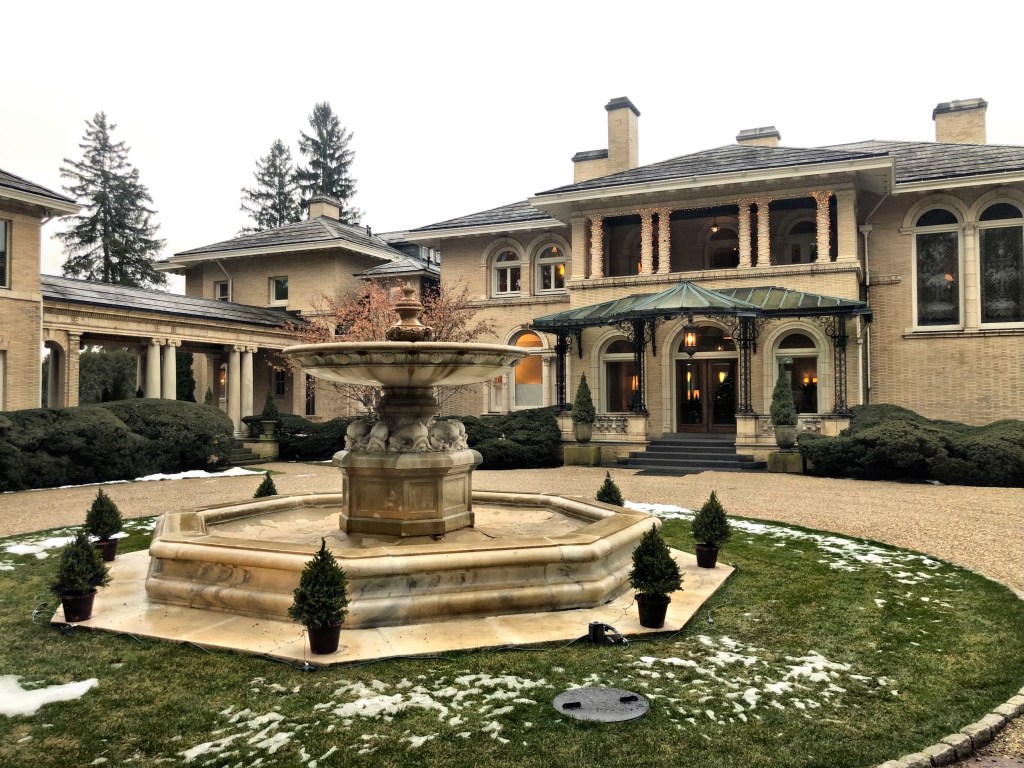
Designed in 1893 by the Boston architectural firm of Peabody and Stearns, Wheatleigh is an early example of Renaissance Revival architecture which became popular for country estates in the early 20th century. The estate was constructed for Henry Harvey Cook, who purchased over 250-acres of forest and lawns overlooking Lake Maheenac for his summer “cottage”. Cook was a New York-based businessman who made his fortune in the railroad and banking businesses, and he wanted a summer house to escape to every year. He named his home “Wheatleigh” as an homage to his family’s ancestral home, Wheatley, Oxfordshire. The mansion is approached by a circular drive that terminates in a formal entrance court partially enclosed by a buff brick wall and evergreen trees, centered on an octagonal marble fountain decorated with a shell and leaf motif. Upon Cook’s death in 1905 Wheatleigh passed to his daughter, Georgie, the Countess de Heredia. Under her ownership the formal garden was opened for evening worshipping services and musical events. Following de Heredia’s death in 1946 the property was divided and changed hands numerous times. In 1976 the mansion and 22 acres were opened as a resort hotel, known as the estates historic name. The Wheatleigh remains one of the most esteemed luxury hotels in the country.

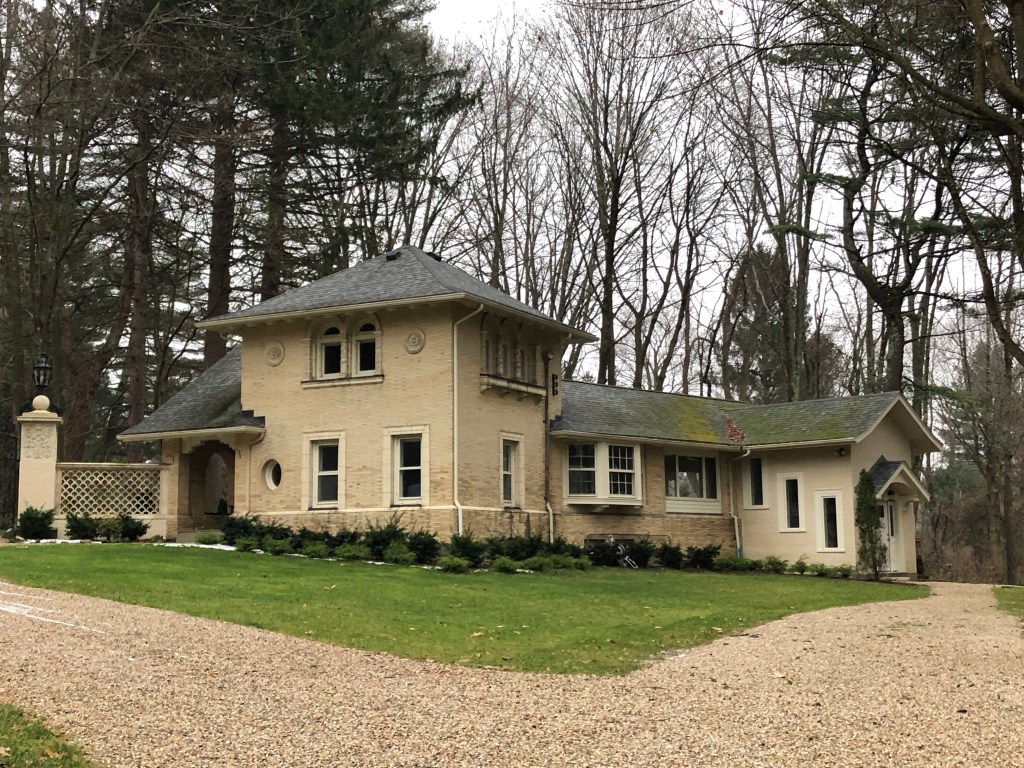
Wheatleigh Caretaker’s house (1893)

Elm Court // 1886

Real estate listing 11-2020

At 55,000 square feet and 106 rooms, the Elm Court mansion retains the title of the largest American Shingle Style home in the United States. The structure was built for William Douglas Sloane and Emily Thorn Vanderbilt (granddaughter of Cornelius Vanderbilt) as their summer “cottage” in the Berkshires. The home straddles the towns of Stockbridge and Lenox and sits on a massive parcel of land, giving the owners space to breathe the clean countryside air. Emily’s brother, George, built The Biltmore in Asheville, North Carolina and her sister, Eliza (Lila), constructed Shelburne Farms in Shelburne, Vermont. The home was constructed in 1886 from plans by the great Peabody & Stearns architects. Shortly after the turn of the century, ca. 1901, the couple commissioned Peabody and Stearns again, to vastly enlarge their original house. The additions used both Shingle Style and Tudor Revival motifs, and the result is a structure highly reminiscent of an English country house. William Sloane died in 1915, and Emily Vanderbilt continued to use the summer cottage, and in 1921, she married a summertime neighbor, Henry White, a career diplomat. While Henry White died in 1927, Emily retained the house and kept the grounds running until her death in 1946. The property’s use evolved into an inn in the late 1940s. During the 1950s, it embraced the public for dinners, overnight accommodations and events. Eventually Elm Court’s doors closed, and for approximately 50 years the mansion succumbed to significant theft and vandalism. The property has been listed for sale numerous times in the past decades, after a renovation by the last owners in the Sloane family. It is now listed for $12,500,000!