“Granite Lodge” // 1851

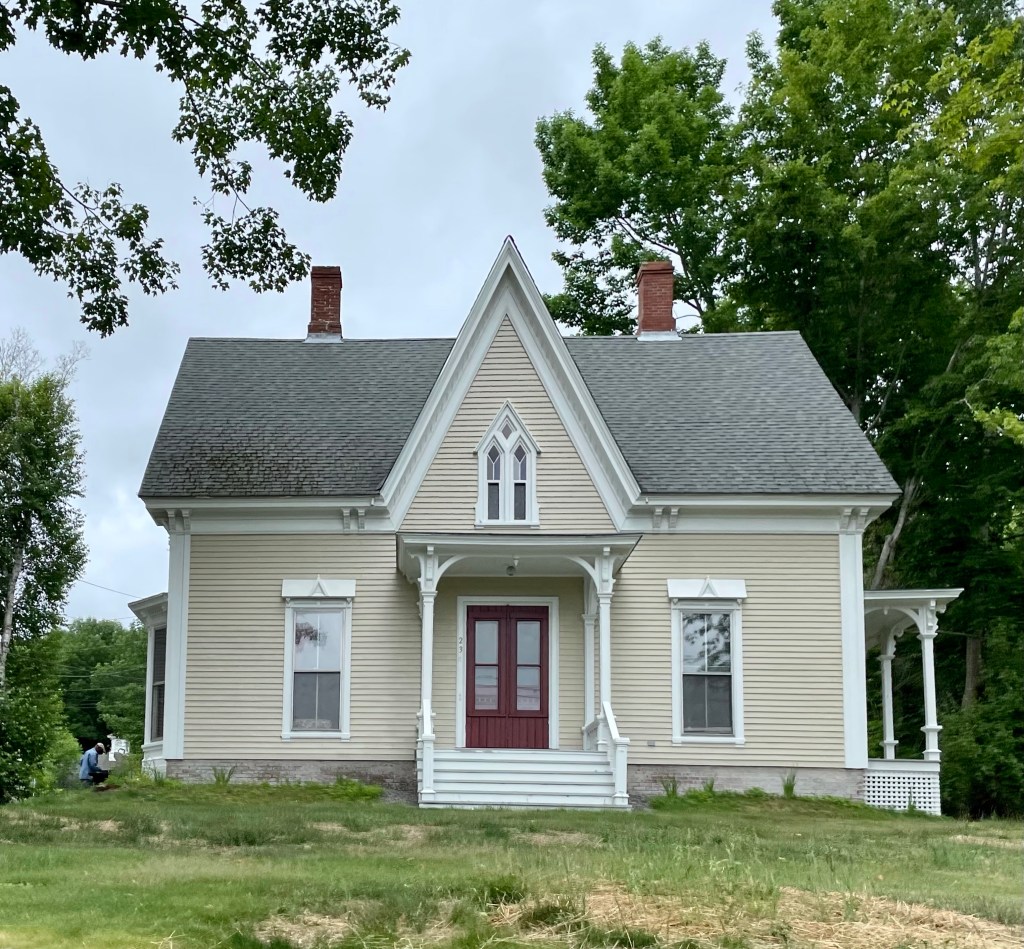
I love Rockport because every time I walk the winding, narrow streets, I find something new. This time, I stumbled upon this absolutely amazing mansion, built at the height of the romantic period of architecture. The home was built in 1851 by Solomon Torrey and his wife, Susanna Norwood. Susanna was the daughter of Charles Norwood, a descendant of Joshua Norwood, who owned much of the land in this part of town and lived in the c.1680 cottage down the street (last post). Solomon Torrey was the son of a quarry owner in Quincy, who seemingly moved to Rockport to continue in the family trade (the “Rock” in Rockport). Solomon and Susanna were gifted some land from her father to build a fine home, when the couple were still in their 20s! Before this, Solomon traveled west to partake in the California Gold Rush, his newlywed wife Susanna kept a diary, while he was away, mentioning her dream “stone cottage” where she and her family would live a long life together. When Solomon returned, the couple built their dream home, and had two daughters, Aria and Susannah. Sadly, Solomon lived only 5 years after his return from the Gold Rush and died at just 33 years old. Susannah was aided by her family, raising her two daughters, never remarrying, living in her dream home without the love of her life until her death in 1908, at 81 years old.

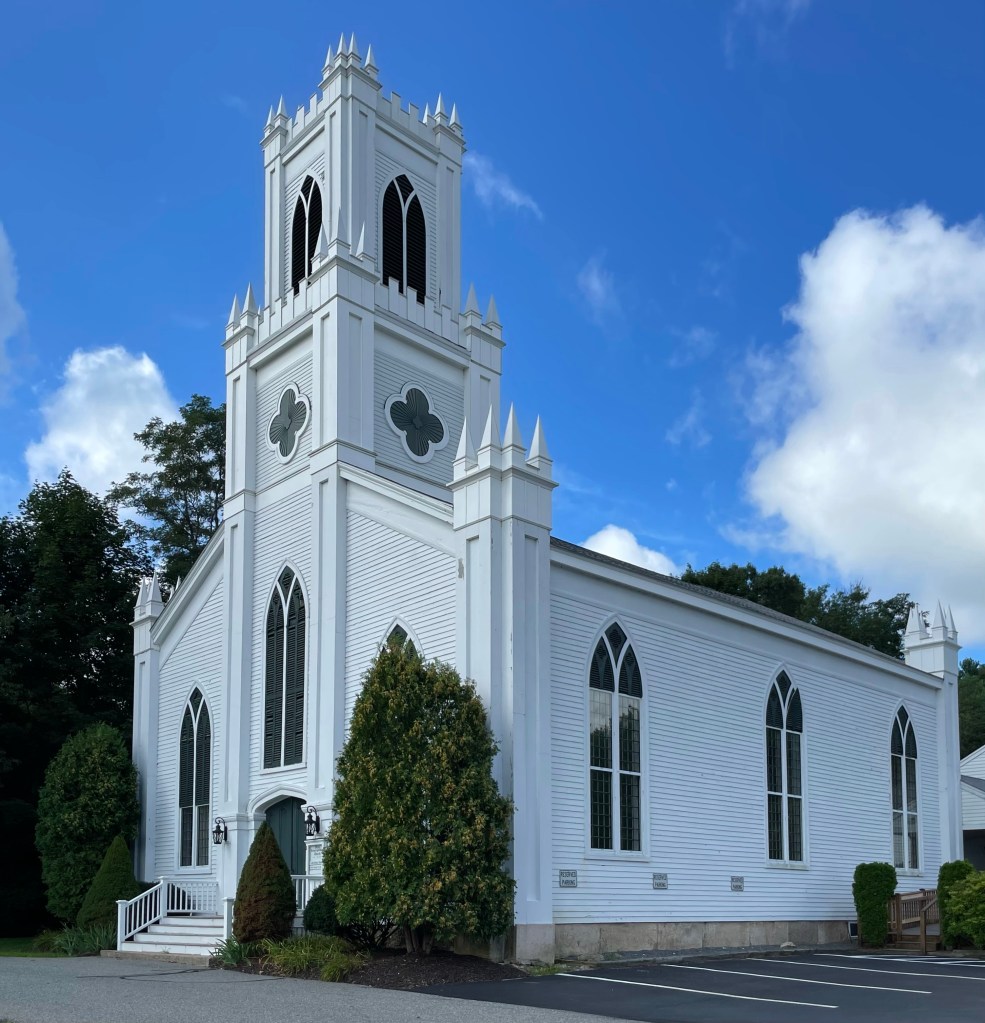
First Congregational Church, Norway // 1840

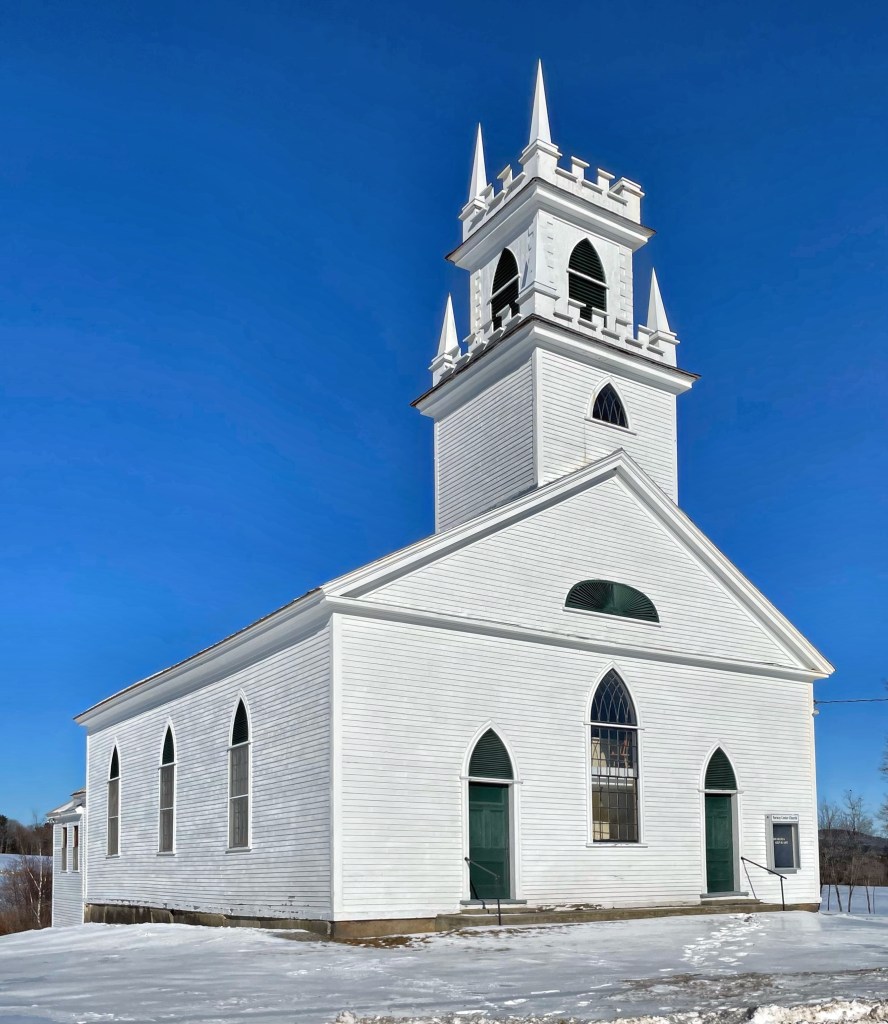
This beautiful, bucolic church in Norway Center was built in 1840 to replace an earlier meeting built in 1808-09 on the site. The present building is Gothic Revival in style with louvered panels making the windows appear lancet in shape and the amazing lancet window centered on the facade. The two-tiered tower is ornamented with crenellation and a wooden spire at each corner (besides one missing). The church features a louvered fan and strong pediment, which are nods to other prominent styles of the early-mid 19th century, Federal and Greek Revival respectively. This church quickly saw membership drop as Norway Village became the population center of town, with Norway Center becoming more agricultural and rural.
Calvert-Marin House // c.1845

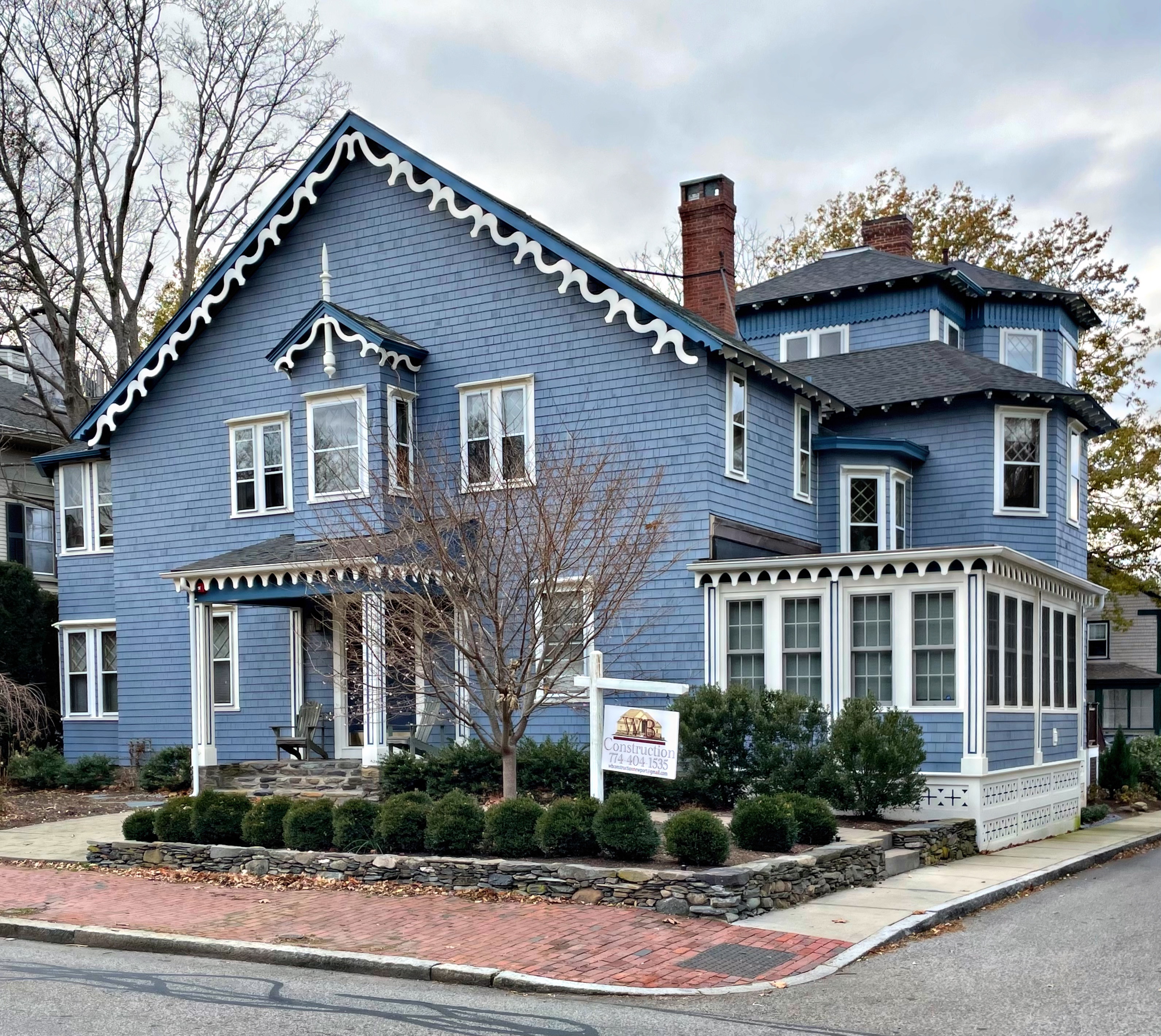
In 1843, George Henry Calvert (1803-1889) and his wife Elizabeth Steuart moved to Newport, Rhode Island from Maryland, not long after built or purchased this home. George was the son of George Sr. a plantation and slave-owner in late eighteenth- and early nineteenth-century Maryland. His plantation house, Riversdale plantation, also known as the Calvert Mansion, built between 1801 and 1807, was designated a National Historic Landmark in 1997. From his wealthy upbringing by unsavory means, George was able to attend Harvard and spent time travelling to Europe. There, he met poets Goethe and William Wordsworth. He lived in Baltimore and served as editor for the Baltimore American, the largest local paper in the city. He worked on poetry and eventually moved to Newport, RI, possibly seasonally. This home was built in the Gothic Revival style for Calvert and his family. Years later, he was elected Mayor of Newport. Calvert hired Fannie Jackson Coppin as a servant for the household. Coppin was born a enslaved in Washington D.C., but gained her freedom when her aunt was able to purchase her at the age of twelve. She went on to become an advocate and leader in Black education. Historic maps show two properties owned by the Calvert’s. A nearby building, presently 38 Kay Street was possibly built as a barn or stable for the Calverts. This home was purchased in the 1880s by Captain Mathias Candelaris Marin, a sea captain who fought in the Mexican and American Civil wars. Marin likely modernized the Gothic House, adding the shingle siding and large Queen Anne additions to the rear. The Marin Street at the side of the house is named after him.

Unity Church Parsonage // 1878

Architects William Robert Ware and Henry Van Brunt designed this parsonage in Easton, Massachusetts for the Unity Church in town (featured previously). The Victorian Gothic house is constructed of polychromatic stone, wood trim, slate and copper roof surfaces, and terracotta finials. The architecture is very well-developed and stands toe-to-toe with the other architectural landmarks in town, just a short walk away.

Church of the Holy Redeemer // 1907

Built to replace the former St. Sylvia’s Catholic Church (1881-1909), the Church of the Holy Redeemer in Bar Harbor stands as one of the more imposing religious buildings in town. The new church was envisioned by Rev. James O’Brien, who wanted a larger church structure closer to downtown Bar Harbor than the current St. Sylvia’s. The Neo-Gothic stone church was designed by Bangor architect Victor Hodgins, and was constructed from granite blocks quarried from Washington County, Maine. Inside, massive trusses from felled cyprus trees nearby support the roof and stone walls. Gorgeous stained glass windows line the walls which flood the interior with color.

Rochester Congregational Church // 1837

Rochester’s First Congregational Church is the oldest extant building still standing on the Town Green in Rochester Center and is the fourth house of worship to occupy the site. Constructed in 1837 to the designs of architect, Solomon K. Eaton, the beautiful Gothic Revival church building is among the most beautiful in the state. Eaton was well-known for his ecclesiastical structures, but also designed other prominent civic buildings in Southeastern Massachusetts. A fun fact about Eaton is that at age 55, he volunteered for the Union Army during the Civil War and his unit saw action in North Carolina, he returned home after the war and lived out his final days. The church stands out to me for the quatrefoil windows on the bell tower, the pointed finials and comer posts, and large lancet windows. Swoon!

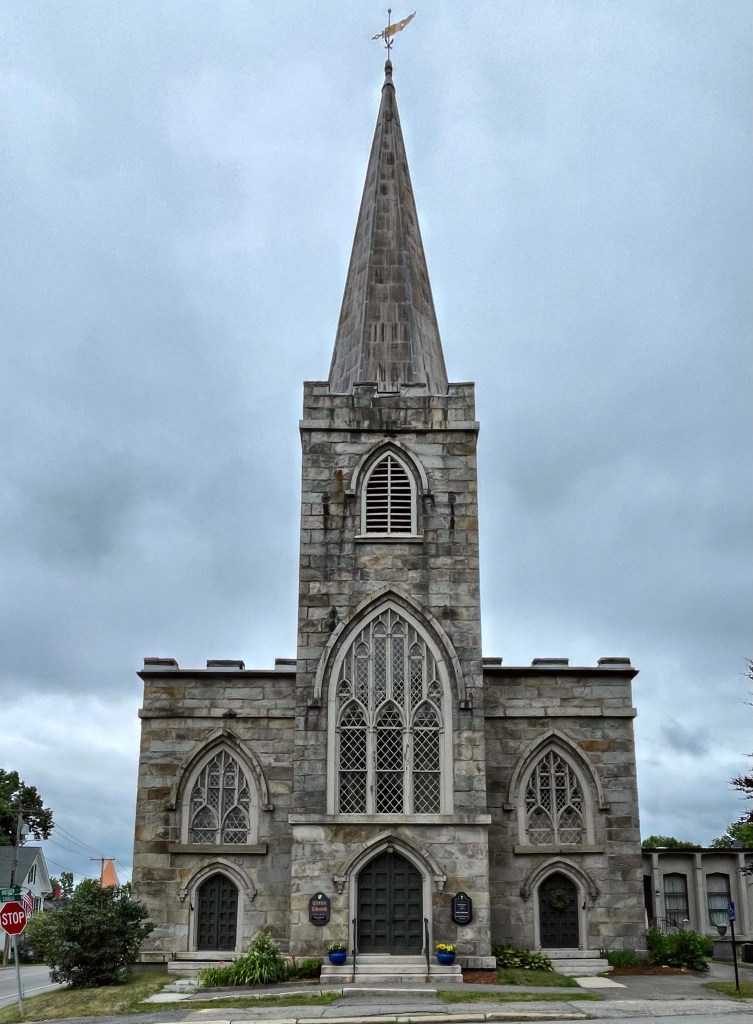
Christ Episcopal Church, Gardiner // 1820

The oldest known example of ecclesiastical Gothic Revival architecture in New England is surprisingly located right in Gardiner, Maine, the Christ Episcopal Church. The Episcopal Church in Gardiner was organized in 1772 by Sylvester Gardiner, a major landowner for whom the city is named as the town’s main church. Two more vernacular buildings were constructed as houses of worship until a new, fireproof structure was desired. Built in 1820, the stone church was designed by the Reverend Samuel Farmer Jarvis, who was likely heavily inspired by the stone churches found in England. The church has massive lancet Gothic windows with tracery, that in the tower considerably larger.

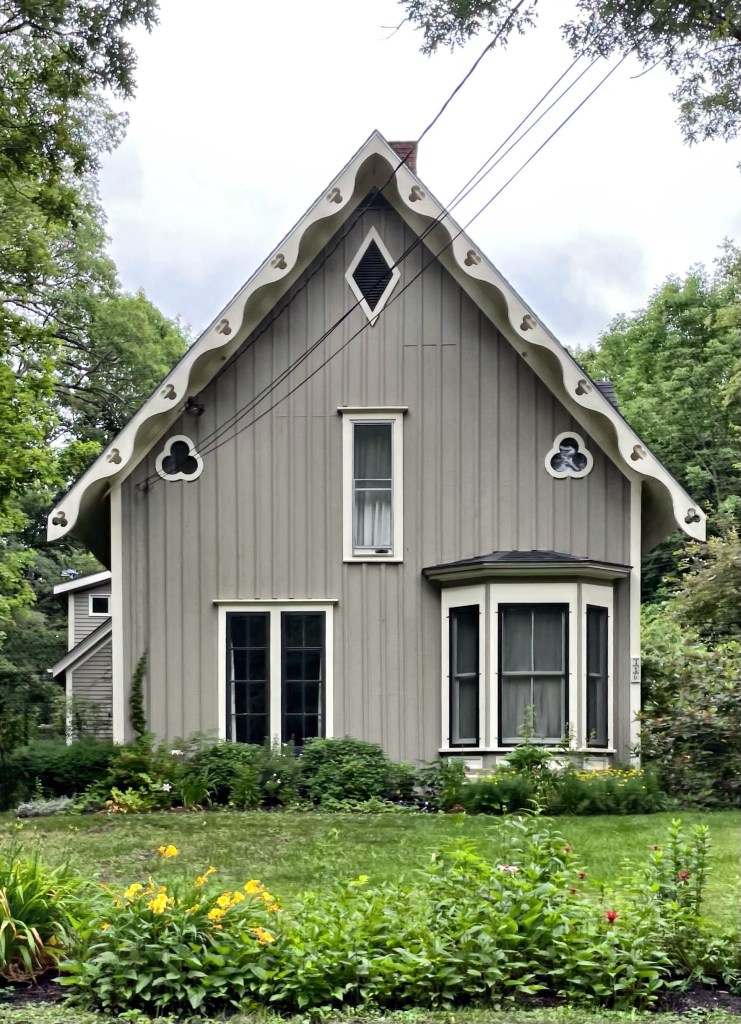
Reverend Hanson House // 1853

This Carpenter Gothic house in Gardiner, Maine, was built in 1853 by Reverend J.W. Hanson, author of the 1852 History of Gardiner, Pittston and West Gardiner and the second minister (1850-54) of the Universalist Church (last post), after its organization in 1843. Hanson was likely inspired by the design of his church when having his own home built, as he followed the Gothic mode. His house features board-and-batten siding, bargeboards, and trefoil windows and carvings in the said bargeboards. Reverend Hanson lived in the home until 1868 when he moved to Dubuque, Iowa. The home is very well preserved and one of the best examples of the Carpenter Gothic style in the state.

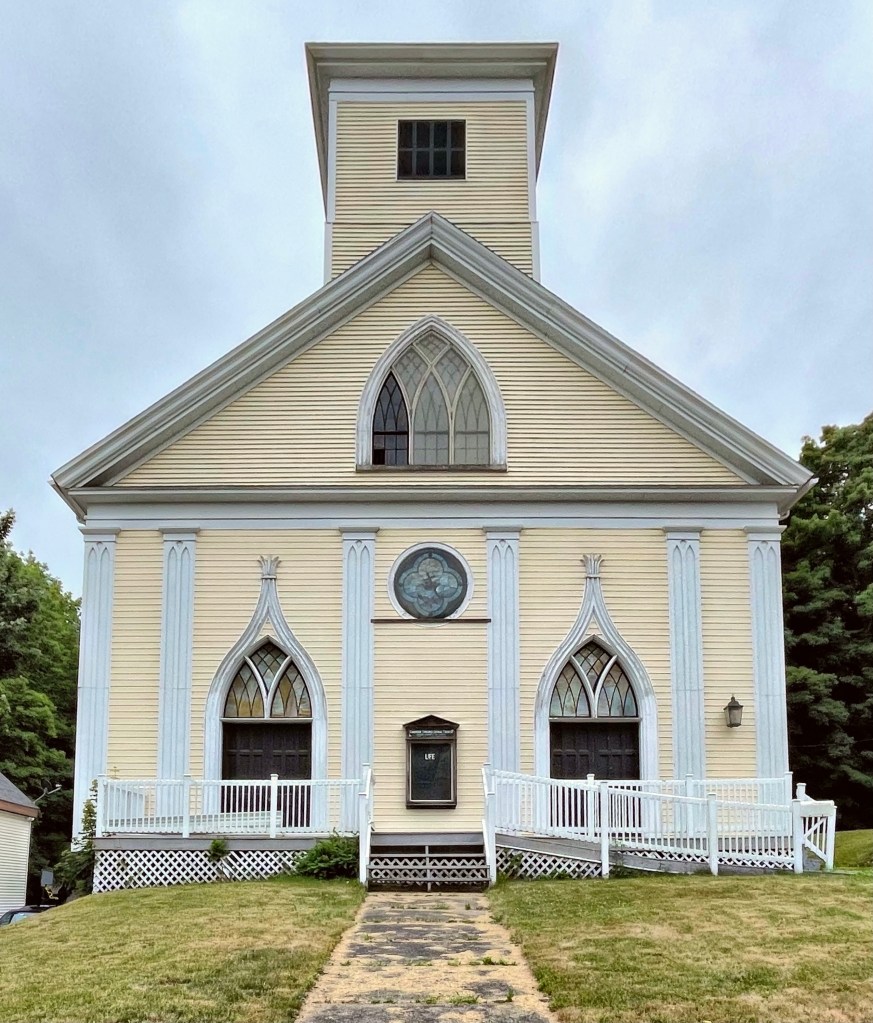
Gardiner Universalist Church // 1843

This stunning Gothic Revival church was built in 1843, on the site of the blockhouse, erected 80 years prior for the settlers of the area from native attack. In the 17th and 18th centuries, many rural parts of New England had blockhouses erected to allow the settlers a defensive fort from attack. The blockhouses were often garrisoned wooden structures with small windows on all sides to allow for gunfire to attackers below. The structure would protect those inside from arrows and melee weapons. This building however, was constructed later for the Universalists, who believed in “universal salvation,” who had been meeting since 1821 in a schoolhouse beside the town common. The church, in its original state with its steeple and clock, was an extremely sophisticated example in wood of the Gothic Revival style with its pinnacles, lancet windows and pilasters. Sadly, the steeple and clock were removed in the early 1920’s for safety reasons as the structure could not support it without significant engineering. The church and congregation changed to the United Church of Christ-Congregational denomination in 1964. After that, the building was occupied by a brewery (believe it or not), before being reverted back to a church by the current congregation.

Dr. Gertrude Heath House // c.1850

Constructed c. 1850, this Gothic Revival house in Farmingdale, Maine, has many identifying features common in the style: a symmetrical facade, steeply pitched gable, and lancet windows in the front gable. Besides its architectural significance, the home is also historically significant as the home of Dr. Gertrude Heath. Gertrude Emma Heath (1859-1935) was born in Gardiner, Maine in January 1859. When Gertrude was just three years old, after the American Civil War began, her father died in battle at Fredericksburg, leaving his widow Sarah to run the family affairs. She excelled in school and received her early education in the public schools of Gardiner, afterward attending Hahnemann Medical College at Chicago, Illinois, taking special courses. She graduated from this institution in 1883 with the degree of Doctor of Medicine, and began medical practice in Chicago in 1884, moving back home within that year. Soon after returning to Maine, she accepted a position at the Maine State Hospital, at Augusta, where she specialized in eye and ear conditions. It is amazing learning stories about such strong women, when at the time, women medical practitioners were almost unheard of and women were decades away from earning the right to vote.