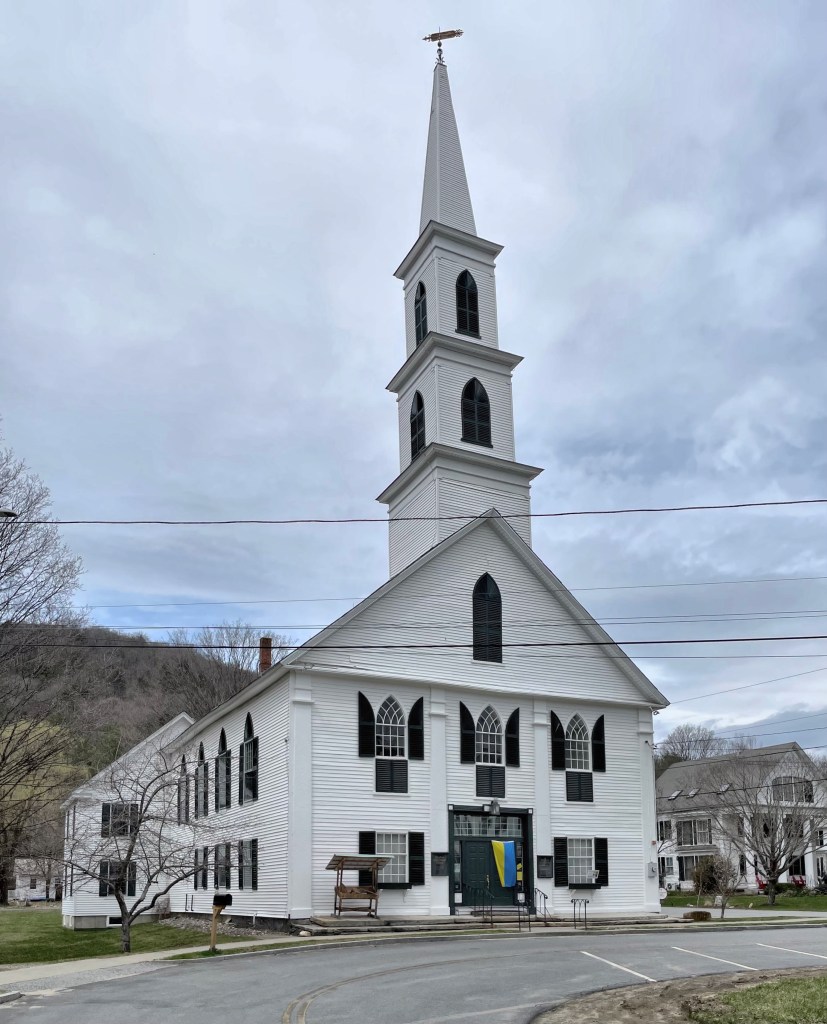
Newfane Congregational Church // 1839

The town of Newfane, Vermont was chartered on June 19, 1753, by Governor Benning Wentworth, who named it Fane after John Fane, the 7th Earl of Westmoreland. But hostilities during the French and Indian War prevented its settlement, and because a first town meeting was not held within the required five years, the charter was annulled. From this, Wentworth issued an entirely new charter in 1761, as New Fane. The town was eventually settled in 1766 from families that moved there from Worcester County, Massachusetts. Newfane became the shire town of the county before 1812 and county buildings were constructed. The village’s location up the hill was not ideal and was difficult to access in the winter, so many new buildings were constructed on the flat of town. The village has retained its rural character, but packs a punch in terms of architecture, especially for a town of under 2,000 people. One of the landmarks in town is the Newfane Congregational Church, constructed in 1839 in the Gothic Revival style. The large lancet (pointed arch) windows with corresponding shutters and spire are eye-catching.

Brookline Baptist Church // 1836

Brookline, Vermont is home to just 540 people but has one of the most beautiful brick churches in the state! The Brookline Baptist Church sits along a quiet road in town and is an excellent example of vernacular Gothic Revival architecture in the Vermont. Brookline’s first organized church congregation were Baptists, who established a formal organization in 1785 out of local homes and barns. By 1836, enough funds were gathered to erect a church, but of brick, a more substantial building material than traditional wood-frame buildings. The church remained active throughout the nineteenth century, and the vestry addition was constructed off the rear in 1895 to provide space for community gatherings and meals. Dwindling membership led the church to become mostly used for weddings, funerals, graduation ceremonies, and craft fairs by the second half of the 20th century. The Town of Brookline presently owns the significant structure, and while preserved, it does not appear to get much use.

Church of the Holy Redeemer // 1907

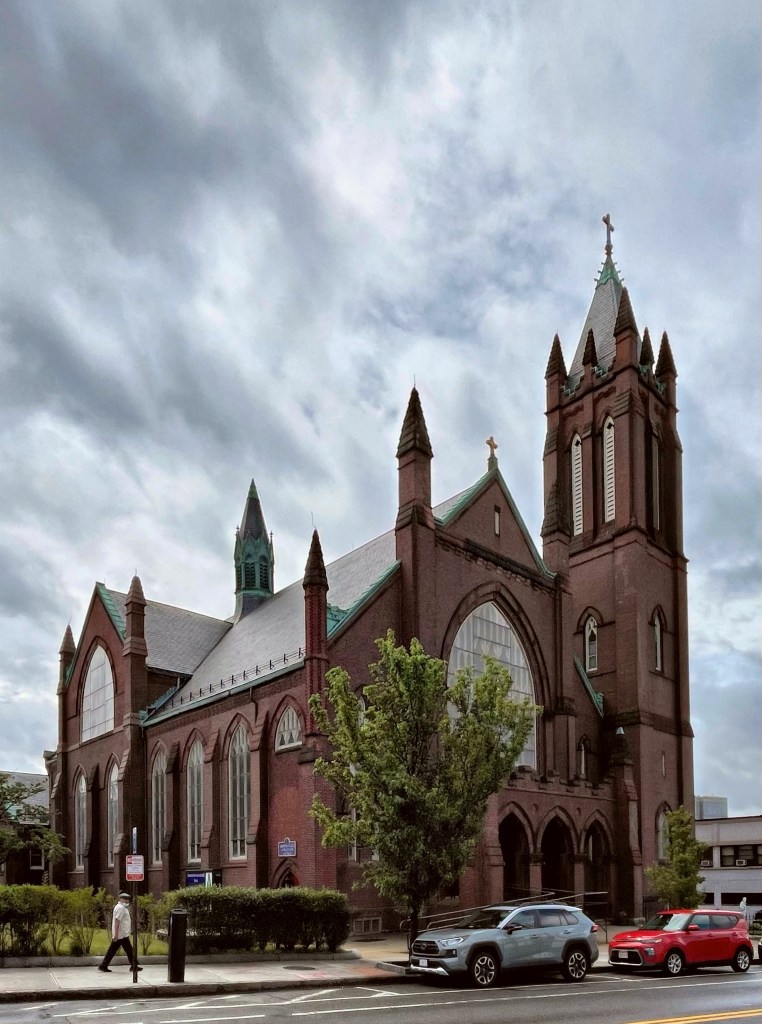
Built to replace the former St. Sylvia’s Catholic Church (1881-1909), the Church of the Holy Redeemer in Bar Harbor stands as one of the more imposing religious buildings in town. The new church was envisioned by Rev. James O’Brien, who wanted a larger church structure closer to downtown Bar Harbor than the current St. Sylvia’s. The Neo-Gothic stone church was designed by Bangor architect Victor Hodgins, and was constructed from granite blocks quarried from Washington County, Maine. Inside, massive trusses from felled cyprus trees nearby support the roof and stone walls. Gorgeous stained glass windows line the walls which flood the interior with color.

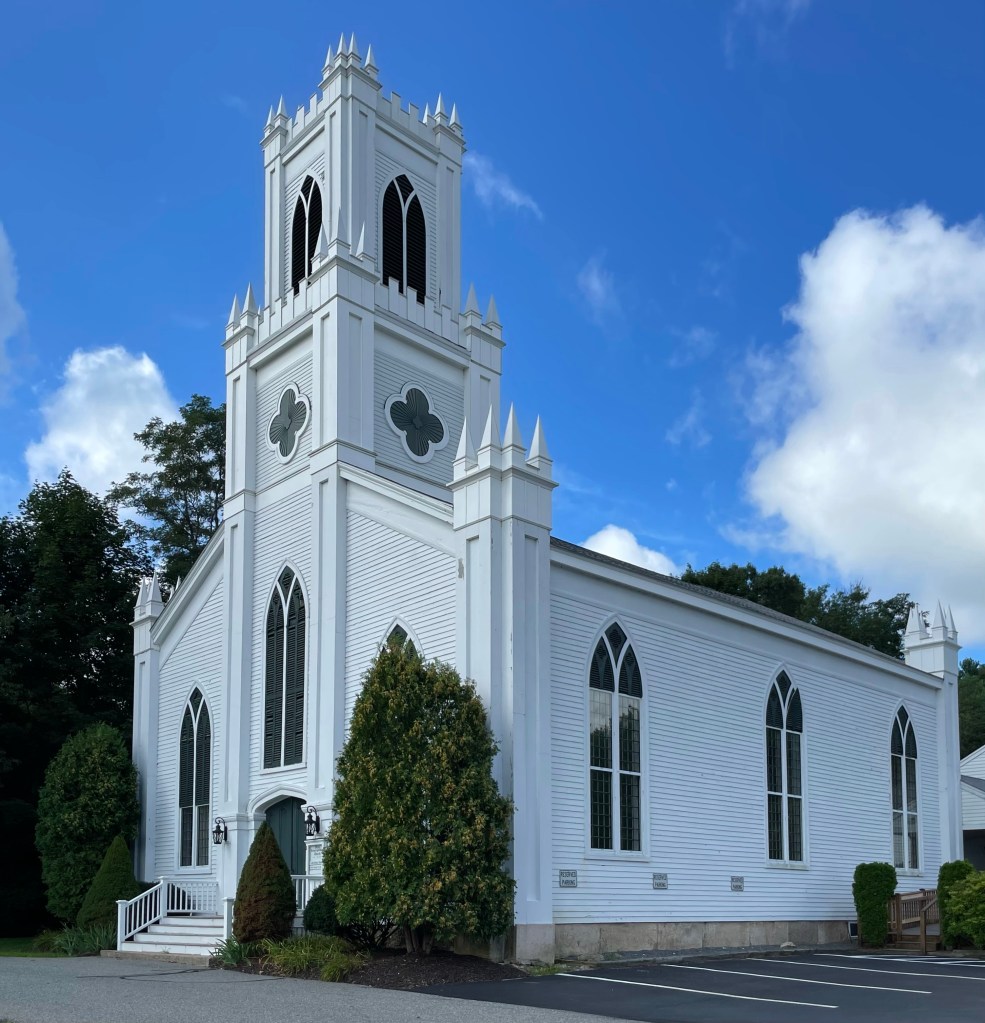
Rochester Congregational Church // 1837

Rochester’s First Congregational Church is the oldest extant building still standing on the Town Green in Rochester Center and is the fourth house of worship to occupy the site. Constructed in 1837 to the designs of architect, Solomon K. Eaton, the beautiful Gothic Revival church building is among the most beautiful in the state. Eaton was well-known for his ecclesiastical structures, but also designed other prominent civic buildings in Southeastern Massachusetts. A fun fact about Eaton is that at age 55, he volunteered for the Union Army during the Civil War and his unit saw action in North Carolina, he returned home after the war and lived out his final days. The church stands out to me for the quatrefoil windows on the bell tower, the pointed finials and comer posts, and large lancet windows. Swoon!

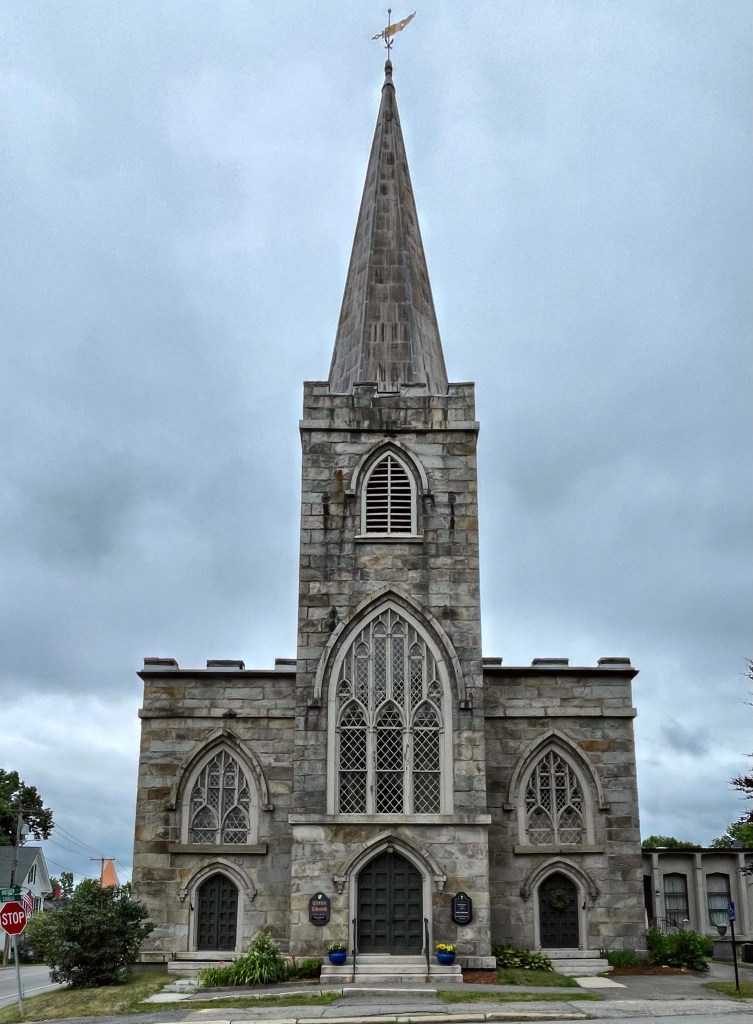
Christ Episcopal Church, Gardiner // 1820

The oldest known example of ecclesiastical Gothic Revival architecture in New England is surprisingly located right in Gardiner, Maine, the Christ Episcopal Church. The Episcopal Church in Gardiner was organized in 1772 by Sylvester Gardiner, a major landowner for whom the city is named as the town’s main church. Two more vernacular buildings were constructed as houses of worship until a new, fireproof structure was desired. Built in 1820, the stone church was designed by the Reverend Samuel Farmer Jarvis, who was likely heavily inspired by the stone churches found in England. The church has massive lancet Gothic windows with tracery, that in the tower considerably larger.

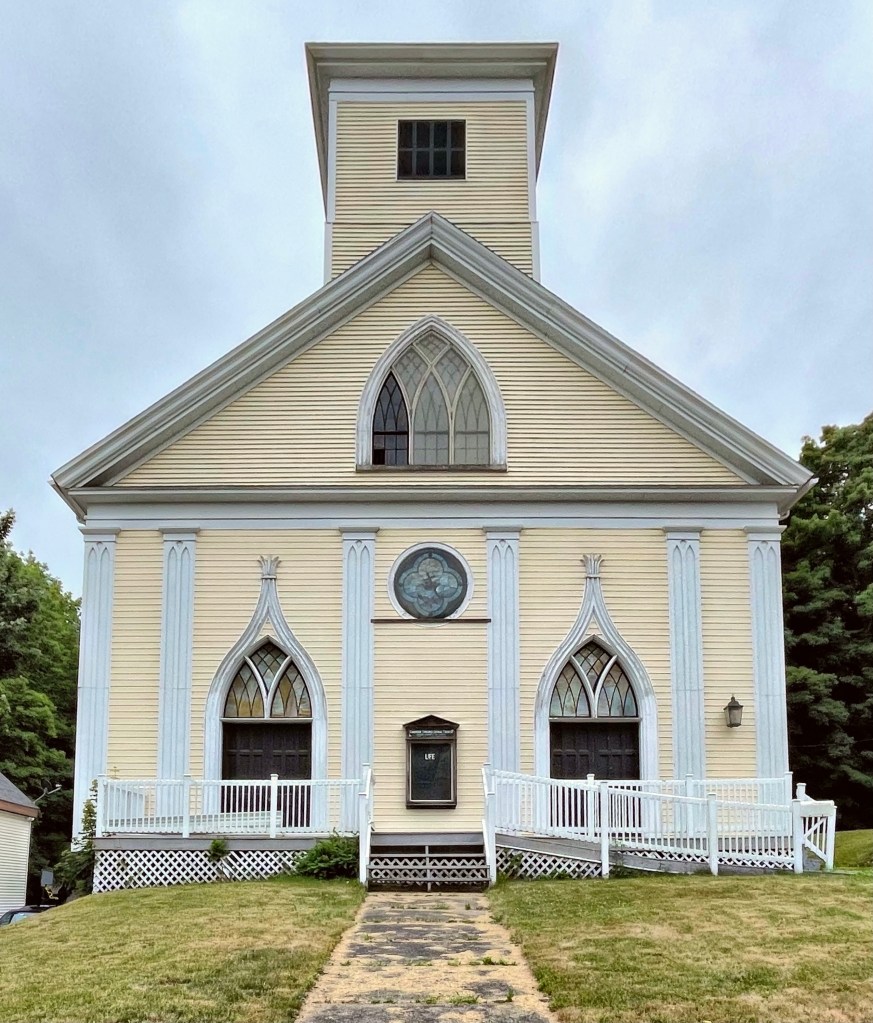
Gardiner Universalist Church // 1843

This stunning Gothic Revival church was built in 1843, on the site of the blockhouse, erected 80 years prior for the settlers of the area from native attack. In the 17th and 18th centuries, many rural parts of New England had blockhouses erected to allow the settlers a defensive fort from attack. The blockhouses were often garrisoned wooden structures with small windows on all sides to allow for gunfire to attackers below. The structure would protect those inside from arrows and melee weapons. This building however, was constructed later for the Universalists, who believed in “universal salvation,” who had been meeting since 1821 in a schoolhouse beside the town common. The church, in its original state with its steeple and clock, was an extremely sophisticated example in wood of the Gothic Revival style with its pinnacles, lancet windows and pilasters. Sadly, the steeple and clock were removed in the early 1920’s for safety reasons as the structure could not support it without significant engineering. The church and congregation changed to the United Church of Christ-Congregational denomination in 1964. After that, the building was occupied by a brewery (believe it or not), before being reverted back to a church by the current congregation.

St. George’s Church // 1759

Schenectady’s oldest extant religious building, St. George’s Church, sits in the center of the Stockade Historic District in Schenectady, New York. As Schenectady was settled and dominated by Dutch settlers, English settlers began moving to the riverfront town, due to its rich fur trade and opportunity. With the growth of English residents, a church where the services were conducted in the English language became necessary. The blossoming congregation hired architect Samuel Fuller, who arrived to Schenectady from Boston in 1758, at the height of the French and Indian War. Ground was broken on the stunning Gothic church in 1759 and it was finally completed in 1763, delayed due to fighting nearby. The church was originally more modest for the smaller congregation, but underwent a large building campaign in the mid 1800s thanks to Reverend William Payne. He oversaw the construction of a new parish house, a new rectory, as well as two successive expansions of the church and the addition of a stone tower and spire to the west front of the church, giving it the appearance we see today. The congregation is still highly active and maintains the building beautifully to this day.

St. Michael’s Episcopal Church // 1860

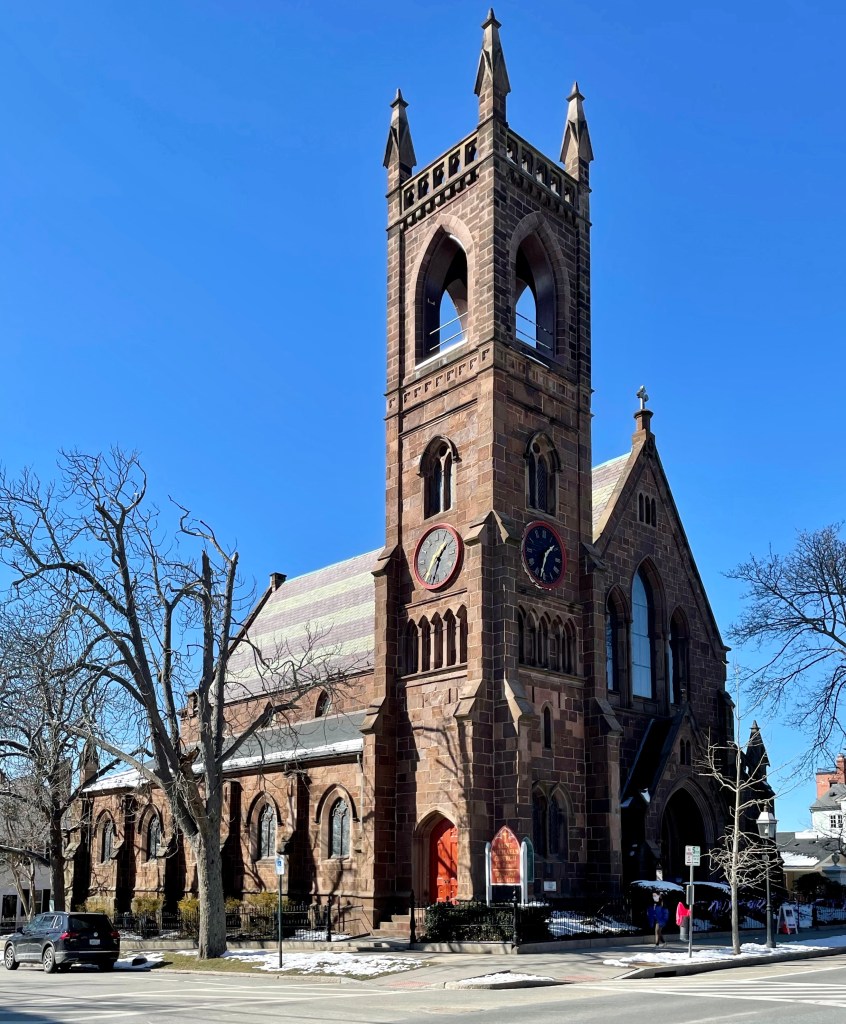
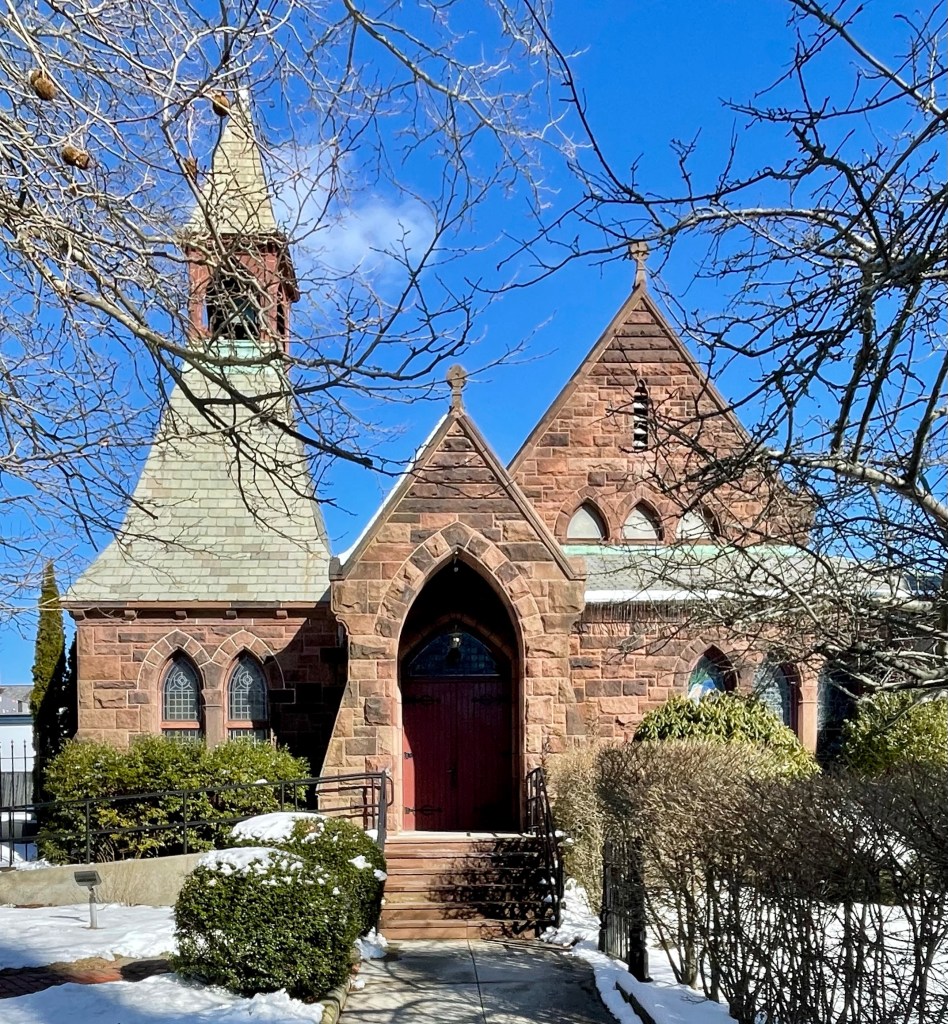
While I love the quintessential white, wood-frame New England churches that proliferate the region, the stone, Gothic churches always make me stop in my tracks; and this example in Bristol is no exception! St. Michael’s parish was founded in 1718 as one of the Rhode Island’s four colonial churches, funded and overseen from London. The first church, built in 1720, was ironically later burned during a British raid in 1778. It was replaced in 1785 by a plain wooden meetinghouse with funds from local residents and partitioners. In 1833, it was replaced by a wood-frame Gothic church which burned in 1858. Undeterred, the church hired New York City architects Alexander Saeltzer and Lawrence B. Valk, who designed the present brownstone Gothic Revival church. Just over a decade later, the church hired Worcester architect Stephen C. Earle, to design a chapel and parish house, across the street. The chapel building follows the Gothic Revival style, but with more Victorian flair, and is also constructed of brownstone to compliment the church. Together, the two structures transport you to the English countryside with their design and presence on the main street in town. What do you think of them?

Mount Vernon Congregational Church // 1892 & 1984

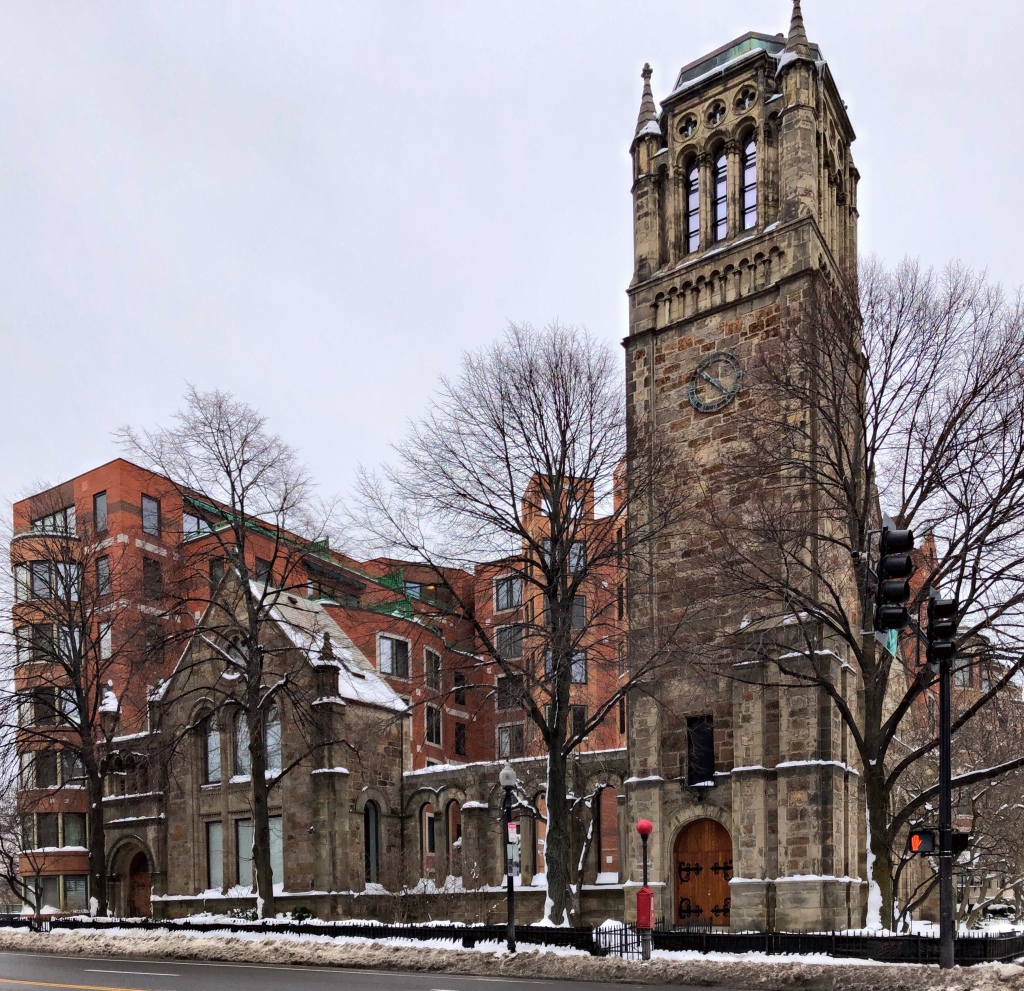
The Mount Vernon Congregation Church was founded in 1842 and originally was located in Ashburton Place on Beacon Hill (which I featured previously). As its members moved to the Back Bay, the congregation decided to build a new church in the western portion of the neighborhood. They hired architect C. Howard Walker to design the new church building, with stained glass windows by John LaFarge and Louis Comfort Tiffany added as memorials to several members of the congregation over subsequent years. As originally designed, the church had a 45-foot high steeple on top of its 85-foot square tower, but over the years it became structurally unsound, and it was removed just before the Hurricane of 1938, which toppled many steeples all over the region. In 1970, the church merged with the Old South Church in the Back Bay. In 1977, developers proposed to remodel the church building into retail and office space. The proposal was approved by the Boston Redevelopment Authority in January of 1978. Before work could commence, a fire destroyed much of the church building leaving a shell of Roxbury Puddingstone walls and the tower, the developer pulled its funding and the building’s future was uncertain. One year later, architect Graham Gund purchased the building. Gund was familiar with adaptive reuse projects, like his restoration of the Middlesex County Courthouse in Cambridge for his own office in Cambridge in the 1970s. Gund redesigned the building into 43 condominium units called Church Court. What are your thoughts on the architecture?

St. Patrick’s Church, Newport // 1882

Perched high on a hill in central Newport, NH, St. Patrick’s Church has served the community in its stunning building for nearly 150 years. The town of Newport began seeing Irish immigrants moving into town looking for work at the mills as early as 1835. The large working-class population created a need for a Catholic church in the growing town. That same year, the Catholic population of the state of New Hampshire was listed at just 720 people. Over the following decades of meeting in homes and small buildings around town, the Catholic population in town, along with the newly established Archdiocese of Manchester, NH, came up with funds for a church in the mill town of Newport. The congregation hired Hira Ransom Beckwith, a carpenter, builder and architect from nearby Claremont to design and construct the new place of worship. Interestingly, Beckwith had only a high school education, so his training as an architect and builder was through apprenticeships. The church is a blend of Gothic Revival and Stick styles, with the lancet windows and tracery paired with the elaborate stick-work in the gable.