Osborne Homestead // c.1840

This Greek Revival style farmhouse in Derby, Connecticut, was originally built around 1840, though little is known about its first occupants. In 1867, Wilbur Osborne (1841-1907), who owned and ran several industries in Derby, Ansonia and Bridgeport, and his wife, Ellen Lucy Davis, moved to the house, who together, also ran a dairy farm on their farmland. Their only daughter to survive to adulthood, Frances E. Osborne (1876-1956) took over the farm after her father’s death and became a prominent businesswoman. At age 16, Frances lost the vision in one eye due to an accident, and, as a result, never completed her public school education. Frances Osborne, in an era when women were denied leadership opportunities in the business world, succeeded through pure determination and an excellent business sense. Her achievements included becoming president of Union Fabric Company, vice president of Connecticut Clasp, and treasurer of the F. Kelly Company. She was also a founding partner of Steels and Busks of Leicester, England. She married Waldo Stewart Kellogg in 1919, and he took charge of the dairy, using selective breeding to make the herd “famous throughout New England for quality milk production.” Waldo and Frances Kellogg enlarged and remodeled the house to its current form between 1919 and 1925 adding wings and renovating the interiors in the Colonial Revival style. Waldo Kellogg died in 1928, but Frances stayed in the house until her death in 1956. Just before she died, she deeded her entire 350-acre (140 ha) estate, including Osbornedale, to the State of Connecticut. The state now operates the house and grounds as the Osborne Homestead Museum; the surrounding land comprises Osbournedale State Park.

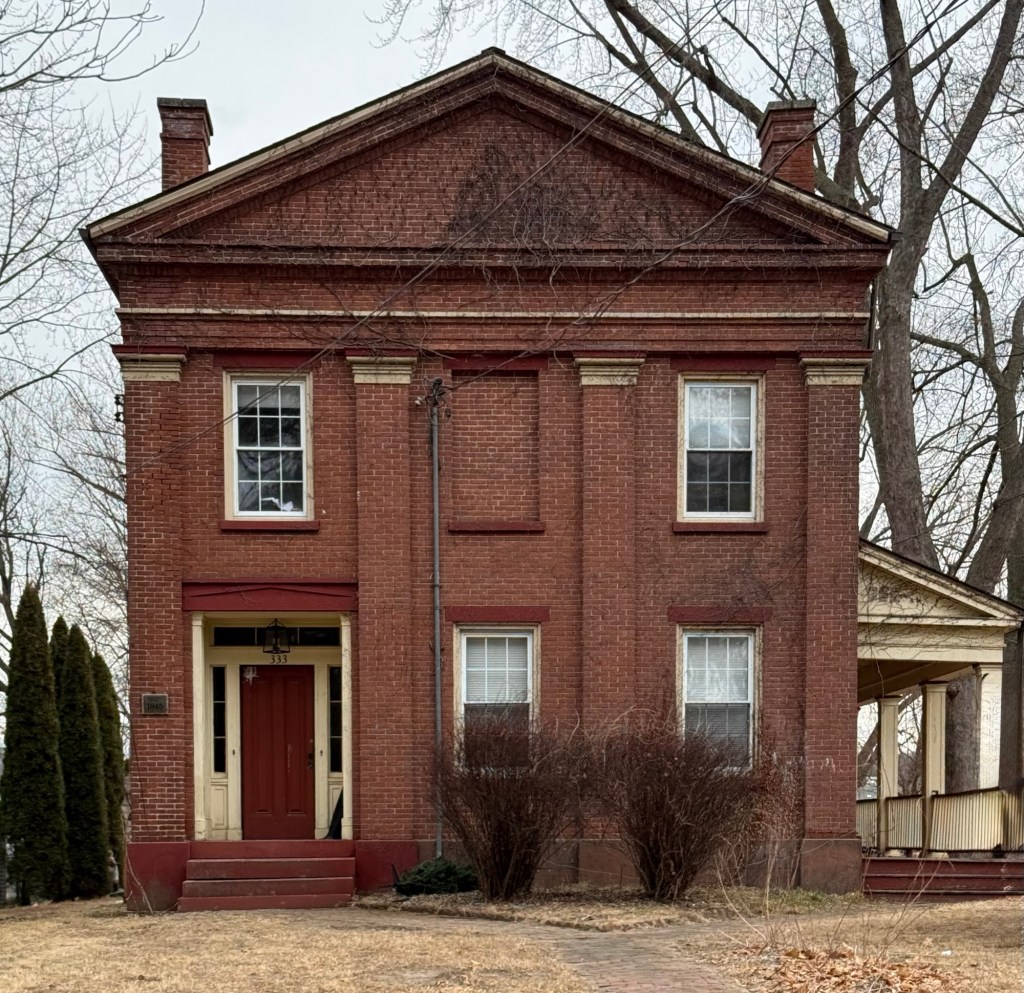
Elias Gates House // 1843

In 1843, Elias Gates (1801-1886) a young farmer, purchased land from the family of his wife, Mary A. Stedman, and had this handsome brick, Greek Revival style house built. The family would reside here less than ten years, and relocate to Albany, where Elias worked as a bookseller. The house was purchased numerous times throughout the 19th and 20th centuries, and operated as a farmhouse until much of the land was sold and subdivided for new housing. The Gates House is a great example of the Greek Revival style with a side hall plan, recessed entry with original sidelights and transom, and bold facade with brick pilasters dividing the bays with brick entablature and gable end facing the street.

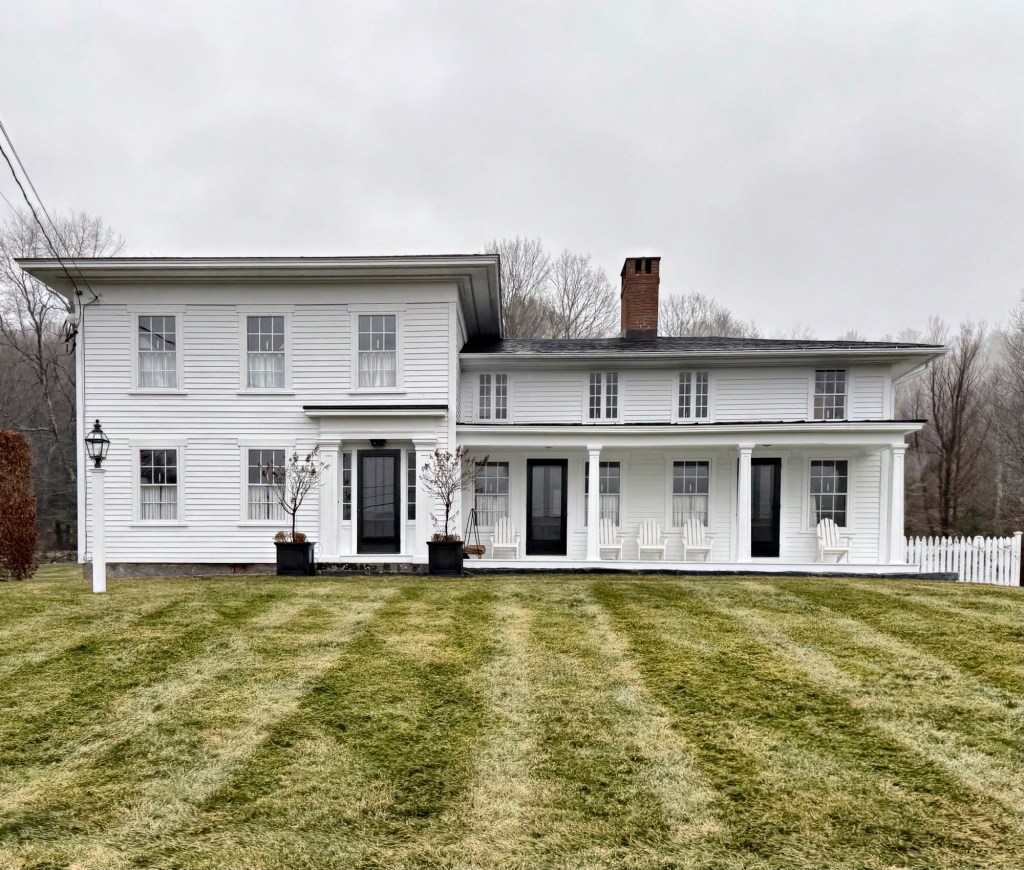
William H. Harrison House // c.1850

In about 1850, William Hopkins Harrison (1813-1878) purchased farmland from the Pierce Family of Cornwall, Connecticut, and built this stately Greek Revival style home upon it. The house was built around the same time as its neighbor, the Dwight W. Pierce House (last post), also an example of the Greek Revival style, but in a very different finish. The seven-bay residence has its main block at the end with a shallow hip roof and overhanging eaves, showcasing the emergence of the Italianate style form to come into popularity. The solidly Classical pilaster and entablature surround at the entry firmly places the house in the Greek Revival style.

Robinson Homestead // c.1835

Located in the Head of Tide village of Alna Maine, this large Greek Revival was once the home of prolific poet, Edwin Arlington Robinson. The home was built around 1835, likely by Edwin’s grandfather, Edward Robinson. The home was inherited by Edward’s second-born son, Edward Jr. Edward Jr. and his wife, Mary Elizabeth Palmer had two sons before their third pregnancy. Their third child was Edwin, but his parents did not name him until he was six months old, as it was said that they wished for a daughter. On a vacation, other vacationers decided that their six-month-old son should have a name, and selected the name “Edwin” from a hat containing a random set of boy’s names. The man who drew the name was from Arlington, Massachusetts, so “Arlington” was used for his middle name. Edwin described his childhood as “stark and unhappy” and his young adult years were plagued with tragedy with the death of a brother from a drug overdose and with his older brother marrying the woman that he was in love with. He would defy the odds and was accepted to Harvard. He became engaged in writing, specifically poetry, with his early struggles leading many of his poems to have a dark pessimism and his stories to deal with “an American dream gone awry.” He would go on to be awarded the Pulitzer Prize in Poetry three times in the 1920s. While he would likely not want to ever see this house again, it is significant both architecturally and as the home in his formative years in Alna.

Almeron Goodell Farmhouse // 1863

The Little River area of Waterbury, Vermont, was a very sparsely developed area of farms located on the slope of Ricker Mountain, which was difficult to traverse and farm. Almeron Goodell (1834-1910) and his wife Luthera bought farmland here in 1863 and built this farmhouse that year from rough-hewn timbers on the land. In 1870, the couple and their seven-year-old son, Bert, had four cows, one horse, and a flock of chickens on their property – enough to supply the family’s needs. Life on Ricker Mountain was hard. By the late 1800s, the loss of soil fertility on the land prompted some farmers to abandon the hillsides for more fertile land in the valleys nearby or the free land offered in the American West. Additionally, the Green Mountain Power Company began purchasing farmland to erect a hydroelectric dam and reservoir in 1920, effectively abandoning the area. The Little River area was left behind, with abandoned farms, family cemeteries, and carriage roads, slowly returning back to the earth. Luckily for us, the area is preserved as part of the Little River State Park, where you can hike and explore the area, learning about the past inhabitants of the now ghost village. The Goodell Farmhouse is the only extant farmhouse left from this early settlement and a lasting reminder of how hard life was for many who settled in undeveloped land in New England. The farmhouse was used as a hunting lodge in the 1940s, likely the only reason it still stands to this day.

Gilbert Sykes House // c.1850

This stunning Greek Revival house in Dorset Village was built around 1850 and was long the home of Gilbert Mortier Sykes (1834-1920). Gilbert Sykes operated a general store in Dorset and held various public offices in town and later in the Vermont House of Representatives and Senate. The house has fully embellished entrance with paneled pilasters carrying an entablature and an amazing triangular window with diamond panes in the gable.

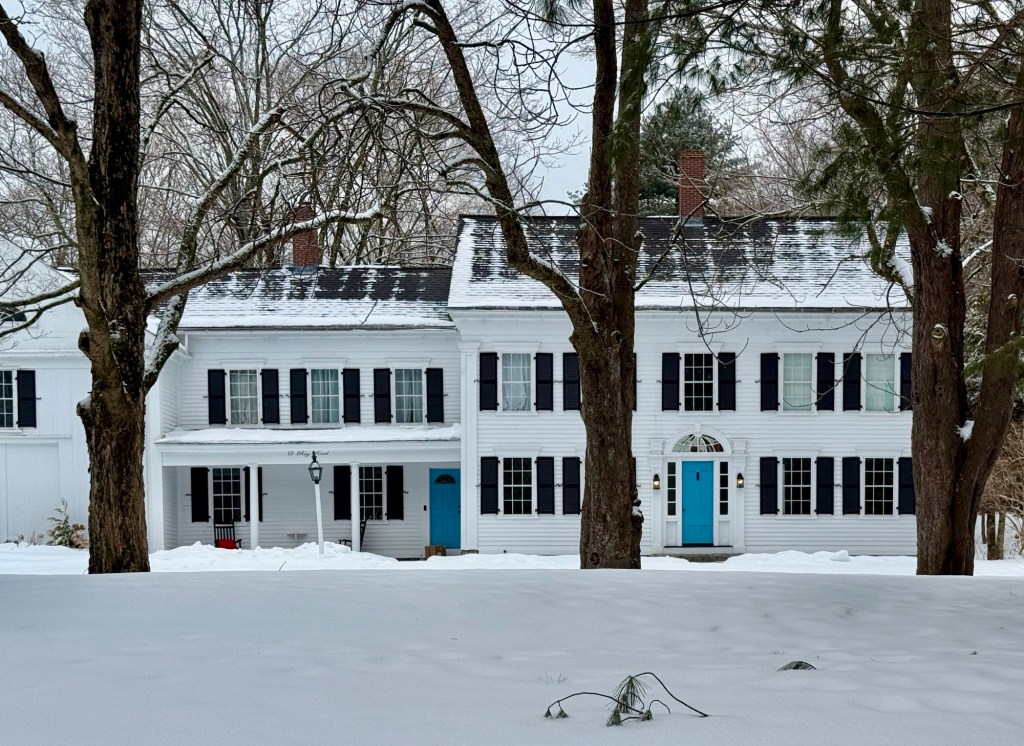
Peru Congregational Church Parsonage // 1850

Just five years after the Congregational Church of Peru was built, the congregation acquired land and built this home as a parsonage for their pastor. The parsonage was designed in the Greek Revival style similar to the church. The home sits amongst beautiful, mature trees and exhibits the best in Classical design with bold corner and entry pilasters and a five bay symmetrical facade. They sure don’t make them like they used to!

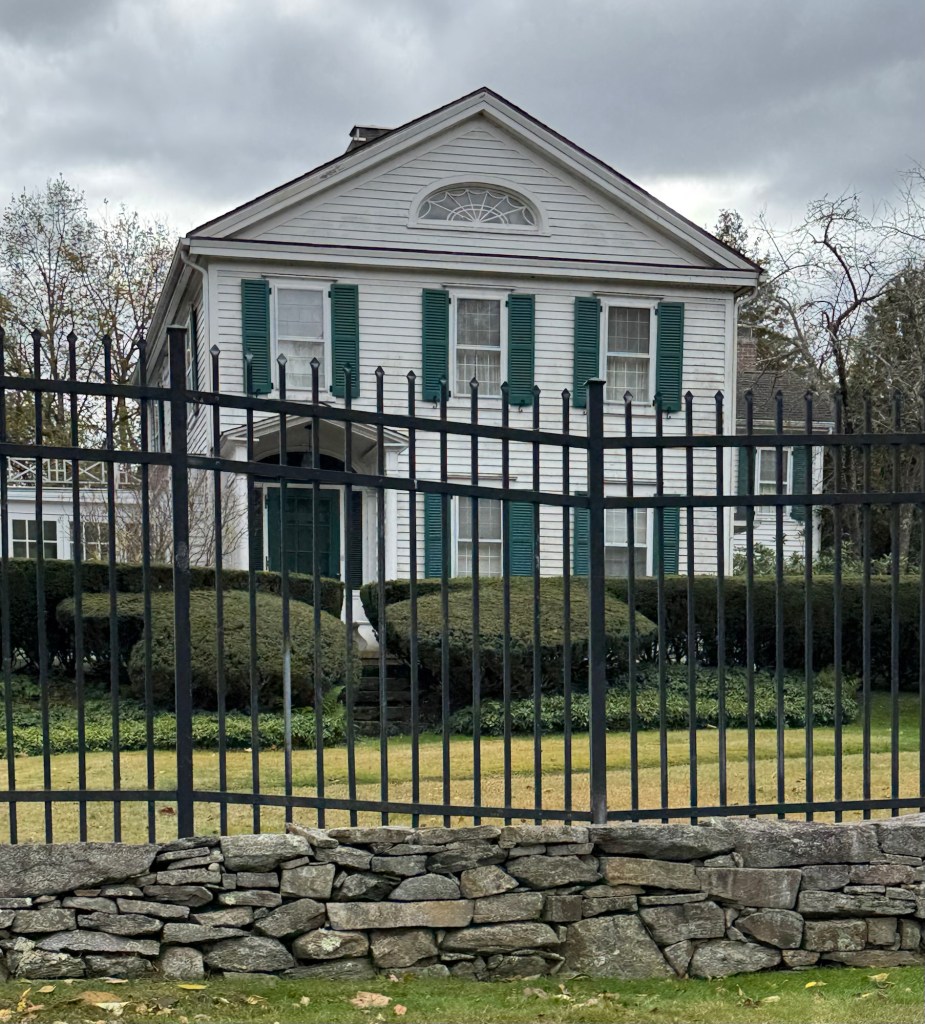
Cory House // c.1859

I stumbled upon this Greek Revival farmhouse located on one of many dirt roads in Landgrove, Vermont and had to snap a few photos! I couldn’t find much on the history of the house besides the fact it was listed on an 1869 atlas as the property of an “I. Cory”. The five-bay farmhouse has an elaborate door treatment and bold corner pilasters all perched behind a historic stone wall. The house telescoped outward with additions, eventually connecting it to what is now a garage. This farmhouse purchased in the 20th century by John A. Brown, who worked as Dean of Students at Princeton University.

Atherton Farmstead // c.1840

This beautiful farmhouse in Cavendish, Vermont is located along a winding dirt road and has ties to one of the town’s original family’s. A home was built here in 1785 and changed hands numerously over the first few decades of its existence. The farmhouse that was built also served as a tavern for travellers along the newly laid out Wethersfield Turnpike. It is possible that the cheap land and rural character of the new town was appealing to some, but reality away from true commerce may have made many sell the farm after a few years, which could explain why the property was bought and sold so often early on. The property was purchased by Jonathan Atherton, a Revolutionary War veteran, farmer, surveyor and lawyer, who acquired large landholdings in Cavendish. In 1821, Jonathan Atherton was sued in court by his neighbor, Jedediah Tuttle for beating Tuttle’s wife Lydia. In order to finance the bonds, Atherton mortgaged all his real estate in Cavendish to his brother Joseph, and Elihu Ives, Jonathan Atherton Jr.’s father-in-law. Atherton St. lost the case and had to pay a fine. The property was eventually inherited by Stedman Atherton, the youngest son of Jonathan, who seems to have demolished the old homestead and constructed the present home on the site. The original dwelling was also the childhood home of Henry B. Atherton, a staunch abolitionist and soldier in the American Civil War, who later served as a lawyer and state legislator for New Hampshire, and his sister Eliza (Atherton) Aiken, a Civil War nurse who has been referred to as America’s own “Florence Nightingale”. The old Atherton farmstead was recently renovated.

Dutton Farmhouse // c.1840

Another one of the Landmark Trust USA properties in Dummerston, Vermont is the Dutton Farmhouse, a meticulously restored Greek Revival farmhouse from around 1840. The gable-roof farmhouse was possibly an addition to an earlier dwelling built decades earlier as a one-and-a-half-story center-chimney home, seen at the rear today. The first known owner of the farmhouse was Asa Dutton who farmed off the large orchards. Generations later, the farmhouse served as a dormitory for migrant laborers who worked nearby, with the interior being altered. The property was eventually gifted to the Landmark Trust USA, who began a massive restoration project on the home, uncovering original detailing and even historic wallpaper! The house has since been meticulously restored and preserved and is available for short-term rentals! The charming interiors and near silence outside is a perfect getaway from city life.