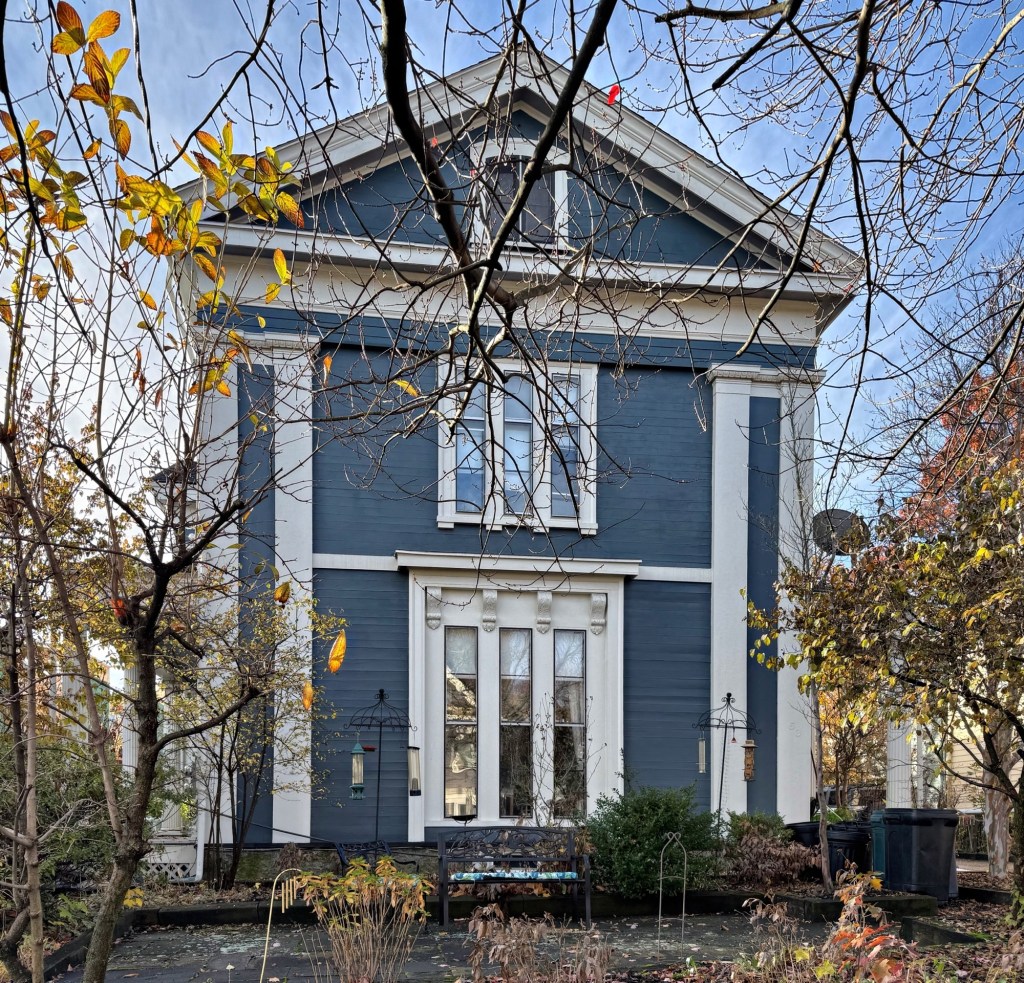
Faxon-Howe House // 1844

The Lindens neighborhood, located just east of the civic and commercial core of Brookline Village, was long an apple and cherry orchard known as Holden Farm. Beginning in 1843, the area became the earliest planned development in the town and was laid out as a “garden suburb” for those wishing to escape the growing congestion of Boston. As originally conceived in 1843, it reflected the latest ideals of planned residential development for a semi-rural setting on land owned by Thomas Aspinwall Davis. The streets, parks, and house lots here were laid out by civil engineer, Alexander Wadsworth, who two years earlier, laid out plans for Mount Auburn Cemetery in Cambridge, the first “Rural Cemetery” in America. Early homes were built on speculation by John F. Edwards, an architect-builder, for Davis, who was strict about high-quality designs in the Greek and Gothic revival styles in his newly laid out neighborhood. This house, at 53 Linden Street, was built in 1844 by Edwards, and sold soon-after to John G. Faxon (1793-1861), a lumber merchant who made his fortune in Lubec, Maine until he moved to Brookline. Faxon sold the house in 1851 to Thomas Howe, who likely added the Italianate style tripartite windows with the lower having scroll brackets.
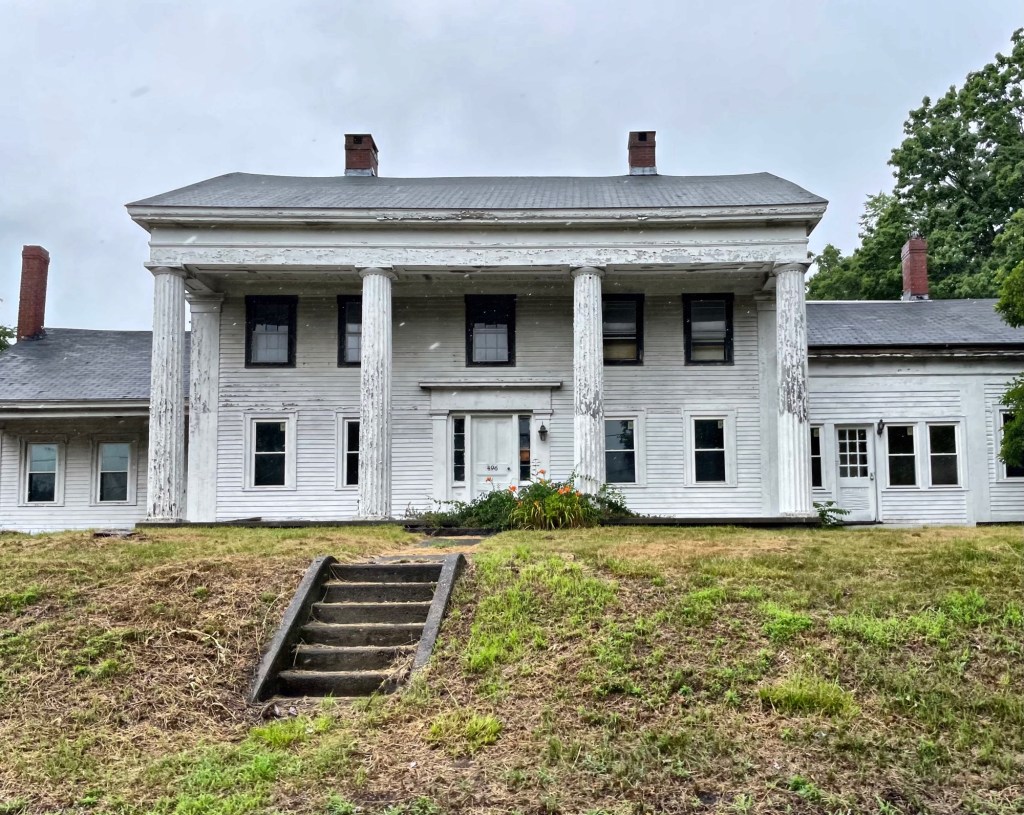
Joseph Andrews House // 1831

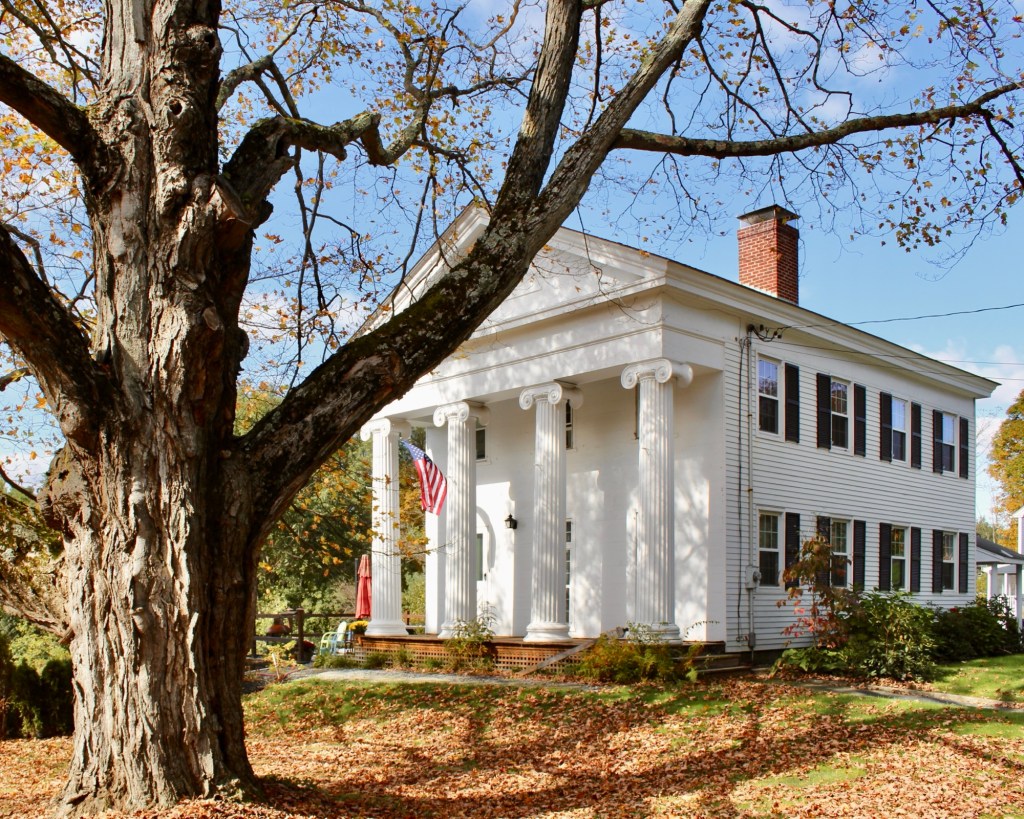
This stately temple-front Greek Revival style house in Lancaster, Massachusetts, faces southward and when originally built, had sweeping views of fields and the Nashua River which abuts the property. The residence was built in 1831 for Joseph Andrews (1806-1873), a renowned 19th century artist who engraved portraits and landscapes, and was also an elder in the local Swedenborgian Church when it still met at residences. The Andrews House was likely a wedding gift to his wife, Thomazine Minot of Brookline, when they married. Tragically, Thomazine died just years later in 1834 at the age of 22. Joseph Andrews remarried soon after and would later move to Waltham. The house, which is listed on the National Register of Historic Places, features a full-length projecting porch with pediment supported by four, two-story fluted Ionic columns and a flush-board facade.

Gilmore-Mason House // c.1850

As the town of Westborough emerged from rural agricultural community to commercial center, connections to Worcester and Boston via rail service opened the town to prosperity. As businessmen accumulated wealth, these merchants built stately homes to showcase their position in the community. Before the Civil War, the Greek Revival style was ever-popular in Westborough, even though the style was already waning in popularity in larger cities. The Gilmore-Mason House on Church Street, is an excellent example of the Greek Revival style in a temple form. The form is seen in this house at the facade, with a portico of four two-story Corinthian columns supporting the pediment above. The house was built for George A. Gilmore and later sold to Alonzo W. Porter, an inventor, who would later move to New York. By the early 20th century, the residence was the home to Joseph S. Mason, a manufacturer who operated a weaving mill in Westborough.

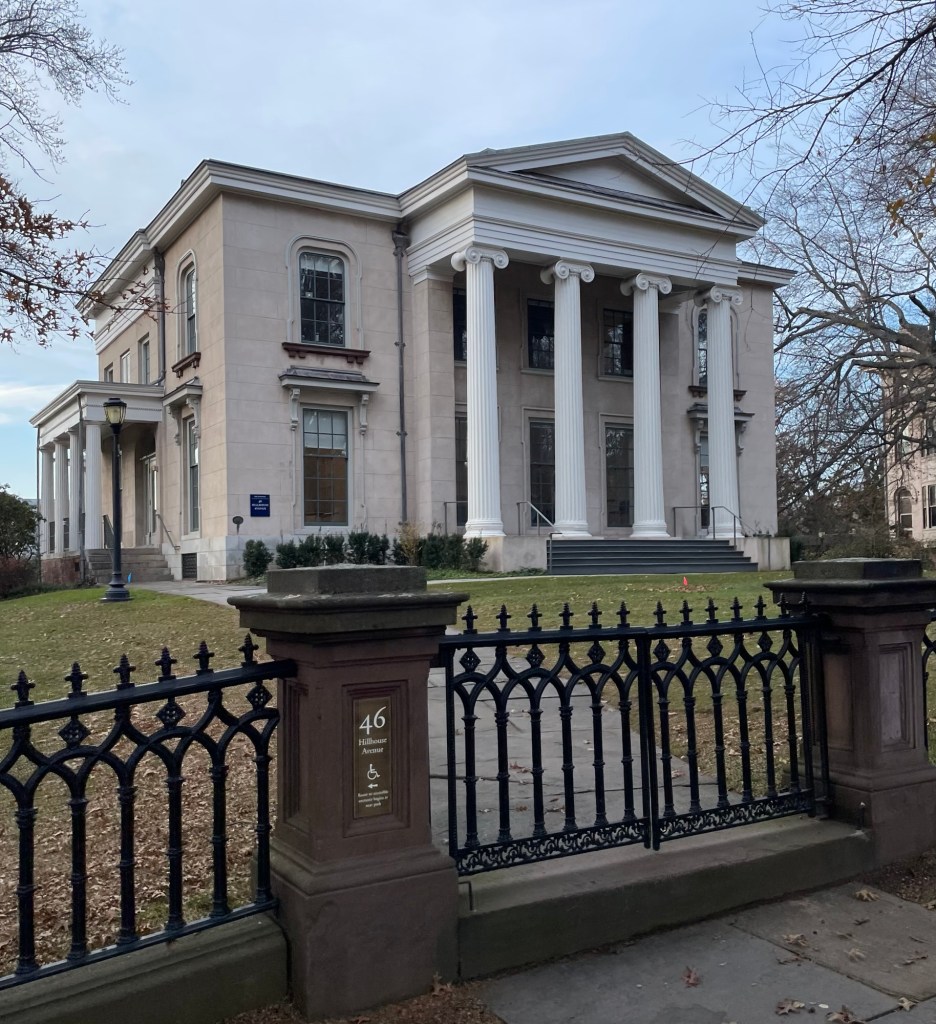
Skinner-Boardman Mansion // 1832

One of the finest houses in New Haven is this stately residence, the Aaron Skinner Mansion on Hillhouse Avenue. The mansion was built in 1832 for Aaron Nichols Skinner (1800-1858) from plans by architect Alexander Jackson Davis. Skinner was a Mayor of New Haven (1850-1854), and for a short time, ran a boy’s boarding school out of this house. Skinner was also a CT State Representative, serving two terms. The house was originally built as a three-bay, two-story house with one-story side wings and a rear ell. After his death, the house was purchased by Judge William W. Boardman, who in 1859, modernized the property hiring architect, Henry Austin, who filled in the side wings and added Italianate window mouldings. The monumental portico supported by fluted, Ionic columns, creates such a stately presence for the early house on the street. In the early 20th century, the mansion was owned by Rutherford Trowbridge, who renovated the house for his own use. The house remained in the Trowbridge family until the death of his last daughter, Miss C. Rachel Trowbridge, when the estate became the property of Yale University.

Harris and Sabin Sayles Mansion // c.1845

Located in the Dayville section of Killingly, Connecticut, you can find a row of large mansions built for mill owners and managers from the 19th century. This house dates to the 1840s and by the 1860s, was owned by Harris Sayles (1817-1893) and his brother, Sabin L. Sayles (1827-1891) who together, co-owned and operated a large woolen mill in the town (featured previously). It is not clear if the Sayles brothers lived in the home, but they likely rented it to higher-level employees at the mill as they both had other homes in town. The two-and-a-half story mansion is a great example of the Greek Revival style in the town, with the side gable roof extending over the full-height portico with doric columns. The mansion was built across the street from the village church, also in the same style, but that building was demolished by 2011.

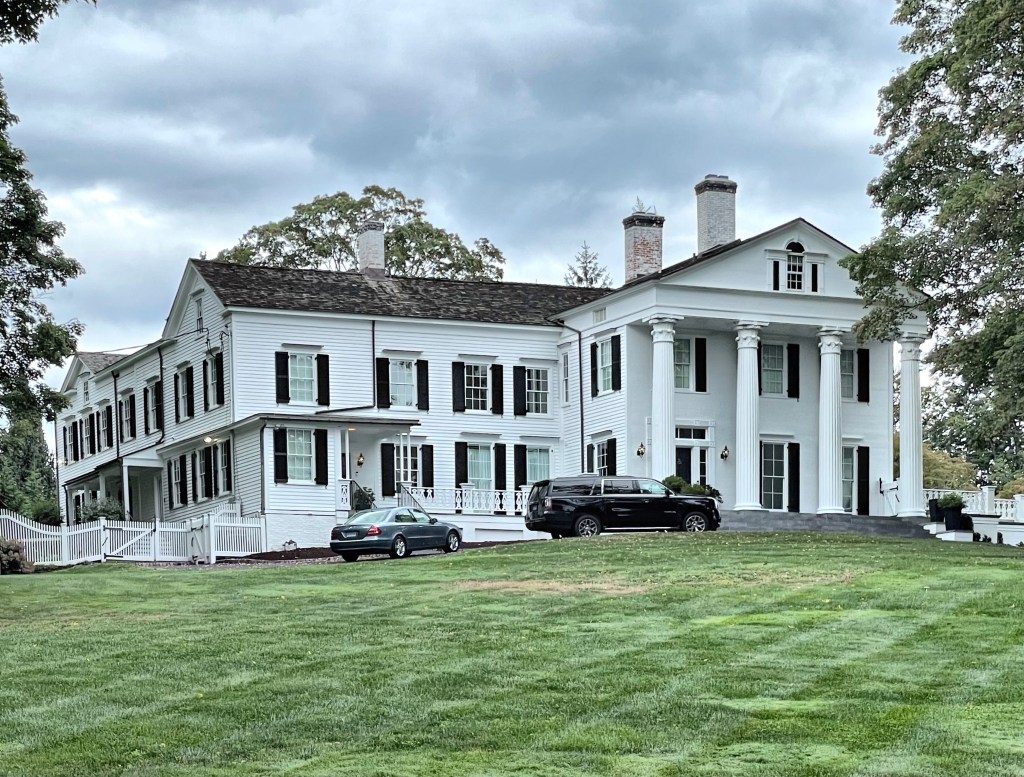
William W. Wakeman Mansion // c.1833

William Webb Wakeman was born in Southport, Connecticut on June 19, 1799, the son of Jesup Wakeman, an eminent citizen of the community. As a young man, William worked with his father in his commercial and trade enterprises. He acquired his own vessel early in his career, and gradually accumulated a line of trade vessels, sailing to New York, Savannah, Georgia and Galveston, Texas. By mid-century he was involved in the East Indian and China trade under the firm name of Wakeman, Dimon & Co. He built and owned a line of steamships during the late 50s, and was commissioned by the Federal government during the Civil War to transport troops and equipment. His massive Greek Revival mansion was built around 1833 on one of the largest house lots in the village, perched high on a hill overlooking the harbor. The three-bayed facade is framed by a two-story portico. Supported by four fluted columns, the capitals and entablature are similar to the “composed” order of Minard Lafever and the “composite” order of Asher Benjamin, popularized in the 1830s and 40s in their pattern books for architects and builders. After William died in 1869, it was likely his widow, Mary Catherine (who lived to be 99 years old, outliving all of her six children) who enlarged the home with massive two-story ells.