In 1790, Joshua Ballard built this house on a prominent triangular lot on the turnpike connecting New Hampshire’s largest city at the time (Portsmouth) with the future Capital (Concord). The main door is flanked by fluted pilasters and surmounted by a pediment with dentils and strong proportions. The old tavern was purchased in the late 1800s by Charles A. Hoitt, a granger and selectman in town. As with many old homes on Main Street in town, the house was converted to apartments with a small commercial space at the ground floor.
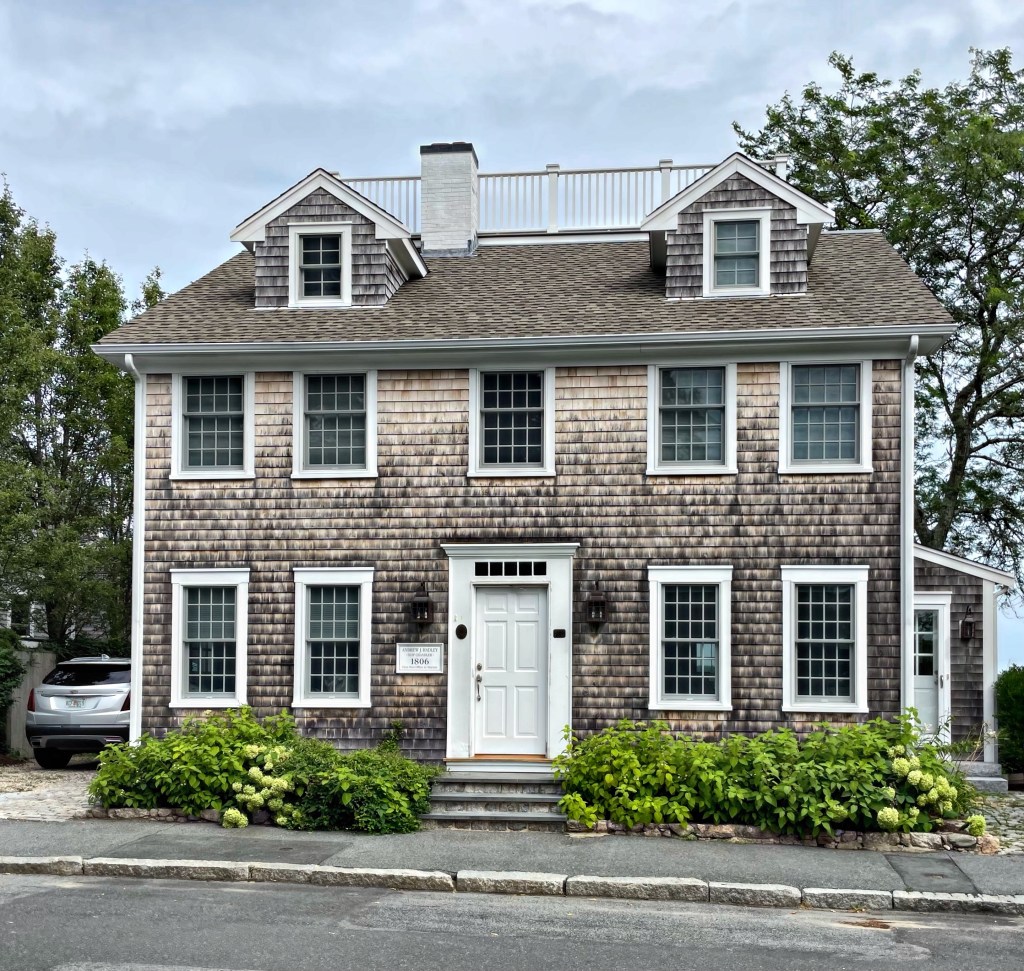
At the corner of Main and Water streets in Marion’s Wharf Village, this beautiful building has long ties to the town’s rich maritime history. The building was constructed by A.J. Hadley in 1806 as a ship chandlery, a shop selling all the goods necessary for sailors and fishermen who were docked just steps away. While Hadley’s store occupied the right half of the first story, the western (left) segment housed the first Post Office in the village, leaving Hadley and his family on the second floor. There is something so special about fishing villages in New England, while the populations of these towns are very different than they once were, the buildings and history still convey martime history and the way of life here over 200 years ago.
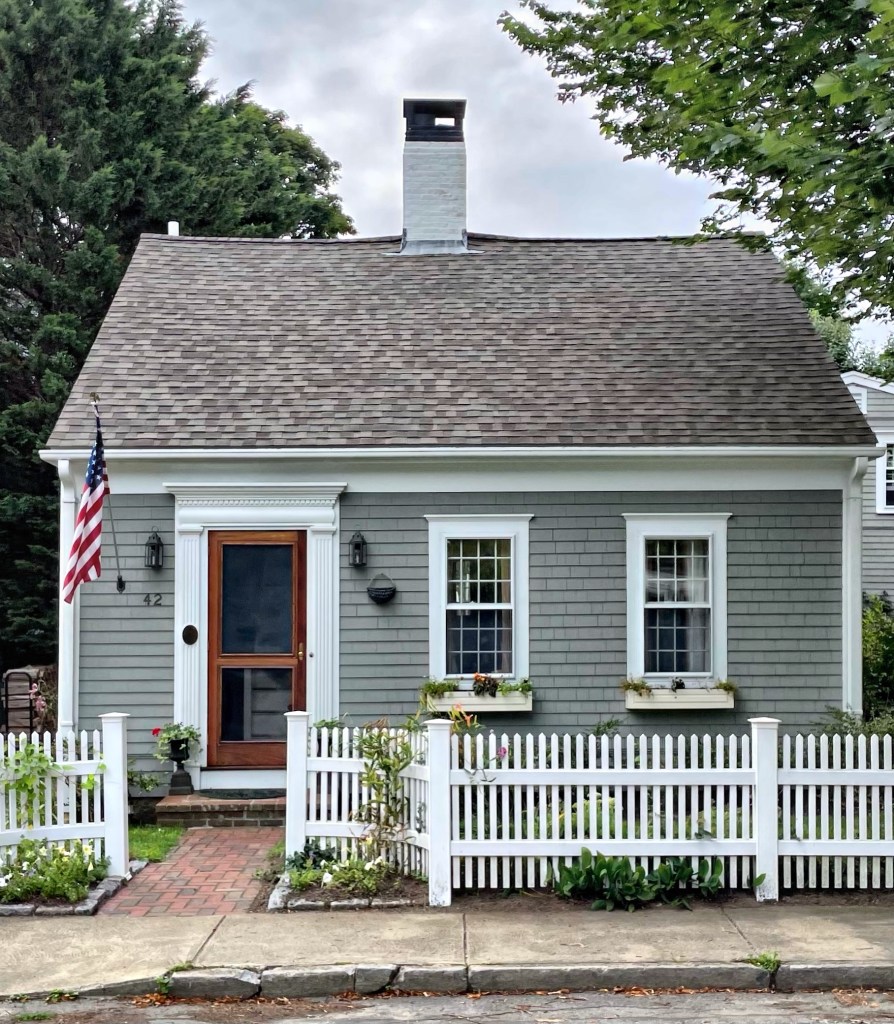
This tiny half-cape house in Marion was built in the mid-19th century for Timothy Hiller Briggs (1822-1877), a whaler. Based on the Federal/Greek detailing on the house, it is also likely the home was built much earlier for Timothy’s father, Silas, a sea captain, and was willed to his only son upon his death in 1833. Timothy died at the young age of 54 and his widow, Josephine, maintained the cottage until her death in 1924! The home is a half-cape as it has an off-center door with two bays of windows at the facade. A full-cape would be symmetrical with a central door and two windows on either side. The central chimney would provide heat to all rooms in the cold winter months.
I do love a good adaptive reuse story! This Marion, Massachusetts church building was constructed in 1830 for the town’s growing Universalist congregation. Architect Seth Eaton was hired and furnished plans, likely relying on neighbor, Warren Blankinship, a carpenter and congregant, to construct the building. It blends together the Greek and Gothic Revival styles well, but in a less sophisticated form. By the mid 20th century, membership of the church dwindled, and it finally shuttered its doors. With the building’s future uncertain, at a time where demolition for surface parking lots was the go-to solution, Marion residents Andrew and Dorothy Patterson, purchased the building and soon after worked with local artists in town to restore the building for use as an art space. The Marion Art Center was thus founded in 1957, and to this day, serves as a non-profit community cultural organization dedicated to promoting the visual and performing arts.
Welcome to Marion, Massachusetts! Colonized in 1679 as “Sippican”, the town was once a district of adjacent Rochester, Massachusetts. The name, which also lends itself to the river which passes through the north of town and the harbor at the heart of town, was the Wampanoag name for the local tribe that once utilized these lands. Native settlements in present-day Marion dates as far back as 3000 B.C. as the local people were members of the Wampanoag tribe who, when the Pilgrims came, lived in a number of villages in Southeastern Massachusetts under the leadership of the great chief Massasoit. By the 19th century, the town was mostly known for its many local sea captains and sailors whose homes were in town. Today, the coastal town is known for its charming village and large waterfront homes, oh and amazing architecture!
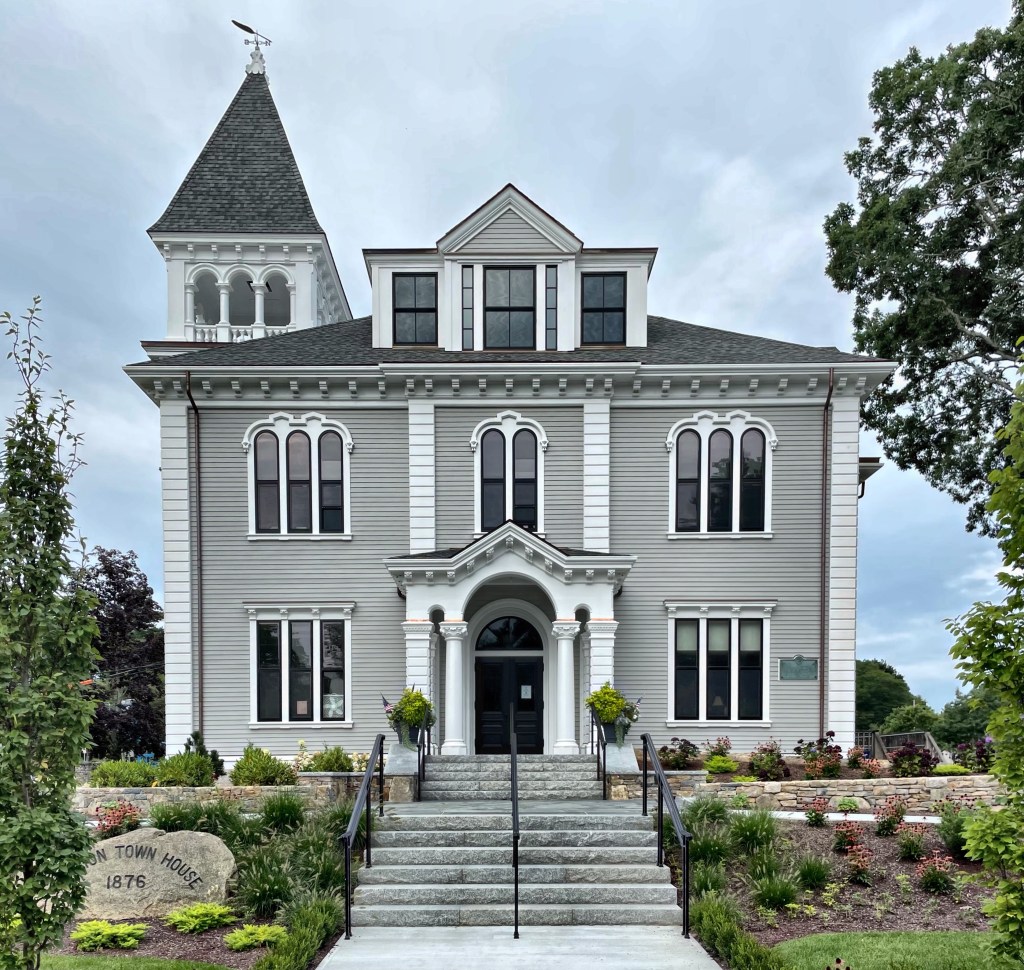
This building was constructed in 1876 by Mrs. Elizabeth Taber (1791-1888), who, at the age of 85, founded Tabor Academy in town. She named it after Mount Tabor in Palestine rather than after herself. The school was built towards the end of the “Age of the Academies”, when in 1852, Massachusetts became the first state in the country to make education compulsory. While some major private institutions already existed, many more were founded in the mid-19th century. Tabor Academy served as a private school for boys and girls over 12 years of age, and was to remain free for local students. With the rise of public schools in the state, many academies began to struggle with admitting students, especially those that had parents willing to pay additional money for enrollment. The school struggled around the Great Depression and thus, traded buildings with the Town of Marion in the 1930s and this building became the Marion Town Hall, a use it retains to this day. The building itself is a stunning Italianate design constructed from plans by Boston architect William GibbonsPreston.
Stay tuned for more buildings and history on one of my favorite Massachusetts towns!
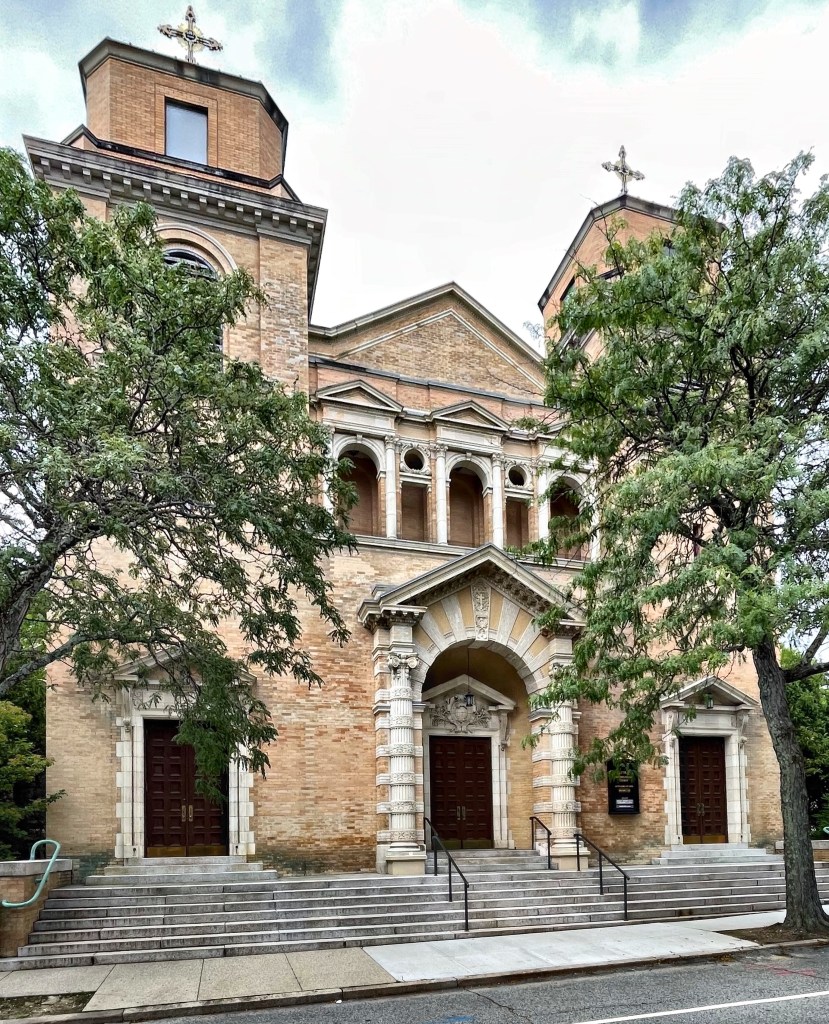
One of the best examples of Renaissance Revival architecture in Rhode Island is the Central Congregational Church of Providence. Constructed between 1891-1893, this building was the new home to a growing congregation, which outgrew its original Thomas Tefft-designed building on Benefit Street (which has since been occupied by RISD). Famed architect Thomas Hastings of the firm Carrère and Hastings of New York City, was hired to furnish plans, and worked closely with Reverend Edward C. Moore to make sure the building was fitting of the site. The church is cross-gabled in form and is constructed of yellow brick with terracotta trimmings, evocative of Spanish and Italian Renaissance styles. The facade has a detailed central pavilion which is flanked by two towers. These towers were originally surmounted by elaborate belfries, but these were damaged by a hurricane in the mid 20th century and replaced by the present brick caps. The dome and vaulting is of tiles by Rafael Guastavino, it is the first dome that he constructed in the U.S., making this building even more significant.
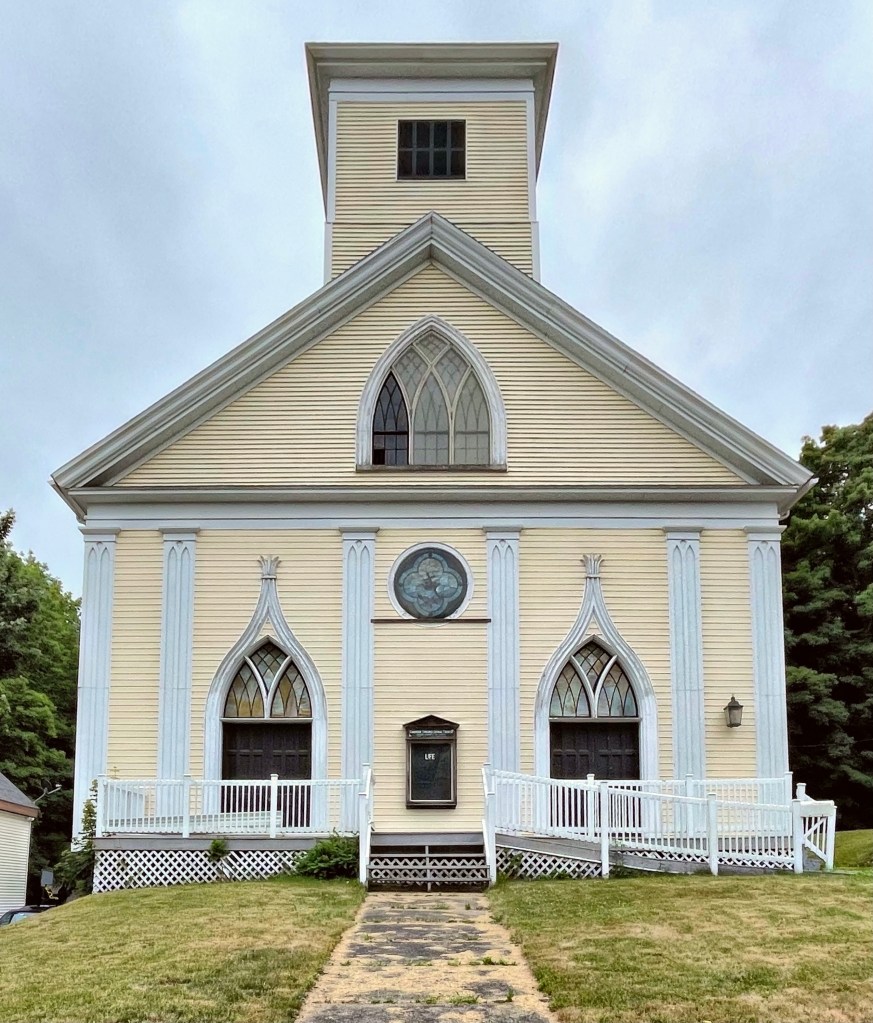
This stunning Gothic Revival church was built in 1843, on the site of the blockhouse, erected 80 years prior for the settlers of the area from native attack. In the 17th and 18th centuries, many rural parts of New England had blockhouses erected to allow the settlers a defensive fort from attack. The blockhouses were often garrisoned wooden structures with small windows on all sides to allow for gunfire to attackers below. The structure would protect those inside from arrows and melee weapons. This building however, was constructed later for the Universalists, who believed in “universal salvation,” who had been meeting since 1821 in a schoolhouse beside the town common. The church, in its original state with its steeple and clock, was an extremely sophisticated example in wood of the Gothic Revival style with its pinnacles, lancet windows and pilasters. Sadly, the steeple and clock were removed in the early 1920’s for safety reasons as the structure could not support it without significant engineering. The church and congregation changed to the United Church of Christ-Congregational denomination in 1964. After that, the building was occupied by a brewery (believe it or not), before being reverted back to a church by the current congregation.
The Octagon form of architecture was conceived in 1848 in the prolific mind of Orson Squire Fowler, phrenologist and author of books on sex, family relations, and many other subjects. His book A Home for All, or, the Gravel Wall and Octagon Mode of Building struck the fancy of a certain few, and Octagon homes were built across the country, for just about a decade until they fell out of favor almost overnight. This home in West Gardiner, Maine, was built by Jesse Tucker in 1856 on land his father had cleared, replacing a more standard structure. The new octagon house was being constructed as a gift to Jesse’s soon-to-be wife, but tragically fell from the roof of the barn when building, and died. The home was completed, and it was seemingly acquired by Jesse’s twin brother David. The home remained in the Tucker family until the 1950s.
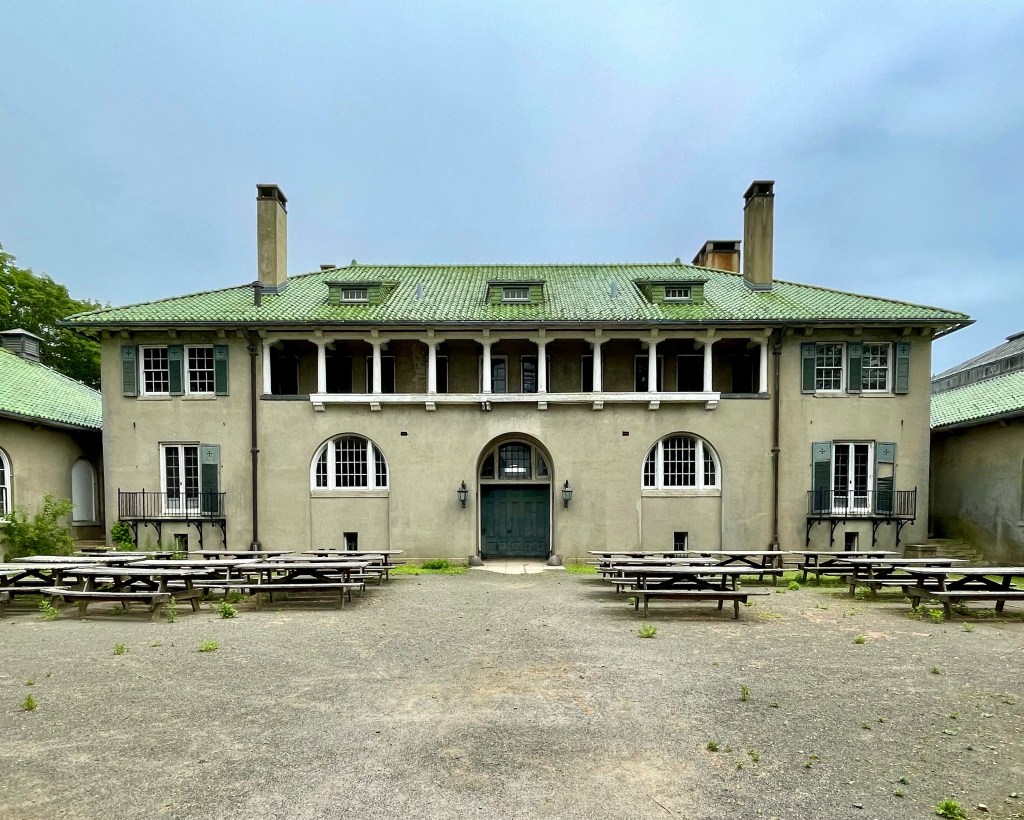
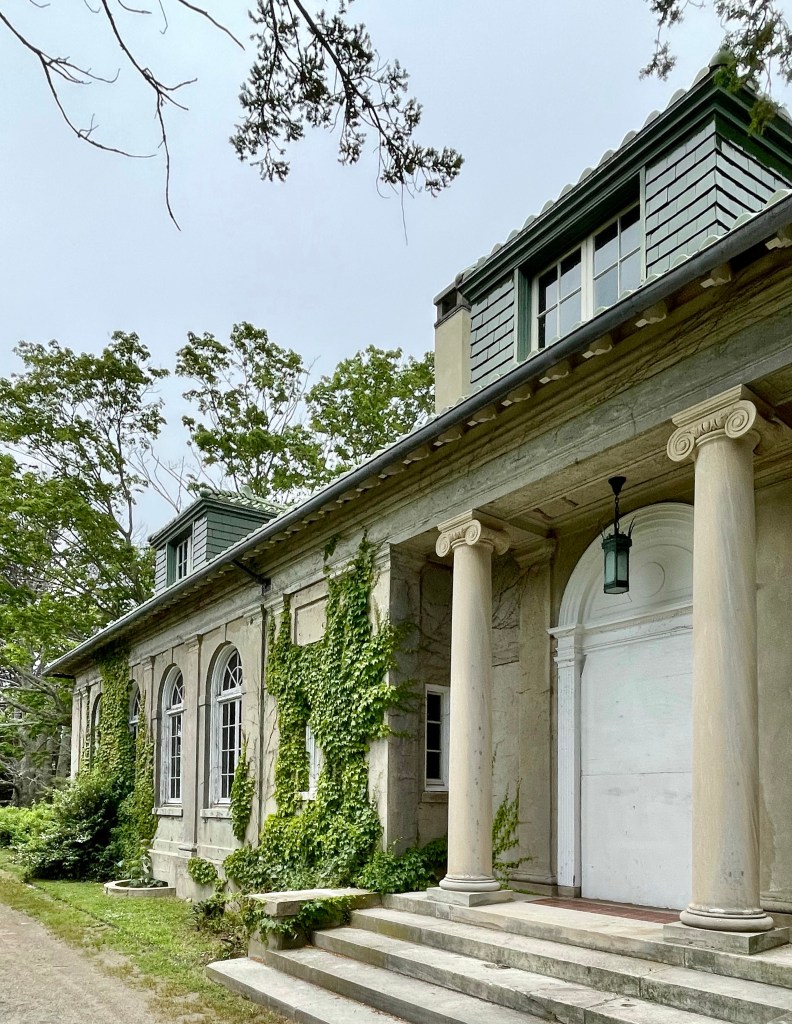
Another of the stunning buildings on the Harkness Estate is this massive all-purpose building that served a variety of functions, but I will call it the Carriage House. The building was constructed in 1908 and designed by James Gamble Rogers, mimicking the Renaissance Revival grandeur of the main home, Eolia. As previously mentioned, the large, U-shaped building was a multi-use support compound for the Harkness Family and their farm. The South Wing (right) of the building served as a clubhouse for Edward Harkness and his friends, with a billiards room, squash court, and two bowling lanes. This wing has large windows looking out towards the ocean and the large gardens on the property. The central block contained a garage with a turntable to facilitate the parking of limousines, a gas pump and a car wash for Mr. Harkness and his growing automobile collection. The North Wing (left) contained the horse stables, carriage area, tack room, smithy, and even a space dedicated to dog grooming. Upon close inspection you can see small rounded stones near the portals to allow the wheels to hit them rather than damage the building. Perhaps most importantly, the Carriage House was the location for the furnace room with its huge steam boiler. This boiler heated the Carriage House as well as the Mansion via an underground steam line. Apparently the building will soon be undergoing a restoration. Fingers crossed!
Another of the handful of original structures extant on the Seaside Sanatorium campus in Waterford, Connecticut, is this gorgeous Tudor Revival style duplex constructed for medical staff housing. Like the Main Building and Nurse’s Residence, this duplex is credited as a design by the great Cass Gilbert. While the building was constructed after Gilbert’s death in 1934, the plans were likely all drawn up at the time the Maher (main) building was in 1933. The duplex residences feature a symmetrical facade with two main entranceways, located in slightly projecting pavilions, and are set within basket-arched openings, detailed with alternating brick and granite voussoirs. There are three-part windows above the doors which project from the wall plane and have cross-braced faux balustrades of wood below. Identical sun porches are recessed at either end of the house. The small associated garage to the immediate northeast has a simple design, but one that reflects the style of the houses. Like the other buildings on the campus, this structure is vacant and is slowly rotting away. So sad to see.




 Buildings of New England