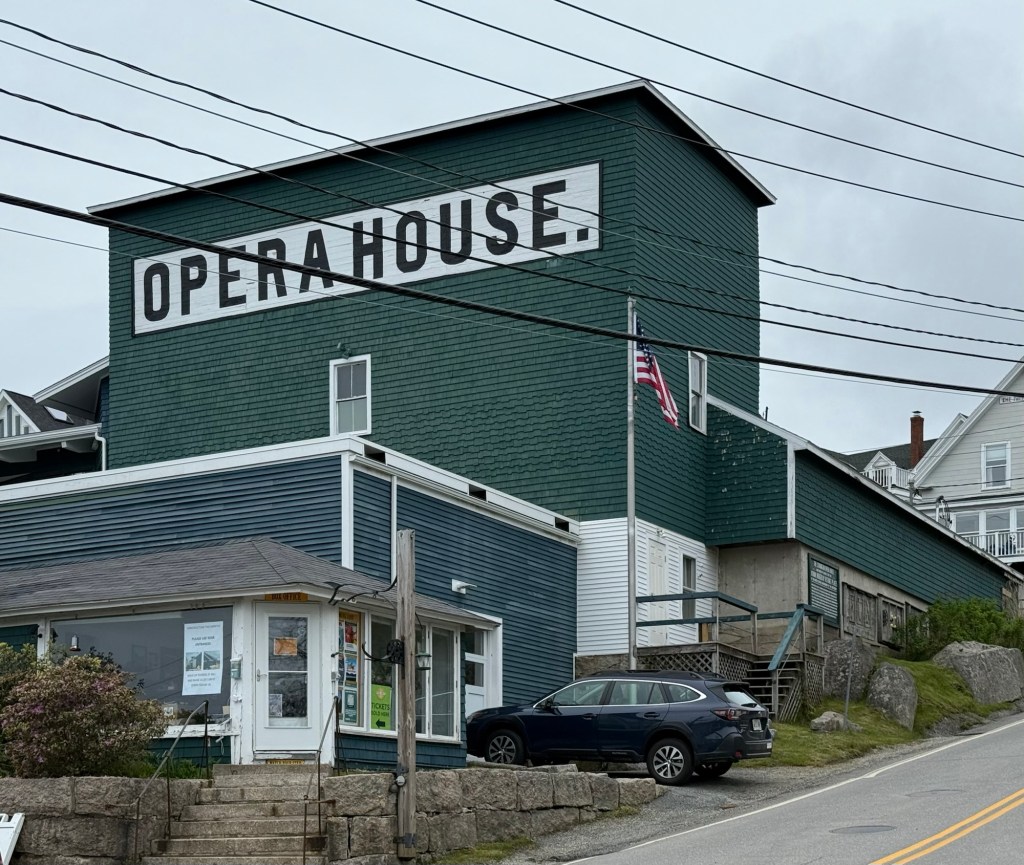
Stonington Opera House // 1912

The Stonington Opera House in Stonington, Maine, is a historic early 20th century community center and theater in a vernacular style. The theater was built in 1912, on the site of an earlier hall built in 1886, that seated more than 1,000 people and hosted national touring shows that arrive via steamboat from Rockland. The original theater was destroyed by fire in 1910 and was soon-after rebuilt. It continued the practice of the earlier facility, hosting theatrical productions, lectures, and community events. Its floor was covered with removable folding chairs, so that the space could be used for dances and other social events. It was fitted for screening films around 1918, which came to dominate its uses in the mid-20th century. Unlike other early theaters, which were generally incorporated into municipal buildings, this one was specifically built as a profit-making venture, and was designed to accommodate elaborate theatrical productions, and is probably the oldest of this type in the state. After being vacated for much of the later half of the 20th century, the Stonington Opera House was restored and reopened by Opera House Arts, a local nonprofit, in 2000, and is once again used primarily for film screenings and theatrical productions.
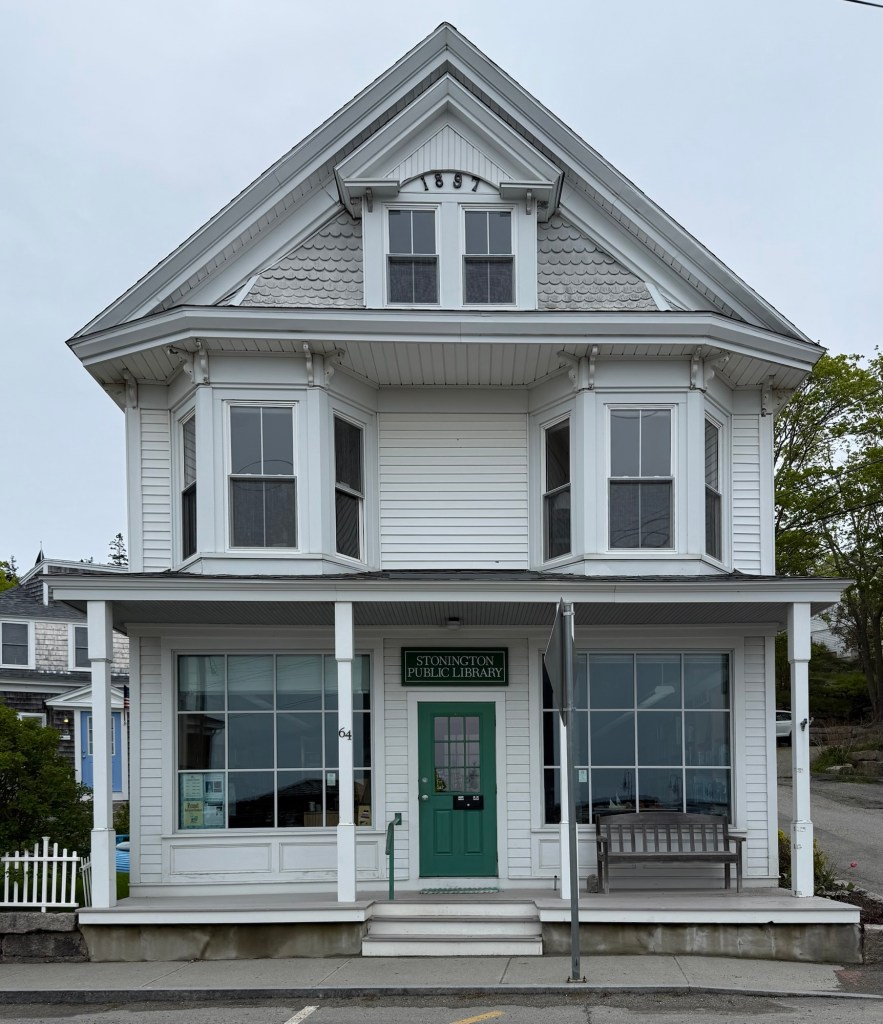
Thurlow Building – Stonington Public Library // 1897

This historic building on Main Street in the working harbor village of Stonington, Maine, was built in 1897 as a commercial block for Mr. Thurlow. John Leman Thurlow (1842-1928) was born on Deer Isle and was engaged in business in town. Mr. Thurlow had this commercial building constructed to house a local grocery store with residences above. Just before its completion, the Deer Isle Gazette wrote, “J. L. Thurlow’s new store is up and the side finish is being put on. It will be a fine commodious two story and a half building, an ornament to the place.” The building later was occupied as a millinery shop, a dress shop, and was purchased in 1959 by a newly established library association. The all-volunteer operation to establish a library in town began in 1955, and a collection of donated books was eventually housed in a rented space until this building was purchased as the home of the village library.

Central Hall // c.1885

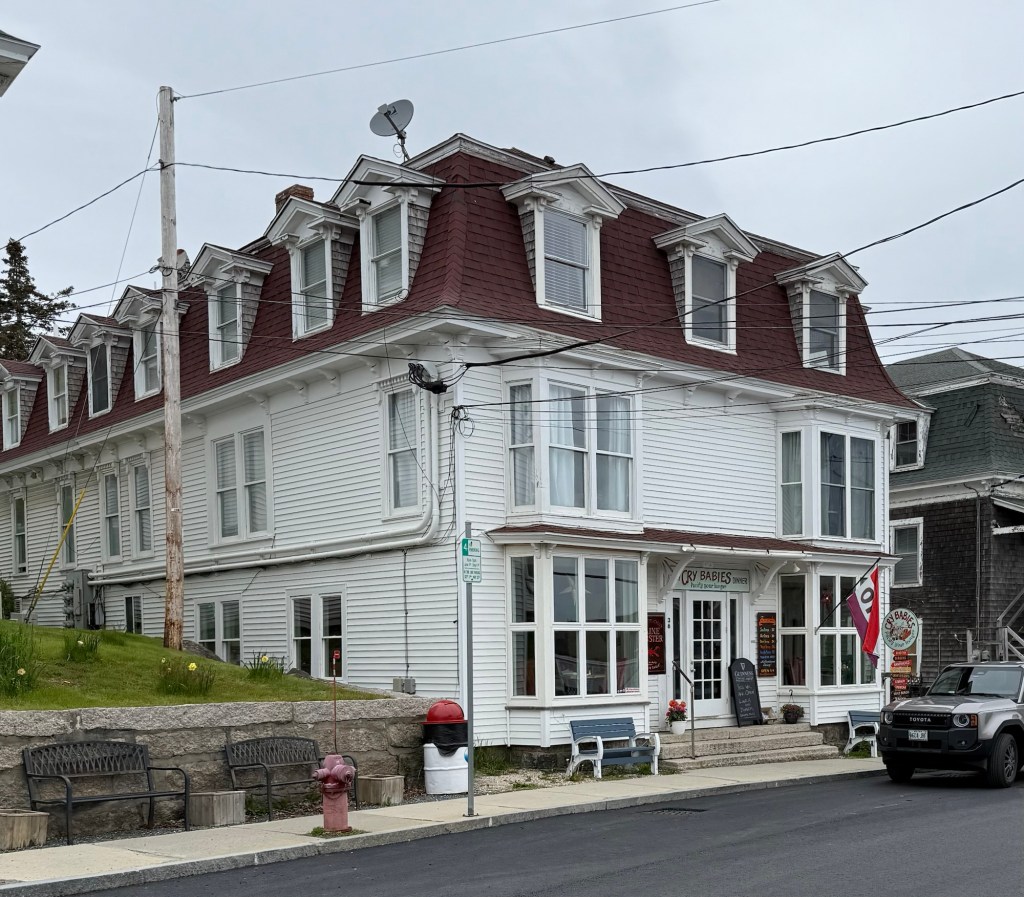
Located next door to the former High School (now the Town Hall) of Stonington, this mansard-roofed commercial building on Main Street is a prototypical example of late 19th century mixed-use architecture seen all over Maine. This building was constructed in the 1880s and known as Central Hall. The building contained retail spaces at the ground floor and tenement housing in the upper floors for workers at local granite quarries. The building is well-preserved and an important contributing building to the working village of Stonington.

Jacob Randall House // c.1796

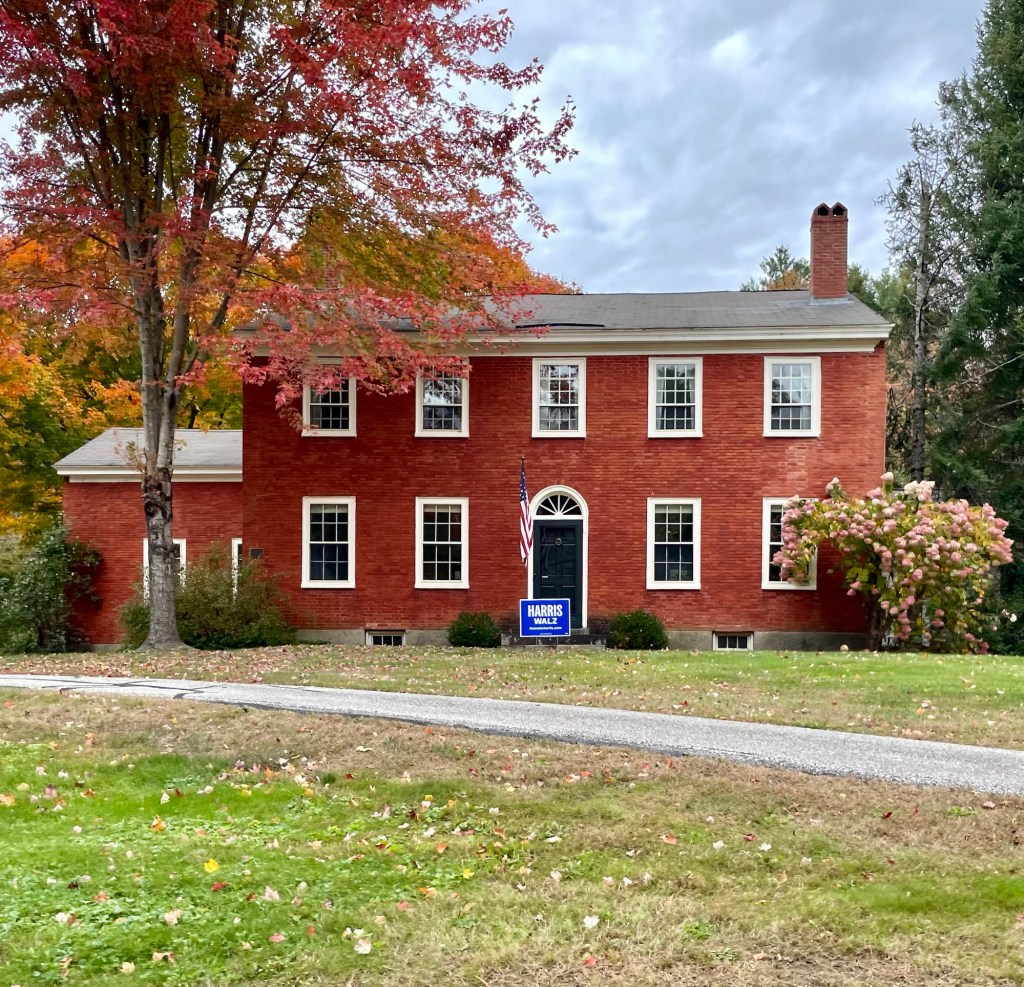
The Jacob Randall House on Lawrence Road in Pownal, Maine was built about 1796 and is a fine example of Federal period architecture executed in brick in the town. Built for Jacob Randall (1771-1829) a native of Weymouth, Massachusetts, who purchased over 100 acres of land in town, and had this house built sometime after. His property spanned the nearby Chandler River, upon which he established a sawmill and gristmill. When Pownal was incorporated in 1808, Randall was one of its first town selectmen, a seat he held nearly continuously until his death in 1836. The house is five bays wide, with its entrance in the central bay, recessed with a fanlight.

Sabbathday Lake Shaker Dwelling House // 1883

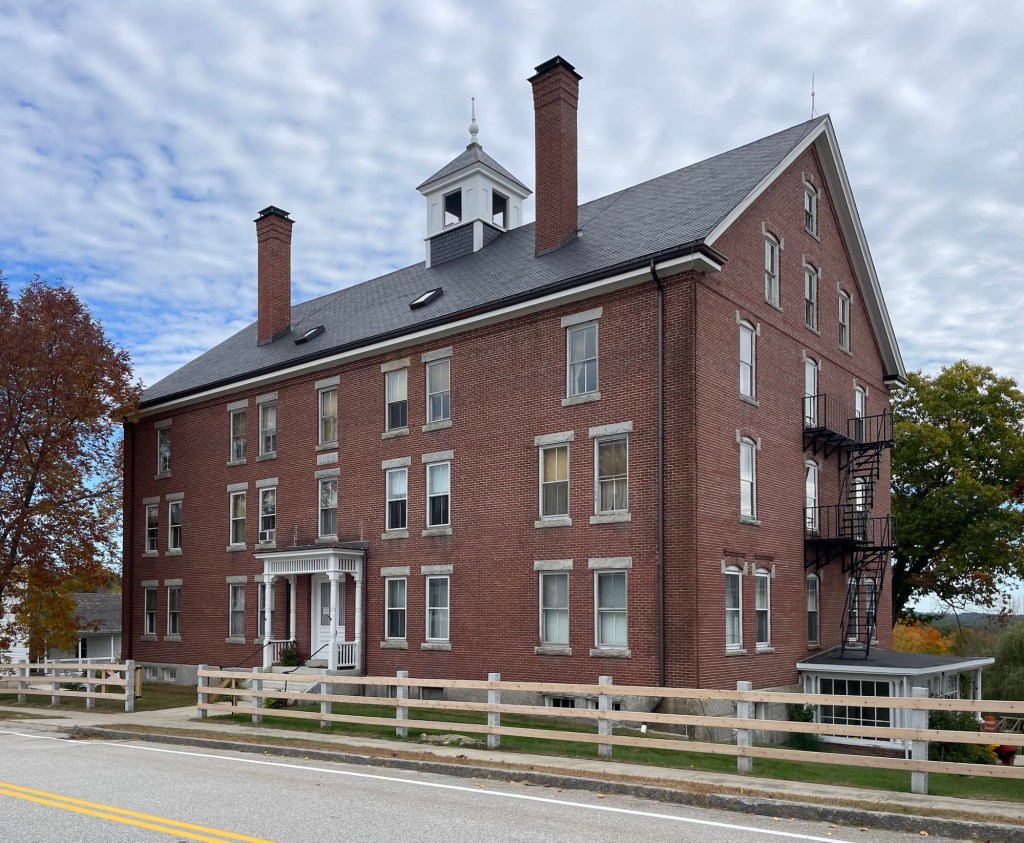
Located across the street from the Sabbathday Lake Shaker Meeting House in New Gloucester, Maine, this large, three and one-half story brick building has historically housed many of the active Shakers in the community. Built in 1883-4, the central dwelling house contains a self-contained town of rooms, including sleeping rooms, a chapel, music room, kitchen, and dining facilities. The building features granite lintels and sills and a square cupola at the roof. The building was designed by the Portland architects Francis H. Fassett and John Calvin Stevens.

New Gloucester Universalist Meeting House // 1839

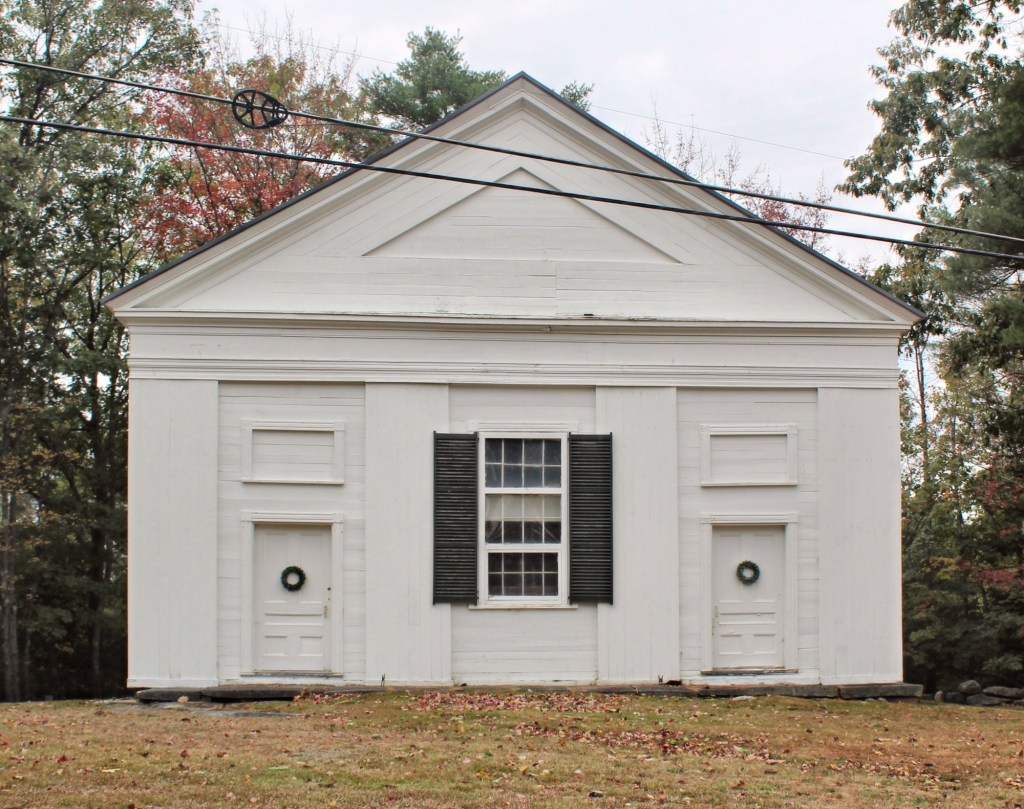
Constructed in 1839 by local carpenter/builder Jeremiah Cotton, the Universalist Meeting House of New Gloucester, Maine, is a dignified example of the Greek Revival style in a rural context. The First Universalist Society of Christians in New Gloucester was organized in 1805 with members drawn from nearby communities including those of Gray and Poland. In 1830, the congregation reorganized itself into the First Universalist Society of New Gloucester and Pownal. During its early history services were apparently held at various places in the community for it was not until November of 1838 that a meeting was called “…to take such measures for Building a meeting house as a majority of Subscribers or proprietors may think proper.” After World War I, membership began to decline and from the 1930s until the society’s demise in 1957 services were infrequently held. In 1969 the property was acquired by the New Gloucester Historical Society, who maintained and restored the building. The flushboard siding, fully pedimented gable, pilasters, and symmetrical façade containing two entry doors, all work together to display the Greek Revival style in a high-style example, but in a rural setting. The building appears to be opened periodically by the Historical Society.

Kennebunk River Clubhouse // 1889

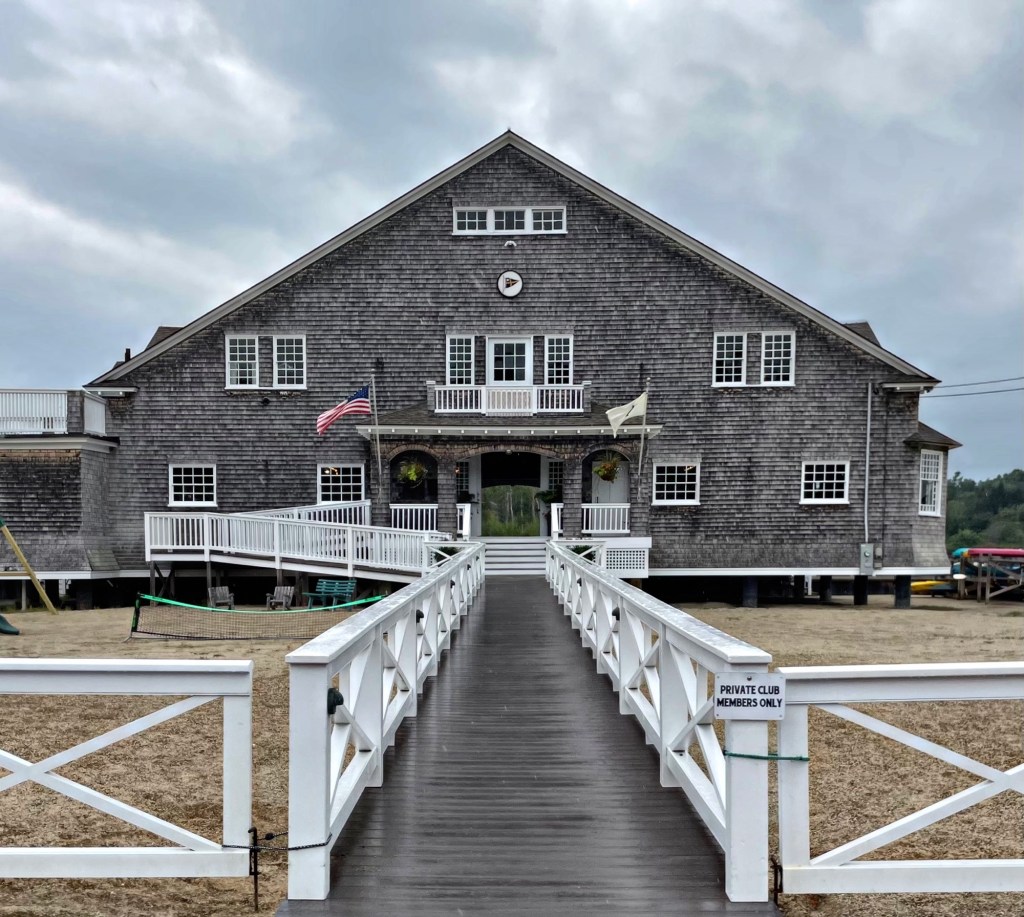
A canoe club formed by John B. McMaster, Prosper L. Senat and Henry E. Woods in the early 1880’s grew to a large “Lobster Club” by 1888. In 1889, the club decided to build this Shingle style boat house and the organization changed their name to the ‘Kennebunk River Club’ and hired Lowell, Massachusetts architect, Frederick W. Stickney to design a new boathouse. It opened in August 1890. The club grew quickly as Kennebunkport continued to become a premier summer destination with wealthy residents building summer “cottages” in town. In the building, canoes were built and hired out to club members by members of the Penobscot tribe who came to Kennebunkport from Old Town each summer working here. The clubhouse is one of the finest Shingle style recreational buildings in New England.

Kewaydin Cottage // 1900

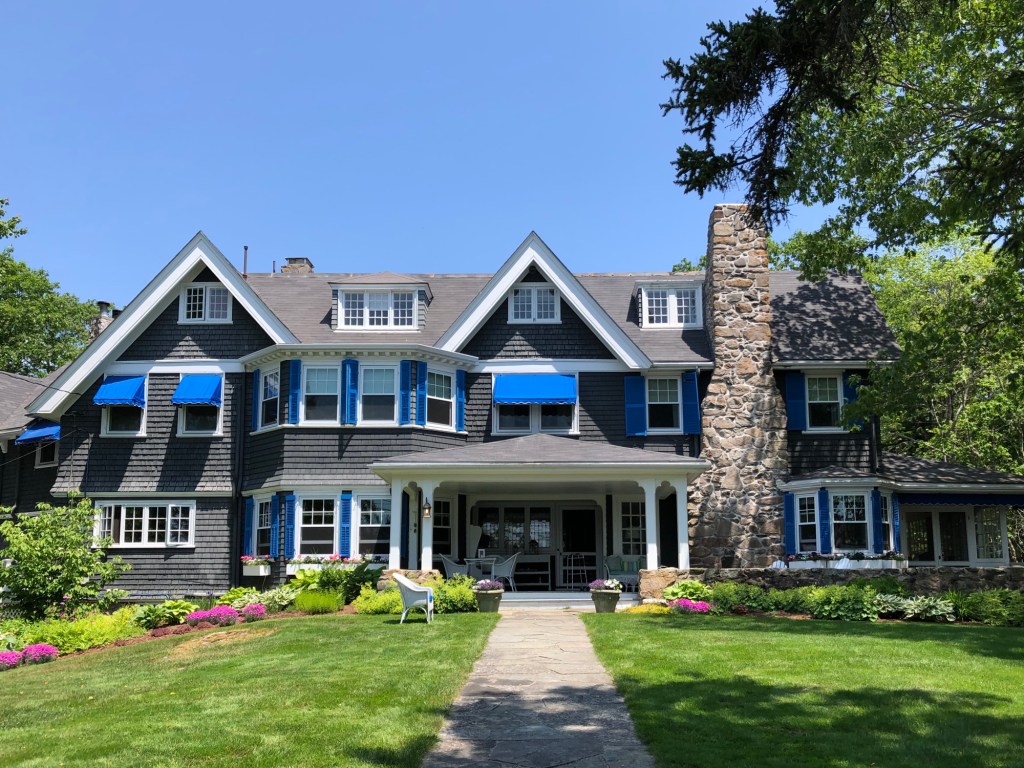
Every good summer cottage needs a name, and this charmer in the Cape Arundel Summer Colony of Kennebunkport, Maine, is no exception! This is “Kewaydin” a massive summer home built for Eben Caldwell Stanwood Jr. (1856-1906) a merchant and later banker of Boston, Massachusetts. Stanwood hired the Boston firm of Chapman & Frazer to design the cottage, which blends Shingle style and Queen Anne elements in a rustic composition that has such great curb appeal! The use of cedar shingles and rubblestone chimneys, paired with the vergeboards and complex roofline with dormers, makes this one of the gems of Kennebunkport!

Walpole Meetinghouse // 1772

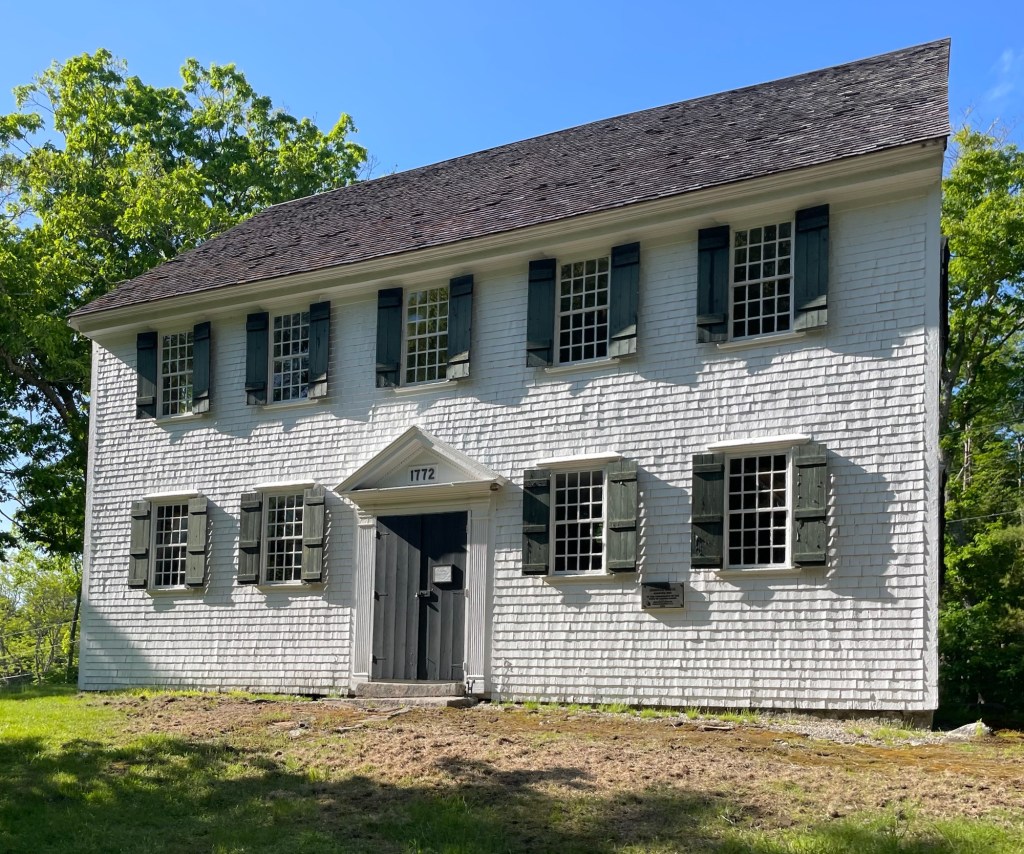
The Old Walpole Meetinghouse is a rare extant example of a Colonial meetinghouse in New England. The building is located in South Bristol, Maine, in the village of Walpole, and was constructed in 1772. The Walpole Meetinghouse is a little-altered example of a late colonial church in Maine (and one of the oldest actively used churches in the state.) The building originally housed a predominantly Presbyterian congregation of Scottish immigrants, but as the presbytery was based far away in Boston (Maine at this point was still a part of the Commonwealth of Massachusetts) the congregation eventually became Congregationalist. The Georgian-style building is clad in wood shingles, originally stained painted a brownish yellow to blend in with the birch leaves as to camouflage it among the trees. The building was painted white in the 20th century. It is one of a few extant meetinghouses in New England that utilized shingle siding instead of the quintessential New England clapboards. It is said that these are still the original shingles. Inside, the doors all enter the single main chamber, where the ground floor is dominated by a series of box pews and the elevated pulpit is sited at the north wall. It is maintained by the South Bristol Historical Society, and is still used occasionally for summer services.