Stone Village Schoolhouse // 1835

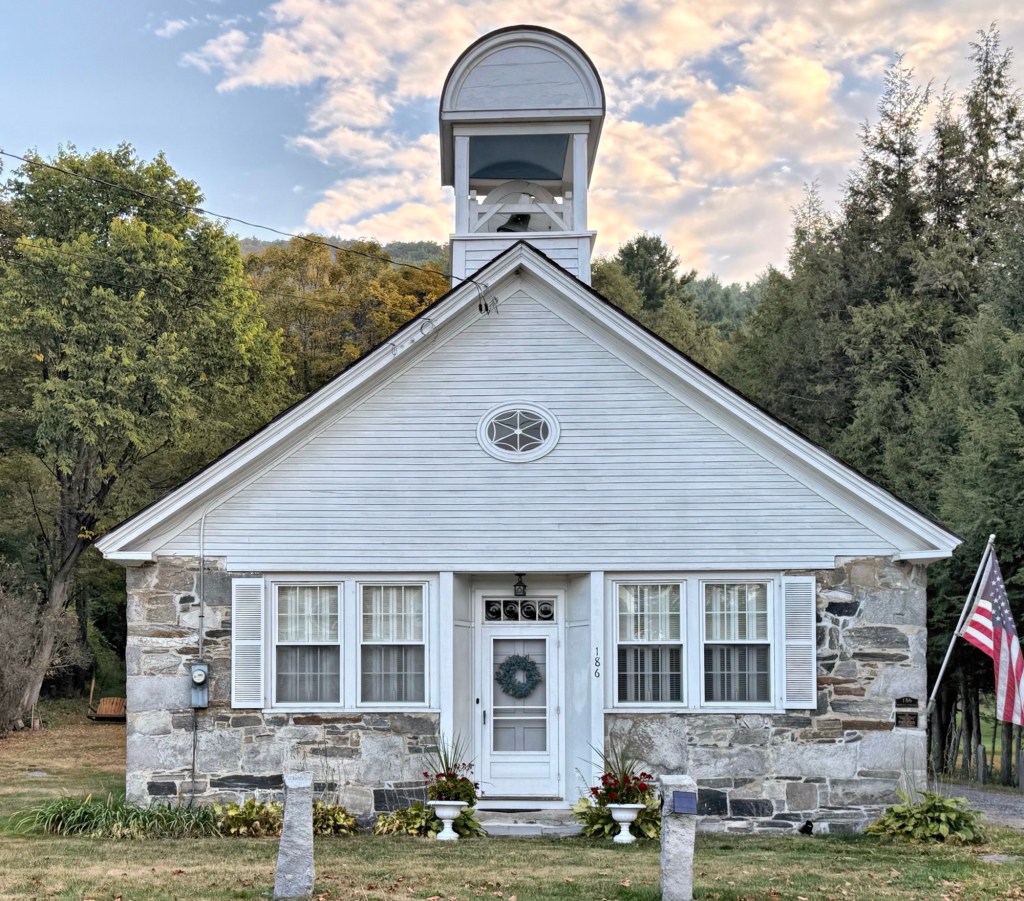
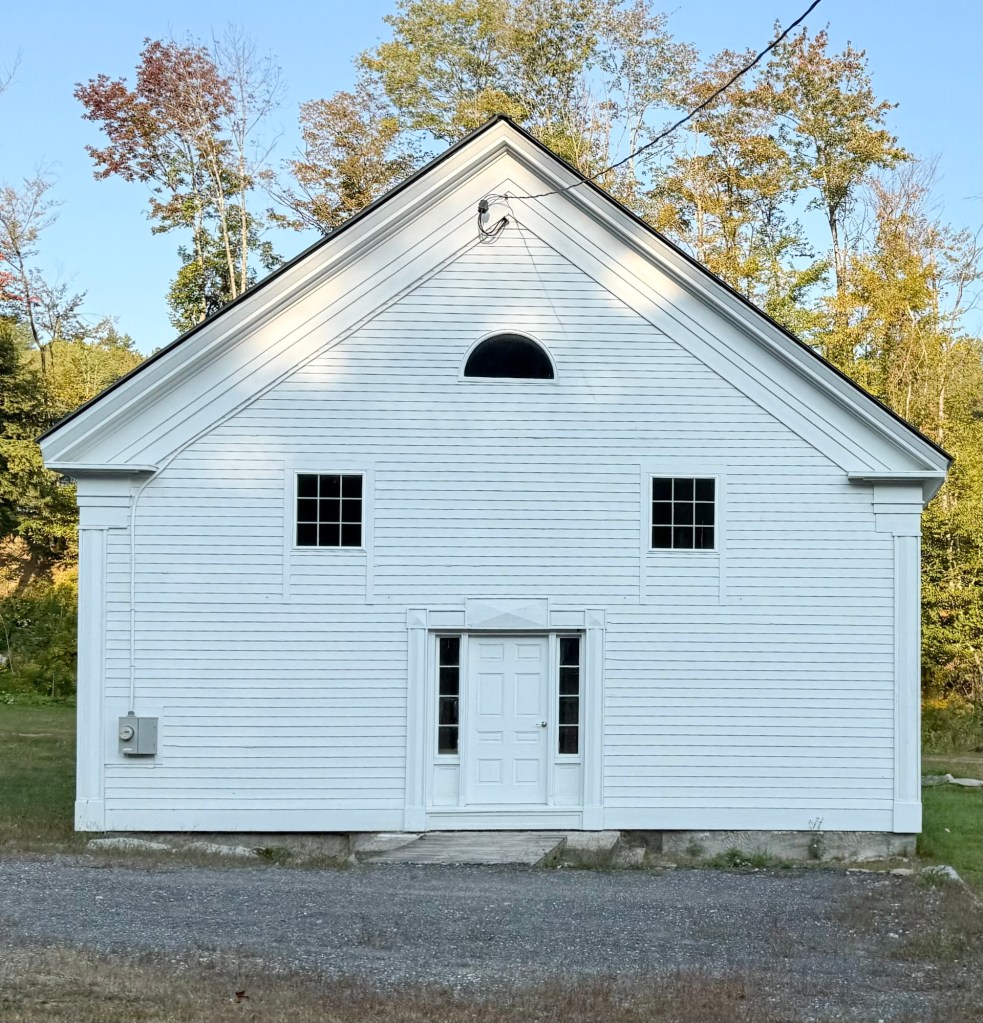
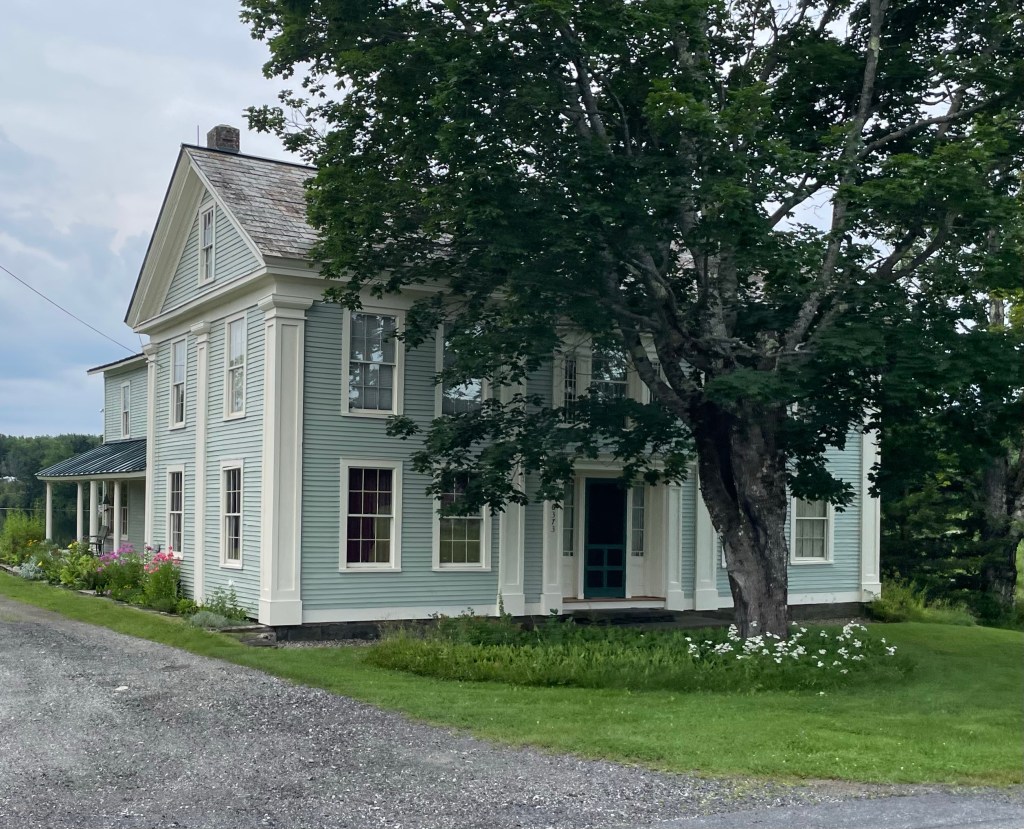
Across the street from the Gideon Lee House in the Stone Village of Chester, Vermont, this historic schoolhouse is one of the oldest in the state and one of the few extant schoolhouses built in stone in New England. The Stone Village Schoolhouse is a rare example of a snecked ashlar building, where the construction method is said to have been brought to the area by masons from Scotland and Ireland which is known there as ‘Celtic Bond’. Oral tradition state that Scottish masons from Canada introduced the technique to local masons while erecting a mill in nearby Cavendish in 1832. Local Chester resident, Dr. Ptolemy Edson became such a fan of the building that in 1834, he had his home, the first stone building in Chester, built in this method. He then would influence the rest of the North Village of Chester, where many of his neighbors, as well as the church and schoolhouse, built their structures in snecked ashlar. Completed in 1835, the schoolhouse is a single-story rectangular plan building with the end gables forming a high pitched roof with a bell cupola over the facade’s gable. The snecked ashlar siding appears only on the first floor with traditional wood clapboard siding in the gable above. Built as School No. 3 for Chester, the building converted to residential use in the 20th century, but still maintains its important materiality and the iconic school bell, allowing passersby to understand its original purpose.

Chester Congregational Church // 1828

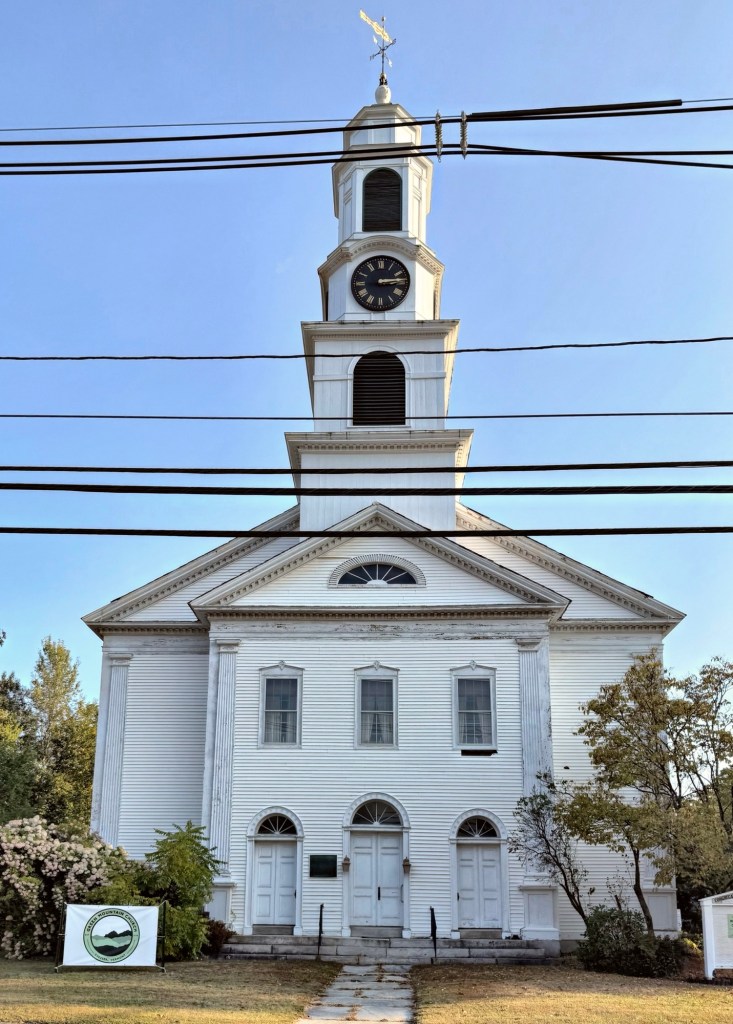
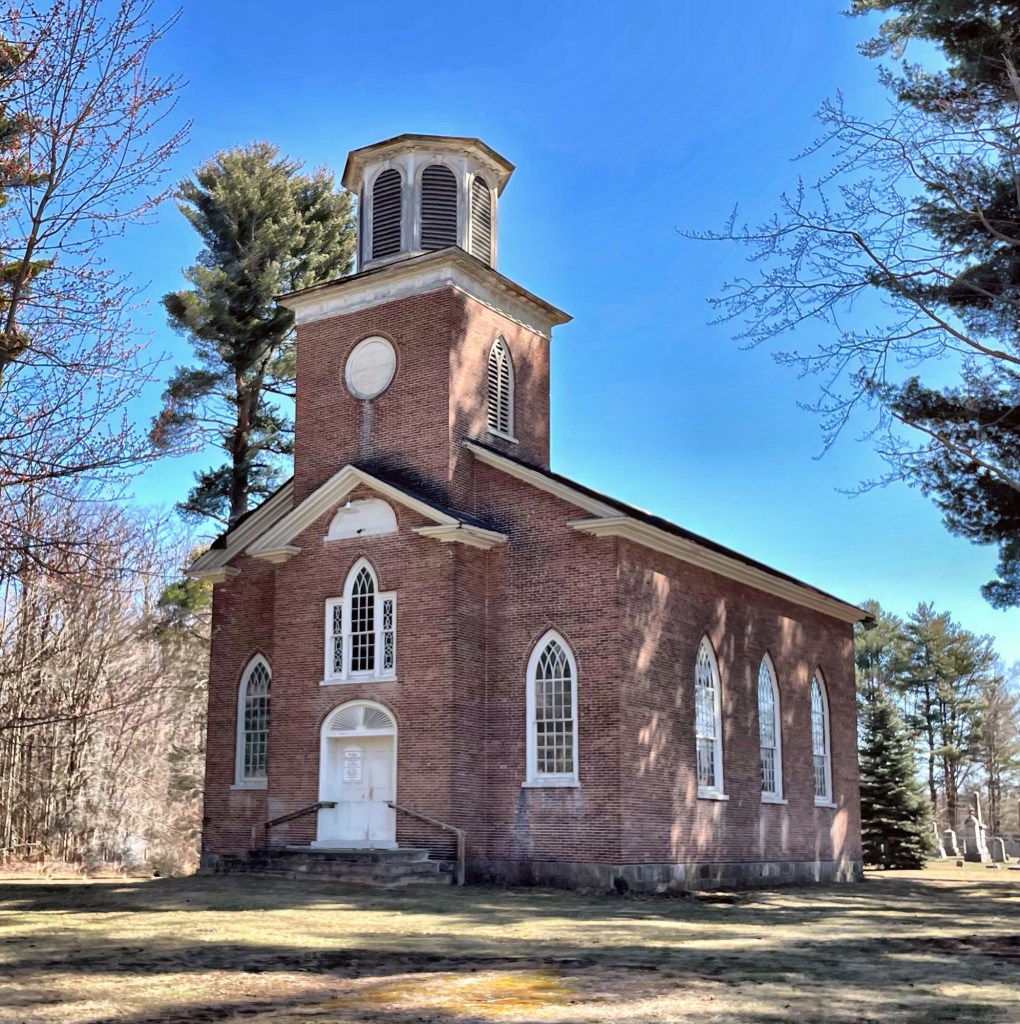
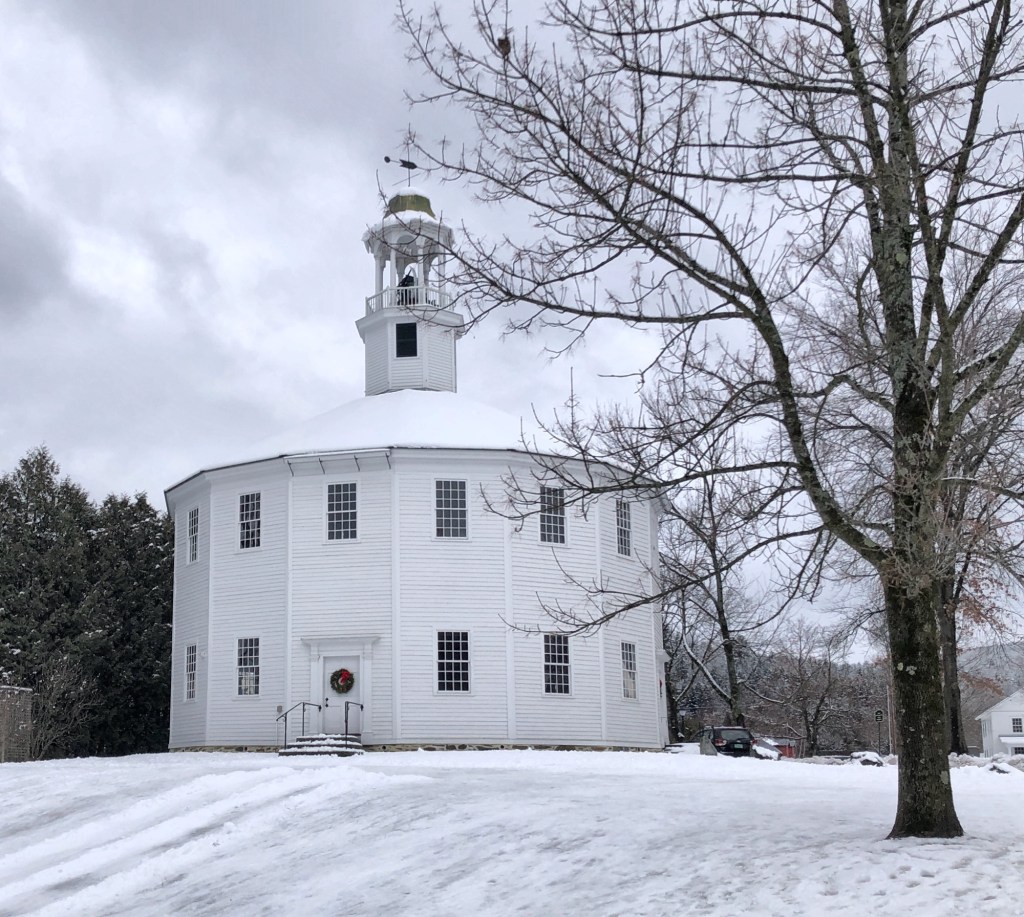
A significant landmark in Chester, Vermont, the Congregational Church of Chester is a sophisticated interpretation of ecclesiastical Federal architecture. Built in 1828, the soaring, five-stage clock-and-bell tower with bellcast cap and weathervane rises above a pedimented three-bay entrance pavilion with semi-elliptical fanlight, a common motif in the style. It is believed that local carpenters, Comfort Carpenter Dresser and his son, Charles Dresser, built the church, likely from planbooks for specific details. The church originally served as the Union Meeting House for Congregational, Methodist, and Universalist parishioners until around 1848, when other churches set off to build their own structures, after this, the Congregationalists remained here. Today, due to years of dwindling membership and a small population in the surrounding area, the church is “replanting” to reactivate membership and realign with community needs. Hopefully this significant church will be preserved in the future, possibly through preservation grants!

Chester Masonic Temple // 1907

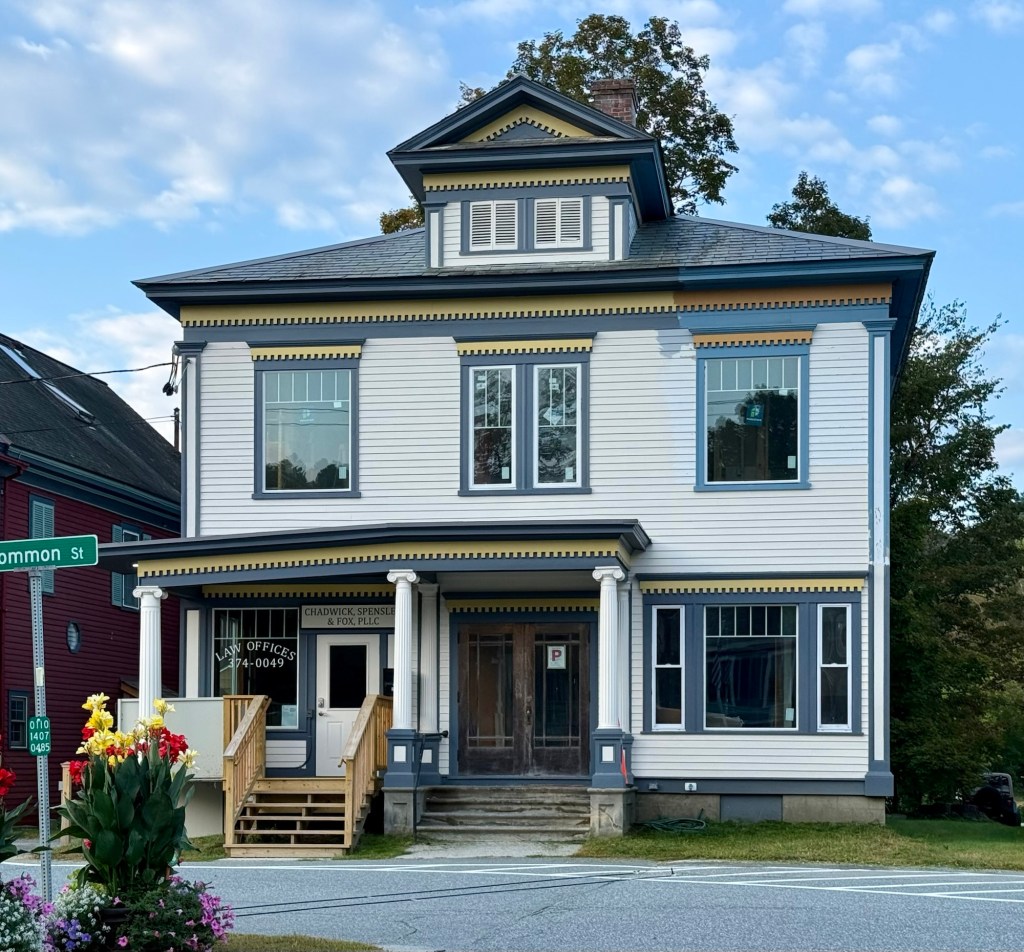
Built in 1907, this handsome building on Main Street in Chester, Vermont, has long been the home to the Olive Branch Lodge 64 of the Freemasons, an international fraternal organization. Colonial Revival in style, the building features corner pilasters that support a denticulated entablature along the eaves of the slate hip roof. A projecting portico over the front entrance is supported by classical Ionic columns. The 1920s marked a heyday for Freemasonry, especially in the United States. By 1930, over 12% of the adult male population of the United States were members of the fraternity. Following the Great Depression and WWII, membership sharply declined in fraternal organizations, like the Masonic Temple. A number of years ago, the Lodge here moved to a new building in a nearby town, and a local law firm purchased the building and spent 18 months renovating the building for use. Today, the historic character and even symbology remain on the building, while it houses a local business. 

Robbins & Marsh Store // c.1858

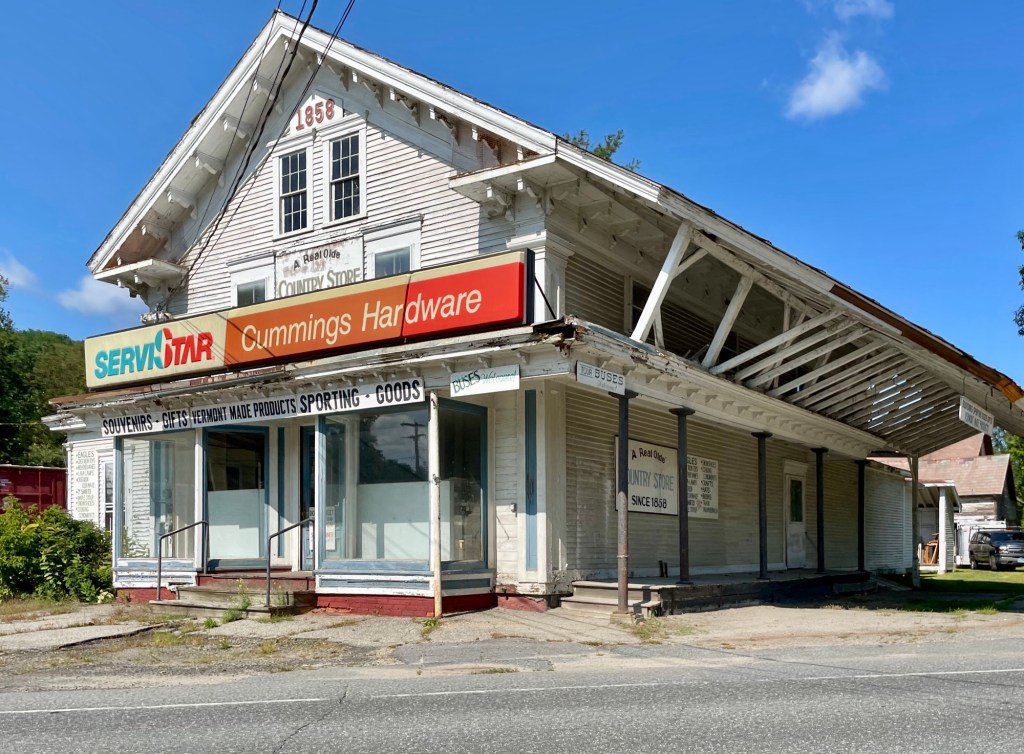
Located in the Chester Depot Village, a commercial and civic assortment of buildings constructed in the mid-19th century between the often feuding North and South villages in Chester, Vermont, this handsome commercial building contributes to the character and history of the once thriving commercial center of town. Built across the tracks of the Central Vermont Railroad from the town’s depot, this Italianate style building dates to about 1858 when a P. H. Robbins opened an all-in-one store, selling everything from groceries to hardware and building products. Mr. Marsh was later joined by Frederick W. Marsh, who entered into the business, then named the Robbins & Marsh Store. The business thrived with the close proximity to the railroad depot with later alterations to the building including the addition of plate glass storefronts and a massive side awning porch. Business slowed after WWII, as rail service slowed and ultimately stopped in town. Today, the handsome building remains as an important visual anchor to the depot village. 

Simonsville Union Meetinghouse // 1848

A once excellent example of a Gothicized, vernacular Greek Revival church in Vermont, the former Simonsville Meetinghouse in Andover, Vermont, has since been renovated into a private residence, removing almost all of the original fabric. Long ago in the Simonsville area of Andover, the residents desired to have a meeting house. There was a Baptist church in the village of Peaseville, but not all the Simonsville residents were Baptists, in fact, there were several religious denominations being followed. None of the religious groups had enough followers in Simonsville to be able to afford a minister and a church building, so they got together and combined their efforts and finances to erect a union meetinghouse that they would share. In April of 1847, the Simonsville Union Meetinghouse Society was formed and later that year, construction began, with the building completed in the spring of 1848. By the late 20th century, membership and use of the building dwindled, causing deferred maintenance and threatening the future of the church. The trustees of the church sold the building, and the church has since been renovated for private home. Sadly, the gothic belfry and historic window fenestration were altered in the renovation, but the entry and basic form remain.

St. John’s Episcopal Church, Highgate // 1831

St. John’s Episcopal Church stands in a grove of pine trees at the southeastern end of the Highgate Falls village green in Highgate, Vermont. The church is built in a transitional style which combines the pointed arches of Gothic architecture with a unique Gothic-Palladian window, but with a traditional plan and massing commonly found in Federal style churches in New England. The church was built between 1831-1833 by Joel Whitney of nearby Enosburg, and was consecrated on May 21, 1834, by Rev. John Henry Hopkins, the first Bishop of the Episcopal Diocese of Vermont. The congregation was a full parish until 1896 and maintenance has since struggled due to dwindling use. The wooden steeple was removed in the late 20th century, but the church stands as an important architectural landmark for the small town.

Whitingham Community Church // 1862

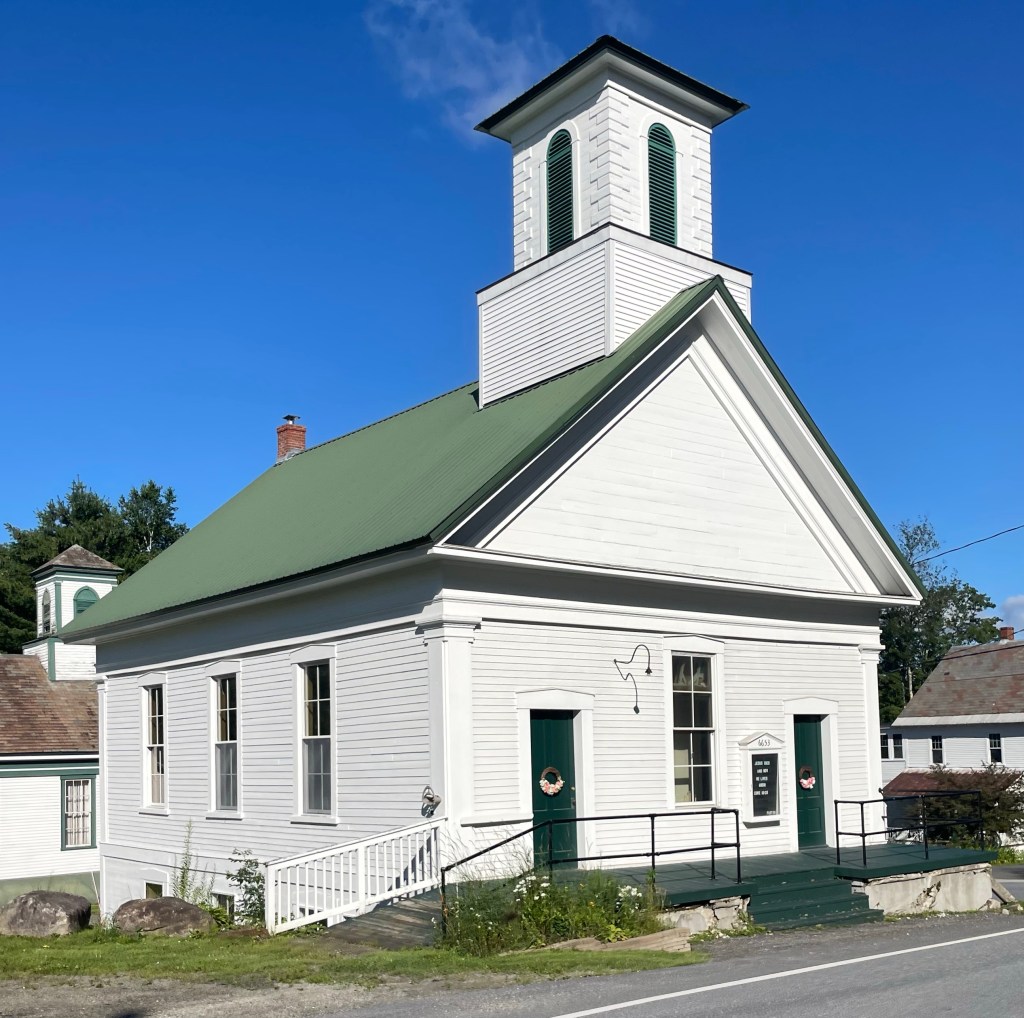
This simple, Greek Revival, frame church has a prominent pediment, corner pilasters, and two part steeple. It is built into a steep bank at the side of the road as it curves and descends into Whitingham Village, making it one of the most visible buildings in town. This church was originally built in 1862 by the Methodists who moved their congregation from their old and deteriorated church in the original Whitingham settlement on Town Hill. By the 1870s, the Methodist congregation was in decline. The Baptist congregation started holding meeting at this church regularly in Sadawga Village in 1879 and then purchased it. They made repairs and alterations in 1881. In historic photographs c. 1890- 1920s, the church’s steeple had third and fourth sections consisting of a narrow octagonal section topped by a small bell shaped dome. By the 1940s photographs show these had been removed. The building now serves as the Whitingham Community Church. My friends who tag along with me on visits throughout New England always say that every town has at least one old, white church. They aren’t wrong!

Reuben Winn House // 1840

The main part of this stunning Greek Revival house in Whitingham, Vermont was built by Reuben Winn around 1840 and was originally located on the town common, southeast of the present village of Whitingham. The building was the only one to be moved from the hill to the valley as development shifted westward to the current town center and its access to water power for industry. This house was moved in 1889 and was run as the Sadawga Lake House hotel by Charles E. Putnam who also was listed in local directories as a slate dealer. The present slate roof was likely added by Putnam! The architectural element which stood out to me was the three part Palladian window directly above the front door that uses the motifs of the Greek Revival pilasters and entablature common to the other façade elements. The home is very well-preserved and even maintains a detached barn on the property!

Waterbury Railroad Depot // 1875

Historic train stations are among some of my favorite types of buildings as they transport you to a different time (no pun intended). The Waterbury Railroad Depot was built in 1875 by the Central Vermont Railroad, connecting Montreal, Quebec with New London, CT and to other lines to Boston and Albany on the way. Waterbury service began in 1849, but this updated station was built later as the railway prospered and expanded. The station suffered from some deferred maintenance for decades in the mid-20th century and its fate (like many such stations) was unknown. Beginning in the late 1990s into the 2000s, Revitalizing Waterbury worked with the Great American Station Foundation, the Vermont Agency of Transportation, and Green Mountain Coffee Roasters Foundation, establishing a capital fundraising campaign meeting the goal of $1,200,000 through donations from the private sector and community members. These funds helped restore the building in phases, beginning when Keurig Green Mountain, Inc. agreed to lease the station from Revitalizing Waterbury, and created a visitor center and cafe (now Black Cap Coffee and Bakery) that has become a first-class attraction and provided an economic boost to the downtown.

United Church of Christ, Waterbury // 1824

As soon as settlers arrived in Waterbury, they began worshipping their respective religions, largely out of private homes. The town’s meeting house was occupied by some congregations, but there was no real union church for the many growing congregations. This edifice was originally erected in 1824 as a united Congregational church by local builders, the Carpenter Brothers (how perfect is that?) The church was modernized in about 1860 with Gothic Revival detailing, which included the raising of its foundation, bargeboard, spires, and a new steeple. It was updated later in 1880 with a new chapel and ten years later, with stained glass windows. It remains today as an active church and is in a great state of preservation.