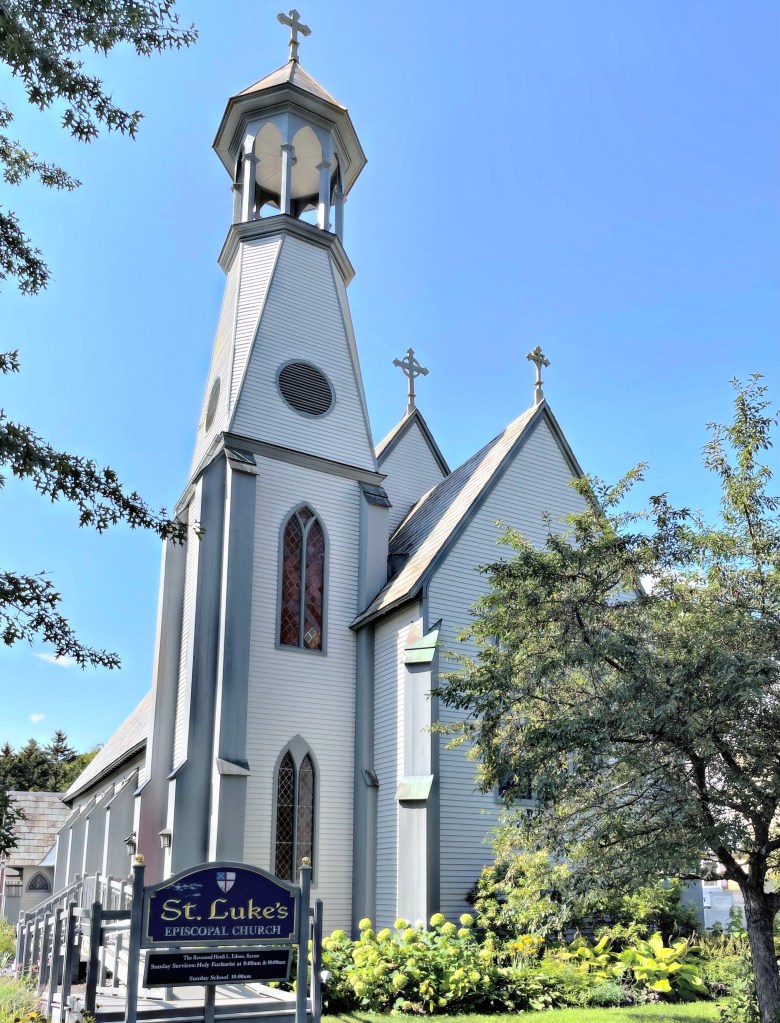
Next door to the Inn Victoria, the beautiful St. Luke’s Episcopal Church in Chester, VT, stands out as one of the only Gothic Revival buildings in the town. A small group of residents gathered in the 1860s to found a Episcopal church in the town, which already had a dominant Congregational church. They furnished money which was matched by the diocese, and Merrick Wentworth was named senior warden. Members of his family and that of Frederick Fullerton, his son-in-law, formed a large part of the congregation. Frederick and Philette Wentworth Fullerton donated a building site across the street from their home, and Mr. Wentworth’s nephew, Boston architect, William P. Wentworth, contributed plans for a Gothic-style frame church, which includes a tall corner belltower.
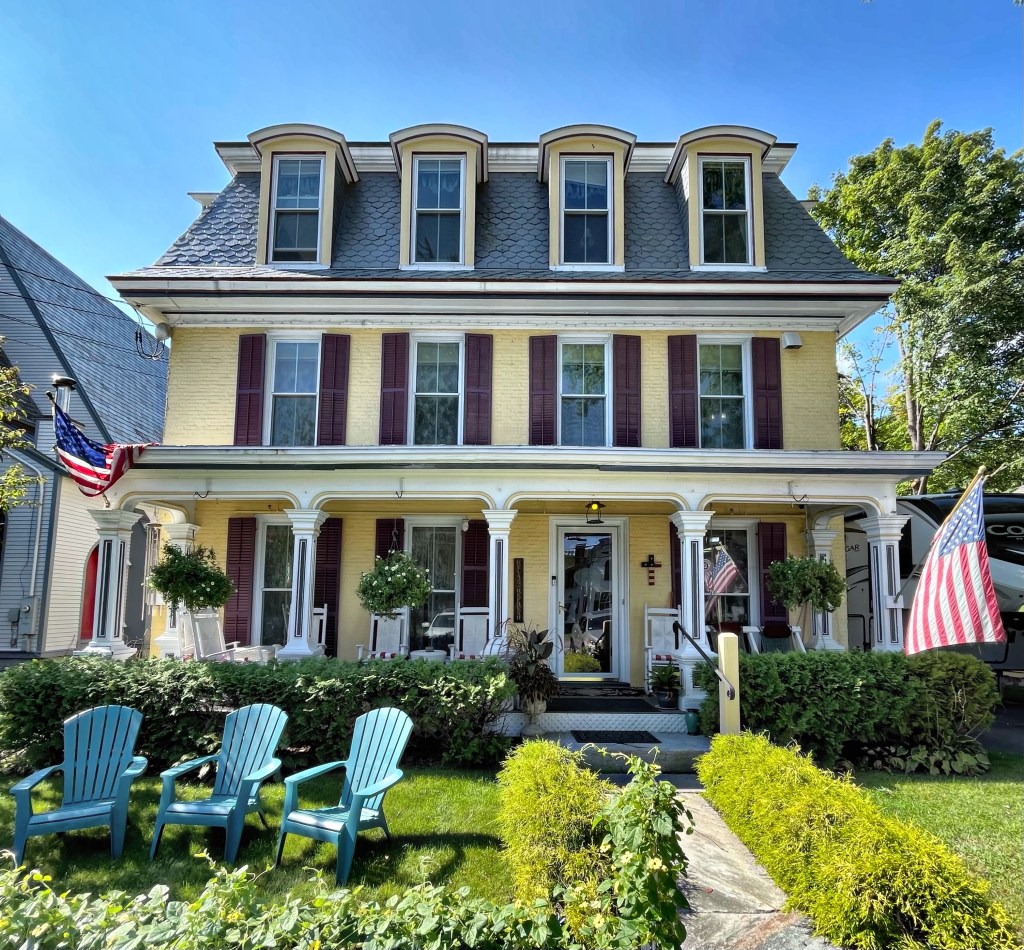
Located right on Main Street in the beautiful village of Chester, Vermont, this historic inn has been a landmark in town since it was built in the mid 19th century. The house was constructed around 1850 for Dr. Abram Lowell (1794-1876), the village doctor. Dr. Lowell conducted his medical practice in a small building next to the main house and resided in the home, which originally had a side-gable roof. Tributes printed in regional newspapers at the time of his death called him an eminent physician, accomplished gardener, “eccentric in his ideas,” and “the wealthiest man in town.” After his death, the home was inherited by his daughter and her husband, George Hilton. They immediately “modernized” the home, adding the mansard roof, which provided an extra full story of living space. The home was converted to a bed & breakfast in 1998, and has been one of the most intact, Victorian era inns in the state since! It is known as Inn Victoria, so named after Queen Victoria and the Victorian period of architecture in the United States.
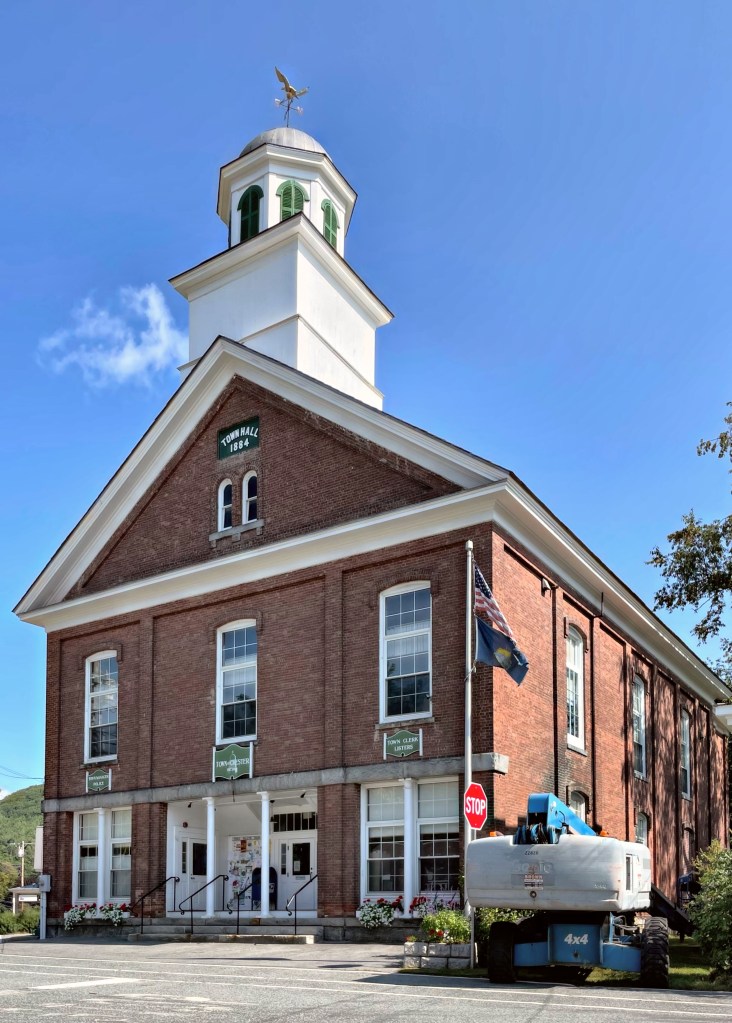
The town of Chester, Vermont, was originally chartered by New Hampshire Governor Benning Wentworth as Flamstead, in 1754. The terms of the charter were not met and the town was re-chartered as New Flamstead in 1761. In 1766, a patent was issued by New York that changed the name of the town to Chester, after George Augustus Frederick, the Earl of Chester and the eldest son of King George III. Vermont in the 18th century was contested land claimed by both New Hampshire and New York, unsettled until the colonists in the area decided to petition for their own statehood. The town of Chester voted to keep their name. The town grew with two distinct villages, Chester Village and Stone Village. Both villages were very distinct in terms of politics, religious affiliations, and architecture. When the railroad cut through the town, the route passed between Chester’s North and South villages, and Chester Depot village emerged right in the middle. The establishment of a third village by the railroad depot, offered neutral ground on which to erect a town hall, as before 1884, town meetings were held alternately each year in the two opposing villages. The large town hall building in Depot Village is a late example of Greek Revival and Italianate design.
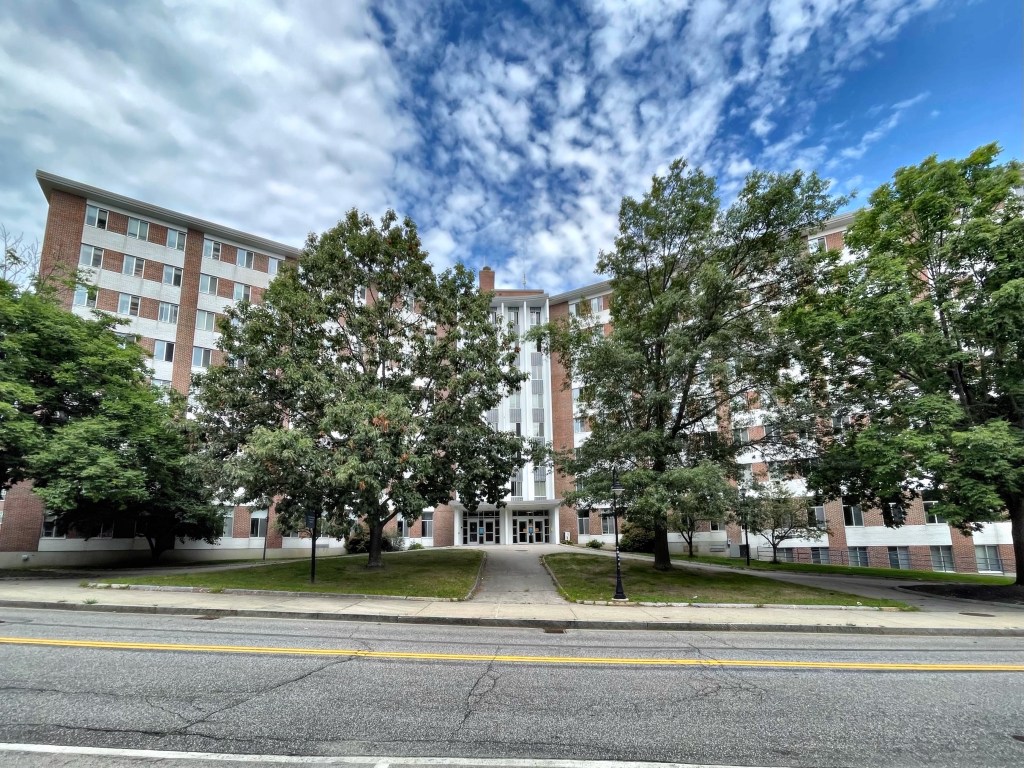
One of the most recognizable buildings (largely due to height) on the University of New Hampshire campus in Durham is Stoke Hall, a large dormitory on the outskirts of campus. The building was designed by Leo Provost, a New Hampshire-based architect, who actually graduated from UNH in 1936. Stoke Hall is named for Dr. Harold Walter Stoke, President of the University of New Hampshire from 1944-1947 during an enrollment surge that more than tripled enrollment and the beginning of a massive building program that continued for decades. The surge began with the conclusion of WWII, and the increase in young men going to college thanks to the GI Bill. Mr. Stoke got around as a President, as after three years at New Hampshire, he became President of Louisiana State University (LSU) until 1951. He later served as President at Queens College, New York, for six years. The Y-shaped building was constructed in two phases, the two wings facing the street were built in 1965, with the rear wing added the summer later. The design blends mid-20th century styles from New Formalism to Mid-Century Modern in a graceful way, especially for a college dormitory, though, I cannot speak for the interiors.
The centerpiece of the University of New Hampshire (UNH) campus in Durham, is Thompson Hall, a stunning example of Romanesque Revival architecture. Thompson Hall was the first building to be built on the new campus of the New Hampshire College of Agricultural and Mechanical Arts, which had been founded in 1866 as a land grant college and was previously located near Dartmouth in Hanover. Benjamin Thompson, a Durham farmer, died 1890, leaving an estate worth $400,000, with 253 acres (102 ha) of land, to the state for use as an agricultural school. The state accepted his gift, and construction of Thompson Hall began in 1891, with a landscape plan for the campus developed by the great Charles Eliot. The bold Romanesque building was designed by Concord, NH architects Dow & Randlett, who were among the most prestigious architectural firms in the state at the end of the 19th century. The building remains as a significant piece of UNH’s ever-growing campus.
John Sullivan was born in nearby Somersworth, and studied law. He settled in Durham to practice law in 1763, and purchased this house in 1763 (it was built in 1740 by Reverend Hugh Adams). It served as his home for the rest of his life, and is buried in the family cemetery nearby. Sullivan was a vocal opponent of British rule in the colonies, and was elected to the First Continental Congress in 1774. In December of that year he led a raid on Fort William and Mary in which the colonial militia seized munitions stored there. He was appointed a brigadier general in the Continental Army in 1775, and served through the American Revolutionary War. He participated in the Siege of Boston, and was captured by the British in the 1776 Battle of Long Island. After being exchanged, he served in the Battle of Trenton, the Philadelphia campaign of 1777, the failed attempt to recapture Newport, Rhode Island, and the 1779 Sullivan Expedition, in which the Iroquois, who had largely sided with the British, were driven from upstate New York. Sullivan’s actions and barbed personality made him enemies in Congress, and he resigned from the army late in 1779. He returned to New Hampshire, where he served as Attorney General 1782-86, and as President (the office now known as Governor) 1787-89. He chaired the state convention that ratified the United States Constitution. His home was designated a National Historic Landmark in 1972, the most prestigious designation (more than listing on National Register of Historic Places). I encourage everyone to read his Wikipedia page, he was a fascinating and polarizing early Revolutionary, that I personally did not know about until researching.
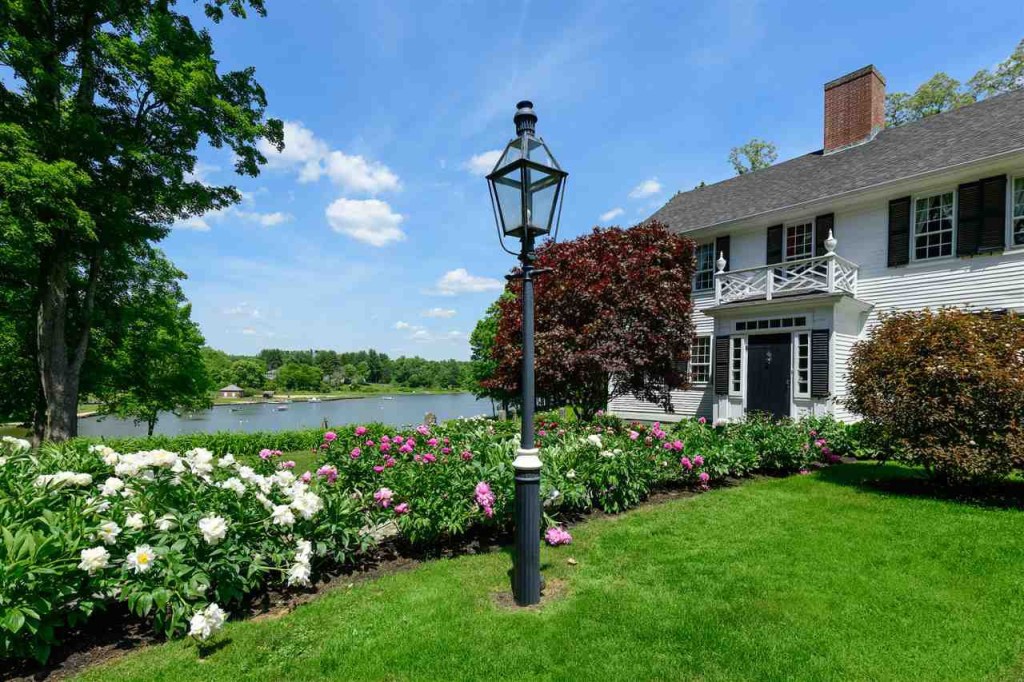
Valentine Hill emigrated to Boston in 1636 from England with his brother and began a successful career as a merchant and trader. In 1638 Valentine was made a member of the Artillery Company, In 1640 he took the Freeman’s Oath, and in that same year ordained as a Deacon in the Boston Church. In 1641 he was elected a Selectman serving until 1647. In 1643 Valentine received a grant of land at the falls of the Oyster River in what is now Durham, N.H. In 1649, Valentine and an associate got permission to build a saw mill on the river. Additional grants of land included 500 acres for farming. Due to issues with his businesses in Boston, he moved up to present-day Durham to manage his mills and property there. On the property, he employed “seven Scots”, who were indentured servants captured by British forces in the Battle of Dunbar, and among other industries, lumber was milled for use in the shipbuilding industry in surrounding towns. In 1649 Valentine Hill built the original homestead, a single-story house with a basement. In 1699, Nathaniel Hill, son and heir of Valentine, made a two-story addition to the house, giving the home the appearance we see today. After successive owners, the next major period of the property was early in the 1900’s, when James Frost took over the estate, completing the transformation of the grounds and turned into a Colonial Revival summer estate with extensive formal gardens, arbors and an elaborate stone wall. The property remained in the family until the 1980s, but suffered from some neglect. The house was purchased in 1997 and restored to her former glory and is now known as the Three Chimneys Inn. Interestingly, if this home can be dated with dendrochronology (aging the home based on the age of the cut timber), this home would be at least a decade older than the present oldest home in New Hampshire!
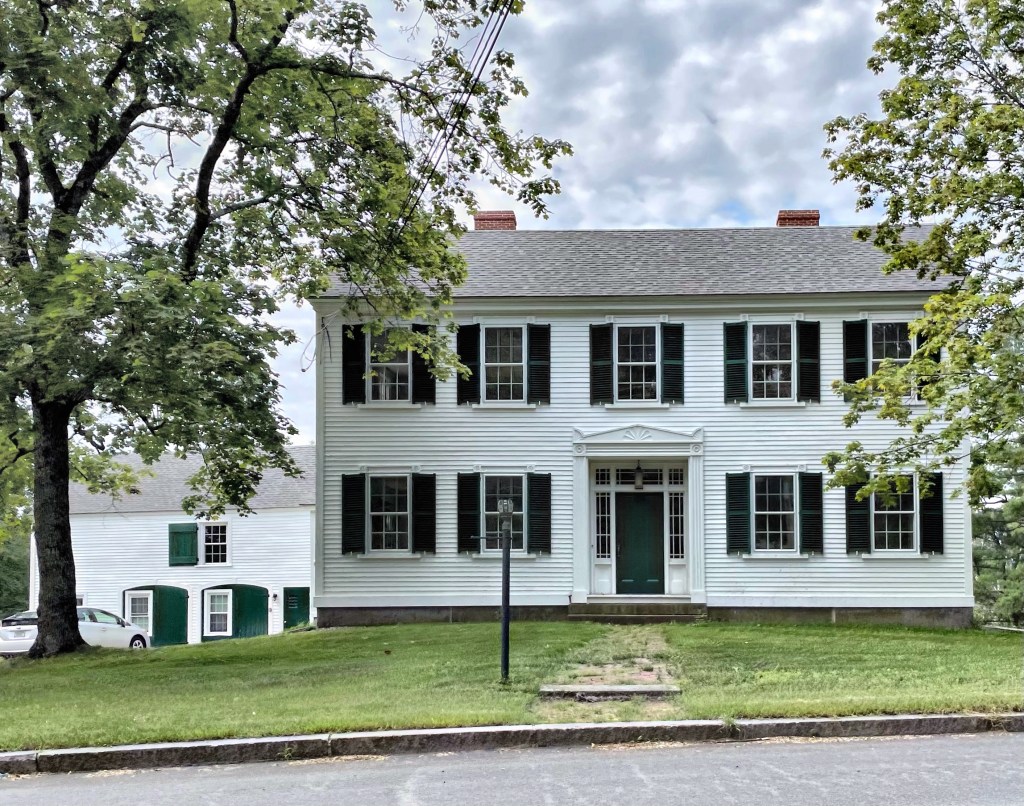
In 1840, a recently married Andrew Lapish Simpson built this home for his new bride, Lydia Kelly. The house blends Federal and Greek Revival architectural styles and has a perfect door surround that stopped me in my tracks. The L-shaped home is attached to a barn which was originally an older home. Andrew was a sea captain who took months long excursions, leaving his wife to maintain the home on her own. He died in 1870, and was survived by his widow for 25 years. The family home was gifted to the local Congregational church in which she was an active member. It was occupied as the church’s parsonage until the 1950s. It was an office until a couple years ago and it is now a single-family home.
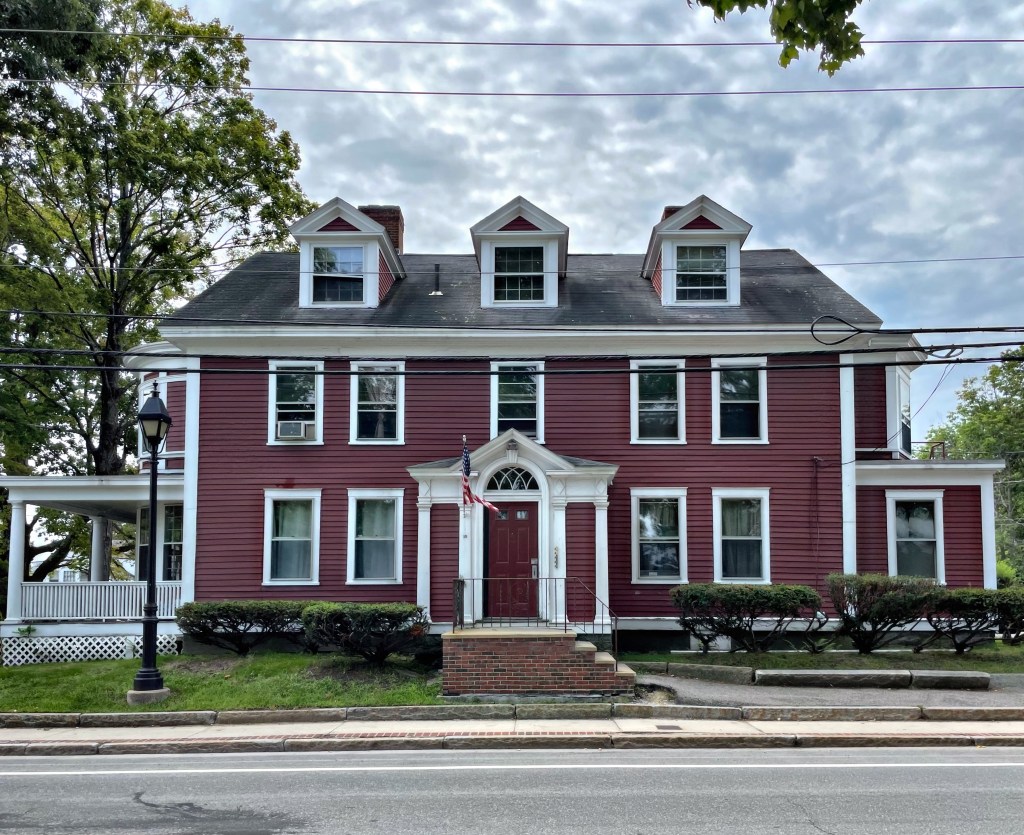
One of the most interesting homes in Durham, NH, sits right on Main Street, and while lacks much of its original grandeur, the house still has a story to tell. When mining engineer, Hamilton Smith met and married Alice Congreve while working in London, the couple envisioned and planned for a sprawling gentleman’s farm in New England to retire to. In 1895, the couple purchased the 1780 Rev. Blydenburgh home on Main Street, a large Federal style mansion. When Alice and Hamilton retired to the Red Tower in 1895, they set about renovating the estate into a jewel of the Gilded Age. They added a three-story tower to the rear of the home, large additions and Colonial Revival alterations, and they purchased large land holdings behind the house for a working farm. On the farmland, they built a carriage house, creamery, and men’s and women’s accessory buildings (a billiards building and tea house, respectively). Hamilton could only enjoy the home for a couple years until his death in 1900. His widow created the family cemetery at the farthest extent of the property and built the stunning Smith Memorial Chapel (last post). In the 1940s, much of the property was sold off and developed for a residential neighborhood for UNH faculty, and the Red Tower mansion was converted to an apartment house for students.
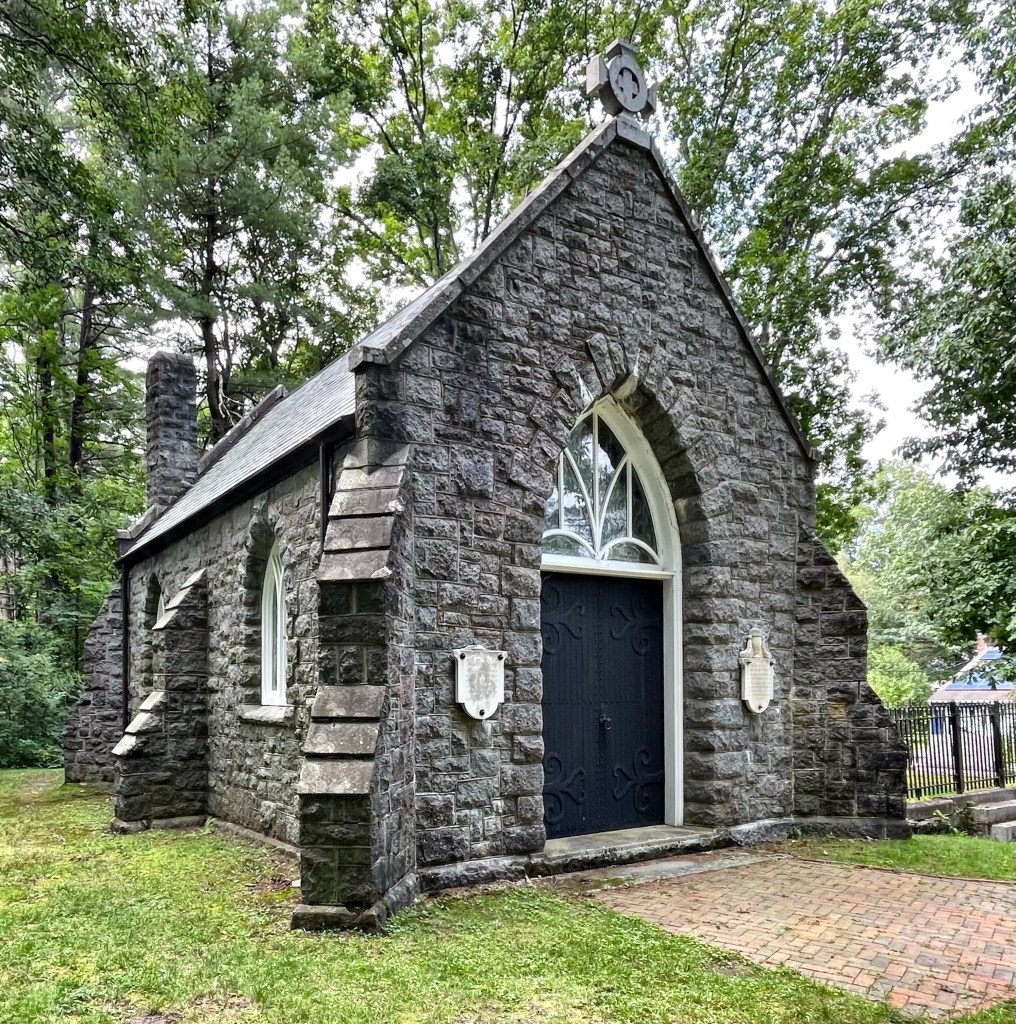
The Smith Memorial Chapel, located in Durham, NH, was built for and named after Hamilton Smith by his wife, Alice Congreve, in 1900. From their marriage in 1886, Hamilton and Alice Smith lived in England for ten years, where Hamilton worked and lived in mining operations in South Africa. He had a home in New York and by the end of 1895, Hamilton acquired property in Durham to create a country estate (next post). On the Fourth of July in 1900, Hamilton and a family friend went boating downriver on the Oyster River, in Durham along with his two dogs Hana and Joy. While attempting to free the boat after it ran aground, he suffered a fatal heart attack at just 59 years old. Almost immediately, his widow Alice funded a memorial chapel to her late husband on the family cemetery. The Gothic Revival chapel features amazing lancet stained glass windows and stone buttresses resembling old English chapels. Also on the grounds of the cemetery are the burials of Mr. and Mrs. Smith and their beloved dogs, marked by small gravestones. The property, including the small cemetery in which both family members and pets are interred, remained in the family until 1979, when it was donated to the town.


 Buildings of New England