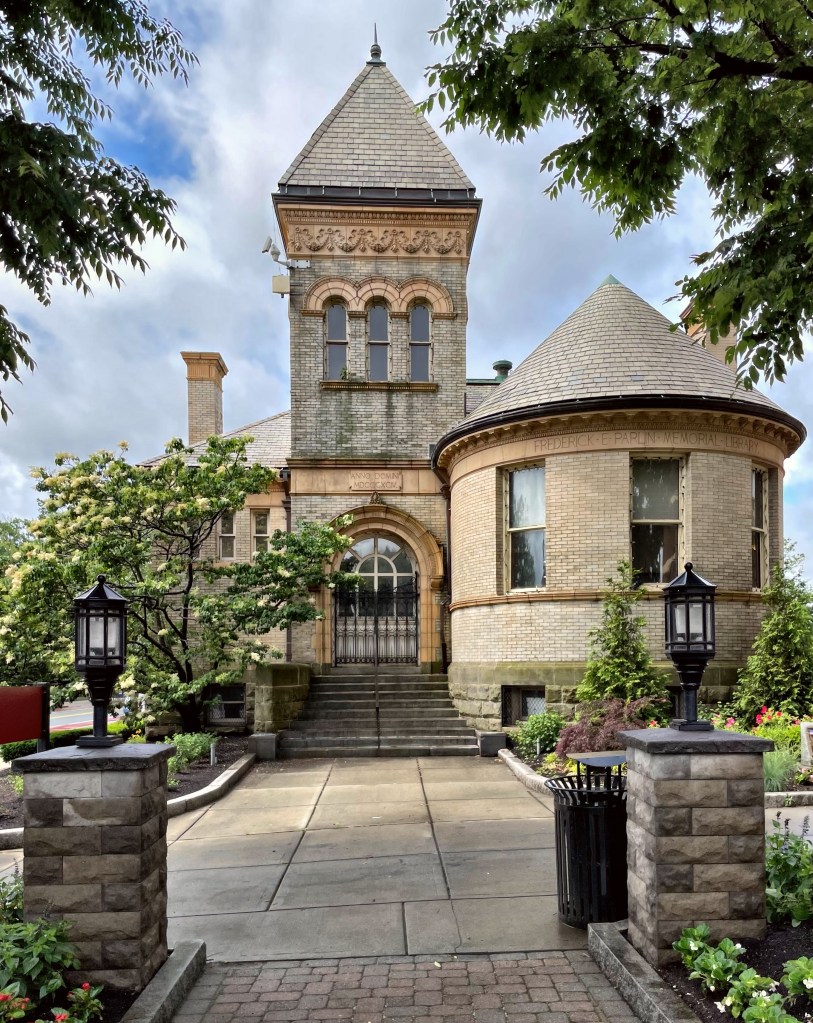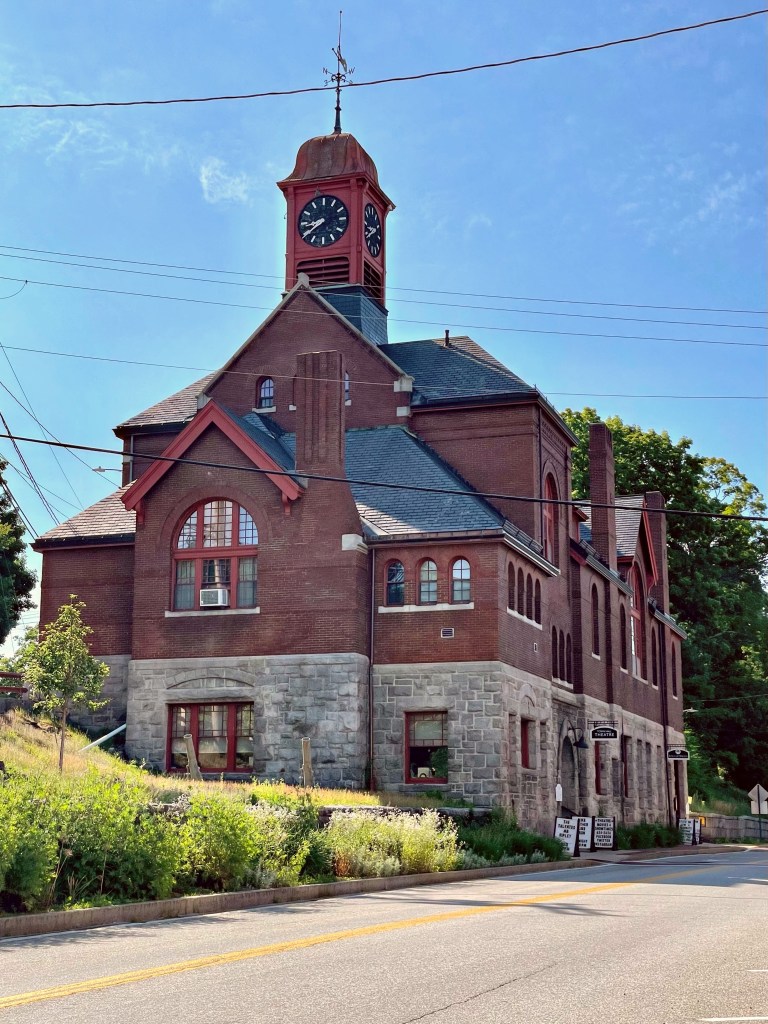
Frederick E. Parlin Memorial Library // 1894

The Frederick E. Parlin Memorial Library is arguably the most architecturally significant building in the City of Everett, Massachusetts. Constructed of buff brick, sandstone and terracotta, it displays characteristics of the Richardsonian Romanesque style including the main entrance set within a recessed arch at the base of a square tower with arched openings. In 1892, Albert Norton Parlin, a local businessman, donated to the City of Everett the Pickering Estate, his birthplace and familial home, to be torn down and a library erected on the parcel in memory of his son, Frederick E. Parlin, who died in 1890 at the age of eighteen. Albert Parlin gave to the City an additional $5,000 to aid in the building of the Frederick E. Parlin Memorial Library. The original 1894 library as well as a 1911-1912 addition were designed by local architect John Calvin Spofford who positioned the building to face a small triangular park. By the 1940’s, the building was outgrown, but it wasn’t until 1982 that a plan was set in motion to renovate the original building and to construct an addition. Childs, Bertman, Tseckares was chosen to draw up the architectural plans, and ground was finally broken in the spring of 1990. With construction of the new addition, the building is almost three times its original size and handicapped accessible, all with an appropriate, Post-Modern design.

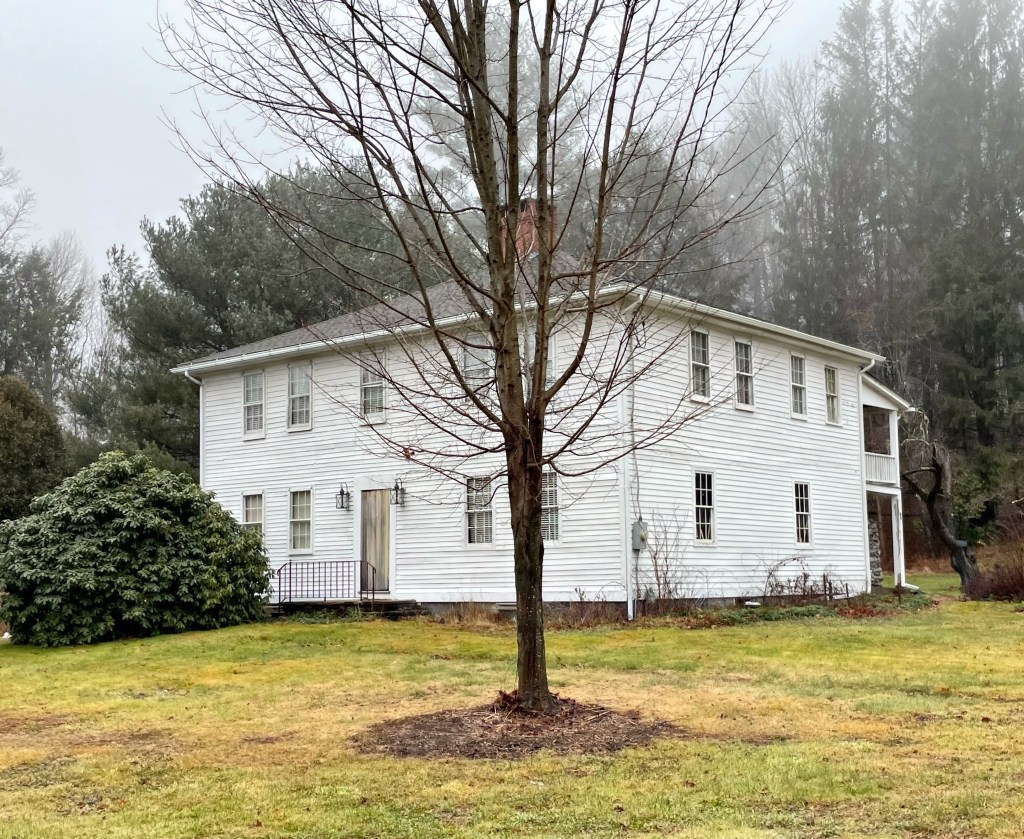
Leonard Proctor House // c.1810

In the early 1780s, Leonard Proctor and Salmon Dutton and their families, moved from Massachusetts and settled in present-day Cavendish, Vermont and gave their names to the two major settlements on the Black River, Proctorsville and Duttonsville. Leonard Proctor was born in Westford, Massachusetts and fought in the Revolutionary War at a young age. He settled in Cavendish in 1782 and built a modest house/tavern, and underwent developing the village in his name, Proctorsville. By the early 1800s, Leonard was a highly esteemed member of town and had the funds to erect the finest Federal style manse in the village, to showcase the stability and wealth of his community. The home exhibits scalloped cornice moldings and the carved wood flowering vines springing from urns on the upper pilasters that have a folk/Federal quality that stands out as a very unique design detail. Carved Adamesque bell flowers that flank the door suggest Asher Benjamin’s Windsor influence. Elliptical sunbursts above the pilasters, elaborate guilloche friezes, and the broad semielliptical attic light have a later Federal character. It is possible that Leonard had this house built, and it was “modernized” by one of his heirs.

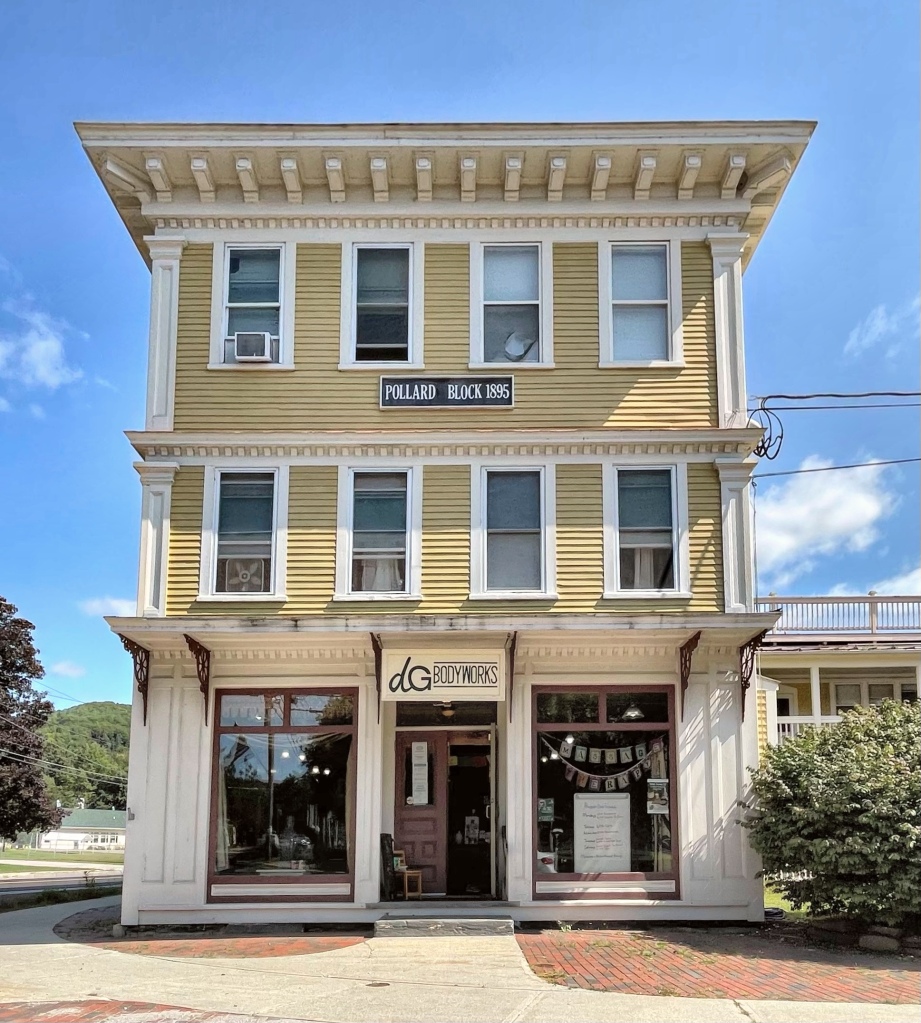
Pollard Block // 1895

Proctorsville Village (in present-day Cavendish, Vermont) was established in last decades of the 18th century along the Black River, where the slope allowed for suitable locations for small water-powered mills. The community grew slowly for the early part of the 19th century as farmers, craftsman and merchants established enterprises around the handful of small mills built along the river. The establishment of the Central Vermont Railroad through the village aided manufacturing expansion, and by the late 1800s, Proctorsville was home to many large mills. As employment in the mills grew, the local economy shifted from the barter economy of a farming community to a cash-based economy generated by wage employment. The general store was essential to this transition supplied the townspeople with essential goods via the railroad, and the major store in Proctorsville was the Pollard General Store. Don Carlos Pollard (1840-1921) was born in Plymouth, Vermont and opened his first store there under his father’s name. He moved to Proctorsville in 1860 and opened a general store in the village. The store was an immediate hit, and later managed by Don’s two eldest sons, Fred and Park out of a brick building. A fire destroyed the brick building in 1895, but construction began of a new building immediately that same year. The present wood-frame building exhibits the retail presence and early commerce in many small villages in New England. It blends Italianate and Classical Revival details with the bracketed eaves and one-story corner pilasters and dentils. Swoon!

Waterford Odd Fellows Hall // 1904

Built soon after a massive fire destroyed much of North Waterford Village in Maine, the Iocal order of Odd Fellows decided to rebuild, constructing this building for their members. Though active for several decades after the building was reopened, an aging and dwindling membership forced this chapter to merge with the Odd Fellows of nearby Norway, Maine. After, this building was occupied by the Daughters of Rebekah, an auxiliary group of the IOOF for women until 1973 when it was donated to the recently formed Waterford Historical Society. The society has since moved, and listed the building for sale in 2020 for just $10,000!!

Lawrence Luellen House // c.1908

Some really interesting history and architecture with this one! Located in Waban Village in Newton, Mass., this gorgeous Mission Revival style house is one of a few in the style in the Boston area. The Mission Revival style was popularized on the West Coast in California in the late 19th century. Rather than continuing to adopt imported East Coast architectural styles, these California architects recognized the value of their own historic surroundings, where the Spanish Colonial mission heritage of California and the Southwest, the beautiful mission chapels, with stucco walls, red tile roofs, and bell towers led to the new revival. The style never took off in New England, which followed its own Georgian and Federal Revival styles, emulating historic Colonial-era homes here. This Newton home was built around 1908 for Lawrence W. Luellen, an attorney and inventor, who made a big invention, disposable paper cups! It is true. Lawrence Luellen wanted to do away with the ubiquitous “tin dippers” he saw in public buildings and railway stations after realizing all that sharing might be transferring disease. In 1907, he took out a patent and create a new, clean and individual drinking cup. After his invention went global, he sold his Newton home and moved to New Jersey, inventing…cup dispensers!

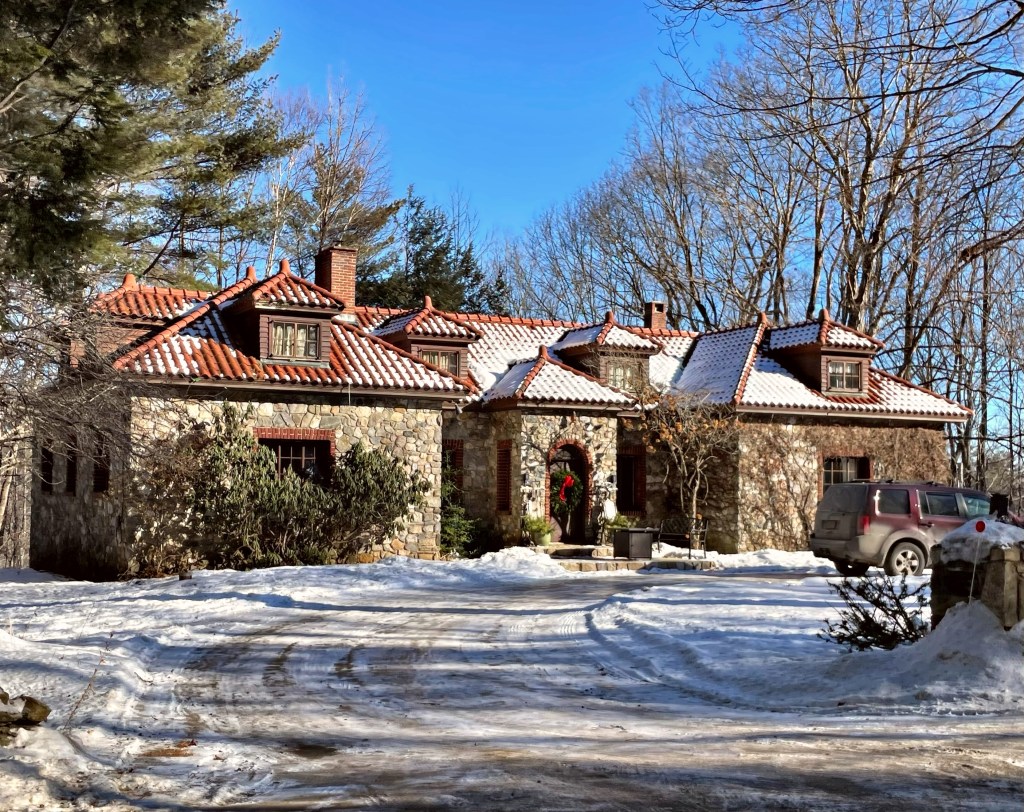
Wrightstone // 1925

In the early 20th century, Norway, Maine and the surrounding towns were sought-after for their natural beauty with large lakes and rivers with untouched expanses of forest. Upper-middle class residents of Portland, Boston and other larger cities in New England built more rustic summer homes, compared to the elaborate “White Elephants” in Newport, Rhode Island. This home in Norway was named Wrightstone and was built in 1925 for the Wright Family. The U-shaped home is constructed from rubblestone, likely gathered from the land on which it sits. The house blends the Arts and Crafts movement with the uncommon (in Maine) Spanish Colonial Revival style, with the terracotta roof! I bet the interior is so cozy!

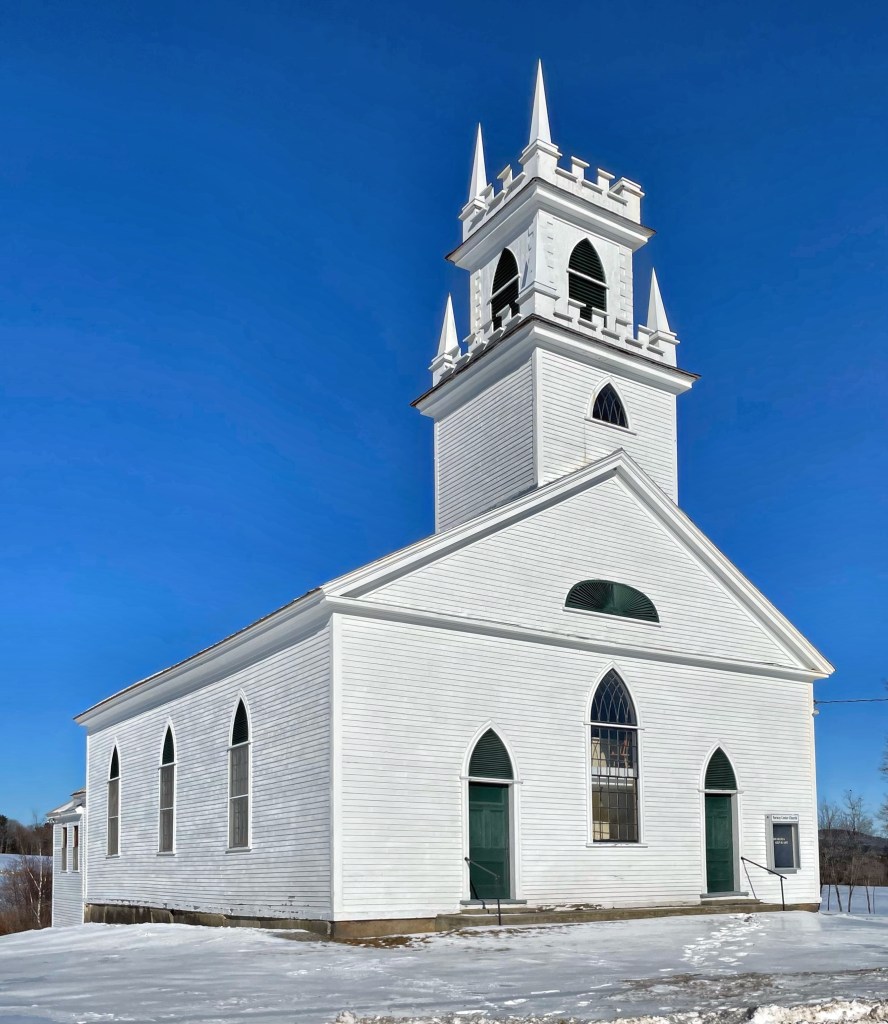
First Congregational Church, Norway // 1840

This beautiful, bucolic church in Norway Center was built in 1840 to replace an earlier meeting built in 1808-09 on the site. The present building is Gothic Revival in style with louvered panels making the windows appear lancet in shape and the amazing lancet window centered on the facade. The two-tiered tower is ornamented with crenellation and a wooden spire at each corner (besides one missing). The church features a louvered fan and strong pediment, which are nods to other prominent styles of the early-mid 19th century, Federal and Greek Revival respectively. This church quickly saw membership drop as Norway Village became the population center of town, with Norway Center becoming more agricultural and rural.

Daniel Glazier Tavern // 1815

The Daniel Glazier Tavern is located at the west end of the Willington Green, an area showcasing great vernacular examples of Federal and Greek Revival architecture. The tavern was apparently built by Daniel Glazier as a stop along the route connecting Norwich, CT to Springfield, MA, where visitors could grab a bite to eat and/or stay the night to rest. Daniel’s son Isaac was the first tavern-keeper, followed by Daniel’s son-in-law Arial Eldridge until his death in 1849. The ballroom of the tavern had long been used in the winter months for town meetings, as he basement of the Town Meetinghouse, used for town meetings, lacked any form of heat. Since 2009, the property has been owned by the Willington Historical Society, who have restored the building.

Hiram Rider House // c.1820

Located on the southern edge of Willington Connecticut’s town common, this vernacular example of the Federal style with later alterations is really appealing, mostly for its simplicity and proportions. The house was built around 1820 for Hiran Rider, who served as a judge, county sheriff, and town selectman. The Rider Family were hit by tragedy in 1851 when dysentery hit the household, killing Hiram, his wife Sarah, and their daughter. The home was altered by a later owner with 2-over-2 windows, an Italianate style door, and a door hood.

Asa Waters Mansion // 1829

In 1824, prosperous gunsmith Asa Waters II set out to build the stateliest residence in the country. It took two full years to amass the necessary materials for what is now known as the Asa Waters Mansion and Mr. Waters spared no expense. Asa Waters II (1769-1841) was born in Millbury in 1813 to Asa Sr. and Sarah Waters. Asa earned the art of gunsmithing from his father, and in 1808 the junior Asa and his brother Elijah opened the Waters & Co. Armory along the banks of the Blackstone River, in what is now Millbury Center. Following the untimely death of his brother in 1814, Asa Waters carried on the business solo and secured lucrative arms contracts with the United States government. His invention of a lathe to turn gun barrels into the first seamless barrels revolutionized the manufacture of guns throughout the world, and provided his company a stockpile of cash. As a result, he hired Boston-based architect Asher Benjamin, to design a country house suitable of his stature. The mansion features two prominent facades with the primary distinguished by a colonnade of fluted two-story columns with composite capitals. The mansion remained in the Waters Family until 1929, when it was sold to the Roman Catholic Diocese of Worcester, as a rectory of a local church. In 1977 the Town of Millbury acquired the Asa Waters Mansion, and with little funding to maintain the property; in 1994, the Asa Waters Mansion had fallen into quite a bit of disrepair. The town proposed to demolish the mansion for a parking lot, but a group of locals worked together as the Asa Waters Task Force and petitioned to save the house: funds were raised, tradesmen in the community donated materials and labor. Saving the architectural landmark for generations to come.