This late 19th century home in Marion was built for Florence and Walton S. Delano, a descendant of the great Delano family in Massachusetts. Walton worked in nearby Wareham at A. S. Gurney and Company, dealers in coal, grain and flour. The house is unique as it is in the American Foursquare form, a type of home built in the late 19th and early 20th centuries. The hallmarks of the style include a basically square, boxy design, two-and-one-half stories high, usually with four large, boxy rooms to a floor, a center dormer, and a large front porch with wide stairs. This example stands out for the shingle siding, flared eaves and rubblestone foundation. Swoon!
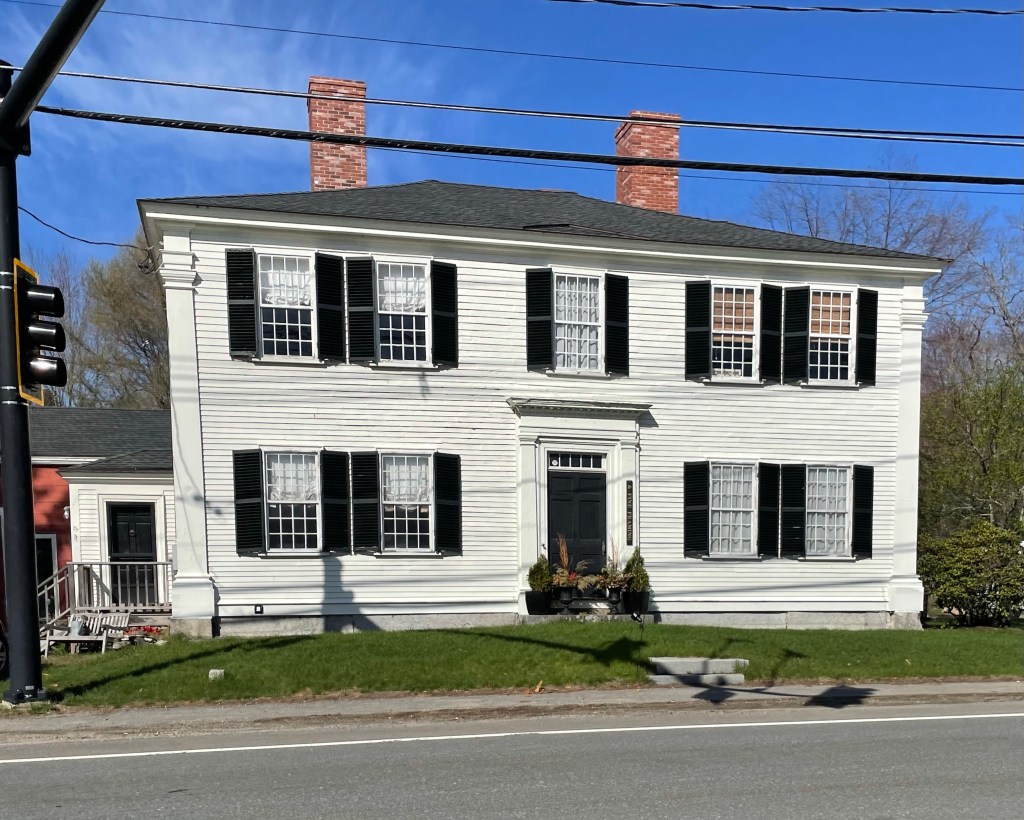
Government-sanctioned lotteries originated in Massachusetts as an alternative to taxation, but soon expanded as a fundraising tool to help fund building projects and support charities. In 1765, the General Court passed the first legislation allowing Harvard College to run a lottery to support dormitory building projects. Before Harvard University accepted multi-million dollar donations, they drew lotteries between 1794 and 1797 to build the second Stoughton Hall and in the early 1800s, for the building of Holworthy Hall. In Harvard’s lottery of 1794-1796 which John Robbins, a farmer and Revolutionary War veteran, entered, together with three friends, each of whom purchased a quarter-share in one ticket. They won! This Federal style home with hipped roof and symmetrical facade is one of four built in Acton.
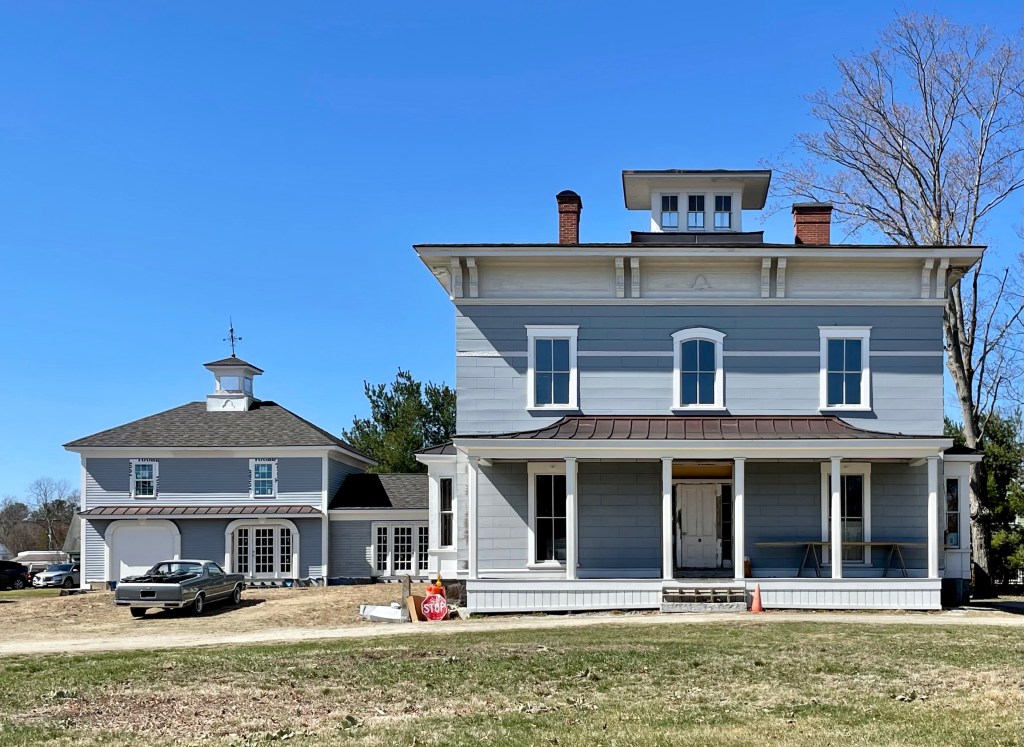
This Italianate mansion was built in the 1860s for George E. Lee, a tanner. Lee lived in this home for a few decades until his death, before which, we had a stable or carriage house built to house his horses and carriage. There is a belvedere at the roof which could have been used by George or his wife to oversee the tannery business just blocks away! The home was willed to his son William after his father’s death, who sold off land across the street for new development. Interestingly, land behind the house was sold off in the early 2000s for townhouse development, possibly to provide funding to restore the home, currently undergoing renovations. The street that the townhomes sit on… Preservation Lane.
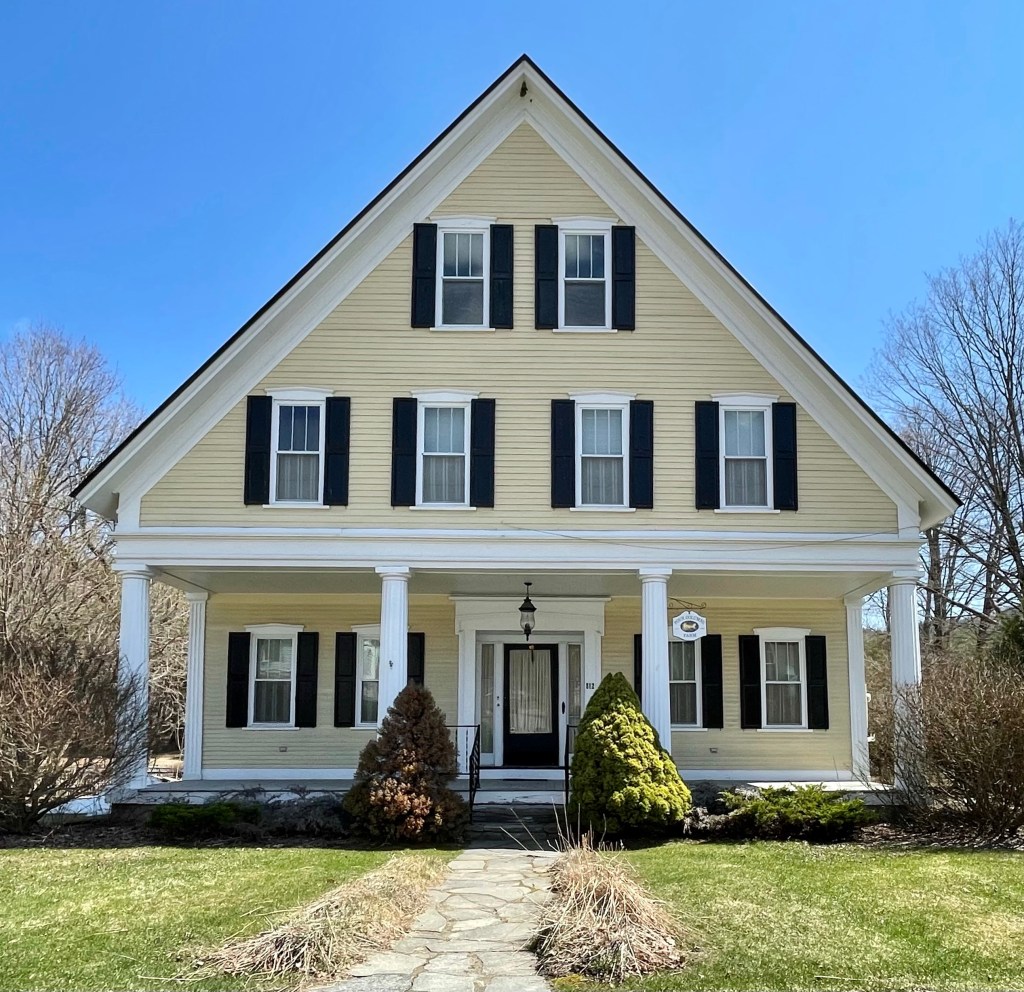
This Greek Revival home in Reading, Vermont was built around 1853 for Levi Fay Hartshorn, and is an excellent example of a vernacular Greek Revival house in Central Vermont. Levi F. Hartshorn moved to Reading, Vermont and opened up a store, also built this home for his family. It appears that Mr. Hartshorn gifted the village one of his shops to be used as a local library, before the present building was constructed.
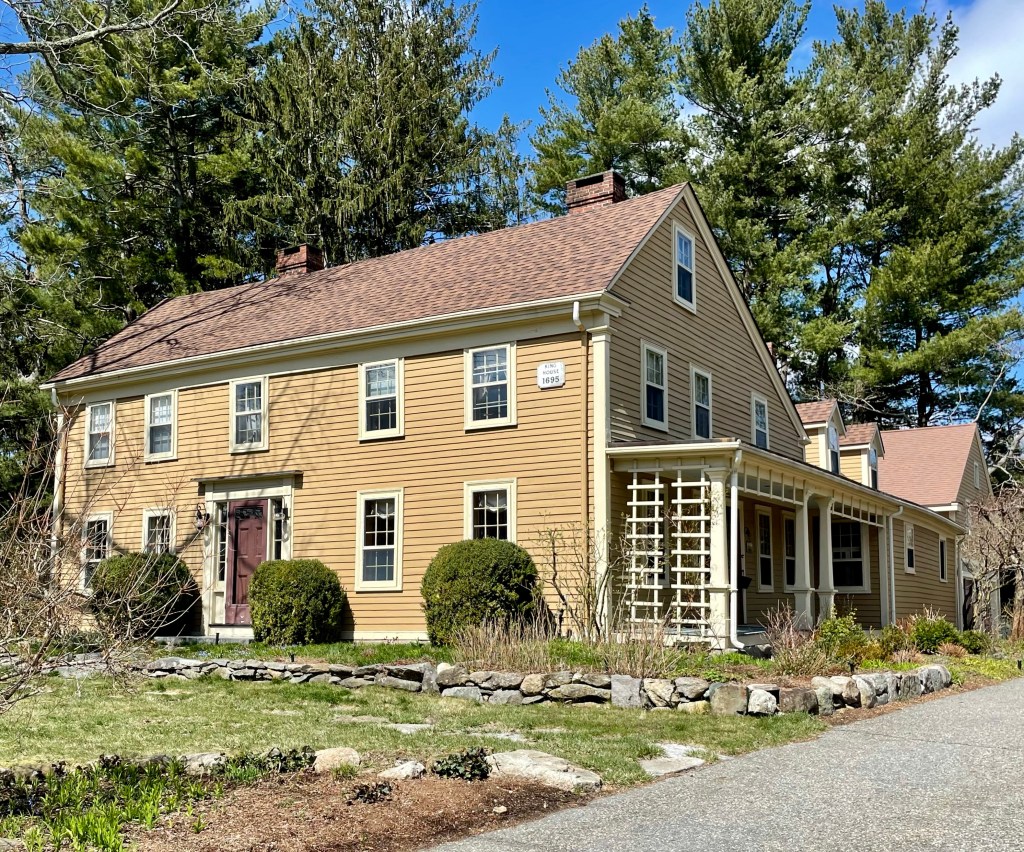
Located in the Oak Hill Village of Newton, the Dike-King House remains as one of a few pre-Revolution houses, but the history is a little murky from what I found. Oak Hill was the most remote village of Newton historically and has maintained much of its open space to this day, as it did not see the suburban development following the streetcar in other villages in town connecting to nearby Boston. This house was apparently built by Jonathan Dike (1673-1751), a cooper, who lived here with his second wife Experience French (yes that was her name). The home he built was likely a much smaller dwelling and was added onto as the family grew. Jonathan died in 1751 and the home went to his eldest living son and later sold to Noah King in 1796. The house plaque on the house gives a date of 1795 as King purchased a house on the lot, but it was likely much older than one year old. Noah King was a housewright, deacon, and son of Dr. John King a prominent civic leader in the town. With his expertise as a housewright, he likely rebuilt much of the house into what we see today. Starting in 1796 through 1923 the property was run as a farm by members of the King family, but land was sold off around the Great Depression for much needed funds. Due to the asymmetry of the house, it is likely that it started as a half-house with just three bays with the door at the left-most bay, with the saltbox roof added around that time.
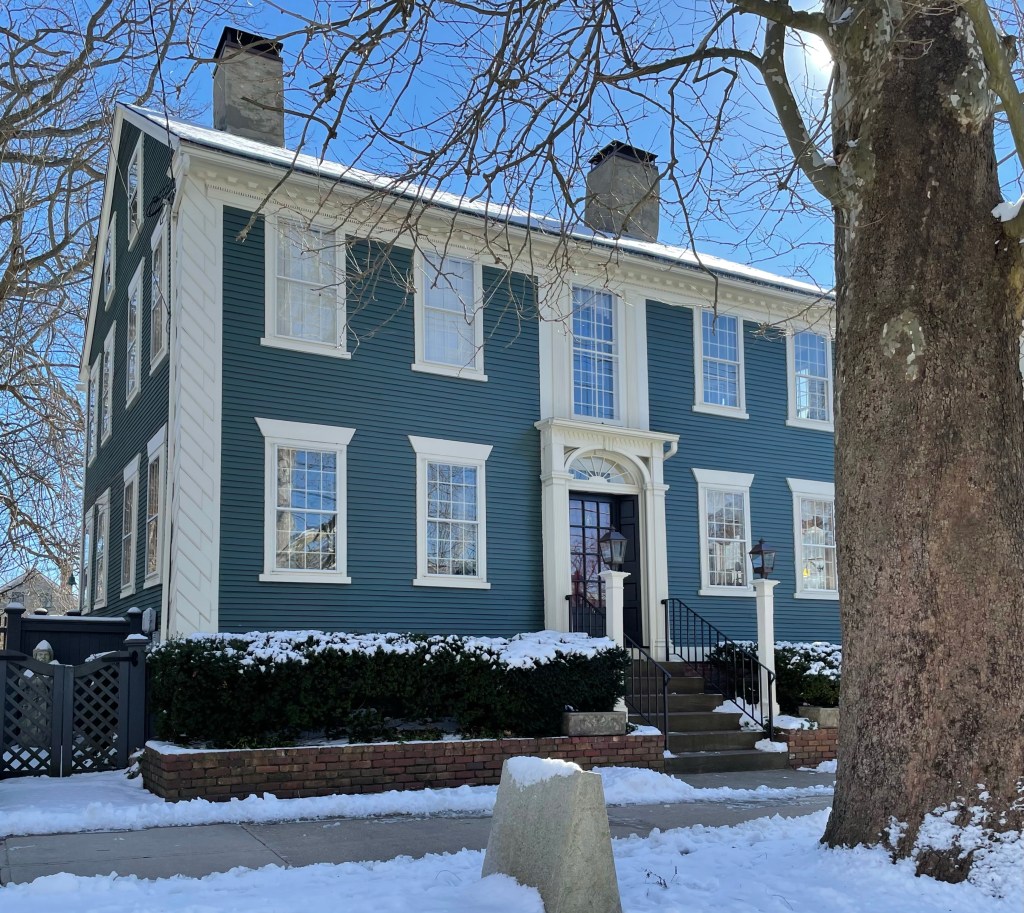
Architect Russell Warren (1783-1860), who I have featured on here numerous times, built this 2-story, 5-bay, hip-roof Federal house in Bristol, Rhode Island. This residence as interpreted by Warren as an example of the Federal style with stylistic features most notably being the angulated quoins (at the corners of the house). The house was designed for William Van Doom, a Bristol tailor of modest means. In 1814, Warren, a young and aspiring architect, saw the significant wealth in Bristol and decided to buy this home he designed. Siting himself in the vicinity of the extremely wealthy DeWolf family, he gained recognition and success by designing three expensive and elaborately crafted houses for them at this time, only Linden Place remaining. Warren lived in this house from 1814 until 1823.
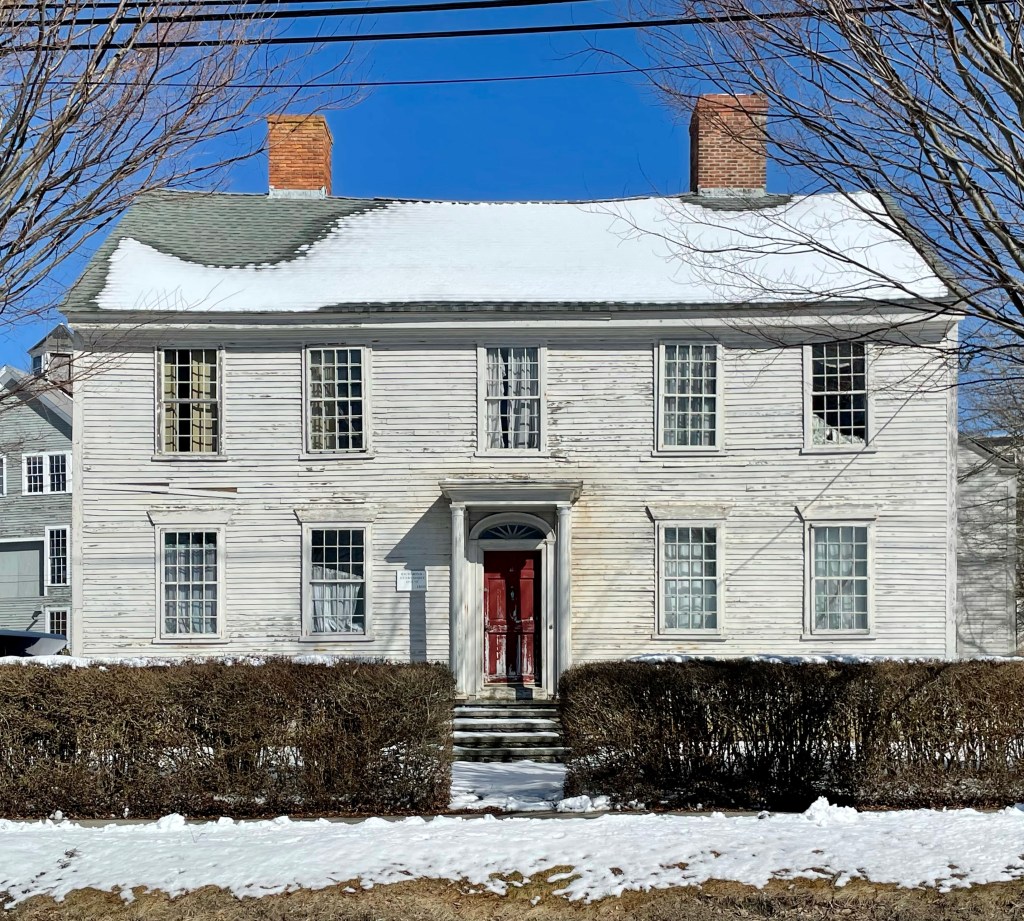
Located on Hope Street, just south of the downtown area of Bristol, Rhode Island, this beautiful Federal-style home overlooks the water, and once oversaw a large ship-building empire. The home was built by Lemuel Clarke Richmond (1782-1876), possibly in response to his marriage to Hannah Gorham in 1803. Richmond was a wealthy whaler who owned nearly twenty ships, including the Empress, a Bristol-built bark. The Federal style home features a five-bay facade with central entry. A modest portico surrounds the door which has a fan light transom above. Oh, and there are some gorgeous 12-over-12 windows on the home, at the ground floor the windows have flared lintels above. The home was sold by Richmond in the early 1850s and rented out to Charles and Julia Ann Herreshoff, who resided there with their eight children! It was here where sons John and Nathanael overlooked the water as young boys and became consumed by the beauty of the ships that sailed by their front yard. The brothers later ran the internationally renowned Herreshoff Manufacturing Company, which occupied land all around the home (and was featured previously). The home was acquired by the family in the 1860s, and often changed hands within the family over the next decades until it was inherited by Norman F. Herreshoff. A collector of Americana, Norman Hcrreshoff completed a series of renovations to the family home, including remodeling of the kitchen to be “old-fashioned” and replacement of the front porch with the small Ionic portico which we see today. The home is owned by the Herreshoff Marine Museum, but has seen better days.
John Brown Herreshoff, a fully-blind ship-builder, and later Founder and President of the Herreshoff Manufacturing Company in Bristol, built this house at the head of Burnside Street, overlooking his boat works (no pun intended). The home sits next to the stunning Codman Place mansion, featured previously, and takes architectural cues from its neighbor. The home is reported to have been built by J.B. Herreshoff, who despite being completely blind, developed his other senses to a high degree to overcome the handicap of sightlessness, and became renowned for his design skills in his ships. The home has a mansard roof with a central projecting entrance bay, capped with a steeply pitched roof, and a barrel-vaulted dormer and ocular window inset. While the house is now condo units, it retains its architectural integrity at the exterior.
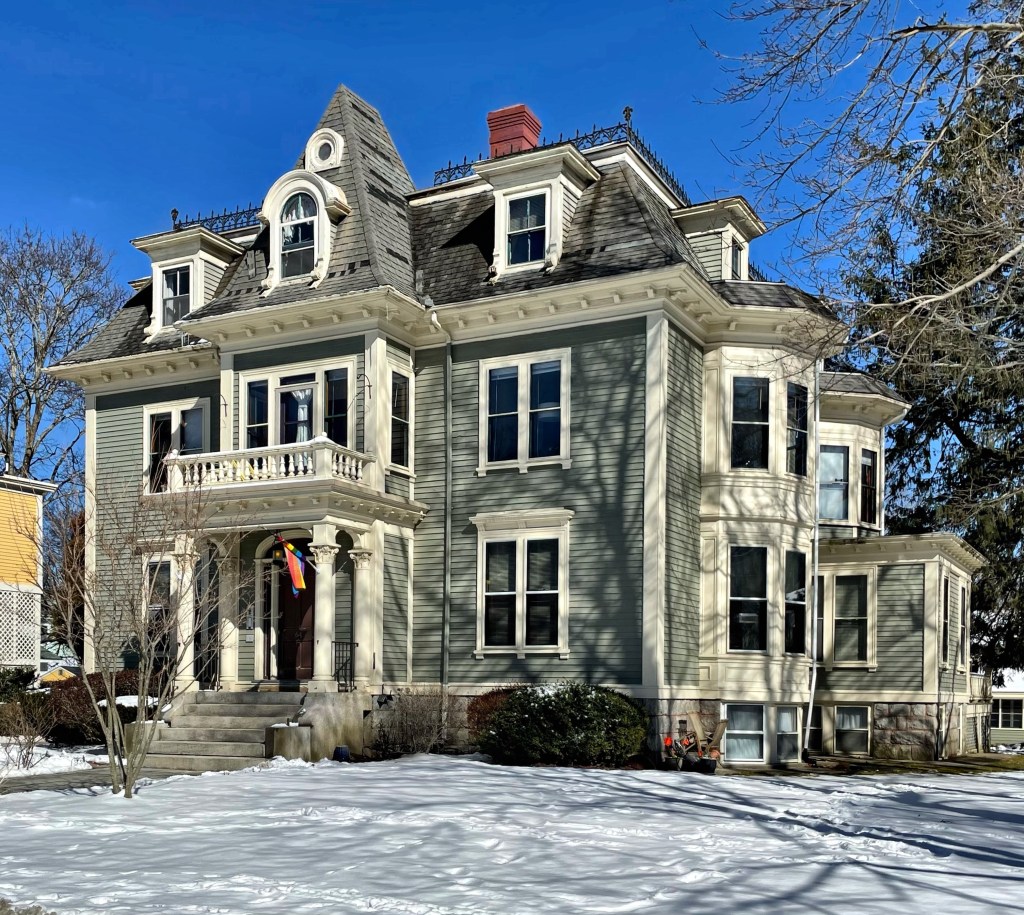
In 1870, unmarried sisters of the esteemed and respected Codman Family of Boston, Catherine Elizabeth and Maria Potter, commissioned this house from the Newport Rhode Island architect George Champlin Mason. Like many who built in Bristol after the Civil War, the sisters seemed to view the location as a kind of suburb of fashionable Newport. In 1875 they were joined by their brother Henry Codman, who was given a large tower addition to dwell in, preserving the architectural significance to the Second Empire style home. Henry died in 1879, only four years after his tower was constructed, Catherine died in 1898, and Maria died in 1902 and the house was sold soon after her death. The home was converted to seven condominium units in the 1980s, yet retains its architectural grandeur from the delicate iron cresting at the roofs, down to the historic 2-over-2 windows.
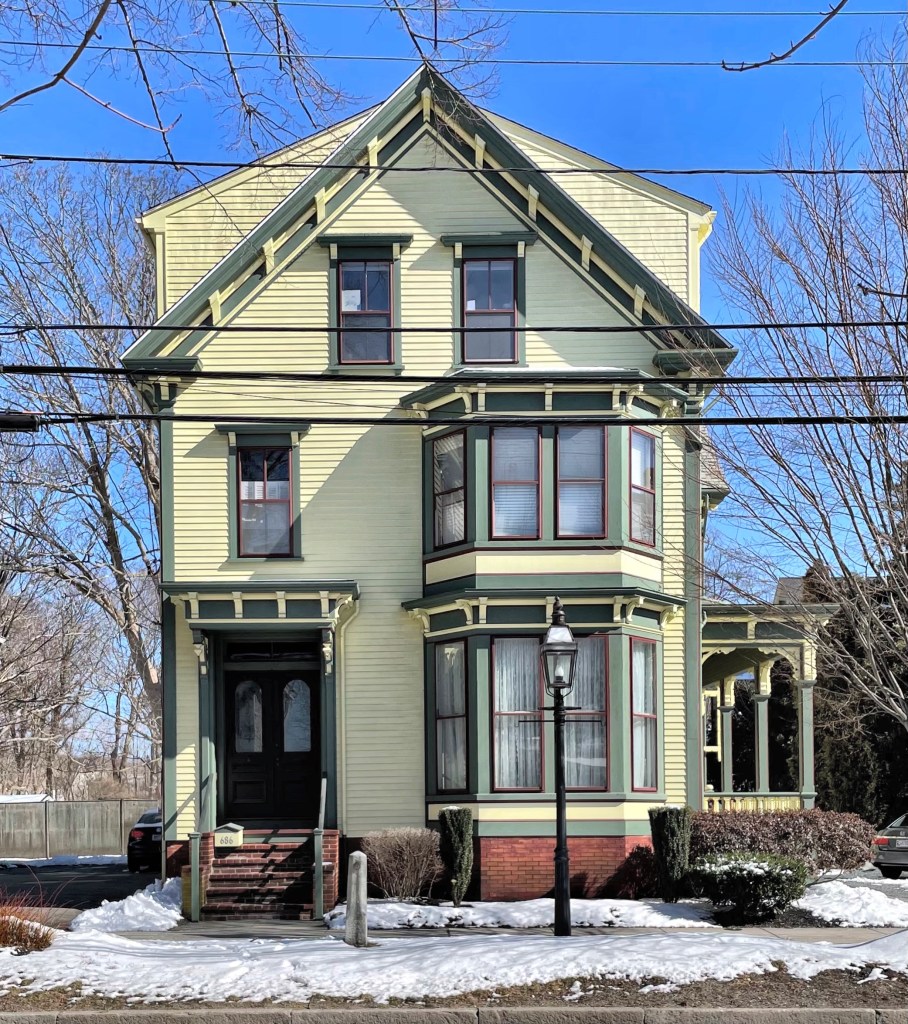
Bristol, Rhode Island is dominated by Federal and Greek Revival homes, but there are some absolutely gorgeous gems built after (I can’t wait to show you a sampling). This Bracketed/Italianate home is a well-preserved example of the style with a side-hall entry, two-story bay window, and hoods over windows and the main entry with brackets. The home was built for Charles Greene, a very active citizen of Bristol. Greene (1822-1899) purchased the Bristol Phoenix in 1862 and remained its editor and publisher for thirty-one years. Active in public and civic affairs, he was first president of the Rhode Island Press Association, clerk of the Supreme and common Pleas Courts of Bristol County from 1865 to 1868, a member of the General Assembly in 1873 and 1874, Sheriff of Bristol County from 1875 to 1877, and a town council member from 1879 to 1881.


 Buildings of New England