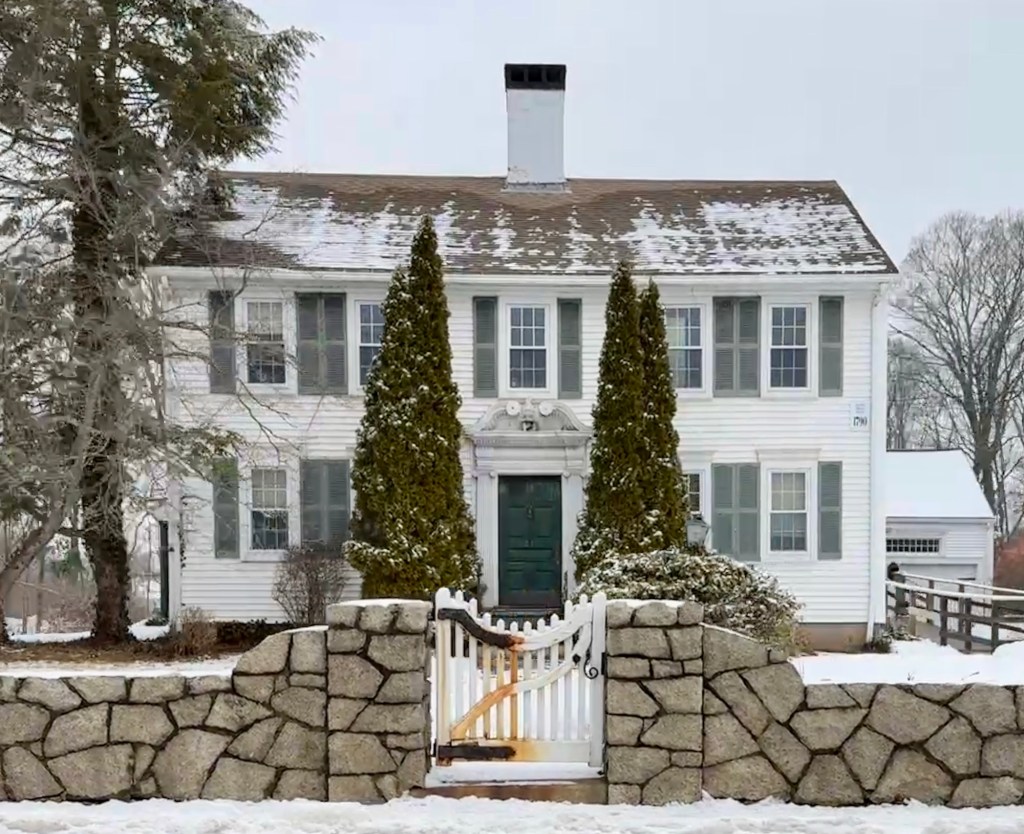
Grout-Heard House // c.1743

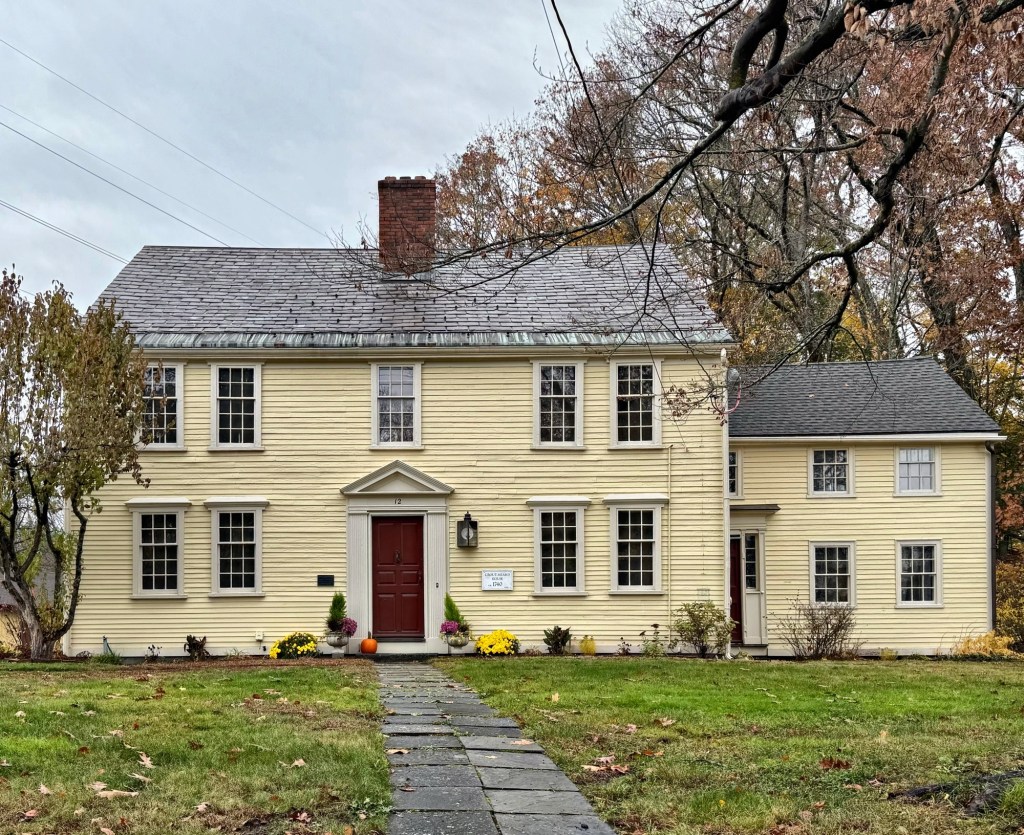
The Grout-Heard House on Cochituate Road in Wayland, Massachusetts, is one of the oldest extant residences in the community and architecturally significant as it shows the evolution of architectural tastes throughout the centuries. The house was built around 1743 for Jonathan Grout (1701-1748), a grandson of an original settler in the area, by the time of his marriage to Hannah Heard in 1743. Early records suggest that the house was originally just one bay deep and two-stories tall with a central entry. The property was sold in 1744 to Richard Heard, Jonathan’s brother in-law. In 1787, Silas Grout (1755-1820), a blacksmith, purchased the house and likely added rooms on the rear of the house. In 1822, Silas’ descendants added the side ell and the residence became a double-house in the mid-19th century. The house was moved from the site to make room for the 1870s Town Hall, and the rounded two-story side bay was added. After the Town Hall was razed in the 1950s, the Grout-Heard house was moved back to its original site in 1962. Since that date the Grout-Heard House has been the offices, research center, artifact repository and house museum of the Wayland Historical Society, who added a two-story Modern addition at the rear.

Gen. Stephen P. Gardner House // 1798

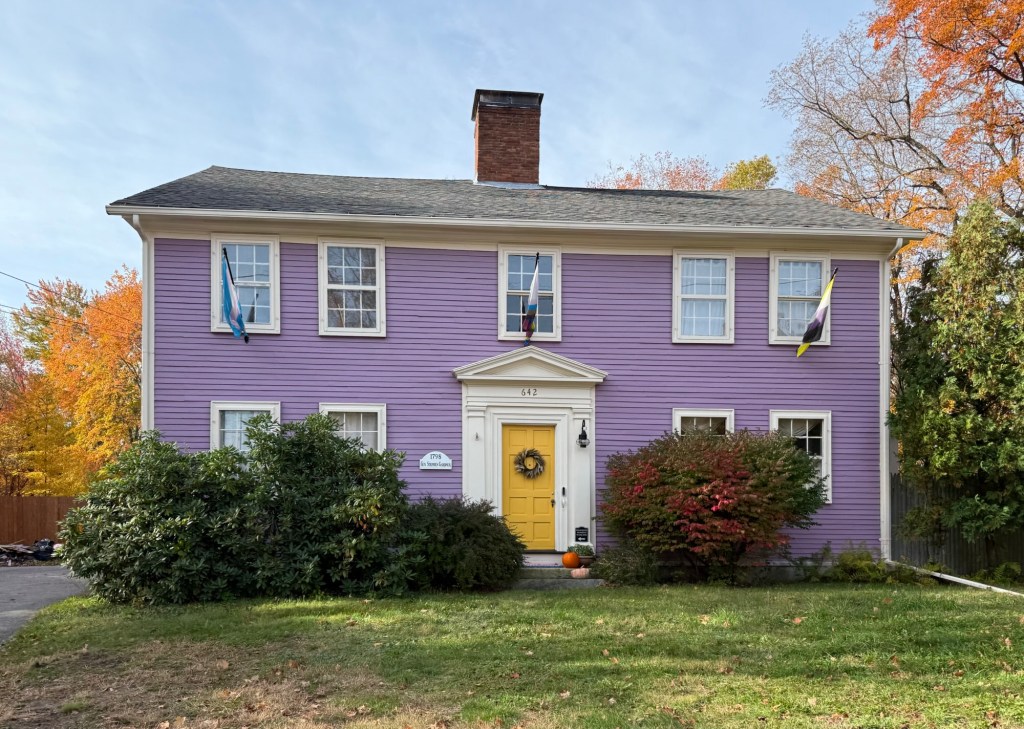
The Stephen P. Gardner House on Main Street in Bolton Center, Massachusetts, is a stunning late-Georgian style residence evocative of rural housing built in the decades following the American Revolution. The home was built by 1798 for Stephen Partridge Gardner (1766-1841) upon the occasion of his marriage to Achsah Moore. Stephen Gardner was born in Sherborn but settled in Bolton where he quickly became one of Bolton’s most important residents. He served as Town Clerk for twenty years from 1797 to 1816, as Town Treasurer from 1810 to 1820, and was also an Assessor and a Selectman for many years. Stephen Gardner was chosen to help write the petition from Bolton against the Embargo Act prior to the War of 1812, and rose to the rank of Brigadier General in the Massachusetts militia. In 1873, the house was purchased by the First Parish Church and used as the minister’s residence for about fifty years before being sold to private owners. The now purple house is well-preserved and maintains its traditional pedimented doorway and central chimney.

Joseph and Ruth Sawyer House // c.1782

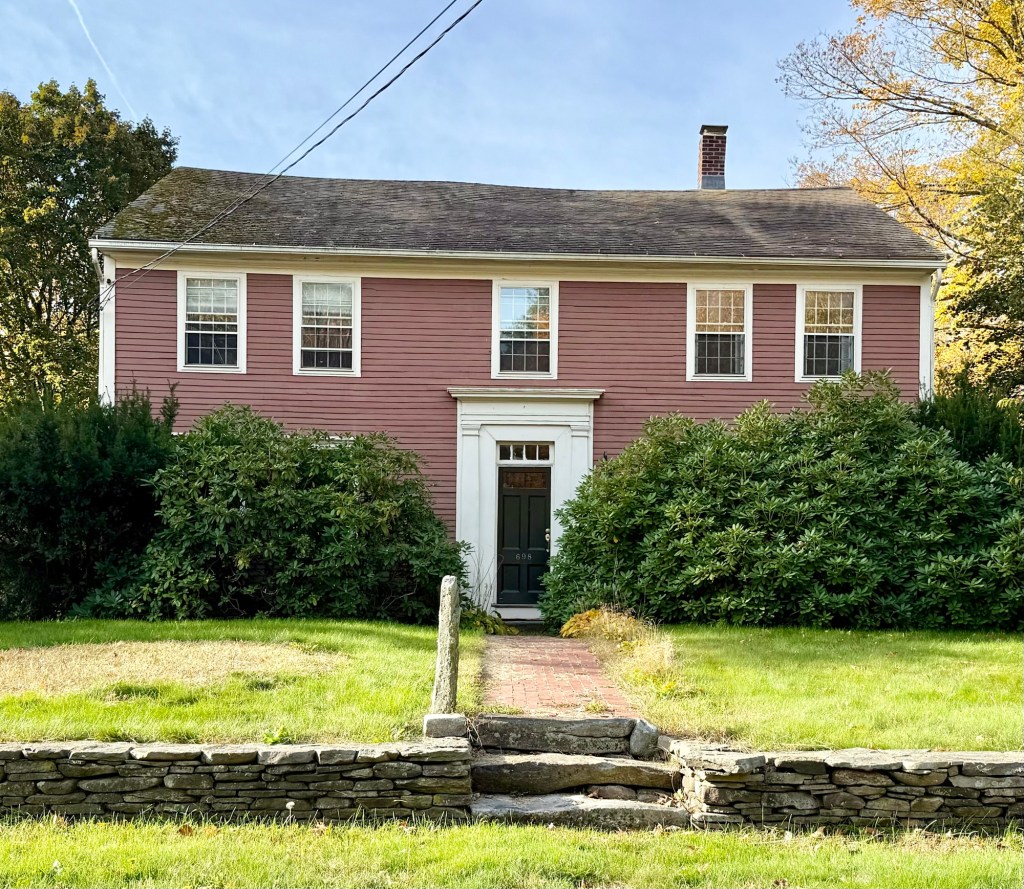
The town center of Bolton, Massachusetts, as we know it, was largely an early Colonial landholding and farm held by William Sawyer (1679-1741) who possessed roughly 300 acres in the area when Bolton was still a part of Lancaster. The Town of Bolton seceded along the Still River from Lancaster and incorporated in 1738. A year later, an aging William Sawyer gifted two acres of his land for the town’s newly designated burying ground, now the Old South Burying Ground, where his own grave (dated 1741), is the oldest marked burial in the cemetery. In 1780, William’s son, William Sawyer, Jr., sold over sixty-acres of the family farm to his son, Joseph Sawyer (1756-1828) who was to marry Ruth Walcott in 1782. This house was probably built about the time of their marriage. Joseph had previously fought in the Revolutionary War, and marched with the Bolton militia to Lexington on April 19, 1775, and upon his return, he worked as a blacksmith and operated the farm while serving in various town offices.

Daniel Heald House // c.1785

Daniel Heald (1739-1833), one of the earliest settlers in the town of New Flamstead (later renamed Chester) Vermont, established his farm on the west side of the upper Williams River. He moved to rural Vermont from Concord, Massachusetts, where he was one of the Patriot soldiers who at the Concord bridge, fought against the British troops while his wife and children who had fled from their home viewed the battle from a neighboring hill. He, with his family, emigrated to Vermont in about 1776 and eventually would serve as town clerk from 1779 to 1799 and as town representative from 1783 to 1797. Around 1785, he built this residence, oldest wood-frame house in North Chester, a two-story, central-chimney house with saltbox roof sloping to the rear. When his son, Amos Heald, was of age, some of the property was deeded to him, where he built a stately Federal style residence that stands across the street to this day. Both of the Heald houses tell the early history of Chester through well-preserved houses.

Brown-Crocker House // c.1836

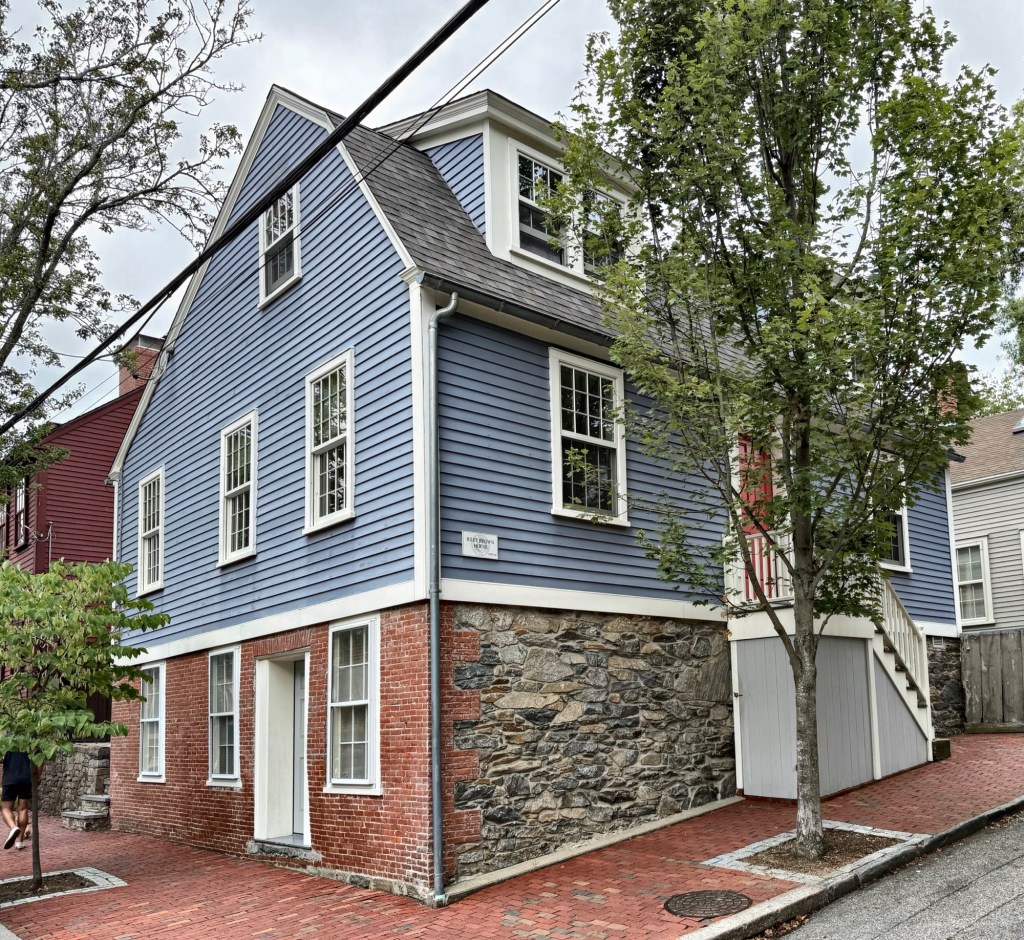
In 1829, Riley Brown, a housewright, purchased a house lot at the corner of Thayer and Transit streets in Providence, and by 1836, built this charming gambrel-roofed cottage, which is one of the most charming in the city. Riley Brown lived in the house next-door at 6 Thayer Street (1829) and on available land, built this 1-1/2-story dwelling on a full-height raised basement on speculation. It is possible that the house could have dated to the 18th century, and was possibly moved to the site from a nearby location, given the distinct gambrel roof and Georgian qualities. The residence here was sold in 1836 to John Crocker, who resided here with his family until his death in 1865. The Brown-Crocker House stands out for its unusually high basement of brick and stone, with a stair ascending up to the central entry and the gentle saltbox roof off the rear. Two shed dormers were likely added in the 20th century to make the house’s second floor more liveable.

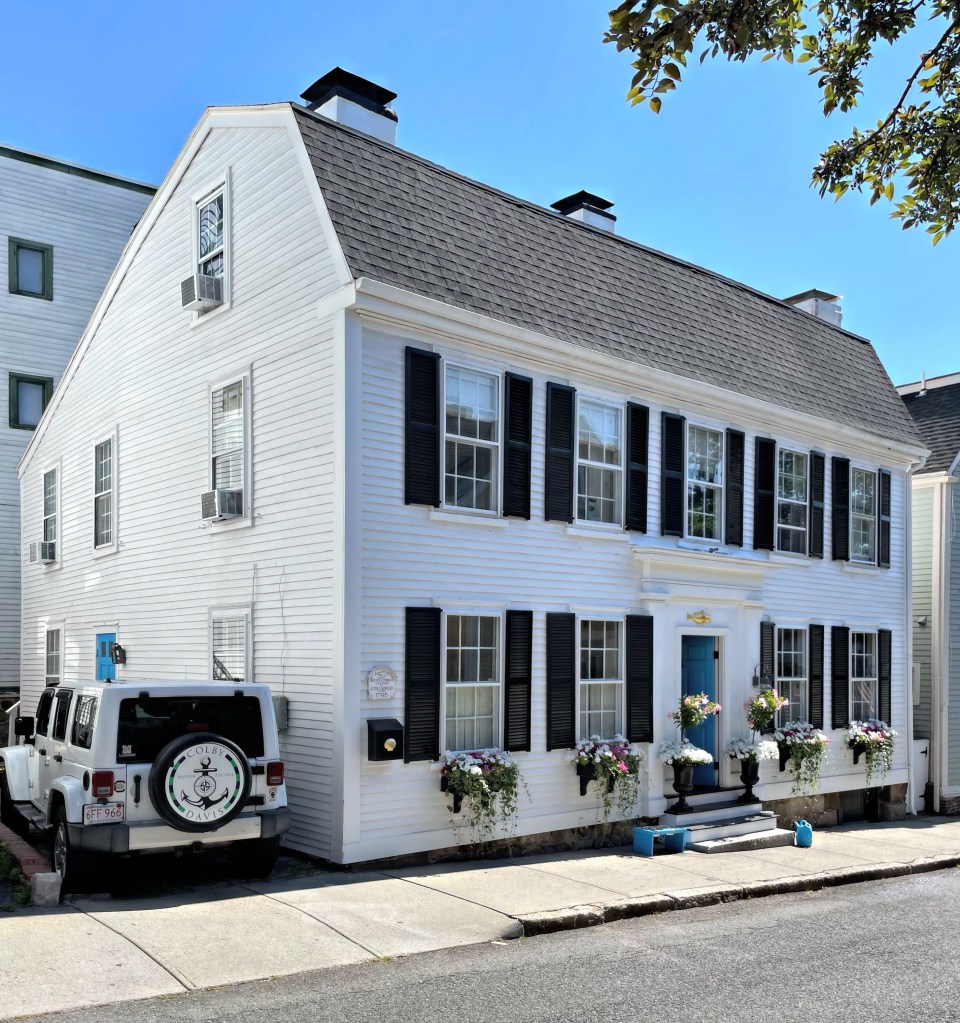
John Adams House // c.1795

In 1795, mariner and fisherman John Adams had this late-Georgian house built in Marblehead, which resembles many homes in the area built a century earlier. The house was apparently built by Benoice Johnson, a cabinetmaker from Roxbury who settled in Marblehead. The gambrel-roofed house had a later lean-to added on the rear for additional square footage. Adams died in 1816 and the house remained in his family until the Great Depression!

Briggs House // c.1790

The village of Assonet in Freetown, MA, has a great collection of late 18th and early 19th century homes built along the riverfront. This home is a great example of a late-Georgian cape house, built in the late 1700s or early 1800s. The home was constructed when Assonet was developing into a prominent, inland commercial fishing port. From this, a shipyard was constructed nearby, where shipbuilders constructed vessels along the river. By the 1850s, the house was owned by Charles Briggs, who worked in the village as a nailer (maker and seller of nails) and his wife Bathsheba. The cottage features a high pitched roof, boxed-eave cornice, and windows standing out from the plane of the house. They really don’t make them like they used to!