In 1910, Ralph Linder Pope (1887-1966) graduated from MIT and later became Chairman of the Board of Directors of the Northwestern Leather Co., Boston. He married Elizabeth S. Wightman two years earlier and her father, George Wightman, purchased a house lot near his own 1902 mansion in the Longwood section of Brookline, Massachusetts and had this brick residence built in 1910 for the new couple. Mr. Wightman commissioned the famed architectural firm of Shepley, Rutan & Coolidge to design his daughter’s home in the Colonial Revival style.
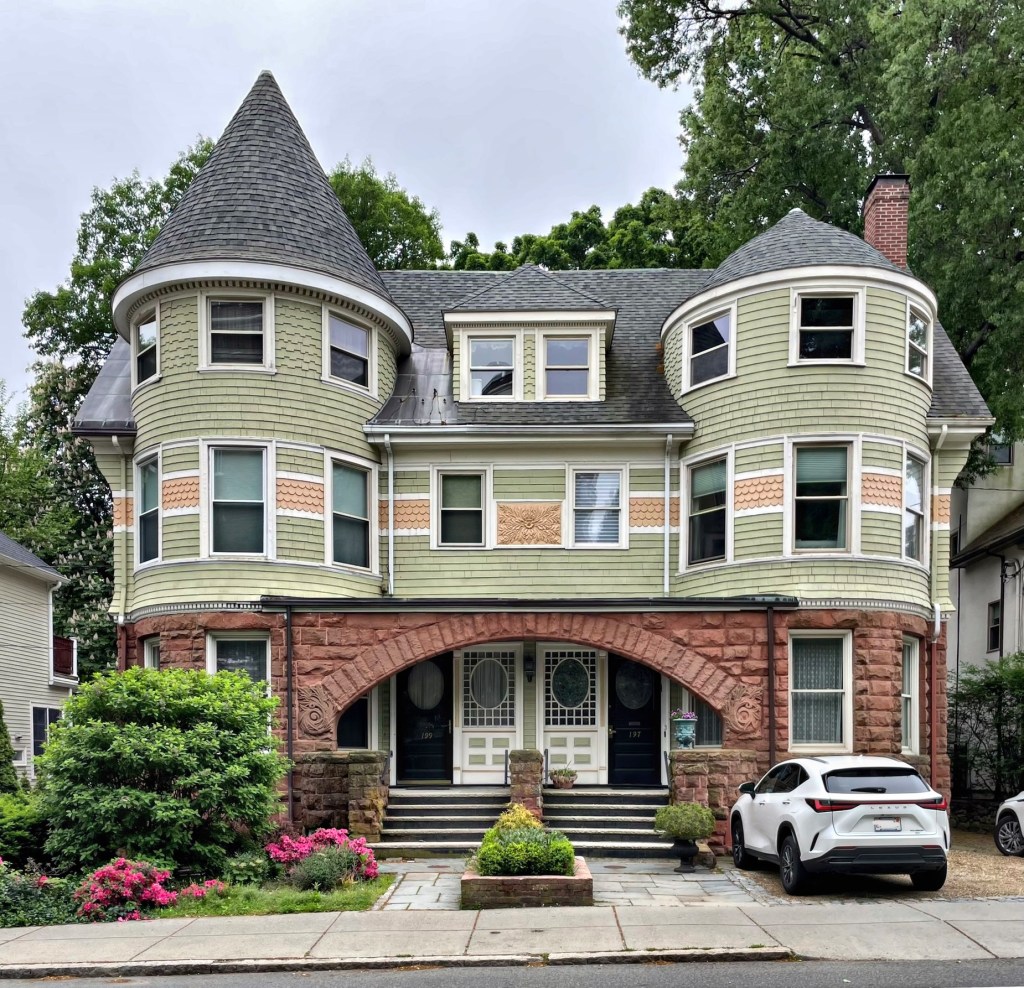
In the late 19th century, the Longwood section of Brookline, saw a second surge of development when larger pieces of land were sold by heirs of the original developers. On the lot across from the Longwood Towers and near the Longwood rail station, Maine-born lumber dealer, John Prescott Webber, built this two-family residence and rented it out for supplemental income. Webber lived in a large home on Beacon Street while renting this and other properties in town to middle-class commuters to Boston. The Queen Anne style residence exhibits a unique rusticated stone first floor with wide arched entry with Richardsonian Romanesque carved detailing.
No trip to Longwood in Brookline would be complete without checking in on one of the finest multi-family housing developments of New England… This is Longwood Towers. The development was originally built in 1925 from plans by architectural/engineering firm Kenneth DeVos and Co. who built three near-identical developments in the early 1920s: Detroit (1922), Brookline (1925), and finally Philadelphia (1928). The complexes were all originally called Alden Park Manor. Kenneth DeVos worked with local architects for each project to oversee construction details and furnish interior detailing as needed. For Brookline, he hired Harold Field Kellogg, who earlier served as the first director of the Boston Housing Authority. The design is Tudor Revival in style with towers connected by social spaces and a lobby linking the towers with a dining room for residents, a ballroom, lounge, day care facilities, barber and beauty shops, and a garage. The idea of a parking garage incorporated into an apartment complex was a very new idea when these were built, so much so it was written about as a new amenity for future developments to emulate. Another interesting tidbit about the complex is that it was featured in architectural journals in 1926 as it solved the “garbage problem” with trash chutes on each floor which terminated down in a brick incinerator (no longer in use). The Longwood Towers in Brookline were eyed as innovative and set trends for later developments, here’s to hoping future developers take cues to what makes good design and finishes rather than just profit with so many new boxy, uninspiring 5-over-1 apartment buildings going up all over the region.
Historians date the bones of this house in the Longwood section of Brookline, Massachusetts to the 1870s (or earlier), but its present appearance is definitely from the early 20th century. This is the Pope-Gardner-Robbins House on Colchester Street, a lovely span of stucco-sided homes in one of my favorite neighborhoods in the Boston area. An early (1874) map of the area shows this was the home of T. B. Pope, and later purchased by Harrison and Laura Gardner, husband and wife. Harrison Gardner was a founder (and served as treasurer) of the Boston Red Stockings of the new National Association of Professional Base Ball Players (NABBP). The Red Stockings eventually became the Boston Braves baseball team and are now the Atlanta Braves. The multi-lot property was likely rented by Gardner for supplemental income and was eventually sold to Annette R. Robbins, who seemingly had this home renovated in the 1920s and others nearby built or renovated as well. The house is today an excellent (and fairly uncommon) example of a Colonial Revival style house with stucco siding.
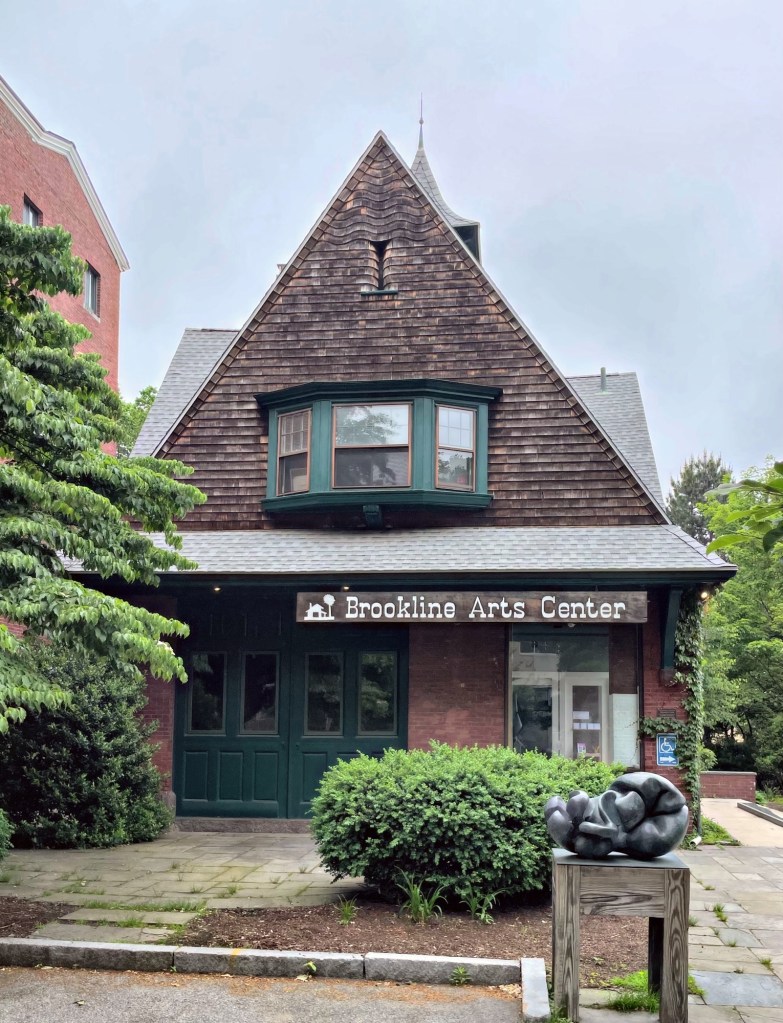
The Longwood area of Brookline, Massachusetts, is among my favorite neighborhoods to stroll and admire great old buildings. The area is home to many grand houses, churches and later high-style apartment buildings but this diminutive building is often overlooked at the edge of the neighborhood! The structure was erected in 1886 by the Town of Brookline as a new Chemical Engine House. The locally renowned architectural partnership of Peabody and Stearns designed the Shingle style fire station for the town, an important hire as the surrounding neighborhood was dominated by stately old homes in a suburban setting. Eventually, in 1965, the firehouse was closed and in 1968, the Brookline Arts Center renovated the building, where their programs have been continuously based in the years since. The brick and shingle building is maintained by the non-profit, preserving a significant piece of the town’s history for the public to enjoy!



 Buildings of New England