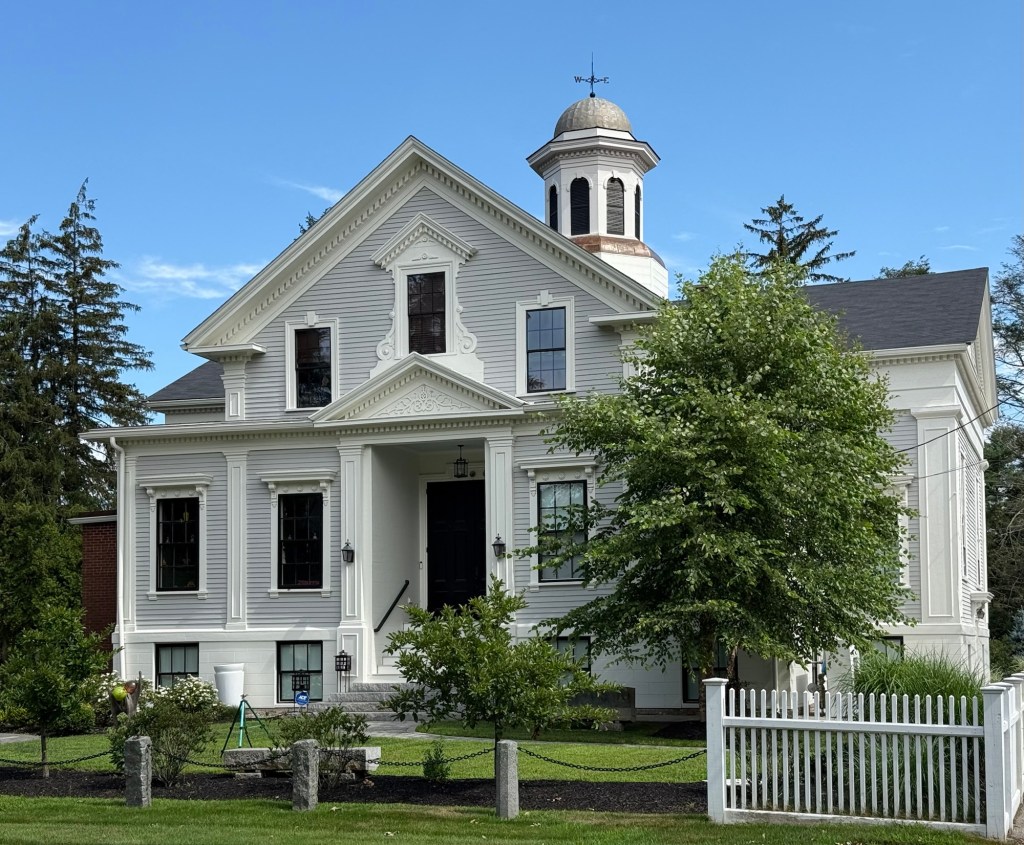
Old Kingston Town House // 1841

Overlooking the town green in Kingston, Massachusetts, this stately Greek Revival home was once the original town house for the community, containing meeting hall, town offices and even a jail cell! Before we go into that further, it is helpful to learn about history first. Present-day Kingston was within the tribal homeland of the Wampanoag people, who in the decades prior to the arrival of the Mayflower, saw their populations decimated from a rapidly spreading pandemics due to earlier contacts with Europeans. Originally part of Plymouth, Kingston was first settled by Europeans shortly after the landing of the Pilgrims at Plymouth Rock in 1620. In 1717, residents in the northern part of Plymouth petitioned the General Court to be set off from Plymouth as a separate township or a precinct. They were allowed to become the north precinct of Plymouth on the condition that they maintain a suitable minister. The northern precinct was wealthier and led to present-day Kingston incorporating as its own town in 1726, following a tax dispute. Early town meetings were held in the parish church until the separation of church and state necessitated a new town hall. The town hall here was built in 1841. As the town grew the building was re-oriented southward and enlarged in 1871 from plans by architect Luther Briggs. Further alterations were made to the building in 1935 under the guidance of the architectural firm of J. Williams Beal & Sons. In the early 2000s, space, parking, and accessibility concerns led the Town of Kingston to sell the 1841 Town House, which was purchased by private owners and converted to a residence. Inside, remnants of the old town house include old signs, office doors for city departments, former vaults converted to closets, and even a jail cell in the basement. Talk about a unique adaptive reuse!
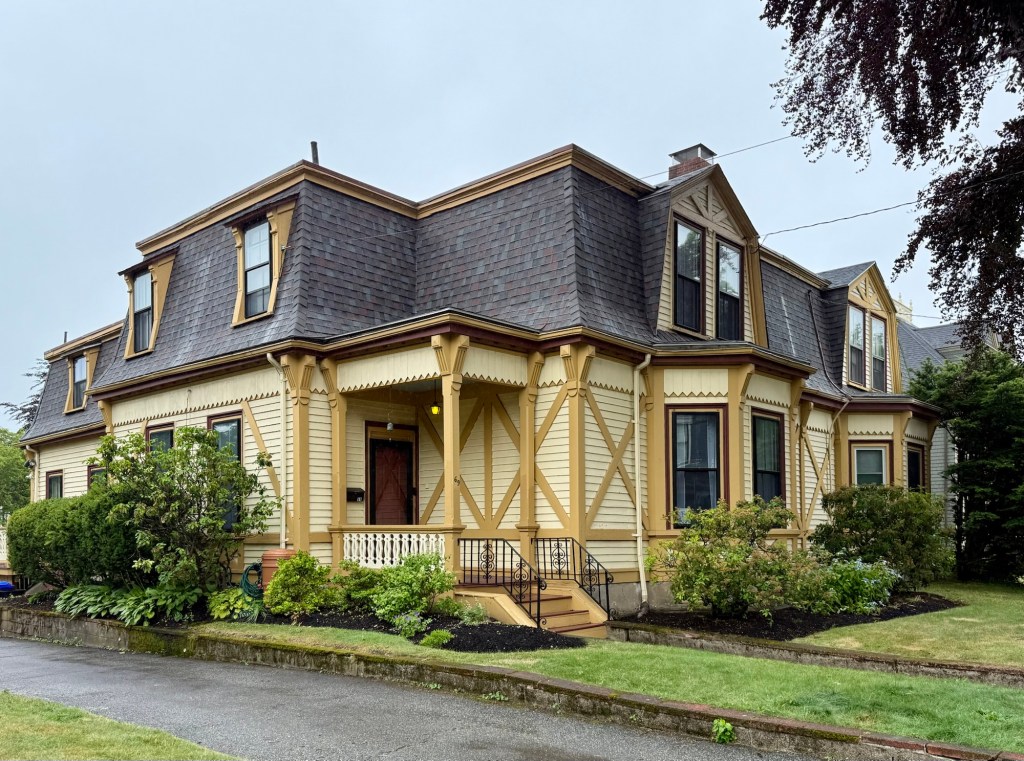
George Derby Welles Rental House // c.1872

From the 1780s until 1870, almost all of Ashmont Hill (west of the present train station) was a farm, with the large farmhouse dating to about 1720, located at the corner of Washington and Welles streets, now the home to the Codman Square Branch of the Boston Public Library system. The farm was owned for a time by General Henry Knox. Sometime before 1850, the estate and mansion came into the possession of the Honorable John Welles, who died in 1855. The property would eventually be deeded to John Welles’ grandson, George Derby Welles, who was then just 26 years old and living in Paris with his wife, Armandine V. Derby. Welles wasted no time in developing the property through his agent, Boston Attorney Edward Ingersoll Browne. Streets were laid out and house lots were platted and sold, with some early properties built with much of the neighborhood developing by the turn of the century. The old Knox-Welles farmhouse would be razed by 1889, but the remainder of the neighborhood has since become a landmark neighborhood of Victorian-era homes. This mansard double-house at 67-69 Ocean Street dates to around 1872 and is one of the earliest properties in the area. Blending the Second Empire and Stick architectural styles, the handsome double house is said to have been designed by architect Luther Briggs for George D. Welles and rented to tenants.

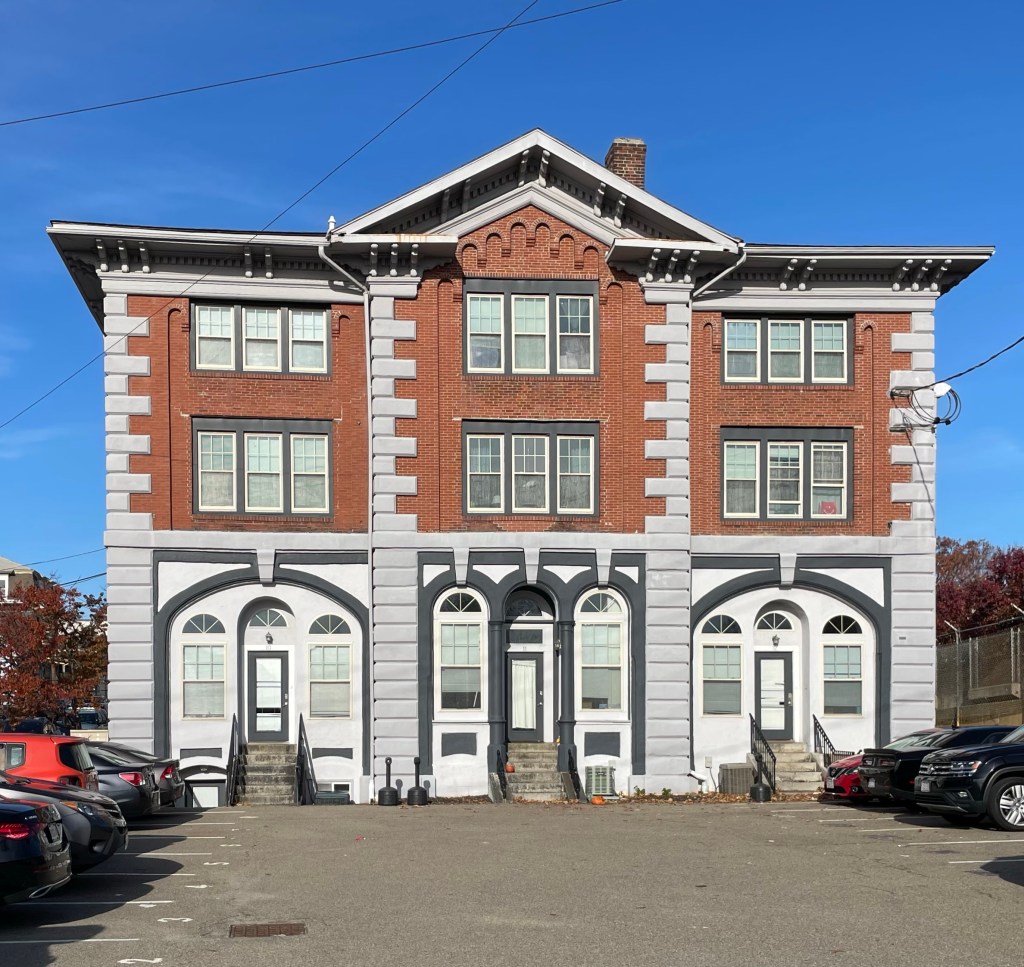
Dorchester Mutual Fire Insurance Building // 1860

This is your sign to take a different route! When exploring a new town or neighborhood, I love to explore the obscure streets just as much as the iconic Main Streets as hidden treasures can always be found! This building in Dorchester’s Port Norfolk neighborhood was constructed in 1860 as the new home of the Dorchester Mutual Fire Insurance Company, which was incorporated in 1855. The company seemingly hired Dorchester-based architect Luther Briggs, who also laid out the streets for Port Norfolk and the Clam Point neighborhoods and designed many buildings in the area at the time. The high-style Italianate building features bold proportions, quoins, and cornice. While the former round-arched windows have since been enclosed and are traditional double-hung windows, they building still stands out! At the rear, Second Empire style rowhouses were built for private ownership. The building is now all condominiums following a renovation.